At five, Rudyard Kipling was sent from Bombay to live with a couple in Southsea, and he called their house “the House of Desolation”. Southsea is less than an hour down the road from me. It’s better now.
— Nick
Seven islands, joined by land reclaimed from the Arabian Sea between 1782 and 1845, became Mumbai, or Bombay. On the west coast, with a deep natural harbour, it is the capital of Maharashtra and the financial capital of India. A king’s gateway seen only in cardboard and Gandhi’s call to “Do or Die” bookend Kipling’s first five years, a blind mother’s clock tower, and India’s first film show.
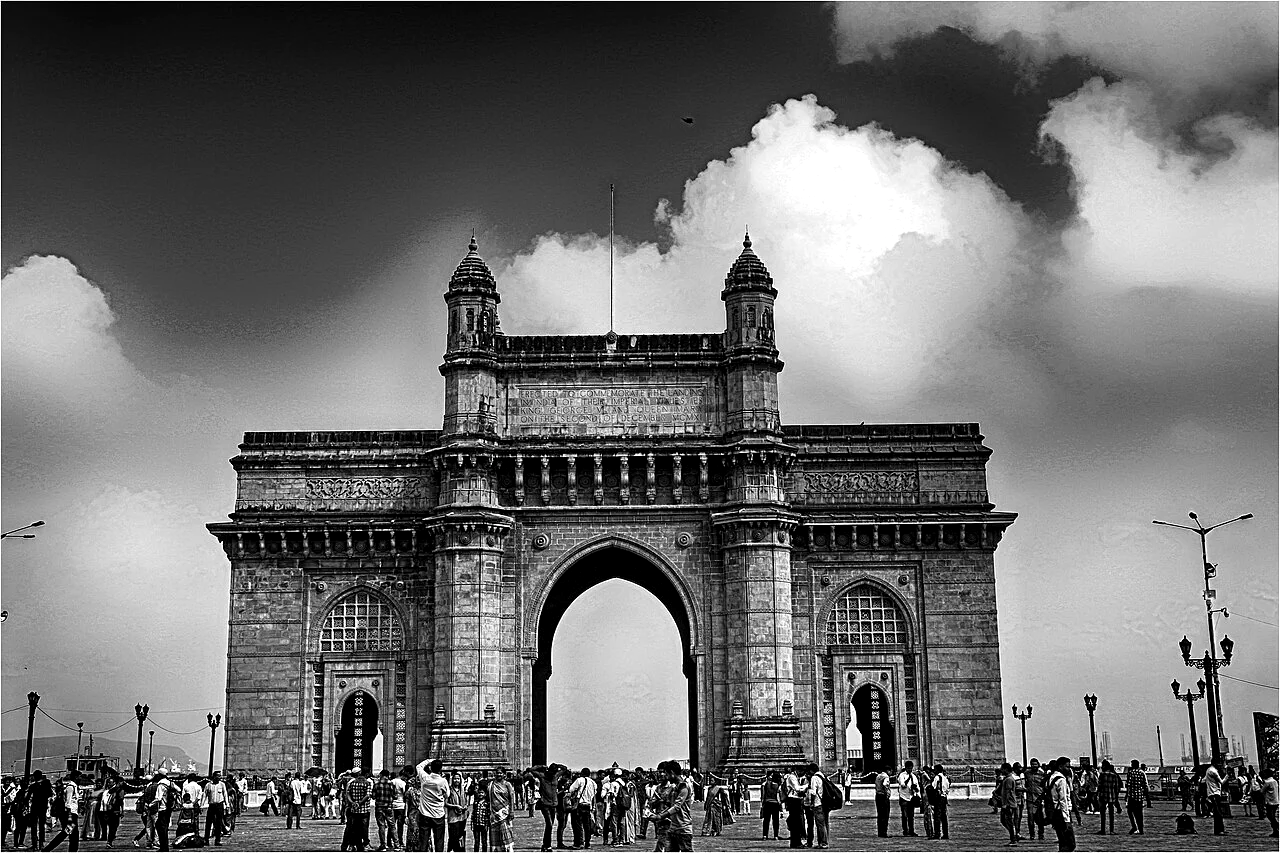
1 George V’s Gateway of India, seen only in cardboard
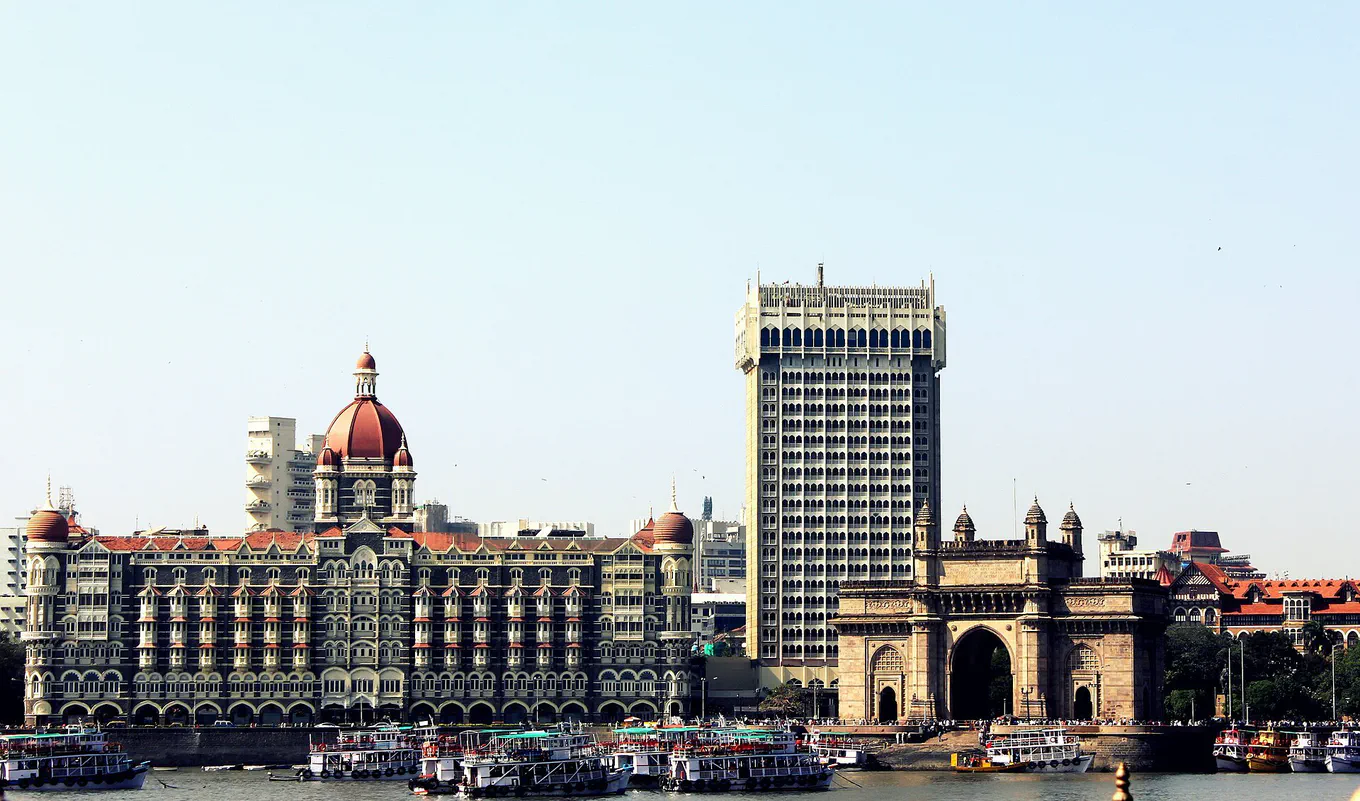
Stand here. The Gateway of India, on the waterfront at Apollo Bunder, opposite the Taj Mahal Palace hotel. Boats to the Elephanta Caves leave from beside it.
The Gateway of India was built to mark the day King George V and Queen Mary landed at Apollo Bunder, 2 December 1911. But the royal couple saw only a cardboard model, because building didn’t start until 1915. The arch was finished in 1924. It had stood less than a quarter of a century when, on 28 February 1948, the last British troops to leave India went out through it, to a 21-gun salute. The gate built for a king’s arrival had become the empire’s exit.
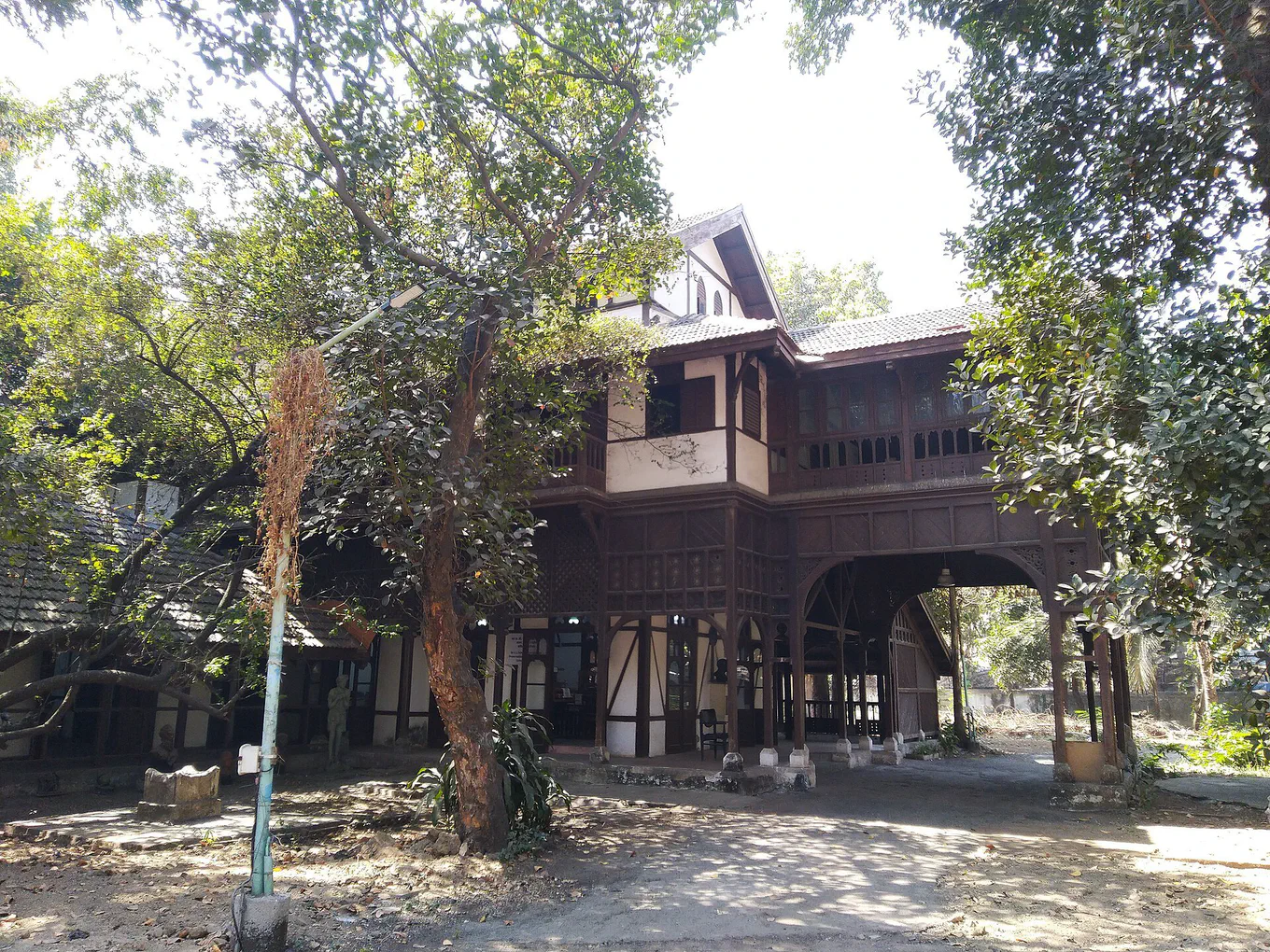
2 Rudyard Kipling’s Bombay childhood at the School of Art
Stand here. The Kipling Bungalow, on the Sir J. J. School of Art campus. His birth cottage was torn down, and this later house carries a plaque.
In 1865, Rudyard Kipling, the future author of The Jungle Book, was born on this campus, where his father taught. A Portuguese nanny and a Hindu bearer told him stories, and he dreamed in the local language. He had to be told, “Speak English now to Papa and Mamma.” At five, the Kipling children were sent to live with a couple in Southsea, England. He called their house “the House of Desolation”. Bombay, he wrote later, was “Mother of Cities to me, / For I was born in her gate”.
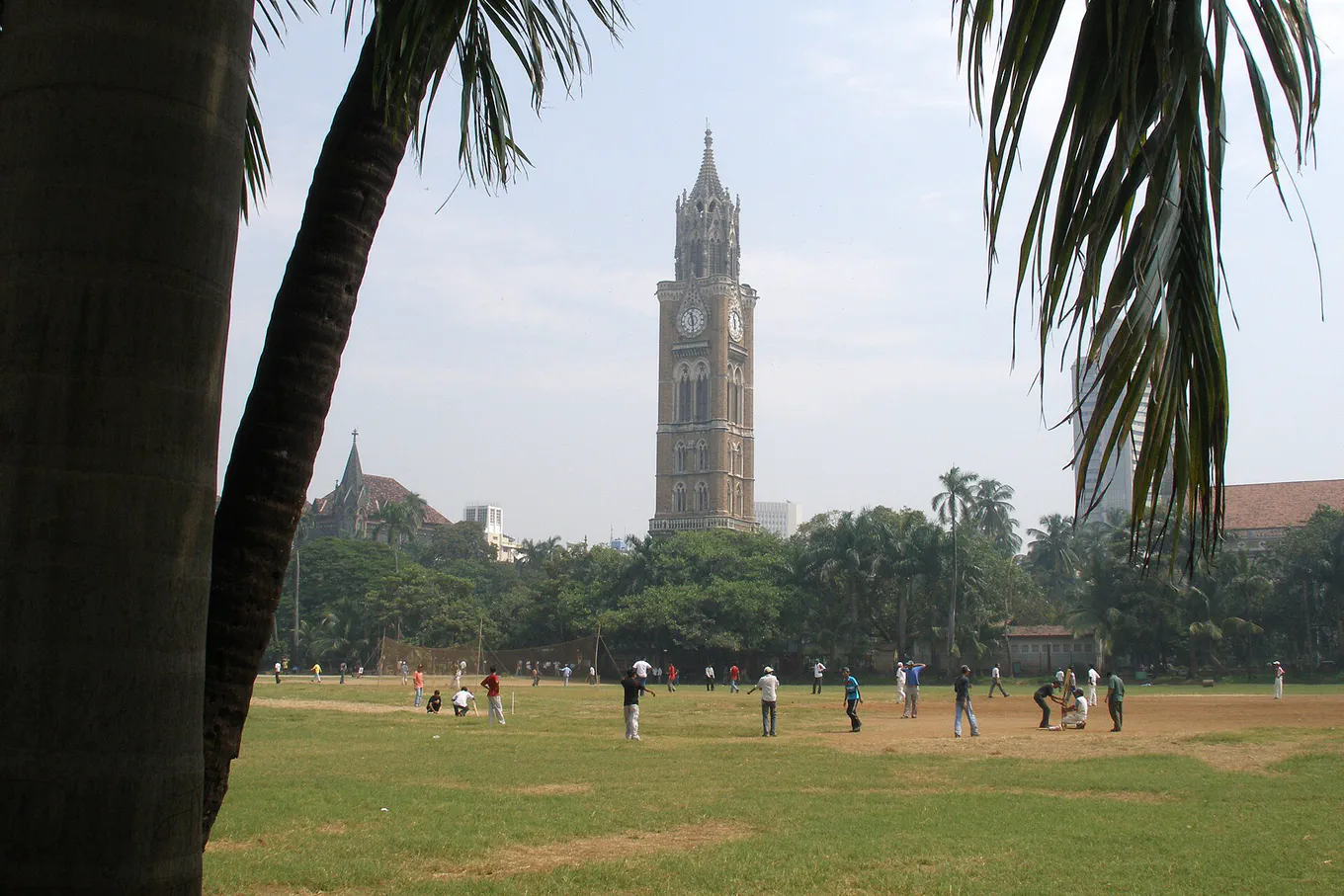
3 The Rajabai Clock Tower and a broker’s blind mother
Stand here. The Rajabai Clock Tower, 85 metres tall, on the University of Mumbai’s Fort campus. It is part of a World Heritage Site.
Sir George Gilbert Scott modelled this tower on Big Ben in London, but it is named after a broker’s mother. Premchand Roychand, the broker who founded the Bombay Stock Exchange, paid part of the cost on one condition. The tower, finished in 1878, had to carry his mother’s name, Rajabai. She was blind, and as a strict Jain she had to eat her dinner before evening. She could never see the clock, but the story goes that its evening bell told her the time without anyone’s help.
4 India’s first film show at Watson’s Hotel, Kala Ghoda
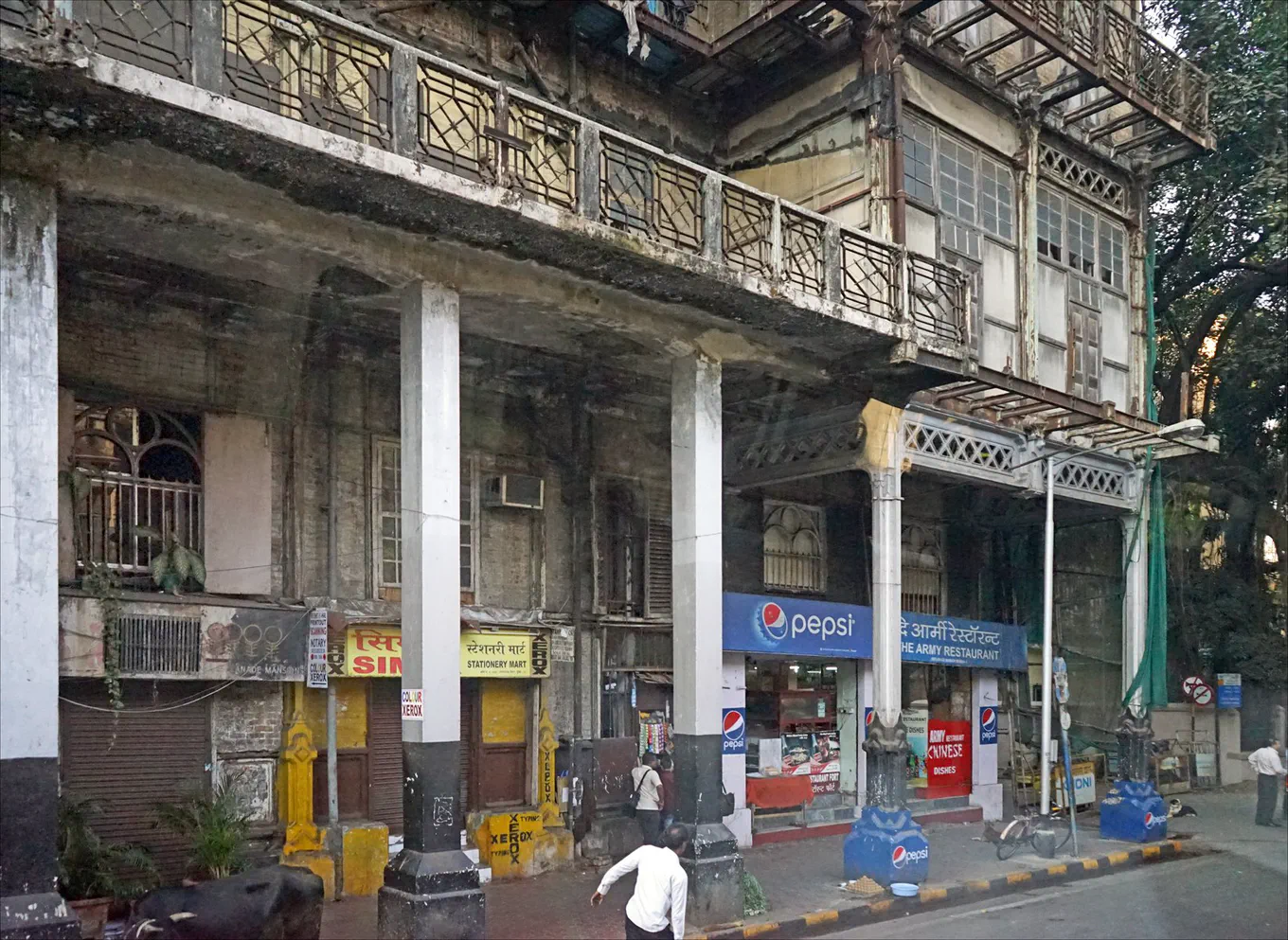
Stand here. Esplanade Mansion in Kala Ghoda, once Watson’s Hotel and India’s oldest surviving cast-iron building.
The Lumière brothers sent Marius Sestier abroad to demonstrate their moving-picture machine, the cinématographe, and on 7 July 1896 he brought it to Watson’s Hotel. He showed six of their short films, the first moving pictures seen in India. In Bombay, Sestier also shot films of his own. But French customs opened the package of undeveloped film, and the Lumières, unhappy with the quality, rejected his films. Sestier moved on to Sydney. Bombay had watched its first moving pictures, but his pictures of Bombay never made the Lumière catalogue.
5 Gandhi’s “Do or Die” speech at Gowalia Tank Maidan
Stand here. August Kranti Maidan, the park once called Gowalia Tank Maidan, in Grant Road West. Now a playground, it has a white marble martyrs’ monument.
Mahatma Gandhi gave his Quit India speech here on 8 August 1942, calling on the British to leave. Speaking in Hindustani to the All India Congress Committee, he said, “The mantra is: ‘Do or Die’. We shall either free India or die in the attempt.” Within hours, almost the entire Congress leadership was in prison without trial. Gandhi was held at the Aga Khan Palace in Pune, with his wife, Kasturba. He was released in May 1944. Kasturba never left. She died there, a prisoner.
Midnight’s Children(Salman Rushdie, 1981). A novel. The Sinais buy their house in Breach Candy from an Englishman who makes buyers live as the English did until independence.
Such a Long Journey(Rohinton Mistry, 1991). A novel. Bombay in 1971, among the residents of the Khodadad Building, a fictional housing block.
Shantaram(Gregory David Roberts, 2003). A novel. The Leopold Cafe, a restaurant and bar on Colaba Causeway, comes up again and again in it and its sequel.
Behind the Beautiful Forevers(Katherine Boo, 2012). Non-fiction. Life in Annawadi, a migrant settlement of some 3,000 people squatting since 1991 on half an acre of airport land.
Films to watch before you visit Mumbai
Salaam Bombay!(Mira Nair, 1988). A film, shot mainly on Falkland Road in the red-light district of Kamathipura, with real street children as its child actors.
Slumdog Millionaire(Danny Boyle, 2008). A film. Jamal promises to wait for Latika every day at five o’clock at Victoria Terminus, where its “Jai Ho” was shot.
Questions
Can you visit the house where Rudyard Kipling was born in Mumbai?
Not the original. Kipling was born on the campus of the Sir J. J. School of Art in 1865, but the cottage was torn down and replaced. The bungalow there now, which carries a plaque, dates from 1882.
Why did Bombay change its name to Mumbai?
The Government of India changed the city’s English name to Mumbai in November 1995, at the insistence of the Marathi nationalist Shiv Sena party, which argued that “Bombay” echoed British colonial rule. Mumbai comes from Mumbadevi, the patron goddess of the native Koli community, and “aai”, Marathi for mother.
Did Jamsetji Tata build the Taj Mahal hotel because Watson’s Hotel turned him away?
Probably not. Watson’s Hotel did admit only Europeans, but the revenge story is almost certainly untrue, and historians call it far too petty a reason for a man like Tata. The likelier reason is his love of the city and his belief that it needed a very good hotel to attract visitors. The Taj opened in 1903.