Mozart came to Munich in 1777 looking for a job and left without one. Three years later, Munich commissioned an opera from him. Quite the turnaround.
— Nick
Henry the Lion founded Munich to control the salt trade; its official founding day is 14 June 1158. Bavaria’s capital and Germany’s third most populous city, it lies on the River Isar about 50 kilometres north of the Alps. Music runs through a king’s scandalous composer and Mozart’s opera for the court, beside a student’s last leaflets, a wedding horse race, and a bomb in a beer-hall pillar.
1 Sophie Scholl and the last leaflets at the university
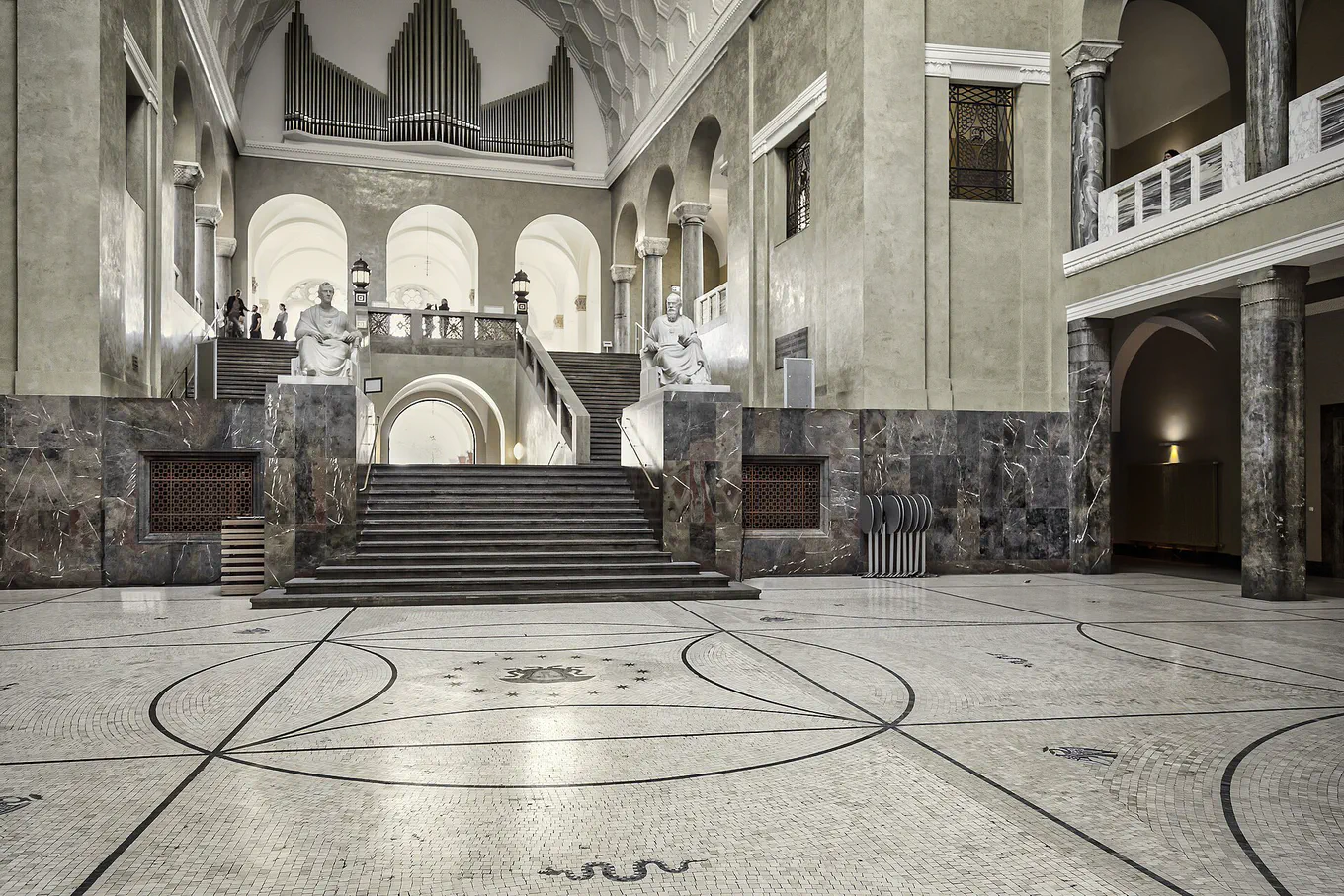
Stand here. The atrium of the university’s main building, on Geschwister-Scholl-Platz. A bronze relief remembers the White Rose, and a free exhibition sits beside it.
Sophie Scholl – The Final Days, nominated for an Oscar, turns on what happened here. On 18 February 1943, Sophie, a 21-year-old student, and her brother Hans carried a suitcase of anti-Nazi leaflets into the building. They belonged to the White Rose, a student resistance group. They spread them through the university, and Sophie flung the last ones into the atrium. The maintenance man saw her and called the Gestapo. Four days later, she and Hans were guillotined. In court, Sophie had said, “Somebody, after all, had to make a start.”
2 The royal wedding horse race that became Oktoberfest
Stand here. The Theresienwiese, south-west of the city centre. The 42-hectare meadow, named after the bride, still holds Oktoberfest every year.
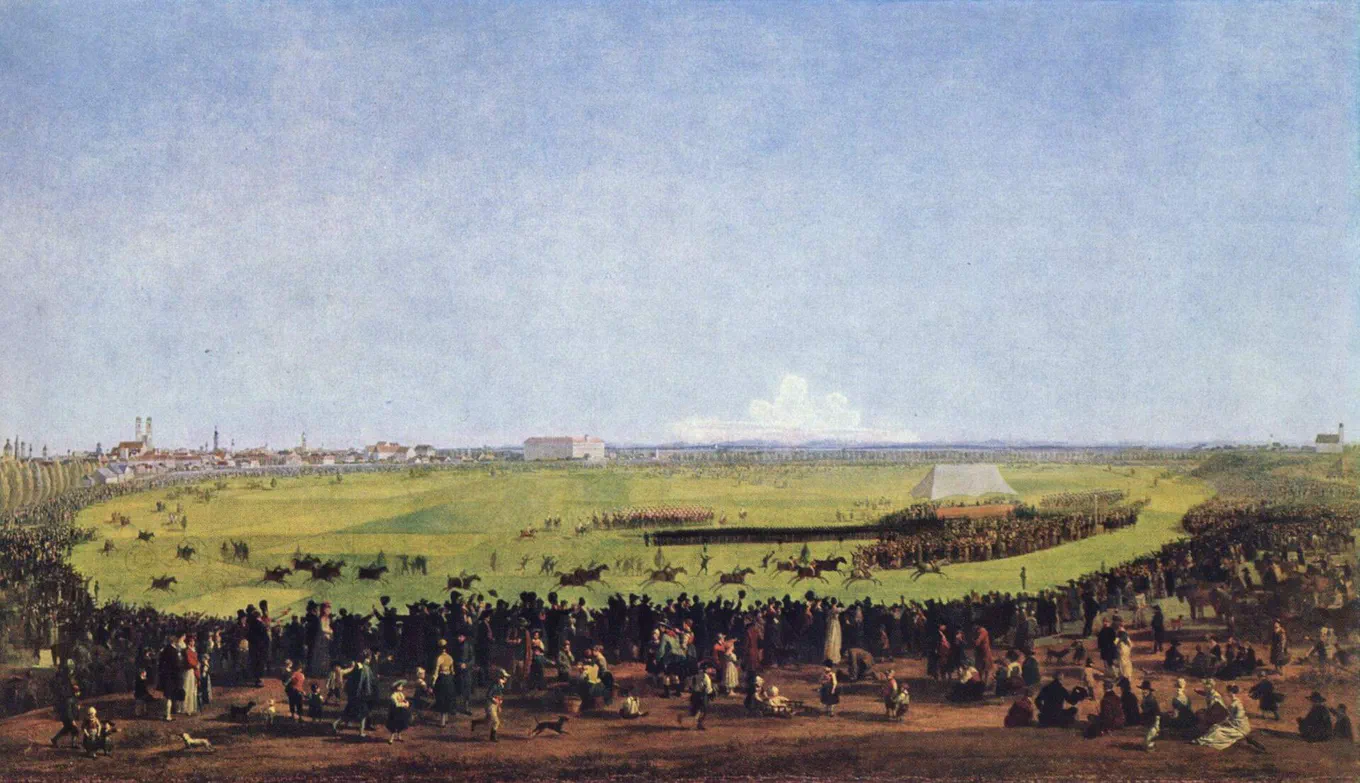
Wilhelm von Kobell’s painting of the first horse race on the Theresienwiese, held for a royal wedding in October 1810.Wilhelm von Kobell / Public domain.
Oktoberfest began as a wedding party. In October 1810, Crown Prince Ludwig, the future Ludwig I, married Princess Therese, and Major Andreas Dall’Armi of the National Guard proposed marking it with a big horse race. Munich invited the public to a meadow outside the city walls, and the race closed five days of celebrations. A coachman, Franz Baumgartner, won it, took a gold medal from the minister, and later claimed the idea as his own. Fourteen years on, the city gave Dall’Armi its first gold citizens’ medal for inventing Oktoberfest.
3 How Ludwig II brought Wagner to the National Theatre
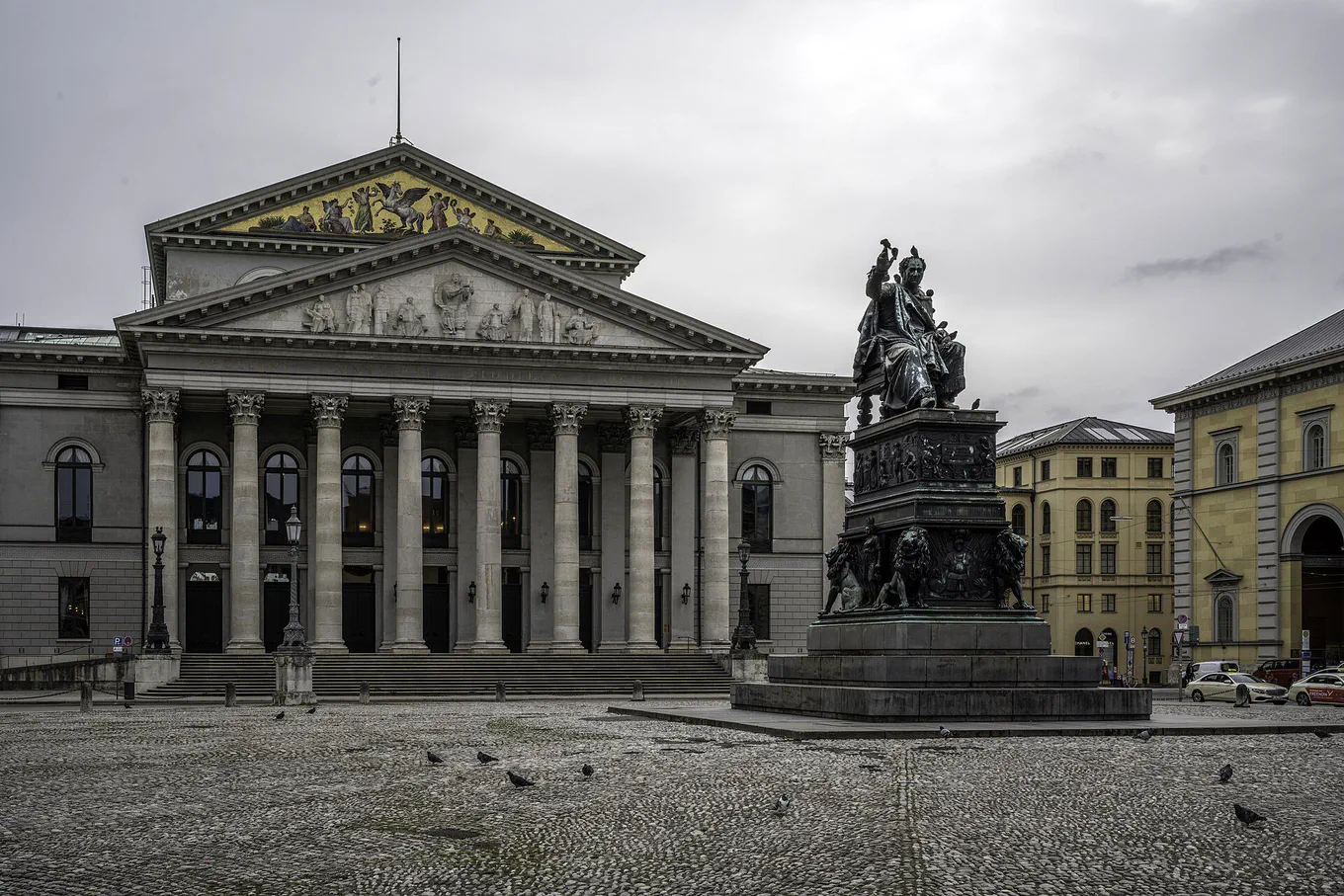
Stand here. The National Theatre on Max-Joseph-Platz, home of the Bavarian State Opera. Gutted in a 1943 air raid, it reopened in 1963.
The National Theatre on Max-Joseph-Platz, home of the Bavarian State Opera, beside the monument to King Maximilian I Joseph.Wilfredor / CC0.
Ludwig II, the Fairy Tale King, became King of Bavaria at 18, and one of his first acts was to send for Richard Wagner. He paid the composer’s debts and offered to stage his operas. In June 1865, Tristan und Isolde opened here, conducted by Hans von Bülow, whose wife, Cosima, was having an affair with Wagner. That April, she had given birth to a daughter, named Isolde. Munich was scandalised, and by December the king had to ask Wagner to leave.
4 Georg Elser’s bomb in the Bürgerbräukeller pillar
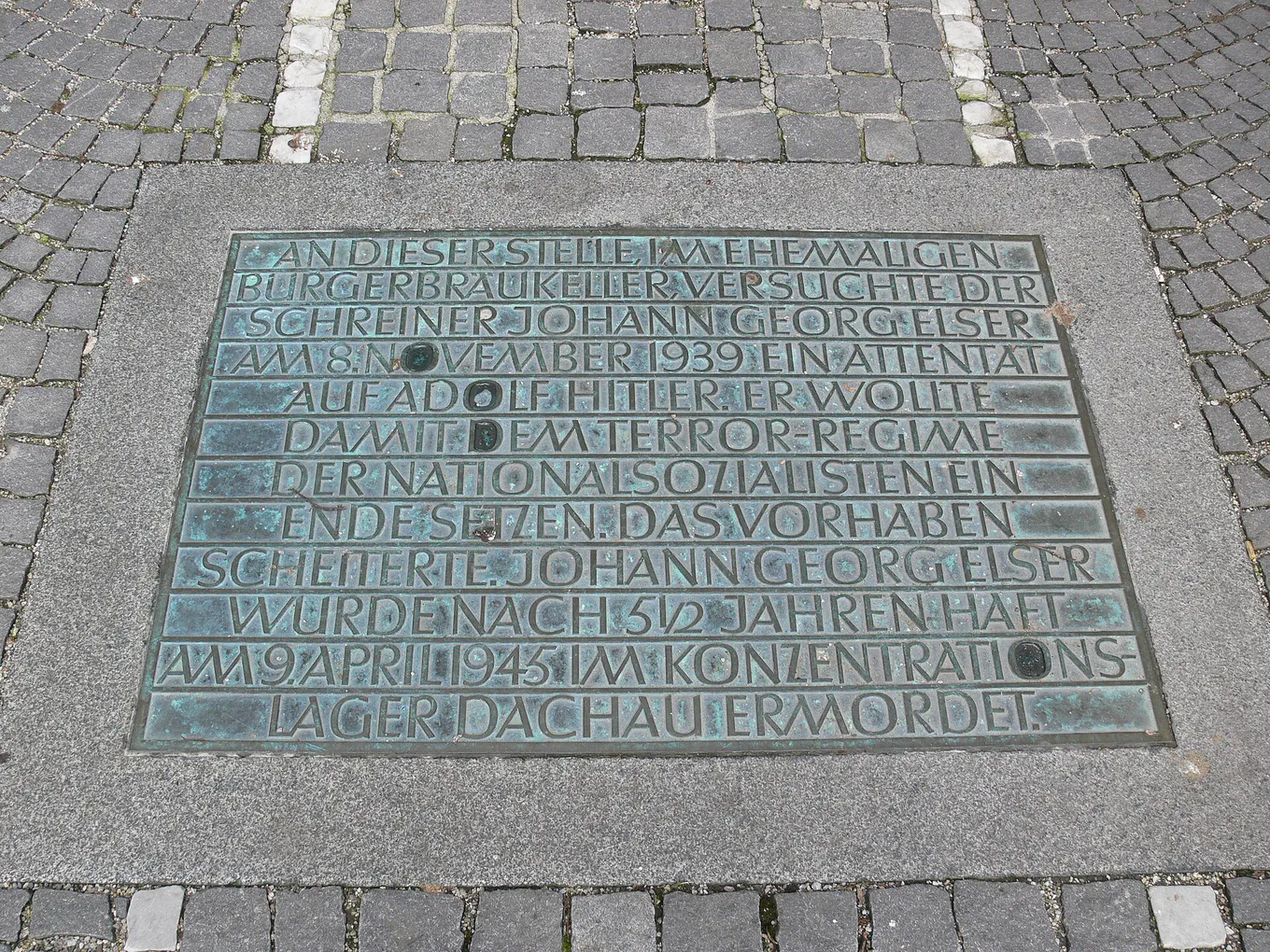
Stand here. The beer hall on Rosenheimer Straße, in Haidhausen, was demolished in 1979. A plaque in the pavement at the GEMA building’s entrance marks the pillar.
The bronze plaque in the pavement in Haidhausen marking the Bürgerbräukeller pillar where Georg Elser hid his bomb.Andreas Praefcke / Public domain.
Every 8 November, Hitler spoke in this hall on the anniversary of his failed coup, and the film 13 Minutes tells how Georg Elser, a carpenter, nearly killed him. In 1939, Elser spent 30 to 35 nights inside, hollowing out the pillar behind the rostrum for a bomb. But Hitler cut his speech short and left at 9.07 p.m. Thirteen minutes later, the bomb went off, killing eight people. Elser was caught 25 metres from the Swiss border and shot dead in April 1945, four weeks before the war in Europe ended.
5 Mozart’s Idomeneo at the Cuvilliés Theatre
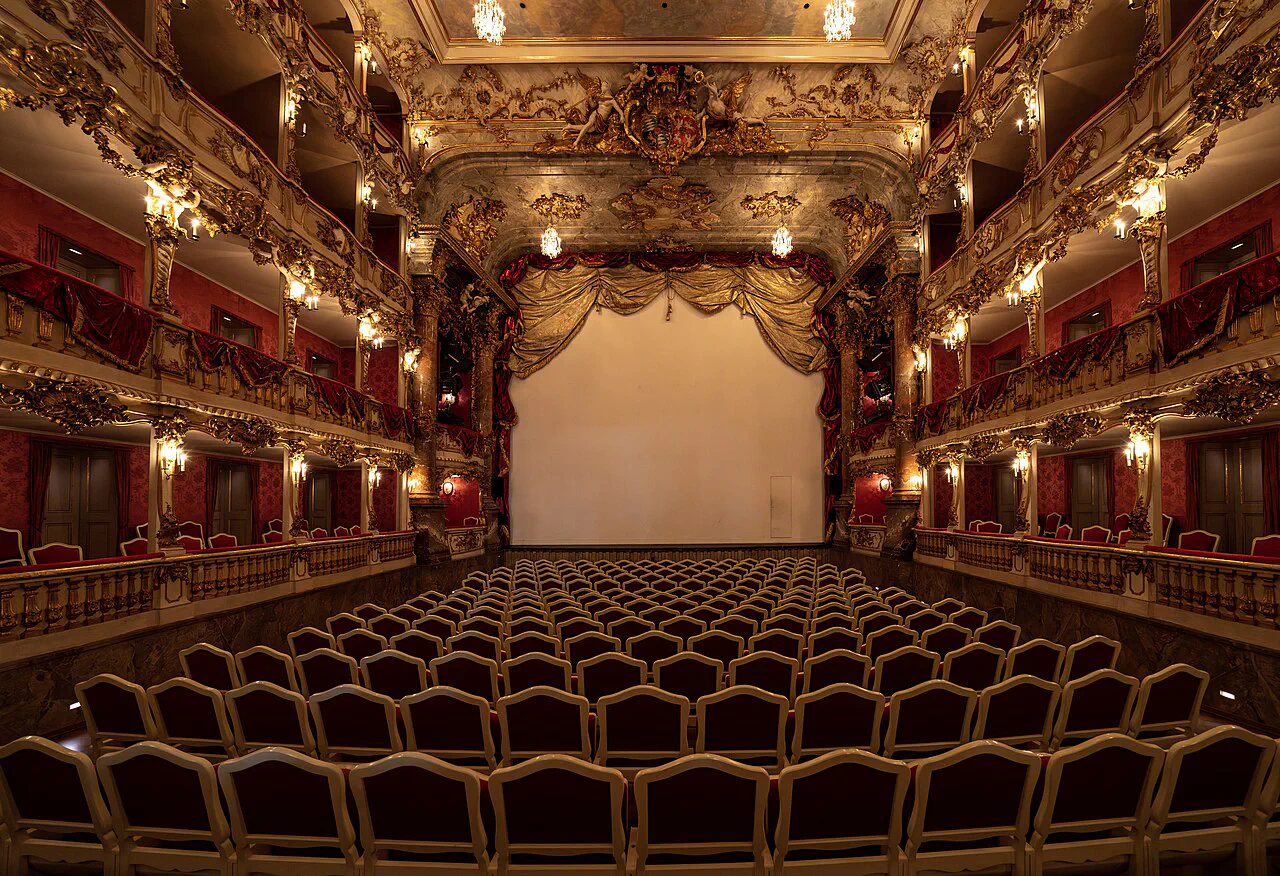
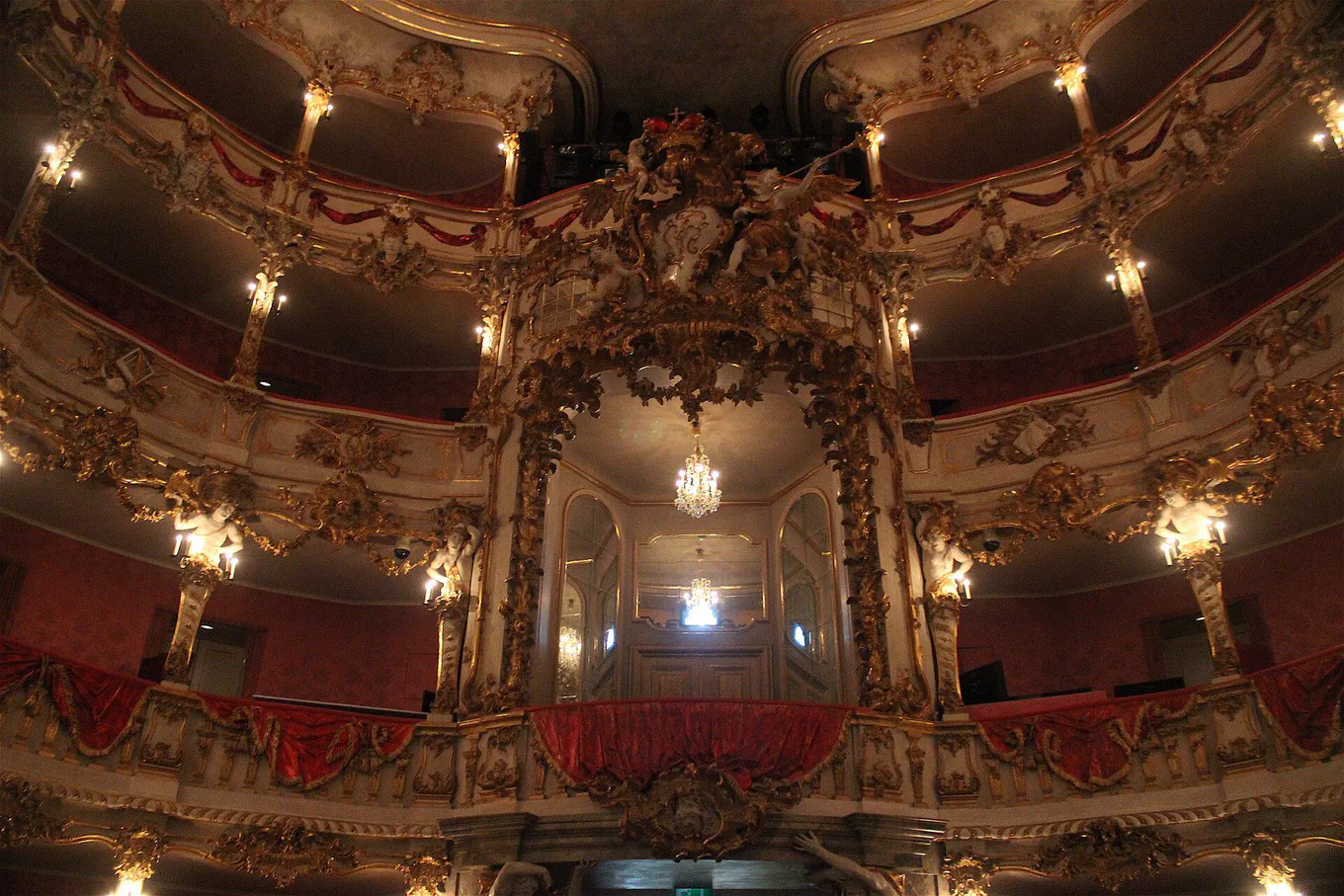
Stand here. The Cuvilliés Theatre in the Residenz, a rococo court theatre that stages opera again.
Mozart came to Munich in 1777, the first stop on his search for a job after he resigned his post in Salzburg. Munich had nothing permanent for him. Three years later, the Elector, Bavaria’s ruler, commissioned an opera from him, and Idomeneo opened in this theatre in January 1781, with “considerable success”. Second World War bombs hit the theatre, but its carved and gilded boxes had been taken down and stored. Rebuilt in another wing, it reopened in 1958, and in 2008 it reopened again with a new Idomeneo.
Pack nothing. Leave Friday.
Every Friday, I write a free letter, Journey, that takes us on a trip through places, stories, and ideas.
Munich(Robert Harris, 2017). A novel set over four days in September 1938, around the Munich Agreement, signed in the Führerbau.
Gladius Dei(Thomas Mann, 1902). A novella set around an art dealer’s shop window near Odeonsplatz and the Theatine Church.
Films to watch before you visit Munich
Sophie Scholl – The Final Days(Marc Rothemund, 2005). A film. Sophie pushes leaflets over a balustrade in the university’s main building, and the janitor spots her.
13 Minutes(Oliver Hirschbiegel, 2015). A film. Christian Friedel plays Georg Elser, whose bomb in the Bürgerbräukeller, in Haidhausen, went off 13 minutes after Hitler left.
Munich – The Edge of War(Christian Schwochow, 2021). A film of Robert Harris’s novel, shot partly in Munich, about the agreement signed in the Führerbau.
Questions
Can you visit the White Rose memorial in Munich?
Yes. The DenkStätte Weiße Rose, a free exhibition, is beside the atrium of the university’s main building, at Geschwister-Scholl-Platz 1. It opens Monday to Friday, 10.30 a.m. to 4.30 p.m., and Saturday, 11.30 a.m. to 4 p.m. Outside the main entrance, a memorial set into the ground shows the group’s leaflets.
Why does Oktoberfest start in September?
The first festival, in October 1810, celebrated a royal wedding. During the 19th century, the opening moved into late September to take advantage of warmer evenings, so only the final days now fall in October. It starts on the first Saturday after 15 September and ends on the first Sunday in October.
Where does the name Munich come from?
From monks. Munich began as a small 10th-century monastic settlement called zu den Munchen, “to the monks”. Henry the Lion founded the town around 1158 to control the salt trade, and 14 June 1158 is taken as its official founding day.