Muscat is the capital and most populous city of Oman, on the Gulf of Oman near the Strait of Hormuz. The Portuguese arrived in 1507 and ruled it for almost 150 years. Its stories here are a storekeeper who turned on a Portuguese fort, a sultan overthrown by his son, a ship sewn together with coconut rope, and an opera house that opened with Plácido Domingo conducting.
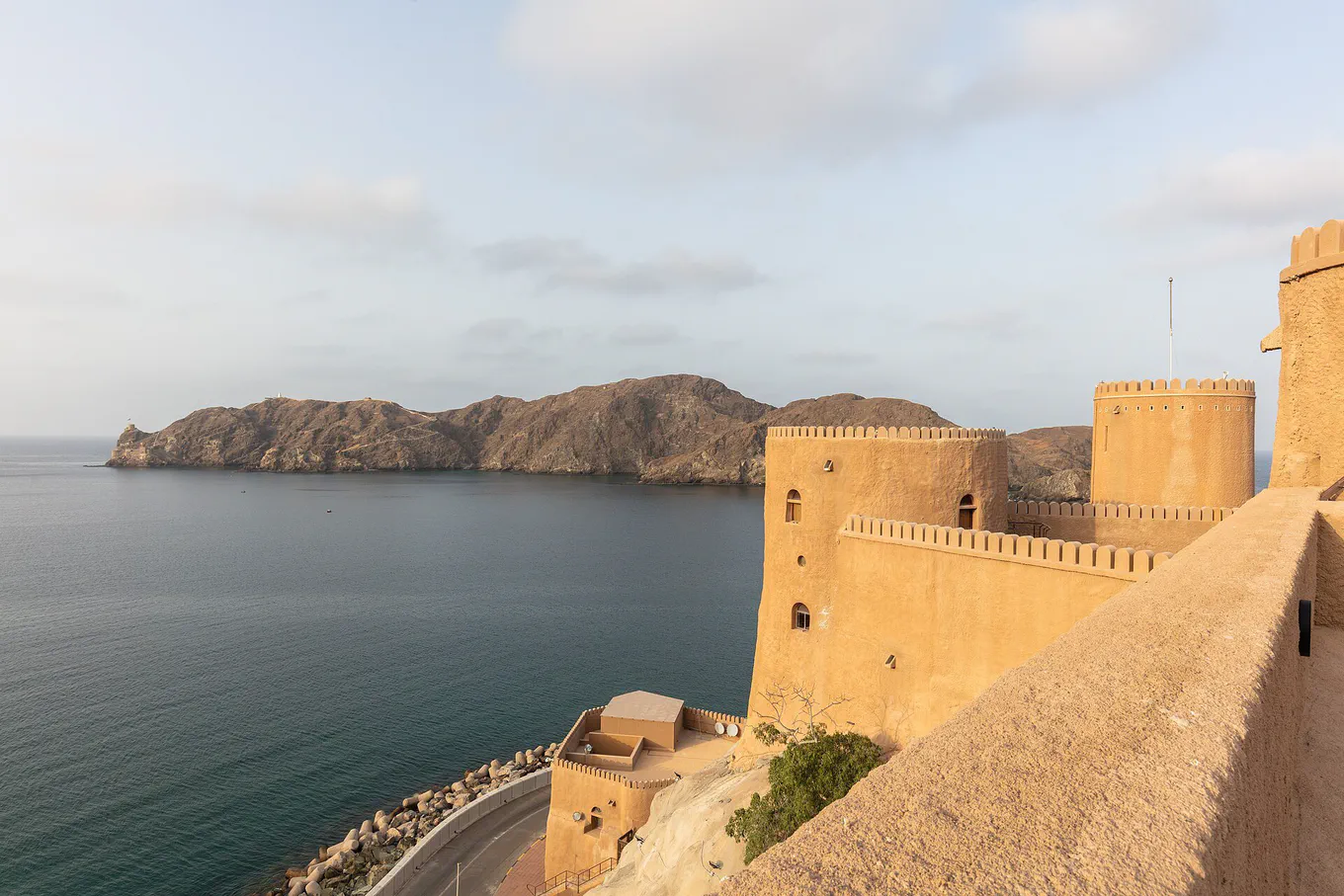
One account of how Portuguese Muscat fell begins with a marriage proposal. The fort’s captain, Pereira, asked to marry the daughter of Narottam, an Indian who ran its storehouse (a merchant, in another account). Narottam was unhappy, and he went in secret to the Omani Imam, who told him to spoil the fort’s gunpowder. He did. While the soldiers were celebrating Christmas, the Imam attacked after the dawn prayer. On 23 January 1650, the Portuguese surrendered, and almost 150 years of their rule in Muscat ended.
2 Muscat’s locked gates and the fall of Said bin Taimur
Stand here. Muscat Gate, on Al Saidiya Street, the entrance to Old Muscat. A museum of Oman’s history sits above the gate.
Until the mid-20th century, Muscat’s gates shut three hours after dusk, and anyone out had to carry a lantern. Under Sultan Said bin Taimur, it was forbidden to smoke in public, play football, wear sunglasses, or speak to anyone for more than fifteen minutes. His only son, Qaboos, was kept under virtual house arrest in Salalah. On 23 July 1970, Qaboos overthrew him. His father shot himself in the foot cocking his pistol, then signed his abdication. He spent his last two years at the Dorchester Hotel in London.
3 Tim Severin’s Sindbad ship on a Muscat roundabout
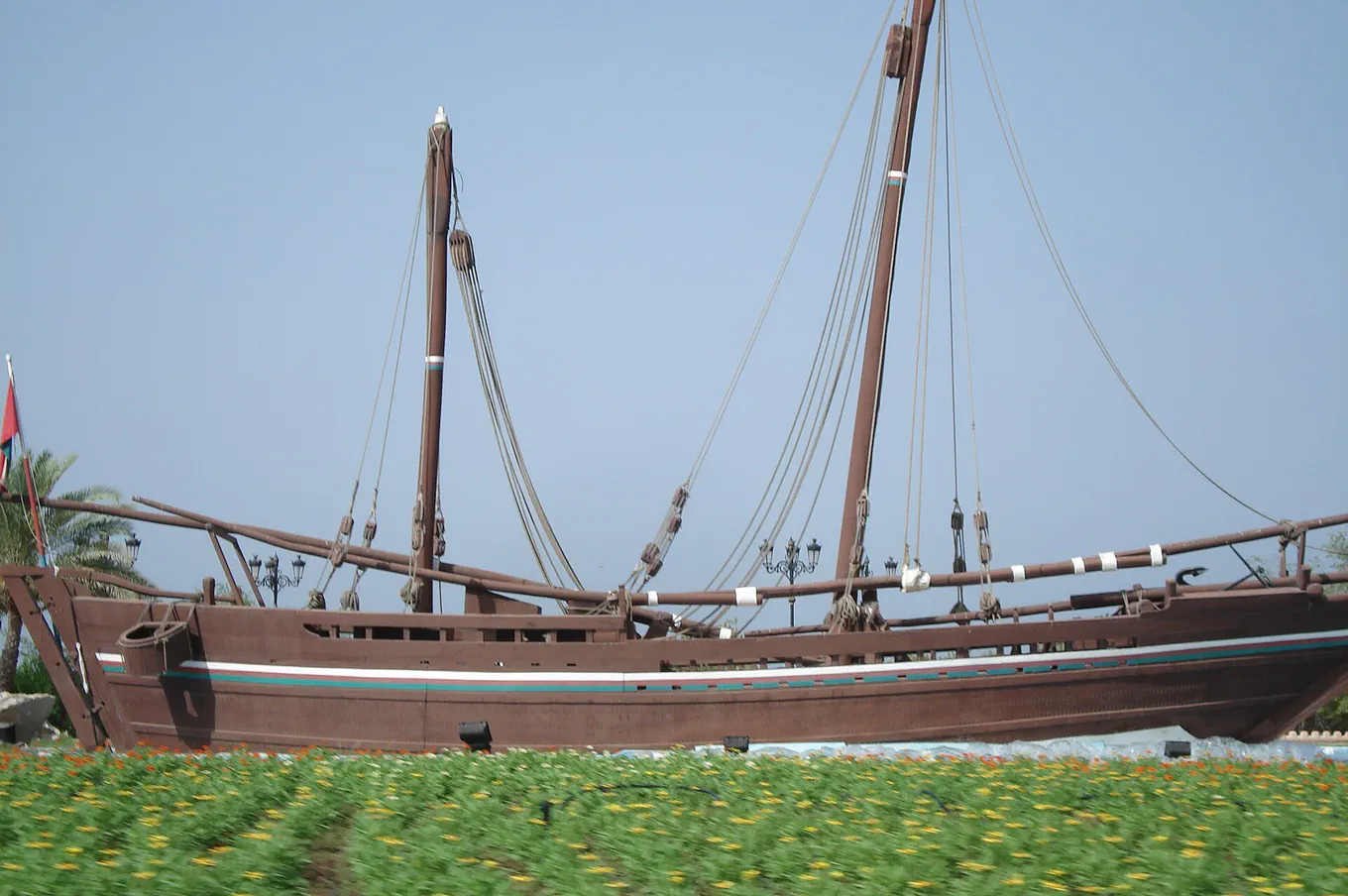
Stand here. The Al Bustan Roundabout in Qantab, near the Al Bustan Palace Hotel. The dhow standing on it is the Sohar.
Tim Severin, a British explorer, wanted to prove the voyages of Sindbad the Sailor were rooted in fact. In the dhow yards of Sur, he guided Omani shipwrights building the Sohar, a replica of a ninth-century Arab dhow, its planks sewn with nearly 400 miles of coconut rope and no nails. In November 1980, it set sail for China. The ship was becalmed for nearly a month, food and water ran short, and its 23-metre spar snapped in two. Months later, the Sohar sailed triumphantly up to Canton (Guangzhou).
4 Domingo’s Turandot opens the Royal Opera House Muscat
Stand here. The Royal Opera House Muscat, on Sultan Qaboos Street in Shati Al-Qurm. It seats up to 1,100 people.
On 12 October 2011, Plácido Domingo conducted Puccini’s Turandot to open the Royal Opera House Muscat. Sultan Qaboos had ordered it built. He was an avid fan of classical music, and he had already founded an orchestra inside the Royal Guard, made up entirely of young Omanis. Qaboos had come to power in 1970 by deposing his father. That year, the whole of Oman had three primary schools, one private hospital, and ten kilometres of paved road.
Pack nothing. Leave Friday.
Every Friday, I write a free letter, Journey, that takes us on a trip through places, stories, and ideas.
The Sindbad Voyage(Tim Severin, 1982). A memoir. Severin’s account of sailing the Sohar, the sewn dhow now on the Al Bustan Roundabout, from Oman to China.
Of Sea and Sand(Denyse Woods). A novel set in and around Muscat, from the narrow streets and small shops of Old Muscat to its Portuguese forts.
Sultan in Oman(Jan Morris, 1957). A memoir of travelling with the Sultan from Salalah to Muscat, on the Sultan’s first visit to the interior of his own country.
The Raven of Ruwi and Other Stories from Oman(Hamoud Saud, trans. Zia Ahmed, 2026). Short stories. A narrator wanders the city’s commercial district, where Indian music drifts from balconies.
Films to watch before you visit Muscat
Once Upon a Time in Mumbai Dobaara!(Milan Luthria, 2013). A Hindi gangster film with Akshay Kumar, shot partly on the corniche in Qurum, on a beach in Qantab, and at the Shangri-La’s Barr Al Jissah resort.
Singam(Hari, 2010). A Tamil-language action thriller starring Suriya alongside Anushka Shetty. The song “En Idhayam” was shot at Qantab Beach in Muscat.
Badass Ravi Kumar(Keith Gomes, 2025). A Hindi-language action film. Scenes set in Muscat see Himesh Reshammiya’s Ravi Kumar face off against goons led by the dance-loving don Carlos Pedro Panther.
Questions
Where is Tim Severin’s Sindbad ship in Muscat?
On the Al Bustan Roundabout in Qantab, near the Al Bustan Palace Hotel. The dhow there is the Sohar, built in the dhow yards of Sur, south of Muscat. In 1980, Severin and a crew of Omanis set out in it from Oman for Guangzhou, in China, to recreate the voyages of Sindbad.
What was Al Jalali Fort?
Al Jalali was built by the Portuguese and completed with its twin, Al Mirani, between 1586 and 1588. The Portuguese surrendered it on 23 January 1650. For much of the 20th century, until the 1970s, it was Oman’s main prison, and in 1983 it was restored as a private museum of Omani cultural history.
What is Al Alam Palace?
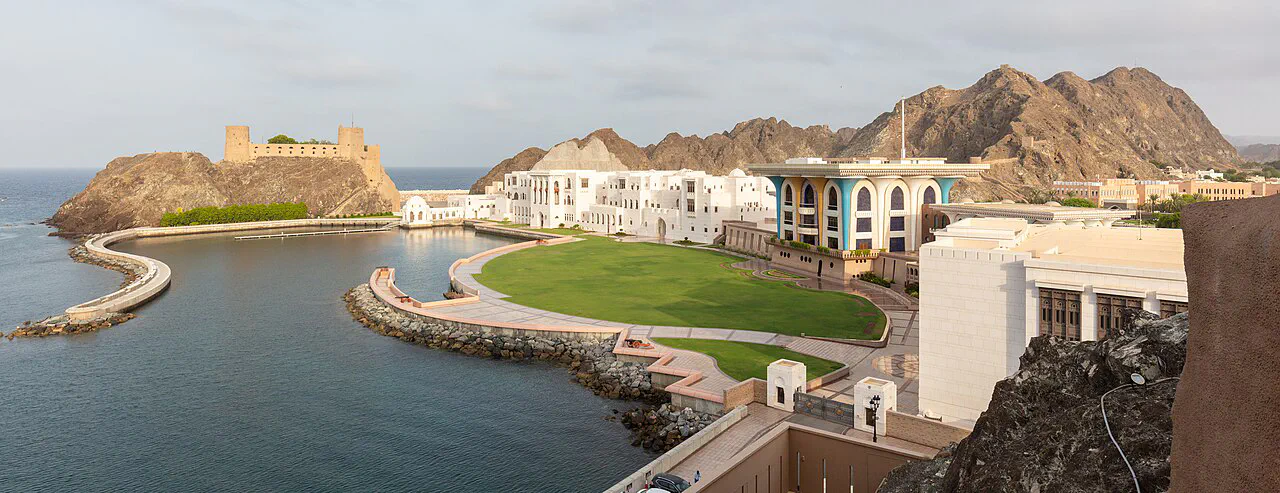
Al Alam Palace stands in Old Muscat between the two Portuguese-built forts, Al Jalali and Al Mirani. Sultan Qaboos commissioned it on the site of an older palace, which was demolished in 1971, and it was built in 1972. Rough Guides calls it Oman’s most flamboyant example of contemporary Islamic design.