Mysore, officially Mysuru since 2014, is a city in the southern Indian state of Karnataka, about 140 km south-west of Bangalore. It was the traditional seat of the Wadiyar kings, whose kingdom lasted from 1399 to 1947. Its stories here are a palace rebuilt after a wedding fire, a yoga school in a palace wing, a novel Graham Greene got into print, a sweet named on the spot, and a queen’s curse.
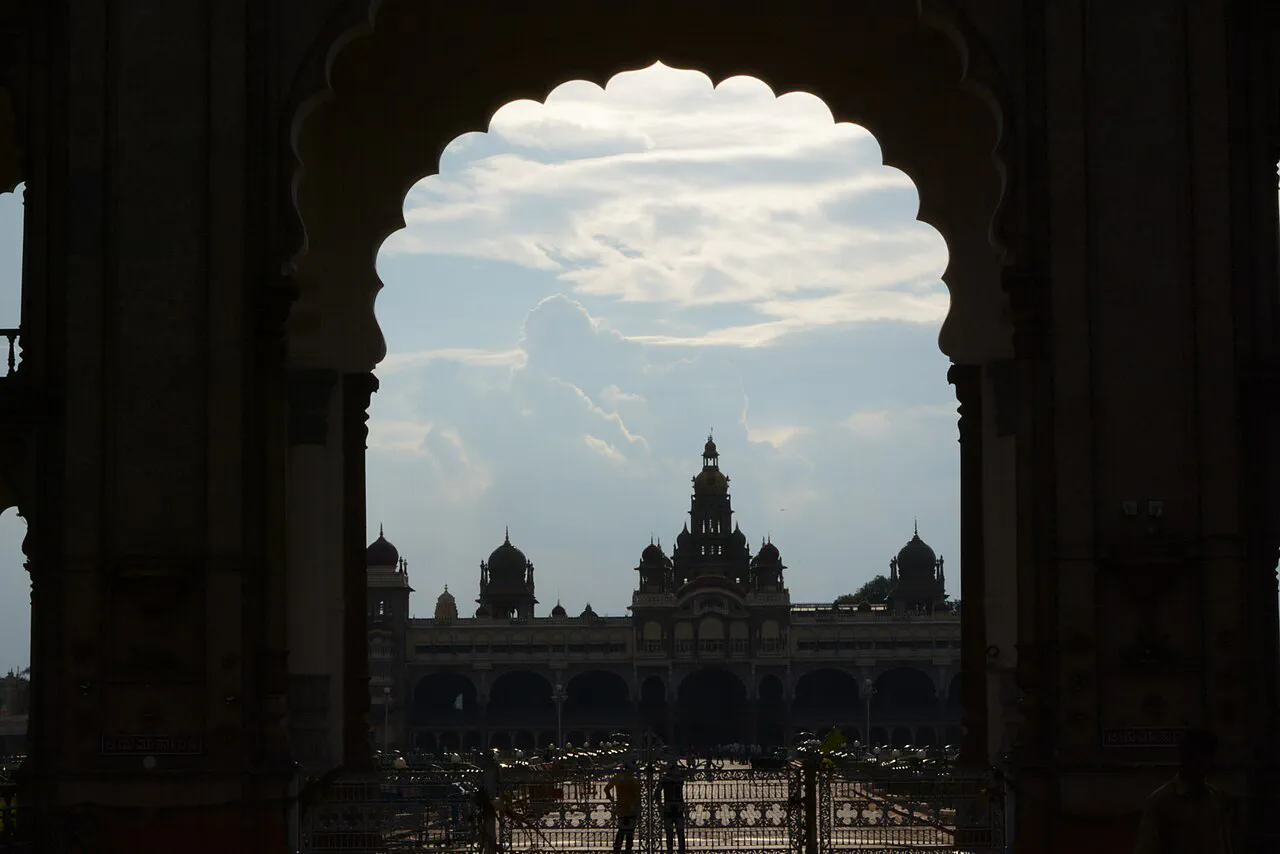
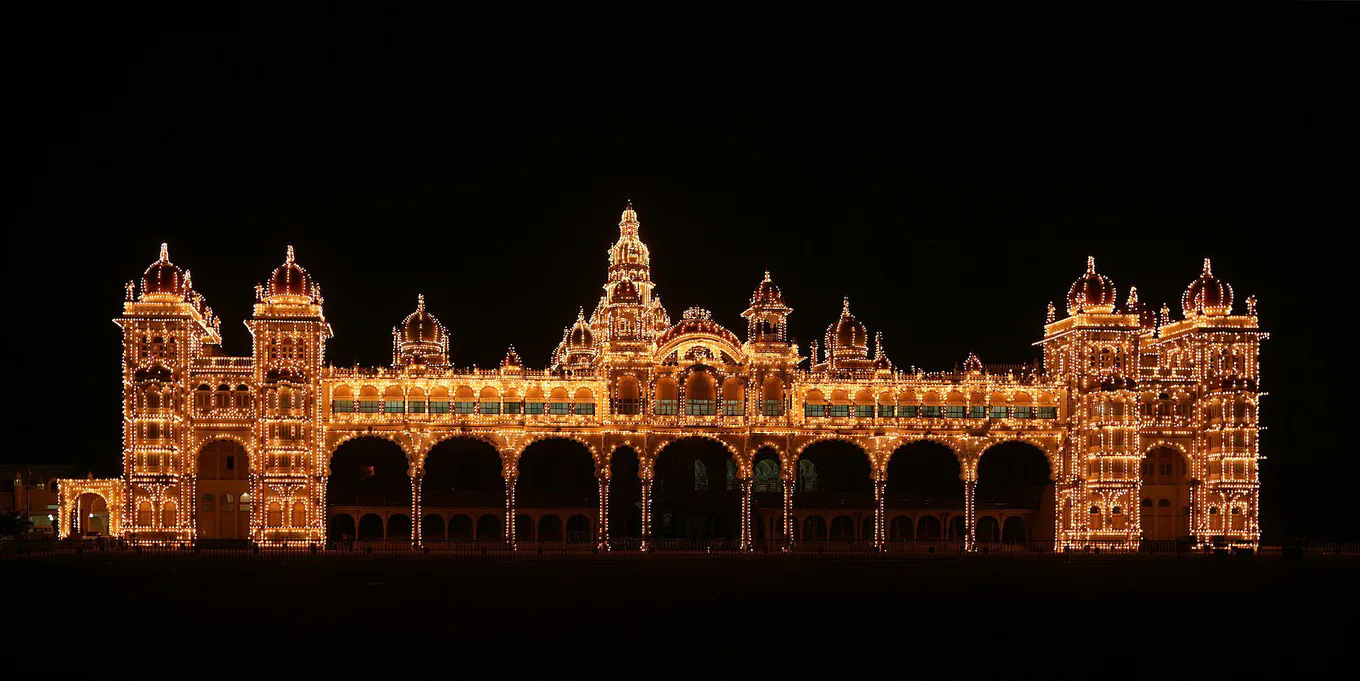
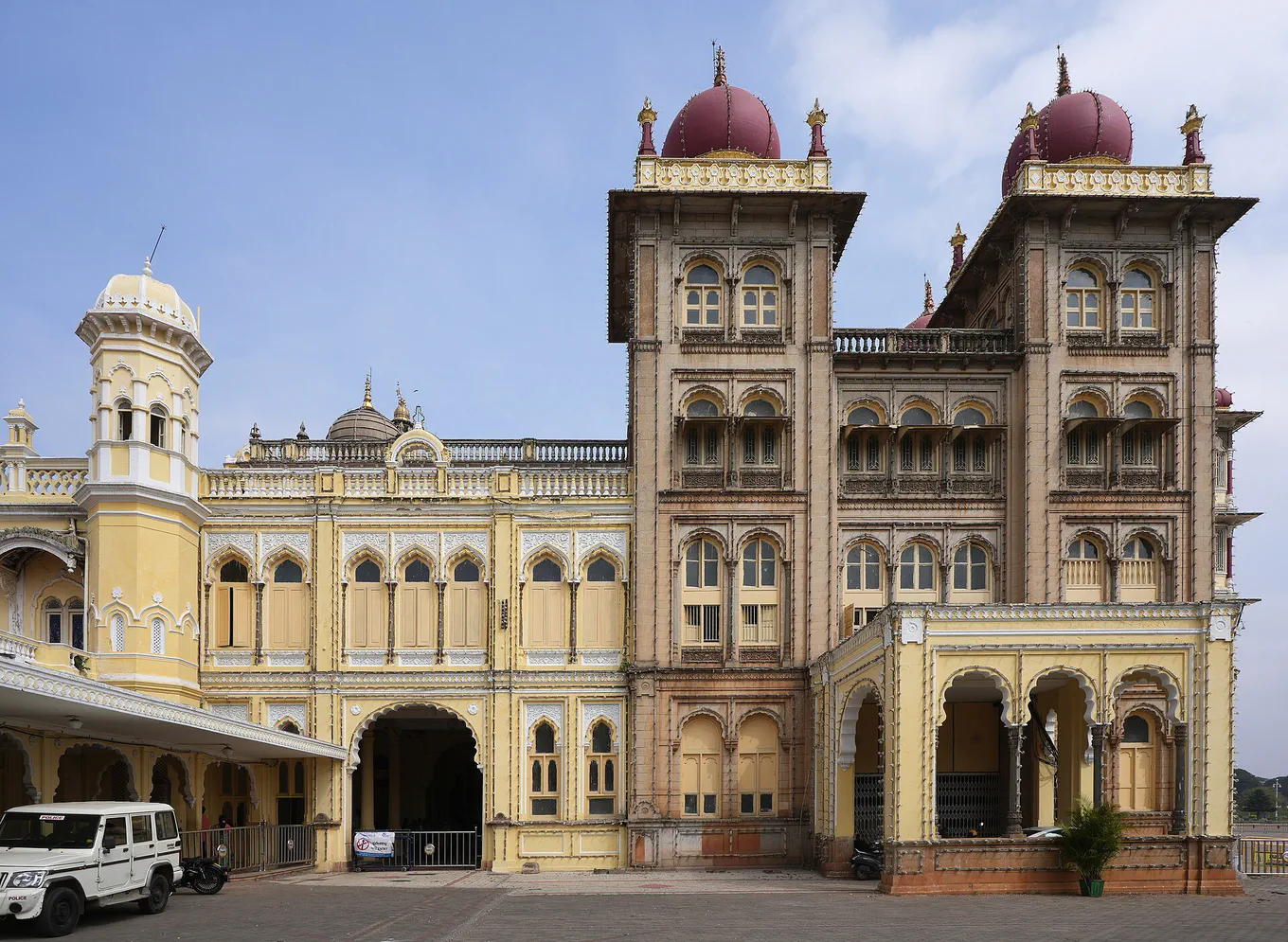
On 20 February 1897, just after the eldest princess’s wedding, fire largely destroyed the northern part of the old Mysore Palace. The maharaja was still a boy, so the rebuilding fell to the queen regent, Kempananjammanni Devi. She chose Henry Irwin, a British architect, because his Renaissance-inspired design impressed her. Building took fifteen years, and the cost, projected at two and a half million rupees, ballooned to more than four million. On each of the nine nights of Navaratri, about 100,000 bulbs light the palace the fire made room for.
2 Krishnamacharya’s yoga school in the Jaganmohan Palace
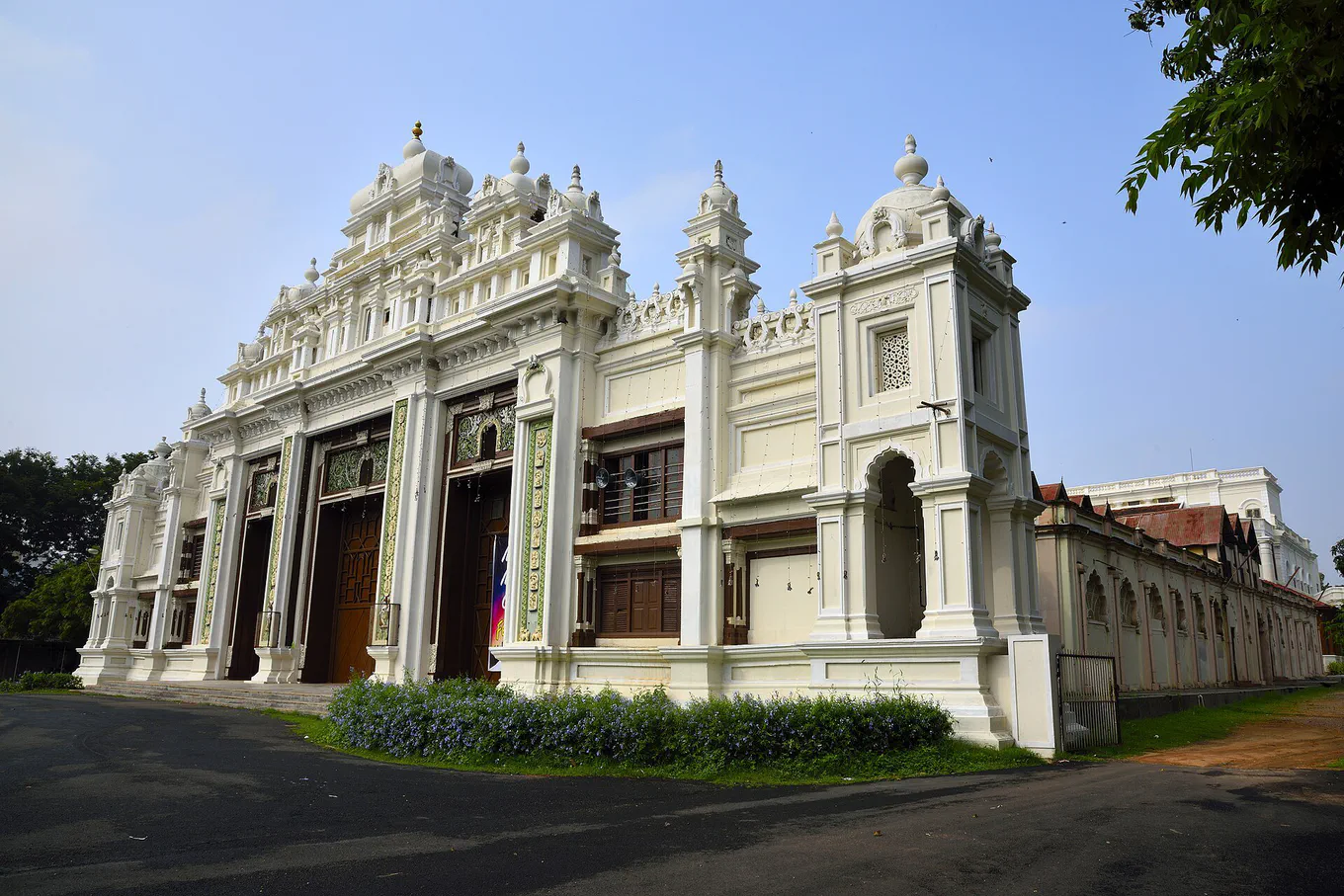
Stand here. The Jaganmohan Palace, about 200 m west of Mysore Palace. It became an art gallery in 1915.
Ashtanga and Iyengar yoga trace back to Tirumalai Krishnamacharya, who taught here. The maharaja, Krishna Raja Wadiyar IV, wanted yoga promoted, so he asked Krishnamacharya, his family’s teacher, to open a school. It opened in a palace wing on 11 August 1933. Among Krishnamacharya’s pupils were Pattabhi Jois, who popularised Ashtanga, and B. K. S. Iyengar, who founded Iyengar Yoga. But a new government curbed the maharajas’ powers, and the money stopped. In 1950, the school closed. Krishnamacharya is often called the father of modern yoga.
3 R. K. Narayan, Graham Greene and the house in Yadavagiri
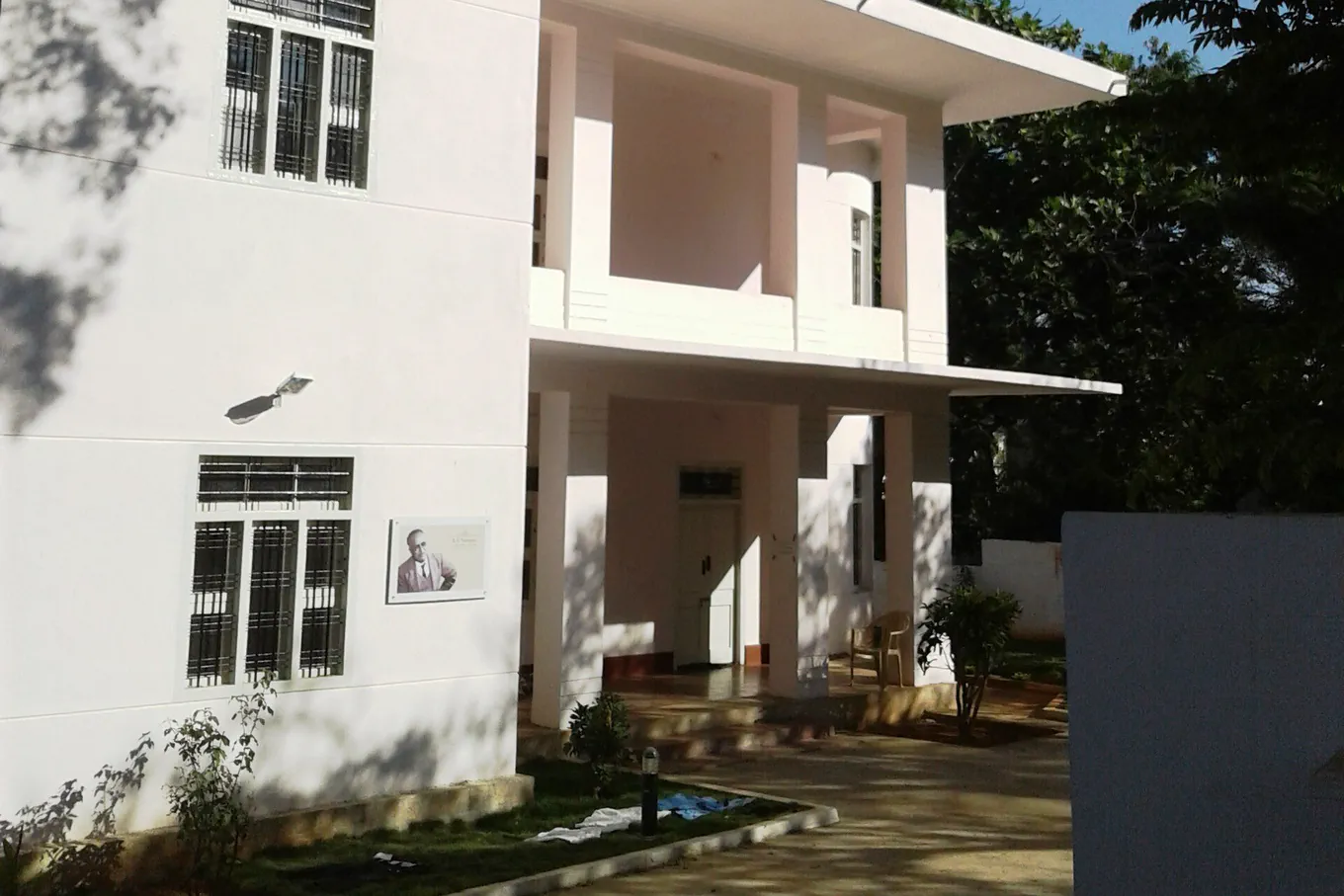
Stand here. R. K. Narayan’s house in Yadavagiri, a memorial since 2016. He wrote in the first-floor room with eight bay windows.
R. K. Narayan’s work became the television series Malgudi Days, but his novel Swami and Friends was rejected by a string of publishers. A friend at Oxford showed the manuscript to Graham Greene, who recommended it to his own publisher. It came out in 1935, and Greene advised Rasipuram Krishnaswami Narayanaswami to shorten his name. In this house, Narayan later wrote a thousand words a day. In 2011, his family sold it to a developer. The demolition had already started when the authorities declared the house a heritage site.
4 Kakasura Madappa and the sweet that took Mysore’s name
Stand here. Sayyaji Rao Road, where the family’s sweet shop moved and became Guru Sweets, run by Madappa’s descendants.
Mysore pak, the sweet of gram flour, sugar, and ghee, began, the story goes, in the palace kitchen of Krishna Raja Wadiyar IV, who died in 1940. Another account names an earlier king. The maharaja loved his food, and his chef, Kakasura Madappa, had made no dessert. Desperate, Madappa experimented with the three, hoping for something unusual. Asked what the dessert was called, he said the first thing that came to mind, “Mysore pak”. Paka means sweet in Kannada, the local language, so he had called it the Mysore sweet.
5 Alamelamma’s curse on the kings of Mysore
Stand here. Back at Mysore Palace, the royal residence of the Wadiyars, the family whose kings Alamelamma cursed.
Four centuries ago, legend says, Raja Wodeyar of Mysore wanted Queen Alamelamma’s jewels. She would part with nothing but a pearl nose ring and threw herself into the Kaveri river. Her curse ran, “Let Talakad become sand … let the Mysore rajas fail to beget heirs.” The old town of Talakad does lie buried under sand. In 2015, the family adopted an heir again, as every other generation had for almost 400 years. A repentant king installed her statue here, and the royal couple worship the woman who cursed their line.
Pack nothing. Leave Friday.
Every Friday, I write a free letter, Journey, that takes us on a trip through places, stories, and ideas.
Yoga Body: The Origins of Modern Posture Practice(Mark Singleton, 2010). A book on the origins of modern posture practice, which closes by examining how Krishnamacharya developed flowing movements (vinyasas) in his Mysore yogashala.
The Smoke is Rising(Mahesh Rao, 2014). A novel set in Mysore. Mahesh Rao’s debut chronicles the daily lives of Susheela, Mala and Uma, with sections on the city’s modernisation.
Films to watch before you visit Mysore
Mayura(Vijay, 1975). A Kannada historical drama film, notable for scenes filmed inside and around the Mysore Palace, and the last movie to be shot inside it.
Lingaa(K. S. Ravikumar, 2014). A Tamil action drama film. Rajinikanth shot British-era scenes in front of the Mysore Palace’s illuminated residential portion, and the crew filmed on Chamundi Hills.
The Sword of Tipu Sultan(Sanjay Khan and Akbar Khan, 1990). A TV series, a fictional portrayal of Tipu Sultan, partly shot at the Premier Studios in Mysore, where a major fire took place during filming in 1989.
Questions
Where was Krishnamacharya’s yoga school in Mysore?
In a wing of the Jaganmohan Palace, about 200 m west of Mysore Palace. The school opened there on 11 August 1933 and closed in 1950. The palace had become an art gallery in 1915, and the last ruling maharaja, Jayachamarajendra Wadiyar, later gave it sixteen paintings by the artist Raja Ravi Varma.
Where does the name Mysore come from?
It is an anglicised form of Mahishuru, “the abode of Mahisha” in Kannada. In legend, Mahisha was killed by the goddess Chamundeshwari, whose temple stands on top of the Chamundi Hills above the city. The city was officially renamed Mysuru, along with twelve other cities, on 1 November 2014.
What is the Jamboo Savari at Mysore Dasara?
The elephant procession of Mysore Dasara, a festival begun in 1610. An elephant carries the idol of the goddess Chamundeshwari in the golden howdah, a 750 kg seat covered in 85 kg of gold sheet, from the palace through the Balarama gate and five km to Bannimantap. Until royalty was abolished, the kings of Mysore rode in it.