My picture of Hong Kong was built by James Clavell’s Tai-Pan, which opens as Britain takes the island after the First Opium War. The paperwork happened here. In 1842, after talks at Nanjing’s Jinghai Temple, China’s envoys signed Hong Kong Island away aboard a British warship.
— Nick
Nanjing, capital of Jiangsu province, sits in eastern China’s Yangtze River Delta. It served dynasties, kingdoms, and republics as a capital between the 3rd century and 1949, and took its name, “Southern Capital”, in 1368. Its stories are a novelist’s ruined family, a temple where Hong Kong’s fate was talked over, a president who gave the job away, a writer in an attic, and a Nazi who sheltered refugees.
1 Dream of the Red Chamber and Nanjing’s imperial silk works
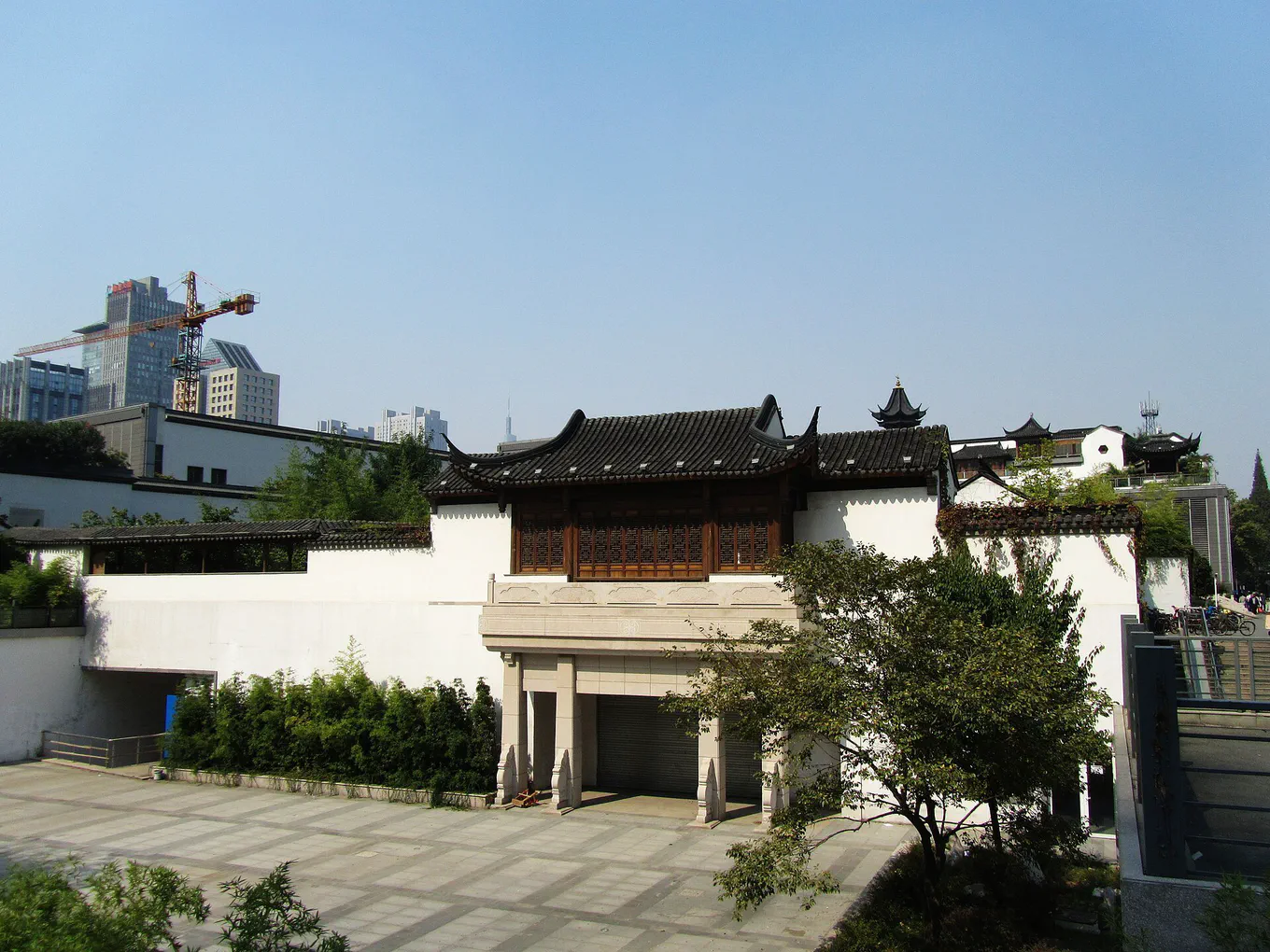
Stand here. The Jiangning Imperial Silk Manufacturing Museum, on Changjiang Road, built on the ruins of the Qing silk office where Cao Xueqin was born.
Dream of the Red Chamber, one of China’s Four Great Classical Novels, grew out of a family’s fall in Nanjing. For three generations, Cao Xueqin’s family ran the emperor’s silk works here, rich enough to host the Kangxi Emperor four times. But Kangxi’s son, the Yongzheng Emperor, turned on them. In 1727, he seized their properties and jailed a family member. The young Cao grew up poor in Beijing. His novel follows the rise and decline of a family much like his own, and he died with it nearly finished.
2 Jinghai Temple and the treaty that gave Britain Hong Kong
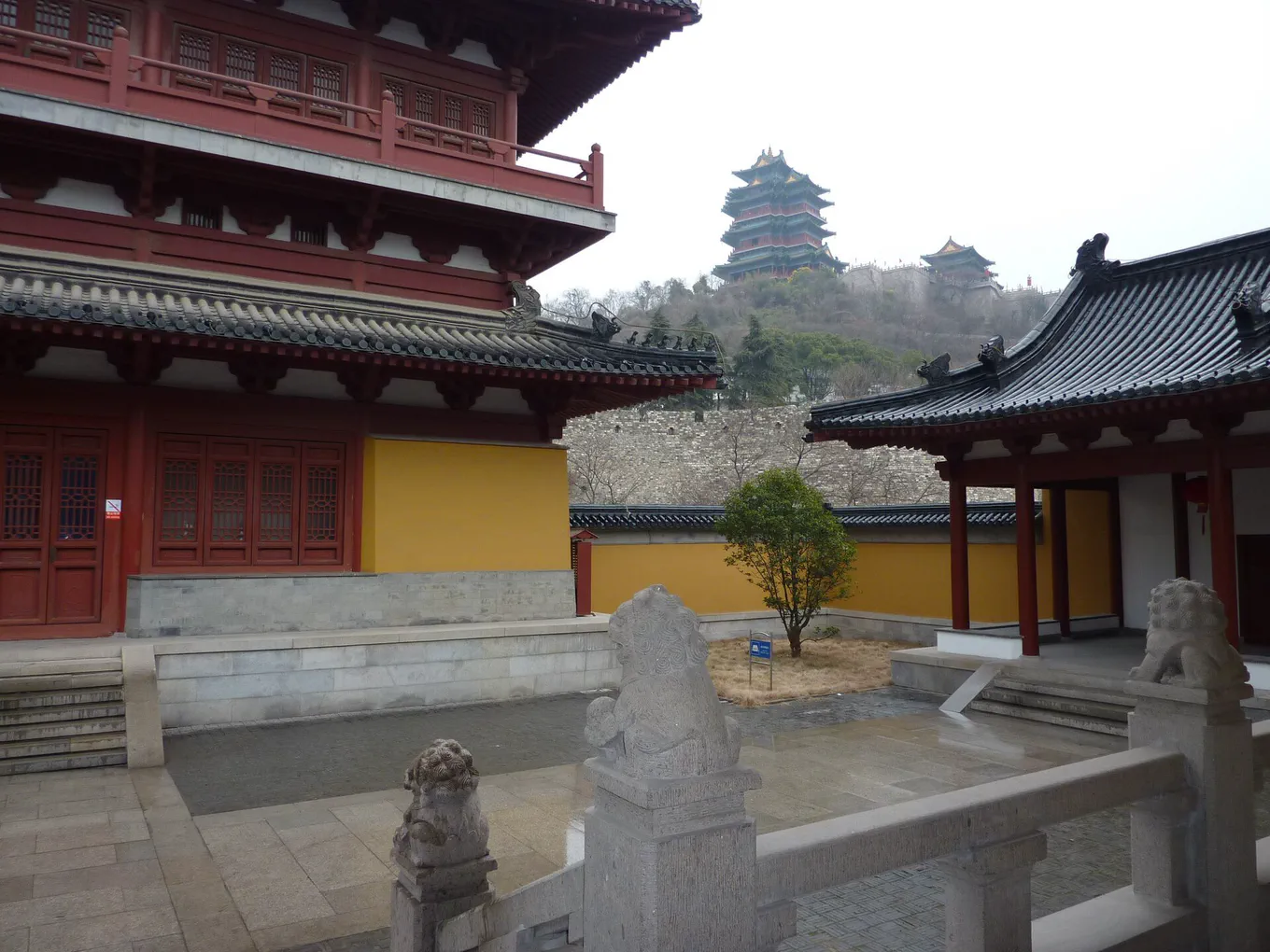
Stand here. Jinghai Temple, southwest of Shizi Mountain, rebuilt in the late 1980s, now a treaty museum. Only a stone tablet survives from the original.
In 1842, the terms that made Hong Kong British were talked over in this temple. Britain had won the First Opium War, and its warship HMS Cornwallis lay in the Yangtze off the city. The Qing court sent two commissioners, but they could not act on their own, and Britain’s victory let it impose a one-sided treaty. On 29 August, after talks aboard the ship, China’s envoys signed away Hong Kong Island. In 1996, to celebrate Hong Kong’s return, the city rebuilt the temple yet again.
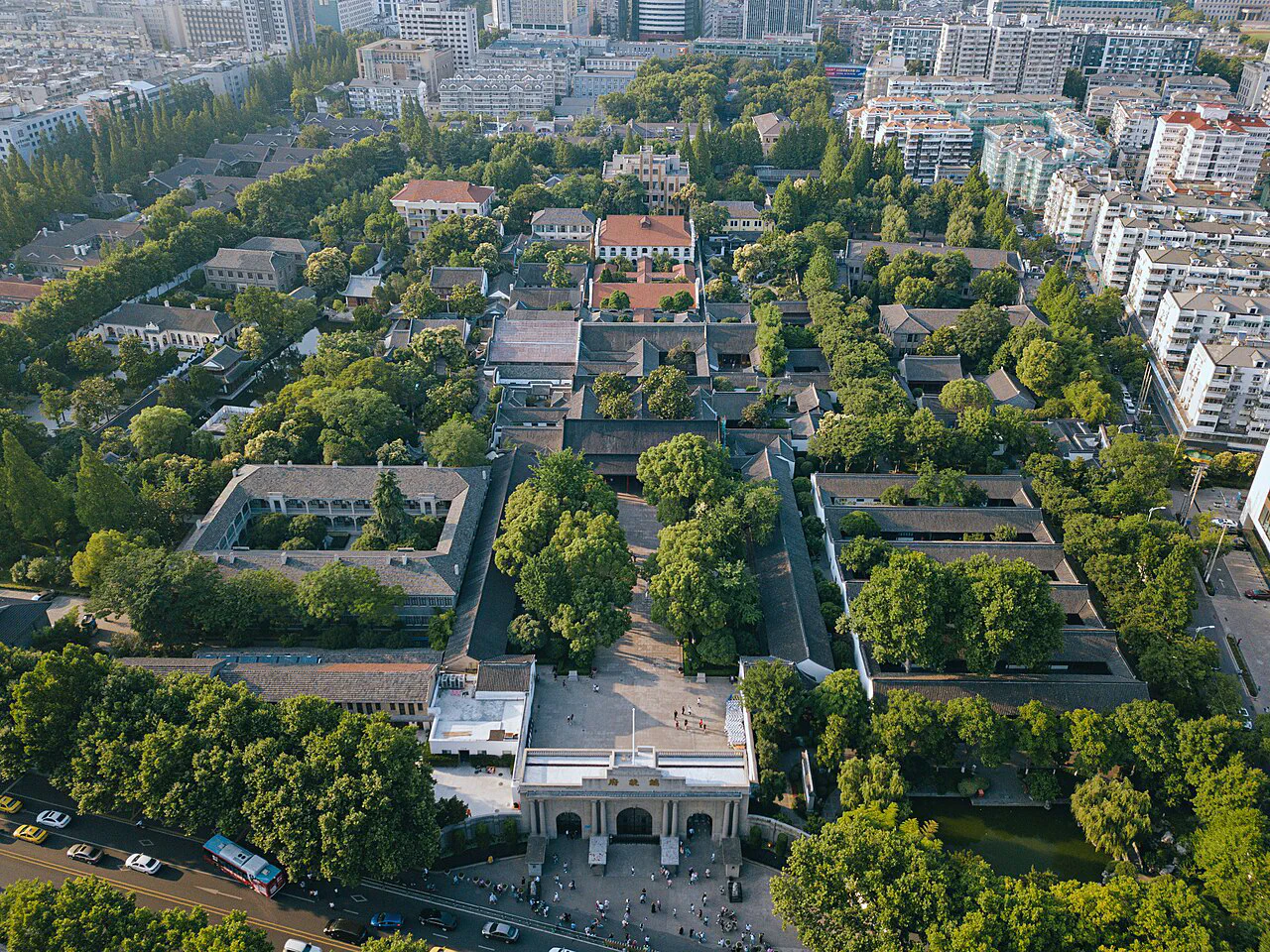
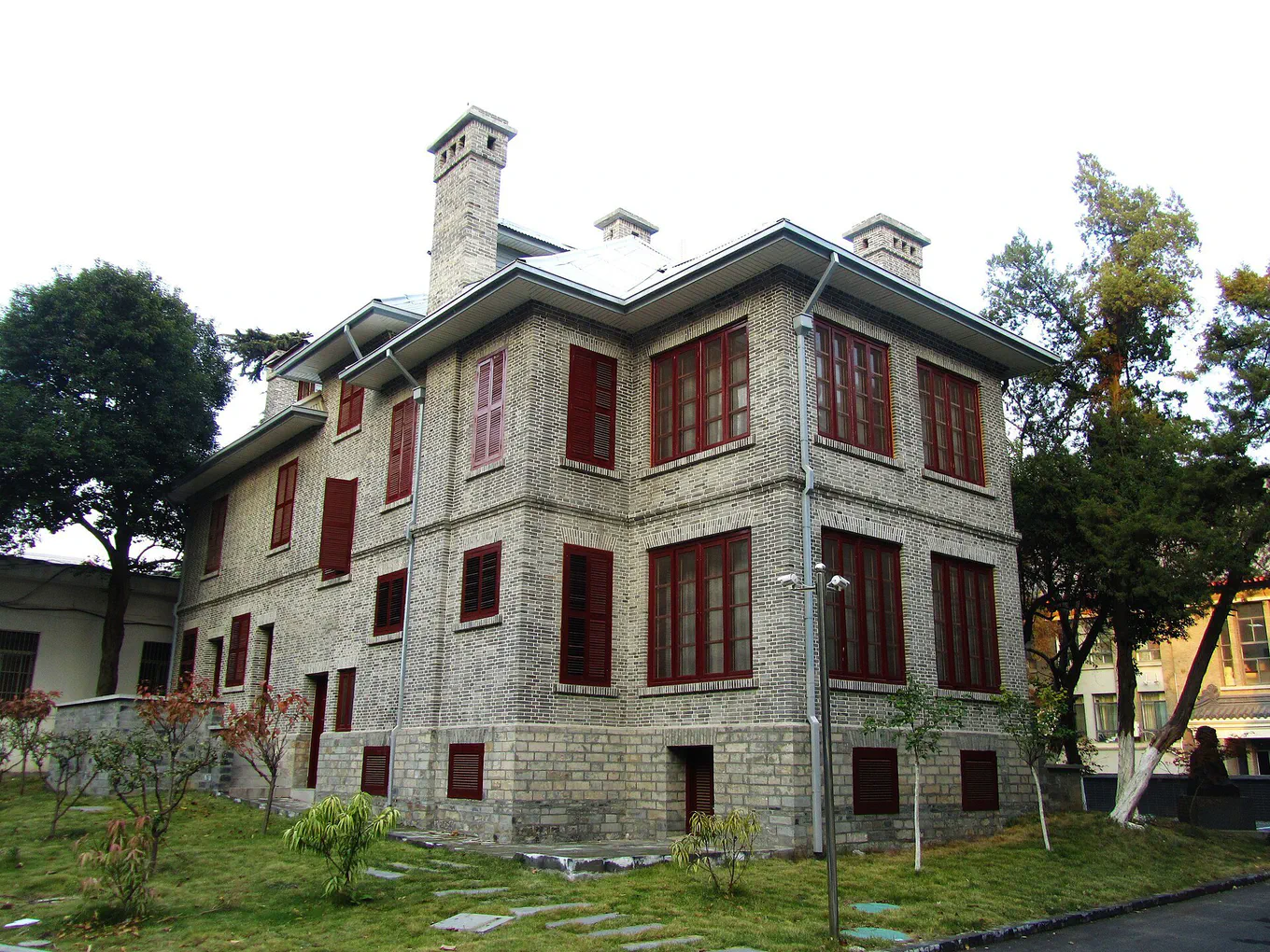
Revered by the Republic of China as the Father of the Nation, Sun Yat-sen is credited with leading the 1911 revolution that overthrew the Qing dynasty. In January 1912, he was sworn in here as the republic’s provisional president. But his government had no army of its own. The man who did, Yuan Shikai, had been promised the presidency if he could make the Qing court abdicate. The emperor abdicated in February, and Sun stepped aside. On 10 March, Yuan took office in Beijing. Three years later, Yuan proclaimed himself Emperor of China.
Pearl S. Buck, the first American woman to win the Nobel Prize in Literature, taught at the University of Nanking and lived on its campus. In March 1927, as the National Revolutionary Army took the city, a poor Chinese family hid the Bucks in its hut while their house was looted. After a terrified day, American gunboats rescued them. A year later, they came back. Every morning, Buck retreated to the attic of her university house, and within the year she had finished The Good Earth.
5 John Rabe, the Nazi who sheltered Nanjing’s refugees
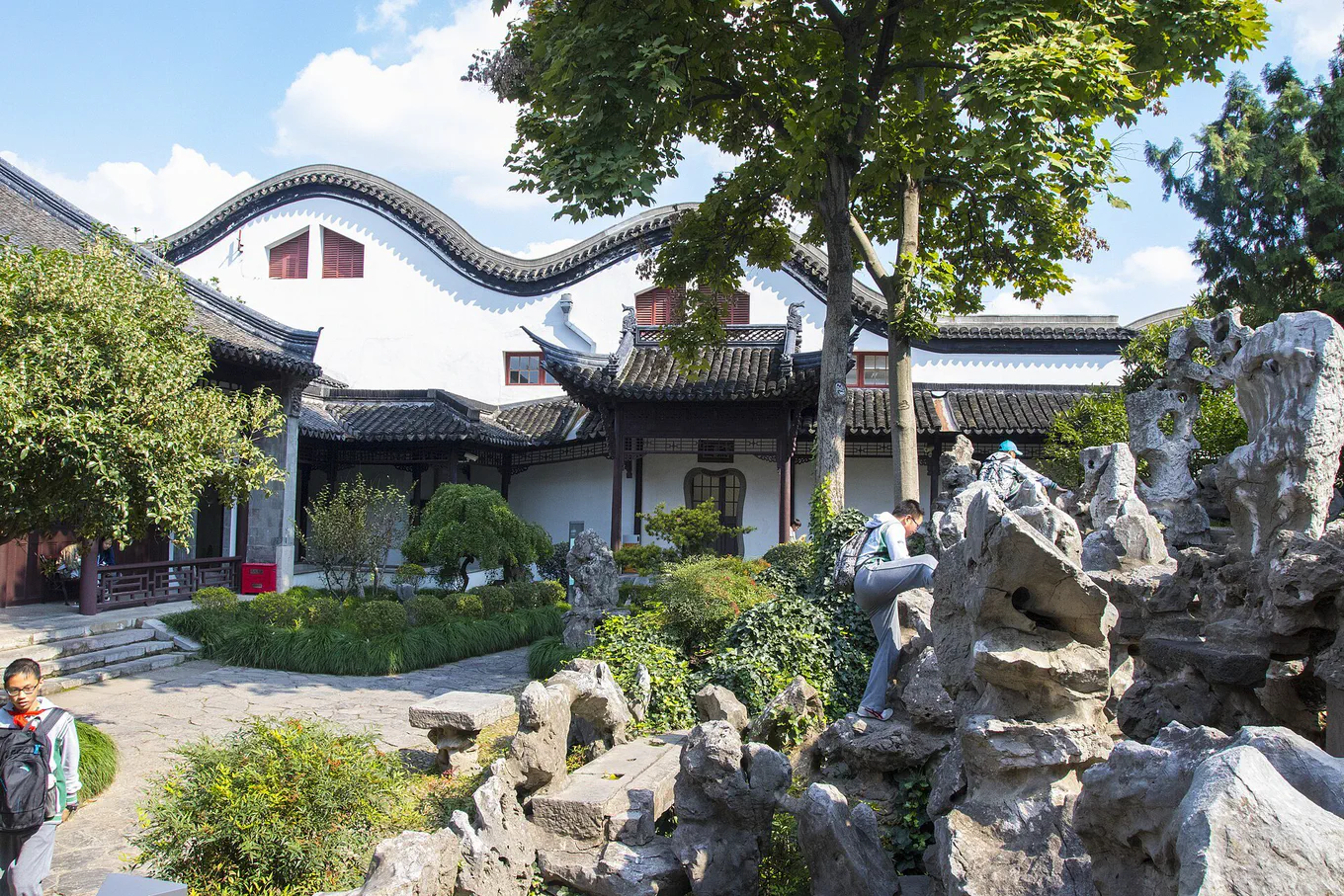
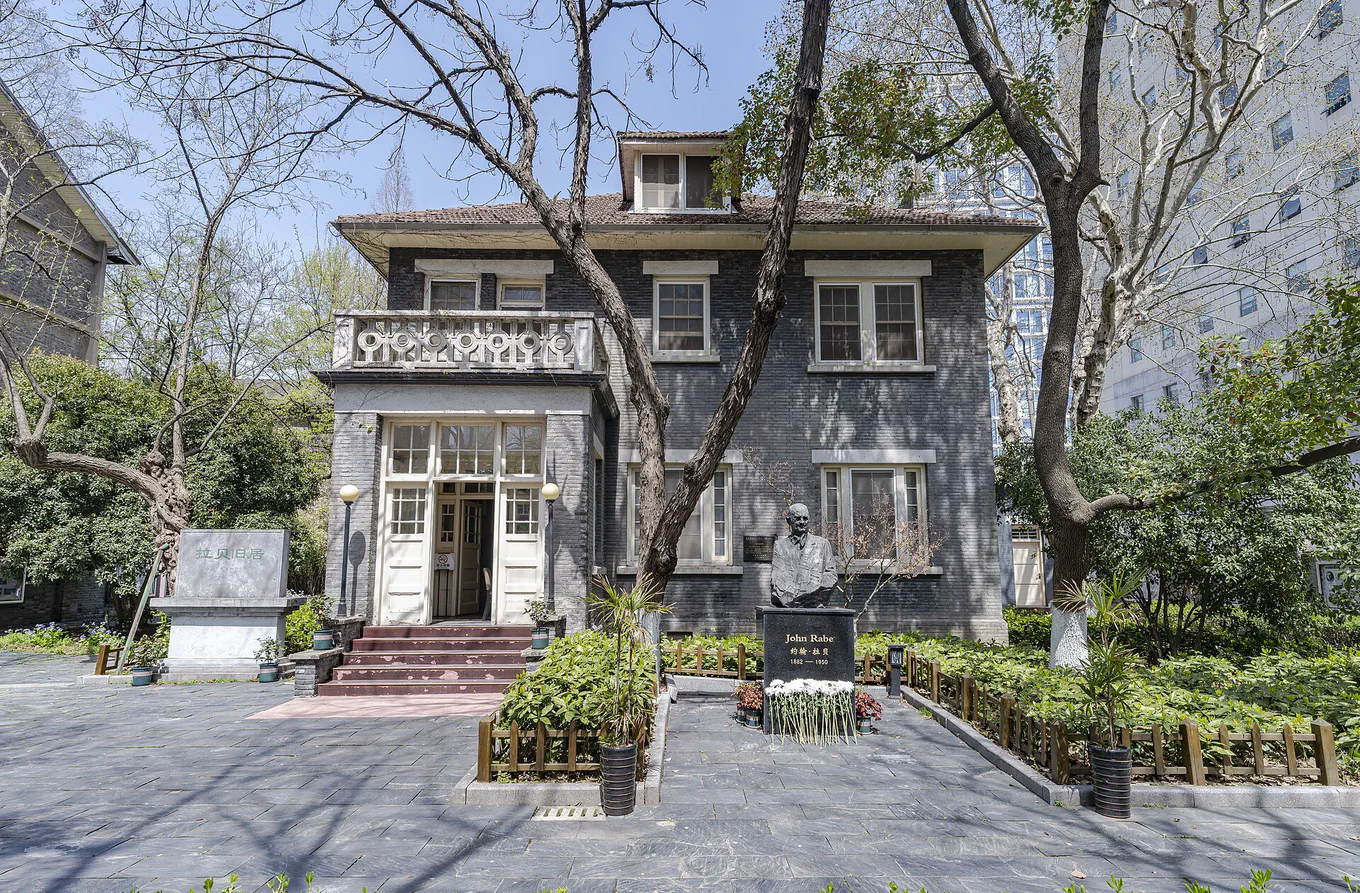
Stand here. John Rabe’s house at Xiaofenqiao No. 1, on Nanjing University’s Gulou campus, now a memorial hall to him and the Safety Zone.
The 2009 film John Rabe is about a Nazi who sheltered refugees in Nanjing. Rabe ran the Siemens branch there, and in December 1937, as the Japanese army closed in, he led a Safety Zone for civilians. More than 600 refugees lived in his garden. Back in Berlin, the Gestapo interrogated him, and he was forbidden to lecture or write about the Nanjing Massacre. After the war, he lived in poverty, and Nanjing’s citizens sent his family food parcels. In 1997, his tombstone was brought to Nanjing’s massacre memorial.
Pack nothing. Leave Friday.
Every Friday, I write a free letter, Journey, that takes us on a trip through places, stories, and ideas.
The Peach Blossom Fan(Kong Shangren, 1699). A play. As the Ming dynasty collapses, Hou Fangyu falls in love with Li Xiangjun beside the Qinhuai River.
Dream of the Red Chamber(Cao Xueqin, mid-18th century). A novel. The Jiangning Imperial Silk Manufacturing Museum, on the site of the Qing silk bureau, has exhibits on it.
Nanjing Requiem(Ha Jin, 2011). A novel. The American missionary Minnie Vautrin protects people at Ginling College during the 1937 massacre.
Films to watch before you visit Nanjing
John Rabe(Florian Gallenberger, 2009). A film, based on the wartime diaries Rabe wrote in his house at Xiaofenqiao No. 1.
The Flowers of War(Zhang Yimou, 2011). A film set in Nanjing during the 1937 massacre, in which a group of escapees find sanctuary in a church compound and try to survive the Japanese atrocities.
Dead to Rights(Shen Ao, 2025). A film set during the Nanjing Massacre, in which civilians seek refuge in a photographic studio based on the Huadong Photo Studio, near today’s Guyilang area in Nanjing.
Questions
Where was Sun Yat-sen sworn in as president?
At the Presidential Palace in Nanjing, the former governor-general’s palace. The inauguration was held in January 1912 in its Warm Pavilion, just northwest of the main hall. The building housed the Office of the President of the Republic of China from 1927 to 1949, and is now the China Modern History Museum.
Can you still see the Porcelain Tower of Nanjing?
Not the original. In 1856, the Taiping razed the nine-storey white porcelain pagoda, either to stop enemies using it to shell the city or from superstitious fear of its geomantic powers, its supposed sway over the land’s fortunes. A replica and park opened in December 2015 on the south bank of the outer Qinhuai River.
Which gates of Nanjing’s Ming city wall still stand?
Two of the thirteen original gates, Zhonghua Gate in the south and Heping Gate in the north. Zhonghua Gate was the largest of the thirteen. The Hongwu Emperor designed the wall after he founded the Ming dynasty in 1368, and it ran for 33.7 kilometres.