Caravaggio fled to Naples while on the run for murder… then actually stopped to do some painting. Although he’s known as the master of chiaroscuro, my favourite thing about him is the fact that, in his painting of David holding the severed head of Goliath, the severed head is a self-portrait. It speaks to a healthy ego held in check.
— Nick
Mount Vesuvius and the Phlegraean Fields, two volcanic areas, frame the Gulf of Naples, where the city lies in southern Italy. Greeks founded it in the eighth century BC; a royal capital until Italy unified in 1861, it is now the capital of Campania. A marble veil and a tenor’s vow stand with a painter on the run, the legend of a queen’s pizza, and two girls’ lost dolls.
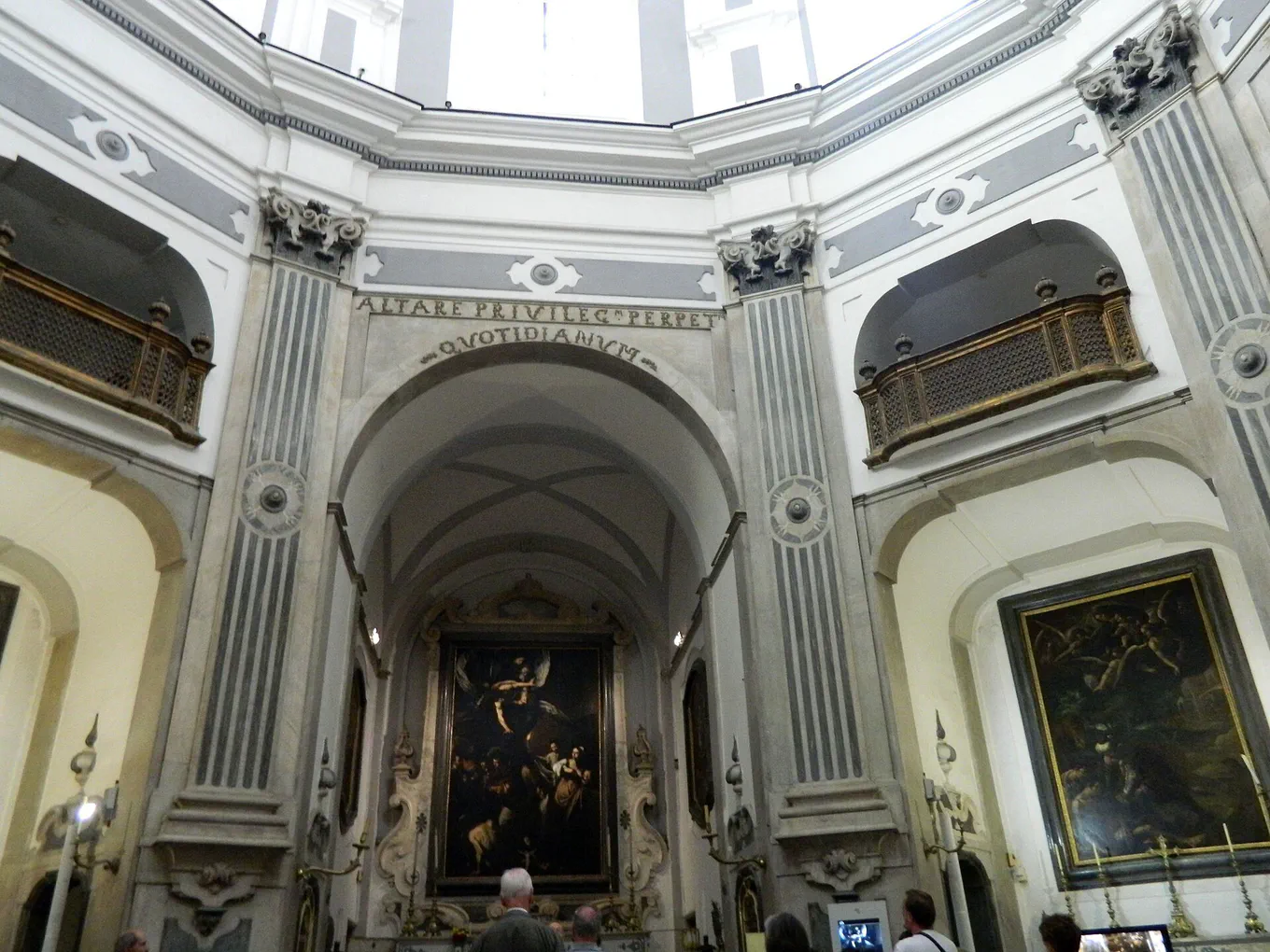
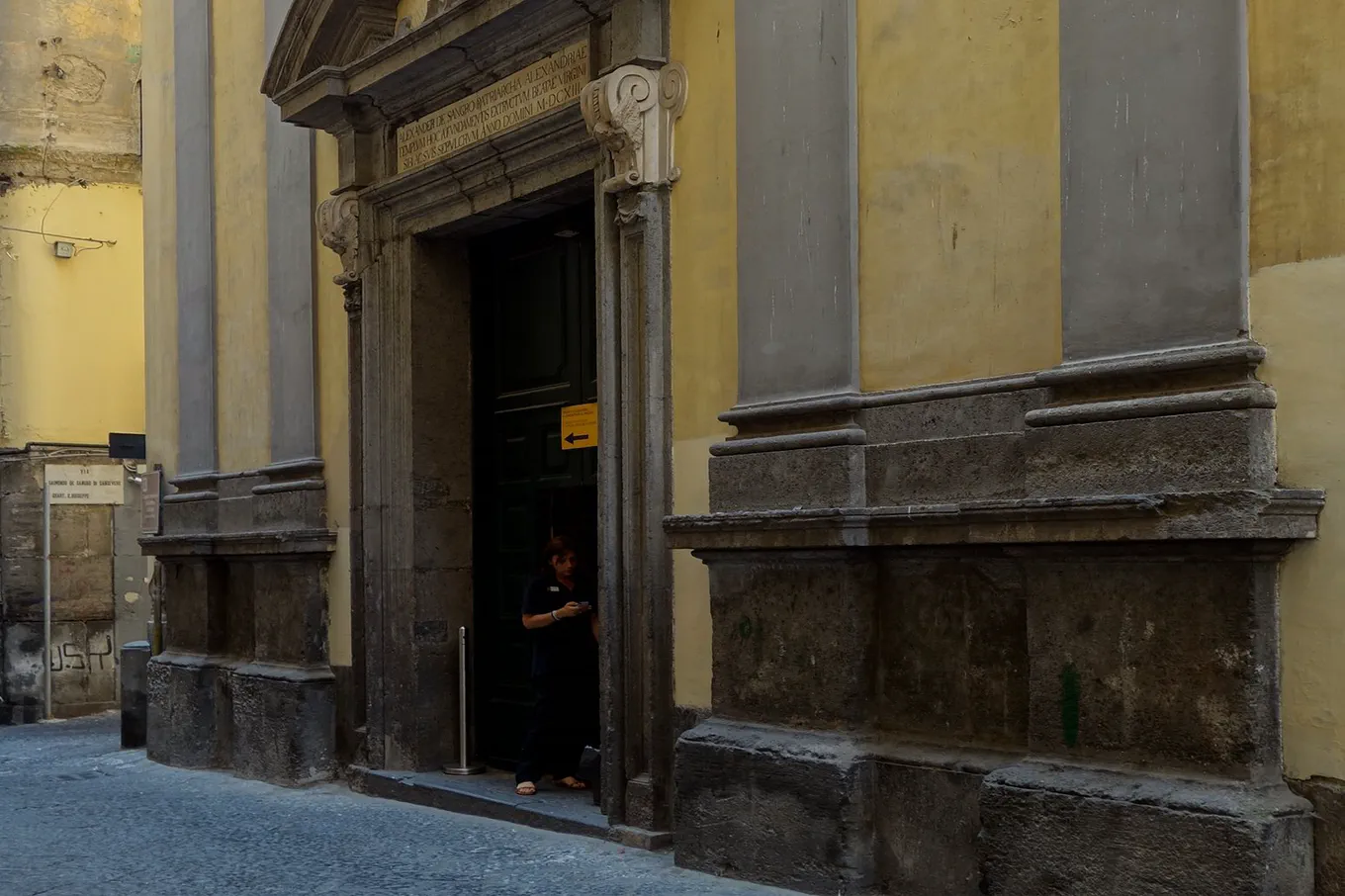
Caravaggio on the run at the Pio Monte della Misericordia
Stand here. The Pio Monte della Misericordia, Via dei Tribunali 253, a charity founded in 1602 by seven young noblemen. Its church holds the painting today.
In 1606, in Rome, Caravaggio, the city’s most famous painter, killed a young man, possibly unintentionally, and fled under a sentence of beheading. In Naples, beyond Rome’s reach, he became the city’s most famous painter. The Pio Monte wanted the seven works of mercy as seven separate panels. Caravaggio put all seven into one picture, with people from the street, at what seems a dark Naples crossroads. The Seven Works of Mercy still hangs in the church it was painted for, by a man with a price on his head.
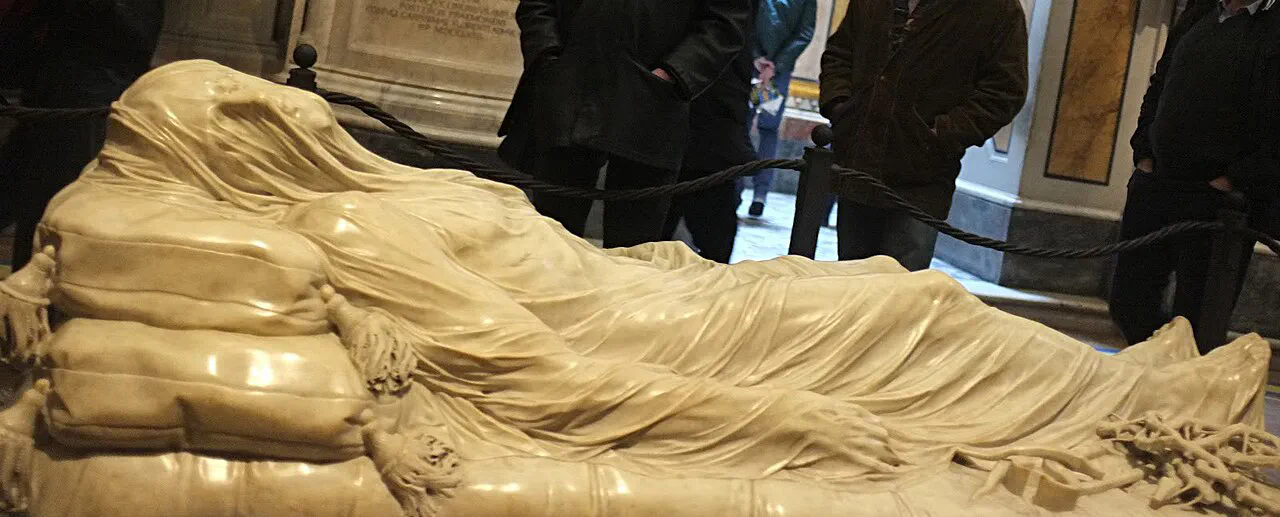
The Veiled Christ and the prince’s alchemy at Cappella Sansevero
Stand here. The Cappella Sansevero, Via Francesco De Sanctis 19/21, in the historic centre. Now a museum, it still has the Veiled Christ as its centrepiece.
The Veiled Christ was meant to be Antonio Corradini’s work. The Prince of Sansevero, an inventor and alchemist, wanted a dead Christ under a marble veil for his chapel. But Corradini died in 1752, leaving only a terracotta model, so the prince turned to a young Neapolitan, Giuseppe Sanmartino. The veil looked so real that some visitors thought the prince had turned a real cloth to marble by alchemy. Yet the prince’s own payment order pays Sanmartino for a statue “covered with a veil of marble”.
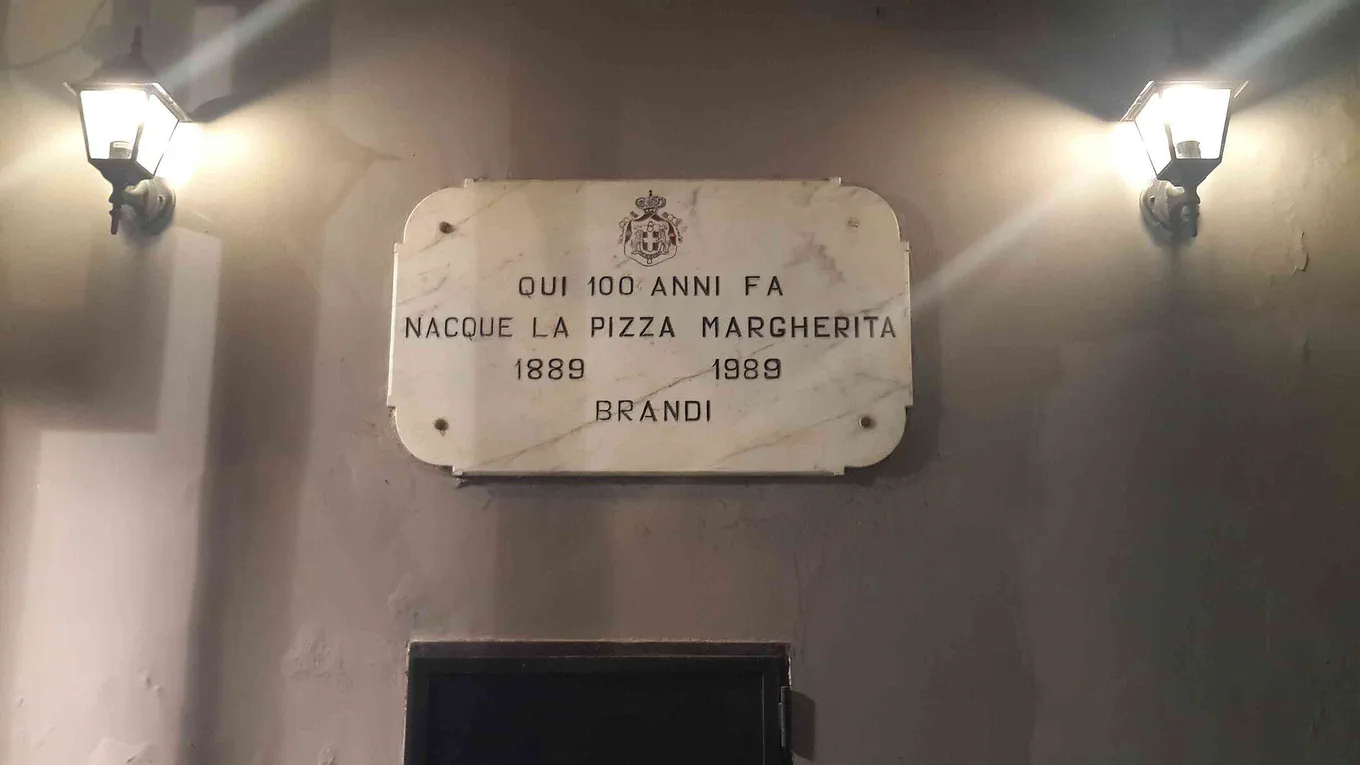
Raffaele Esposito’s pizza for Queen Margherita, at Pizzeria Brandi
Stand here. Pizzeria Brandi, Salita Sant’Anna di Palazzo 1/2. Esposito’s shop is still a pizzeria, now named after his wife, Maria Giovanna Brandi.
Pizza Margherita, the story goes, was born on 10 June 1889. The Royal Palace of Capodimonte asked a pizza maker, Raffaele Esposito, to make pizza for Queen Margherita. She preferred the one in the colours of the Italian flag, red tomato, white mozzarella, and green basil, and it took her name. But nothing printed at the time reported the visit, and the story was first promoted in the 1930s and 1940s. In 1849, a writer had already listed basil, tomatoes, and mozzarella among pizza toppings.
Enrico Caruso’s vow at the Teatro di San Carlo
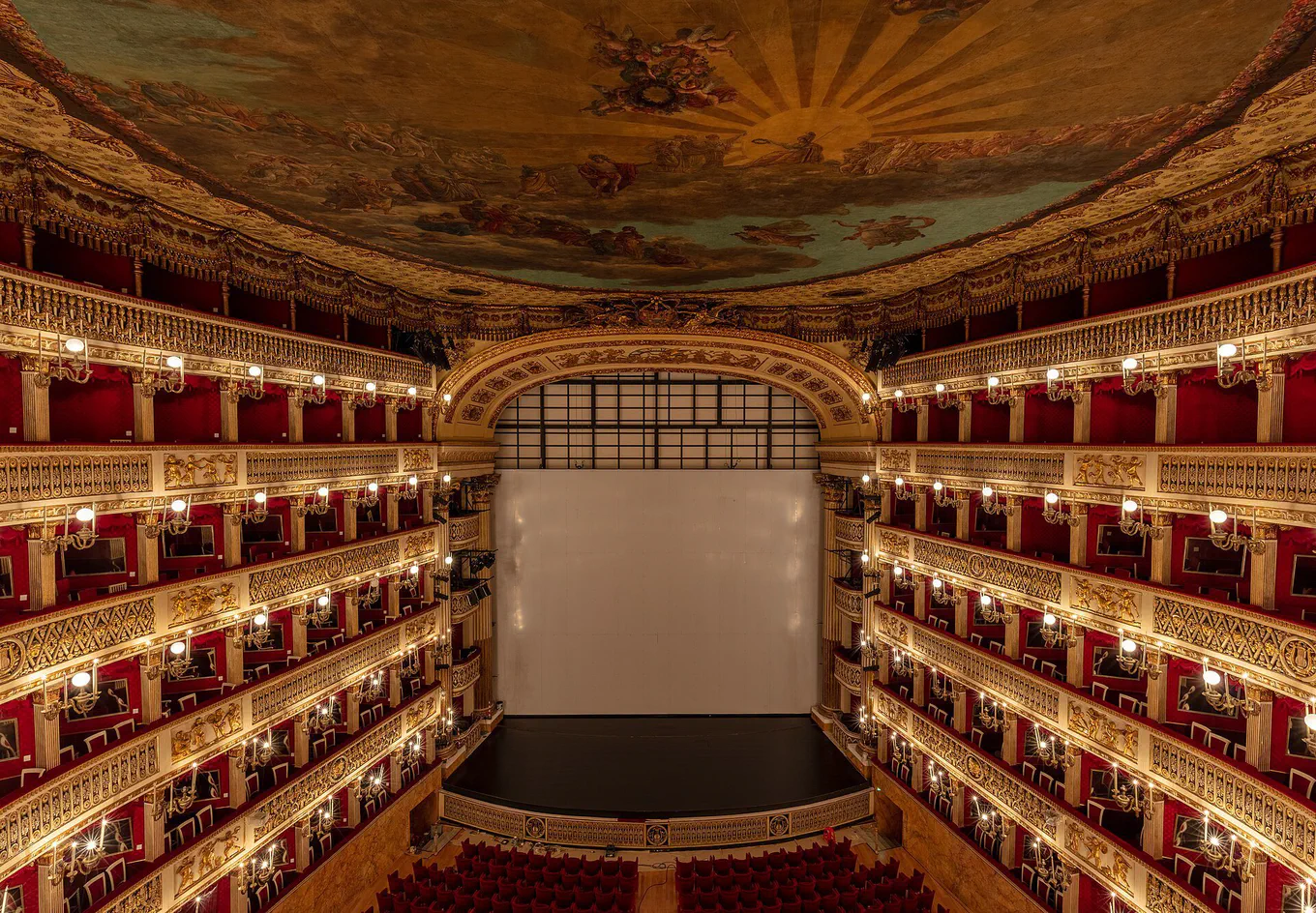
Stand here. The Teatro di San Carlo, beside Piazza del Plebiscito. Opened in 1737, it is the oldest opera house in continuous use in the world.
Born in Naples, Enrico Caruso became the first international recording star. In December 1901, he made his San Carlo debut, and his home city received him coolly. Hurt, he vowed, “I will never again come to Naples to sing; it will only be to eat a plate of spaghetti.” He never sang there again. In 1921, recovering from pleurisy, he set off from Sorrento for a clinic in Rome. By the time he reached Naples, he was gravely ill, and he died at the Hotel Vesuvio, aged 48.
Stand here. The Stradone in Rione Luzzatti, a 1920s housing estate by Gianturco metro station. The tunnel from the novels and the basement grates are still there.
Elena Ferrante’s My Brilliant Friend, the 2011 novel that became an HBO series, follows two girls, Lila and Elena, growing up in a poor, violent neighbourhood of 1950s Naples. Once, Lila throws Elena’s doll through a grate into the local loan shark’s basement, and Elena throws Lila’s after it. Then Lila goes fearlessly to the loan shark to ask for them back, with Elena beside her. They never get the dolls. Ferrante never names the neighbourhood, but the people of Rione Luzzatti recognised it at once as theirs.
Pack nothing. Leave Friday.
Every Friday, I write a free letter, Journey, that takes us on a trip through places, stories, and ideas.
The Gallery(John Horne Burns, 1947). A novel. It takes its title from the Galleria Umberto I, the Naples shopping arcade that all its main characters pass through.
Naples ’44(Norman Lewis, 1978). A memoir of wartime Naples. The author recalls “our first days at the Riviera di Chiaia”.
My Brilliant Friend(Elena Ferrante, 2011). A novel, the first of the four Neapolitan Novels. Residents of Rione Luzzatti recognised its unnamed neighbourhood as their own.
Films to watch before you visit Naples
Journey to Italy(Roberto Rossellini, 1954). A film. Its locations include the National Archaeological Museum, the Phlegraean Fields, the Fontanelle cemetery, and the excavations at Pompeii.
Yesterday, Today and Tomorrow(Vittorio De Sica, 1963). A film. In 1954, in Forcella, a working-class district, Adelina supports her unemployed husband, Carmine.
Gomorrah(Matteo Garrone, 2008). A film. Among its locations is the housing project in Scampia, north of Naples, whose triangular blocks are known as the Sails.
The Hand of God(Paolo Sorrentino). A film. The film’s flat is on Via San Domenico, in the building where Sorrentino himself lived for 37 years.
Questions
Can you see the Veiled Christ in Naples?
Yes. It is the centrepiece of the Cappella Sansevero, now the Sansevero Chapel Museum, at Via Francesco De Sanctis 19/21 in the historic centre. Giuseppe Sanmartino carved it, veil and all, from a single block of marble, and completed it in 1753.
Where did Enrico Caruso die?
At the Hotel Vesuvio, now the Grand Hotel Vesuvio, at Via Partenope 45 on the seafront, on 2 August 1921. He was 48, and had fallen gravely ill on his way from Sorrento to a clinic in Rome. The hotel keeps a suite that still bears his name.
How close is Naples to Vesuvius?
Vesuvius stands on the Gulf of Naples, about 9 km east of the city. Its eruption of AD 79 destroyed the Roman cities of Pompeii and Herculaneum, and it last erupted in March 1944.