Nashville, United States, Tennessee, North America
All I really know is the TV show, which at least was shot in Nashville. To be honest I gave up eventually, because it felt like every scene was people either getting in a fight or saying that they were sorry for getting in a fight.
— Nick
Settlers built Fort Nashborough on the Cumberland River in 1779 to found Nashville, now the capital of Tennessee. A major centre of the music industry, especially country, it is commonly called Music City. Music City’s stories include Dolly Parton’s car in a studio wall, students singing to save their university, a heckler who built a tabernacle, a plate of revenge chicken, and a student’s question to the mayor.
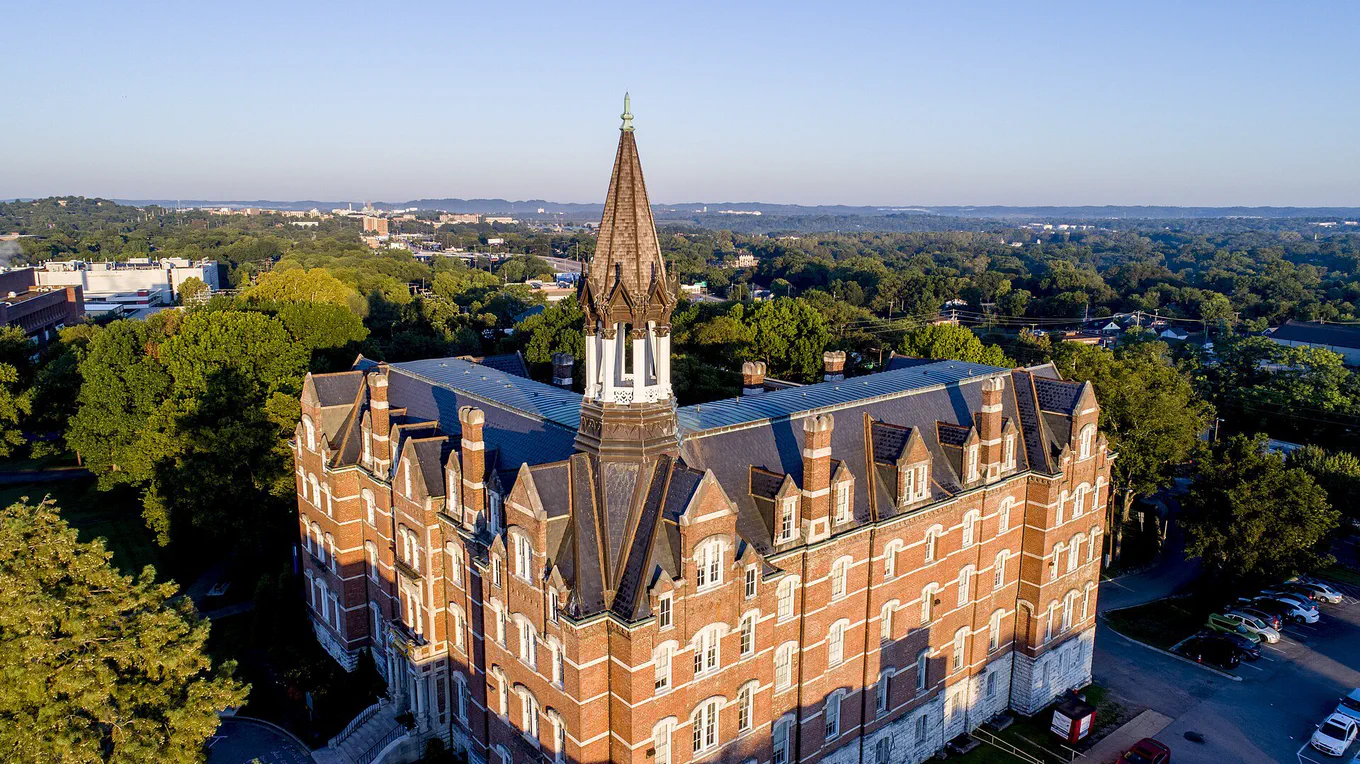
Queen Victoria later heard the Fisk Jubilee Singers, but in 1871 they sang to save their school. Fisk University was five years old and facing bankruptcy, so its music director, George Leonard White, took them on tour. They left Nashville on 6 October with the entire university treasury. In Columbus, Ohio, short of money, they were discouraged. Then they sang at a Brooklyn church, and the country took notice. The tours paid for Jubilee Hall, and inside is a floor-to-ceiling portrait of the singers, given by the Queen herself.
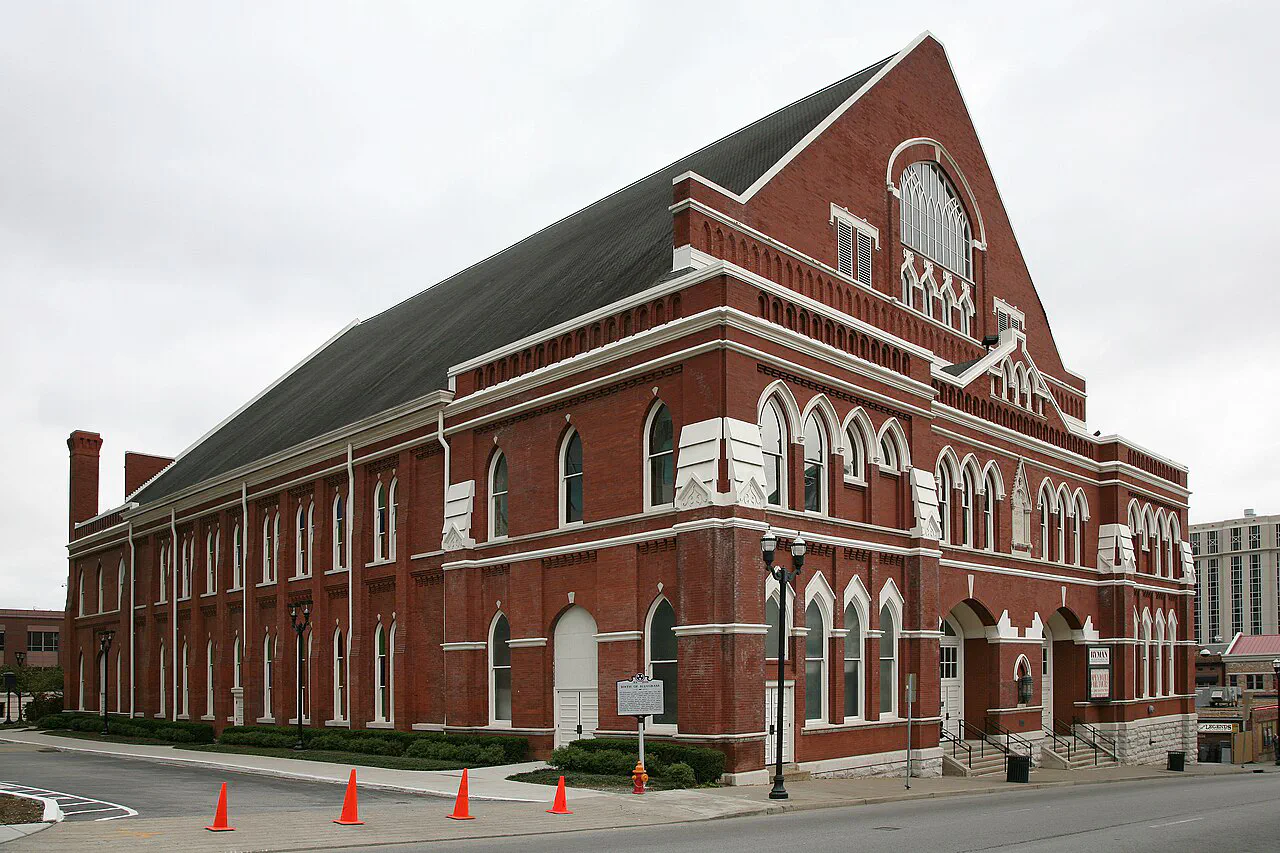
2 Thomas Ryman, the heckler who built the Ryman Auditorium
Stand here. The Ryman Auditorium, downtown. Now a concert hall and museum, with daytime tours every day.
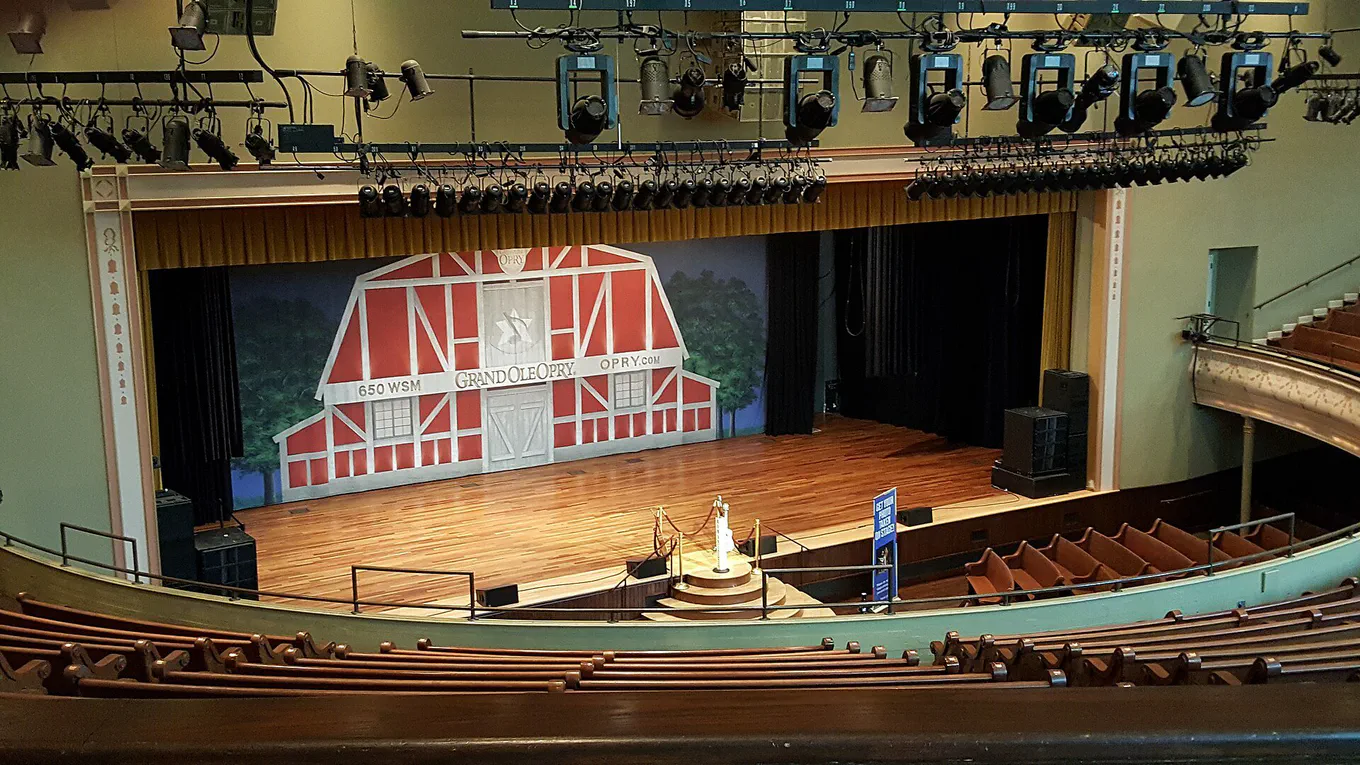
The Ryman Auditorium, the Grand Ole Opry’s home for three decades, began with a heckler. Thomas Ryman was a wealthy, crude riverboat captain who owned saloons. In 1885, he went to one of the Georgia revivalist Sam Jones’s revivals to heckle, and Jones converted him instead. Ryman built Jones a tabernacle, which took seven years and $100,000. When Ryman died, his funeral was held there on Christmas Day. Jones proposed renaming the building after him, and some 4,000 mourners rose to their feet as one.
3 Thornton Prince and the revenge that made Nashville hot chicken
Stand here. Prince’s Hot Chicken, 5814 Nolensville Pike, run by Thornton Prince’s great-niece. The café started at 28th Avenue and Jefferson Street, before it moved downtown.
By the Prince family’s account, Nashville hot chicken began as revenge. Thornton Prince was said to be a womaniser, and after one late Saturday night, a girlfriend cooked him a fried chicken breakfast with extra pepper. Her plan backfired. He loved it, and by the mid-1930s he and his brothers had their own recipe and a café, the BBQ Chicken Shack. Later, when it moved near the Ryman, Opry stars came after every show. Nobody can verify the story, and the family doesn’t know who the woman was.
4 Diane Nash’s question to the mayor on Public Square
Stand here. Witness Walls, Walter Hood’s civil rights memorial, in the northwest corner of Public Square Park, steps from where the marchers met the mayor.
In 1960, Diane Nash, a 22-year-old Fisk student, led the Nashville sit-ins, trained in nonviolence alongside the young John Lewis. On 19 April, dynamite was thrown into the home of the students’ lawyer, who escaped unhurt. That day, thousands marched in silence to City Hall, and Mayor Ben West met them on the steps. Nash asked, “Do you feel it is wrong to discriminate against a person solely on the basis of their race or color?” He said it was, lunch counters included, and the marchers cheered.
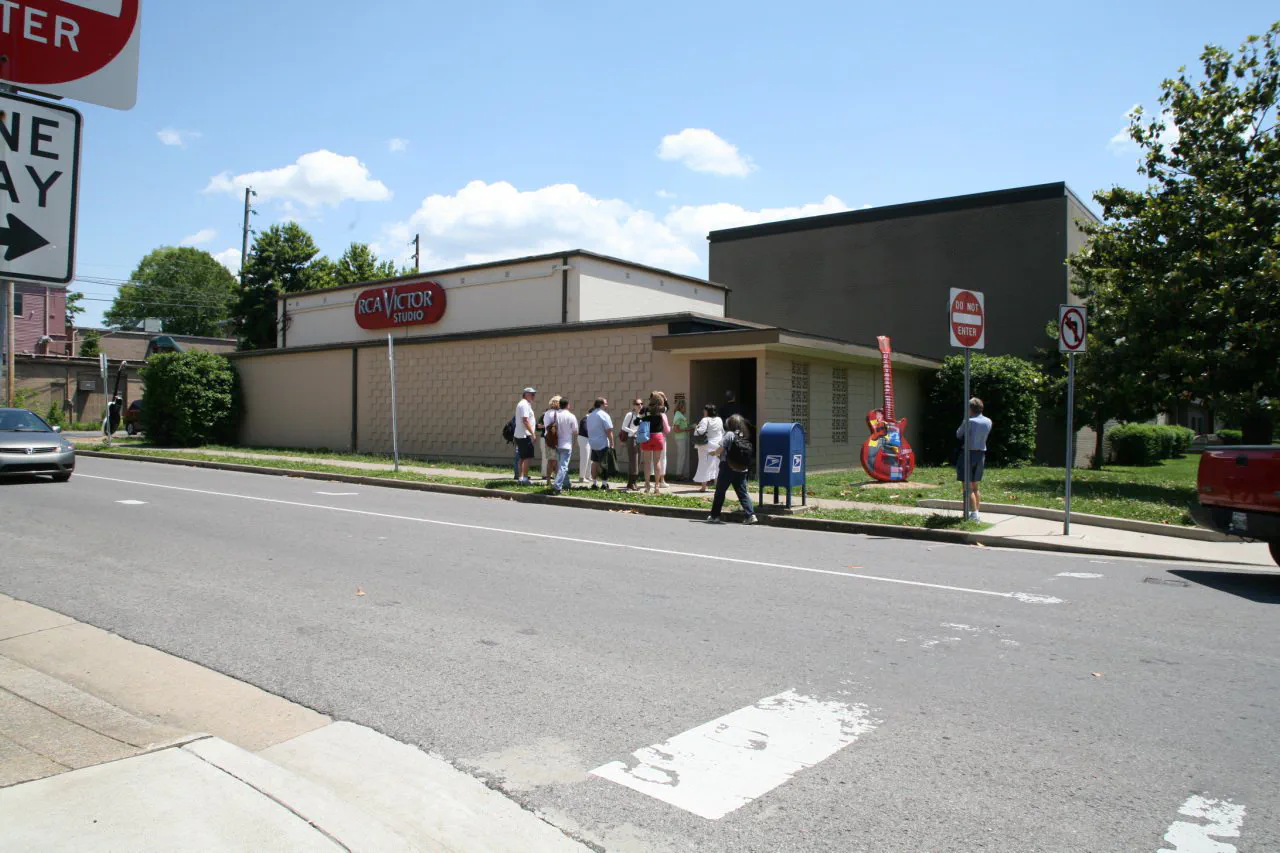
5 Dolly Parton’s car through the wall of RCA Studio B
Stand here. RCA Studio B, on Music Row, run as a historic site by the Country Music Hall of Fame and Museum.
Dolly Parton was in a hurry. It was October 1967, she had just signed with RCA Victor, and she was on her way to her first recording session at Studio B, where Elvis Presley recorded more than two hundred songs. She drove her new Chevrolet through the building’s side wall. In 1971, she recorded “Coat of Many Colors” in that same studio. By her own account, you can still see where the wall was mended.
The Children(David Halberstam, 1998). A history of the Nashville student movement from 1959 to 1962, from the downtown lunch-counter sit-ins to the Freedom Riders.
Dinner at Belmont(Alfred Leland Crabb, 1942). A novel. The story of Nashville before and during the Civil War is told through several dinners, the first at the Belmont mansion in 1858.
The Death of Halpin Frayser(Ambrose Bierce, 1891). A Gothic ghost story, partly set in Nashville, Tennessee, where the title character, Halpin Frayser, was brought up.
Films to watch before you visit Nashville
Nashville(Robert Altman, 1975). A film. Twenty-four characters converge on a gala concert for a presidential outsider, and the finale was shot at the Parthenon in Centennial Park.
The Thing Called Love(Peter Bogdanovich, 1993). A film. An aspiring country musician leaves New York for Nashville and the Bluebird Café, a showcase for new talent.
Nashville(created by Callie Khouri, 2012). A TV series about fictional country singers, with the Bluebird Café, an important local stage, as a frequent setting.
Questions
Can you visit RCA Studio B in Nashville?
Yes. The Country Music Hall of Fame and Museum runs Studio B as a historic site. Tours leave from the museum.
Why is the Ryman Auditorium called the Mother Church of Country Music?
It opened in 1892 as the Union Gospel Tabernacle, built for the revivalist Sam Jones. From 1943 to 1974 it was the home of the Grand Ole Opry, which gave it the nickname.
Why is Nashville called Music City?
Because it is a major centre of the music industry, especially country music. The nickname is traced to 1950, when the radio announcer David Cobb ad-libbed it on air.