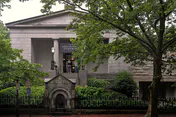
New Haven sits on Long Island Sound, in Connecticut. English Puritans founded it in 1638 and laid it out as a grid of nine squares, and the college that became Yale moved here in 1716. Its stories here are two king-killers in a cave, Africans jailed after seizing a slave ship, a hamburger on toast, a book no one has been shown to read, and Indiana Jones riding into a library.
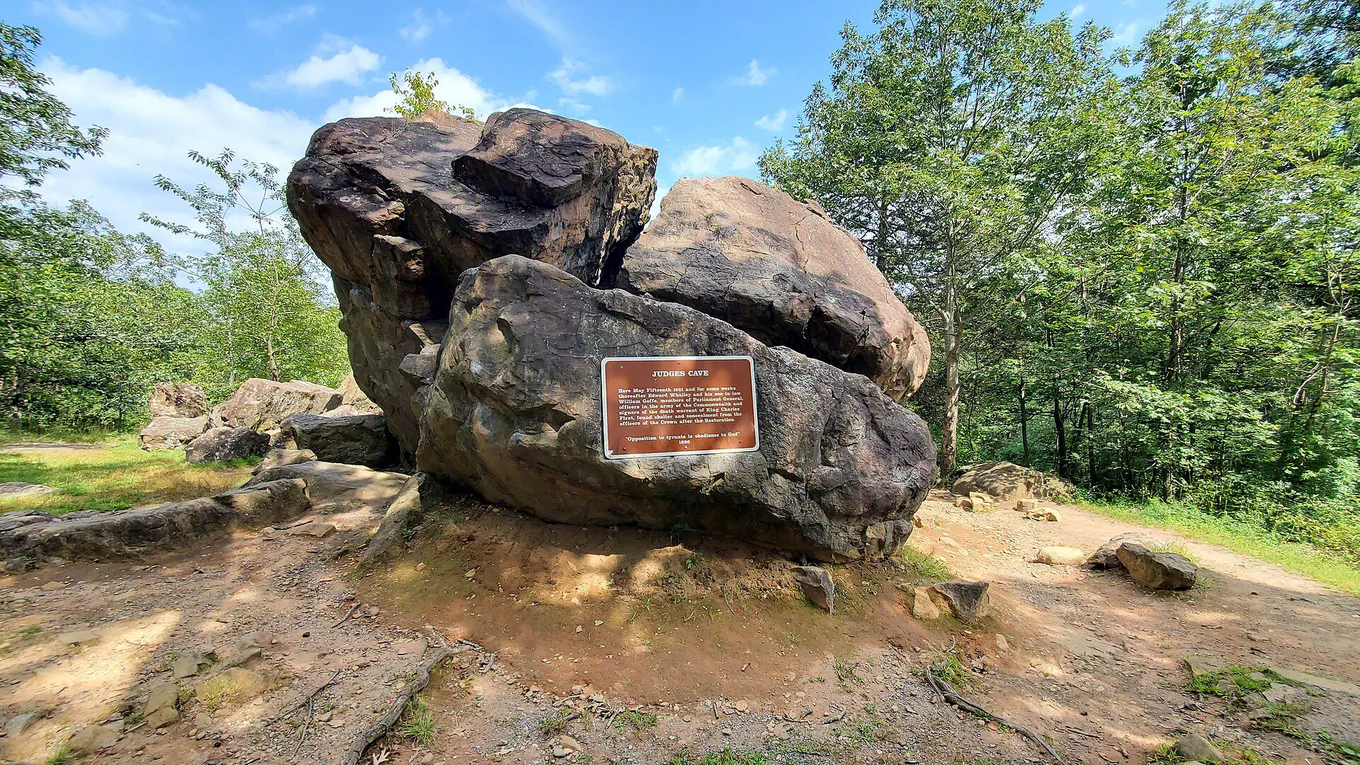
Edward Whalley was the fourth man to sign King Charles I’s death warrant, straight after Cromwell. When the monarchy returned, he and his son-in-law William Goffe fled to Boston, and in March 1661 they lodged with New Haven’s minister. Royal agents came to arrest them that May. Warned by local friends, the pair made a show of leaving for Milford, then hid in this cave. Later they slipped away by night to Hadley, Massachusetts, and lived there undiscovered. Whalley died around 1675. Goffe’s last letter to his wife is dated April 1679.
2 Sengbe Pieh and the Amistad captives in New Haven’s jail
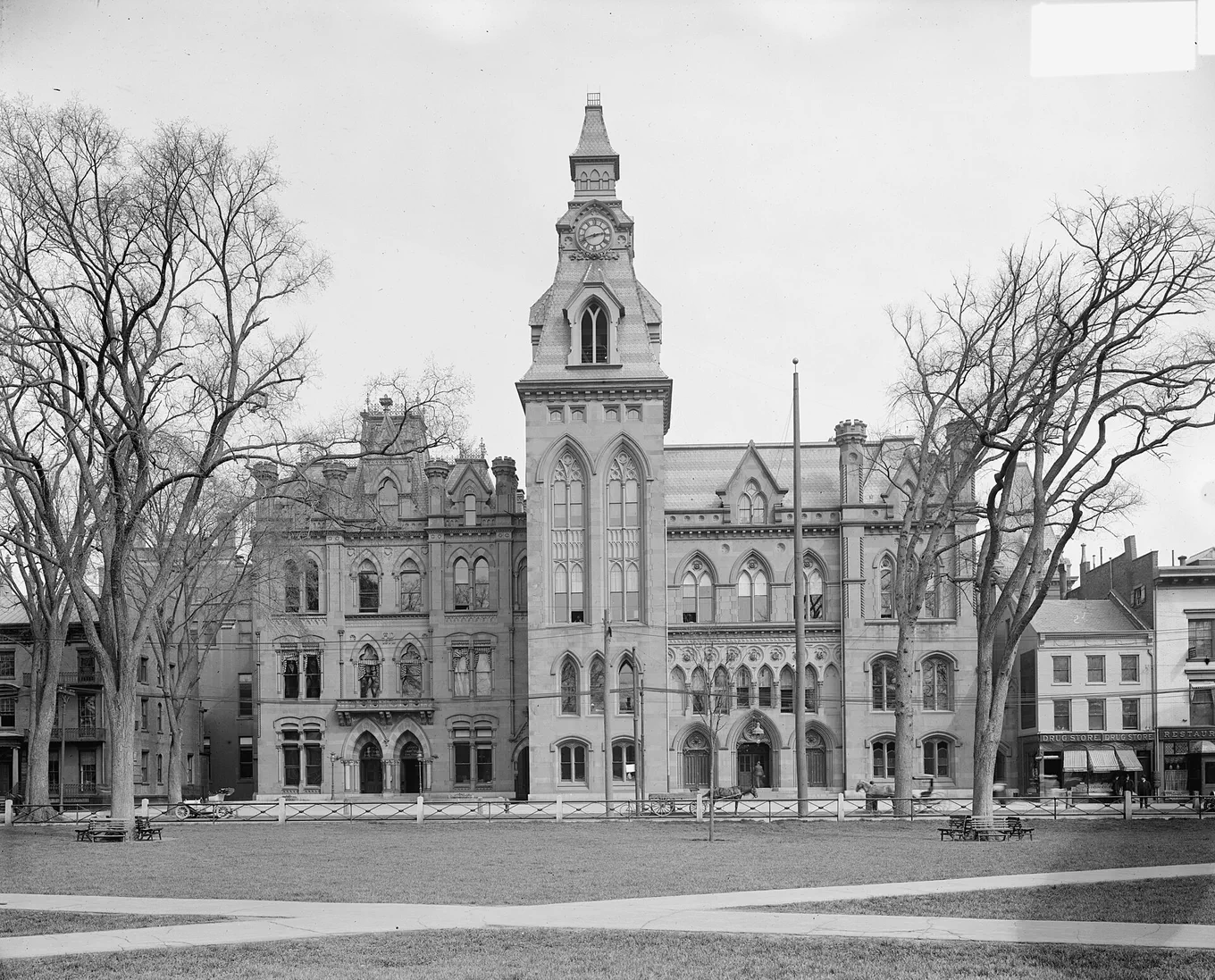
Stand here. The Amistad Memorial, Ed Hamilton’s three-sided bronze in front of City Hall on Church Street, stands where the jail once stood.
New Haven’s City Hall and courthouse on Church Street, by the site of the old town jail, in a vintage photograph.Detroit Publishing Co. / Public domain.
Steven Spielberg’s film Amistad tells this story. In 1839, Sengbe Pieh, a Mende man the Americans would call Joseph Cinqué, led a revolt on the Spanish slave ship La Amistad off Cuba. He ordered the two surviving navigators to sail for Africa, but by night they steered north. The ship ended up off Long Island, and the captives were jailed here, charged with murder and piracy. In 1841, the Supreme Court set them free. Only 35 lived to go home to Sierra Leone.
3 Louis Lassen and the hamburger at Louis’ Lunch
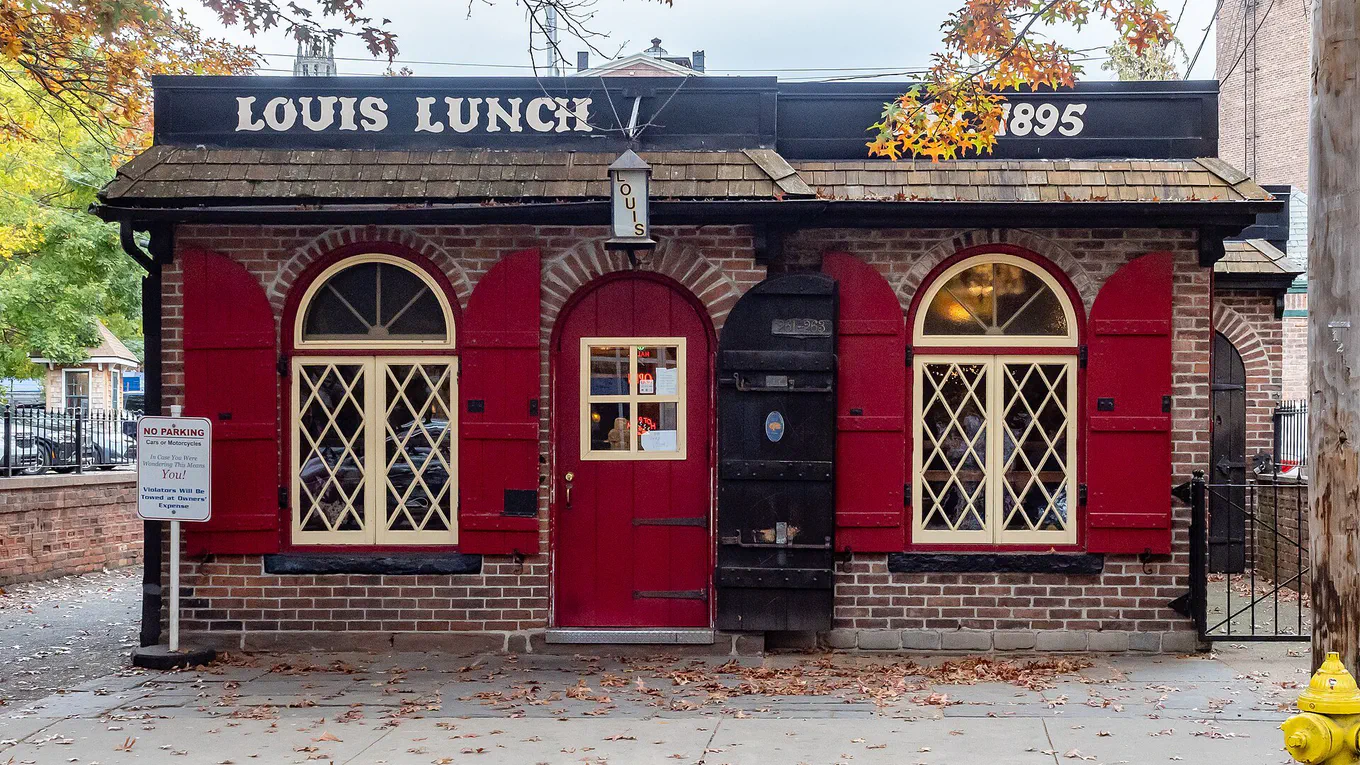
Stand here. Louis’ Lunch, at 261 Crown Street, where it moved in 1975 when redevelopment forced it out of its old site.
The Lassen family says Louis’ Lunch invented the hamburger. In 1900, by their account, a businessman told Louis Lassen, a Danish immigrant, “Louie! I’m in a rush, slap a meatpuck between two planks and step on it!” Lassen was out of steak, so he grilled a patty of ground steak trimmings and put it between two slices of toast. The Library of Congress later backed the claim. Others dispute it, and one critic says that putting it on toast is “redefining the hamburger out of existence”.
4 The unreadable Voynich manuscript at Yale’s Beinecke Library
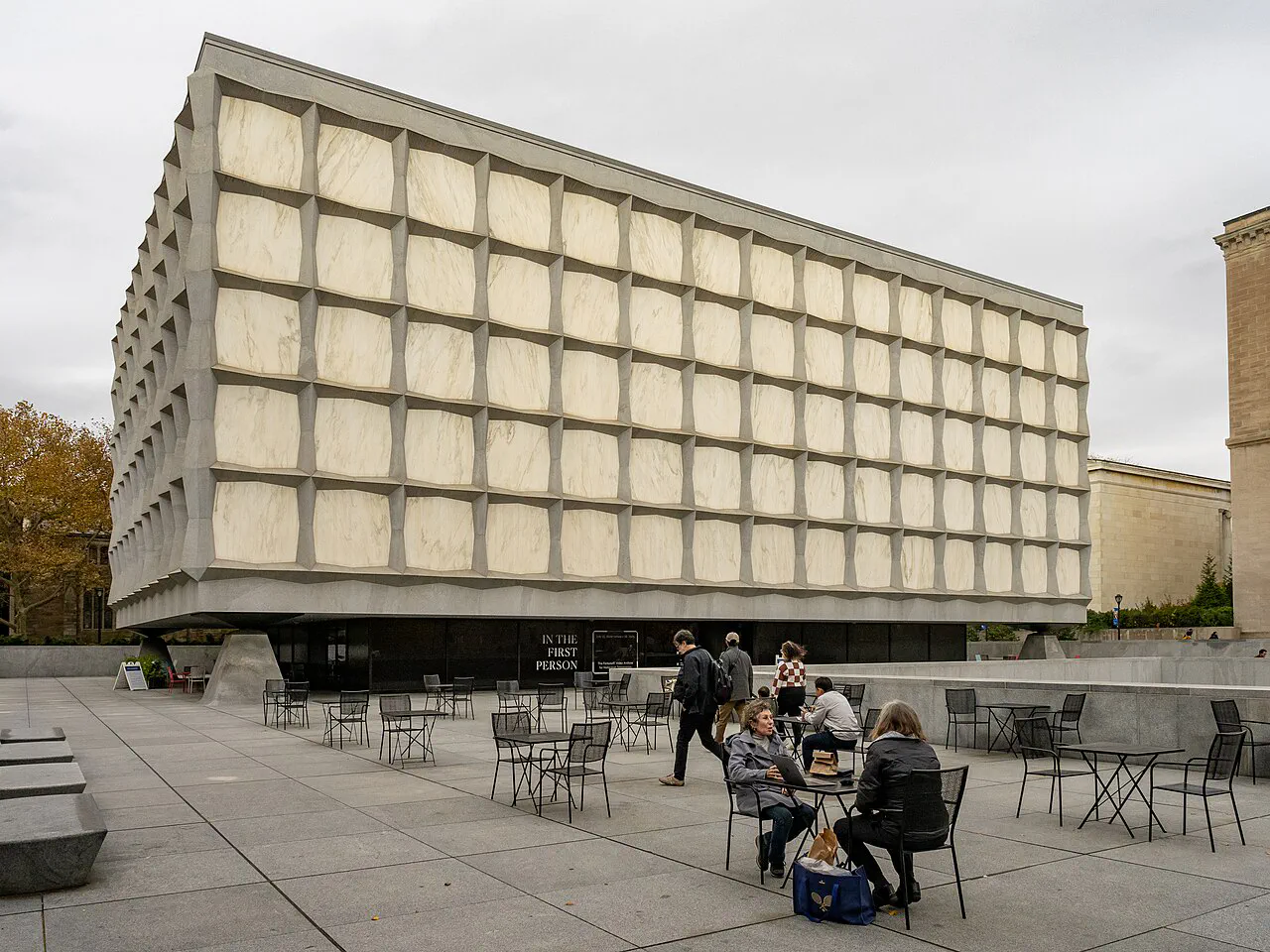
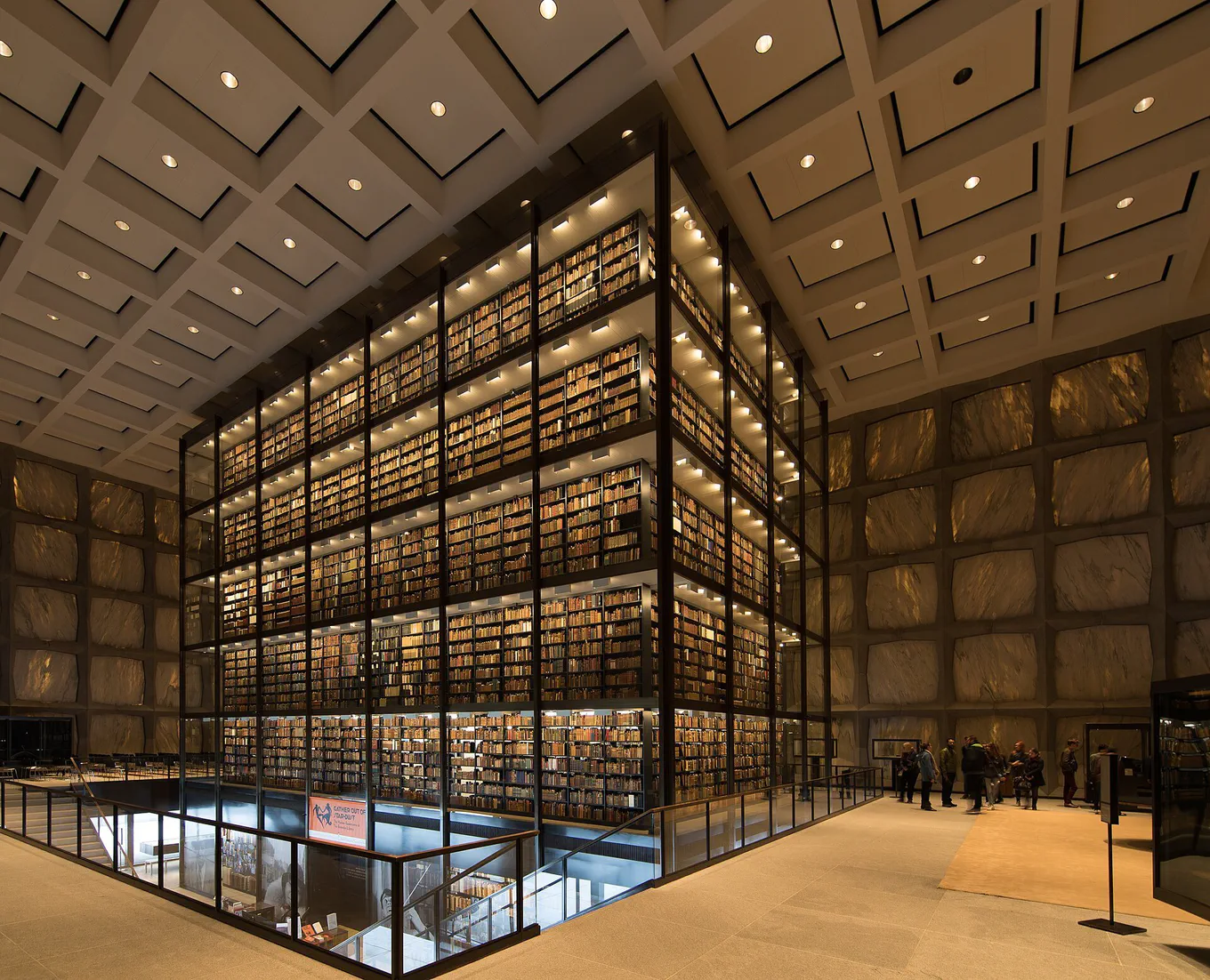
Stand here. The Beinecke Rare Book and Manuscript Library, 121 Wall Street, whose marble walls are thin enough to let daylight through.
The Voynich manuscript is a handwritten book in a script no one has ever been shown to decipher, on vellum dated to the early 1400s. It is named after Wilfrid Voynich, the book dealer who bought it. Codebreakers tried to crack it and failed. Later another dealer, Hans P. Kraus, bought it, then couldn’t find a buyer. In 1969, he gave it to Yale, which catalogued it as MS 408. The book has sat here, unread, ever since.
5 Indiana Jones rides a motorcycle into Yale’s Sterling Library
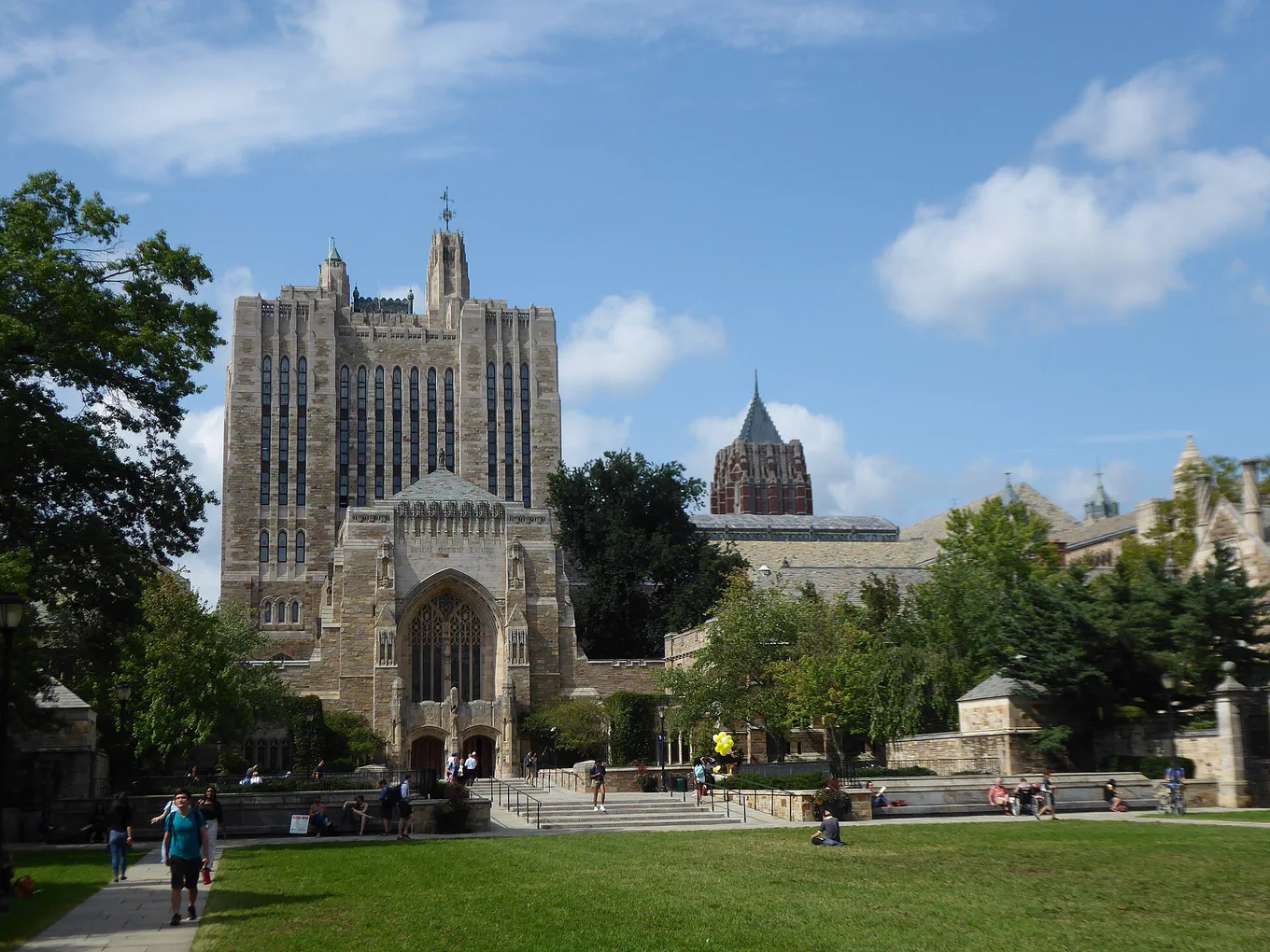
Stand here. The front entrance of Sterling Memorial Library at Yale, and Commons, the dining hall that played its reading room.
Yale plays Indiana Jones’s college in Kingdom of the Crystal Skull, and in summer 2007 Harrison Ford filmed a motorcycle chase across the campus. The chase sends Indy and his son blasting through Sterling Library’s front doors. When the scene was first mentioned, some Yale faces were aghast, so the film-makers built an 80-foot tunnel inside the library’s nave. The reading room the bike bursts into is really the Commons dining hall. John Williams’s score marks the crash with a bar and a half of Brahms’s Academic Festival Overture.
Stover at Yale(Owen Johnson, 1912). A novel of undergraduate life at Yale. It opens on a train bound for New Haven and describes the Skull and Bones tap ceremony.
God and Man at Yale(William F. Buckley Jr., 1951). Non-fiction. Buckley’s book about his undergraduate years at Yale, written while he lived in New Haven.
Ninth House(Leigh Bardugo, 2019). A dark fantasy novel, inspired when Bardugo came across the tombs of Yale’s secret societies on Grove Street.
Films to watch before you visit New Haven
Amistad(Steven Spielberg, 1997). A film. The Amistad captives held in New Haven’s jail, on the site of today’s City Hall, though Mystic Seaport stood in for New Haven.
Indiana Jones and the Kingdom of the Crystal Skull(Steven Spielberg, 2008). A film. Yale plays Indy’s Marshall College, from a 1950s Chapel Street to Sterling Memorial Library’s doors.
Everybody’s Fine(Kirk Jones, 2009). A film. Its concert-hall scenes were filmed at Yale University’s Woolsey Hall with the New Haven Symphony Orchestra, and its train and bus station scenes at Union Station.
Questions
Where is the Amistad Memorial in New Haven?
In front of New Haven City Hall, at 165 Church Street, on the site of the old New Haven Jail, where the Amistad captives were held while they awaited trial. Ed Hamilton’s three-sided bronze, dedicated in 1992, shows Sengbe Pieh, known as Joseph Cinqué, on each of its sides.
Did Louis’ Lunch invent the hamburger?
Louis’ Lunch says so, and in 2000 the Library of Congress recognised the claim, after Representative Rosa DeLauro backed it. Two rivals claim 1885: Charlie Nagreen at the Seymour Fair in Wisconsin, and the Menches brothers at the Erie County Fair in Hamburg, New York. No conclusive argument has ended the dispute.
What is New Haven-style pizza?
It’s called apizza, and it made its debut at Frank Pepe Pizzeria Napoletana on Wooster Street in 1925. It is baked in a coal- or wood-fired brick oven and has a thin crust. Pepe’s white clam pie is olive oil, oregano, grated cheese, chopped garlic, and fresh littleneck clams.