In Red Dead Redemption 2 (a truly epic video game) Saint Denis stands in as New Orleans. In 1993, I also loved Gabriel Knight: Sins of the Fathers, a point and click PC adventure set in the French Quarter. (The fact that what I have is two video games makes me feel a little ashamed. This is why I need to travel more.)
— Nick
The Duke of Orléans, France’s regent, gave his name to New Orleans when the French founded it on the Mississippi River in Louisiana in 1718. It became American with the Louisiana Purchase of 1803. Tennessee Williams’s streetcar heads the list, with Louis Armstrong’s New Year’s Eve arrest, a battle fought after the peace was signed, a shoemaker’s planned ride in a whites-only carriage, and a house made ready for Napoleon.
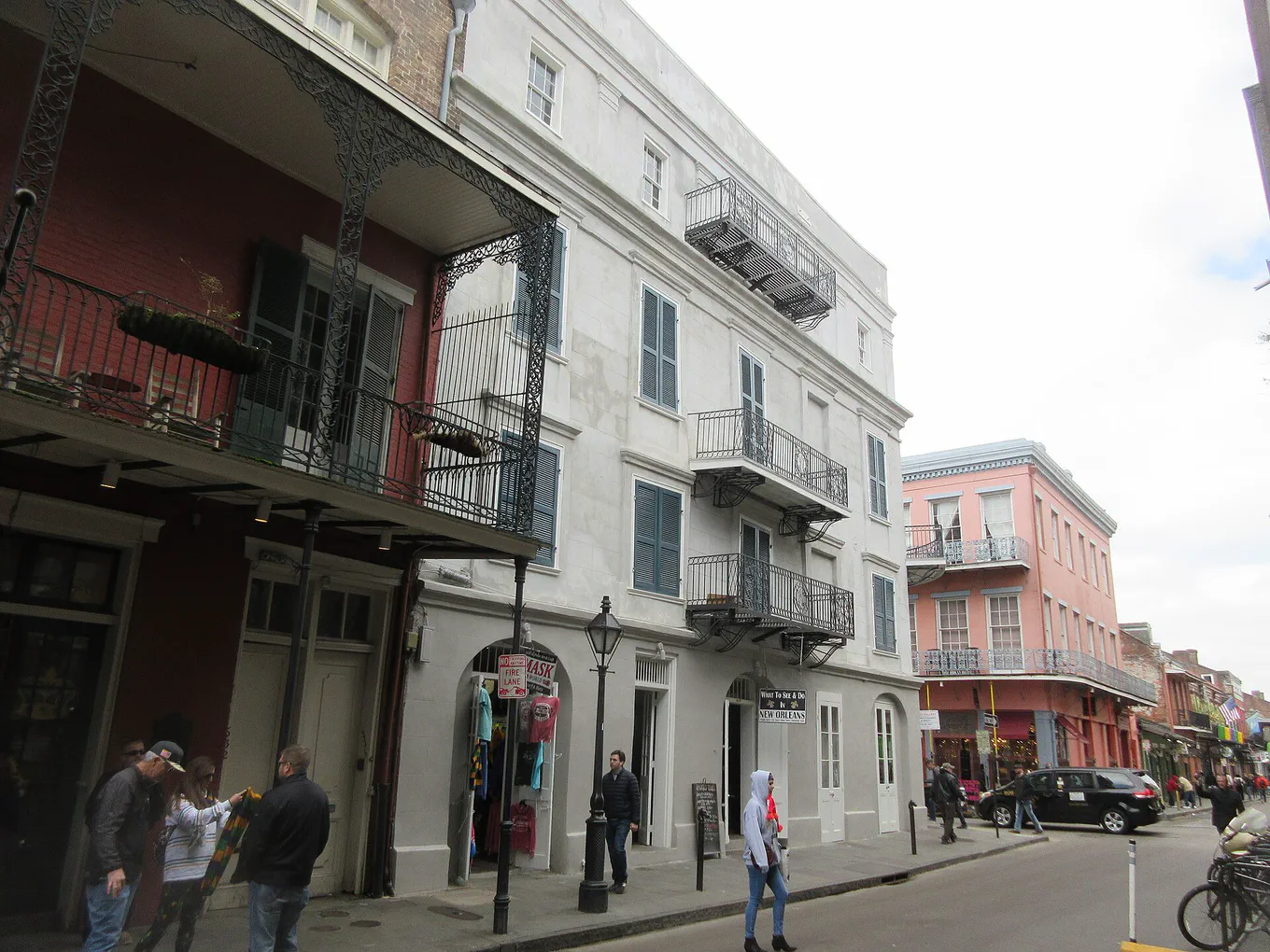
Tennessee Williams meant to write A Streetcar Named Desire during a long stay in Mexico. Instead, in 1946, he came back to New Orleans, the city he called his “spiritual home”, and lived in an apartment here. He was calling it The Poker Night. The apartment sat near the Desire streetcar line, and both its location and its address went into the play. On Broadway, his heroine Blanche arrives saying she was told to take a streetcar named Desire, transfer to one called Cemeteries, and get off at Elysian Fields.
2 Louis Armstrong’s New Year’s Eve arrest and the cornet
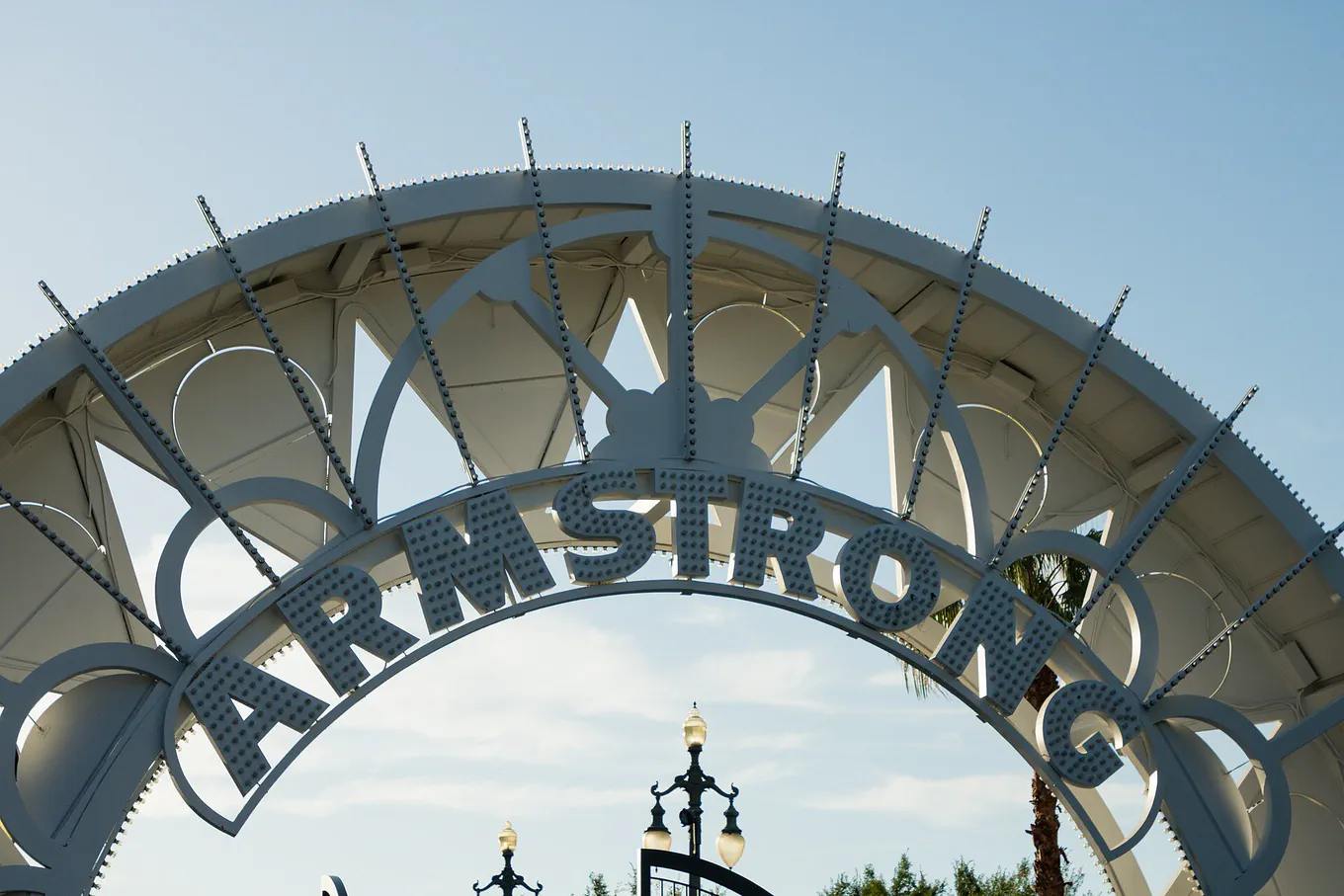
Stand here. Louis Armstrong Park, in Tremé, across Rampart Street from the French Quarter. Its 12-foot statue shows him trumpet in hand.
On New Year’s Eve 1912, a boy named Louis Armstrong borrowed his stepfather’s gun without permission and fired a blank into the air. Arrested, he spent the night at the juvenile court, and the next day was sentenced to the Colored Waif’s Home for Boys, which was run like a military camp. There, a teacher taught him to play the cornet properly and to read music, then chose him to lead the Home’s brass band. He had gone in for firing a gun. He came out a bandleader.
3 Andrew Jackson’s battle after the peace at Chalmette
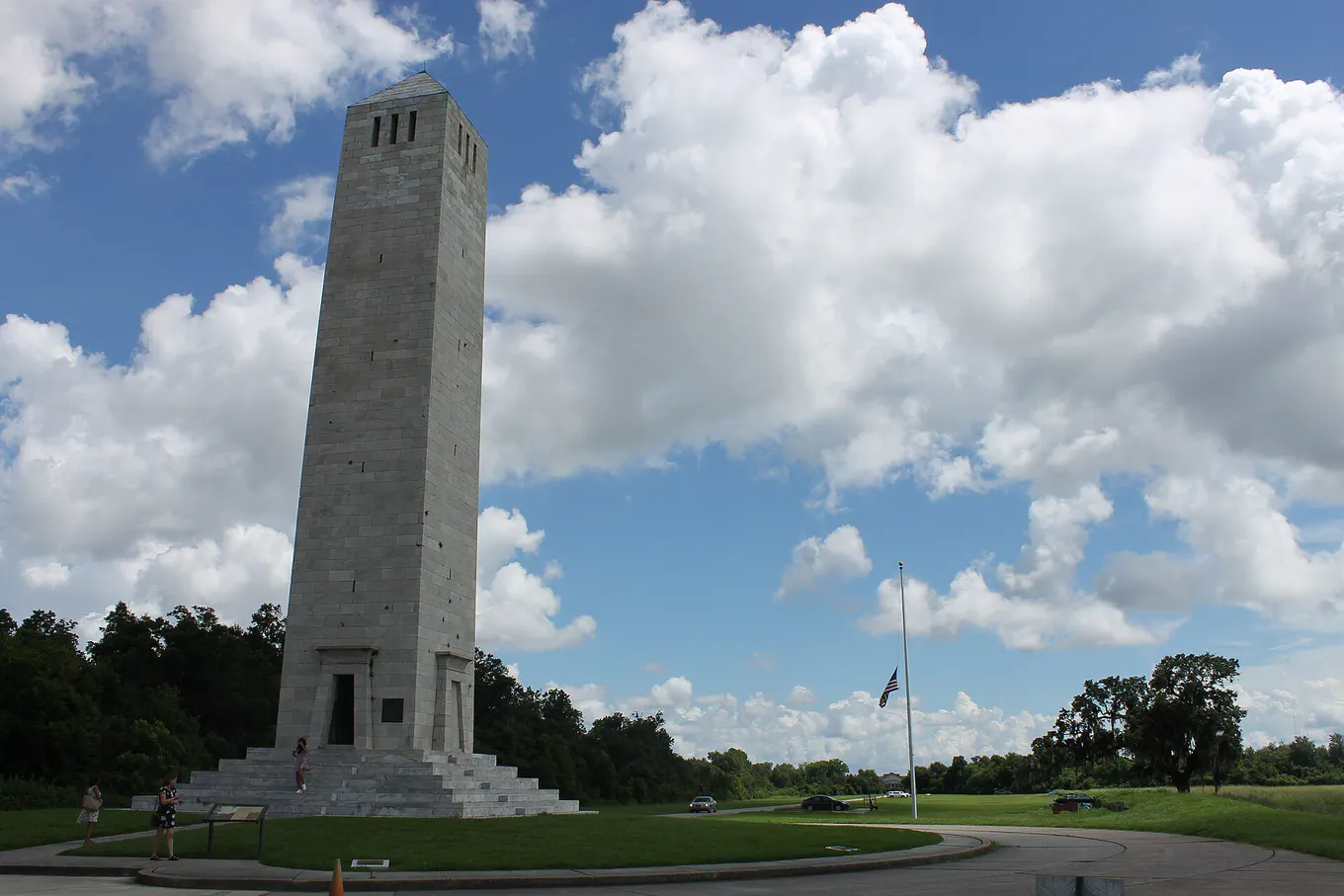
Stand here. Chalmette Battlefield, just downriver from the city, now run by the National Park Service. The Chalmette Monument stands in front of the visitor centre.
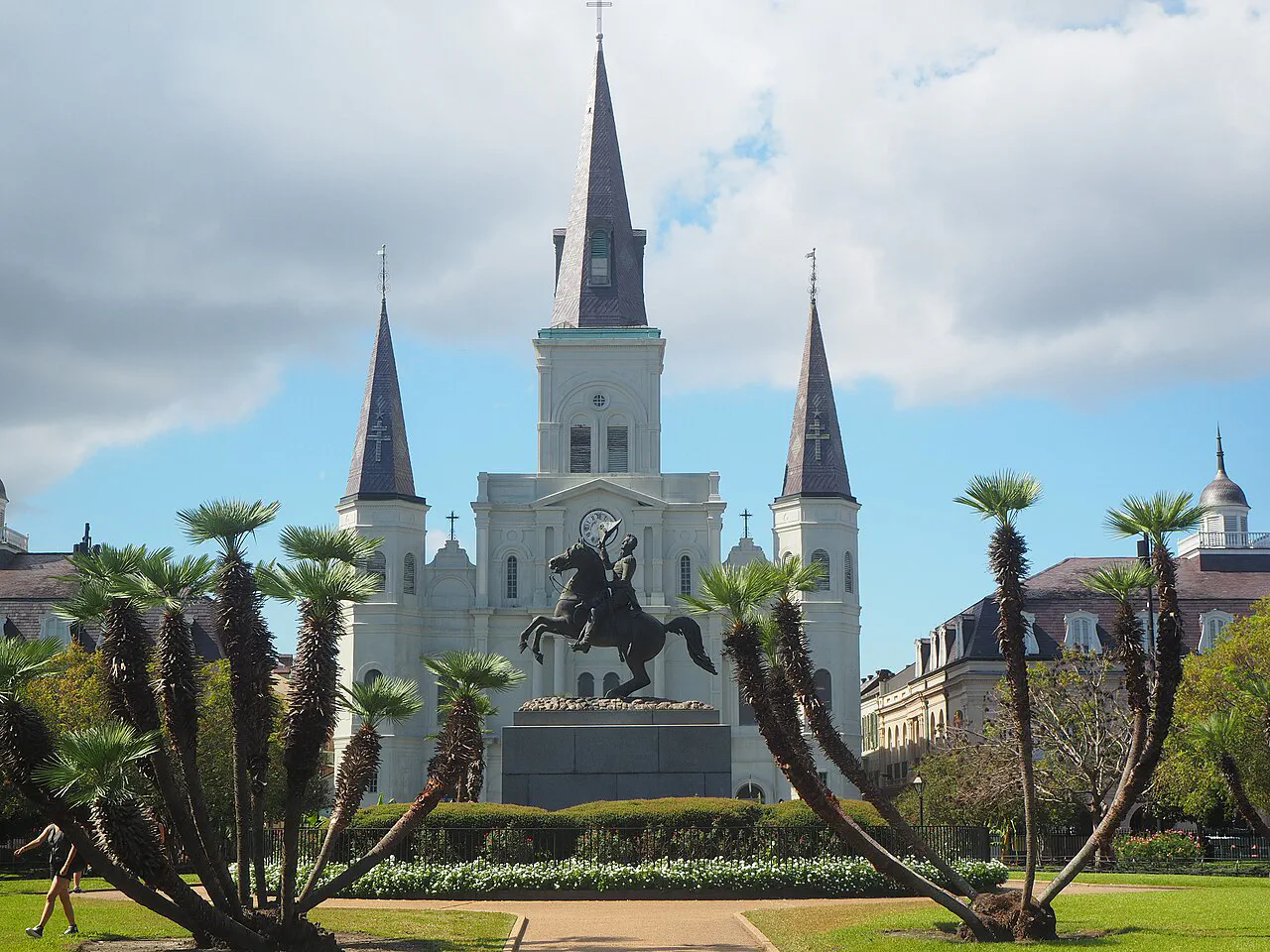
Jackson Square, beside St Louis Cathedral, is named for the general who won here and later became president. On 8 January 1815, Andrew Jackson’s hastily assembled army beat a larger, battle-hardened British force. The Americans counted 71 casualties, the British more than 2,000, their commander among the dead. But the treaty to end the war had been signed at Ghent fifteen days earlier, and the news hadn’t yet reached America from Europe. For decades afterwards, the country kept 8 January as a national holiday, just like the Fourth of July.
4 Homer Plessy’s planned arrest at Press and Royal Streets
Stand here. The corner of Press and Royal Streets, where Plessy was taken off the train. A marker was placed here in 2009.
If you’ve heard of Plessy v. Ferguson and “separate but equal”, this is where the case began. On 7 June 1892, Homer Plessy, a shoemaker, boarded a whites-only carriage on a first-class ticket. He meant to be caught. A citizens’ committee had recruited him to challenge Louisiana’s Separate Car Act, and as planned, the train was stopped and he was arrested. But in 1896, the US Supreme Court ruled 7–1 against him. He paid a $25 fine. Louisiana’s governor pardoned him in 2022, nearly ninety-seven years after his death.
5 The Napoleon House, a mayor’s refuge for an emperor
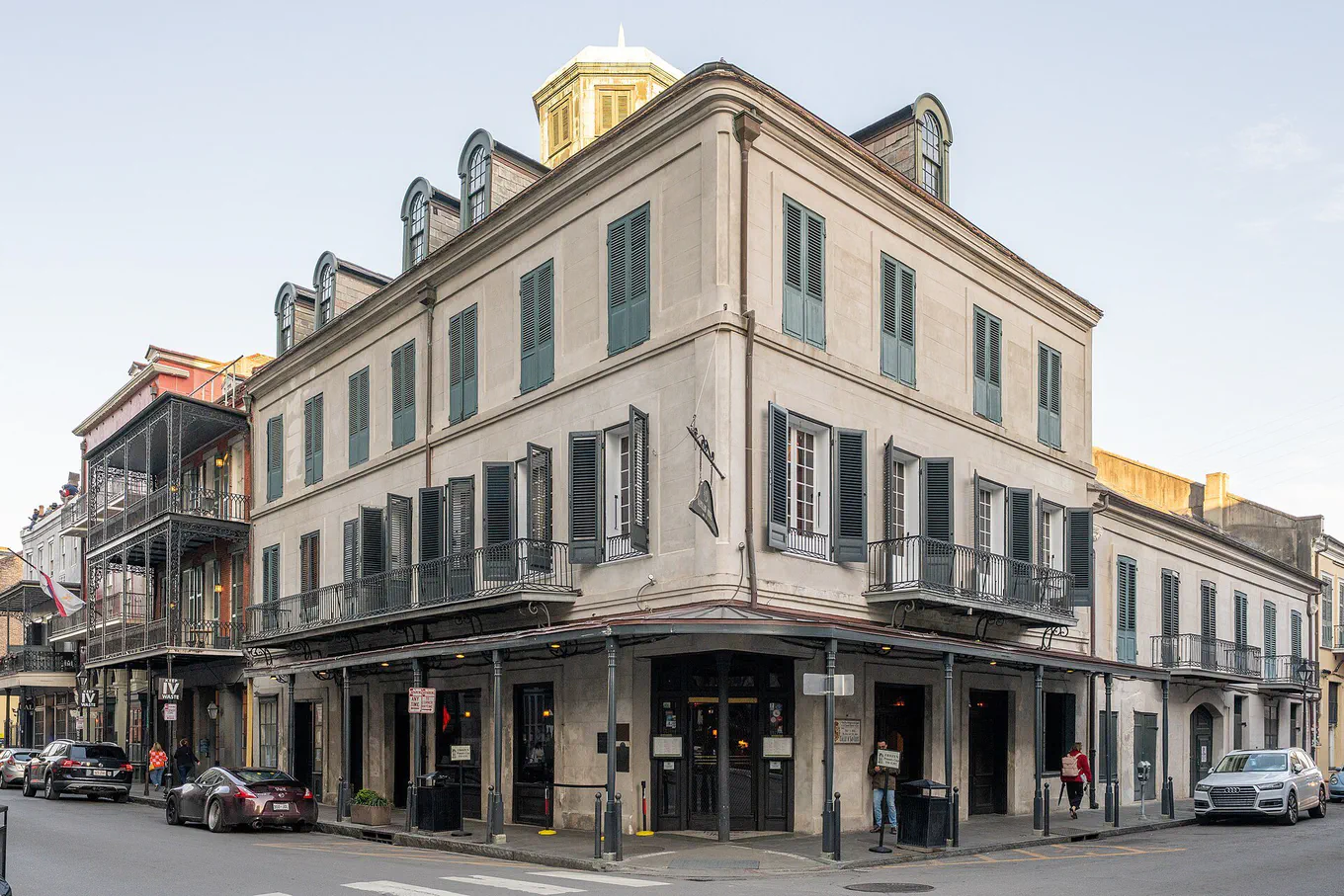
Stand here. 500 Chartres Street, at the corner of St Louis Street. It has been a restaurant called Napoleon House since 1914, known for its Pimm’s Cup.
Napoleon never slept here, though a former mayor of New Orleans, Nicholas Girod, hoped he would. In the spring of 1821, with Napoleon in exile on St Helena, Girod remodelled and furnished this house and offered him refuge. The story goes that Girod also helped fund a ship to rescue the emperor, with a Louisiana pirate aboard. It had already sailed when a French merchant ship signalled that Napoleon was dead, and it turned back. Nineteen years later, Girod died at his own home on this same corner.
Pack nothing. Leave Friday.
Every Friday, I write a free letter, Journey, that takes us on a trip through places, stories, and ideas.
A Streetcar Named Desire(Tennessee Williams, 1947). A play, set in Stanley and Stella Kowalski’s grimy apartment at 632 Elysian Fields Avenue, Williams’s own house number.
A Confederacy of Dunces(John Kennedy Toole, 1980). A novel. It opens with Ignatius Reilly agreeing to meet his mother under the D. H. Holmes clock on Canal Street.
The Moviegoer(Walker Percy, 1961). A novel. A young stockbroker in postwar New Orleans wanders the streets of the French Quarter.
Zeitoun(Dave Eggers, 2009). Non-fiction. A man rides out Hurricane Katrina in his Uptown home, then is held for three days in a makeshift jail in the Greyhound bus station.
Films to watch before you visit New Orleans
A Streetcar Named Desire(Elia Kazan, 1951). A film. Its heroine rides the Desire streetcar to the French Quarter, and its opening and closing scenes were shot on location.
Easy Rider(Dennis Hopper, 1969). A film. Its riders head east to reach New Orleans for Mardi Gras, and end up in a French Quarter cemetery.
Interview with the Vampire(Neil Jordan, 1994). A film, written by Anne Rice from her first novel, shot partly on location in the French Quarter.
Questions
Can you still ride the streetcar named Desire?
No. The Desire line ran from 1920 to 1948, at the height of streetcar use in New Orleans. Its route went down Royal Street, through the French Quarter, to Desire Street in the Bywater, and back up to Canal Street. It closed the year after the play opened on Broadway.
Can you visit the Battle of New Orleans battlefield?
Yes. Chalmette Battlefield is just downriver from the city, roughly five miles southeast of the French Quarter. The National Park Service runs it as part of Jean Lafitte National Historical Park and Preserve, and the Chalmette Monument stands in front of its visitor centre.
Why does the French Quarter look Spanish rather than French?
Because Spain rebuilt it. New Orleans was ceded to Spain in 1763. Fires in 1788 and 1794 then destroyed 80 per cent of its buildings, so nearly all of the Quarter dates from the late 1790s onward. Spanish fire codes banned wooden siding in favour of brick, and flat tiled roofs replaced the old peaked French ones.