Newcastle upon Tyne, United Kingdom, England, Europe
In 1897, a little Tyne-built boat called Turbinia gatecrashed the Royal Navy’s jubilee review at 34 knots, outrunning the boat they sent to catch her. Within two years, the Navy was buying the engines… which makes it pretty successful as a product demo.
— Nick
Newcastle upon Tyne is England’s northernmost city, on the north bank of the Tyne opposite Gateshead. It takes its name from a castle built in 1080 by William the Conqueror’s eldest son. Its stories here are a ladder elopement, a locomotive called Rocket, a lamp shown to more than seven hundred people, a ship that turned up unannounced at Queen Victoria’s jubilee, and Martin Luther King’s honorary degree.
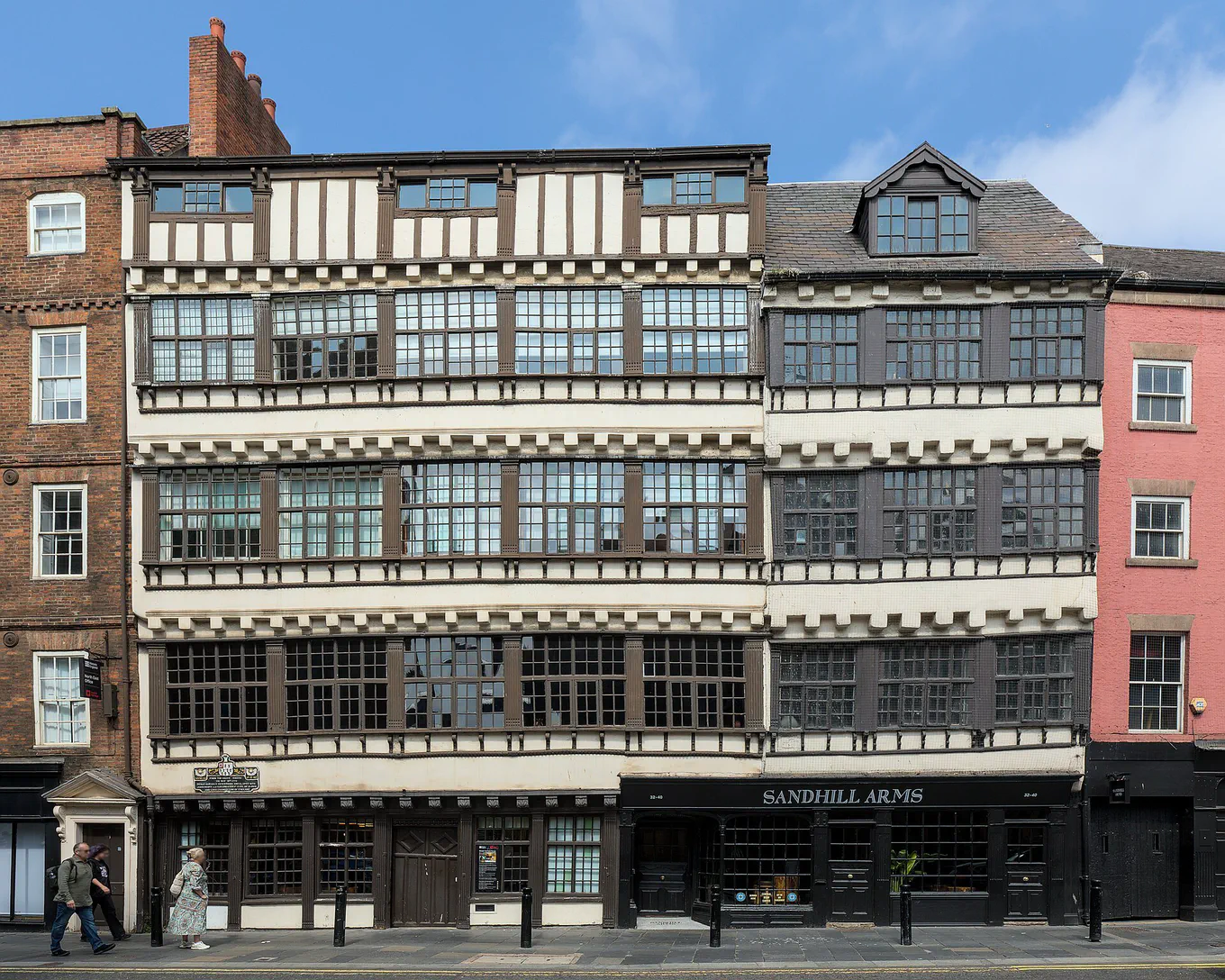
Stand here. Bessie Surtees House, 41–44 Sandhill, overlooking the Tyne. Two merchants’ houses from the 1500s and 1600s, now Historic England’s North East office.
On 18 November 1772, Bessie Surtees eloped from a first-floor window of her father’s house on Sandhill. Her family had objected to John Scott, a coal merchant’s son, and tried to stop the match. Scott came with a ladder and an old friend, and carried her over the border to Blackshields, in Scotland, where they married the next day. When the families made peace, the couple married again in St Nicholas’ Cathedral. The suitor the Surtees family had tried to keep away went on to be Lord Chancellor.
2 Stephenson’s Rocket, built on Forth Street in Newcastle
Stand here. The old Forth Street Works, on South Street. Its office block and one workshop are restored, and the boiler shop is now a music venue.
Stephenson’s Rocket was built here, by the world’s first company set up to build railway engines. In 1829, Robert Stephenson, George’s son, designed it for the Rainhill Trials, a contest with a £500 prize held by the Liverpool and Manchester Railway. Rocket travelled in pieces, by horse wagon to Carlisle and by water to Liverpool, and that October it won. But on the railway’s opening day, 15 September 1830, Rocket hit an unlatched carriage door and threw William Huskisson, the MP for Liverpool, onto the track. Huskisson died that evening.
3 Joseph Swan’s electric lamp at the Lit & Phil
Stand here. The Lit & Phil, 23 Westgate Road, yards from Central Station. Its library has been here since 1825.
While Thomas Edison was working on his electric lamp, Joseph Swan, a chemist with a Newcastle firm, was working on his own. On 3 February 1879, Swan showed a working lamp to more than seven hundred people in the lecture theatre of the Lit & Phil, Newcastle’s Literary and Philosophical Society. Both men patented their lamps, and their firms became rivals. Then Swan’s strong British patents brought the two firms together. The merged company of 1883 carried both men’s names: Ediswan.
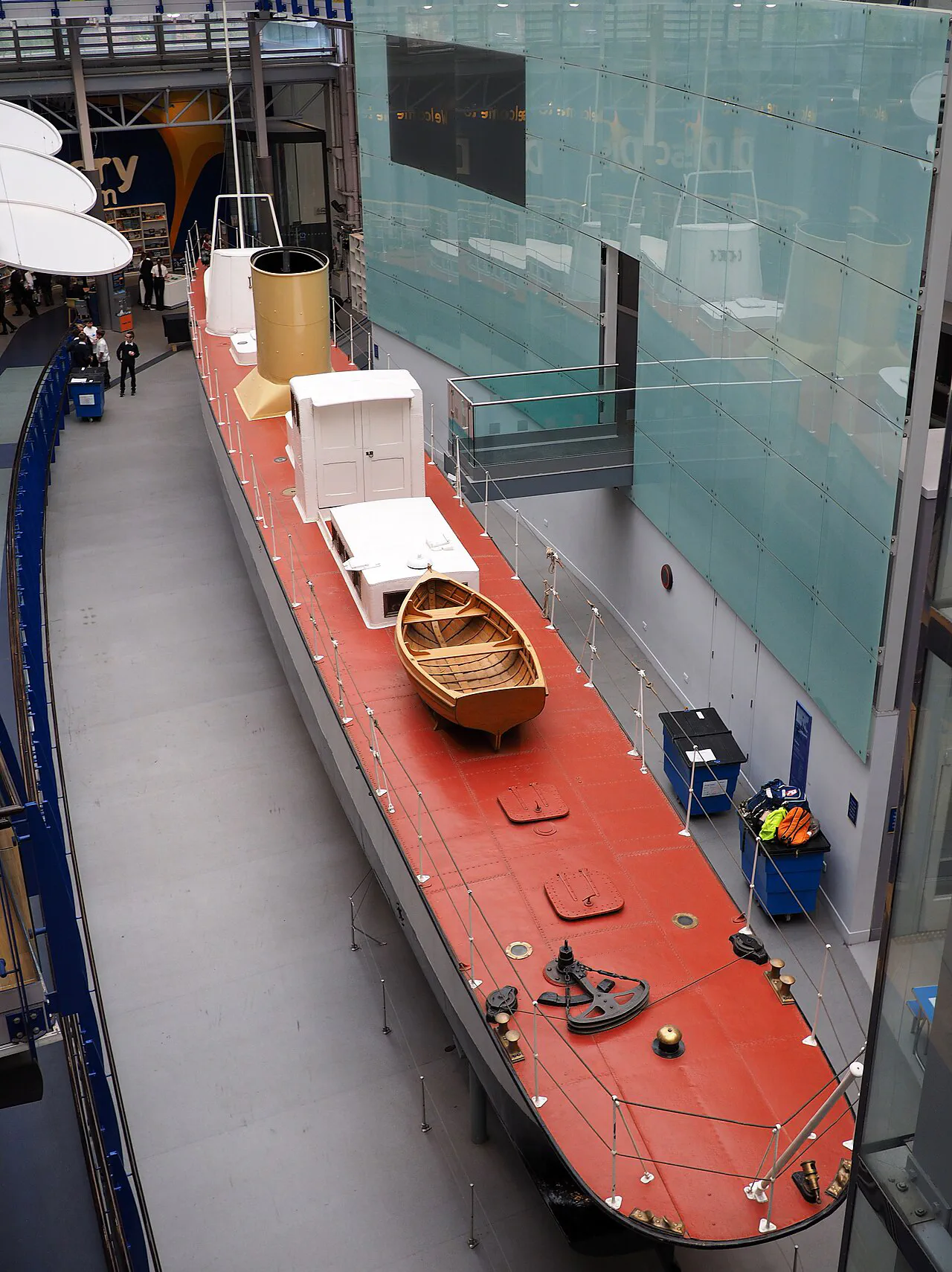
4 Charles Parsons’s Turbinia, the Tyne ship that raced through the Navy’s jubilee review
Stand here. The entrance hall of the Discovery Museum, Blandford Square. Turbinia has pride of place there.
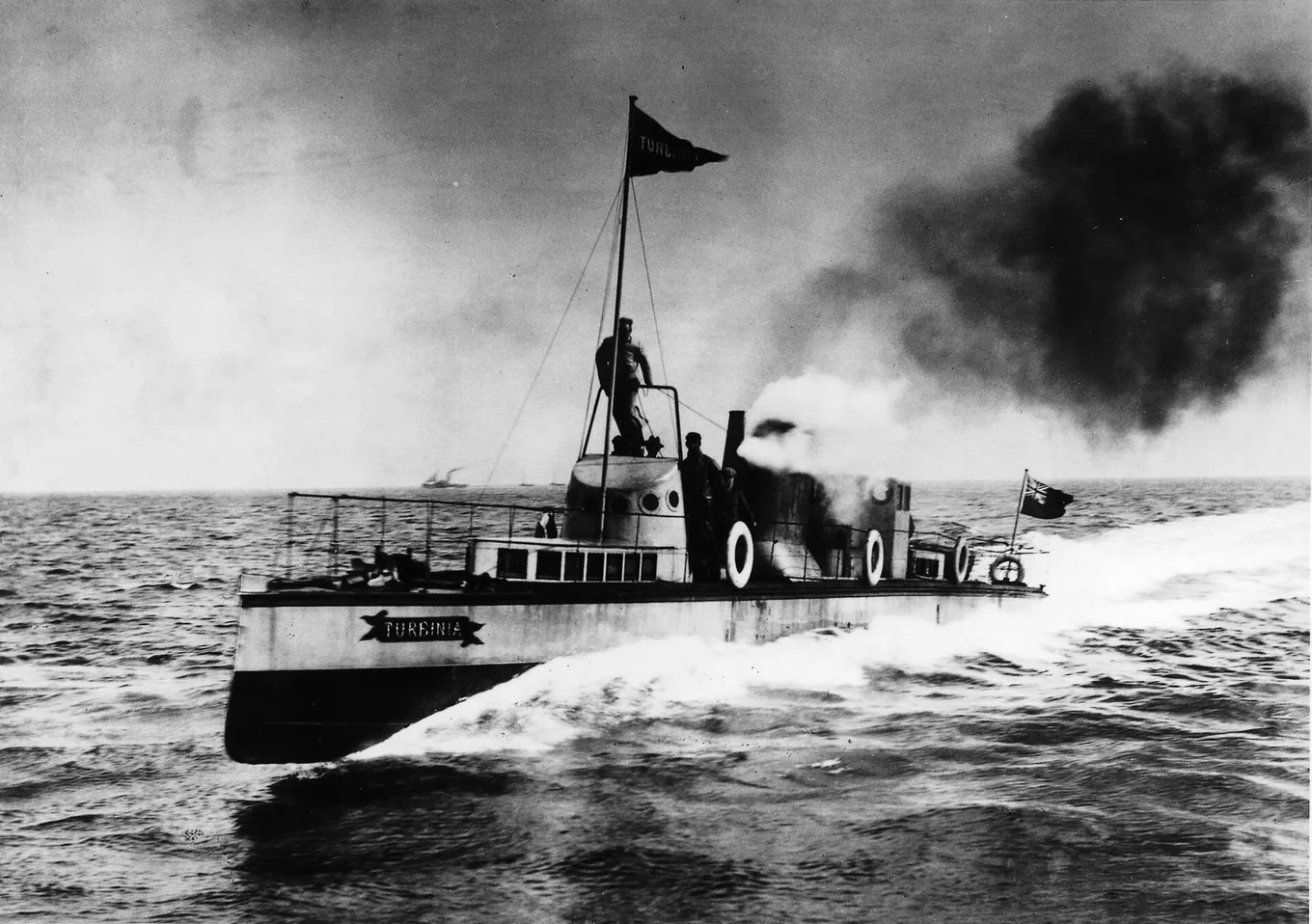
Charles Parsons’s steam-turbine ship Turbinia racing at full speed, in a photograph by Alfred John West.Alfred John West / Public domain.
Queen Victoria’s Diamond Jubilee had an unannounced visitor. On 26 June 1897, as the Navy’s warships lay in two lines at Spithead for the jubilee review, Turbinia turned up. Built on the Tyne, she was the first ship driven by steam turbines, the engine Charles Parsons had designed. She raced between the lines in front of the crowd and almost swamped the navy boat sent after her. She could make 34 knots, when the Navy’s fastest made 27. Within two years, the Navy was launching destroyers with Parsons’s turbines.
5 Martin Luther King’s honorary degree in King’s Hall, Newcastle
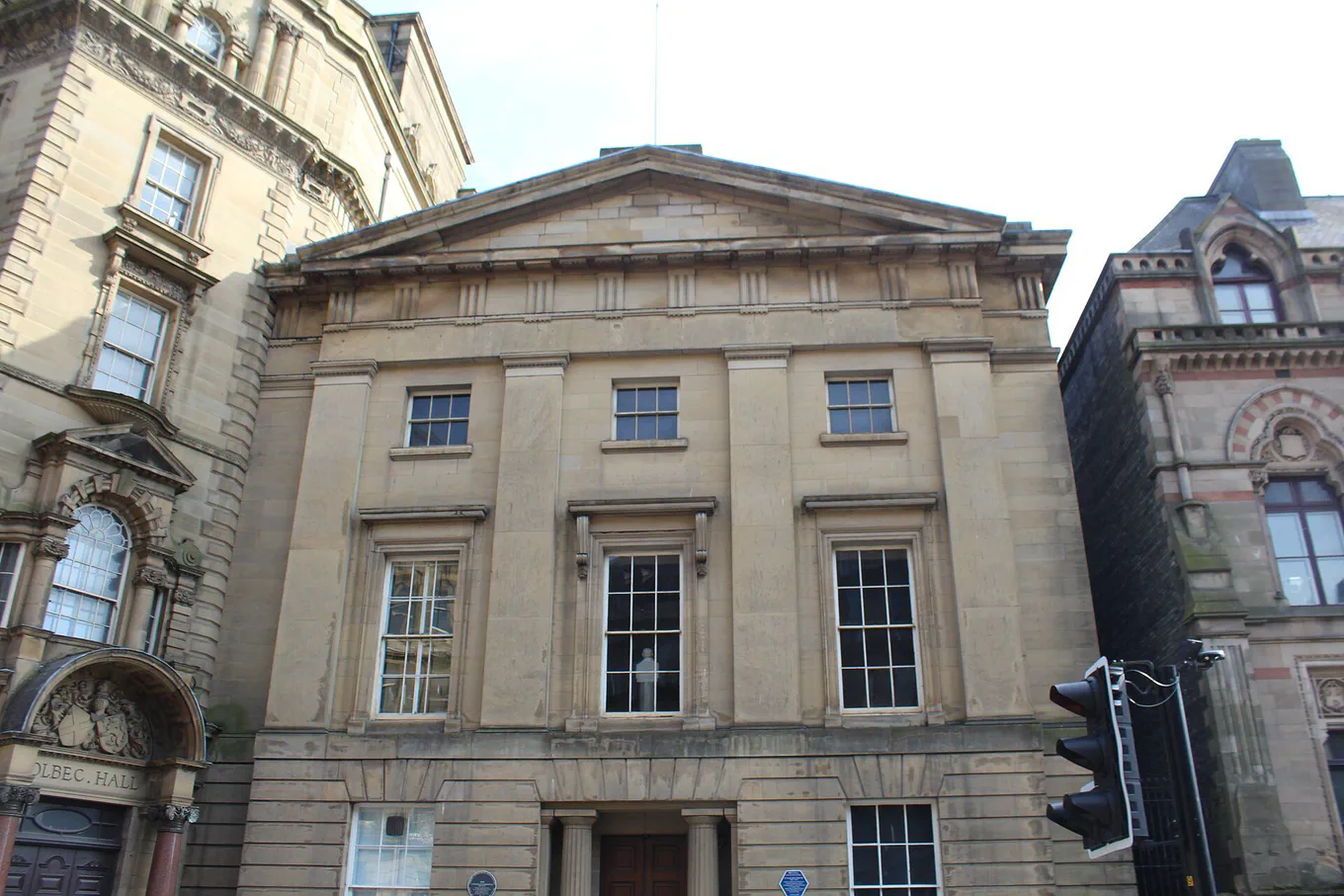
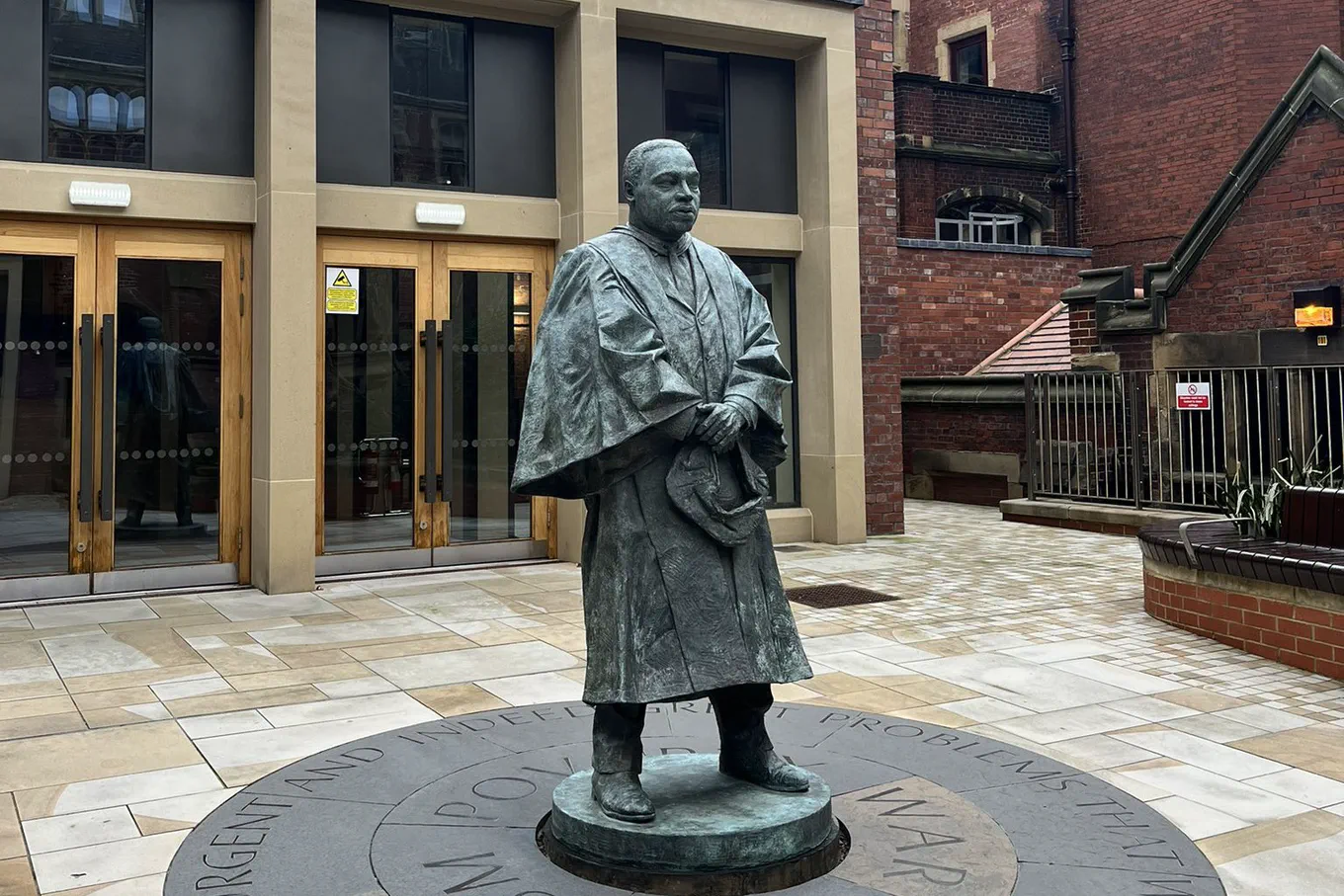
Stand here. King’s Quad at Newcastle University, beside King’s Hall. A two-metre bronze of King stands there, its base ringed with bronze lettering.
Newcastle University was the only UK university to give Martin Luther King an honorary degree in his lifetime. It was his last visit to the UK, and he was there for just 24 hours. On 13 November 1967, in King’s Hall, he received the degree from the University’s Chancellor and, unusually, was asked to speak. He named racism, poverty, and war as three urgent problems facing the world, and held the audience spellbound. Barely five months later, King was assassinated in Memphis, and the University was organising his memorial service.
Books to read before you visit Newcastle upon Tyne
The Stars Look Down(A. J. Cronin, 1935). A novel. It chronicles two decades in an English coal-mining community, set in a Northumberland mining town and in ‘Tynecastle’, the novel’s name for Newcastle upon Tyne.
The Day of the Sardine(Sid Chaplin, 1961). A novel set in a working-class community in Newcastle upon Tyne at the very beginning of the 1960s.
Another World(Pat Barker, 1998). A novel set in Newcastle, about Geordie, a 101-year-old Somme veteran in his last days, narrated mainly by his grandson Nick, a schoolteacher.
Films to watch before you visit Newcastle upon Tyne
Get Carter(Mike Hodges, 1971). A film. Michael Caine as a London gangster home in Newcastle for his brother’s funeral, and the Gateshead car park later nicknamed after it.
Purely Belter(Mark Herman, 2000). A film. Football-mad teenagers from broken families in Gateshead break into St James’ Park, Newcastle United’s ground.
Stormy Monday(Mike Figgis, 1988). A film, written around specific places in Newcastle by a director who spent much of his youth there. Scenes include the Royal Station Hotel.
Goal!(Danny Cannon, 2005). A film. A footballer is given a trial with Newcastle United and trains until the early hours at St James’ Park.
Questions
Where is Stephenson’s Rocket now?
Rocket is at the National Railway Museum in York. It was built in Newcastle in 1829 at the Forth Street Works, whose office block and one workshop, on South Street, have been restored by the Robert Stephenson Trust.
Was the Tyne Bridge the model for Sydney Harbour Bridge?
Not quite. The same firm, Mott, Hay and Anderson, designed the Tyne Bridge and the one in Sydney, and both took their design from the Hell Gate Bridge in New York. The Tyne Bridge was built by Dorman Long of Middlesbrough and opened by King George V on 10 October 1928.
Where does the word Geordie come from?
Nobody knows for sure. All the theories agree it comes from a pet form of George, but not on why. One traces it to 1715, when Jacobite rebels called Newcastle’s people staunch supporters of the Hanoverian kings. Another points to the Geordie safety lamps miners used, designed by George Stephenson. A third says George was a common name among pitmen.