Albert Spaggiari’s gang tunnelled into a Nice bank vault and left a note on the wall, ‘Without weapons, without hatred, without violence.’ Then he jumped from a courthouse window onto a parked car and rode off on a motorbike. He was never caught. Now that’s a story!
— Nick
Nice sits on the French Riviera, France’s south-eastern Mediterranean coast, about 30 kilometres west of the Italian border. Greeks founded it around 350 BC as Nikaia, and it became French only in 1860. Its stories here are a tsar’s heir and his last wish, a dancer’s silk shawl, Matisse and his scissors, a set designer in hiding, and a thief who left court by the window.
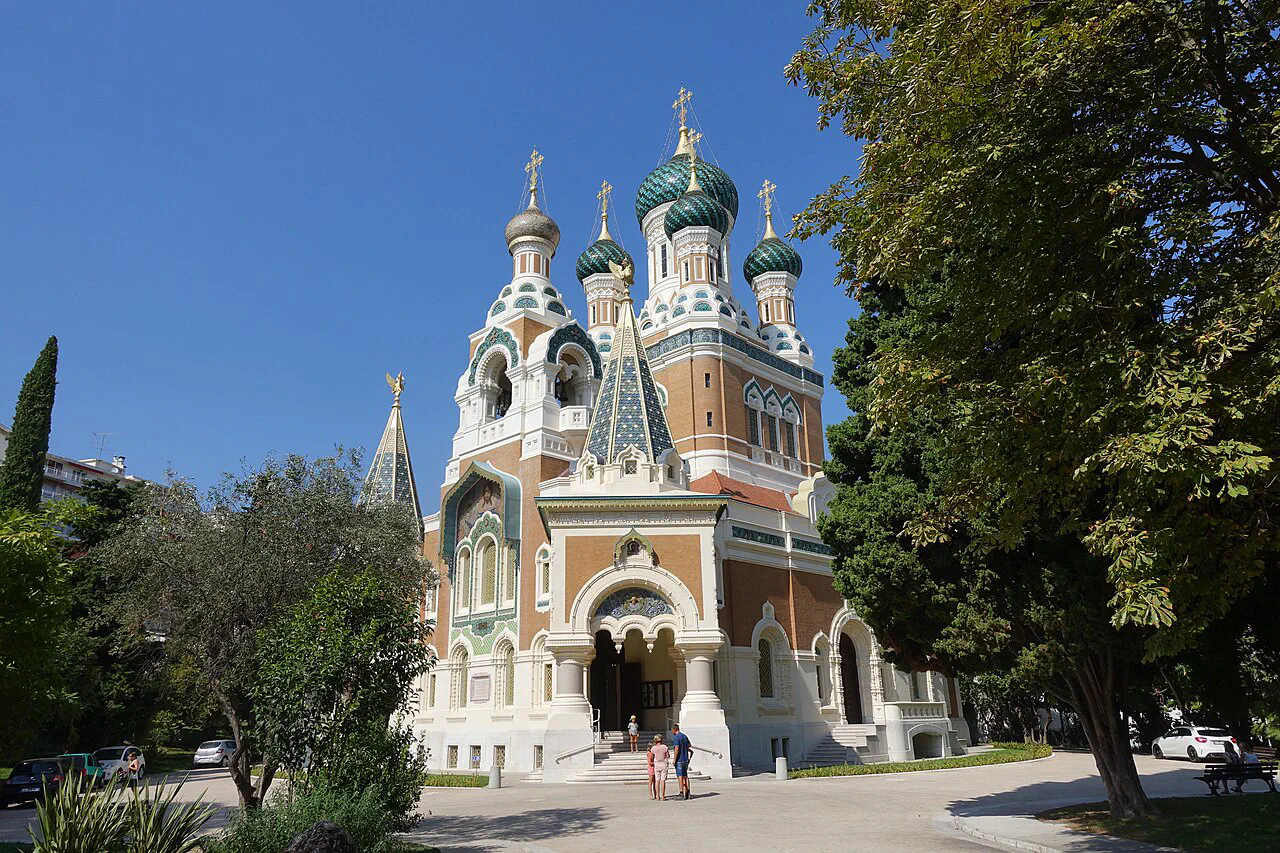
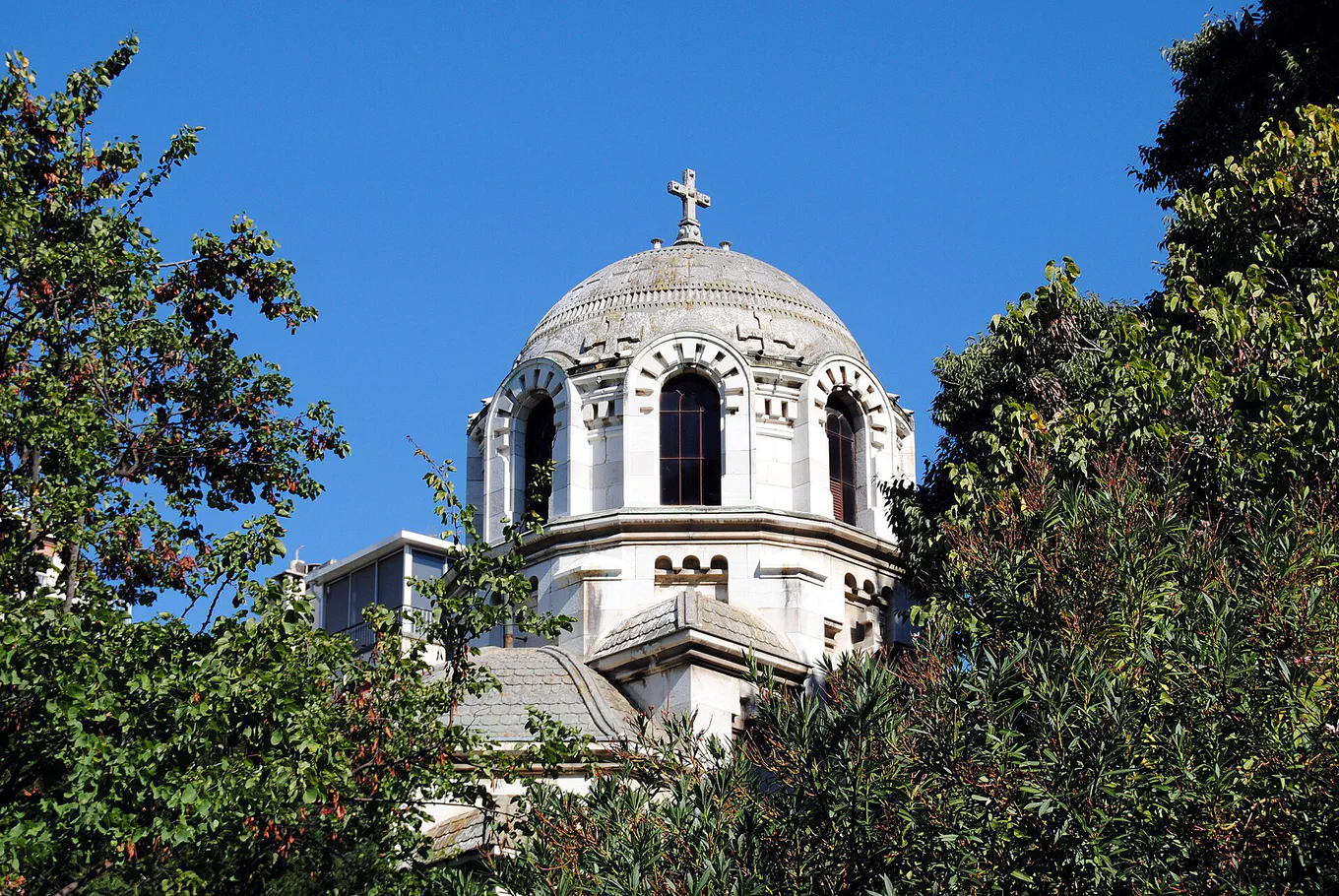
The mother of Nicholas II, Russia’s last emperor, was promised first to another man. The tsar’s heir, also named Nicholas, fell for Princess Dagmar of Denmark from a photograph, and once they were engaged he wrote to her daily. Then his health failed, and in the south of France doctors found meningitis. In April 1865, dying at the Villa Bermond in Nice with Dagmar beside him, he asked that she marry his younger brother, Alexander. She did. Their eldest son paid for the cathedral raised in his uncle’s memory.
2 Isadora Duncan and the red silk shawl in Nice
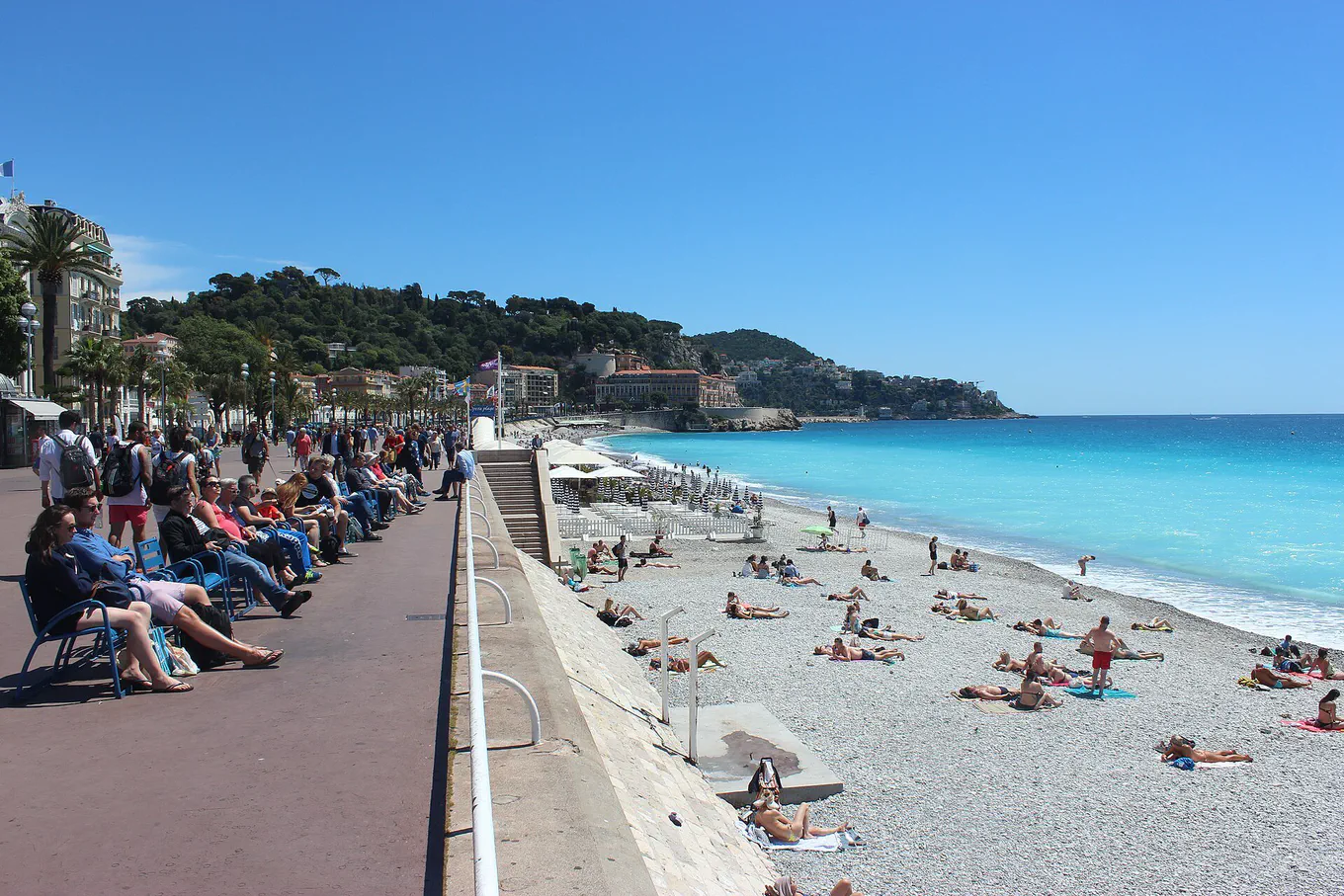
Stand here. The Promenade des Anglais, the seafront walk that runs about 7 kilometres along the sea. Exactly where on it isn’t known.
Isadora Duncan, the Mother of Modern Dance, was among the most famous dancers alive. In Nice in September 1927, she rode out in an open sports car, in a long red silk shawl from her friend Mary Desti. Against the cold, Desti asked her to take a cape, but Duncan would wear only the shawl. It caught in the rear wheel and axle, pulled her out, and broke her neck. Her ashes went beside her children’s. They had drowned in Paris in 1913, when their car plunged into the Seine.
3 Henri Matisse’s second life with scissors in Cimiez
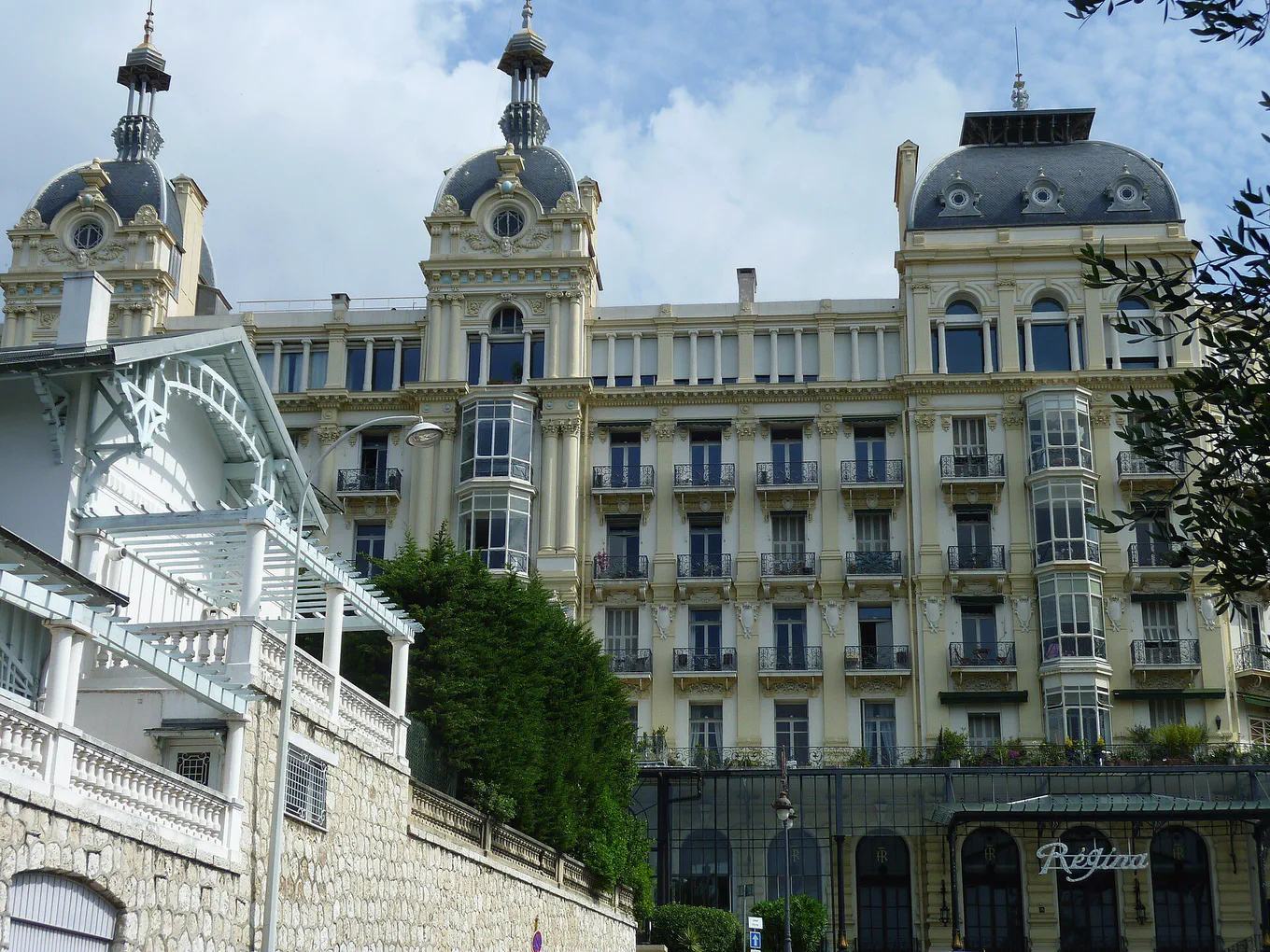
Stand here. The Régina, 71 boulevard de Cimiez, a former hotel designed to welcome Queen Victoria. The Musée Matisse is a stone’s throw away.
On Christmas Day 1917, Henri Matisse came to Nice, and the light made him stay. “I decided not to leave Nice,” he said, “and I stayed there practically all my life.” But in 1941, cancer surgery nearly killed him, leaving him in a wheelchair and often in bed. Three bedridden months turned him to paper and scissors. Sheets were painted for him, he cut shapes, and his assistant Lydia Delectorskaya pinned them up as he directed. At the Régina, the cut-outs grew monumental. He called these years his second life.
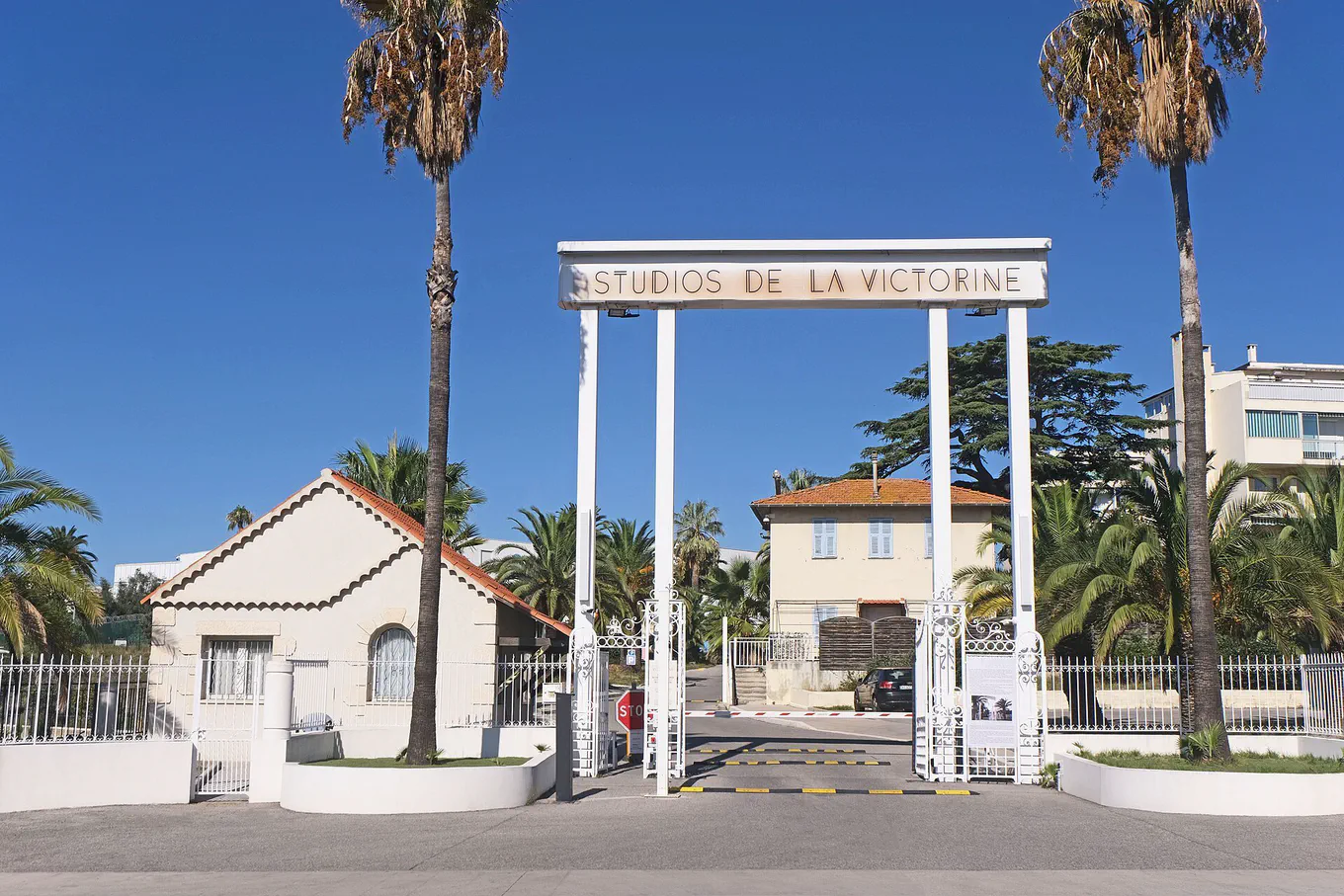
Children of Paradise, voted France’s best film ever by 600 critics and professionals, was shot at the Victorine in 1943 and 1944, under the German occupation. Its set designer, Alexandre Trauner, a Jew who had fled antisemitism at home, now worked in hiding and lived under an assumed name. His main set was the Boulevard du Temple, a street a quarter of a mile long. A storm badly damaged it, and it had to be rebuilt. Many of the 1,800 extras were Resistance agents, using the film as cover.
5 Albert Spaggiari’s leap from a Nice courthouse window
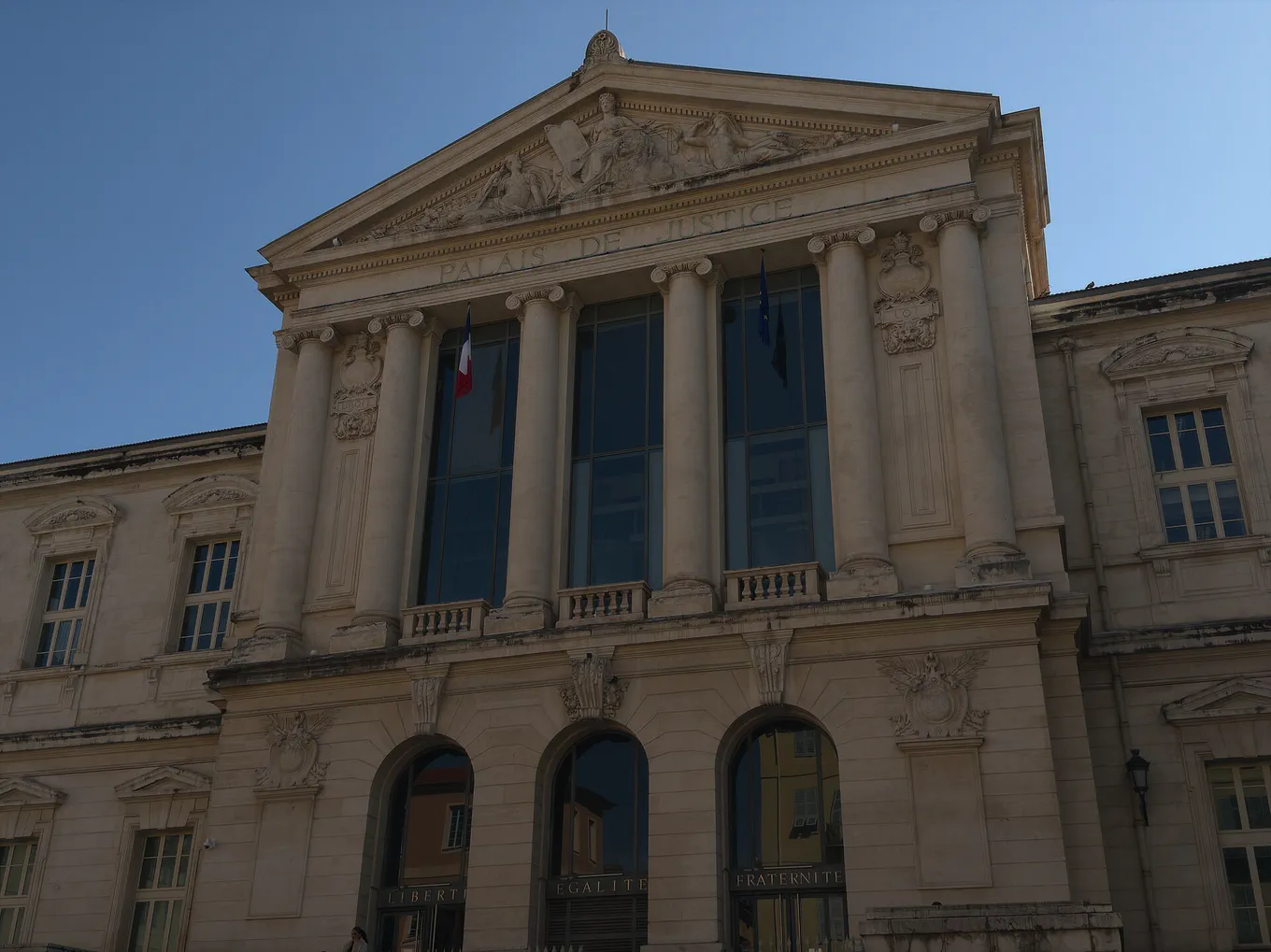
Stand here. The Palais de Justice, Nice’s courthouse, and the Rue de la Préfecture beside it. Spaggiari escaped along this street.
Nice’s “heist of the century” was Albert Spaggiari’s plan. His gang tunnelled for two months from the sewers into a Société Générale vault, and over the Bastille Day weekend they took money and valuables worth about 46 million francs. On the wall they left a message, “Without weapons, without hatred, without violence.” That October, a tip led police to one of the thieves. He named the gang, and Spaggiari was arrested at Nice airport. But in March 1977, Spaggiari jumped from a courthouse window onto a parked car and rode off on a waiting motorcycle. He stayed free for life, and the loot was never found.
Pack nothing. Leave Friday.
Every Friday, I write a free letter, Journey, that takes us on a trip through places, stories, and ideas.
Promise at Dawn(Romain Gary, 1960). A memoir, also called an autobiographical novel. Gary’s teenage years in Nice, where his mother ran the Hotel-Pension Mermonts.
Travels through France and Italy(Tobias Smollett, 1766). A travel book. Its principal destination was Nice, chosen for its reputedly beneficial climate for sufferers of pulmonary complaints; topics include the Roman remains at Cimiez.
Swimming Home(Deborah Levy, 2011). A novel. In the summer of 1994, the poet Joe Jacobs is staying at a summer home in Nice with his wife, daughter, and two friends.
Films to watch before you visit Nice
Children of Paradise(Marcel Carné, 1945). A film. Its quarter-mile street set was built at the Victorine Studios, on avenue Édouard Grinda, during the German occupation.
Day for Night(François Truffaut, 1973). A film about making a film at the Victorine Studios, with the Atlantic Hotel, 12 boulevard Victor Hugo, as its Windsor Hotel.
To Catch a Thief(Alfred Hitchcock, 1955). A film. In it, Robie meets an insurance man at a flower market recreated on Boulevard Jean Jaurès. The real one is on Cours Saleya.
À propos de Nice(Jean Vigo, 1930). A film. The rich at leisure on the Promenade des Anglais, then the carnival, with its processions and masks.
Questions
Can you visit the Russian Orthodox Cathedral in Nice?
Yes. The Cathedral of St Nicholas stands near boulevard du Tzaréwitch, at the end of avenue Nicolas II. It reopened to visitors in July 2012, and officially in January 2016, after nearly two years of work. The tsarevich’s chapel stands beside it, on the spot where he died in 1865.
Why is it called the Promenade des Anglais?
Because the English were behind it. In 1820, a harsh winter further north brought beggars to Nice, and some of the English there proposed putting them to work on a walkway along the sea. The Reverend Lewis Way and members of Holy Trinity, the Anglican church in Nice, funded it. Locals called it the English Way.
Is there a castle on Castle Hill in Nice?
No longer. French troops took the castle in 1705, and Louis XIV had it destroyed in 1706. Castle Hill, a limestone rock 93 metres high, is now a park, with views of the harbour at sunrise and the Promenade des Anglais at sundown.