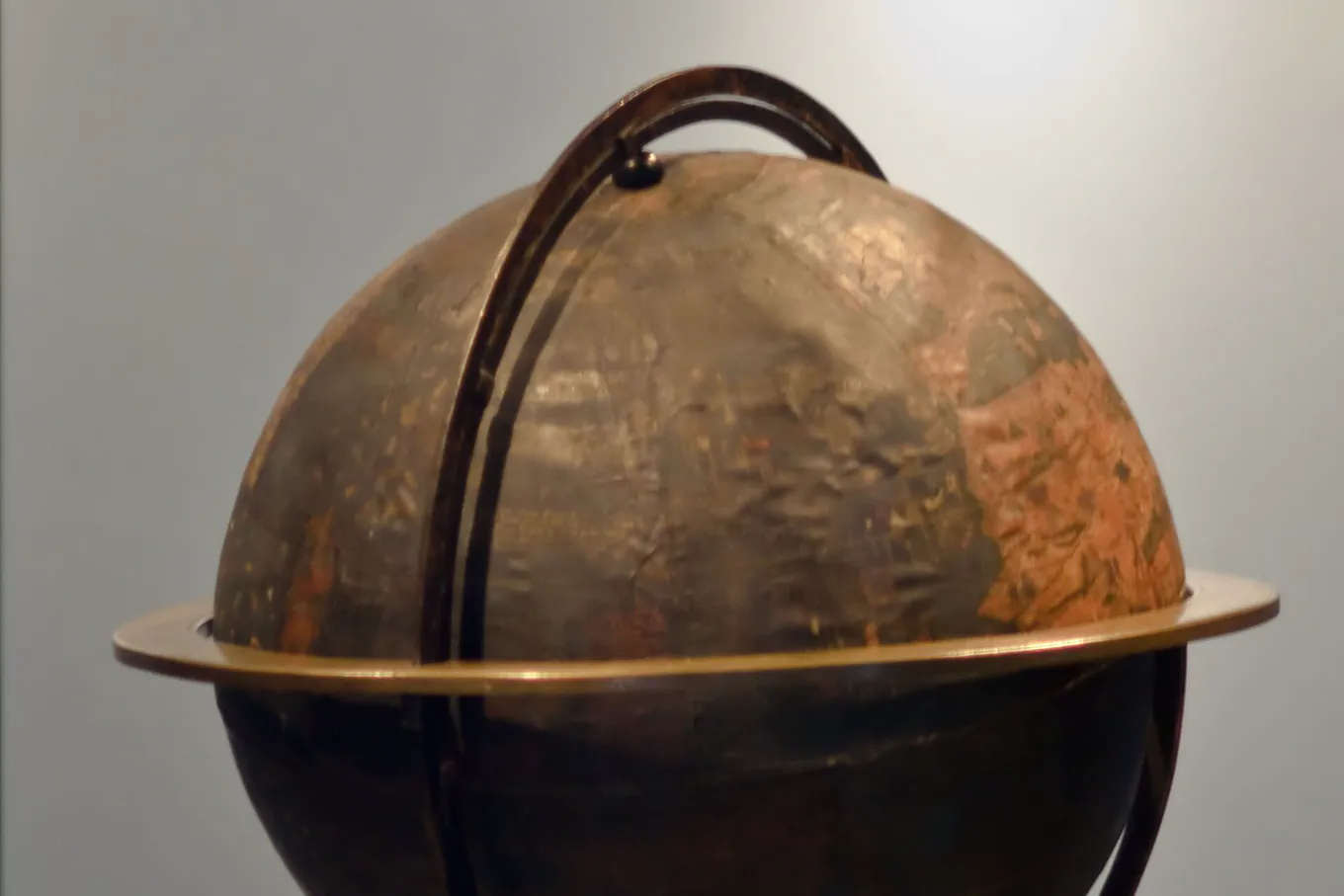
Martin Behaim’s globe, the oldest that survives, shows nothing but ocean between Europe and Asia. It was made just before Columbus sailed. In 1992, I followed Columbus’s route across that ocean on a tiny yacht. I can confirm there’s a lot of ocean, but eventually you hit that strange lumpy stuff sticking up out of the water. The Americas.
— Nick
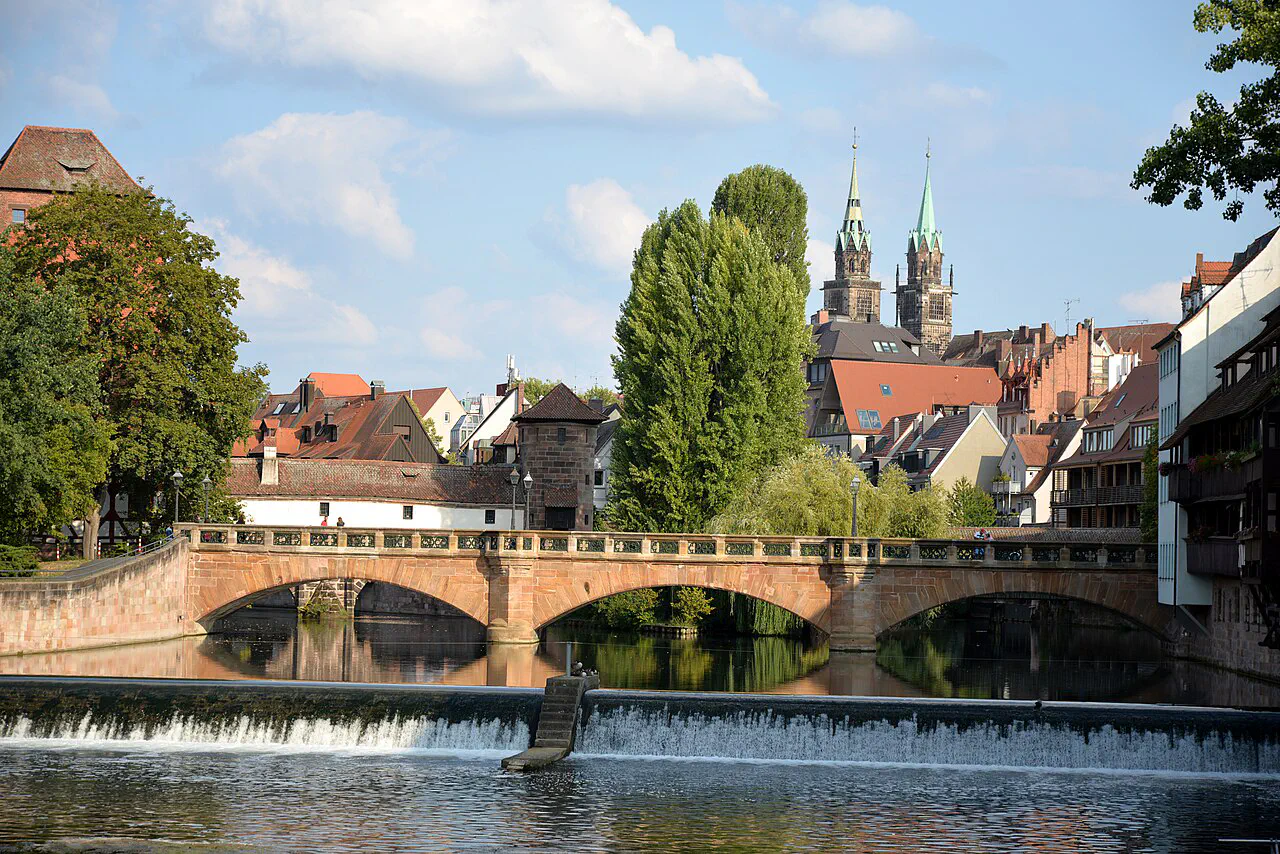
Nuremberg, on the river Pegnitz, is the second-largest city in Bavaria, in Germany. It grew up around an imperial castle into one of the most important cities of the Holy Roman Empire. In 1945, bombing destroyed most of its medieval centre, and much was rebuilt. Its stories here are Göring’s last night, Dürer’s rhinoceros, a boy from nowhere, an executioner’s lost honour, and a globe without America.
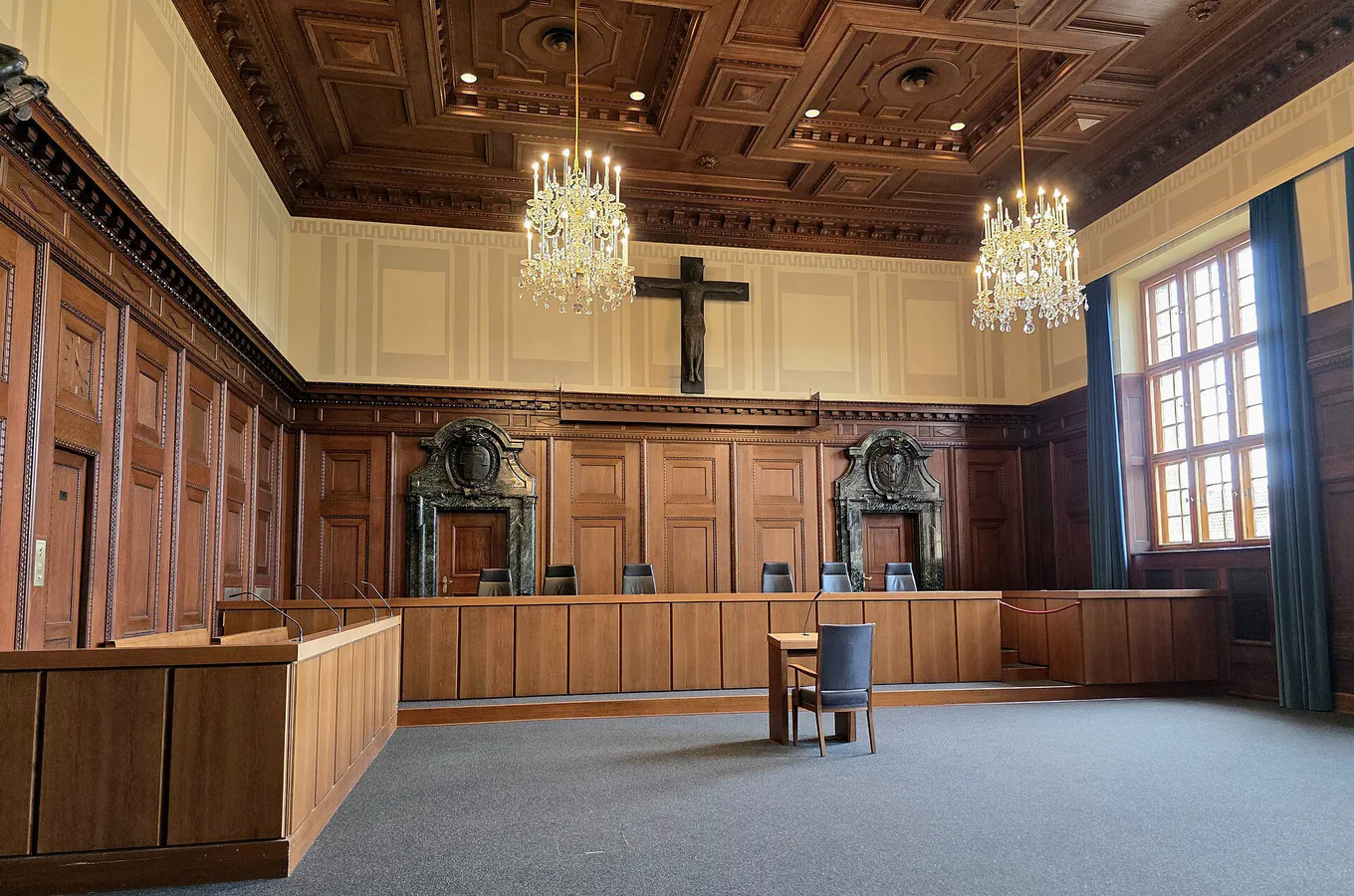
Russell Crowe plays Hermann Göring in the 2025 film Nuremberg, and this is the room where the real Göring stood trial. Once Hitler’s chosen successor, he was convicted on all four counts and sentenced to hang. He asked to be shot as a soldier instead, and the court refused. In October 1946, on the night before the hanging, guards saw him convulsing in his cell. Within five minutes he was dead of cyanide. Nobody has ever been sure how a man guarded around the clock got the poison.
2 Albrecht Dürer and the Nuremberg rhinoceros he never saw
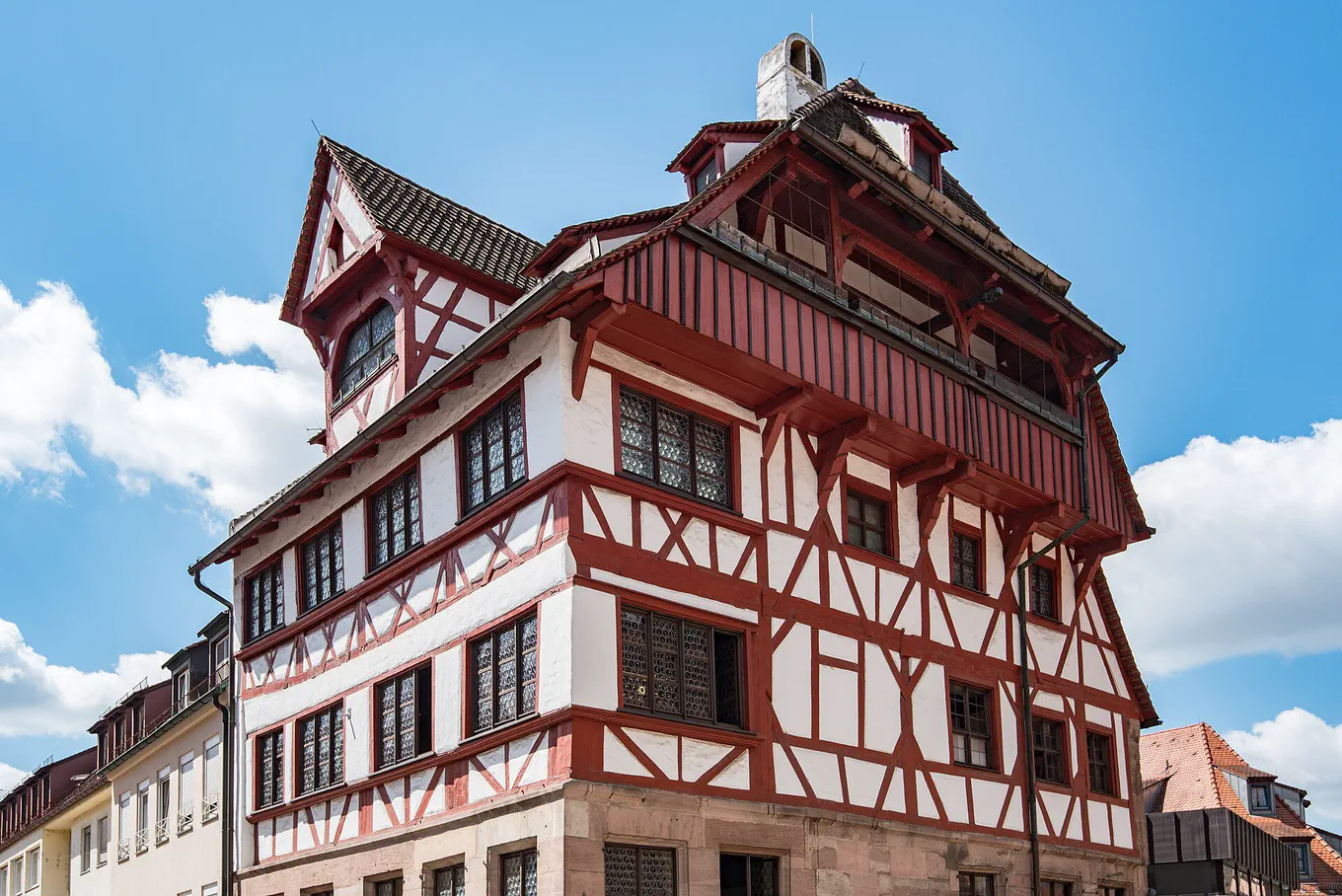
Stand here. Albrecht Dürer’s House, by the Tiergärtnertor near the castle. The half-timbered house where he lived from 1509 is now a museum.
Albrecht Dürer made his Rhinoceros woodcut in 1515, and he never saw the animal. That May, an Indian rhinoceros had landed in Lisbon, the first live one in Europe since Roman times. Dürer worked from a letter and a sketch. He gave his beast plates of armour, scaly legs, and a small twisted horn on its back, none of which a rhinoceros has. The animal drowned in a shipwreck on its way to the Pope. German schoolbooks were still printing Dürer’s as the true rhinoceros in the 1930s.
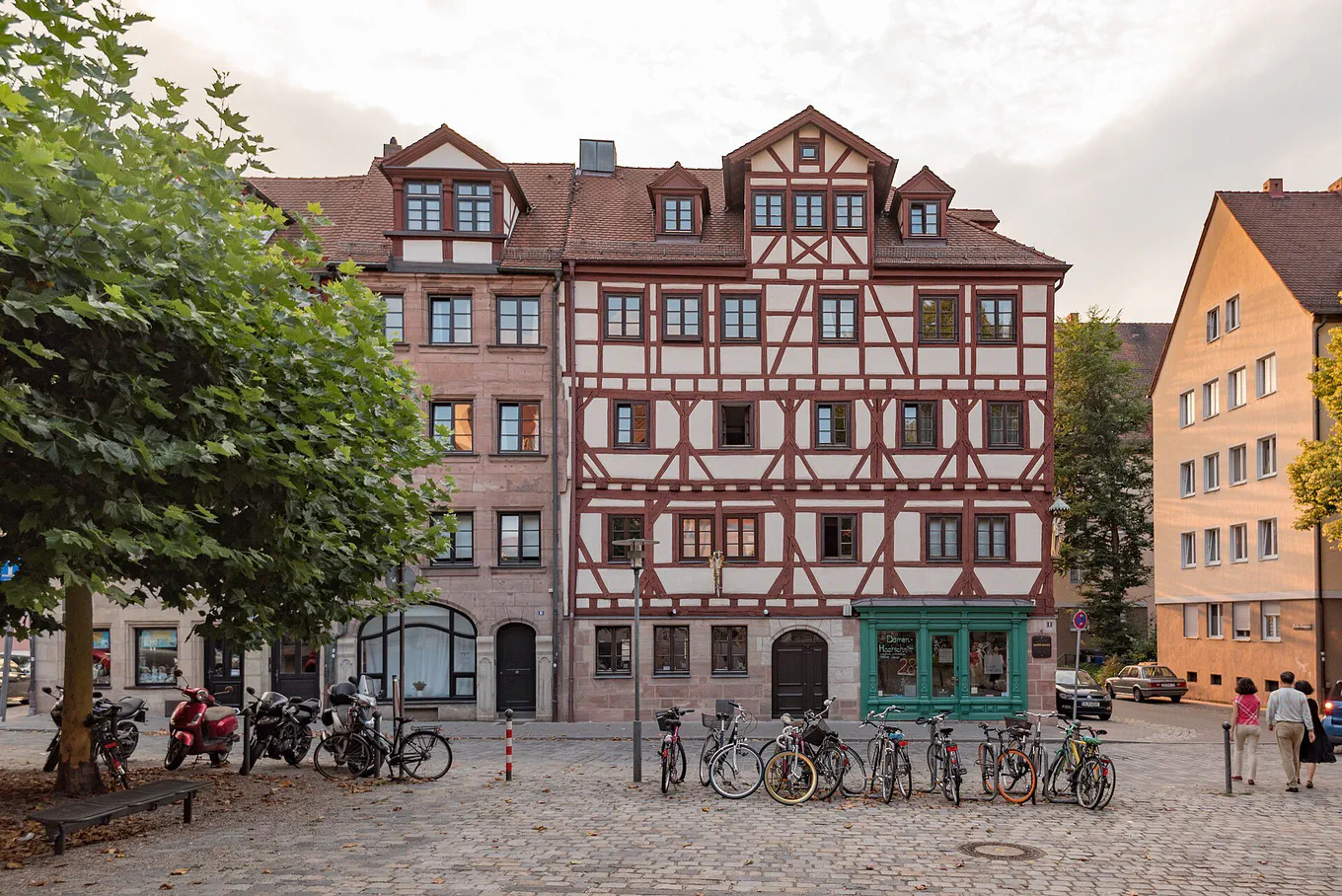
Kaspar Hauser, the boy in Werner Herzog’s film The Enigma of Kaspar Hauser, appeared on this square on 26 May 1828. One of his letters said he wanted to be a cavalryman, as his father was. He could only repeat that wish, and “Horse! Horse!” By his own account, he had grown up alone in a dark cell, and rumour made him a prince of Baden. He died of a stab wound in 1833, and DNA later ruled out the prince. His gravestone calls him the riddle of his time.
4 Franz Schmidt, the Nuremberg executioner who wanted his honour back
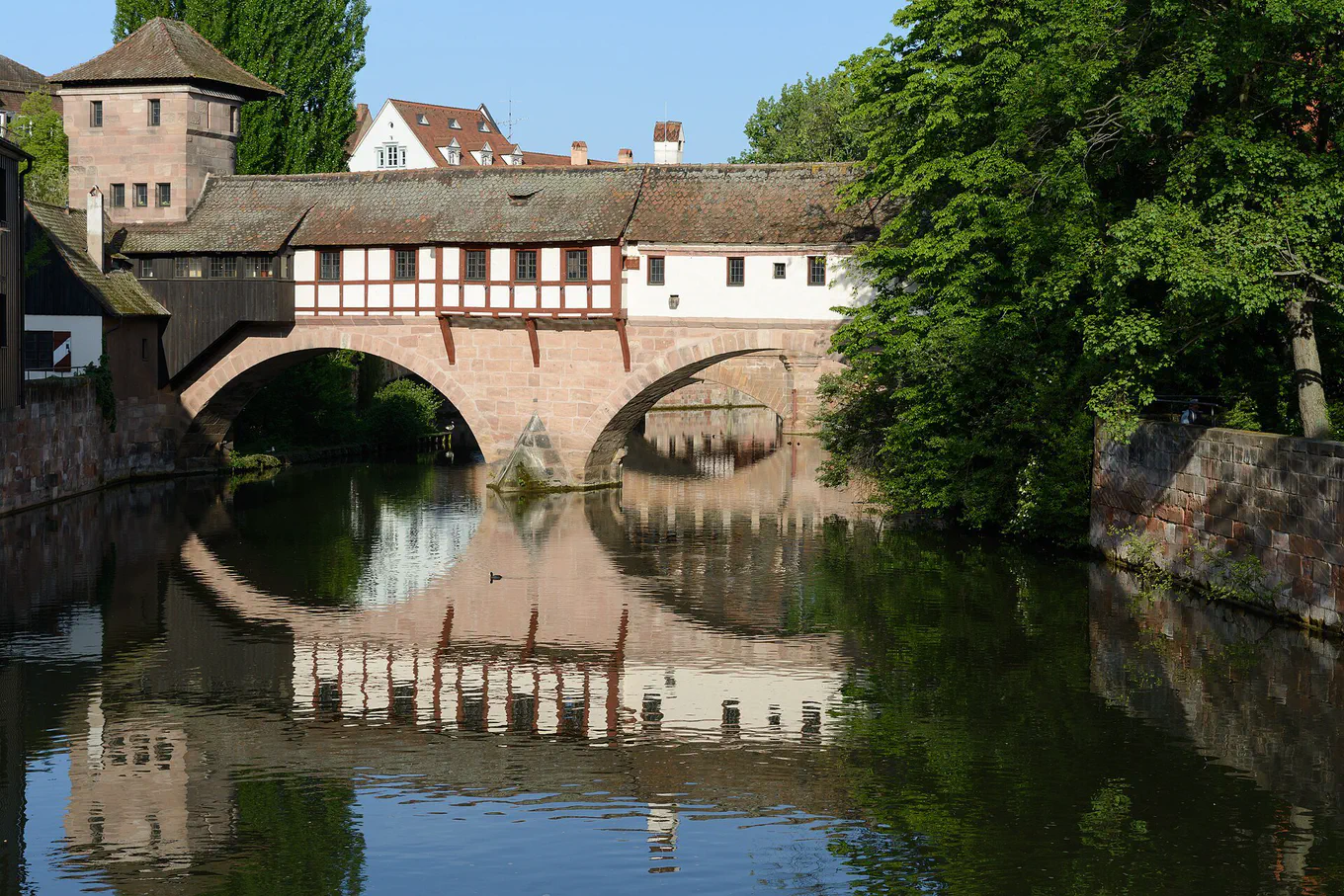
Stand here. The Executioner’s House, built over the Pegnitz beside the Henkersteg footbridge. It is now a museum centred on Schmidt and his diary.
Franz Schmidt never chose his trade. His father, a woodsman, was picked from a crowd by a margrave and forced to hang condemned men, and after that he could do no other work. His children inherited the trade. From 1578, Franz was Nuremberg’s executioner, and his diary records 361 executions. He also worked as a healer. In 1624, years after he retired, the emperor made the family honourable again.
5 Martin Behaim’s Erdapfel, the Nuremberg globe without America
Stand here. The Germanisches Nationalmuseum, where the globe is on display in the first permanent exhibition, on the Renaissance, Baroque, and Enlightenment.
Martin Behaim, a Nuremberg merchant and mapmaker who had lived in Lisbon, came home in 1490 and talked the city council into paying for a globe of the world. Between Europe and Asia it shows only ocean, and a Japan far too big. Columbus didn’t get back to Spain until March 1493. The townspeople called Behaim’s globe the Erdapfel, the earth apple. It is the oldest surviving globe of the Earth, and America isn’t on it.
Pack nothing. Leave Friday.
Every Friday, I write a free letter, Journey, that takes us on a trip through places, stories, and ideas.
The Faithful Executioner(Joel F. Harrington, 2013). A history. The life and times of a sixteenth-century German executioner. Nuremberg’s executioners lived in the house over the Pegnitz, now the Henkerhaus museum.
Caspar Hauser oder Die Trägheit des Herzens(Jakob Wassermann, 1908). A historical novel. It follows Caspar Hauser’s last six years in Nuremberg and Ansbach, including when he is taken in at the Tucher house on Hirschelgasse.
Nuremberg Diary(Gustave Gilbert, 1947). An account of interviews. Gilbert, a prison psychologist in Nuremberg, records his interviews with high-ranking Nazi leaders, including Hermann Göring, during the Nuremberg trials.
Films to watch before you visit Nuremberg
Nuremberg(James Vanderbilt, 2025). A film. Russell Crowe plays Göring, and Rami Malek a US Army psychiatrist, during the trials in Courtroom 600.
Judgment at Nuremberg(Stanley Kramer, 1961). A film. A fictionalised Judges’ Trial of 1947, one of the later Nuremberg trials held under the US military, told with fictional characters.
The Enigma of Kaspar Hauser(Werner Herzog, 1974). A film, starring Bruno S., about the boy who appeared on Unschlittplatz in 1828. Its outdoor scenes were shot in Dinkelsbühl.
Die Meistersinger von Nürnberg(Richard Wagner, 1868). An opera, set in Nuremberg in the mid-16th century. Its first scene takes place inside St Catherine’s Church on Midsummer’s Eve.
Questions
Can you visit Courtroom 600, where the Nuremberg trials were held?
Yes. Courtroom 600 in the Palace of Justice is part of the Memorium Nuremberg Trials, a museum on the courthouse’s top floor, with a media installation in the room. It stopped hearing trials on 1 March 2020.
Where can you see the Behaim Globe, the oldest surviving globe?
In the Germanisches Nationalmuseum in Nuremberg, in its first permanent exhibition, on the Renaissance, Baroque, and Enlightenment. Made for the city council in the early 1490s, it is the oldest surviving globe of the Earth. It has no Americas, because Columbus had not yet returned from his voyage.
When is the Nuremberg Christmas market?
The Christkindlesmarkt fills the Hauptmarkt, the main square of the old town, from the Friday before the first Sunday in Advent, usually until Christmas Eve. The Christkind opens it with a prologue from the balcony of the Frauenkirche, and about two million people visit it each year.