Oklahoma City, United States, Oklahoma, North America
I once read Gerry Spence’s opening to the Silkwood jury on the podcast. After the longest trial in Oklahoma history, he began with ‘I actually thought that we were going to grow old together.’ Relationship first, evidence second. Smart man.
— Nick
Oklahoma City is the capital of the US state of Oklahoma, in the middle of the state. It was founded in a day, when a gunshot at noon on 22 April 1889 opened the land to settlers, and within hours it had over 10,000 people. Its stories are a governor’s seal, a would-be trumpeter, the first parking meter, a sit-in, and a nurse who came to help.
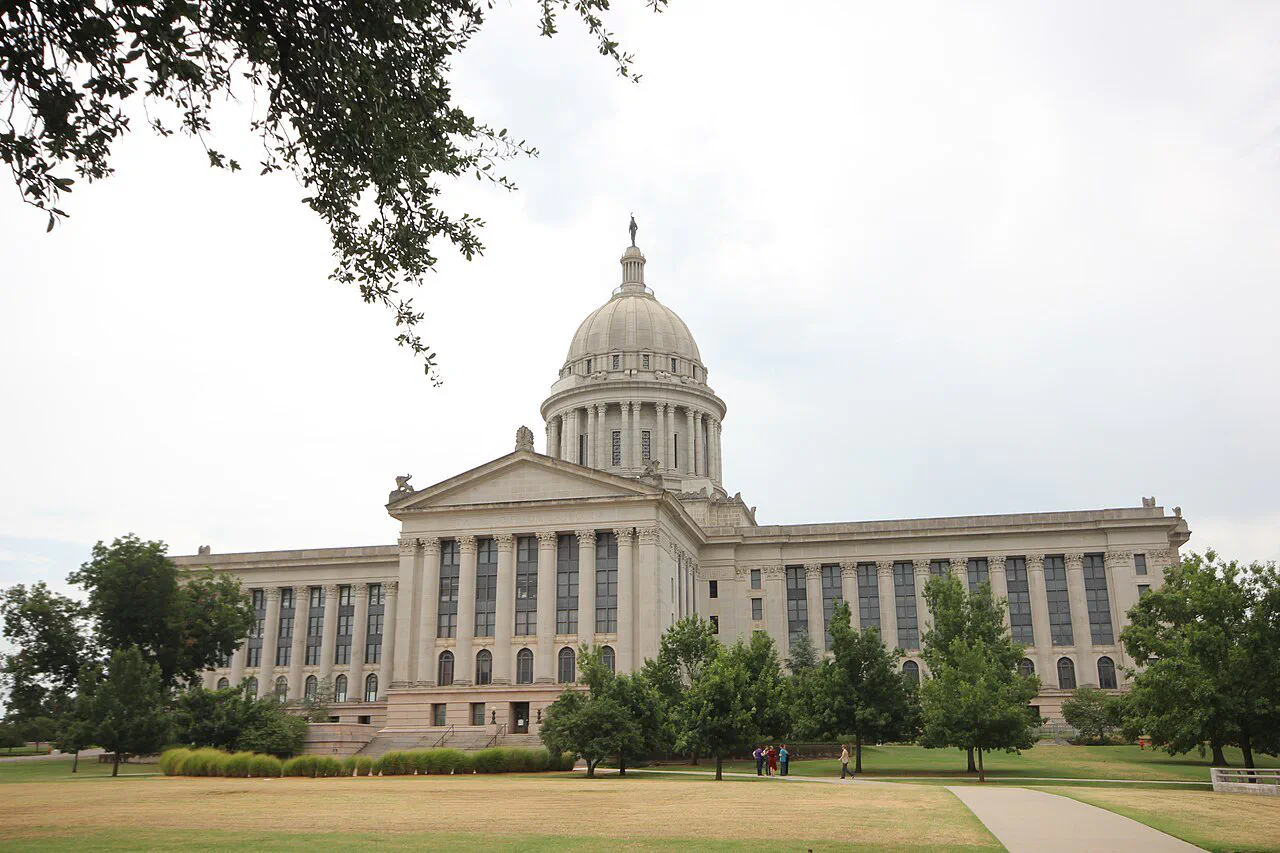
Guthrie was Oklahoma’s capital, and a 1906 law meant to keep it there until 1913. But on 11 June 1910, the state’s voters, all men, chose Oklahoma City. Governor Charles Haskell, in Tulsa that day, ordered the state seal moved. Within hours it was said to be in his rooms at the Lee-Huckins Hotel, and the next day he declared the new capital on hotel notepaper. Guthrie’s officials were angry. Nobody agrees who carried the seal, but a state messenger, Jim Noble, always boasted he had moved the capital.
2 Ralph Ellison, the young trumpeter of Deep Deuce
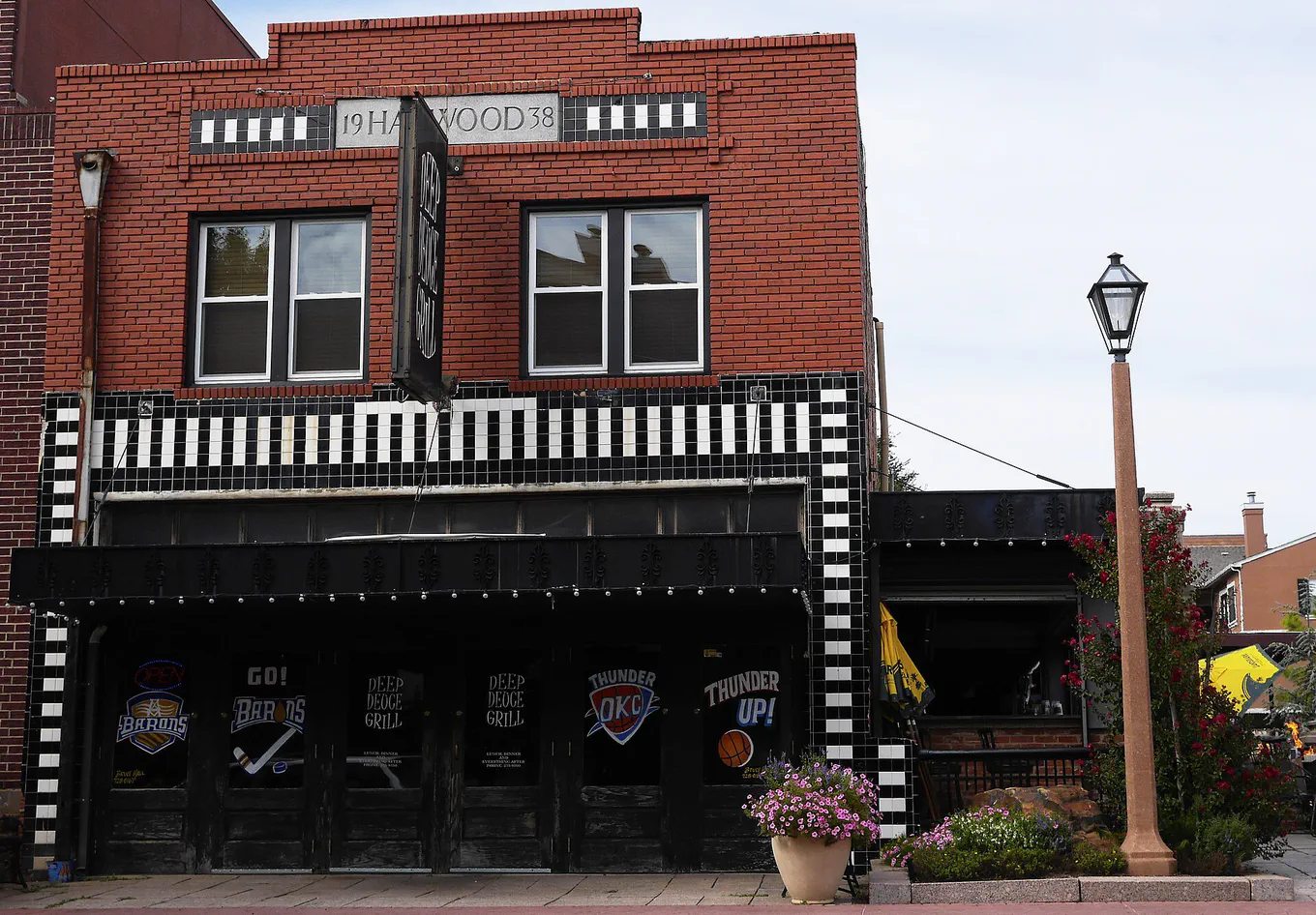
Stand here. NE 2nd Street, north of Bricktown. Much of Deep Deuce was bulldozed for the I-235 highway in the 1980s, and it is mostly apartments now.
Ralph Ellison, who wrote Invisible Man, set out to be a musician. He grew up in Deep Deuce, then a centre of jazz and Black culture, and a friend’s father gave him free trumpet lessons. Tuskegee Institute, in Alabama, took him because its orchestra needed a trumpeter, and he hopped freight trains to get there. Later he went to New York to study sculpture. Then he wrote a book review for Richard Wright, and Wright encouraged him to write fiction. Invisible Man won the National Book Award in 1953.
3 Carl Magee and the world’s first parking meter
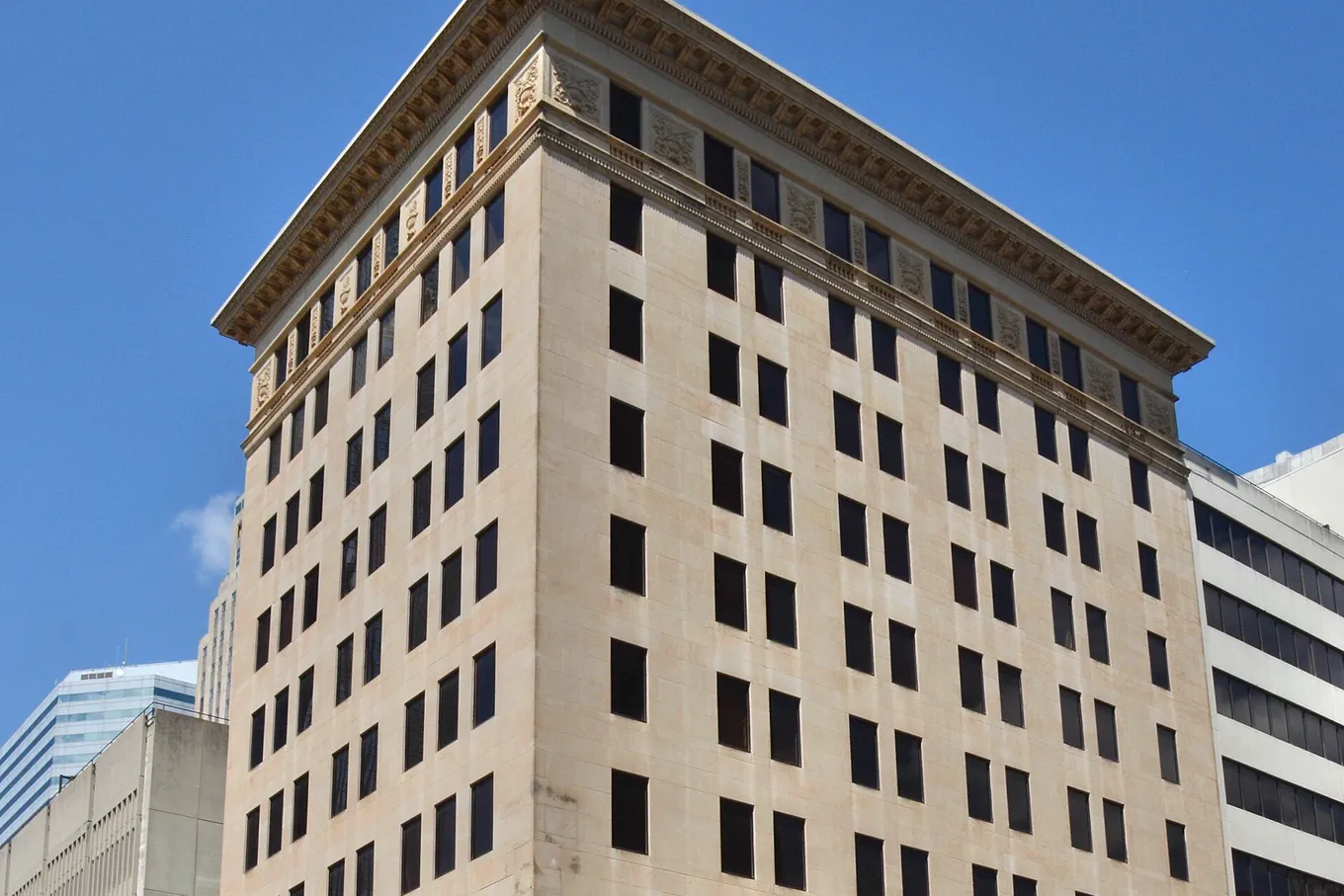
Stand here. The southeast corner of what was then First Street and Robinson Avenue, downtown. Park-O-Meter No. 1 stood here.
Anyone who has fed a parking meter can thank, or blame, Carl Magee. In the early 1930s, he chaired the Chamber of Commerce traffic committee. Downtown workers took every space all day, so shoppers parked far from the stores. On 16 July 1935, his answer went in: 175 meters on fourteen blocks, a nickel an hour. Opponents called paying to park un-American, but legal action failed to stop the meters. One of the first tickets went to a preacher who said he’d only gone for change. He was let off.
4 Clara Luper’s sit-in at the Katz Drug Store lunch counter
Stand here. W Main Street and N Robinson Avenue, now the Clara Luper National Sit-In Plaza. A bronze lunch counter with an empty seat.
Clara Luper, a history teacher, took her NAACP Youth Council to New York, where her students saw places without segregation. Her daughter, Marilyn, asked why she couldn’t just go in and ask for a Coca-Cola and a hamburger. On 19 August 1958, two years before the Greensboro sit-ins, thirteen children ordered Cokes at Katz Drug Store. They were refused, and the police were called. They came back. On the third day they were served, and two days later Katz desegregated its lunch counters in three states.
5 Rebecca Anderson and the rescue at the Murrah Building
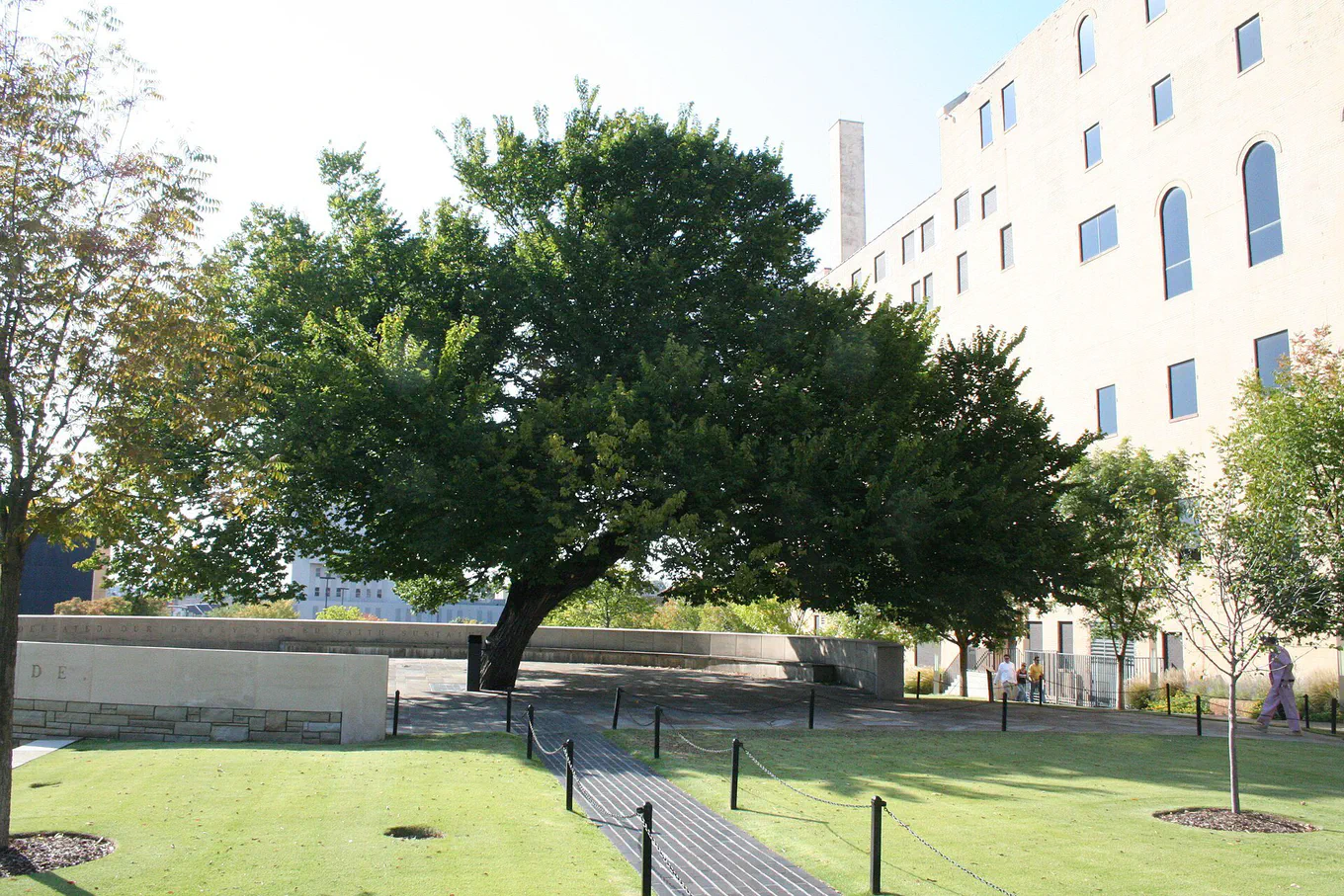
Stand here. The Oklahoma City National Memorial, on NW 5th Street. The Murrah Building was demolished in May 1995. Empty chairs now stand on its footprint.
At 9:02 a.m. on 19 April 1995, a truck bomb left by Timothy McVeigh, an anti-government extremist, exploded in front of the Alfred P. Murrah Federal Building. He had parked it under the building’s day-care centre, and he was executed for it in 2001. In Midwest City, a nurse, Rebecca Anderson, saw the bombing on television and came to help. During the rescue, falling debris struck her on the head. The bomb killed 168 people, nineteen of them children. Her own death, from that blow, isn’t counted among them.
Pack nothing. Leave Friday.
Every Friday, I write a free letter, Journey, that takes us on a trip through places, stories, and ideas.
Homegrown(Jeffrey Toobin, 2023). A chronicle of the 1995 bombing of the Alfred P. Murrah Federal Building, drawing on Toobin’s reporting from the 1997 federal trial of Timothy McVeigh.
Ralph Ellison: A Biography(Arnold Rampersad, 2007). A biography of Ralph Ellison, mentored as a boy by members of the Oklahoma City black elite. His father had built many of the town’s most important buildings.
American Terrorist(Lou Michel and Dan Herbeck, 2001). A biography of Timothy McVeigh, based on 75 hours of interviews with him, tracing his preparations for the Oklahoma City bombing. It is the only biography he authorised.
Films to watch before you visit Oklahoma City
Oklahoma City(Barak Goodman, 2017). A documentary. It chronicles the 1995 bombing, when Timothy McVeigh and Terry Nichols detonated a truck bomb in front of the Alfred P. Murrah Federal Building, killing 168 people.
The Fearless Freaks(Bradley Beesley, 2005). A documentary about the alternative rock band The Flaming Lips. Many interviews were filmed in the band’s hometown of Oklahoma City, where Wayne Coyne still lives.
Questions
What do the chairs at the Oklahoma City National Memorial mean?
There are 168 of them, for the people killed in the bombing of 19 April 1995. They stand in nine rows, one for each floor of the Murrah Building, and each chair bears the name of someone killed on that floor. The nineteen smaller chairs stand for the children.
Where was the Katz Drug Store sit-in, and can you visit it?
Yes. Katz Drug Store stood at W Main Street and N Robinson Avenue, downtown. The store is gone, and since November 2025 the site has been the Clara Luper National Sit-In Plaza, with a bronze lunch counter, life-size statues of the thirteen children, Luper watching over them, and an empty seat to sit in.
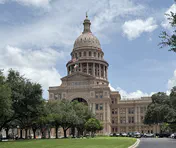
Are there oil wells at the Oklahoma State Capitol?
There have been. The Capitol stands directly on top of the Oklahoma City Oil Field, and its grounds are the only state capitol grounds in the United States to have had oil rigs. Production there ended in 1986.