I’ve read Shōgun several times, so meeting the real Blackthorne here is a treat. William Adams arrived with 24 survivors out of 110, was nearly executed as a pirate, and was kept in Japan for over a decade. When he was finally free to leave, he stayed.
— Nick
Osaka is the capital of Osaka Prefecture, on Osaka Bay in the Kansai region of Japan. In 645, when the city was called Naniwa, an emperor built his palace here and made it Japan’s capital. Its stories are the Englishman behind Shōgun, a castle’s last stand, lovers who became a play, a Colonel Sanders statue in a canal, and, in nearby Ikeda, the first instant noodles.
William Adams is the real John Blackthorne of James Clavell’s Shōgun. An English pilot, he reached Japan in 1600 on a ship that left Rotterdam with 110 men and drifted ashore with 24. Tokugawa Ieyasu, the novel’s Toranaga, had him brought to Osaka. Ieyasu’s interpreters, Portuguese Jesuits, said the crew were pirates and should be executed. Ieyasu talked with Adams until midnight and refused, saying they had done Japan no harm. For more than a decade, Adams wasn’t allowed to leave Japan. When he finally could, he chose to stay.
2 Hideyori, Yodo-dono and the fall of Osaka Castle
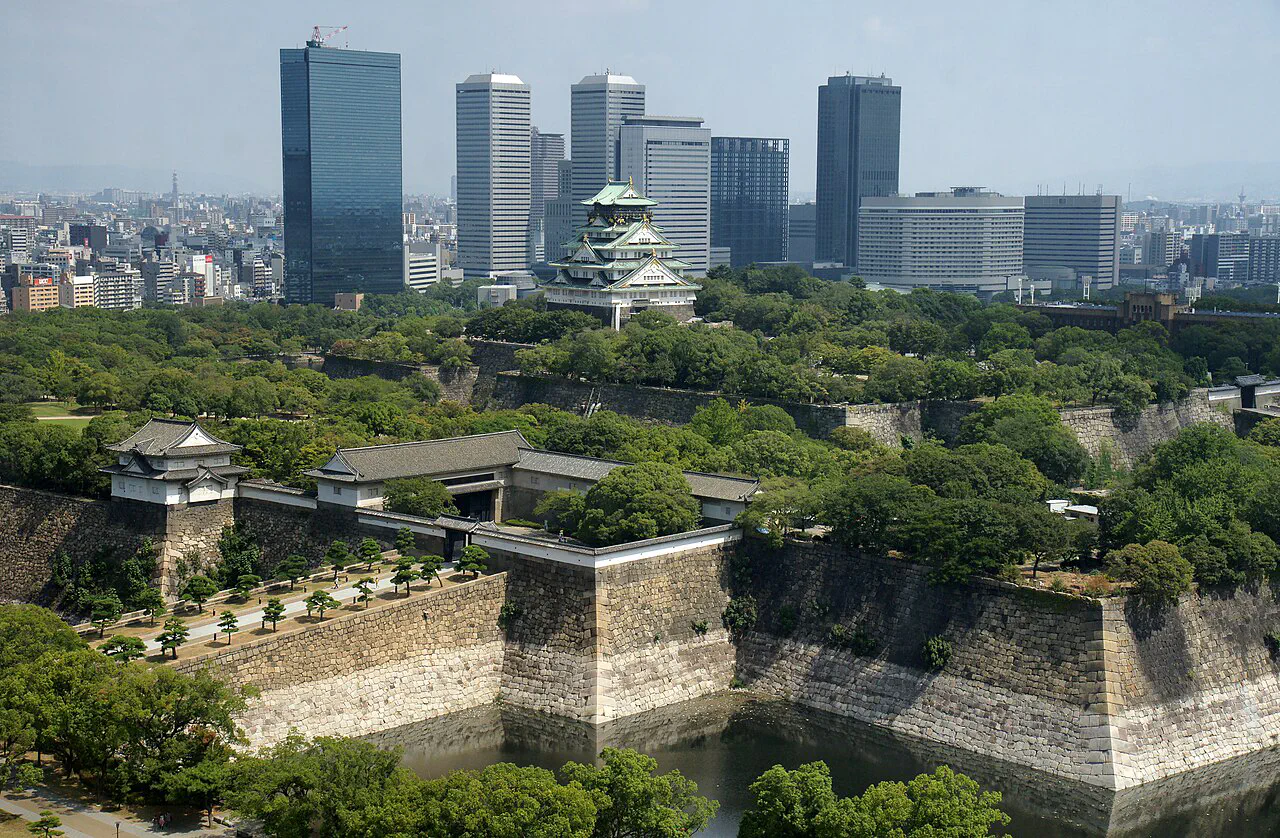
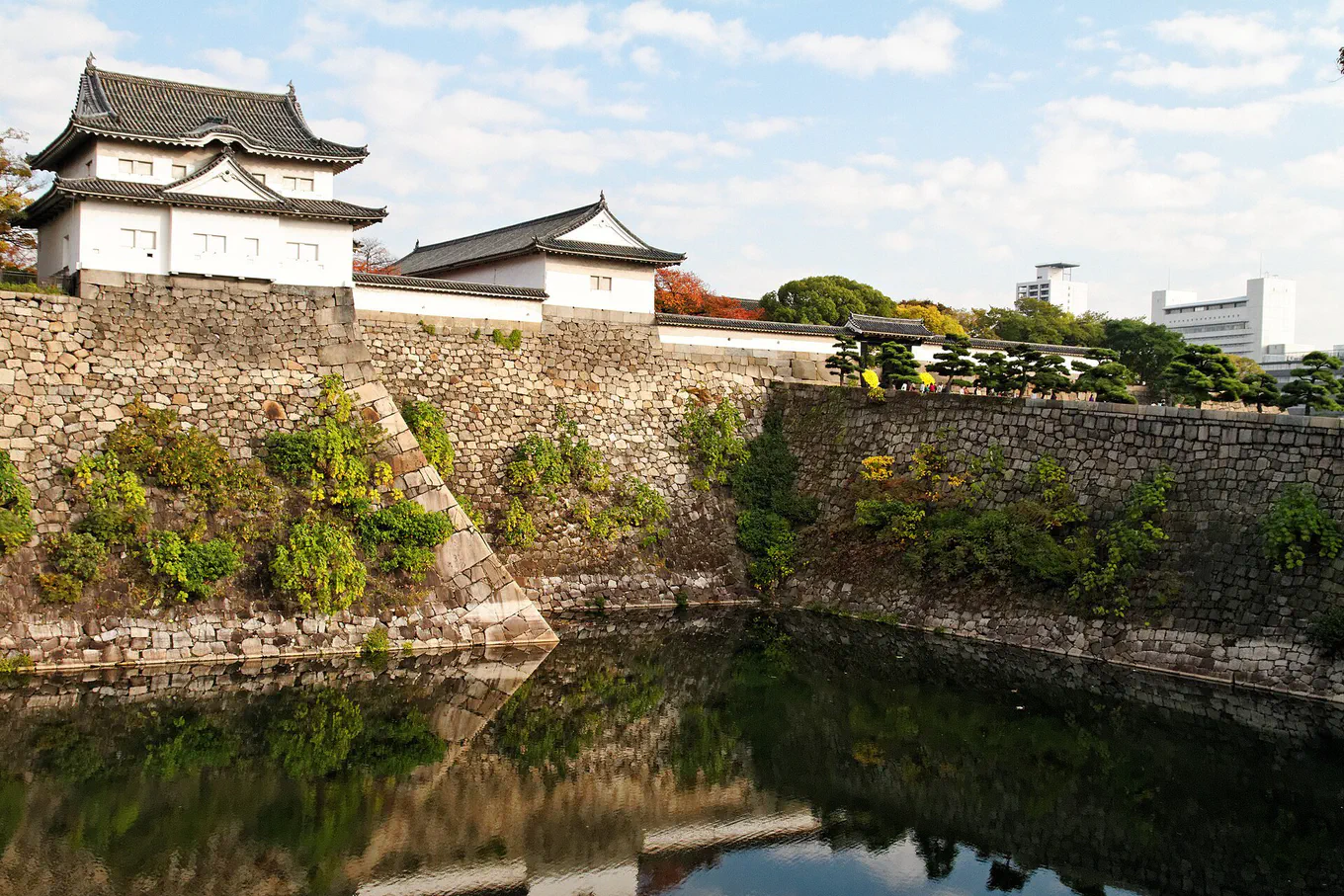
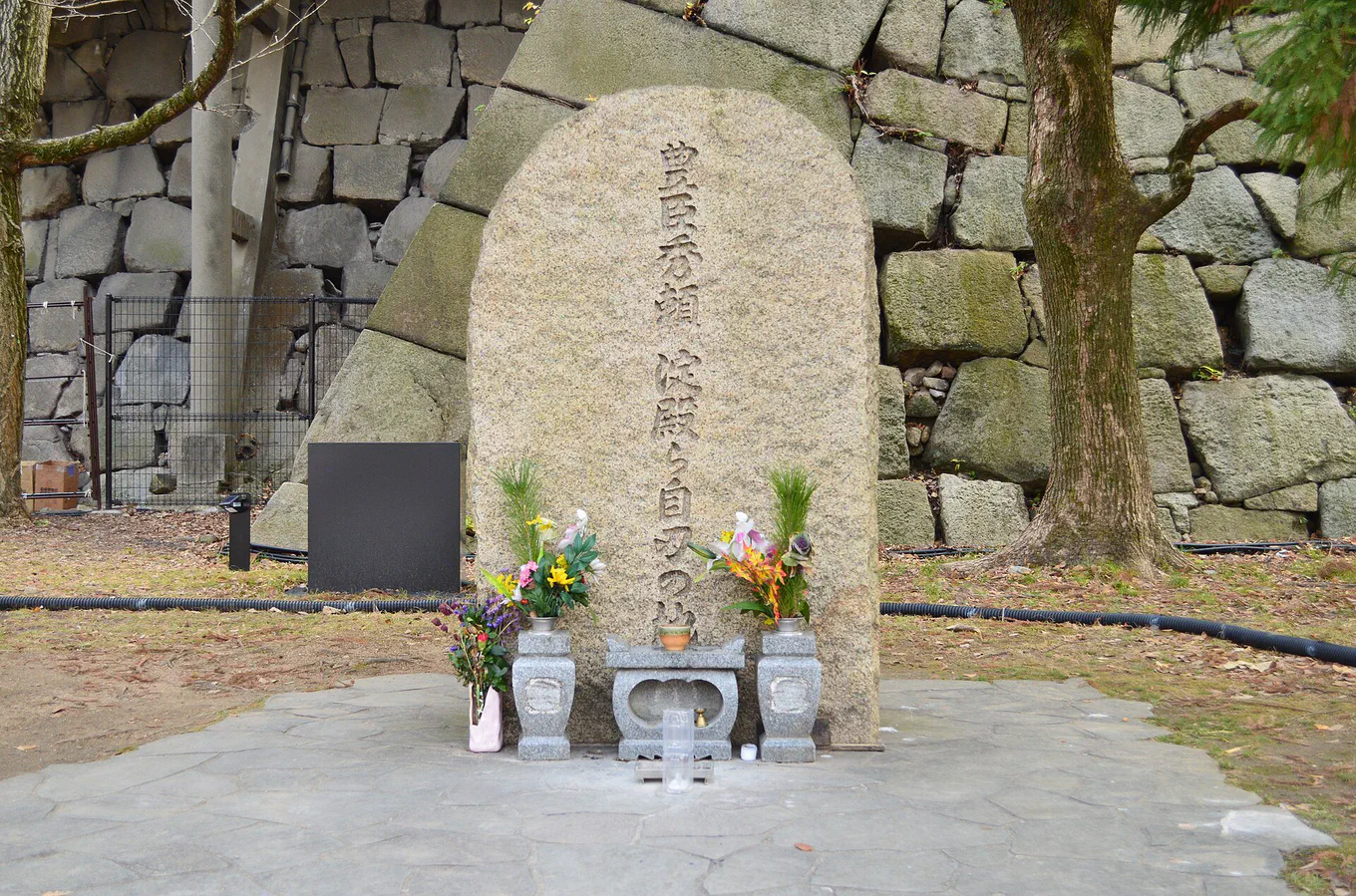
Stand here. The Yamazato-maru, one of two areas inside Osaka Castle’s inner moat. A stone marks where Hideyori and his mother died.
The stone marking where Toyotomi Hideyori and his mother Yodo-dono died, in the Yamazato-maru of Osaka Castle.Saigen Jiro / CC0.
Osaka Castle was built by Toyotomi Hideyoshi, who died a year after it was finished. His son, Hideyori, and Hideyori’s mother, Yodo-dono, held it against Tokugawa Ieyasu. In the winter of 1614, Ieyasu laid siege, and the two sides made peace. Under its terms, Ieyasu’s men were to fill in the outer moat. They filled the inner moat too, and Hideyori protested that this was never agreed. The next year, Ieyasu attacked again. As the castle burned, mother and son killed themselves, and the Toyotomi line ended with them.
3 Ohatsu, Tokubei and the love suicides at Sonezaki
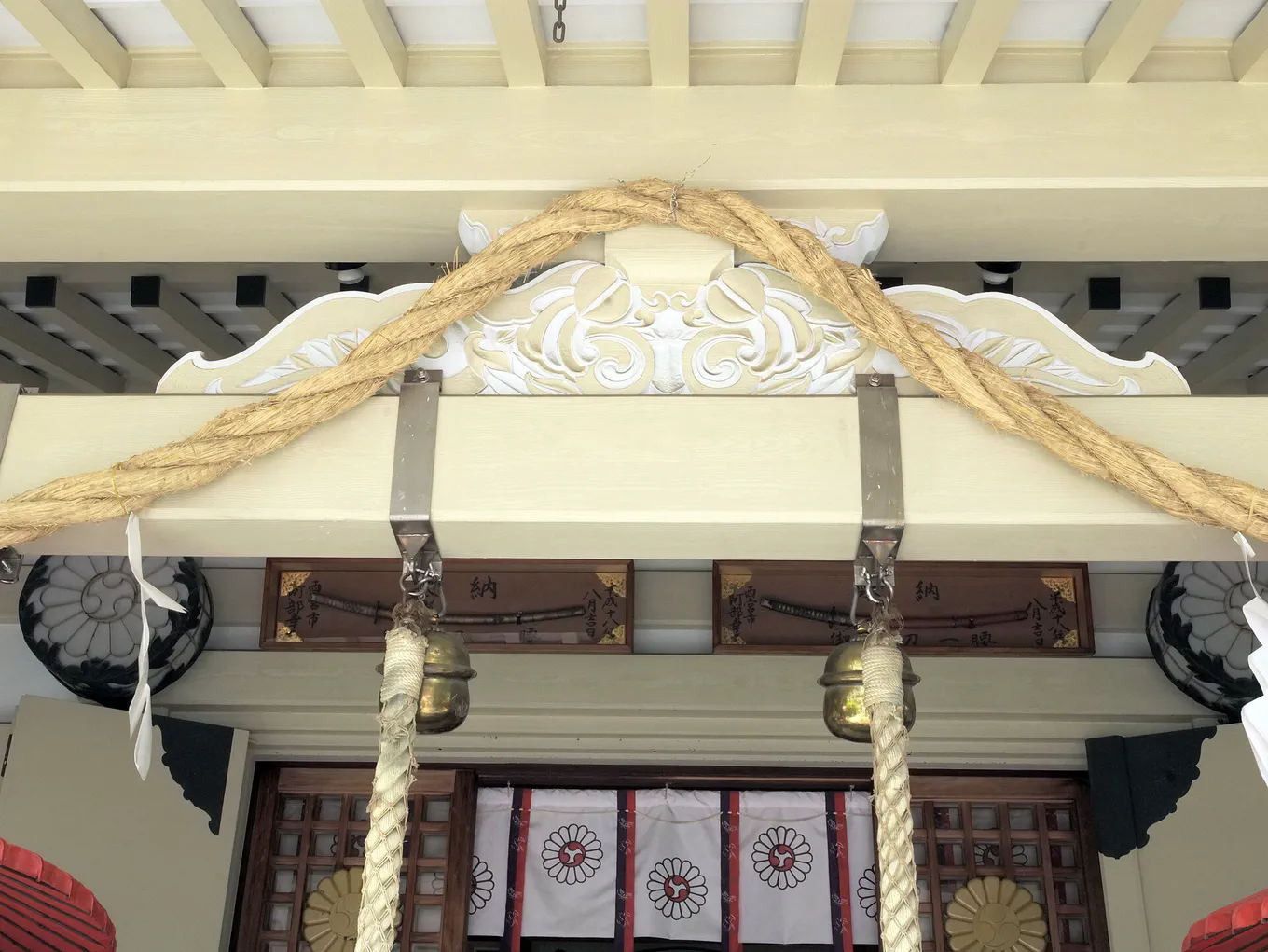
Stand here. Tsuyuten Shrine, known as Ohatsu Tenjin, at the south end of the Ohatsutenjin-dori shopping street in Umeda. It has a bronze statue of Ohatsu and Tokubei.
In 1703, the courtesan Ohatsu and the clerk Tokubei died together in this shrine’s wood. That June, Chikamatsu Monzaemon, often called Japan’s greatest dramatist, put them on stage in a bunraku puppet play, The Love Suicides at Sonezaki. In the play, Tokubei’s employer wants him to marry someone else, and a friend borrows his money and denies the debt, so the lovers walk to that wood to die. In its first year, at least seventeen couples died the same way. People still come here to pray for love.
4 Momofuku Ando’s backyard shed and the first instant noodles
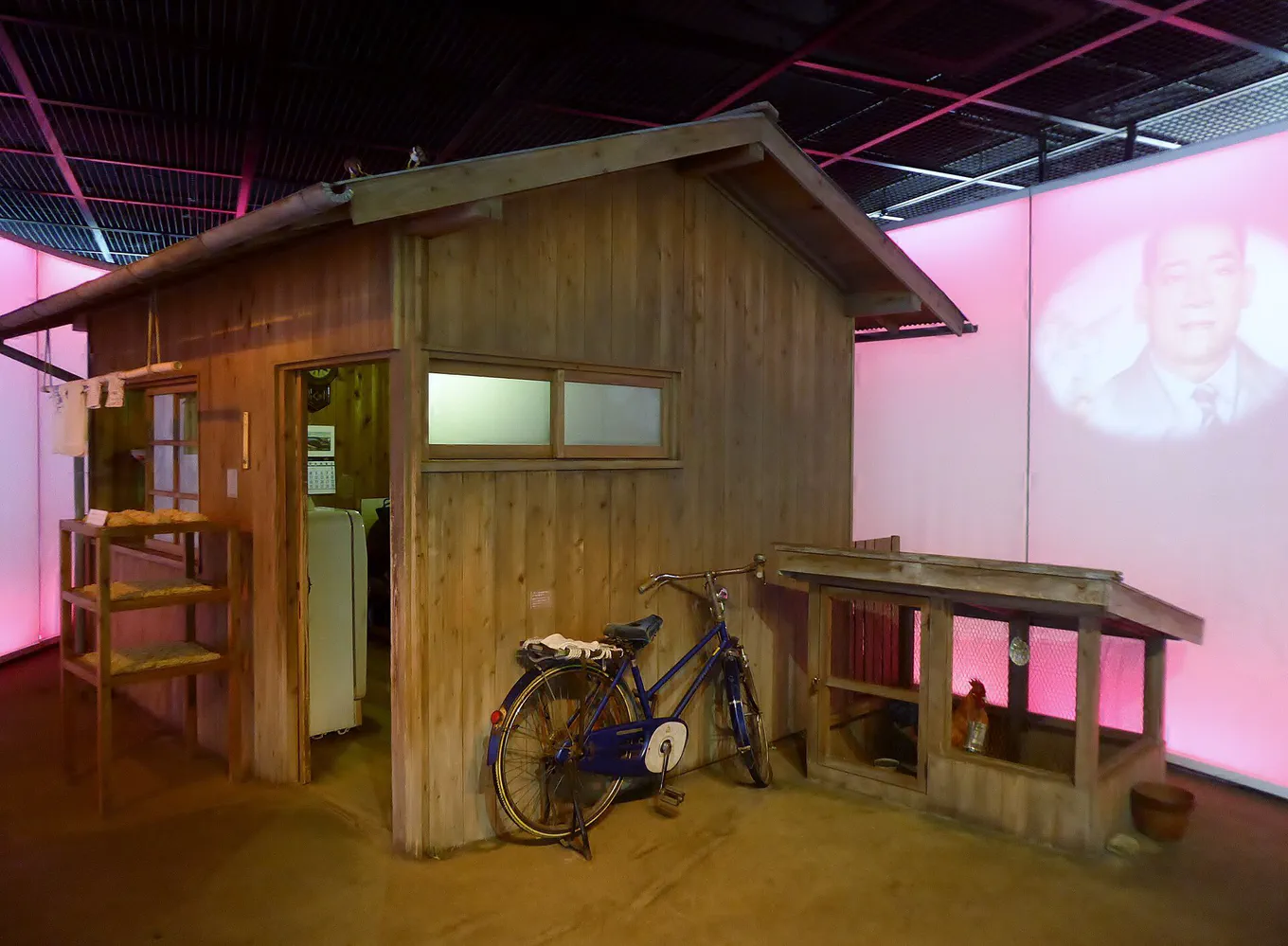
Stand here. The Cupnoodles Museum in Ikeda, a city in Osaka Prefecture. It holds a faithful copy of the work shed.
The world’s first instant noodles were invented in a back-garden shed in Ikeda. Momofuku Ando built it after a credit union where he was a director went bankrupt, leaving him nothing but a rented house. He worked there alone for a year, sleeping four hours a night. The answer came when he saw his wife deep-frying tempura, and he flash-fried noodles the same way. Chicken Ramen went on sale in August 1958, when Ando was 48. He would later say, “There’s no such thing as too late in life.”
5 The Colonel Sanders statue thrown off Ebisu Bridge
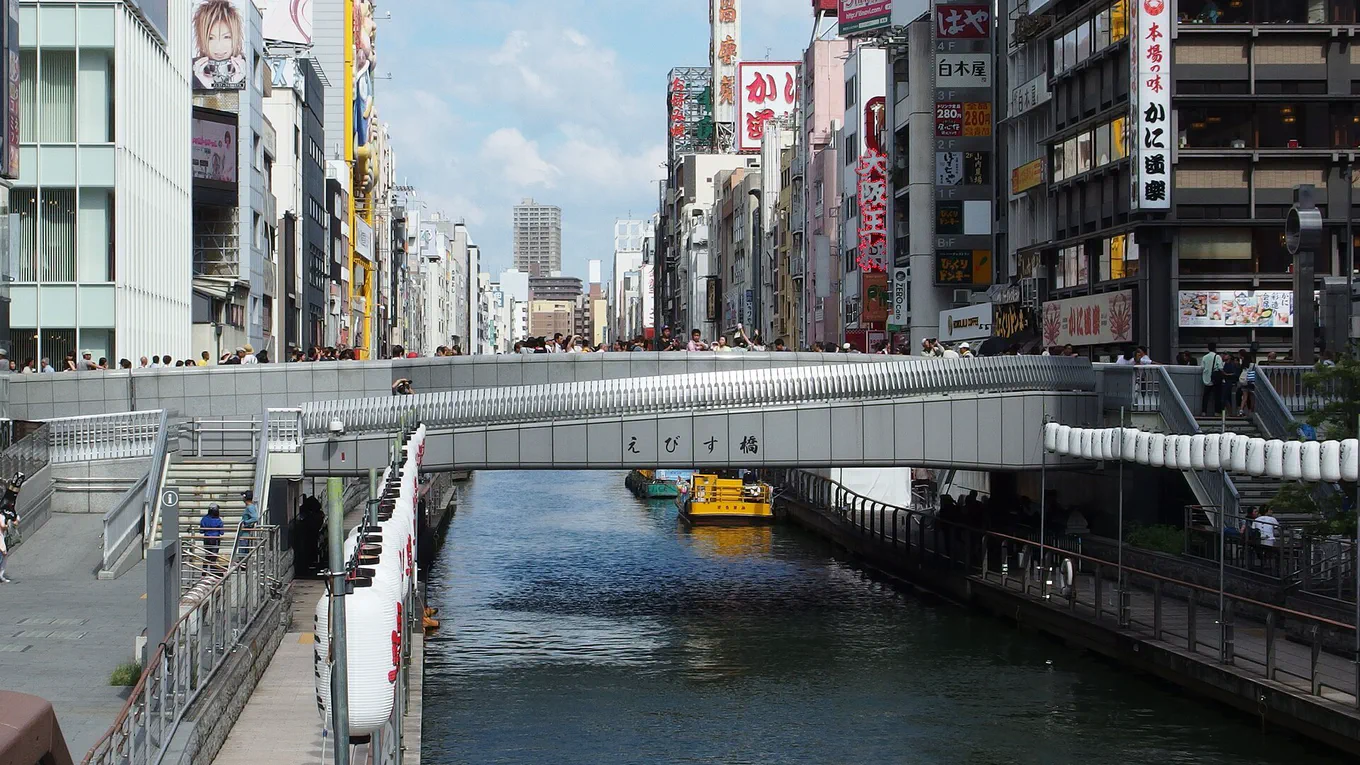
Stand here. Ebisu Bridge, over the Dotonbori canal in Namba. A sign on it now reads, “Dangerous! Do not dive into this river.”
A plastic Colonel Sanders went off this bridge on 16 October 1985. Hanshin Tigers fans were celebrating, and as each player’s name was shouted, a lookalike jumped in. But their star, Randy Bass, was a bearded American, and nobody could stand in for him, so the crowd seized the Colonel from a KFC. Fans said the Tigers wouldn’t win again until the statue was found. When the Tigers finally won the Japan Series again, in 2023, fans threw one of their own, dressed as the Colonel, into the river.
Pack nothing. Leave Friday.
Every Friday, I write a free letter, Journey, that takes us on a trip through places, stories, and ideas.
Pachinko(Min Jin Lee, 2017). A novel. One of its characters lives in Ikaino, the Korean district of Osaka.
The Love Suicides at Sonezaki(Chikamatsu Monzaemon, 1703). A bunraku play. Its last scene follows Ohatsu and Tokubei from Dojima to the Sonezaki shrine, now Ohatsu Tenjin.
The Makioka Sisters(Jun’ichirō Tanizaki, 1948). A novel. It follows the wealthy Makioka family of Osaka from the autumn of 1936 to April 1941, with the main branch at the family home in Osaka.
Films to watch before you visit Osaka
Black Rain(Ridley Scott, 1989). A film. The neon of Dotonbori, in Namba, was its main location in Japan, and its main Osaka location was by Ebisu Bridge.
Muddy River(Kōhei Oguri, 1981). A film of Teru Miyamoto’s short story, which unfolds along the Tosabori River in Osaka.
Blood and Bones(Yoichi Sai, 2004). A film of Yang Seok-il’s novel. Its central character lives in what is now Ikuno Korea Town, in Osaka.
Questions
Can you see the shed where instant noodles were invented?
Yes, as a copy. The Cupnoodles Museum Osaka Ikeda has a faithful recreation of Momofuku Ando’s work shed. The museum is about five minutes’ walk from Ikeda Station on the Hankyu Takarazuka Line.
Is Osaka Castle original?
Not the main tower. It is the third on the site, after the Toyotomi and Tokugawa towers. It was rebuilt in reinforced concrete in 1931, complete with lifts, paid for by donations from the people of Osaka, and it has been a museum ever since.
Was the Colonel Sanders statue ever found?
Yes. Divers pulled it from the Dotonbori River on 10 March 2009, though at first they took it for a barrel, then a body. Its glasses and left hand are still missing. In March 2024, KFC Japan held a burial ceremony for the statue.