My first Naughty Dog game, back in 2007, was Uncharted: Drake’s Fortune. It opens off the coast of Panama, with Nathan Drake raising Sir Francis Drake’s coffin. The real Drake did die off Panama, in 1596. Panama City has its own privateer story, too. Henry Morgan took the old city, and got a knighthood for it.
— Nick
Panama City is the capital and largest city of the Republic of Panama, at the Pacific entrance of the Panama Canal. Spain founded it in 1519, and after the first city was destroyed in 1671 it was rebuilt 8 km away. Its stories here are a privateer’s raid, a photographer in exile, a doomed French canal, a plot saved by a train, and a dictator besieged with rock music.
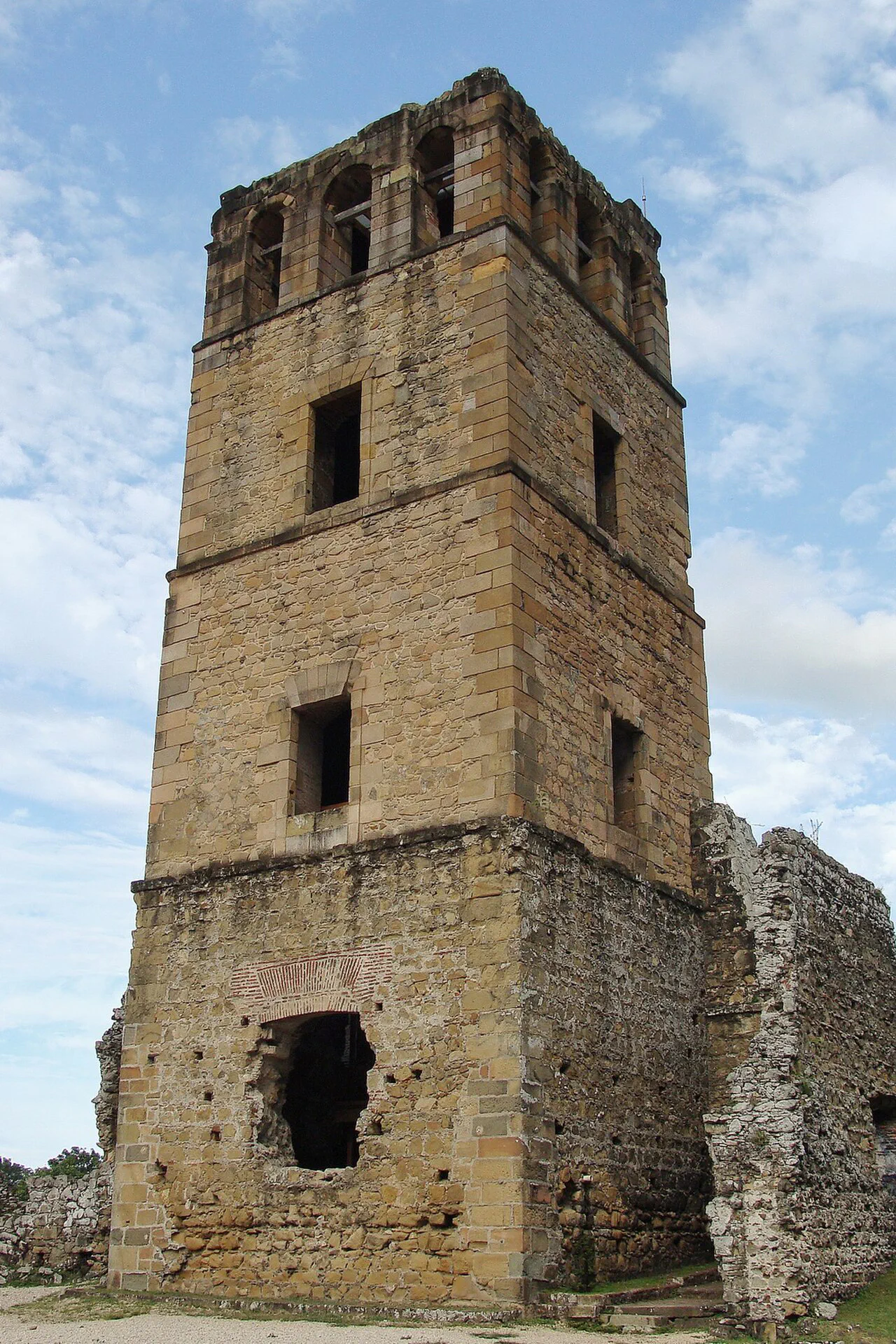
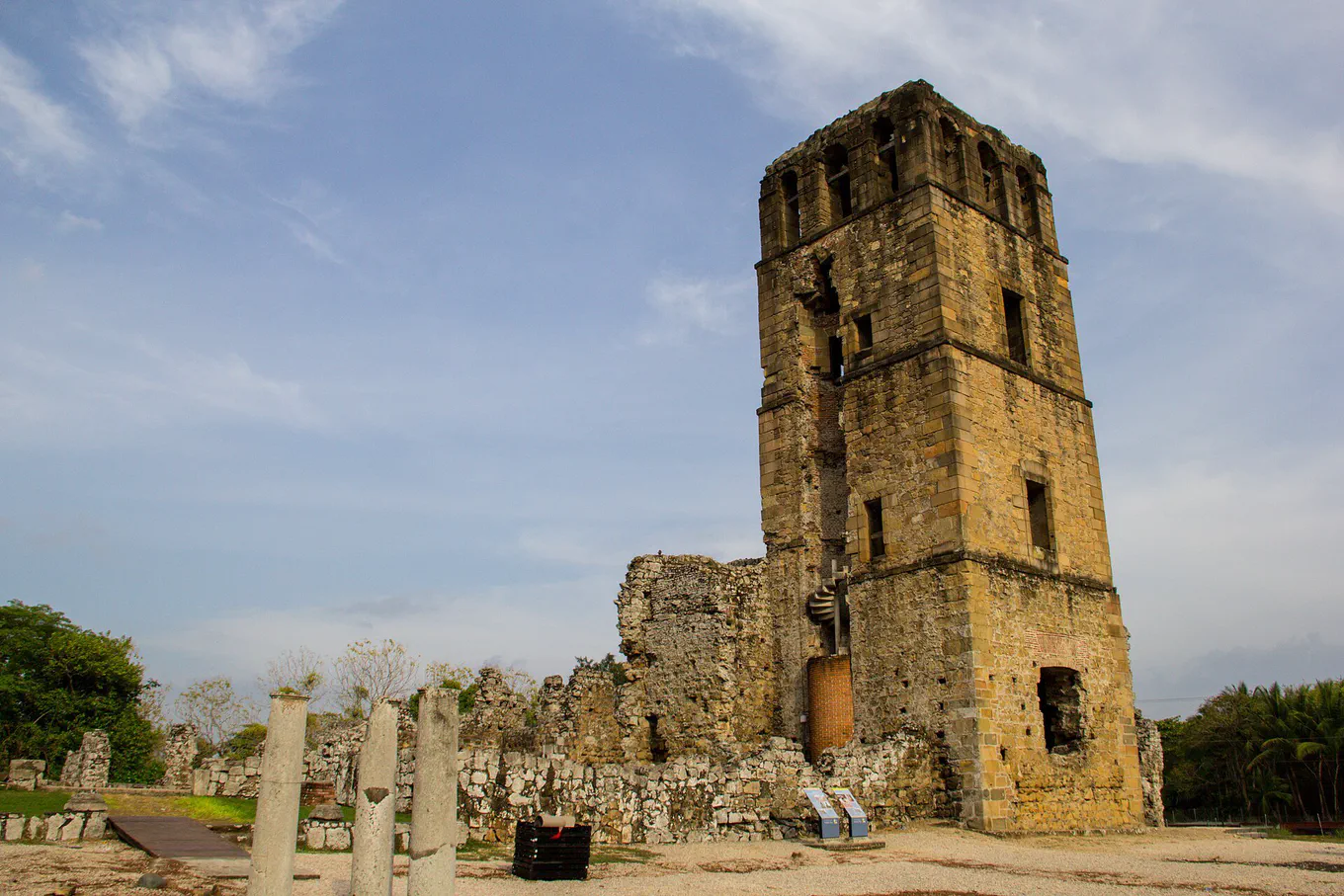
In January 1671, the Welsh privateer Henry Morgan marched on Panama, after reports that Spain was gathering forces to attack Jamaica, his base. His 1,400 men crossed the jungle from the Caribbean and routed the defenders. But the governor had sworn to burn Panama if he lost, and barrels of gunpowder went up among its wooden buildings. Some accounts blame Morgan for the fire. Much of the wealth burned, or had already left by ship. Summoned to London to appease Spain, Morgan was never charged. The king knighted him.
2 Eadweard Muybridge’s working exile in Panama City
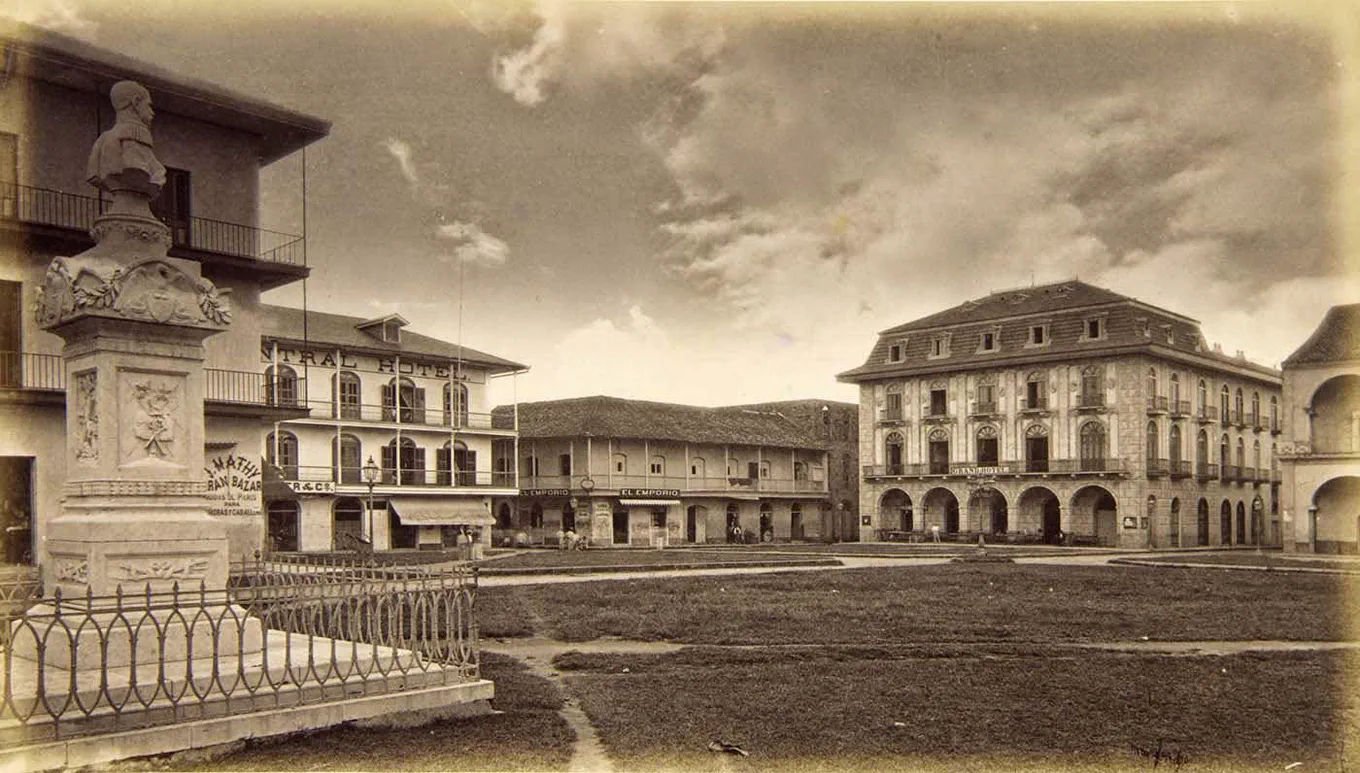
Stand here. Plaza de la Independencia, in Casco Viejo. Muybridge photographed it in 1875, when it was the Plaza Mayor.
Eadweard Muybridge’s photograph of the Plaza Mayor, the square in Casco Viejo later named Plaza de la Independencia.Eadweard Muybridge / Public domain.
Eadweard Muybridge, later famous for The Horse in Motion, photographed this square in 1875, the year he stood trial for murder. His wife Flora had become involved with a friend, and Muybridge tracked the man down and shot him, saying, “I have a message for you from my wife.” Acquitted on grounds of justifiable homicide, he left on a photography trip. While he was away, Flora died suddenly. Their son ended up in an orphanage. Muybridge paid for his care, and otherwise had little to do with him.
3 Ferdinand de Lesseps and the French canal at Panama
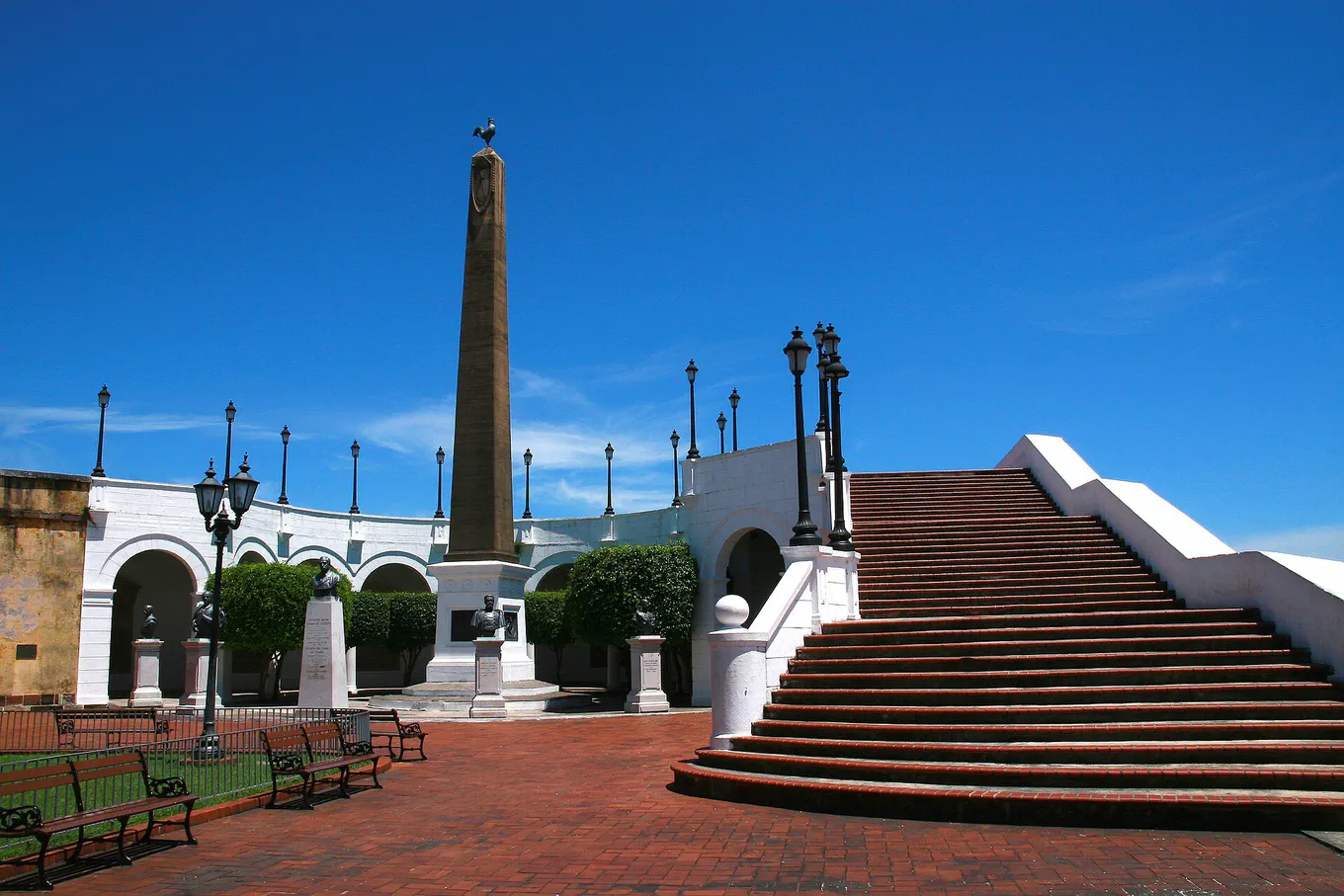
Stand here. Plaza de Francia, on the old Chiriquí point in Casco Viejo, with an obelisk crowned by France’s bronze rooster and stone tablets for the canal’s dead.
Having built the Suez Canal, Ferdinand de Lesseps started work at Panama in 1881, meaning to repeat it with a canal at sea level and no locks. But the hills kept sliding into the cuttings, and malaria and yellow fever killed thousands, spread by mosquitoes, though no one yet knew it. He accepted locks only in 1887. Two years later the company went bankrupt, with an estimated 22,000 men dead. Here his bust shares the square with one of Carlos Finlay, the Cuban who showed how mosquitoes carry yellow fever.
4 María de la Ossa’s train trick and Panama’s independence
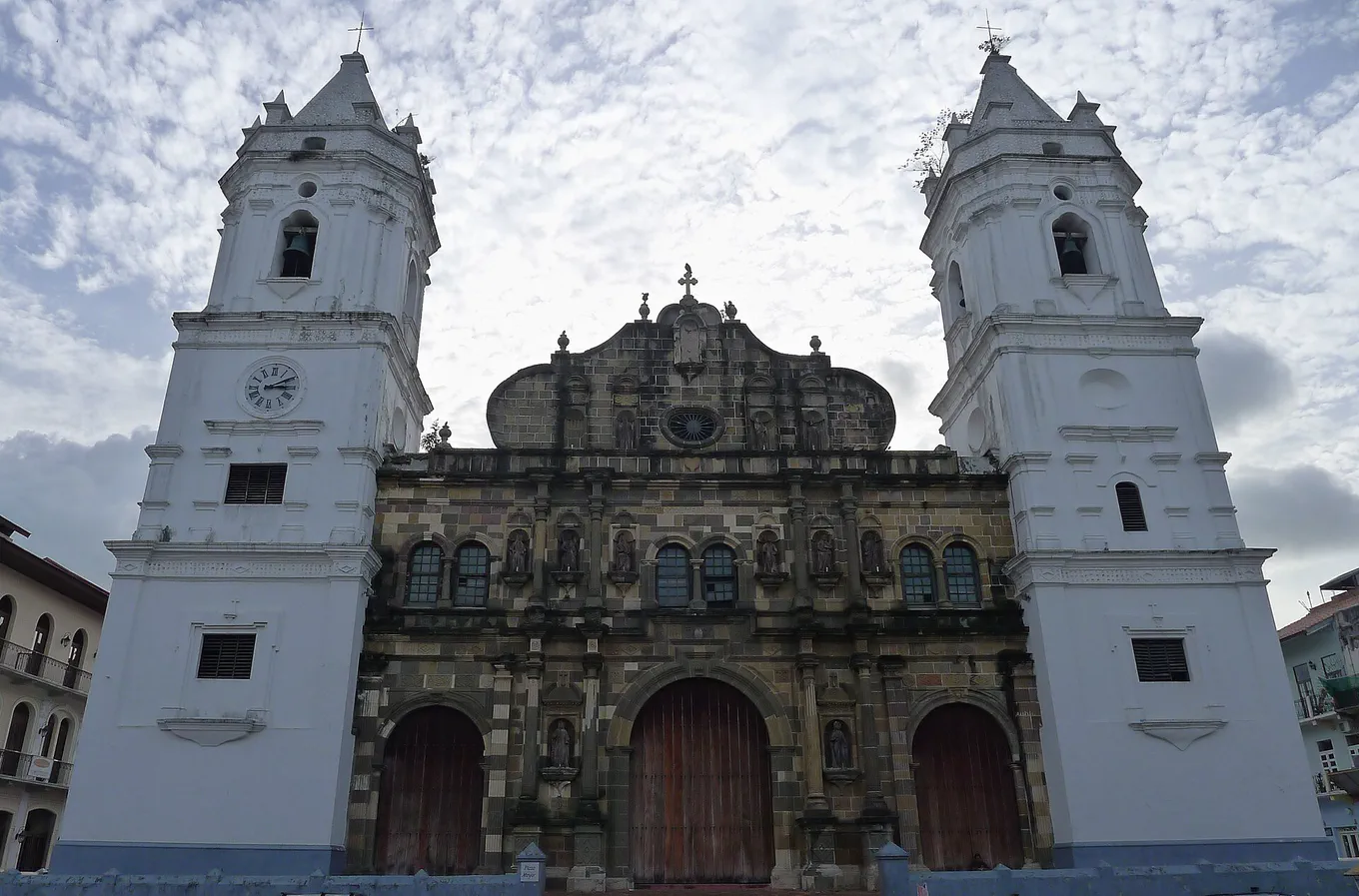
Stand here. Back in Plaza de la Independencia, facing the Cathedral. The plotters met at the Hotel Central, on the square.
Theodore Roosevelt’s warship USS Nashville was at Colón. Hearing that 500 Colombian troops were coming, many of Panama’s independence plotters deserted. But María de la Ossa, wife of the plot’s leader, saw the soldiers needed the railway. On 3 November 1903, friendly railway officials sent the generals to Panama City alone and held their men in Colón. The generals were met with music and drink until the garrison commander had them arrested. They walked to jail with their hands up. The next afternoon, the act of independence was signed here.
5 Manuel Noriega and the rock music siege at the nunciature
Stand here. The former Apostolic Nunciature, the Vatican’s embassy, on Avenida Balboa at the entrance to Punta Paitilla. The Holy See left in 2016.
Van Halen’s “Panama” and The Clash’s “I Fought the Law” were reportedly among the songs US troops blasted at this building to drive out Manuel Noriega. The dictator had taken refuge here on Christmas Eve 1989, during the US invasion. Inside, he slept, read, and went to Mass. The Vatican complained, and the music stopped. The nuncio, the Pope’s ambassador, relied on persuasion. On 3 January 1990, with thousands protesting at the gates, Noriega put on his uniform, asked to keep his Bible, and walked with three priests to surrender.
Pack nothing. Leave Friday.
Every Friday, I write a free letter, Journey, that takes us on a trip through places, stories, and ideas.
The Tailor of Panama(John le Carré, 1996). A novel. Harry Pendel, a British expatriate, runs his own bespoke tailoring business, Pendel and Braithwaite, in Panama City.
The Path Between the Seas(David McCullough, 1977). A history of the creation of the Panama Canal, 1870 to 1914.
Cup of Gold(John Steinbeck, 1929). A novel. Steinbeck’s first, it is loosely based on the 17th-century privateer Henry Morgan and centres on his assault and sacking of Panama City.
Films to watch before you visit Panama City
The Tailor of Panama(John Boorman, 2001). A film, shot partly on location in Panama City, Lake Gatún, and Gamboa.
Quantum of Solace(Marc Forster, 2008). A film. The National Institute of Culture building, on Plaza de Francia, stands in for a hotel in Bolivia.
Hands of Stone(Jonathan Jakubowicz, 2016). A biographical film about the boxer Roberto Durán, who was raised in the slums of El Chorrillo, in Panama City.
Questions
Can you climb the cathedral tower at Panamá Viejo?
Yes. The cathedral was built between 1619 and 1626, and its old bell tower and watchtower has been made into a lookout. The climb is 115 steps over three levels, with a platform on each level for a rest and museum displays.
Where did Noriega hide during the US invasion?
In the Apostolic Nunciature, the Vatican’s embassy, on Avenida Balboa at the entrance to Punta Paitilla, from 24 December 1989 to 3 January 1990. The US said the nuncio had threatened to end his asylum, and the nuncio denied it. The Holy See returned the building to the state in 2016.
What is Casco Viejo?
Casco Viejo, also called Casco Antiguo or San Felipe, is Panama City’s historic district. It was built as a walled city after the original city was destroyed in 1671, to protect its settlers from pirates. Together with the ruins of Panamá Viejo, it is a UNESCO World Heritage Site.