In 1997, I wrote a speech for the head of the IBM PC Company (EMEA), who was based in Paris. It’s the only time I’ve flown anywhere for a meeting, had the meeting, and flown right back. I had no time to explore back then, but fortunately I’ve been back many times since. Like all the best places, it’s easy to walk around.
— Nick
Julius Caesar conquered the Paris Basin in 52 BC and began a Roman settlement on the Left Bank of the River Seine, where France’s capital and largest city now stands in the Île-de-France region. The theft of the Mona Lisa joins a tower meant to come down, a scroll in the Bastille’s wall, a novel that saved a cathedral, and a bookseller who defied a Nazi officer.
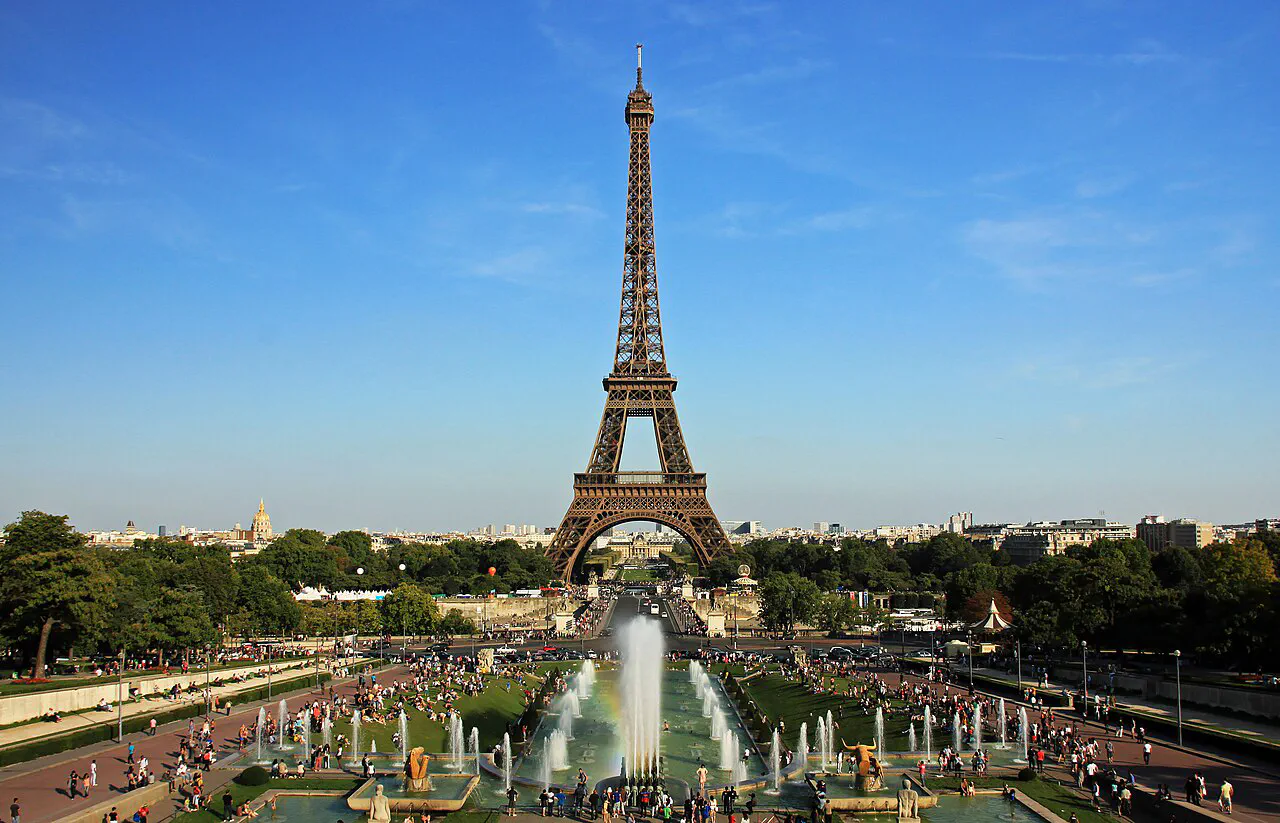
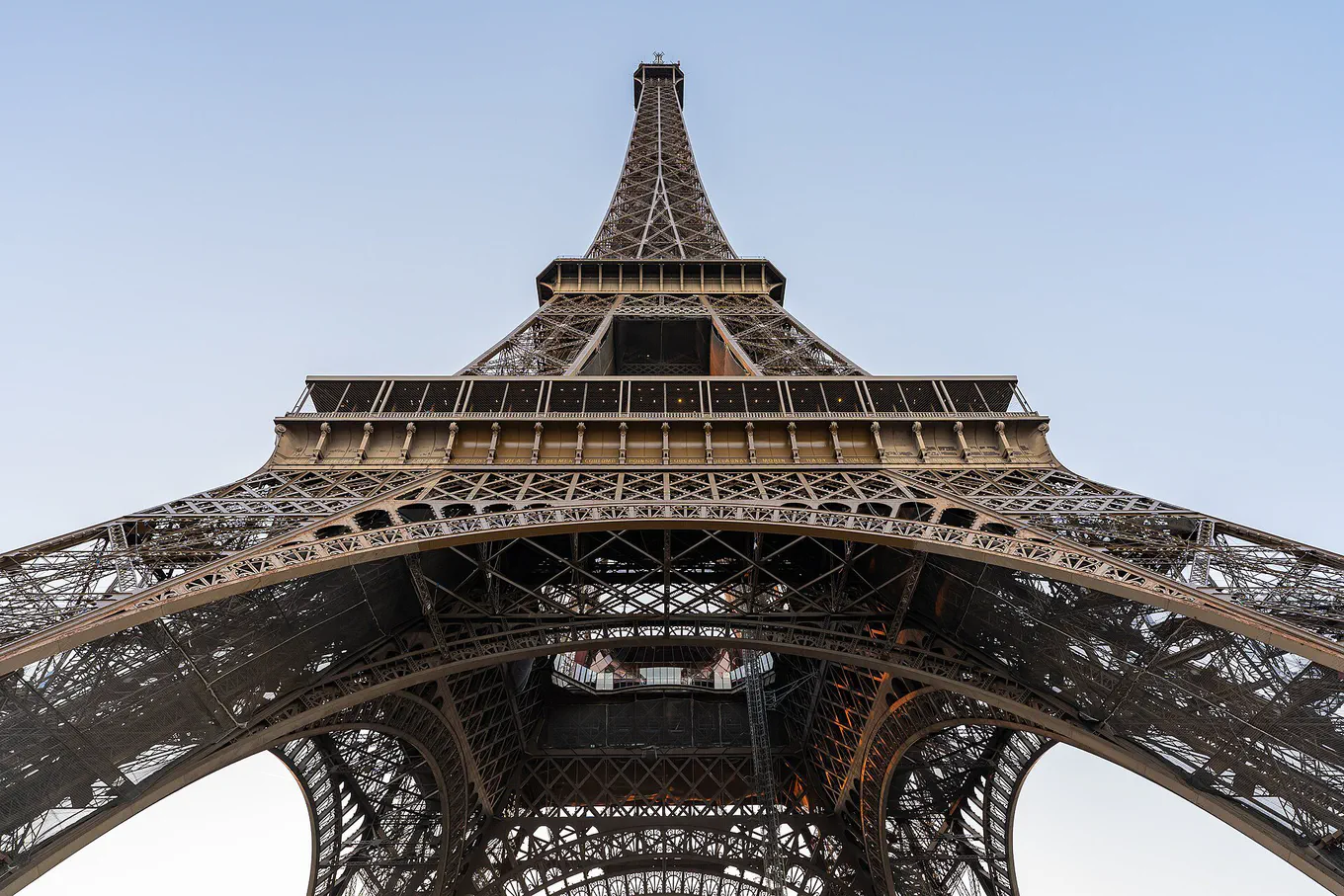
The Eiffel Tower was due to come down in 1909. Gustave Eiffel’s company built it for the World’s Fair of 1889, and he would keep its income for twenty years. Artists had already called it “useless and monstrous”. Eiffel had an apartment at the top, where Thomas Edison gave him a phonograph and hailed him in the guestbook as “the brave builder”. Then the tower proved useful for radio. In 1909, the year it was due to go, a radio centre was built underground by its south pillar. It is still there.
2 The Marquis de Sade’s lost scroll and the Bastille
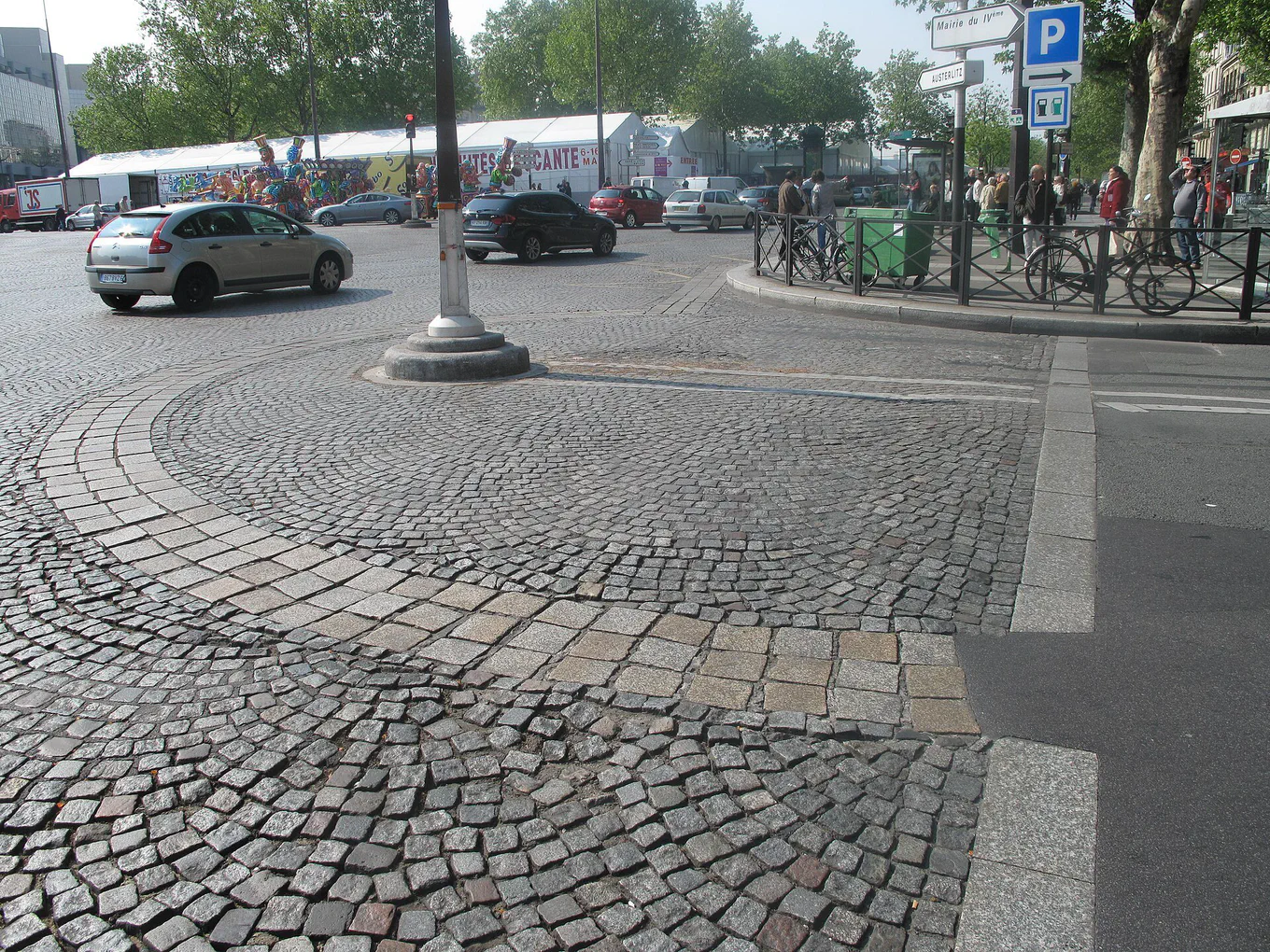
Stand here. Place de la Bastille, where the fortress stood. Nothing of the prison is left, but its outline is marked in the paving.
The line of the Bastille fortress’s walls, marked in the paving setts of the Place de la Bastille, Paris.Tangopaso / Public domain.
The word sadism comes from the Marquis de Sade, who wrote The 120 Days of Sodom as a prisoner in the Bastille, in tiny writing on a scroll twelve metres long. He hid it rolled inside his cell wall. In July 1789, he shouted to passers-by that the warders were killing the prisoners, and was moved to an asylum. When the Bastille fell on 14 July, he thought the scroll destroyed, and wrote that he “wept tears of blood”. But two days earlier, it had been found and carried out.
3 Vincenzo Peruggia steals the Mona Lisa from the Louvre
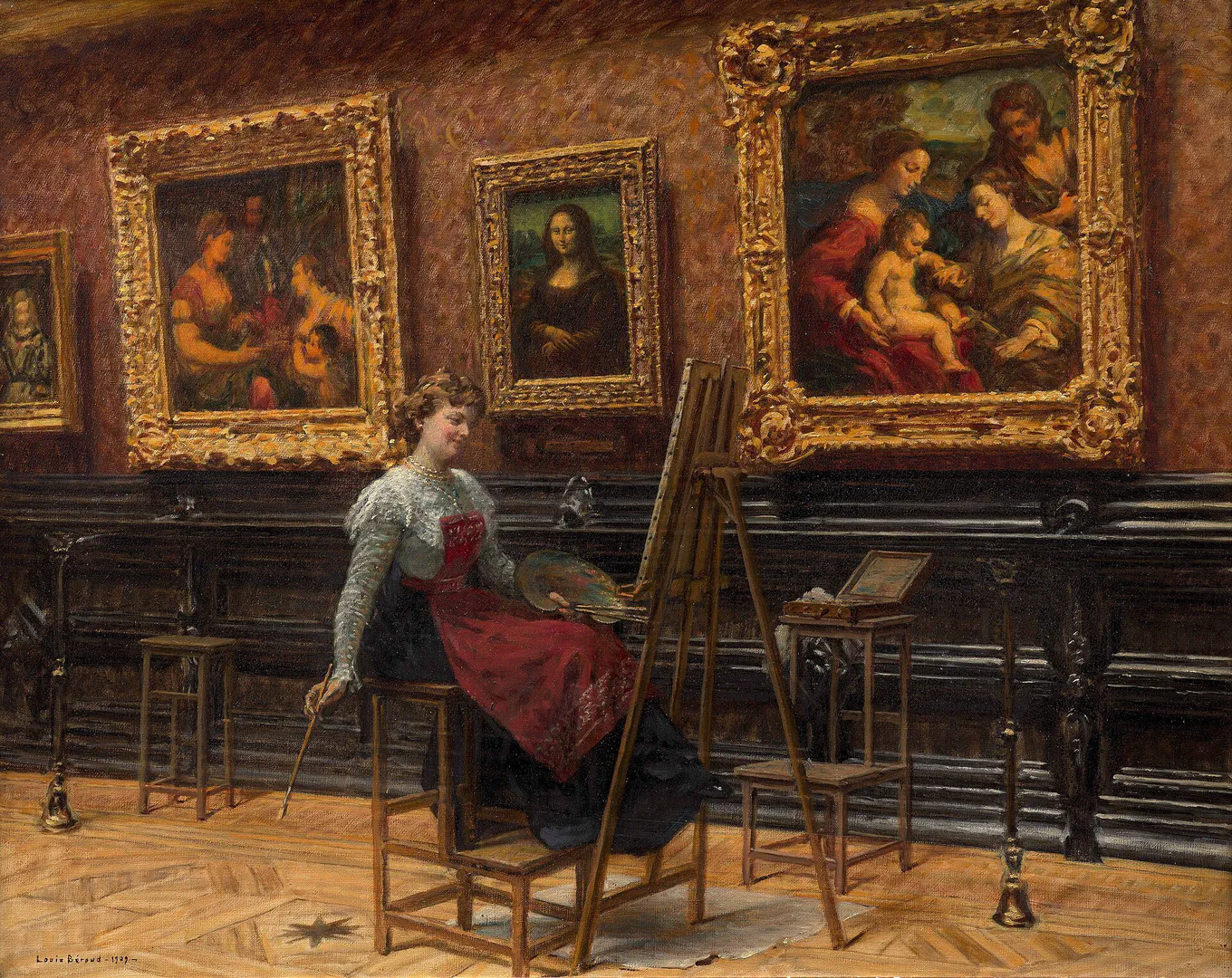
Stand here. The Louvre. The painting hung then in the Salon Carré, and today hangs alone behind glass in the Salle des États.
Louis Béroud’s painting of a copyist at her easel in the Louvre’s Salon Carré, with the Mona Lisa on the wall behind her.Louis Béroud / Public domain.
In 1911, the Mona Lisa wasn’t yet popular with the public. On 21 August, a Monday when the Louvre was closed, Vincenzo Peruggia took it. He had worked there as a glazier and built the painting’s case, and he said he wanted it in Italy. People came to stare at the empty wall. The painting lay in a trunk in his flat for two years, until he offered it to a Florence dealer, who called the police. He went to prison. The Mona Lisa came back more famous than ever.
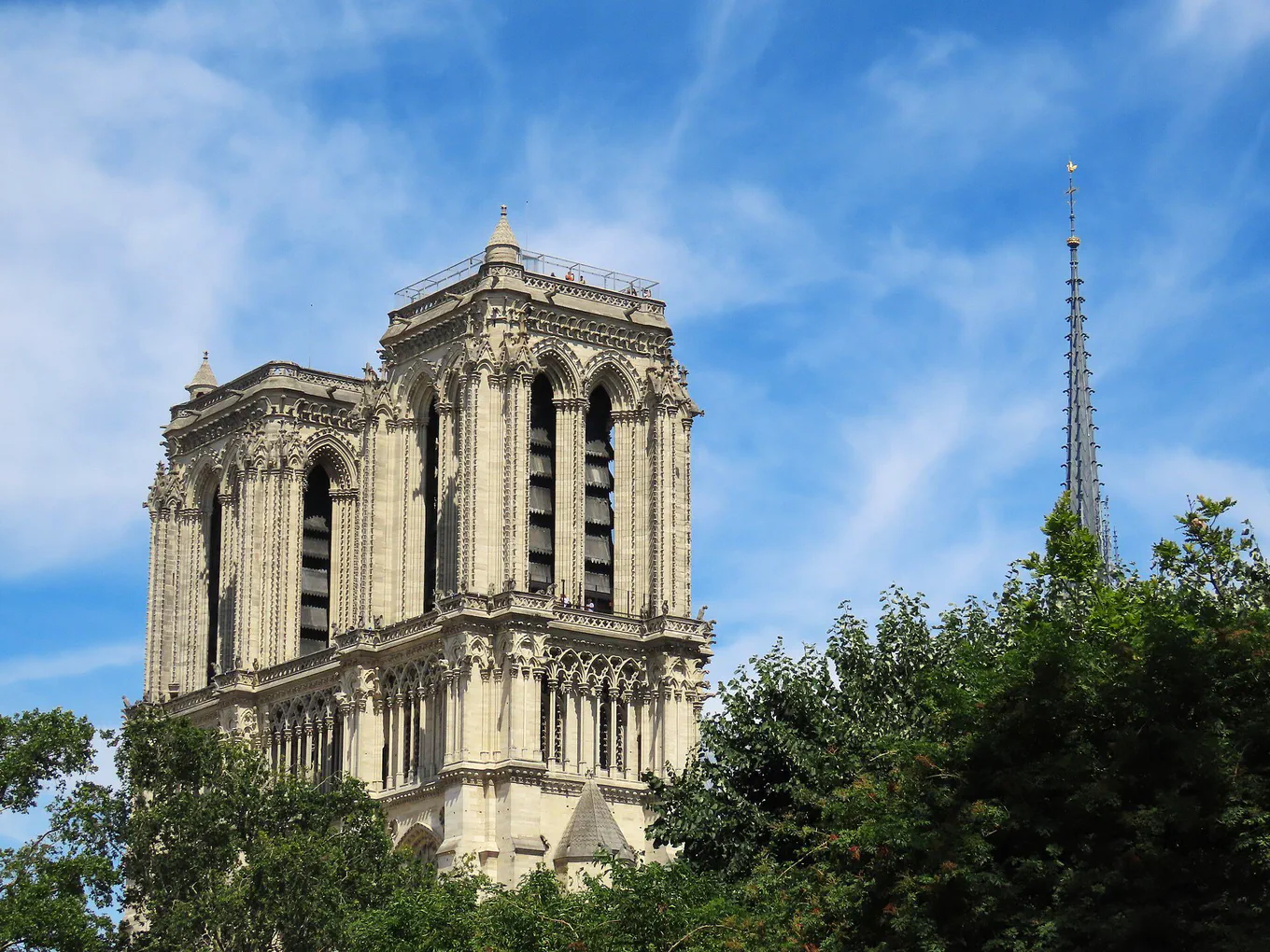
Victor Hugo published The Hunchback of Notre-Dame in 1831, when the cathedral had fallen into such disrepair that Paris officials considered demolishing it. By his own account, Hugo had found a Greek word, ananke, or fate, cut by hand into the wall of a nook in one of its towers. Then the wall was whitewashed or scraped, and the word disappeared. He built the novel on it. The book was an enormous success, and it shamed the city into restoring the cathedral. The stones were saved. The word was already gone.
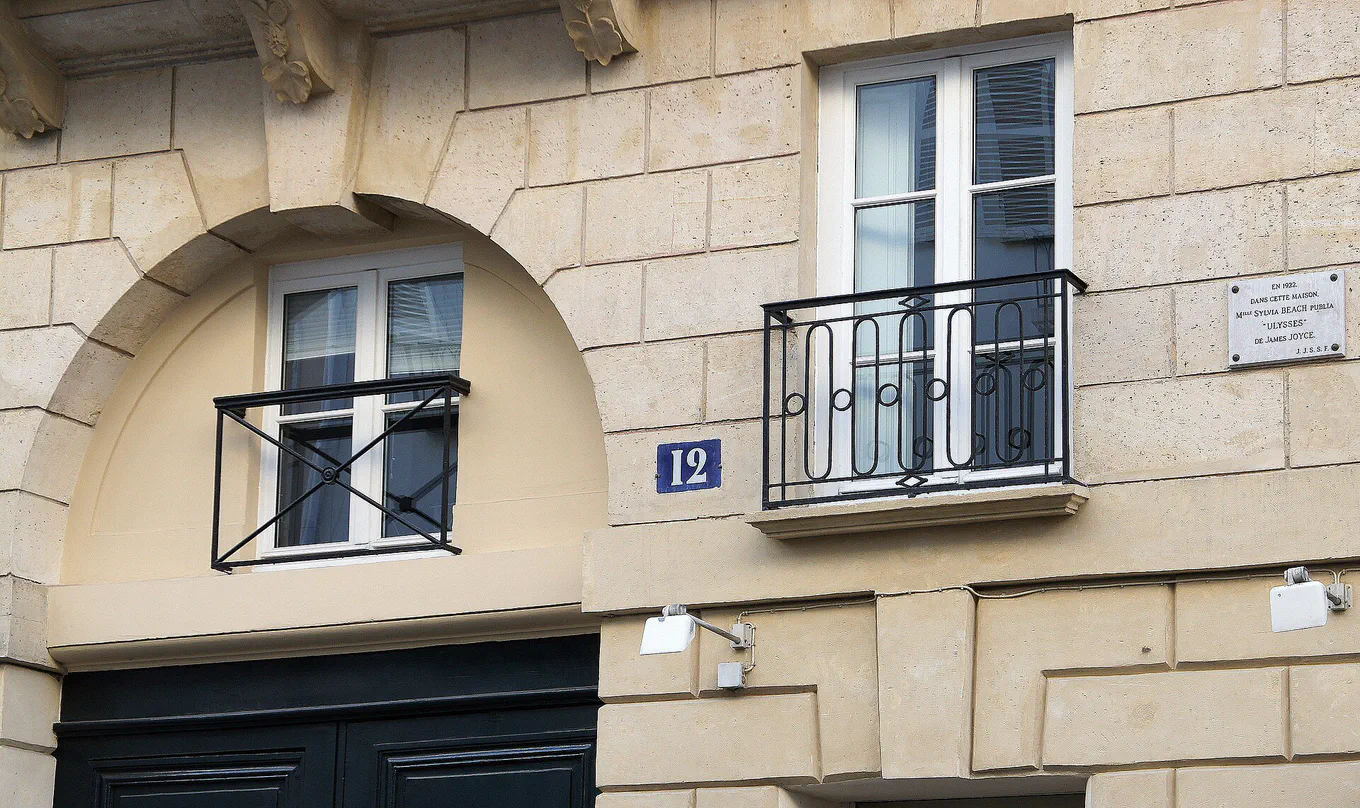
When no one else dared to publish James Joyce’s Ulysses, Sylvia Beach did, from her bookshop, Shakespeare and Company. In December 1941, a Nazi officer came in and demanded her last copy of Finnegans Wake. She would not sell it. He said he would come back that afternoon, take everything, and close the shop. The moment he left, she moved every book upstairs. The shop never reopened, and she spent six months in an internment camp at Vittel. Today’s Shakespeare and Company, opposite Notre-Dame, is named in her honour.
The Hunchback of Notre-Dame(Victor Hugo, 1831). A novel. Set in the Paris of 1482, around Quasimodo, the bell-ringer of Notre-Dame, and Esmeralda, a sixteen-year-old Roma dancer.
The Phantom of the Opera(Gaston Leroux, 1910). A novel set in the Palais Garnier, the real Paris opera house. Its underground lake is real too, an enormous cistern.
A Moveable Feast(Ernest Hemingway, 1964). A memoir of his years as a struggling writer in 1920s Paris, with sketches of Sylvia Beach and Gertrude Stein.
Les Misérables(Victor Hugo, 1862). A novel. Its barricade goes up on the Rue de la Chanvrerie, at the end of the Rue Rambuteau near Les Halles.
Down and Out in Paris and London(George Orwell, 1933). A memoir. Orwell’s narrator washes dishes in a hotel near the Place de la Concorde.
Films to watch before you visit Paris
Amélie(Jean-Pierre Jeunet, 2001). A film. Amélie works at the real Café des 2 Moulins, 15 rue Lepic, Montmartre, and finds a boy’s hidden box of childhood keepsakes.
Breathless(Jean-Luc Godard, 1960). A film. Patricia sells the New York Herald Tribune on the Champs-Élysées, and Michel’s death was filmed on the rue Campagne-Première.
Questions
Where is the Mona Lisa in the Louvre?
In the Salle des États, the largest room in the palace, which is Room 711 on Level 1 of the Denon wing. The painting has hung there since 1966, and since 2005 it has been alone in a protective glass case in the middle of the room. In 2024, it was decided to give it a room of its own.
Is anything left of the Bastille?
Not on the square. No part of the prison stands at Place de la Bastille, though its outline is marked in the paving. Part of its foundation is on display in the Métro station below, and the remains of one tower, dug up in 1899, are displayed in Square Henri-Galli, a few hundred metres away.
How many arrondissements does Paris have?
Twenty. The arrondissements, or districts, are numbered in a clockwise spiral, and each has its own cultural identity. The Eiffel Tower is in the 7th, Sylvia Beach’s old shop on the rue de l’Odéon is in the 6th, and today’s Shakespeare and Company is in the 5th.