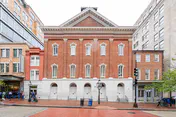
Rocky was set here. The Sixth Sense was set here. That brilliant Tom Hanks film whose name I forget was set here. It also plays a fantastic part in the life of Benjamin Franklin, who moved there when he was 17. (To find out more about Franklin’s extraordinary life, I recommend the biography by Walter Isaacson. Great stuff.)
— Nick
William Penn, an English Quaker, founded Philadelphia, now Pennsylvania’s most populous city, in 1682 between the Delaware and Schuylkill rivers. The Declaration of Independence was adopted there in 1776. Al Capone’s cell is one story, and a runaway with three bread rolls, a bell that sounded like coal scuttles, six women left off a guest list, and a run up the museum steps are the others.
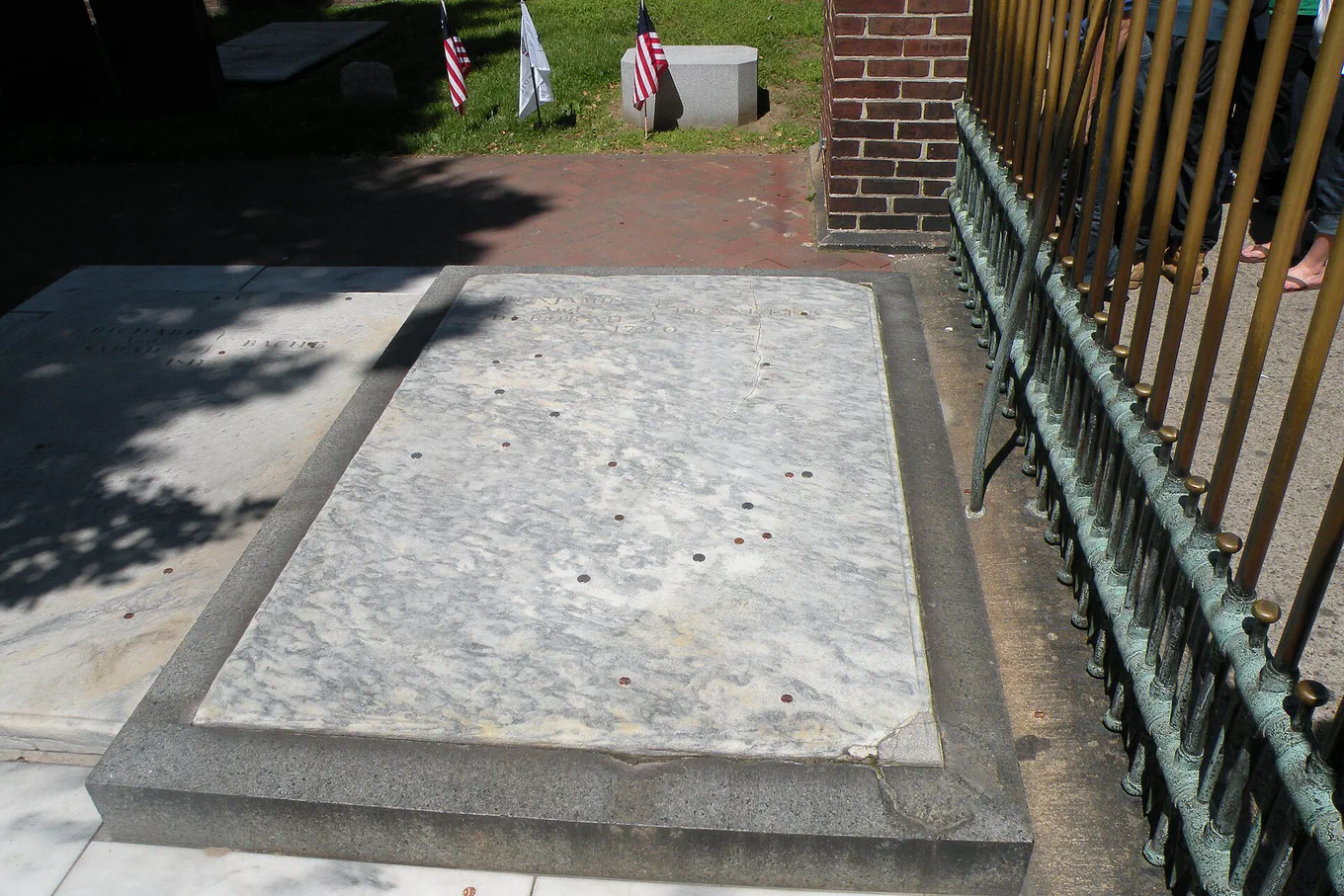
Benjamin Franklin was 17 and a runaway printer’s apprentice from Boston when he landed at the Market Street wharf one Sunday morning in October 1723. He came away with “three great puffy rolls”. With no room in his pockets, he walked up Market Street with a roll under each arm, eating the third. Deborah Read, 15, saw him from her father’s door and thought he made “a most awkward, ridiculous appearance”. He agreed. Seven years later she became his wife. Their gravestone reads only “Benjamin and Deborah Franklin”.
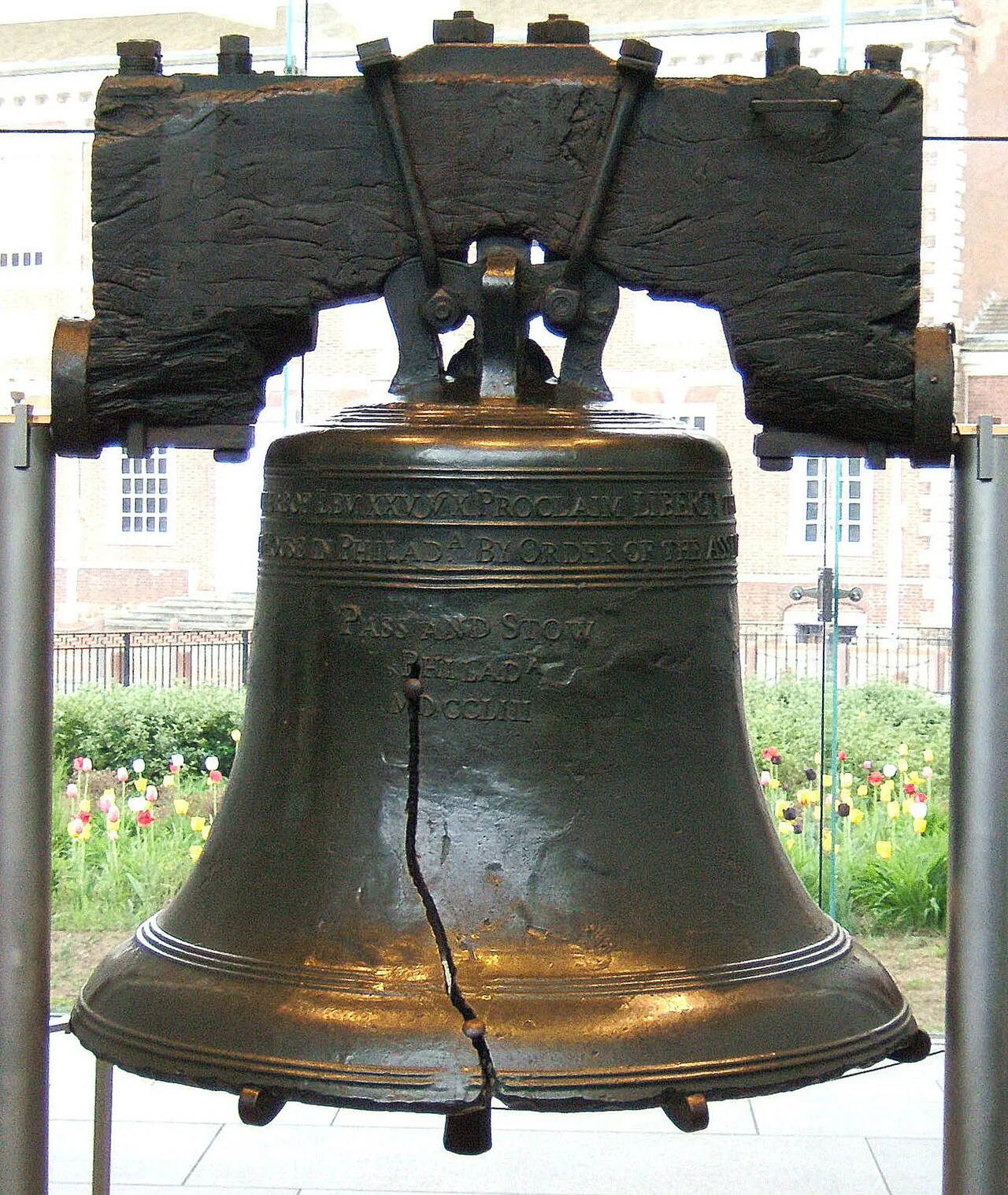
2 Pass and Stow, who recast the Liberty Bell twice
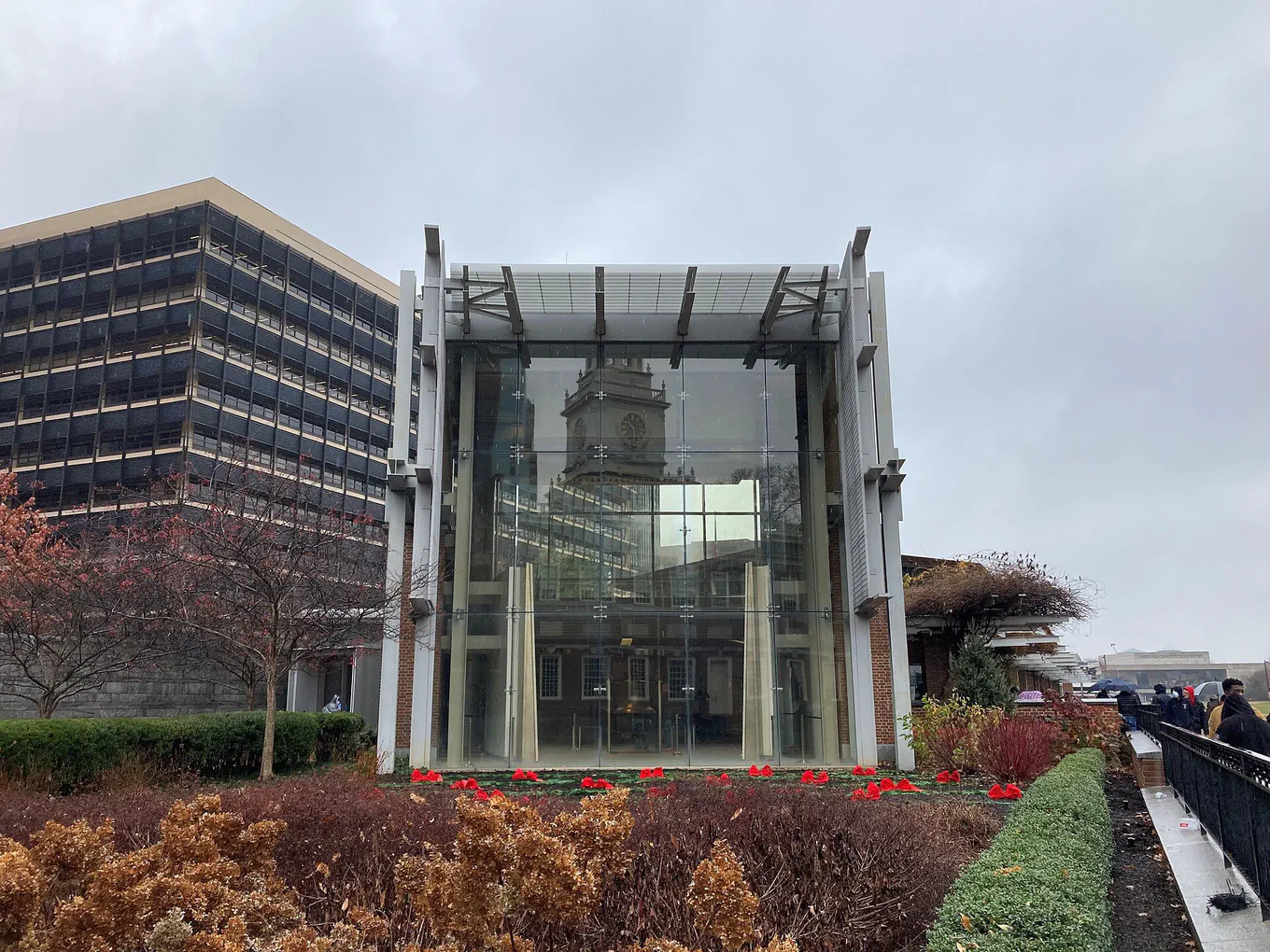
Stand here. The Liberty Bell Center, at 526 Market Street.
The Liberty Bell arrived from London’s Whitechapel Foundry in 1752, ordered for the tower of the State House, now Independence Hall. At the first strike of the clapper, its rim cracked. Two local founders, John Pass and John Stow, offered to recast it, though both were new to casting bells. Their bell sounded, one hearer said, like two coal scuttles banged together. Mocked by the crowd, they hurried it away and cast it again. This time the sound passed. The bell they were laughed at for still carries their names.
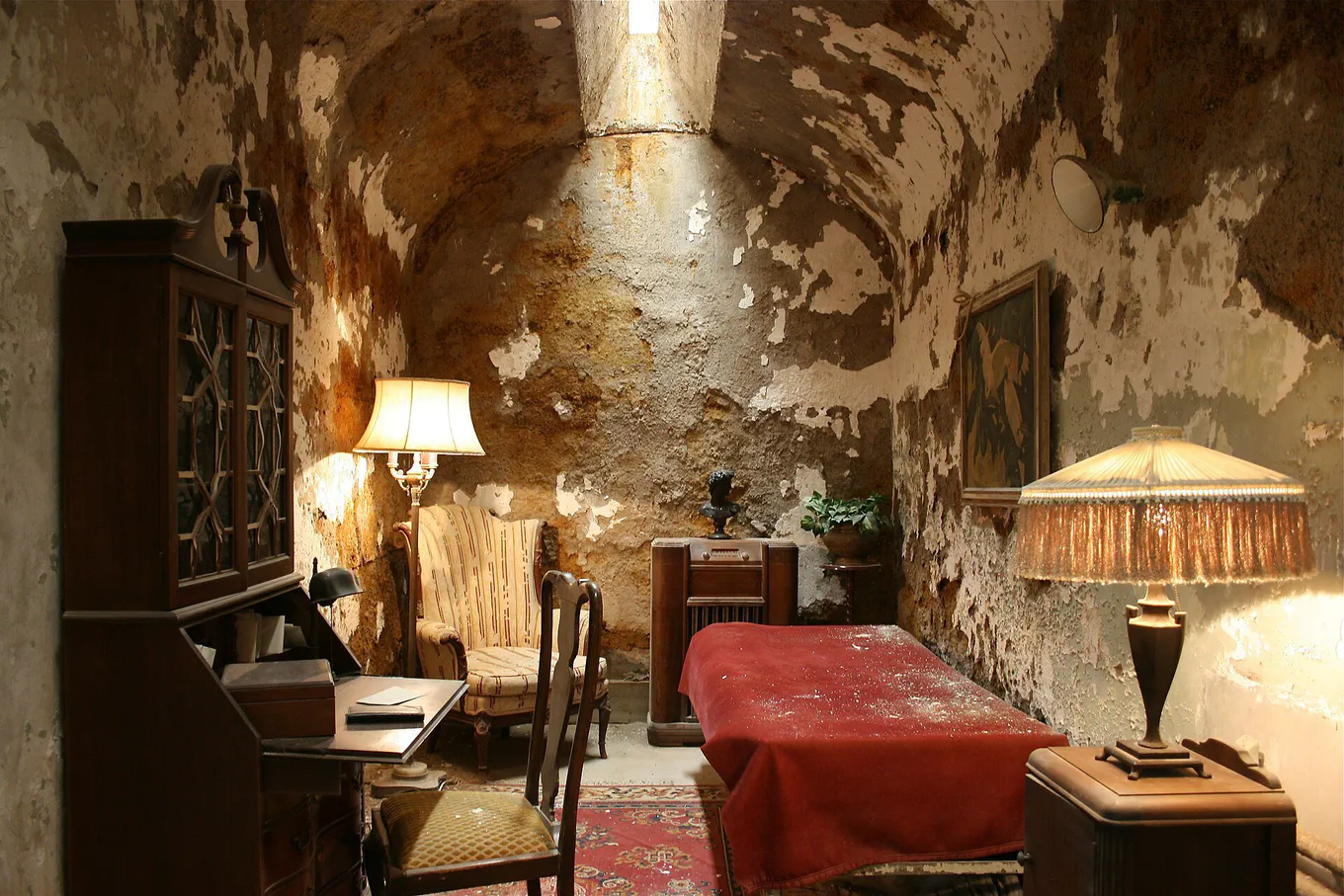
3 Al Capone’s ‘luxury’ cell at Eastern State Penitentiary
Stand here. Eastern State Penitentiary, 2027 Fairmount Avenue, in Fairmount. The old prison is a museum, with Capone’s cell restored.
Al Capone, boss of the Chicago Outfit, was arrested in Philadelphia in 1929 for carrying a concealed weapon. He was sent to Eastern State Penitentiary, to a cell said to hold oriental rugs, fine furniture, and a cabinet radio playing waltzes. But when the museum restored the cell in 2019, its research found he had a cellmate, and likely just a prison-made rug, a dresser, a table, a flower vase, and a smoking stand. A cot went in, and some of the luxuries came out.
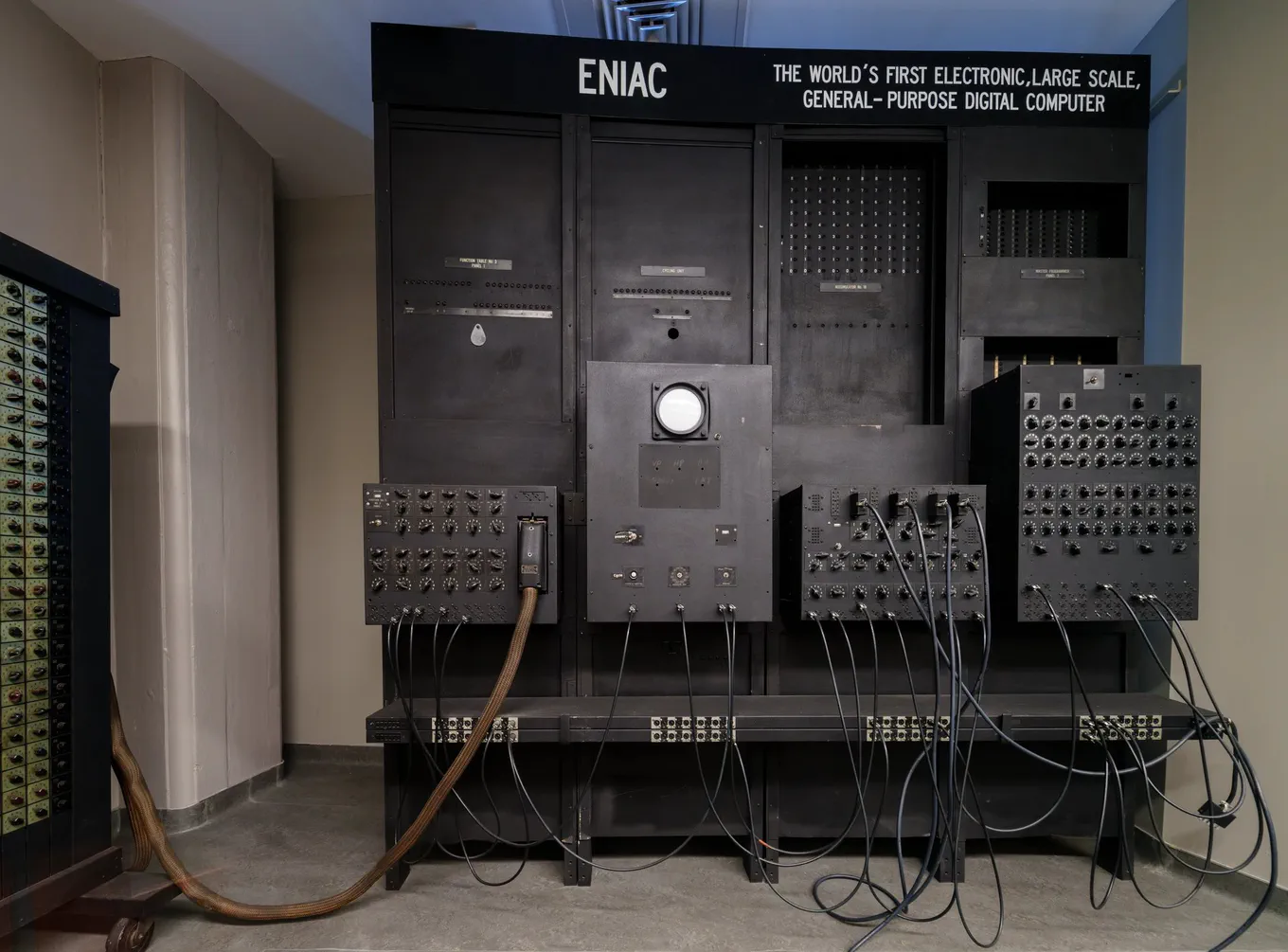
4 Jean Bartik and the ENIAC women at Penn’s Moore School
Stand here. The Moore School Building, on the University of Pennsylvania campus. Four of ENIAC’s original 40 panels are on its ground floor.
Six women programmed ENIAC, a computer built at Penn’s Moore School for the US Army that filled a room 30 by 50 feet. With no manual, they learned it from diagrams and by questioning its engineers. Two of them, Jean Bartik and Betty Snyder, wrote the program for its public demonstration in February 1946. None of the women was invited to the dedication or the celebratory dinner, and the photographs showed only men. Bartik still called the day one of the most exciting of her life.
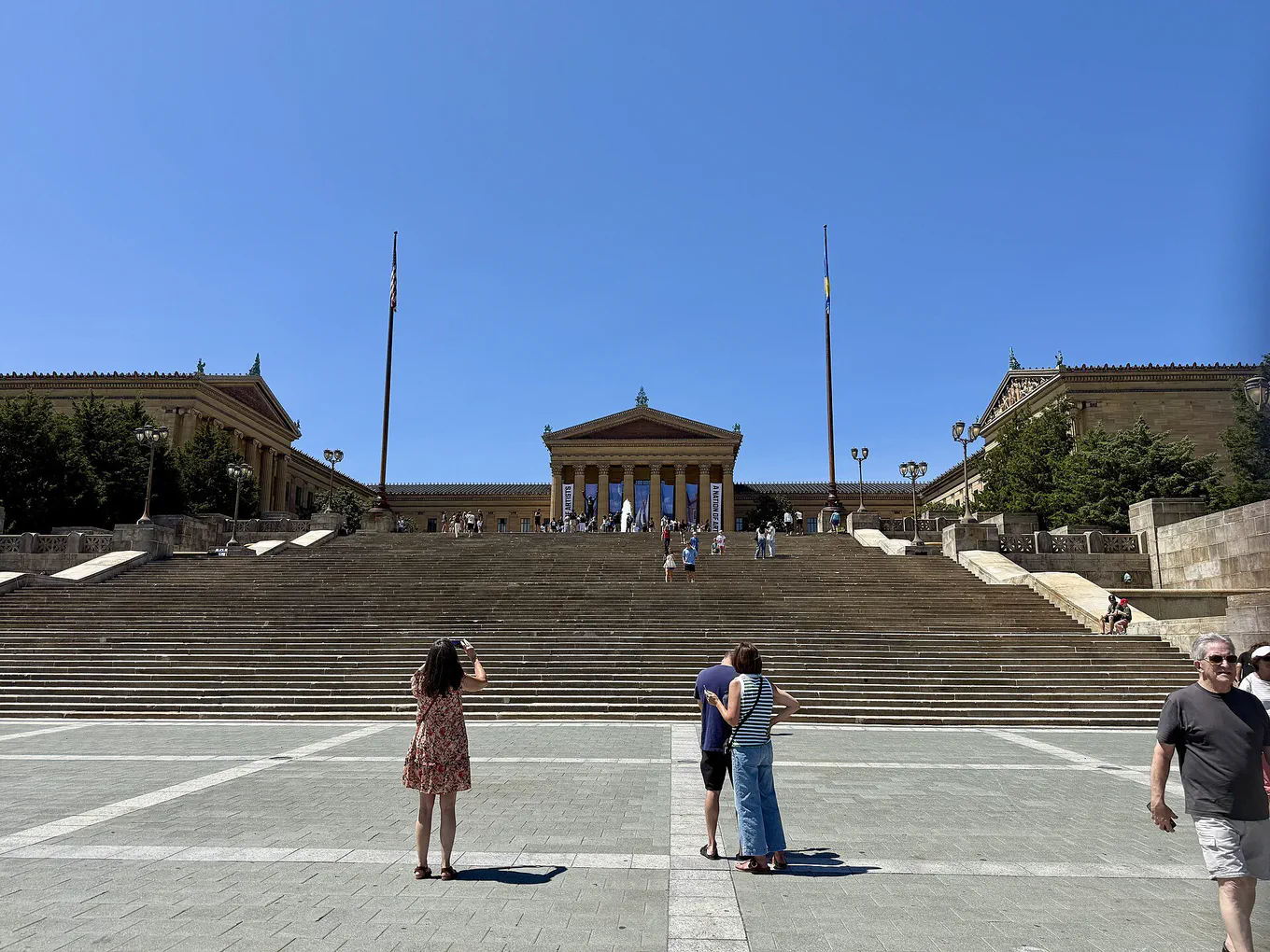
5 Stallone, Rocky, and the Art Museum’s 72 steps
Stand here. The 72 stone steps to the east entrance of the Philadelphia Museum of Art. A bronze Rocky statue stands at the foot of the steps.
Sylvester Stallone wrote Rocky in three and a half days. United Artists liked the script, but saw it as a vehicle for an established star such as Robert Redford. Stallone turned down a six-figure deal for the rights rather than let the film be made without him in the lead, and the studio gave in. Made for about $1 million, Rocky became the highest-grossing film of 1976 and won Best Picture. Tourists run up these steps to copy Rocky’s climb, the underdog rising to a challenge.
Pack nothing. Leave Friday.
Every Friday, I write a free letter, Journey, that takes us on a trip through places, stories, and ideas.
The Autobiography of Benjamin Franklin(Benjamin Franklin, 1791). A memoir. Franklin’s account of walking up Market Street to Fourth Street with his rolls, past the door of his future wife’s father.
Long Bright River(Liz Moore, 2020). A novel set in Philadelphia’s Kensington neighbourhood, about two sisters on opposite ends of the opioid crisis, one a police officer, the other suffering from heroin addiction.
Fever 1793(Laurie Halse Anderson, 2000). A historical novel set in Philadelphia during the yellow fever epidemic. It received two starred reviews and was a Publishers Weekly bestseller.
Films to watch before you visit Philadelphia
Rocky(John G. Avildsen, 1976). A film, written by and starring Sylvester Stallone. His boxer runs up the 72 steps of the Philadelphia Museum of Art.
Trading Places(John Landis, 1983). A film. Eddie Murphy’s character is introduced in Rittenhouse Square, pretending he can’t walk.
Witness(Peter Weir, 1985). A film. Waiting at 30th Street Station for a connecting train, Samuel goes into the men’s room.
Philadelphia(Jonathan Demme, 1993). A film, shot on location in the city, with its courtroom scenes filmed at City Hall.
The Sixth Sense(M. Night Shyamalan, 1999). A film. Its Philadelphia locations include St Augustine’s Church, on 4th and New Streets in Old City.
Questions
Can you see Al Capone’s cell at Eastern State Penitentiary?
Yes. Eastern State, at 2027 Fairmount Avenue, held prisoners from 1829 to 1971 and is now a museum. Capone’s original cell has been restored to how it likely looked in 1929.
Did the Liberty Bell ring on 4 July 1776?
There’s no evidence it did. The story comes from fiction George Lippard published in 1847, later reprinted as historical fact. The Declaration wasn’t read in public until 8 July, and the bell was first called the Liberty Bell in 1835, by an abolitionist publication.
Why is Philadelphia called the City of Brotherly Love?
William Penn, an English Quaker and advocate of religious freedom, founded the city in 1682 and named it Philadelphia, which is Greek for “brotherly love”. Less than a century later it became the nation’s first capital.