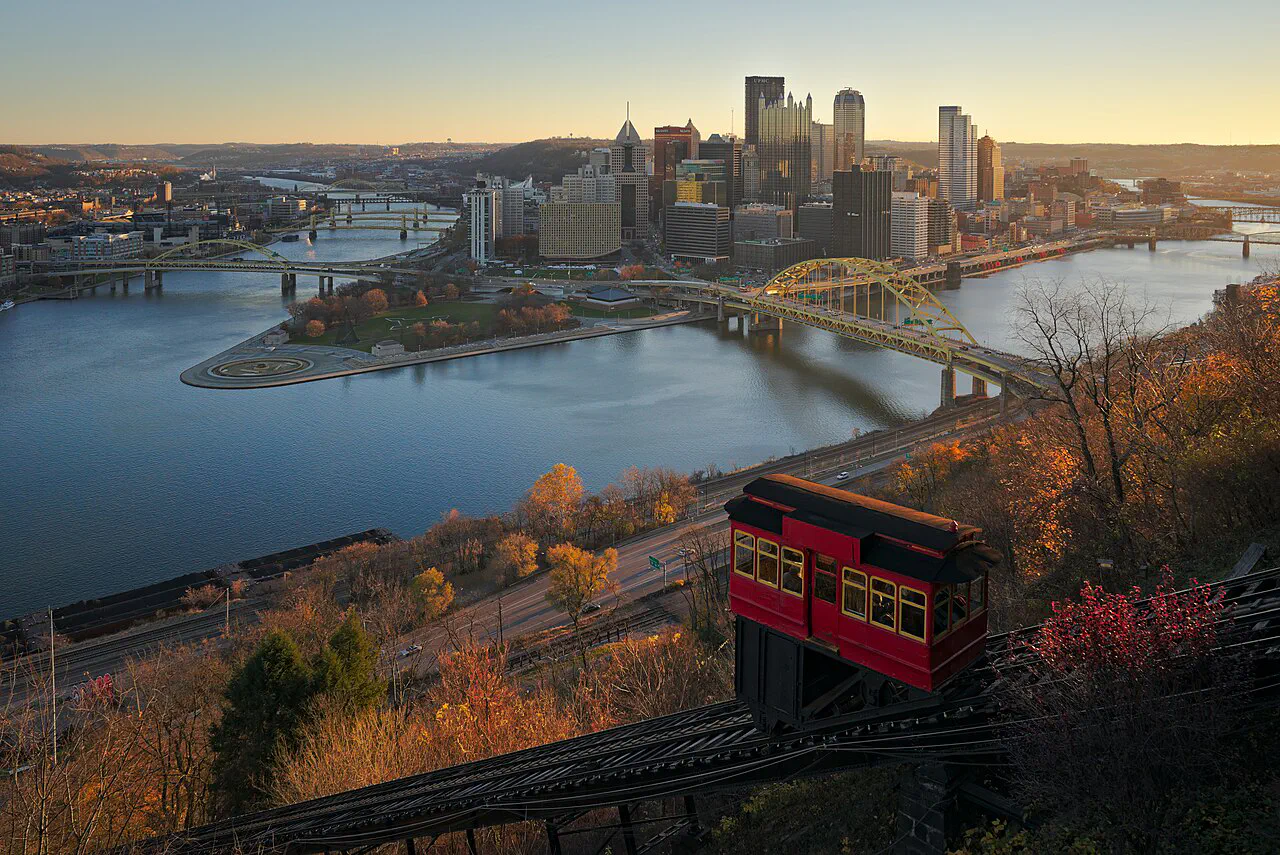
Pittsburgh, United States, Pennsylvania, North America
This is Us is most of what I’ve seen of Pittsburgh, but I’ve no idea how much of it was shot there. Recently, The Pitt has been big in our house, but honestly, same deal. If you know Pittsburgh… tell me what it’s like.
— Nick
Named in 1758 after the British statesman William Pitt, Pittsburgh grew into the Steel City. It stands in southwestern Pennsylvania, where the Allegheny and Monongahela rivers meet to form the Ohio. George Washington on a raft in the ice starts the stories and a World Series home run ends them, with an anarchist in Henry Clay Frick’s office, Jonas Salk’s polio vaccine, and Mister Rogers before the Senate in between.
George Washington thrown into the icy Allegheny River
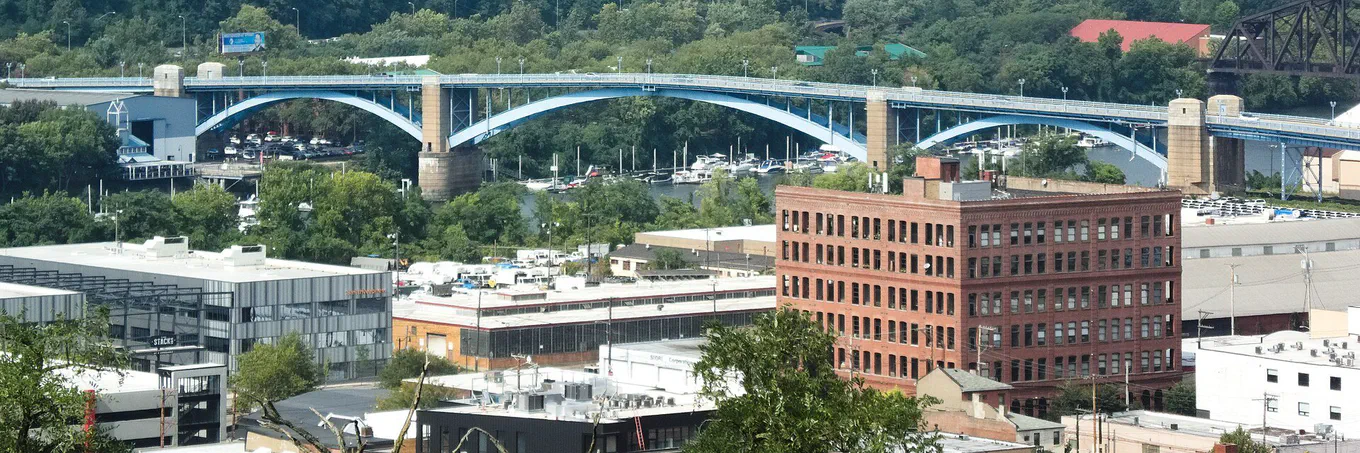
Stand here. The Washington Crossing Bridge, over the Allegheny River in Pittsburgh. It stands where George Washington was nearly killed crossing on a raft.
The Washington Crossing Bridge over the Allegheny River in Pittsburgh, seen from Frank Curto Park.Cbaile19 / CC0.
Sent by Virginia, George Washington had told the French to leave the Ohio Country. On 29 December 1753, heading home with a guide, he reached the Allegheny expecting it frozen, but ice was driving down it. With one poor hatchet, they built a raft, and it jammed. The stream caught Washington’s pole and jerked him into ten feet of water. He saved himself on a raft log, by his own account. On an island that night, the guide’s fingers froze. In the morning, they walked ashore on the ice.
The anarchist who shot Henry Clay Frick in Pittsburgh
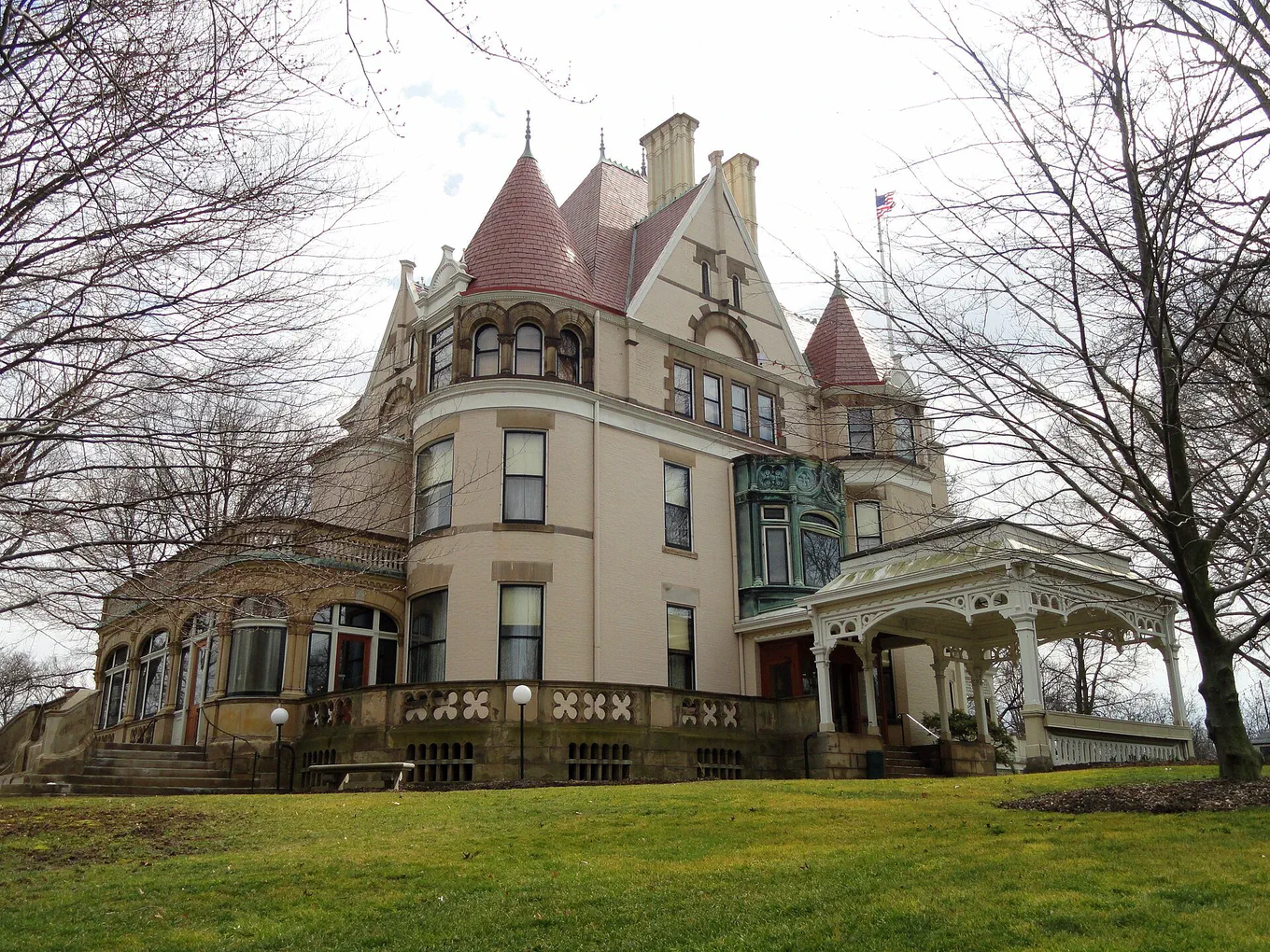
Stand here. Clayton, the Frick home in Point Breeze, now part of The Frick Pittsburgh. The shooting was at his downtown office.
Clayton, the Point Breeze mansion of Henry Clay Frick, in the grounds of The Frick Pittsburgh.Daderot / CC0.
Henry Clay Frick ran Andrew Carnegie’s steel company, and in 1892 he resolved to break the union at the Homestead works. Strikers beat his Pinkerton guards in a battle. The anarchist Alexander Berkman and his lover, Emma Goldman, plotted to kill Frick and rouse the workers to revolt. On 23 July, Berkman entered Frick’s office, shot him twice and stabbed him with a sharpened file. Frick was back at work within a week. Berkman got 22 years. The attack turned the public against the union, and the strike collapsed.
Jonas Salk’s polio vaccine in a Pittsburgh basement
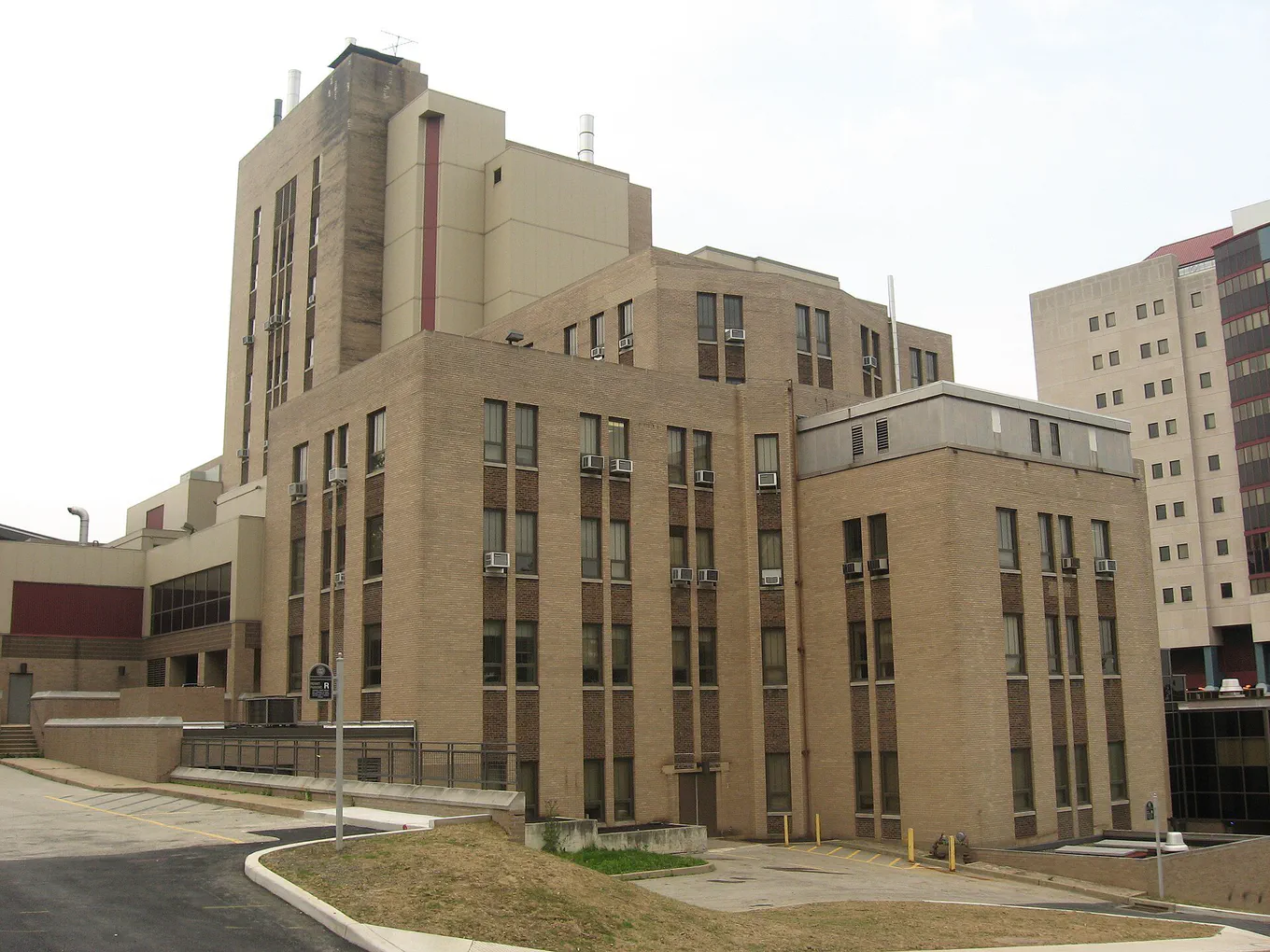
Stand here. Salk Hall, University of Pittsburgh, once the city’s hospital for contagious diseases. It now houses the dental and pharmacy schools, and a dental museum.
Jonas Salk worked on the first polio vaccine in a basement laboratory, while on the faculty of the University of Pittsburgh. Against the scientific opinion of his day, he believed a vaccine of killed virus could stop paralytic polio, the most frightening disease of the time. He gave it to himself, his wife, and their children. On 12 April 1955, after a national trial on a million children, it was announced as safe and effective. Asked who owned the patent, Salk said, “There is no patent. Could you patent the Sun?” (His backers had judged the vaccine probably unpatentable.)
Bill Mazeroski’s home run over the Forbes Field wall
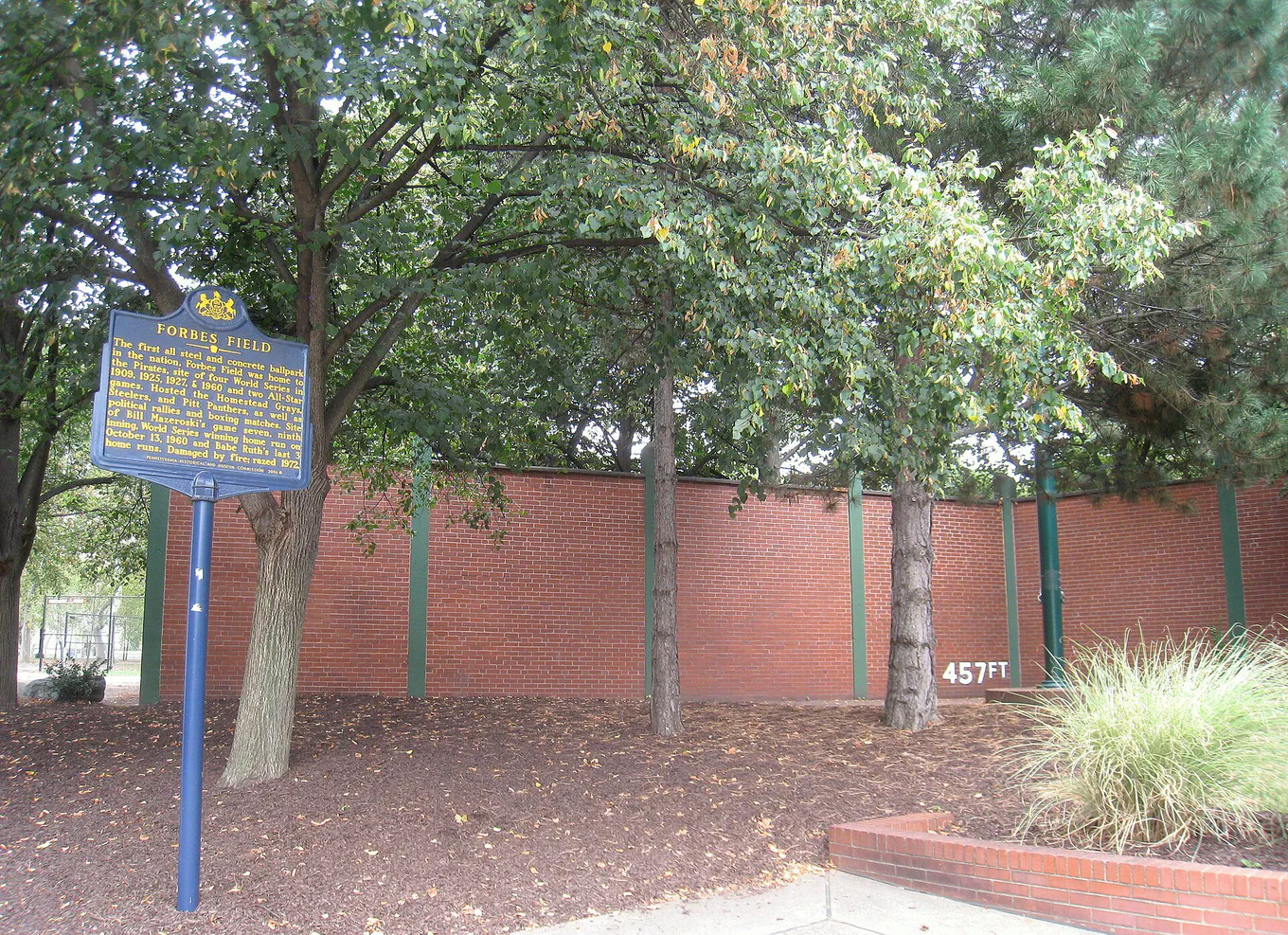
Stand here. Forbes Field was demolished in 1971, but its left-centre and centre-field wall still stands beside Posvar Hall, University of Pittsburgh. A sidewalk plaque marks where the home run cleared the wall.
The surviving brick outfield wall of Forbes Field, beside Posvar Hall on the University of Pittsburgh campus.Daderot / Public domain.
The New York Yankees outscored the Pittsburgh Pirates 55–27 across the 1960 World Series, but it still came down to Game 7. On 13 October, at Forbes Field, the score was 9–9 going into the bottom of the ninth. The first batter was Bill Mazeroski, a second baseman known mainly for his fielding. He hit the ball over the left-field wall, and the Pirates won 10–9. No World Series had ever ended on a home run. Every 13 October, fans still gather at the wall to hear the game on tape.
Fred Rogers of WQED Pittsburgh and the $20 million hearing
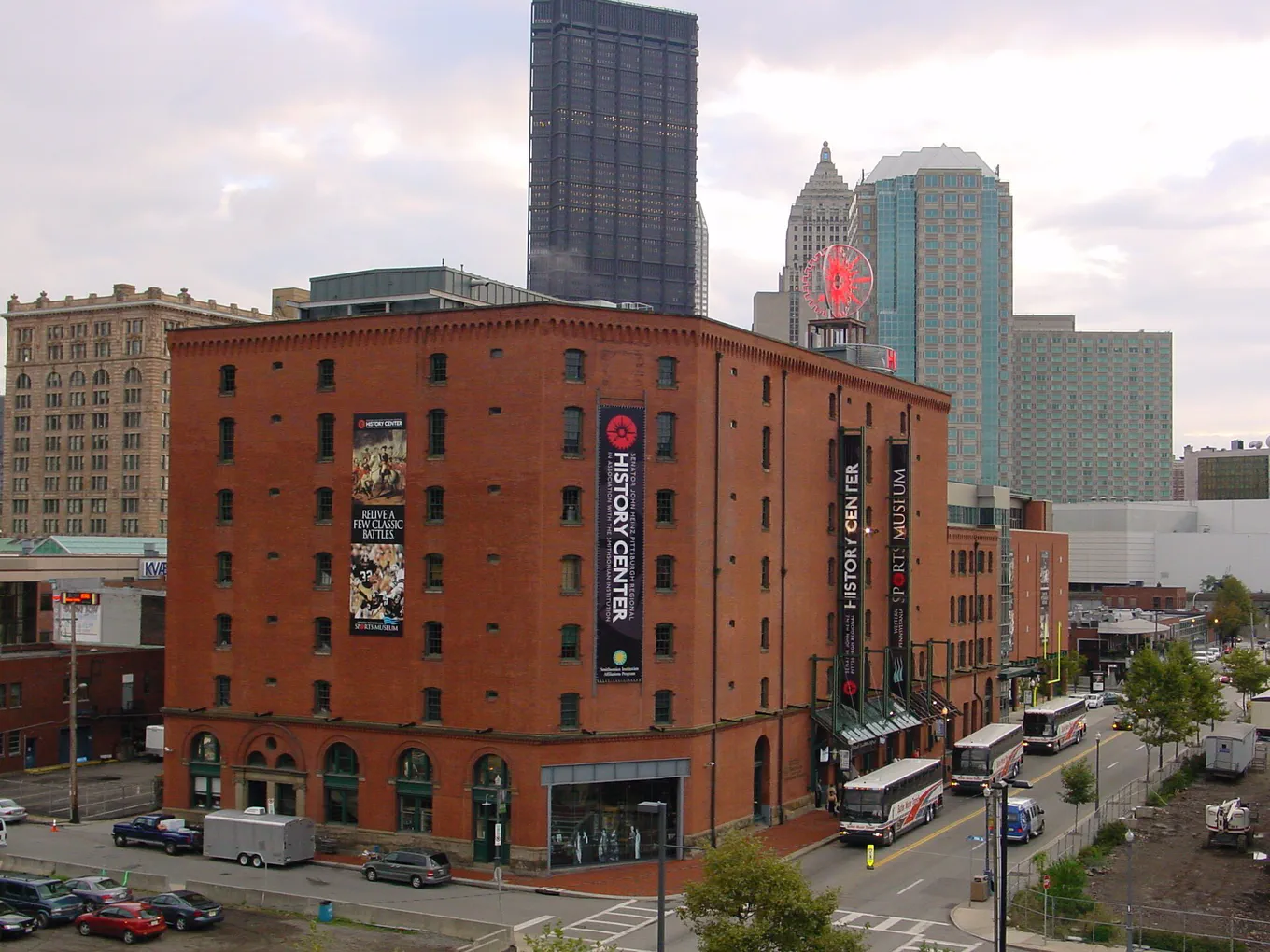
Stand here. The Heinz History Center, which shows the largest collection of original items from the Mister Rogers’ Neighborhood set, including King Friday’s castle.
Mister Rogers’ Neighborhood was taped at WQED in Pittsburgh. Fred Rogers, its host and a Presbyterian minister, had gone into television because he hated it, and wanted it to serve children rather than slapstick and nonsense. In 1969, Nixon’s administration proposed cutting public broadcasting from $20 million to $10 million, and on 1 May, Rogers testified to a Senate subcommittee. Its chairman, John Pastore, had sat through two days of hearings unimpressed. When Rogers finished, Pastore said, “Looks like you just earned the $20 million.”
Pack nothing. Leave Friday.
Every Friday, I write a free letter, Journey, that takes us on a trip through places, stories, and ideas.
Fences(August Wilson, 1985). A play, and a Pulitzer Prize winner, from his Pittsburgh Cycle, in which every play but one is set in the Hill District.
Out of This Furnace(Thomas Bell, 1941). A novel set in Braddock, a steel town just east of Pittsburgh along the Monongahela River.
The Mysteries of Pittsburgh(Michael Chabon, 1988). A novel set around Oakland, from Hillman Library and Schenley Park to the Bellefield Boiler Plant, known as the Cloud Factory.
Films to watch before you visit Pittsburgh
Fences(Denzel Washington, 2016). A film of the play, shot on location in the Hill District of Pittsburgh.
Flashdance(Adrian Lyne, 1983). A film about an 18-year-old steel-mill welder who lives in the South Side, with Carnegie Music Hall as the dance conservatory.
Wonder Boys(Curtis Hanson, 2000). A film shot in Pittsburgh, with scenes at Carnegie Mellon University and Chatham University.
The Dark Knight Rises(Christopher Nolan, 2012). A film. Heinz Field, now Acrisure Stadium, is the scene of Gotham’s football game, with Steelers players as the Gotham Rogues.
Questions
Can you still see Forbes Field, where Mazeroski hit his 1960 home run?
Partly. The stadium was demolished in 1971, but a stretch of its brick outfield wall and its flagpole still stand on the University of Pittsburgh campus, and home plate is kept in Posvar Hall. The section Mazeroski’s home run cleared was restored in 2009 and stands on the Riverwalk outside PNC Park.
Where do Pittsburgh’s three rivers meet?
At Point State Park, where the Allegheny and Monongahela join to form the Ohio, a spot once known as the Forks of the Ohio. The park holds the outlines of Fort Pitt and Fort Duquesne, and a fountain that sprays water up to 150 feet into the air.
Why is Pittsburgh called the Steel City?
Because of its leading role in the history of the US steel industry. Andrew Carnegie began making steel at the Edgar Thomson Steel Works in North Braddock in 1875, and by 1910 Pittsburgh produced between a third and a half of the nation’s steel.