I wasn’t great at school, but the ONE “A” I got in all of education was Classical Studies. For some reason, that mix of history, philosophy, and far-flung places spoke to me. I’ve never been to Pompeii, but it’s lived in my imagination for a long time. These stories just make me want to go there more.
— Nick
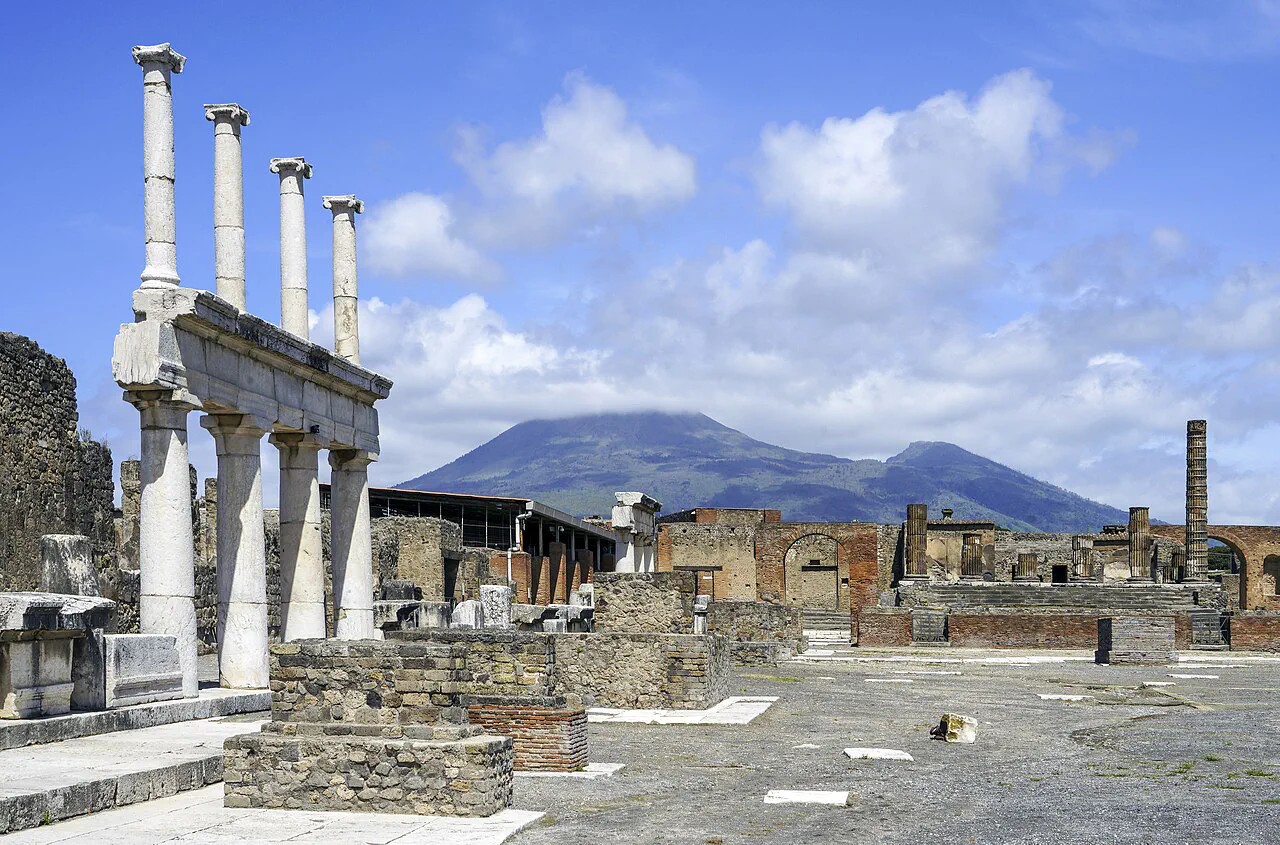
In AD 79, Mount Vesuvius, 8 km away, erupted and buried Pompeii, a Roman city near Naples in Italy’s Campania region, under metres of ash, preserving a snapshot of Roman life. Plaster casts of the dead come first, then Pink Floyd in an empty arena, a blind girl from a novel, the real banker behind a Doctor Who character, and the saint behind the modern town, Pompei.
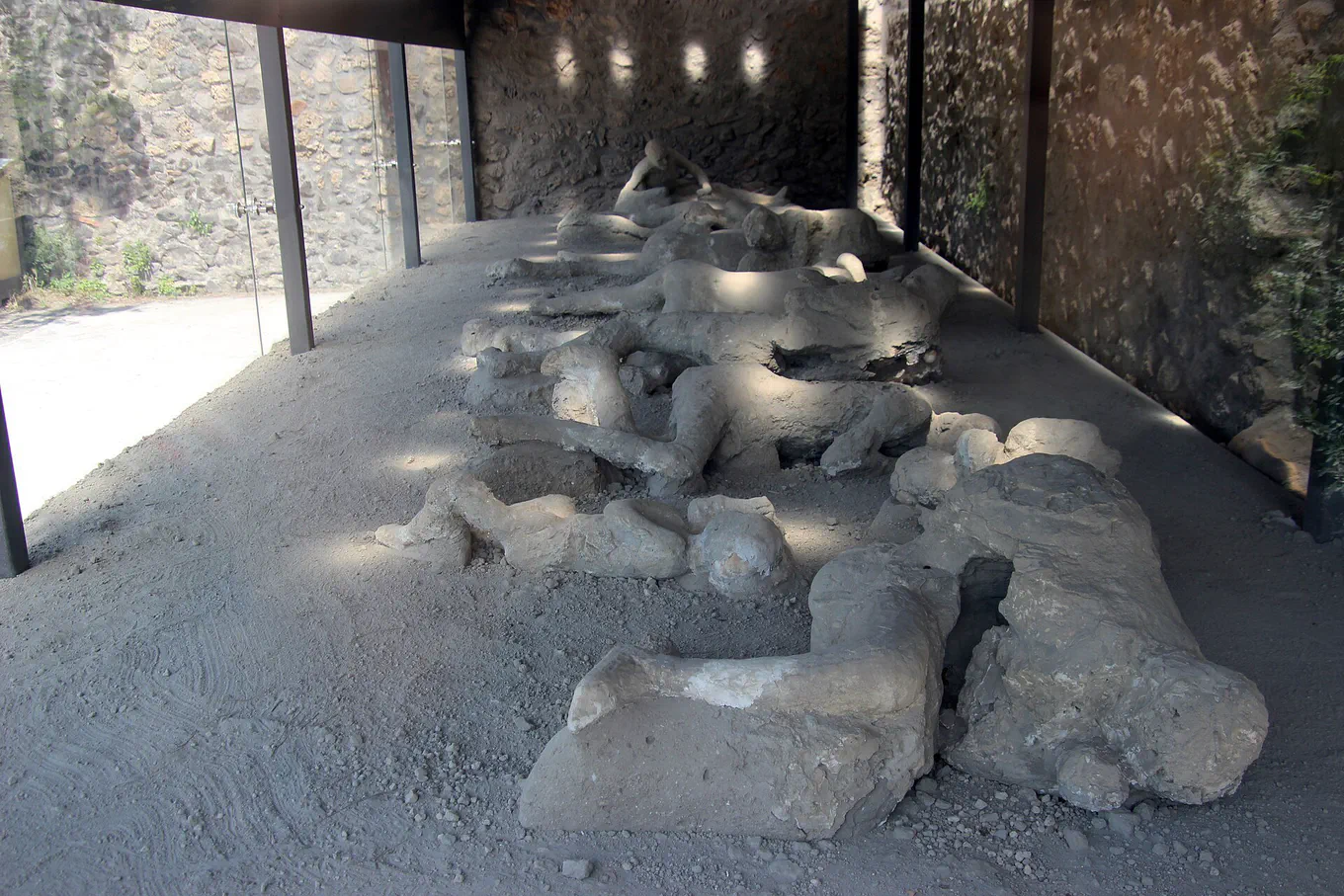
The plaster casts of Pompeii’s dead began with the archaeologist Giuseppe Fiorelli. Fiorelli, who took charge of the excavations in 1863, saw what the hollows in the ash really were. Each was the space left by a body that had rotted away, a mould. He poured in plaster, and the shapes of the dead came back. In the 1960s and 1970s, digs here found thirteen adults and children who had died trying to reach the Nocera Gate. They had been running across pumice already 3.5 metres deep.
2 Pink Floyd play to an empty amphitheatre in Pompeii
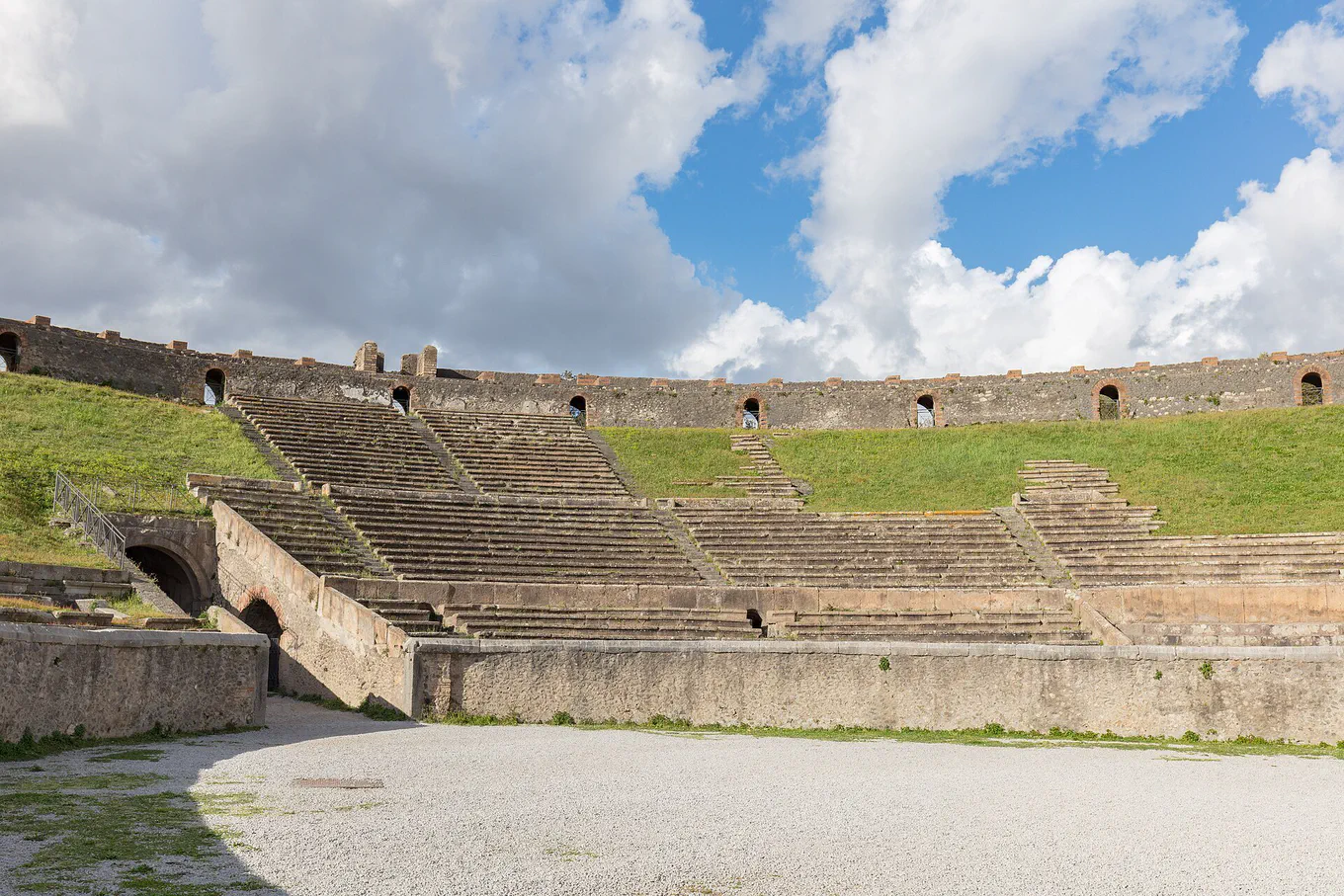
Stand here. The Amphitheatre of Pompeii, built in 70 BC for up to 20,000 spectators, and the oldest known from Roman times.
The setting of Pink Floyd: Live at Pompeii came from a lost passport. The director, Adrian Maben, wanted to combine art with Pink Floyd’s music. On a visit to Pompeii, he lost his passport, went back to the amphitheatre to find it, and decided the silence of the deserted ruins was the backdrop he wanted. In October 1971, Pink Floyd played here to nobody but the crew and a few children who sneaked in. When their guitarist, David Gilmour, returned in 2016, his concerts were the first public performances here since AD 79.
3 Nydia, the blind flower-girl of The Last Days of Pompeii
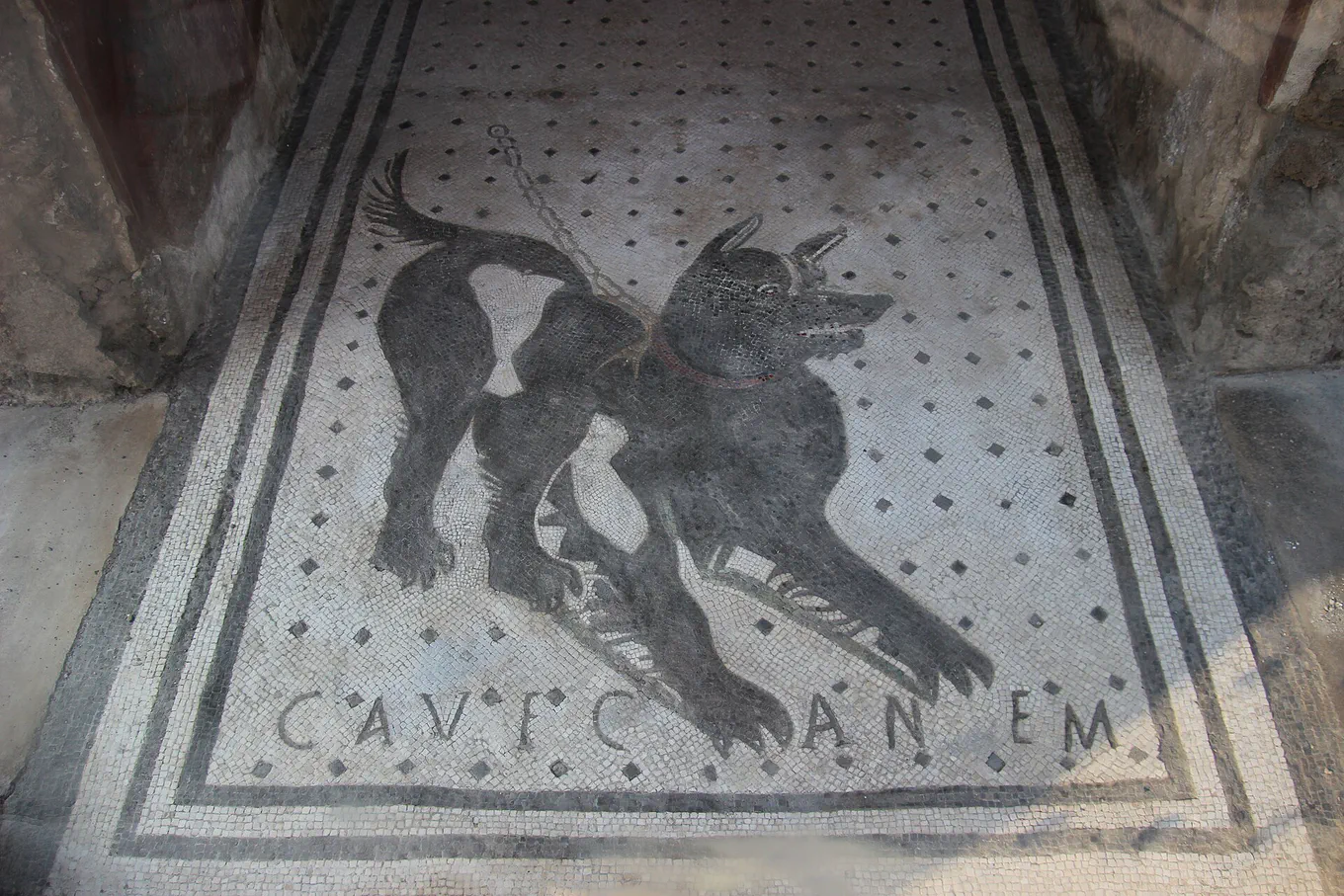
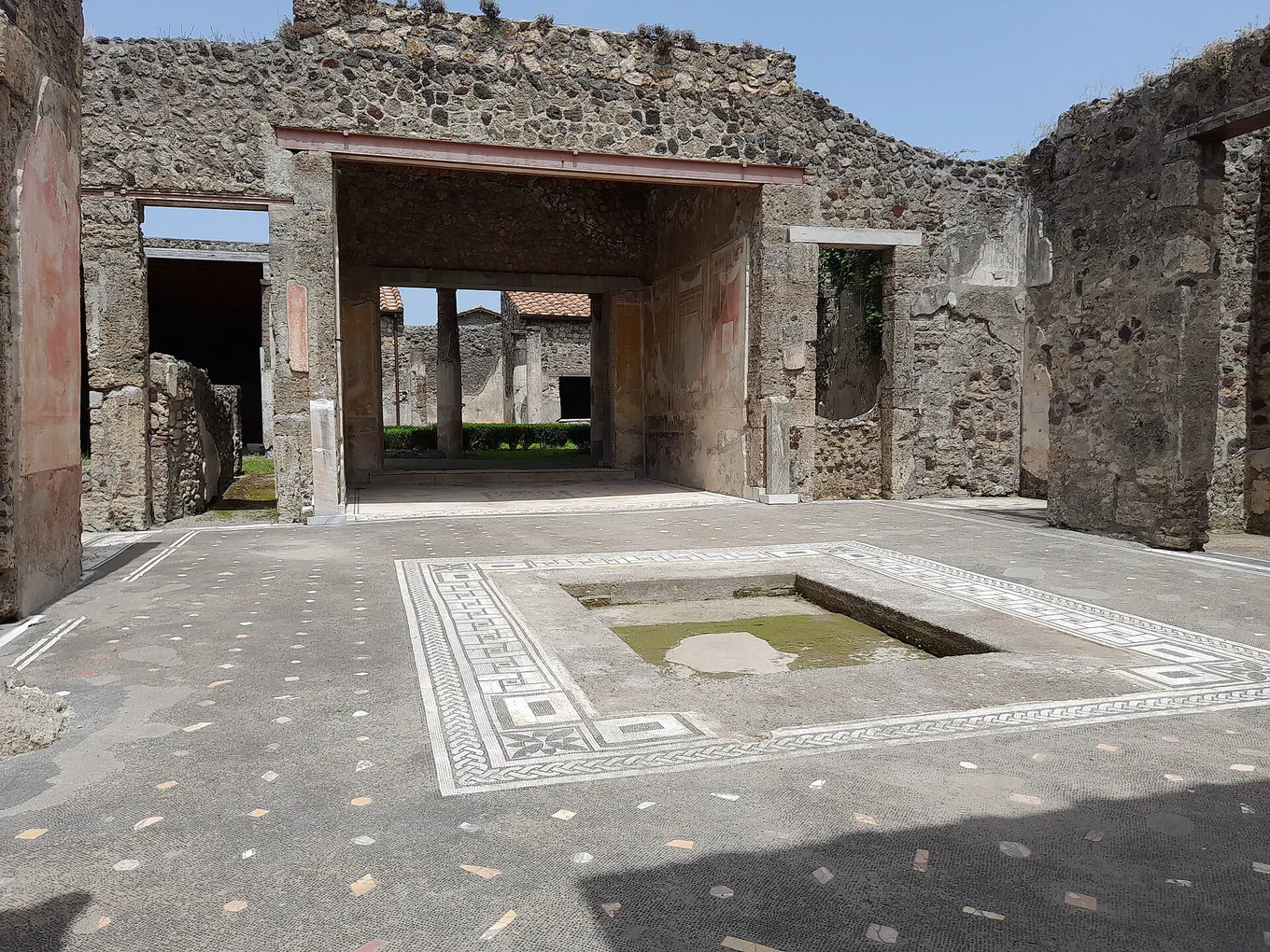
Stand here. The House of the Tragic Poet. In its entrance hall, a mosaic of a chained dog is set above “CAVE CANEM”, “Beware of the dog”.
Edward Bulwer-Lytton’s 1834 novel, The Last Days of Pompeii, makes this the home of Glaucus, an Athenian nobleman engaged to Ione. Bulwer-Lytton invented Glaucus’s life but described the house accurately. Nydia, a blind slave girl who sells flower garlands for her cruel owners, loves him. When the eruption turns the city dark, the sighted are helpless, but Nydia is used to darkness. She leads Glaucus and Ione through it to a ship in the Bay of Naples. The next morning, she slips quietly into the sea.
4 Caecilius the banker, from Doctor Who to Via del Vesuvio
Stand here. The House of Lucius Caecilius Iucundus, Via del Vesuvio. Its household shrine shows the Temple of Jupiter during the earthquake of AD 62.
Doctor Who fans know Caecilius as Peter Capaldi, and generations of Latin pupils know him from the Cambridge Latin Course, where he dies in the eruption of AD 79. Both characters are based on a real banker, Lucius Caecilius Iucundus, a middleman at auctions. In this house, 153 of his wax tablets turned up, every one a receipt. But the receipts stop a few days before the earthquake of AD 62. That suggests he died in the earthquake, seventeen years before Vesuvius.
5 Bartolo Longo and the junk-shop painting of Pompei
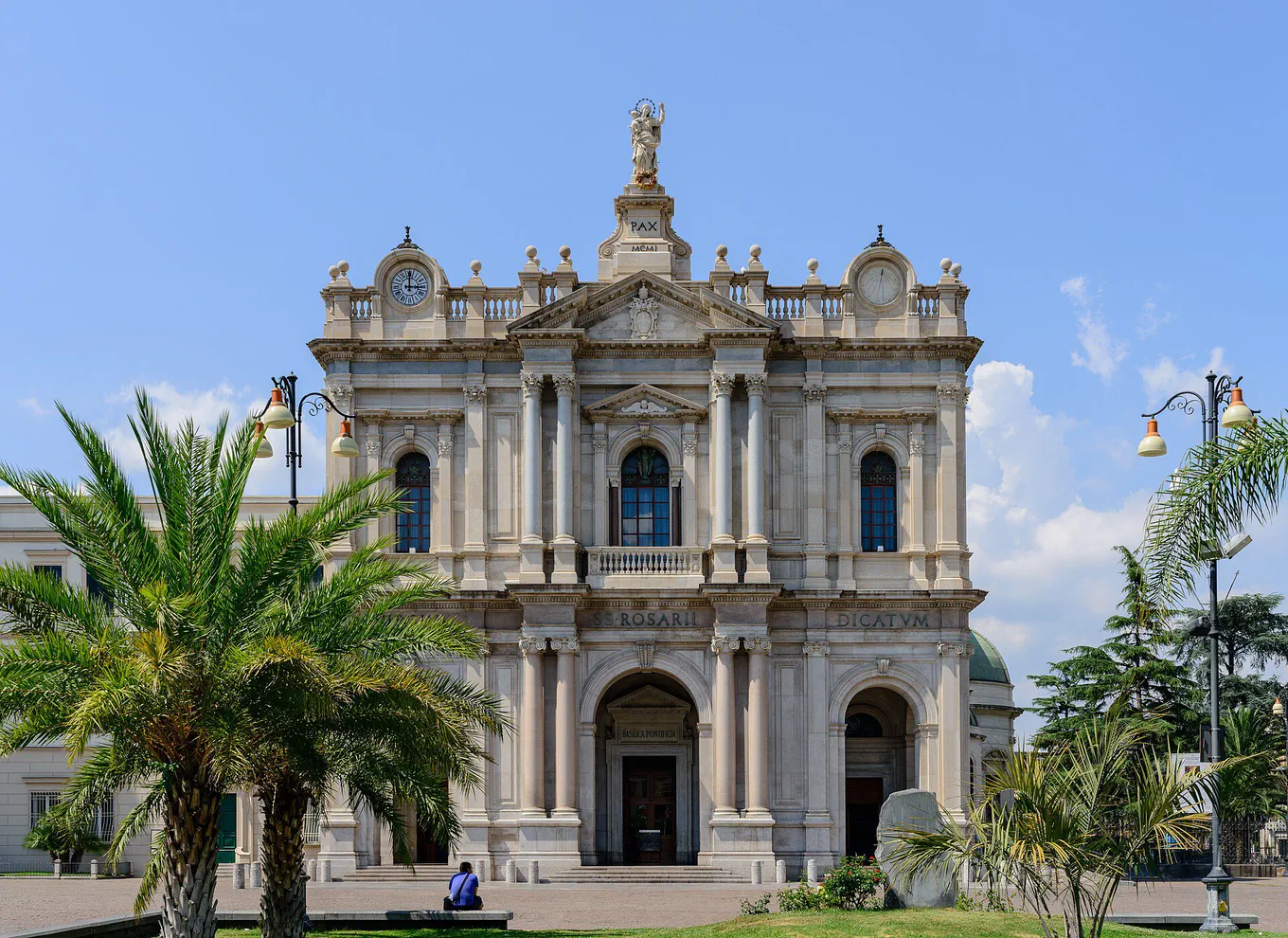
Stand here. The Shrine of the Virgin of the Rosary, a church for up to 6,000 people in the modern town of Pompei.
Bartolo Longo went to Naples to study law and, by his own account, was ordained a Satanic priest. Back in the Church, he came to the village of Pompei to manage a countess’s affairs and sank into despair. He remembered the Virgin’s promise: “He who propagates my rosary will be saved.” In 1875, he was given a battered painting of her from a Naples junk shop. He built it a church, pilgrims flocked in, and modern Pompei was founded in its wake. In 2025, Longo was made a saint.
Pack nothing. Leave Friday.
Every Friday, I write a free letter, Journey, that takes us on a trip through places, stories, and ideas.
The Last Days of Pompeii(Edward Bulwer-Lytton, 1834). A novel. Its hero, Glaucus, lives in the House of the Tragic Poet, which the book describes accurately.
Gradiva: A Pompeiian Fancy(Wilhelm Jensen, 1903). A novel about an archaeologist obsessed with a woman in a stone relief, walking on the stepping-stones that cross Pompeii’s streets.
Pompeii(Robert Harris, 2003). A novel. An engineer arrives from Rome to take charge of the Aqua Augusta, the aqueduct that supplies the towns of the Bay of Naples.
Pompeii: The Life of a Roman Town(Mary Beard, 2008; in the US, The Fires of Vesuvius). A history that won the Wolfson History Prize.
Films to watch before you visit Pompeii
Pink Floyd: Live at Pompeii(Adrian Maben, 1972). A concert film. The band play the empty Amphitheatre of Pompeii, filmed over four days in October 1971.
Journey to Italy(Roberto Rossellini, 1954). A film. At the excavations in Pompeii, its travellers watch two bodies uncovered that had been buried in the ash of Vesuvius.
Doctor Who, “The Fires of Pompeii” (BBC, 2008). A TV episode. Peter Capaldi plays Caecilius, based on the banker whose house stands on Via del Vesuvio.
Questions
Can you see the plaster casts of the victims at Pompeii?
Yes. In the Garden of the Fugitives, near the Nocera Gate, the casts of thirteen victims, adults and children, are in a glass case by the back wall. Many other casts are in the National Archaeological Museum of Naples.
When did Vesuvius erupt and bury Pompeii?
In AD 79. The date was long given as 24 August, but a charcoal inscription found at the site in 2018 includes the date 17 October, which fits a later eruption. A 2022 study put it between 24 October and 1 November, though that conclusion has been challenged.
How do you get to Pompeii from Naples?
By train. The Circumvesuviana’s Naples–Sorrento line stops at Pompei Villa dei Misteri, by the Porta Marina entrance, and its Naples–Poggiomarino line stops at Pompei Santuario, near the amphitheatre entrance. Mainline trains on the Naples–Salerno line stop at Pompei.