Derek Sivers’s company, CD Baby, was born in Portland. I never bought a CD from Sivers, but I LOVED his famous shipping email. Talk about the power of words. If you’ve never read it, do yourself a favour and find it. It will remind you that most businesses aren’t run by anonymous machines, but by real people like you and me.
— Nick
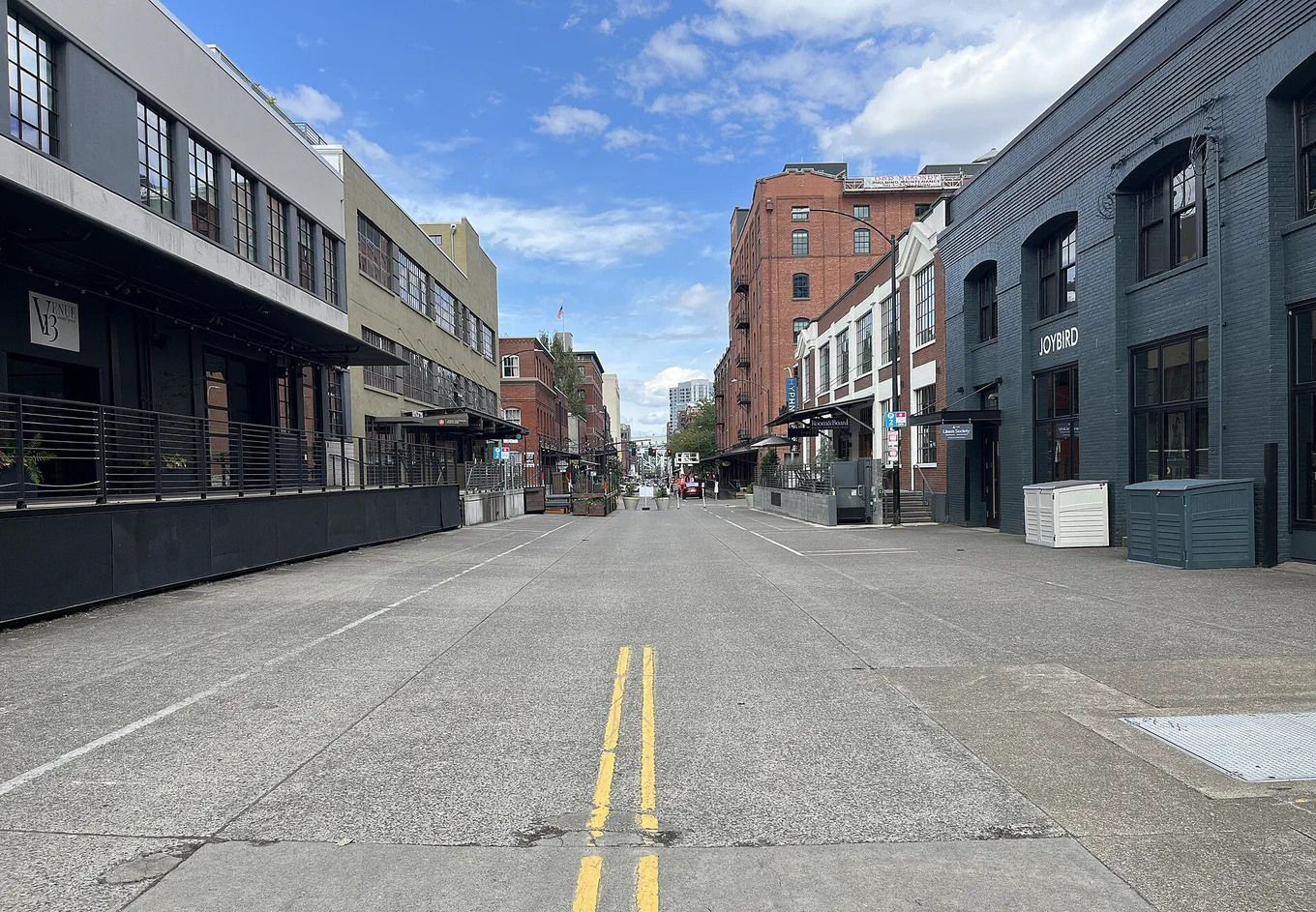
Where the Willamette River meets the Columbia, in the Pacific Northwest, sits Portland, Oregon’s most populous city, founded in 1845. On clear days Mount Hood and Mount St Helens dominate the horizon. A coin toss for its name starts the list, followed by a columnist’s leprechaun park, a song the FBI couldn’t decipher, the streets in The Simpsons, and a condemned man’s words that became Nike’s slogan.
Portland came within a coin toss of being called Boston. In 1845, two men with adjoining land laid out a town on a site known as The Clearing, and each wanted it named after his home town. Asa Lovejoy, a lawyer, was from Boston. Francis Pettygrove, a merchant, was from Portland, Maine. In a house in Oregon City, they settled it with a copper penny, best two out of three, and Pettygrove won. Lovejoy’s name went on a Northwest Portland street, and the street gave The Simpsons its Reverend Lovejoy.
2 Dick Fagan’s leprechaun park on Naito Parkway
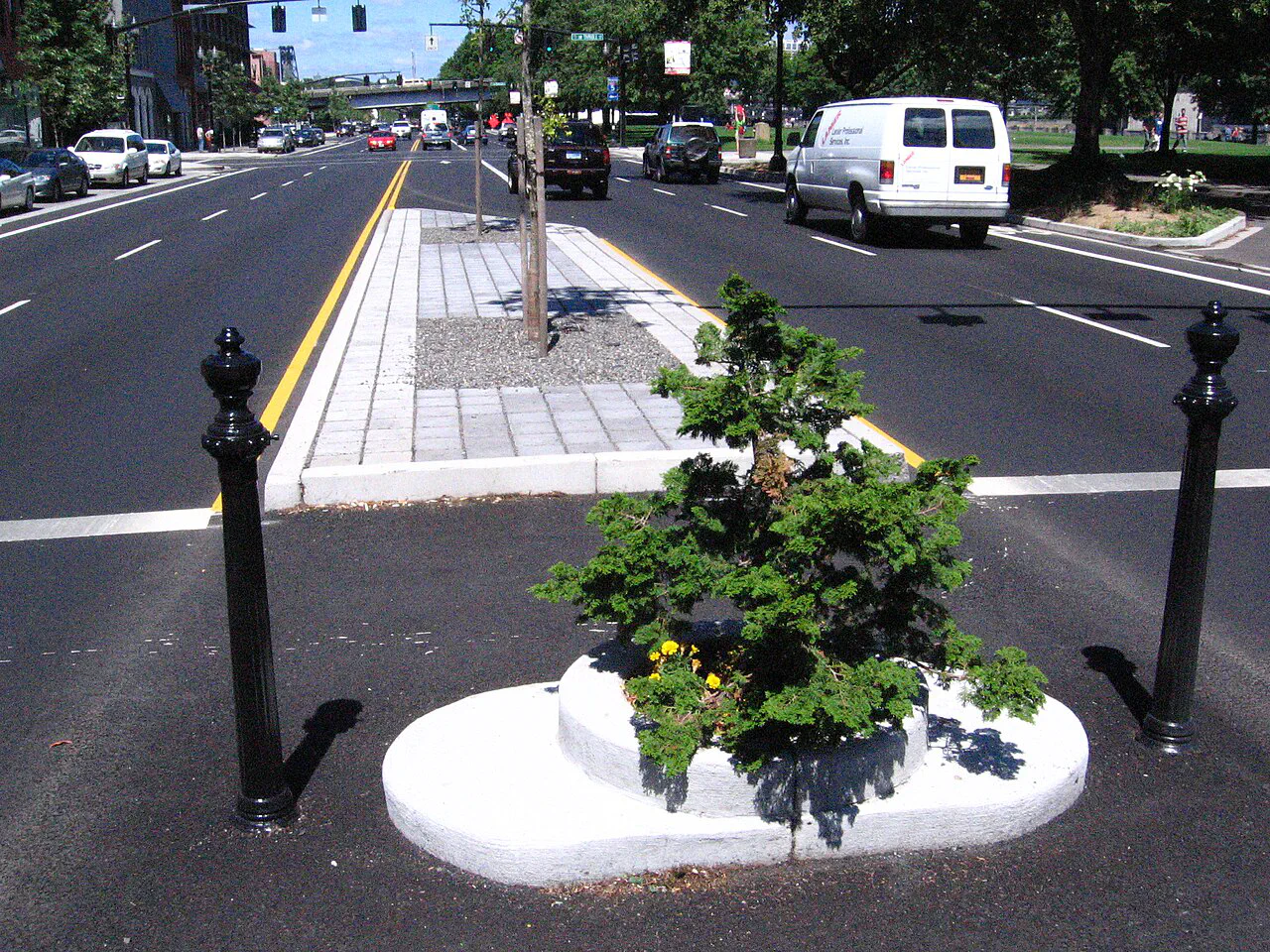
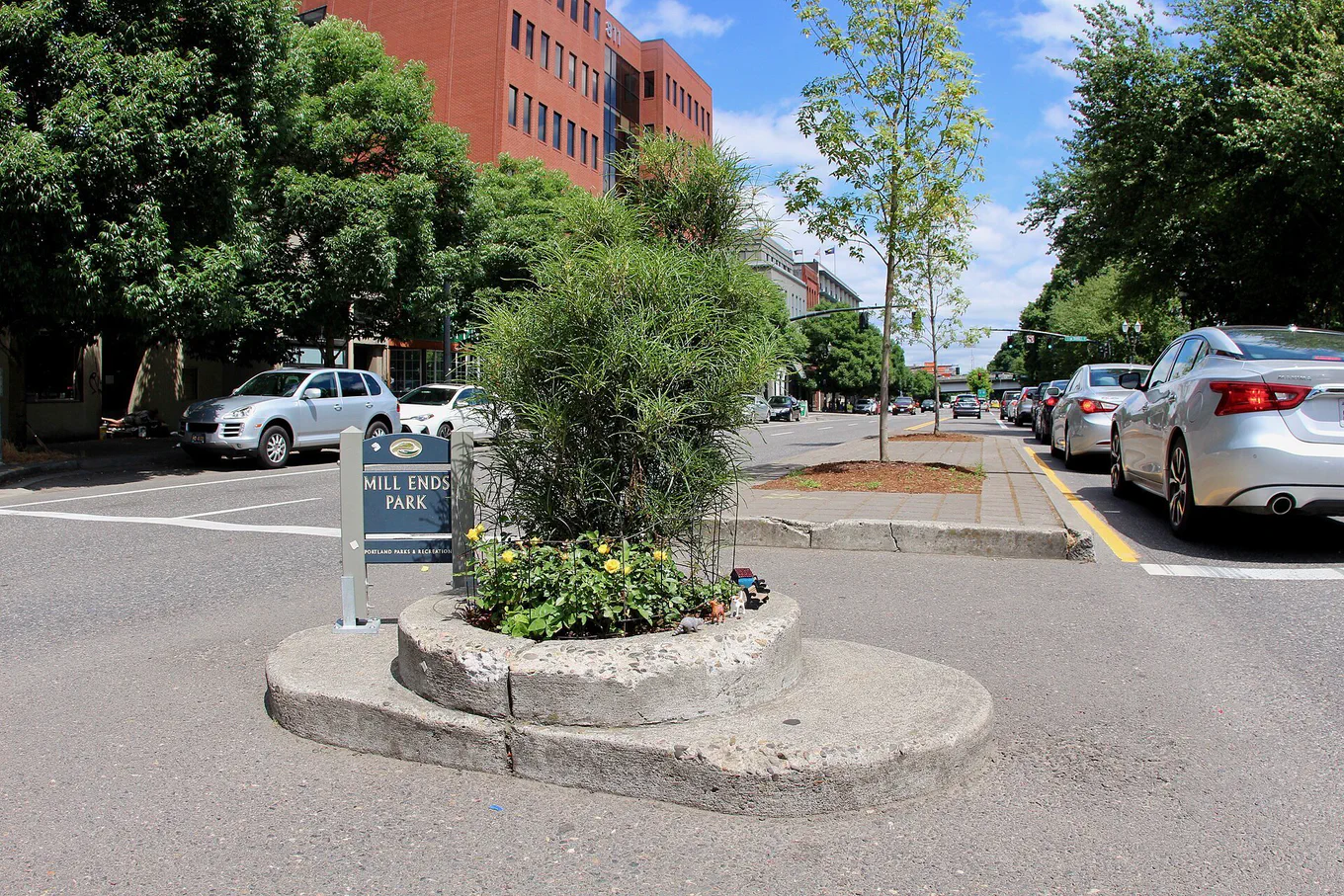
Stand here. The median of SW Naito Parkway at SW Taylor Street, beside Tom McCall Waterfront Park. Look for a cloverleaf border two feet across.
For more than fifty years, Guinness listed this as the world’s smallest park. Dick Fagan, a columnist back from the war, could see it from his office, a hole in the median meant for a light pole that never came. When weeds took over, he planted flowers and named the patch after his column, Mill Ends (the rough offcuts left at lumber mills). A leprechaun had given him the hole, he claimed. On St Patrick’s Day 1976, seven years after Fagan died, the city made his joke an official park.
3 The Kingsmen record “Louie Louie” on SW 13th Avenue
Stand here. 411 SW 13th Avenue, site of the Northwestern Inc. recording studio. Two plaques went up here, in 1993 and 2013, and both have gone.
The Kingsmen’s “Louie Louie” was only meant to be an audition tape, for a summer job on a cruise ship. On 6 April 1963, the Portland band split the cost of an hour in the studio here. The engineer had raised the microphone several feet above their singer, Jack Ely, who wore braces, so Ely stood on his toes and shouted. A rumour spread that the slurred words hid rude ones, and it may have helped the record to No. 2. The FBI investigated for 31 months and couldn’t interpret a word.
4 Matt Groening and the Portland streets in The Simpsons
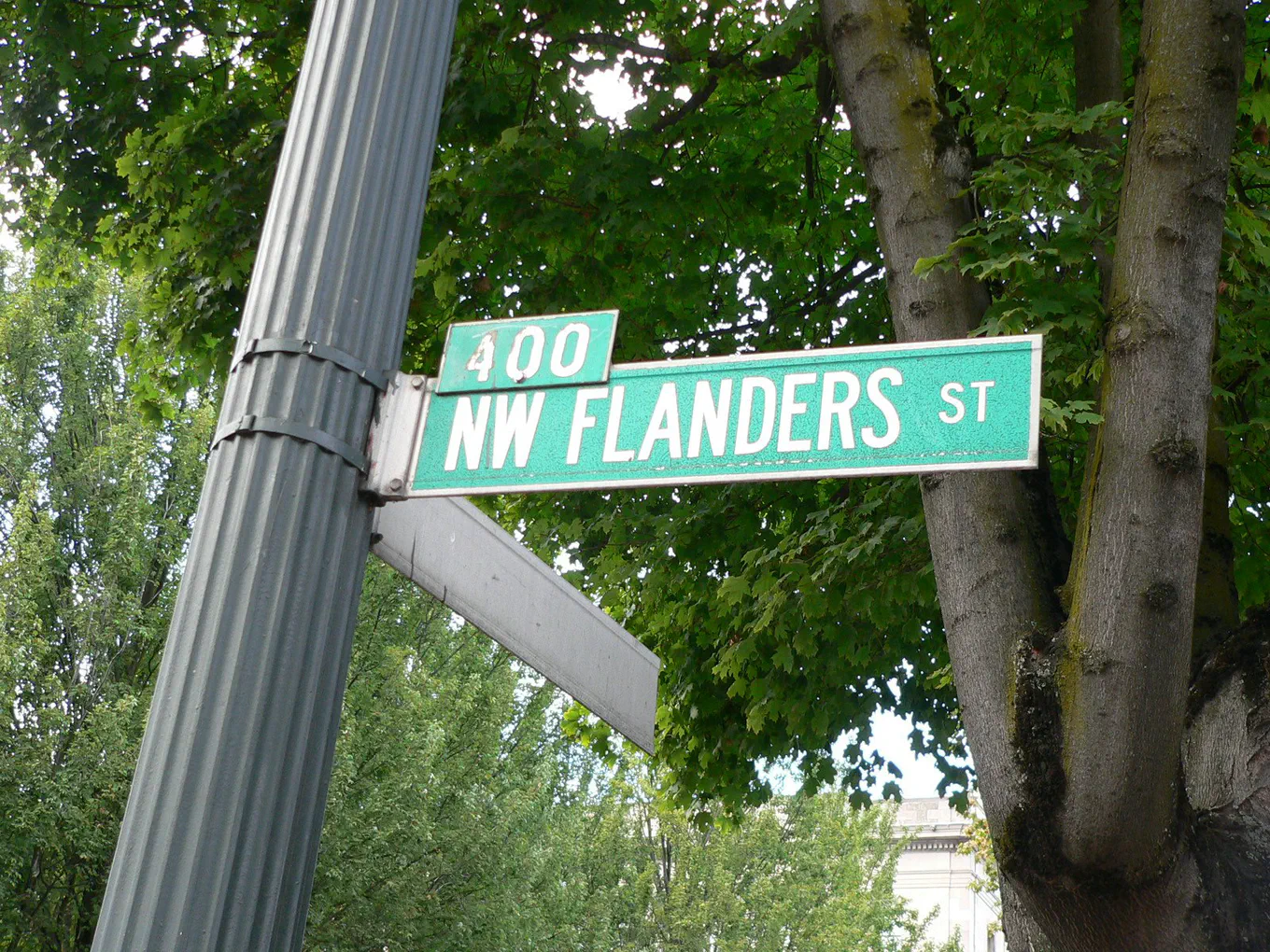
Stand here. NW Flanders Street, in Northwest Portland, an ordinary city street that lent its name to a Simpsons character.
Matt Groening created the Simpsons so he wouldn’t have to give away his comic strip. In 1985, James L. Brooks invited the Portland-born cartoonist into animation, and wanted the strip’s characters. Groening feared losing the rights. So, waiting in the lobby before the pitch, he hurriedly made up a new family and gave it his own family’s names, with Bart, an anagram of brat, for himself. Ned Flanders and Mayor Quimby took theirs from Portland streets. Springfield, Groening has said, has much in common with Portland.
5 Dan Wieden and the condemned man behind “Just Do It”
Stand here. The Pearl District, where Wieden+Kennedy, the advertising agency Dan Wieden co-founded, has its offices.
Nike’s “Just Do It” began with a man facing a firing squad. Dan Wieden had co-founded a Portland advertising agency which started with one client, an Oregon sneaker company. In 1988, by his own account, he drew on Gary Gilmore, a convicted murderer who, asked in a Utah prison for any last words, had said, “Let’s do it.” Wieden admired the line, but not the “let’s”, so he changed it. Otherwise, he joked, “I’d have to give him credit.”
Pack nothing. Leave Friday.
Every Friday, I write a free letter, Journey, that takes us on a trip through places, stories, and ideas.
Henry Huggins(Beverly Cleary, 1950). A novel, the first of Cleary’s books about Henry, a young boy who lives on Klickitat Street in Portland.
Beezus and Ramona(Beverly Cleary, 1955). A children’s novel. Beezus and Ramona began as Henry’s friends on Klickitat Street.
Films to watch before you visit Portland
Drugstore Cowboy(Gus Van Sant, 1989). A film about nomadic drug addicts in 1971 Portland. Its first drugstore scene was shot at the Nob Hill Pharmacy on NW Glisan Street.
Paranoid Park(Gus Van Sant, 2007). A film. Its fictional Eastside Skatepark is Portland’s Burnside Skatepark, and its main character throws his skateboard into the Willamette from the Steel Bridge.
Twilight(Catherine Hardwicke, 2008). A film. Some of its school scenes were shot at Leodis V. McDaniel High School.
Elephant(Gus Van Sant, 2003). A film, shot in Van Sant’s hometown in late 2002 on the former campus of Whitaker Middle School, once Adams High School.
Questions
Where is Mill Ends Park, and is it still the world’s smallest park?
No longer. It’s a circle two feet across in the median of SW Naito Parkway at SW Taylor Street, beside Tom McCall Waterfront Park. Guinness called it the world’s smallest park from 1971 until February 2025, when the title went to a park in Nagaizumi, Japan.
Are Portland’s Shanghai tunnels real?
The tunnels are real, mostly under Old Town Chinatown, and were built to move goods from ships on the Willamette to basement storerooms. Shanghaiing, kidnapping people to serve as sailors, did happen in Portland, but there is no evidence the tunnels were used for it. The idea has been traced to apocryphal stories by the writer Stewart Holbrook.
Why is Portland called the City of Roses?
Its climate is ideal for roses. The nickname has been used unofficially since 1888 and officially since 2003. For the 1905 Lewis and Clark Centennial Exposition, 20 miles of streets were lined with rose bushes, and the International Rose Test Garden in Washington Park, approved in 1917, now holds over 10,000.