Prayagraj, long known as Allahabad, is a city in Uttar Pradesh, India, close to the Triveni Sangam, where the Ganges and Yamuna meet the mythical Sarasvati. The Mughal emperor Akbar laid its foundations in 1583, and it took the name Prayagraj in 2018. Its stories here are a blinded prince, a revolutionary’s last bullet, a wedding, a verdict against a prime minister, and the Mahatma’s forgotten ashes.
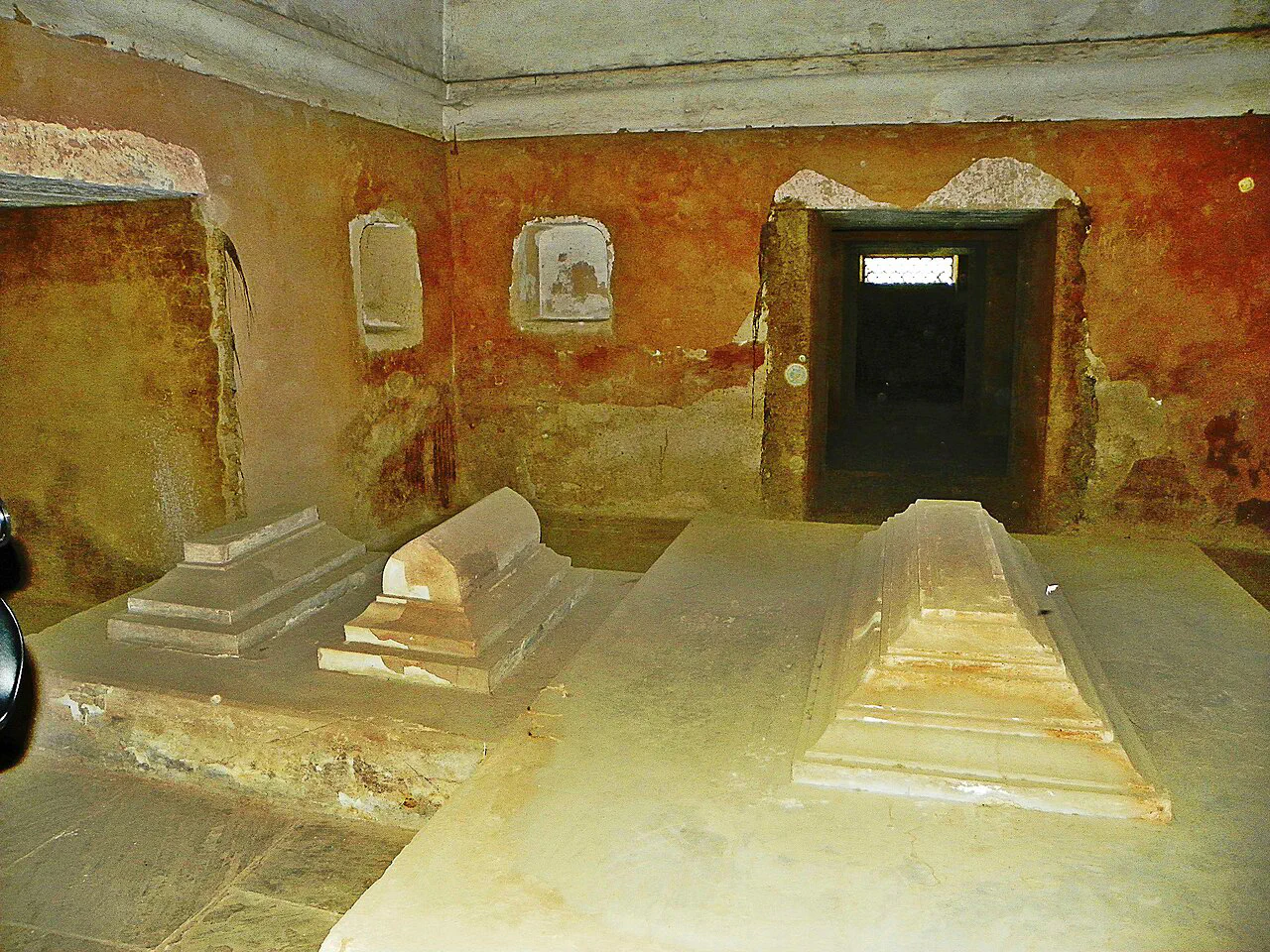
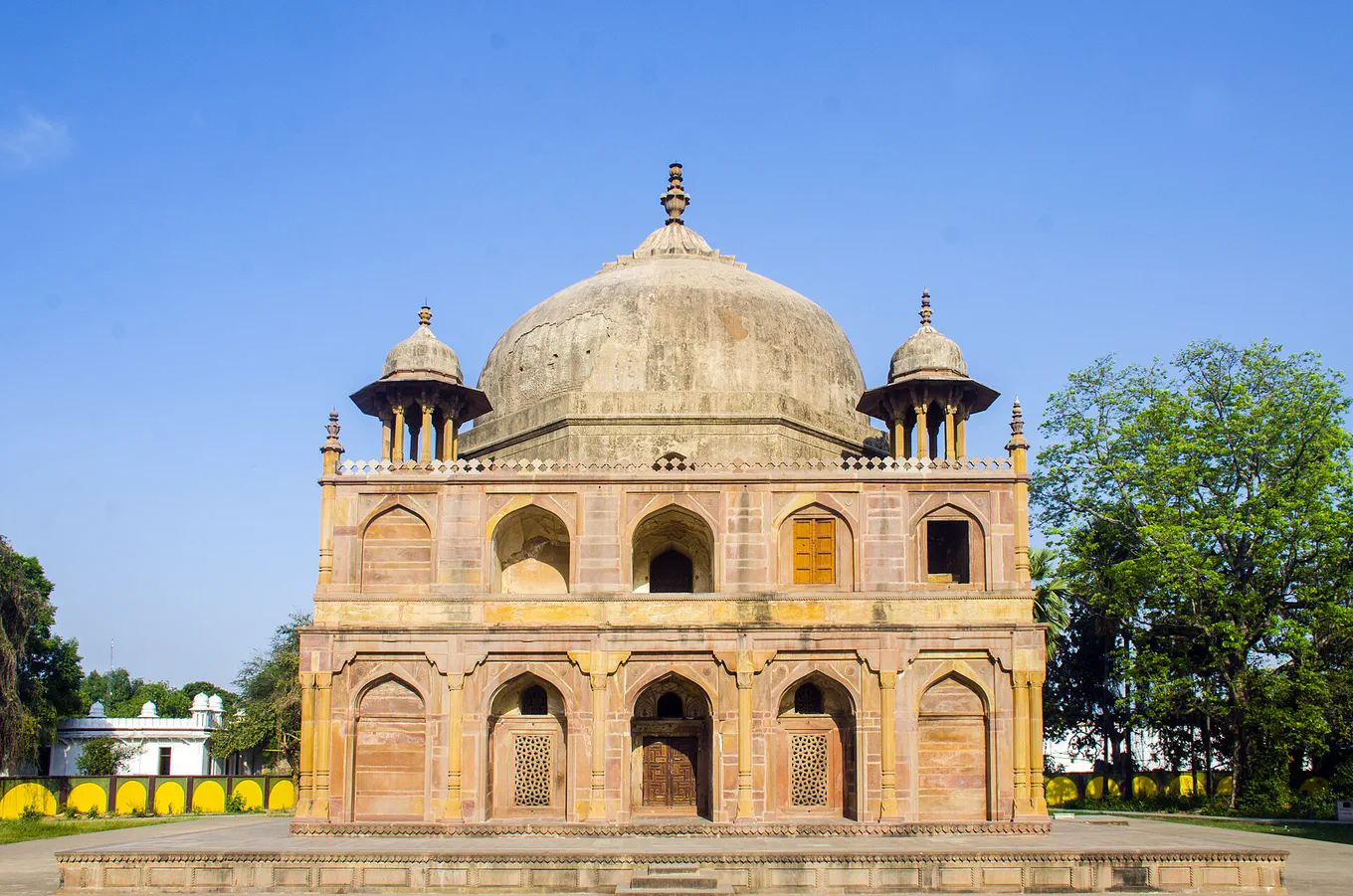
Shah Jahan, the emperor who built the Taj Mahal, began as Prince Khurram, and he had his own brother killed. The brother was Khusrau, eldest son of the emperor Jahangir. In 1606, Khusrau rebelled against his father and was imprisoned in this garden. When he tried to escape, Jahangir had him blinded. Khusrau’s mother had already killed herself, distressed by the feud between husband and son. In 1622, Khurram ordered his brother’s death. Khusrau’s tomb, finished that year, stands in the garden that had been his prison.
2 Chandra Shekhar Azad’s last bullet in Alfred Park
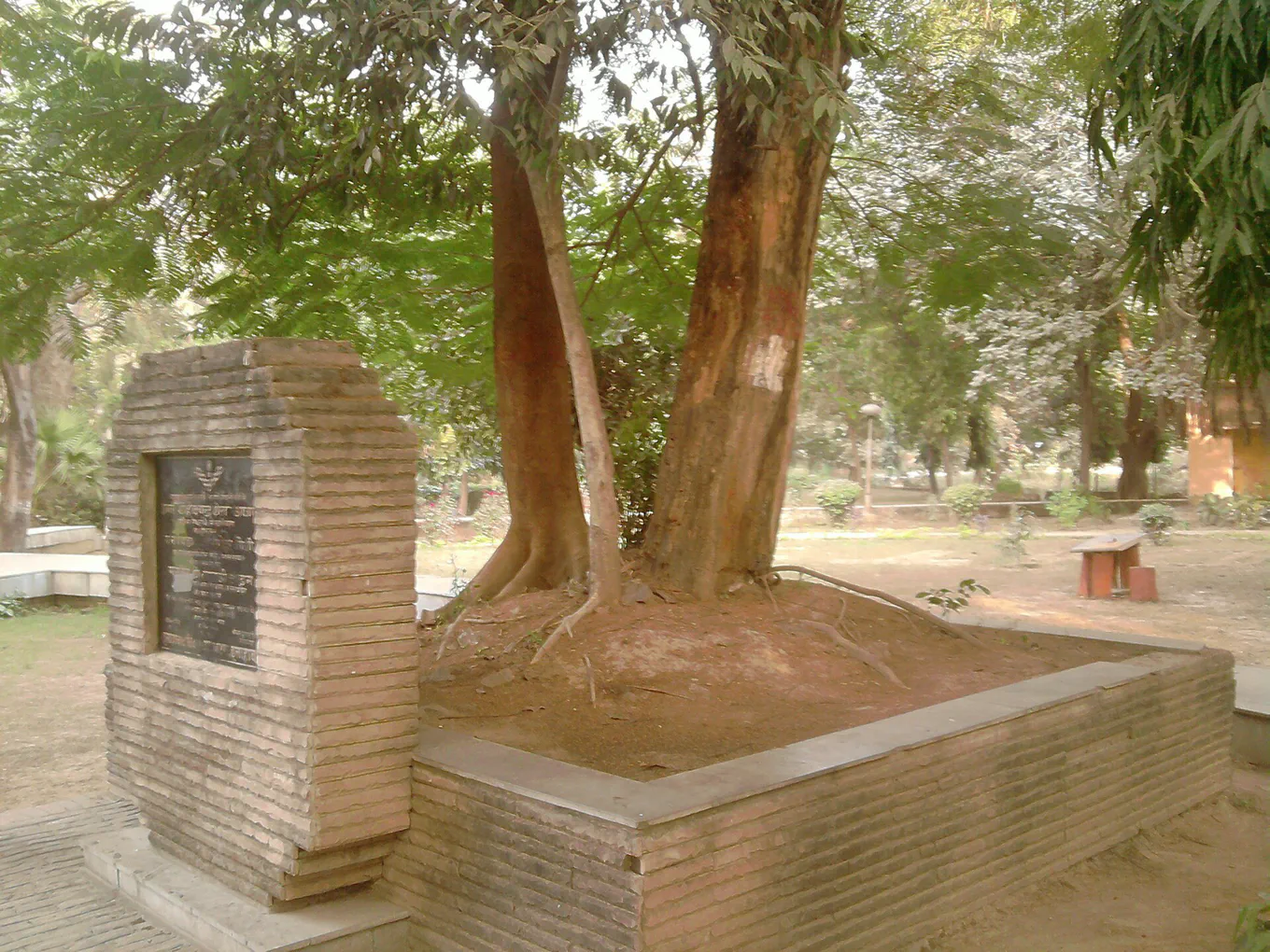
Stand here. Chandrashekhar Azad Park, once Alfred Park. A memorial marks where Azad died, and the Allahabad Museum and public library stand in the park.
The revolutionary Chandra Shekhar Azad was born Chandra Shekhar Tiwari. Azad means “free”, and he had pledged never to be captured alive. On 27 February 1931, the police in Allahabad were tipped off that he was in Alfred Park, and constables came in with rifles. Azad killed three policemen, but he was badly wounded. Rather than be taken, he shot himself with the last bullet in his gun.
3 Indira Nehru marries Feroze Gandhi at Anand Bhavan
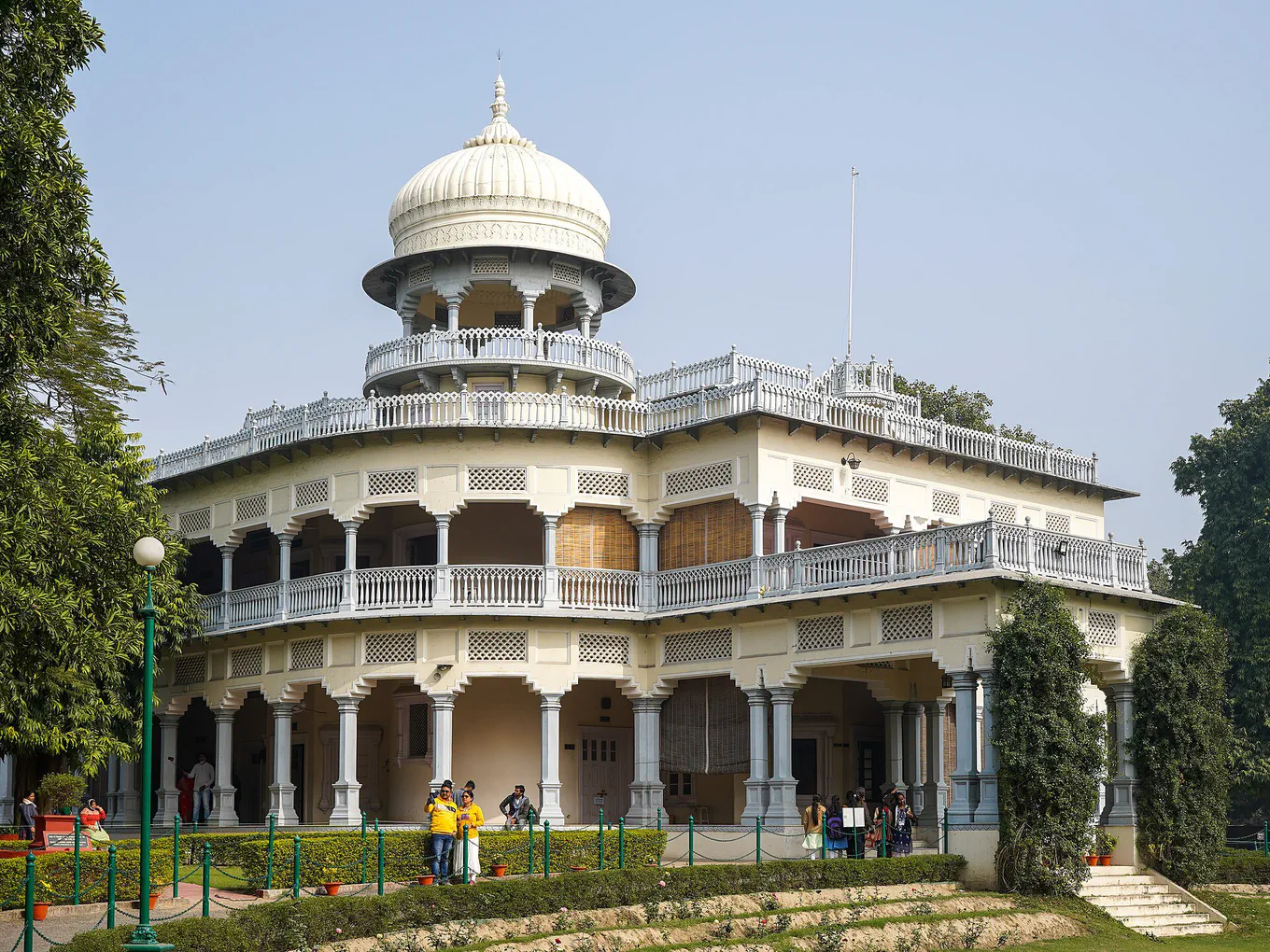
Stand here. Anand Bhavan, the Nehru family house, now a museum on the family. Indira Gandhi gave it to the Government of India in 1970.
Long before she was prime minister, Indira Gandhi was Indira Nehru, and she wanted to marry Feroze Gandhi, a journalist from a Parsi family. Her father, Jawaharlal Nehru, pleaded against the match. Fundamentalists among Parsis and Hindus protested, and some threatened to picket this house. In the end, the unpleasant letters gave way to gifts. On 26 March 1942, she married Feroze here, in a shell-pink khadi sari made from yarn her father had spun. By August, in the Quit India Movement, both of them were in jail.
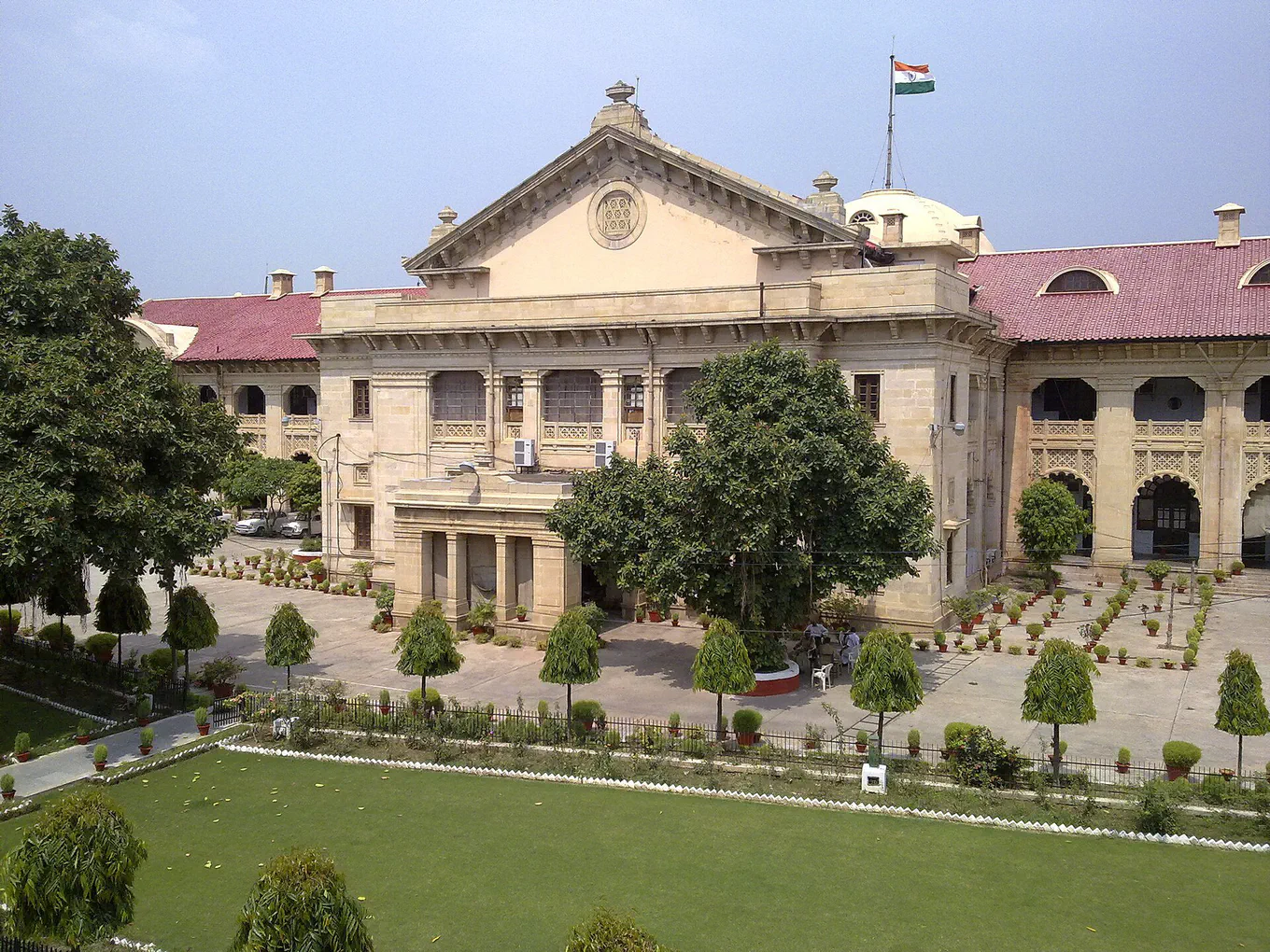
Stand here. The Allahabad High Court, in the building the Viceroy, Lord Chelmsford, opened in 1916.
The Allahabad High Court building in Prayagraj, seen over its formal gardens.Vroomtrapit / CC0.
In 1971, Raj Narain stood against Indira Gandhi, India’s prime minister and the daughter of its first prime minister, Jawaharlal Nehru, and lost. He went to court, alleging electoral malpractice, including the illegal employment of a government servant. On 12 June 1975, in this court, Justice Jagmohanlal Sinha found the prime minister guilty. He declared her 1971 election void and barred her from elected office for six years. Thirteen days later, Indira Gandhi declared a state of emergency across India.
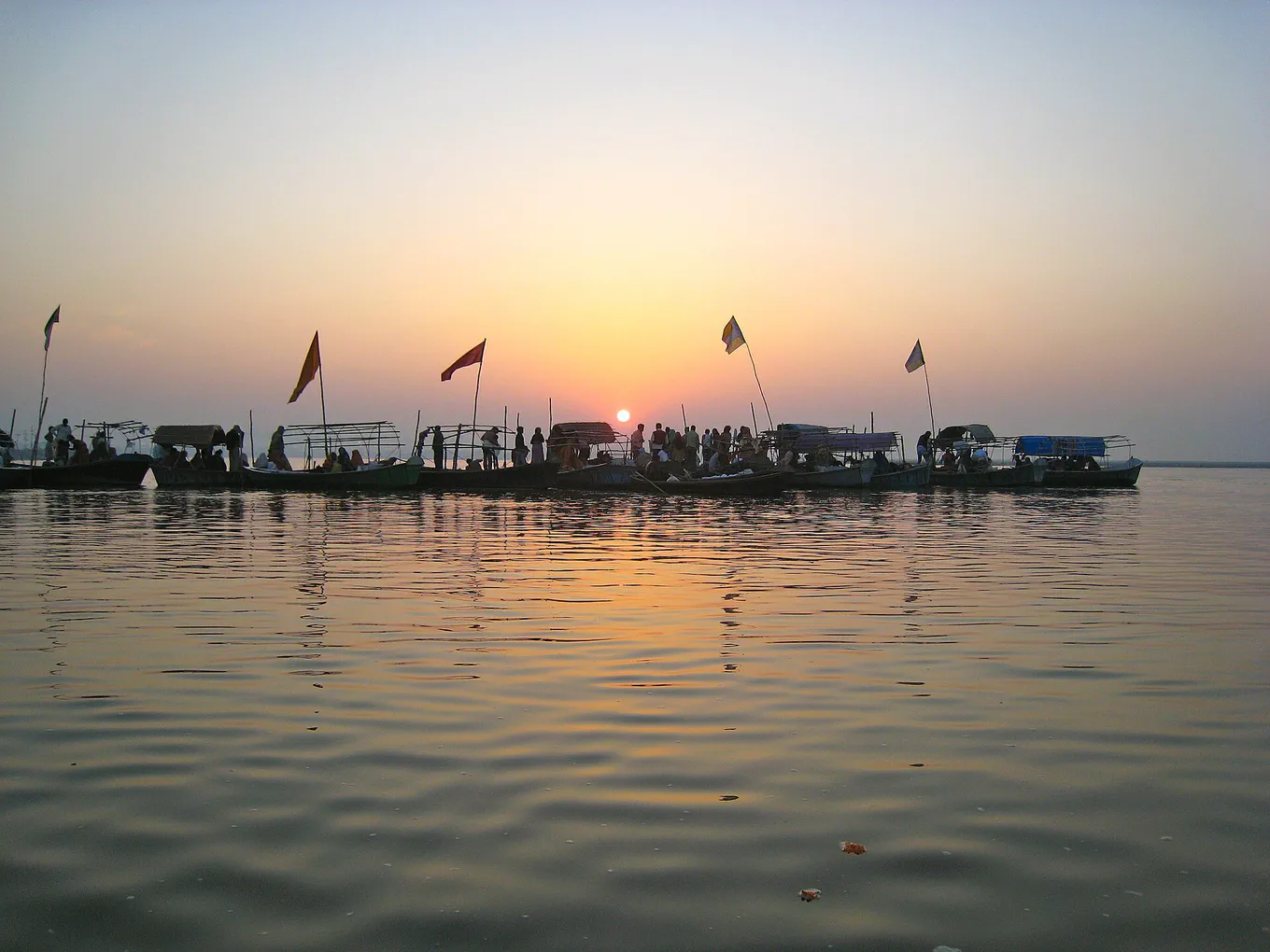
Some of Mahatma Gandhi’s ashes were somehow forgotten in a State Bank of India vault in the city of Cuttack. When they were found, his great-grandson, Tushar Gandhi, wanted to scatter the ashes in the Ganges here. It took him two years and a case in the Supreme Court to win them. On 30 January 1997, he carried them to the confluence at last. State officials were disappointed by the low turnout. The prime minister was not there.
Following the Equator(Mark Twain, 1897). A travel book, taking in the fair beyond the Fort, where the Ganges and Jumna (the Yamuna) meet, and two million came every year.
Three Rivers and a Tree: The Story of Allahabad University(Neelum Saran Gour, 2025). A history, from the college’s start at Lowther Castle.
The Last Bungalow: Writings on Allahabad(Arvind Krishna Mehrotra, editor, 2007). An anthology on the city, from the river confluence and its Melas to the Pioneer, where Kipling worked.
Films to watch before you visit Prayagraj
Haasil(Tigmanshu Dhulia, 2003). A film, set and shot in and around Allahabad, about student politics at the University of Allahabad and the dirty turn it takes.
Short Cut to Nirvana: Kumbh Mela(Nick Day and Maurizio Benazzo, 2004). A documentary about the 2001 Kumbh Mela at Prayagraj, where an estimated 25 million pilgrims entered the sangam, the confluence of the Yamuna and Ganges, in 24 hours.
Shubh Mangal Zyada Saavdhan(Hitesh Kewalya, 2020). A romantic comedy film. Aman Tripathi, from an orthodox middle-class family in Allahabad, and his boyfriend, Kartik Singh, have trouble convincing Aman’s parents of their relationship.
Questions
When did Allahabad become Prayagraj?
On 16 October 2018, when the city was officially renamed. The Mughal emperor Akbar laid its foundations in 1583, and until the renaming it was Allahabad. Much earlier, in the Vedas, it had been known as Prayag.
Where did Chandra Shekhar Azad die?
In Alfred Park, on 27 February 1931. The park was built in 1870 to mark a visit by Prince Alfred, and the Uttar Pradesh government later renamed it Chandrashekhar Azad Park. A memorial marks the spot where he died, and the Allahabad Museum and the public library stand in the same park.
Did Rudyard Kipling work in Allahabad?
Yes. In November 1887, he moved to The Pioneer newspaper in Allahabad as assistant editor, and from 1888 to 1889 he lived in Belvedere House. He left India in March 1889, travelling first to San Francisco by way of Rangoon.