Providence, United States, Rhode Island, North America
Barnaby Evans lit eleven braziers on the river in 1994 because he was tired of people running down their own city. Now 86 burn, and tens of thousands come to watch. I love that, because the best answer to cynicism is to start something.
— Nick
Providence, the capital and largest city of Rhode Island, stands at the mouth of the Providence River, at the head of Narragansett Bay. Roger Williams founded it in 1636, making it one of the oldest cities in New England. Its stories here are a banished minister’s spring, a burning British ship, Poe’s lost wedding, Lovecraft’s grave, and fires on the rivers.
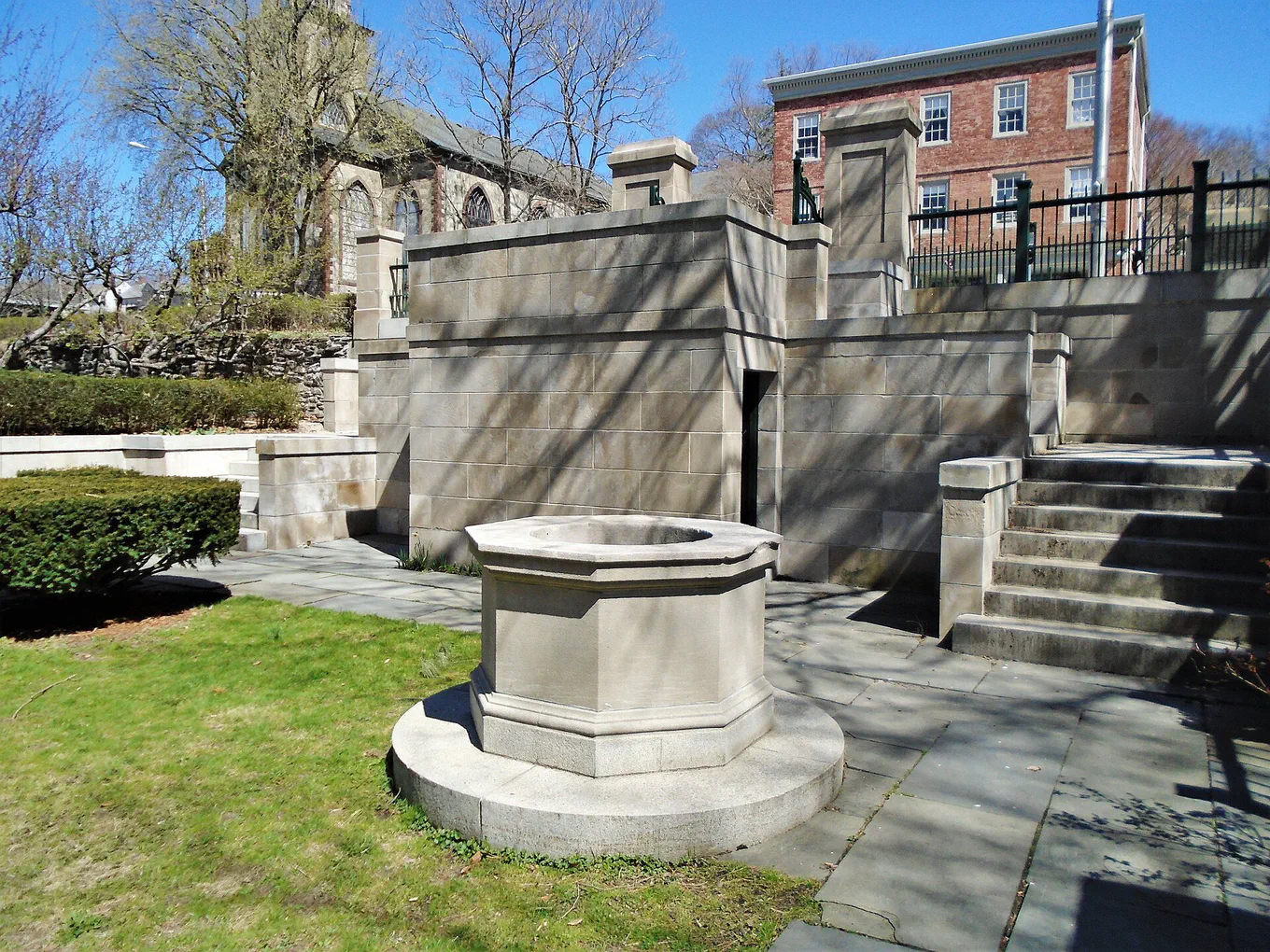
Massachusetts convicted Roger Williams, a minister who argued for religious liberty, of sedition and heresy, and ordered him banished. Rather than be sent back to England and perhaps put to death, he slipped away on foot during a blizzard, three days before the sheriff came for him in January 1636. The Wampanoag leader Massasoit sheltered him through the winter. Then he canoed to a freshwater spring here. “Having, of a sense of God’s merciful providence unto me in my distress,” he wrote, “[I] called the place PROVIDENCE.”
2 John Brown and the Gaspee raiders at Sabin’s Tavern
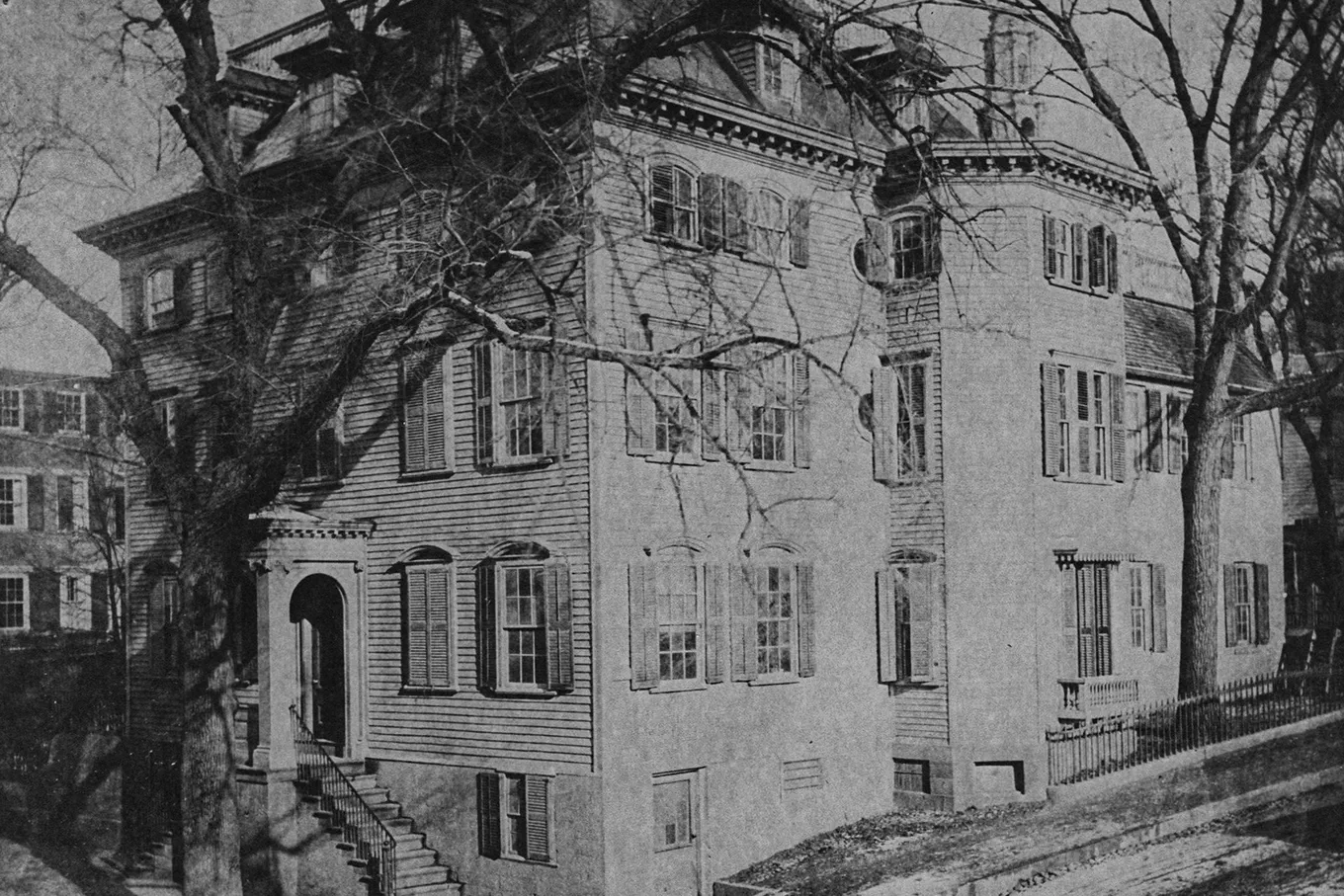
Stand here. The corner of South Main and Planet Streets. The tavern was demolished, and a tablet on the Gaspee Building marks the spot.
Sabin’s Tavern on South Main Street, Providence, in a photograph taken before the building was demolished.Unknown / Public domain.
More than a year before the Boston Tea Party, the British customs schooner Gaspee, which searched and seized ships, ran aground chasing a packet boat on 9 June 1772. John Brown, a Providence merchant and slave trader, resolved to destroy her. That evening his party met at Sabin’s Tavern. Overnight, they boarded her, shot and wounded her commander, and burned her. The Crown wanted the raiders tried in England, but found too little evidence. For a long time, Brown slept away from home, lest he be arrested at night.
3 Edgar Allan Poe’s broken engagement at the Providence Athenaeum
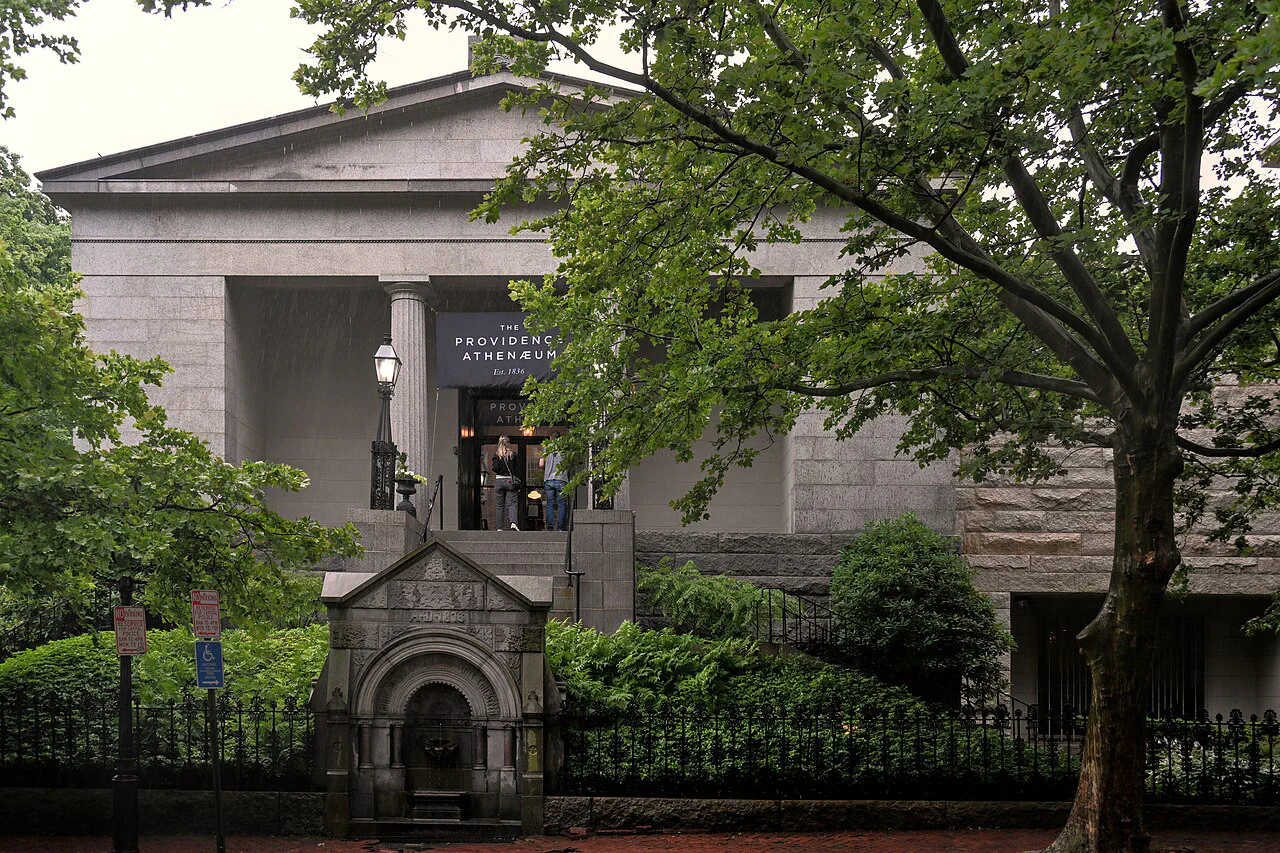
Stand here. The Providence Athenaeum, 251 Benefit Street, a library open to visitors. It still has the book where Poe pencilled his name beside “Ulalume”.
When Edgar Allan Poe, author of “The Raven”, first saw the poet Sarah Helen Whitman, standing in her rose garden, he declined to be introduced. Three years later, he courted her with anonymous poems, love letters, and promises to stay sober. On 23 December 1848, two days before their Christmas wedding, they sat in an alcove here when, the Athenaeum says, a messenger handed her a note: Poe had broken his promise. She called the wedding off. They never saw each other again, and within a year Poe was dead.
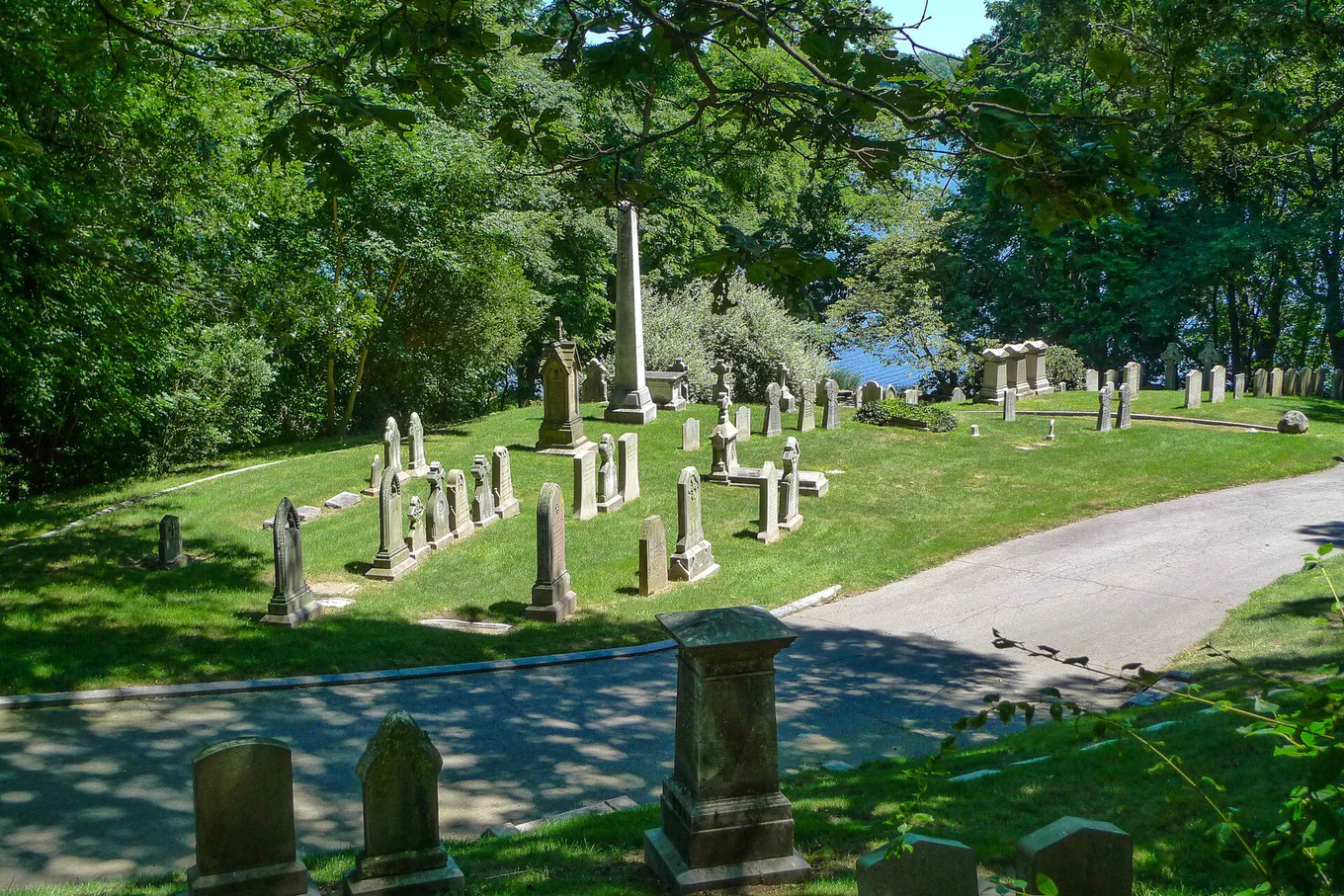
H. P. Lovecraft, creator of the Cthulhu Mythos, was born in Providence, and as an adult he could never support himself by his writing. He was published almost only in pulp magazines, and when he died of cancer in his home town in 1937, he was virtually unknown. After a small funeral, he was buried here, his name listed alongside his parents’ on the family monument. Forty years later, his fans put up a headstone of his own, bearing a line from one of his letters: “I AM PROVIDENCE”.
5 Barnaby Evans lights WaterFire on the Providence rivers
Stand here. Waterplace Park and the Riverwalk, downtown, on the site of the old Great Salt Cove. WaterFire is lit here from May to November.
On New Year’s Eve 1994, the artist Barnaby Evans lit eleven braziers on steel tripods along the river, from WaterPlace Basin to Steeple Street. He was frustrated by locals’ negativity about their city, and believed its newly moved rivers and park needed priming. First Fire was a commission for the city’s First Night celebrations. After a second fire, supporters persuaded him to keep going, and in 1997, its thirteen lightings drew an estimated 350,000 people. Today 86 braziers burn, and fire tenders pass in silhouette before the flames.
Pack nothing. Leave Friday.
Every Friday, I write a free letter, Journey, that takes us on a trip through places, stories, and ideas.
The Case of Charles Dexter Ward(H. P. Lovecraft, 1941). A novel. A young man raises his wizard ancestor from the dead. His family home is based on the 1801 house at 140 Prospect Street.
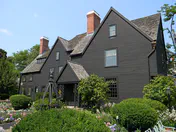
The Shunned House(H. P. Lovecraft, 1937). A short story. Its house is based on a real one, built around 1763 and still standing at 135 Benefit Street.
The Haunter of the Dark(H. P. Lovecraft, 1936). A short story. A man lodging on the East Side becomes fascinated by a disused church he can see on Federal Hill.
The Marriage Plot(Jeffrey Eugenides, 2011). A novel. Eugenides set it at Brown University, on College Hill, where he studied, rather than at a made-up college.
Films to watch before you visit Providence
Dumb and Dumber(Peter Farrelly, 1994). A film. Lloyd and Harry are flatmates in Providence, and the opening scenes take in the city’s skyline and its Big Blue Bug.
Brotherhood(Blake Masters, 2006). A TV series. A crime drama about the Irish-American Caffee brothers from Providence, filmed largely on location there, with scenes at the Olneyville New York System Restaurant.
Outside Providence(Michael Corrente, 1999). A film. A teen comedy whose interior scenes were filmed in the Cranston Street Armory, in the west end of Providence.
Questions
Where is H. P. Lovecraft buried?
In Swan Point Cemetery, 585 Blackstone Boulevard, on Providence’s East Side. He was first listed with his parents on the family monument. In 1977, his fans added a headstone of his own, inscribed “I AM PROVIDENCE”, a line from one of his letters.
When is WaterFire in Providence?
WaterFire runs from May to November, usually on Saturday evenings once or twice a month. The rivers are tidal, so lightings are timed for when sunset coincides with an incoming high tide. An average night draws about 40,000 people.
Why is Providence called Providence?
Roger Williams named it himself in 1636, after fleeing banishment from Massachusetts. He wrote that he called the place Providence out of “a sense of God’s merciful providence unto me in my distress”. The settlement became a safe haven for people persecuted for their beliefs, including Baptists, Quakers, and Jews.