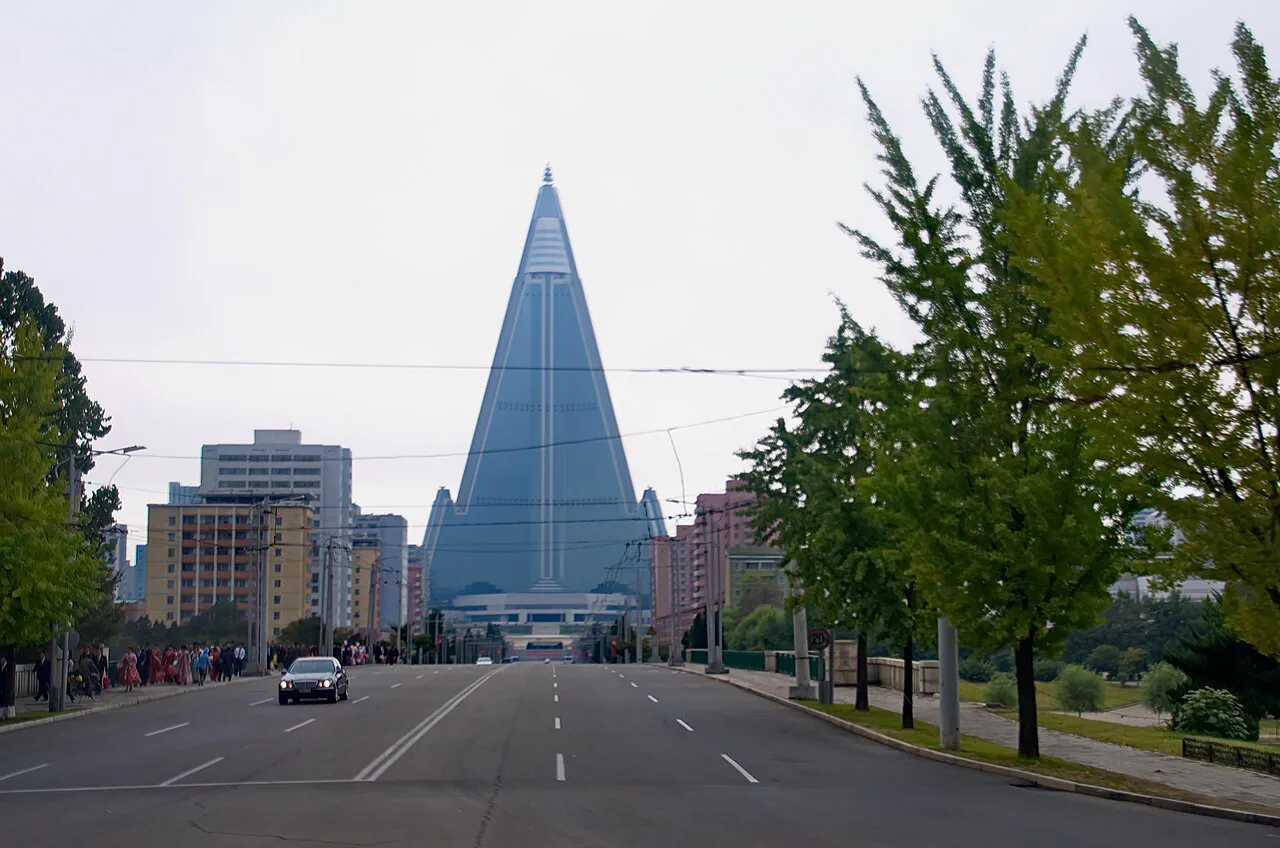
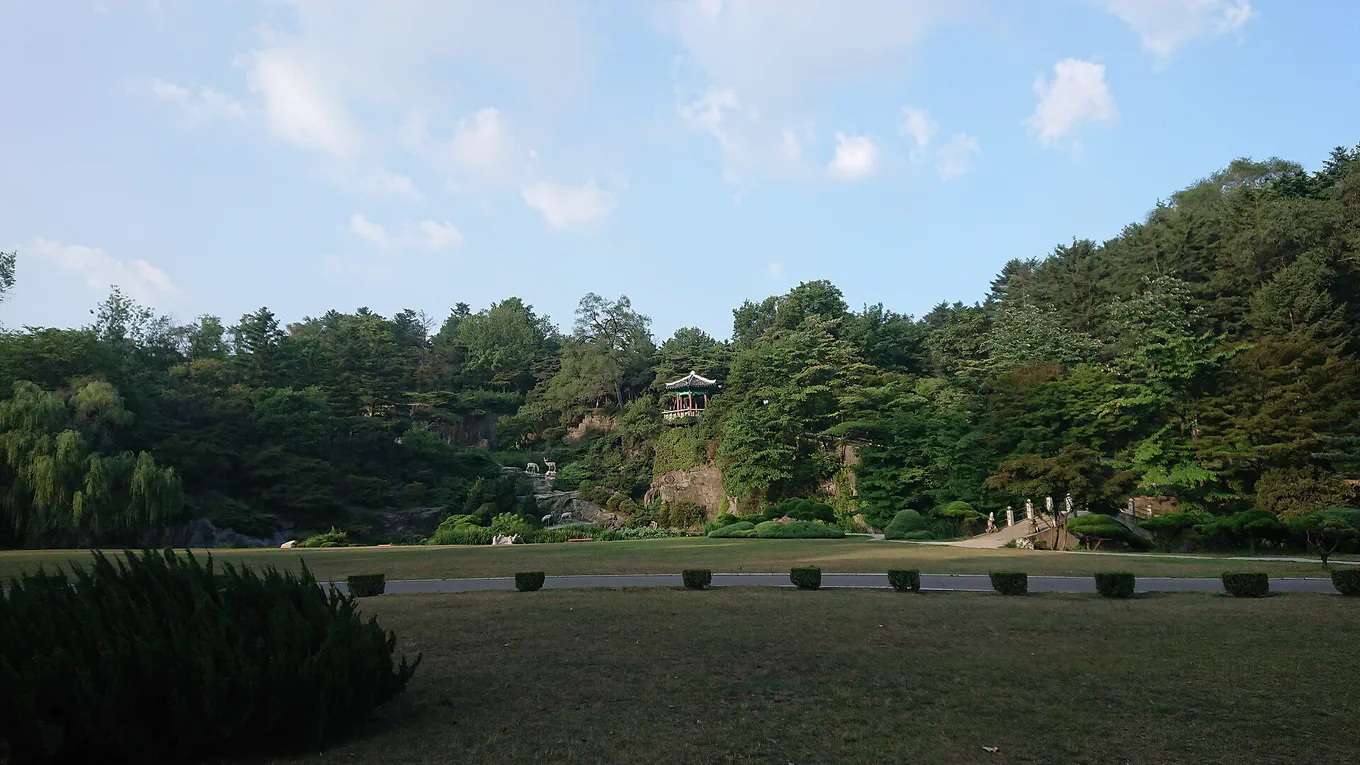
Pyongyang is the capital and largest city of North Korea, on the Taedong River. The kingdom of Goguryeo moved its capital here in 427, and the city was rebuilt with Soviet help after the Korean War. Its stories are a schooner burned on the river, a young leader called a fake, a captured US Navy crew, a student who defied a ban, and a concert that ended in tears.
1 The General Sherman, burned on the Taedong River
Stand here. The bank of the Taedong River, at the stone monument to the General Sherman. Replicas of cannons from the wreck stand nearby.
An armed American-owned schooner, the General Sherman, came up the Taedong in August 1866 to force Korea to open to trade. The crew seized a Korean official, and the provincial governor, Pak Kyu-su, tried to negotiate a release. The crew demanded a ransom. When the tide went out, the ship ran aground. A fire attack burned it, and the crew who abandoned it were killed by angry onlookers on the shore. Yet Pak later became one of Korea’s leading voices for opening the country to the outside world.
2 Kim Il Sung at Moranbong, and the cry of ‘Fake!’
Stand here. The Moranbong area of Pyongyang, where the rally crowd gathered. The Arch of Triumph, built in 1982 for Kim’s 70th birthday, now stands at the foot of Moran Hill.
Kim Il Sung, the founder of North Korea, first appeared in public on 14 October 1945, at a rally in the Moranbong area. The Soviets presented him as the legendary guerrilla leader of that name, though several guerrillas had used it. By one account, the crowd expected a white-haired general, and a young man who looked no older than 30 stepped up instead, holding a manuscript. Disbelief spread through the crowd: ‘Fake!’ A Russian account calls the crowd rapturous. The ‘fake’ led North Korea until his death in 1994.
3 The USS Pueblo crew and their ‘Hawaiian good luck sign’
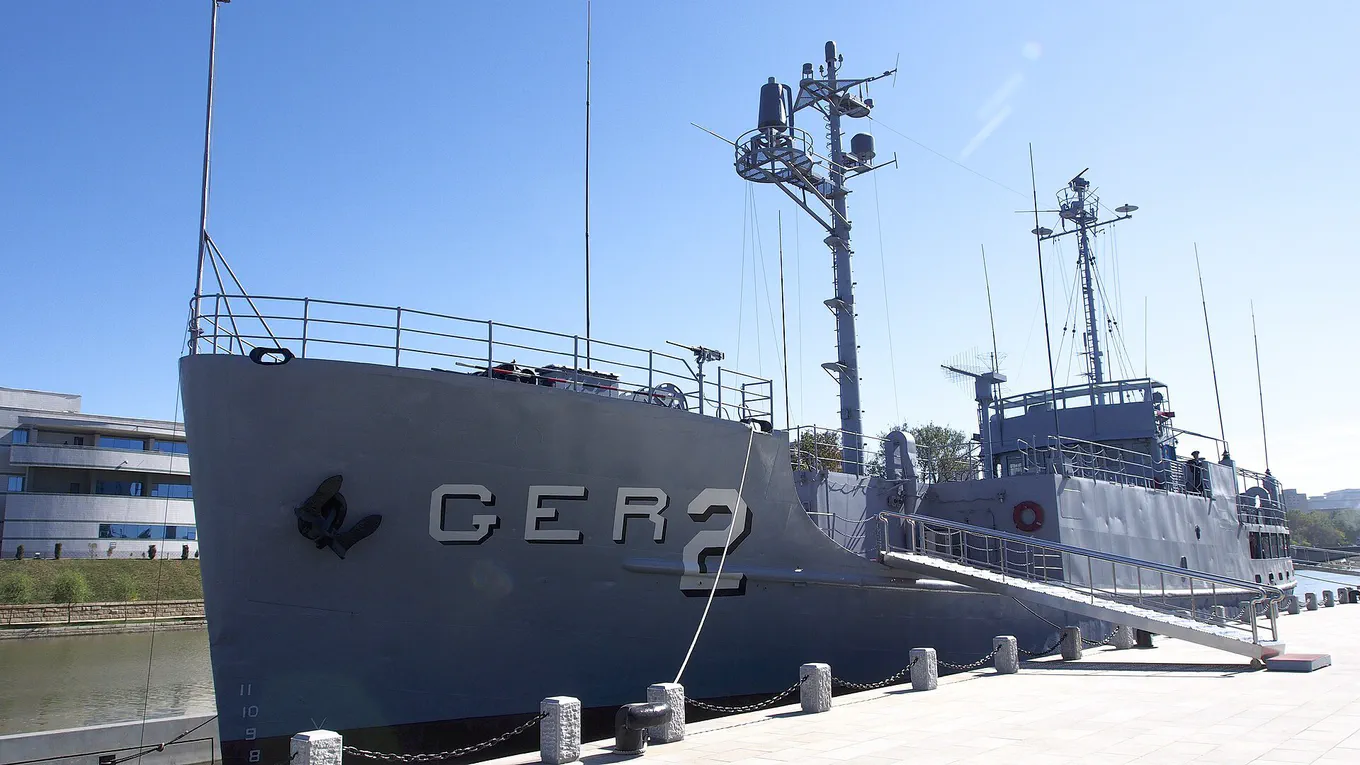
Stand here. The Pothong River beside the Victorious War Museum. The Pueblo was moved here from the Taedong in 2012, as a museum ship.
The USS Pueblo was captured by North Koreans in January 1968, and one man was killed. Its captain, Lloyd Bucher, was psychologically tortured, and when his captors threatened to execute his men in front of him, he wrote a confession. His crew found another way to fight. In staged propaganda photos they secretly gave the finger, calling it a ‘Hawaiian good luck sign’. Eleven months after the capture, they were taken to the Demilitarized Zone and freed. ‘Any time a camera appeared,’ one recalled, ‘so did the fingers.’
4 Lim Su-kyung, the ‘Flower of Unification’, at May Day Stadium
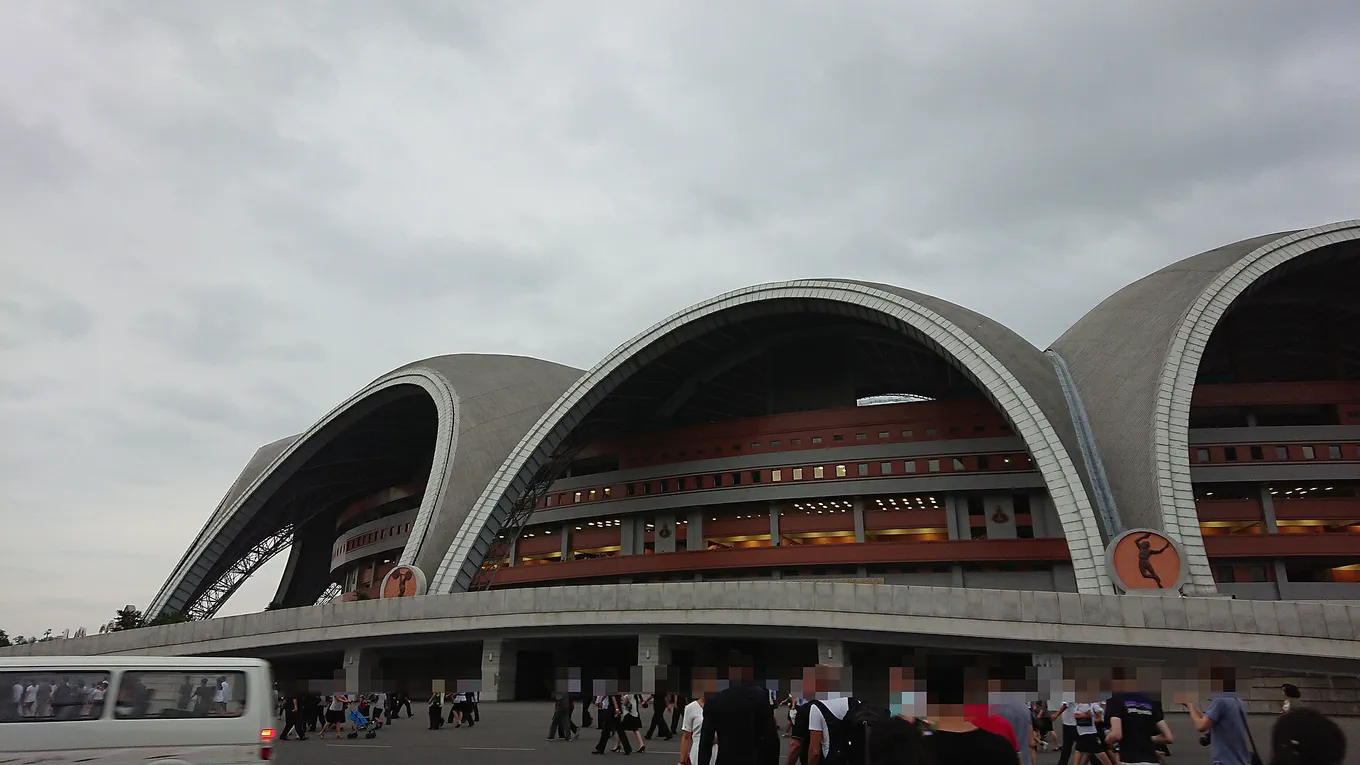
Stand here. Rungrado 1st of May Stadium, on Rungra Island. It opened on 1 May 1989, and its first major event was the World Festival of Youth and Students.
The festival, widely seen as North Korea’s answer to the Seoul Olympics, opened in this stadium in July 1989. Despite a ban, a student association secretly sent Lim Su-kyung, a fourth-year French student. Her journey, through Japan and Germany, took ten days. She was hailed as the ‘Flower of Unification’. On 15 August, she crossed the Demilitarized Zone back home and was arrested, then sentenced to 12 years. She served three. In 2012, she was elected to South Korea’s National Assembly.
5 The New York Philharmonic at the East Pyongyang Grand Theatre
Stand here. The East Pyongyang Grand Theatre. The orchestra played here in 2008, and North Korean state television broadcast the whole concert.
On 26 February 2008, the New York Philharmonic made the first significant American cultural visit to North Korea since the Korean War. Lorin Maazel conducted, and the programme included both national anthems. One North Korean said it was the first time they had seen the American flag in North Korea. The country’s leader, Kim Jong Il, stayed away. But the concert ended with ‘Arirang Fantasy’, built on a Korean folk song, and some of the musicians were so overcome they left the stage in tears.
Pack nothing. Leave Friday.
Every Friday, I write a free letter, Journey, that takes us on a trip through places, stories, and ideas.
Pyongyang: A Journey in North Korea(Guy Delisle, 2003). A non-fiction graphic novel. Delisle spends two months in Pyongyang working for a French animation company, staying at the Yanggakdo International Hotel.
Without You, There Is No Us(Suki Kim, 2014). A book of undercover journalism. Kim documents her three and a half months teaching English at the Pyongyang University of Science and Technology in 2011.
The Orphan Master’s Son(Adam Johnson, 2012). A novel. Much of it is set in Pyongyang, the North Korean capital, and it won the 2013 Pulitzer Prize.
Films to watch before you visit Pyongyang
A State of Mind(Daniel Gordon, 2004). A documentary film. It follows two North Korean child gymnasts and their families for over eight months as they train for the 2003 Pyongyang mass games.
The Propaganda Game(Álvaro Longoria, 2015). A documentary film about North Korea. It was shot mainly in Pyongyang, including the Pyongyang Metro, the Munsu Water Park, the Mansudae Grand Monument, and a mass in Changchung Cathedral.
Comrade Kim Goes Flying(Kim Gwang Hun, Nicholas Bonner, and Anja Daelemans, 2012). A romantic comedy film. It was set and shot in Pyongyang with a North Korean cast and crew, and showed at the 2012 Pyongyang International Film Festival.
Questions
Where did the General Sherman sink?
On the Taedong River at Pyongyang. A massive stone monument on the riverbank says the people of Pyongyang sank it at Hansajong Rapids on 2 September 1866, and replicas of cannons recovered from the wreck stand near it.
Is Pyongyang’s Arch of Triumph bigger than the one in Paris?
Yes. It is modelled on the Arc de Triomphe in Paris but is 10 metres taller. It was built in 1982 at the foot of Moran Hill for Kim Il Sung’s 70th birthday.
How old is Pyongyang?
Very old. It was the capital of two ancient Korean kingdoms, Gojoseon and Goguryeo, and Goguryeo moved its capital there in 427. The city was devastated in the Korean War and quickly rebuilt with Soviet help.