On our Peru trip in 2024, I learned the Inca empire lasted only about a hundred years, from the 1430s to the 1530s, and reached north into Ecuador. Quito was one of its great cities before the Spanish refounded it in 1534. An empire across a continent, built and lost in roughly one long human lifetime.
— Nick
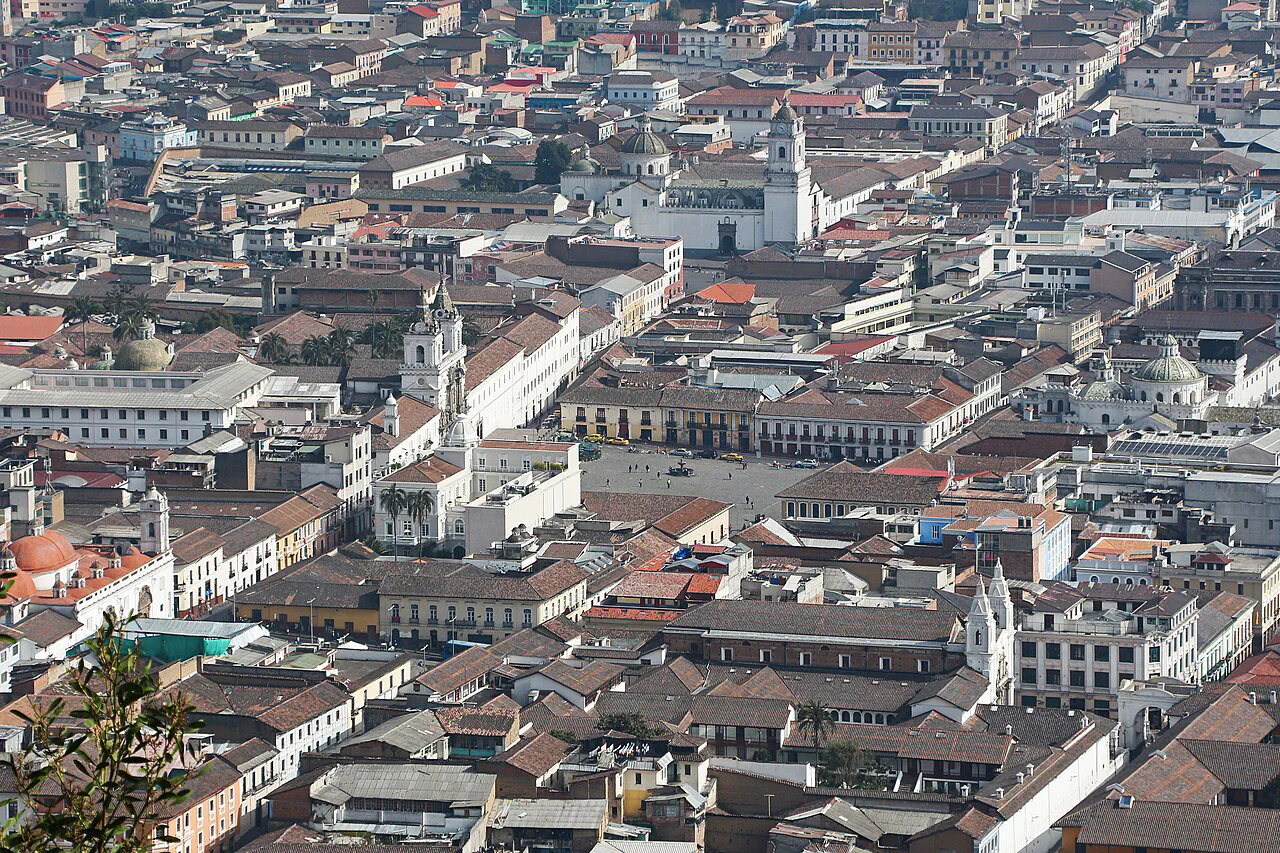
Quito, the capital of Ecuador, sits on the eastern slopes of the Pichincha volcano, and no capital is closer to the Equator. Spanish settlers refounded it here in 1534. Its stories are a woman who saved Simón Bolívar, a deal with the devil one stone short, a saint who offered her life for the city, a monument that missed the Equator, and a chapel its painter never saw finished.
1 Manuela Sáenz, the Quito woman who saved Simón Bolívar
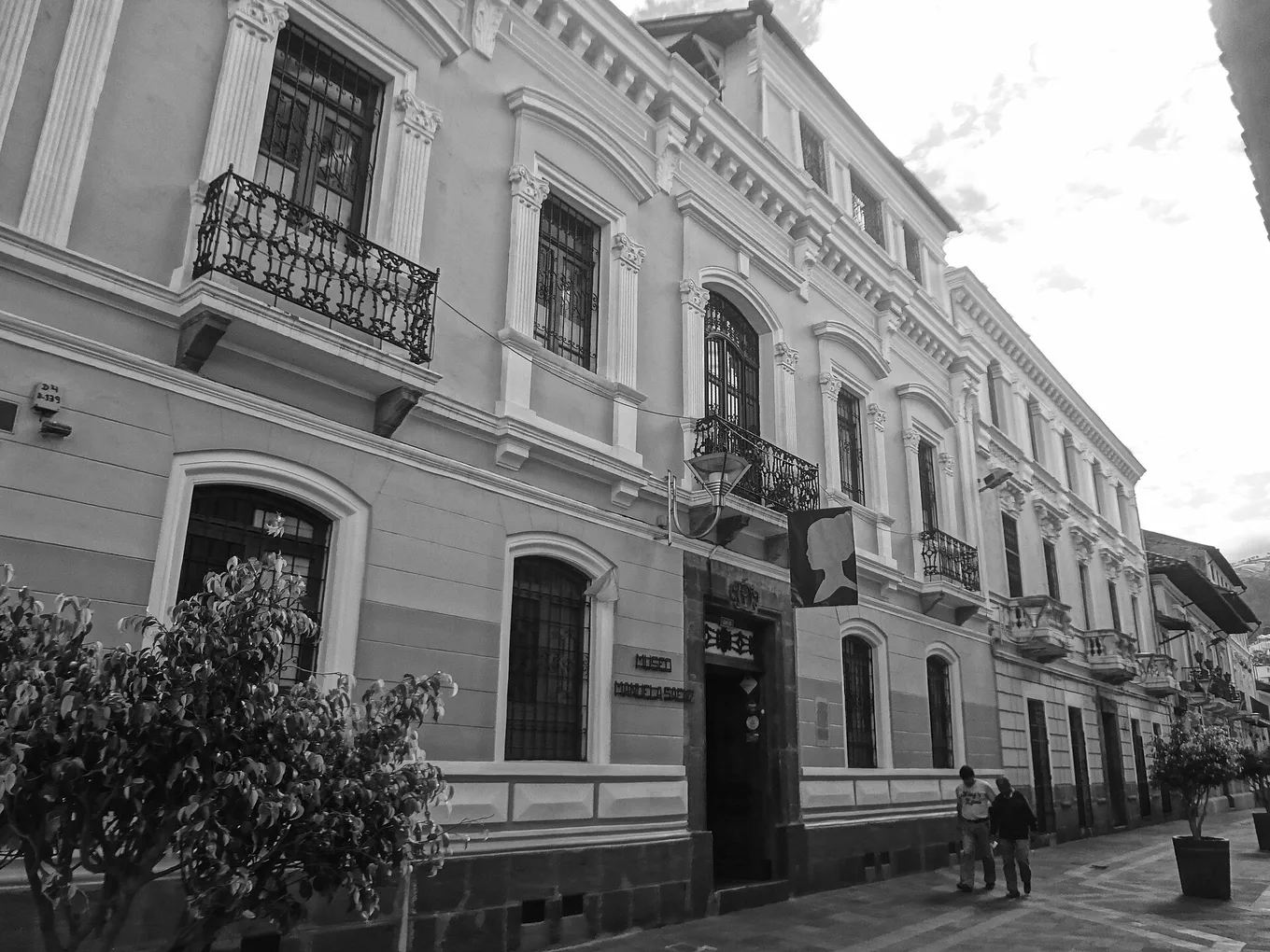
Stand here. Museo Casa Manuela Sáenz, in the barrio of San Marcos in the historic centre. It keeps letters about her romance with Bolívar, and his poncho.
Simón Bolívar led six of today’s countries, Ecuador among them, to independence, and a Quito woman saved his life. Manuela Sáenz’s father had arranged her marriage to an English doctor twice her age. In 1822, she left him, travelled to Quito, and met Bolívar at a ball. Six years later, in Bogotá, assassins broke into the Presidential Palace. Sáenz was with Bolívar that night. She woke him, persuaded him out through a window, and stayed to face the attackers. She became known as the liberator of the Liberator.
As the legend goes, in the seventeenth century an Indigenous man named Cantuña had six months to finish the vast Franciscan church here. He struck a deal with the devil. If the devil laid every last stone before dawn, he would take Cantuña’s soul. But Cantuña had hidden one stone of the atrium. At dawn, the church was a stone short, and his soul was still his own. There was a real Cantuña, too, and he said he had made a pact with the devil.
3 Mariana de Jesús, the Lily of Quito, at La Compañía
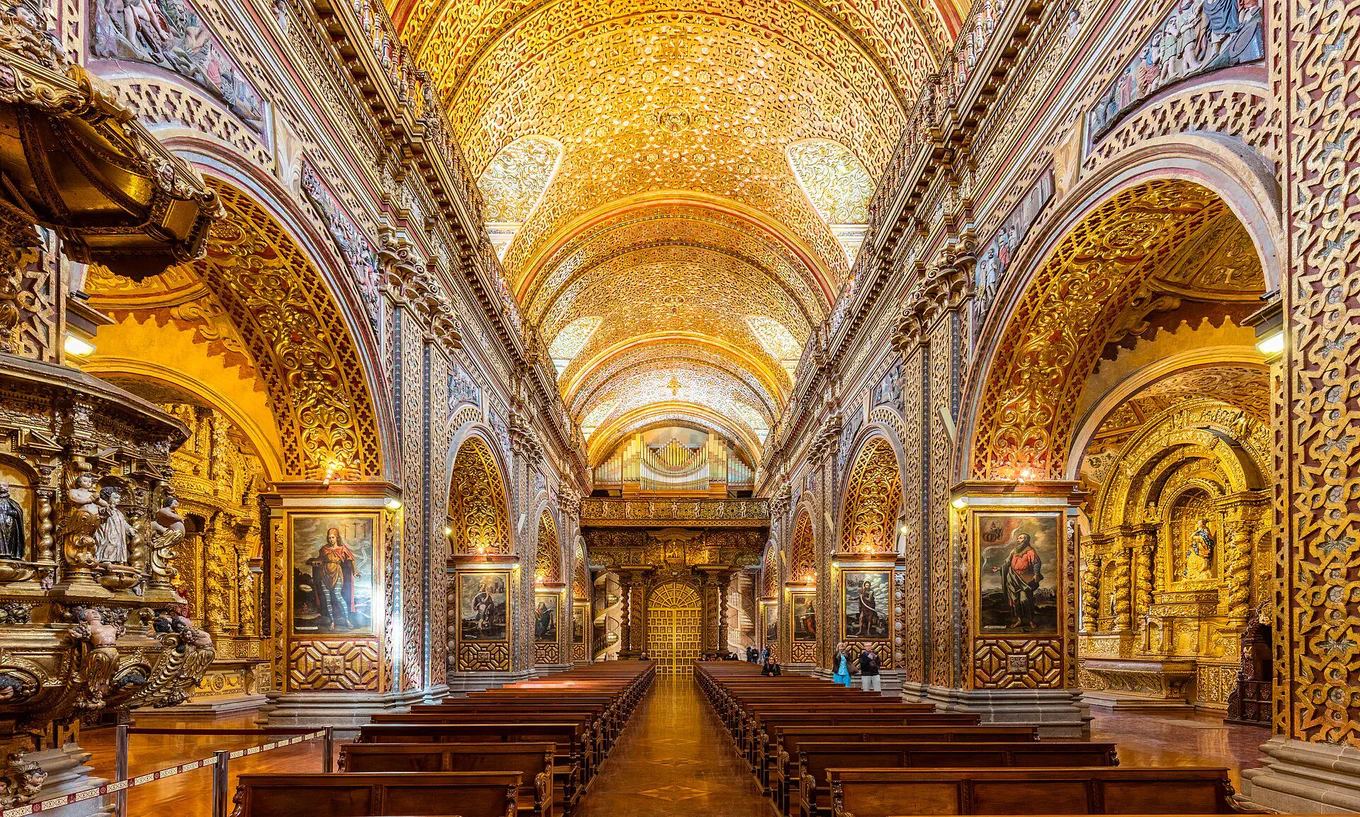
Stand here. La Compañía, the Jesuit church at García Moreno and Sucre, its carved interior covered in gold leaf. Her remains lie under the main altar.
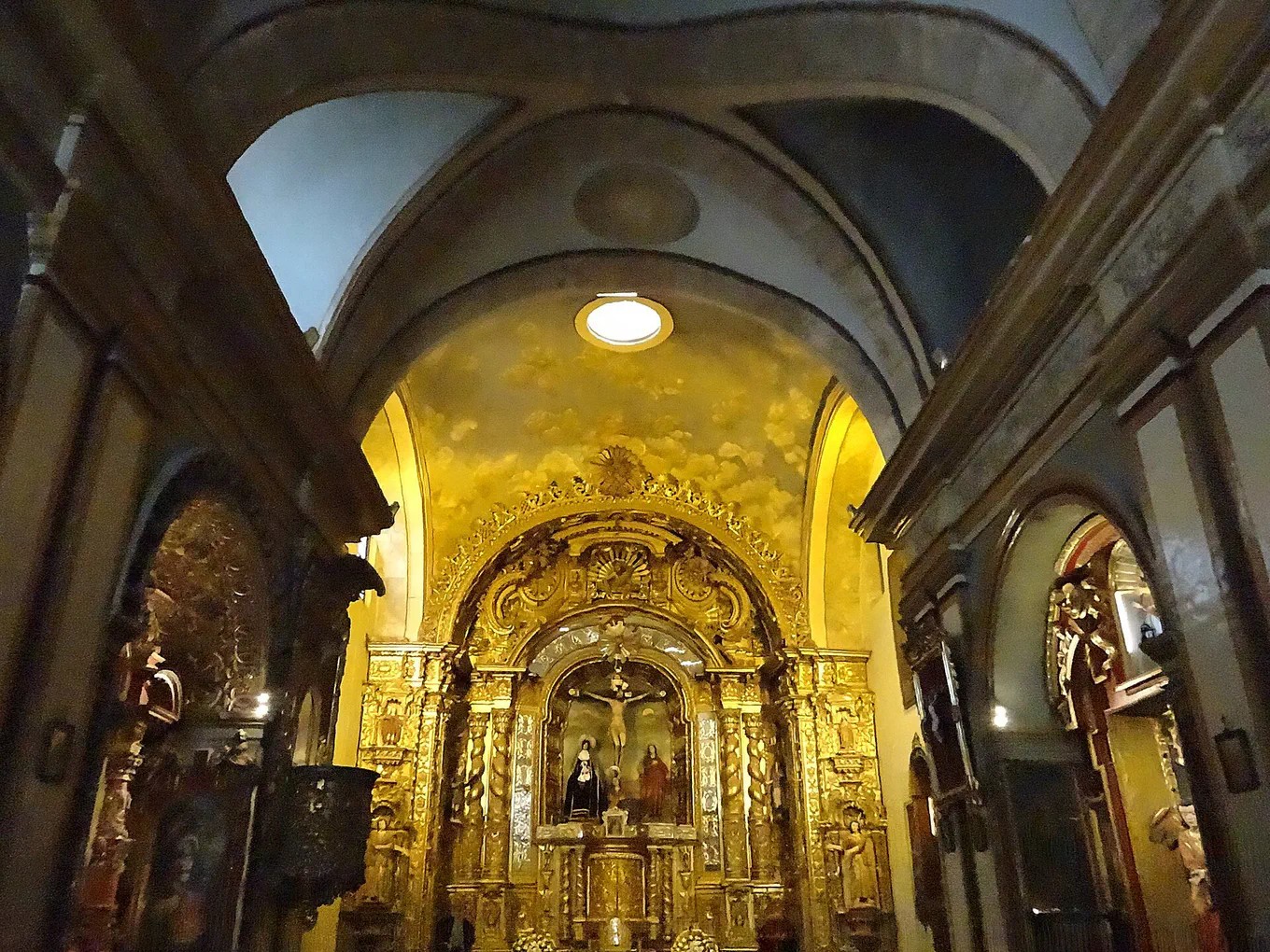
In 1645, earthquakes struck Quito, and epidemics followed. Mariana de Jesús lived in seclusion in her family’s house. She came to this church, where a Jesuit was offering God his life for the city, and asked heaven to take her life instead of his. She died, and she was buried here. The story goes that a pure white lily sprang from her blood. In 1950, the Lily of Quito was made a saint.
4 La Condamine’s Equator, and the monument that missed it
Stand here. Ciudad Mitad del Mundo, 26 kilometres north of central Quito. A 30-metre monument stands beside a line marked as the Equator.
A French mission reached Quito in June 1736 to measure a degree of latitude near the Equator, and so settle the shape of the Earth. Charles Marie de La Condamine was one of its three leaders. The work took years, and La Condamine went home down the Amazon. Long after, a monument to the mission, Mitad del Mundo, the Middle of the World, was raised on a line marked as the Equator. By GPS, the true Equator lies about 240 metres north.
5 Oswaldo Guayasamín and his Chapel of Man above Quito
Stand here. La Capilla del Hombre, on the Guangüiltagua hill in Bellavista, facing the painter’s house, which is now a museum.
Oswaldo Guayasamín, a Quito-born painter and sculptor of Kichwa descent, wanted a building that would record man’s cruelty to man, and the greatness people are capable of. He helped design it beside his home in the hills above the city. It is La Capilla del Hombre, the Chapel of Man. Work began in 1995, but Guayasamín died in 1999, three years before it was completed. His ashes rest between the house he lived in and the chapel he never saw finished.
Pack nothing. Leave Friday.
Every Friday, I write a free letter, Journey, that takes us on a trip through places, stories, and ideas.
Sueño de lobos(Abdón Ubidia, 1986). A novel set in Quito in 1979–80. Sergio plans a bank robbery with a dealer from San Juan, in the historic centre, timed for the city’s foundation fiestas.
El chulla Romero y Flores(Jorge Icaza, 1958). A novel. Most of the book ends up as a put-down of the various denizens of Quito, from the high to low.
The Amnesia Clinic(James Scudamore, 2007). A novel, Scudamore’s debut. A coming-of-age tale set in 1990s Quito, in which storytelling exalts, but also kills.
Films to watch before you visit Quito
Ratas, ratones, rateros(Sebastián Cordero, 1999). A crime drama. Salvador, a young petty thief from Quito, is visited by his cousin Ángel, an ex-convict with a bounty on his head.
Entre Marx y una mujer desnuda(Camilo Luzuriaga, 1996). A film of Jorge Enrique Adoum’s 1976 novel. It follows Galo Gálvez through the 1960s in Quito, and filming began in 1994 in the city’s colonial centre.
Cuando me toque a mí(Víctor Arregui, 2006). A film based on Alfredo Noriega’s novel De que nada se sabe, about a solitary, sceptical forensic doctor who works in a morgue in Quito.
Questions
Is the Mitad del Mundo monument really on the Equator?
Not quite. By GPS, the Equator lies about 240 metres north of the line marked at the monument. The monument stands in San Antonio parish, 26 kilometres north of central Quito, and honours the French mission that reached the city in 1736.
What is the statue on top of El Panecillo?
A 45-metre monument of the Virgin, made of seven thousand pieces of aluminium by the Spanish artist Agustín de la Herrán Matorras and inaugurated in 1975. It was inspired by the Virgin of Quito, which Bernardo de Legarda carved in 1734 and which stands on the main altar of the Church of San Francisco, the church of the Cantuña legend.
When did Quito become a World Heritage Site?
In 1978. Quito and Kraków were the first World Cultural Heritage Sites that UNESCO declared. The Spanish city dates from 6 December 1534, when 204 settlers led by Sebastián de Benalcázar founded it on its present site, the date most often given as its founding.