Rabat, the capital of Morocco, stands on the Atlantic at the mouth of the Bou Regreg river, facing Salé. The Almohads founded it in the 12th century, and the French ruled Morocco from it after 1912. Its stories are a Dutch pirate admiral, a caliph’s unfinished mosque, a sultan buried by the son who seized his throne, Mohammed V’s return from exile, and Zaha Hadid’s theatre on the river.
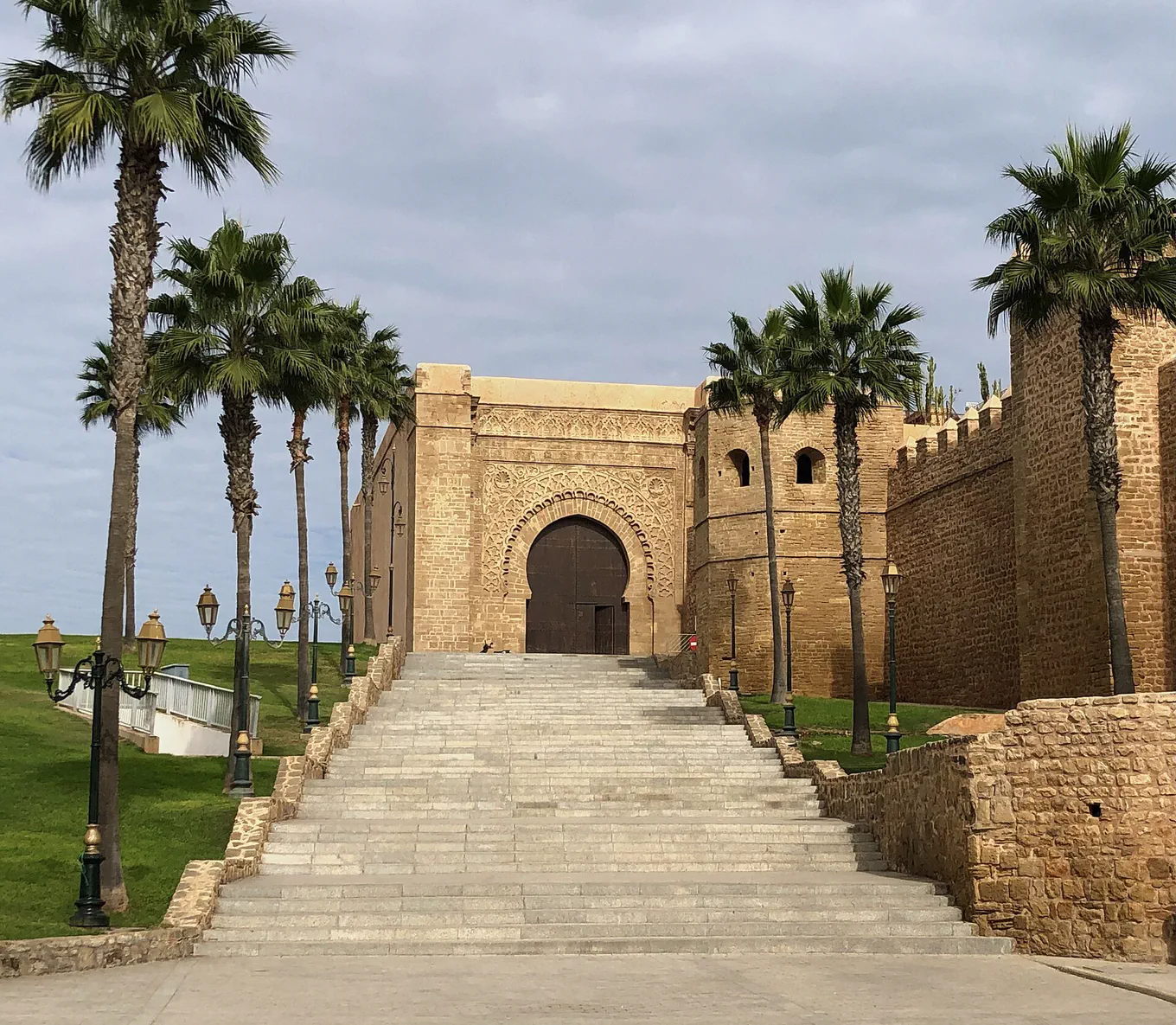
In Robinson Crusoe, Defoe’s hero is carried off as a slave by the pirates of Salé, and for a time their admiral was a Dutchman. Jan Janszoon was captured by corsairs at Lanzarote and “turned Turk”, becoming a Muslim, perhaps by force. Men from Hornachos, in Spain, made this kasbah their republic, and the Salé rovers elected him President. In 1627, as Grand Admiral Murat Reis, he raided Iceland. Once, the Dutch authorities brought his first wife and children to the port to talk him out of piracy. It utterly failed.
2 Yaqub al-Mansur’s unfinished mosque at the Hassan Tower
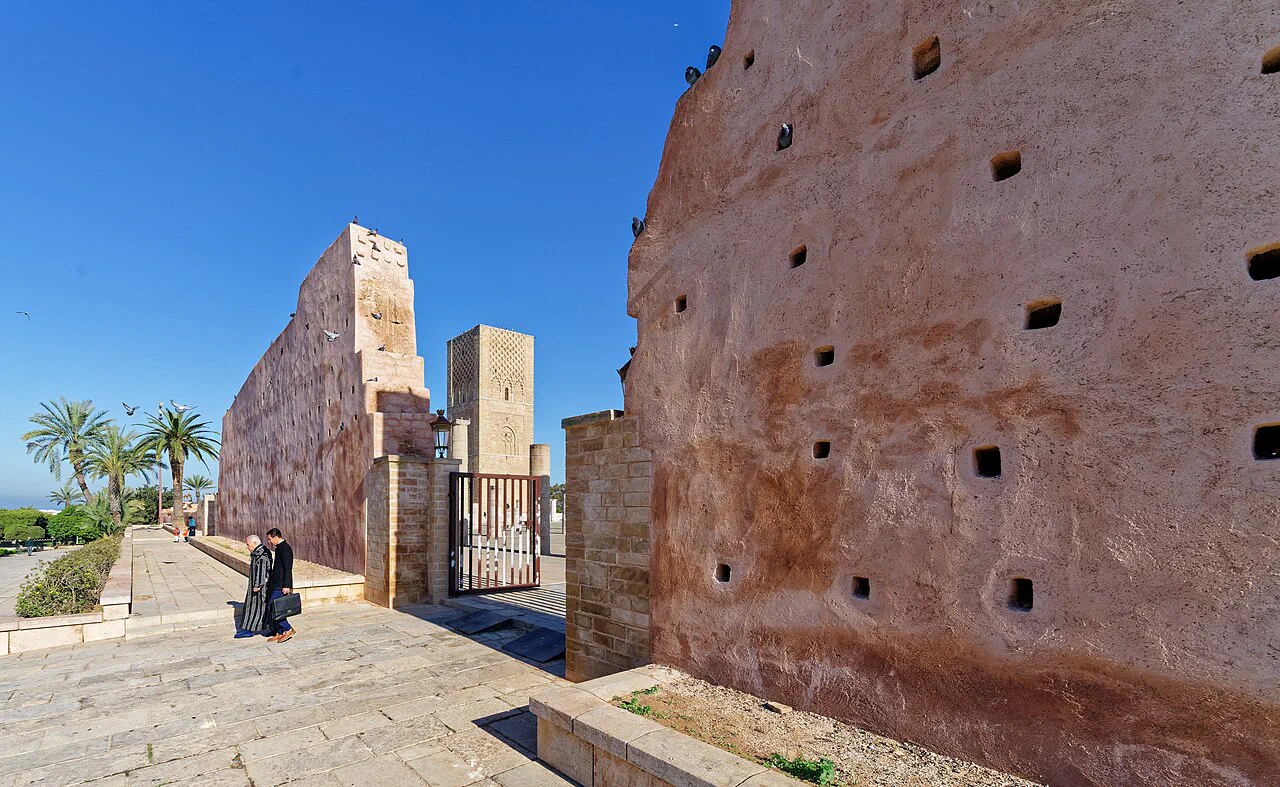
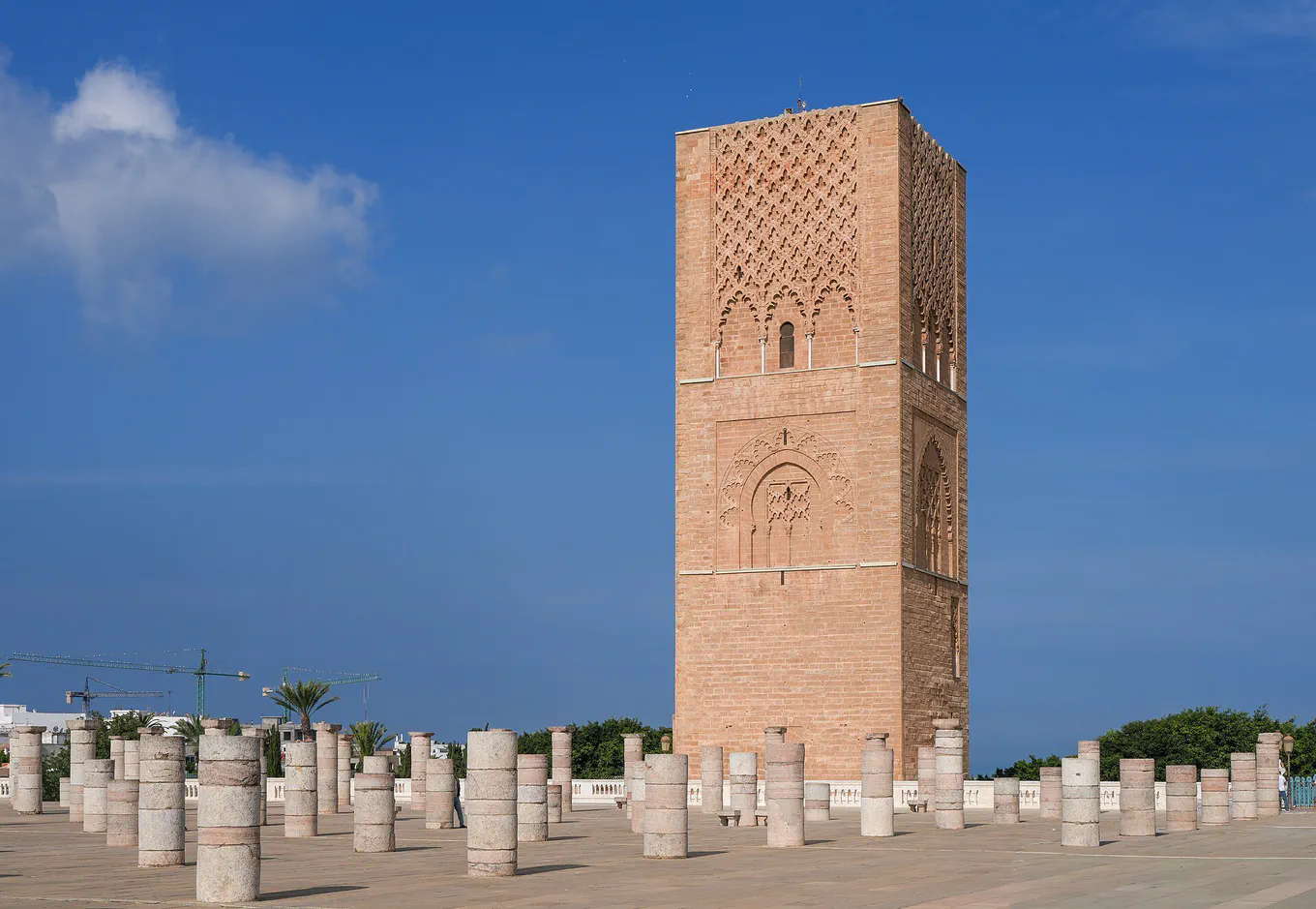
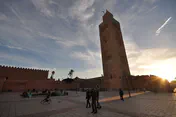
Stand here. The Hassan Tower, on the high south bank of the Bou Regreg, beside the remains of the unfinished mosque’s walls and columns.
Yaqub al-Mansur, caliph of a Berber empire in the Maghreb and Iberia, began a mosque on this bank in 1191 that would have been the largest in the western Muslim world. Its minaret was meant to rise to at least 64 metres, perhaps 80. But eight years later al-Mansur died, and the work stopped, leaving only the beginnings of the walls and 348 columns. The minaret stands 44 metres tall, at least twenty short of the caliph’s plan.
3 Abu al-Hasan, the Black Sultan, buried at Chellah
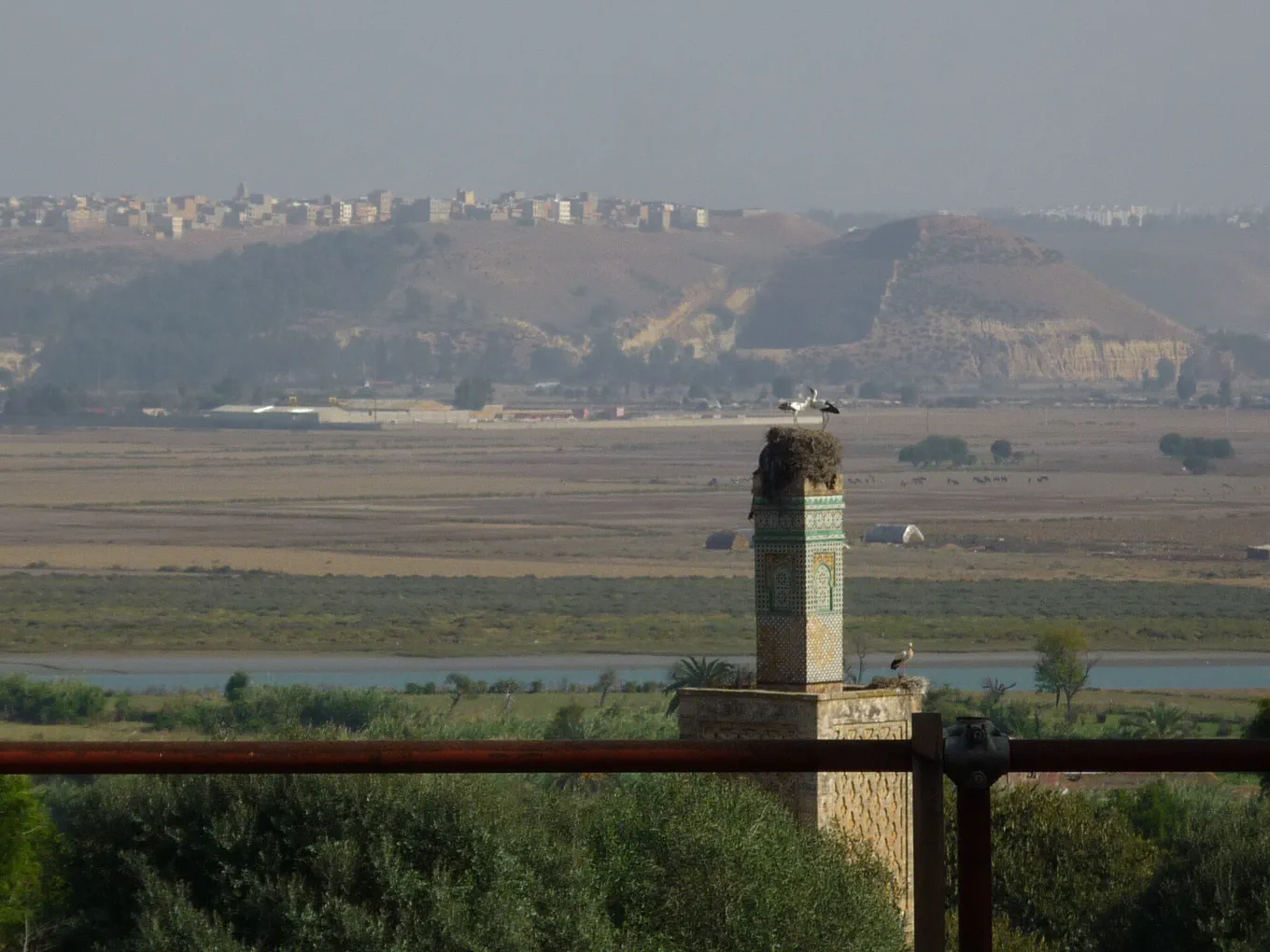
Stand here. Chellah, the Marinid burial ground. The ruins are now a garden, with storks nesting on the old minaret.
They called Abu al-Hasan the Black Sultan, for the dark skin he inherited from his sub-Saharan mother. His armies took Tlemcen and swept on into Tunis. Then a storm wrecked his fleet on the way home, and his son Abu Inan went to Fez and declared himself sultan. In 1351, Abu al-Hasan died still hiding in the Atlas mountains. Yet it was Abu Inan who brought his father’s body here, reportedly amid great public mourning, to lie near Abu Inan’s mother.
4 Mohammed V, the exiled sultan who came home
Stand here. The Mausoleum of Mohammed V, across from the Hassan Tower. Royal guards stand in dress uniform, and the tombs are seen from a gallery above.
On the eve of Eid al-Adha in 1953, the French authorities forced Sultan Mohammed V and his family into exile in Corsica, then Madagascar. In his place they put a relative on the throne, a puppet known as the “French sultan”. Two years later, Mohammed V came home and was recognised as sultan again, and for many his return was the sign that the colonial era was ending. In February 1956, he negotiated Morocco’s independence. The sultan the French had exiled took the title of king. Since 1971 he has lain in this mausoleum.
5 Zaha Hadid’s theatre on the Bou Regreg
Stand here. The Grand Theatre of Rabat, on the left bank of the Bou Regreg, with a 1,821-seat auditorium and an outdoor amphitheatre for about 7,000.
Zaha Hadid based this theatre’s design on the winding course of the Bou Regreg, and it was reported to be the largest theatre in the Arab world and in Africa. Her practice was commissioned, and building began, but Hadid died in 2016, with the theatre among the last major projects she designed. It was finished five years later, and then its opening was delayed for several years. When the public finally came in, in April 2026, she had been dead for ten years.
Pack nothing. Leave Friday.
Every Friday, I write a free letter, Journey, that takes us on a trip through places, stories, and ideas.
Robinson Crusoe(Daniel Defoe, 1719). A novel. Its hero is taken by a Rover of Sallee and held as a slave in Salé, across the river from Rabat.
In Morocco(Edith Wharton, 1920). A travel book. Wharton describes “Salé the white and Rabat the red” frowning at each other across the Bou Regreg.
The Clash of Images(Abdelfattah Kilito, 1995). Stories, translated by Robyn Creswell. A boy who is the author’s double grows up in the medina, Rabat’s old town.
Films to watch before you visit Rabat
Mission: Impossible – Rogue Nation(Christopher McQuarrie, 2015). A film. The action spy film brought Tom Cruise to Rabat, with scenes shot in the Kasbah of the Udayas.
Body of Lies(Ridley Scott, 2008). A film. Rabat’s basketball stadium plays the United States embassy in Jordan.
Black Hawk Down(Ridley Scott, 2001). An American epic war film. Most of it was photographed in the cities of Rabat and Salé.
Questions
Was the Hassan Mosque in Rabat ever finished?
No. The Almohad caliph Yaqub al-Mansur began it in 1191, meaning it to be the largest mosque in the western Muslim world, but work stopped when he died in 1199. It was left with the beginnings of its walls and 348 columns, and its minaret, the Hassan Tower, stands 44 metres tall, short of the 64 metres or more planned.
Why is Rabat the capital of Morocco and not Fez?
Because of the French. When France set up its protectorate over Morocco in 1912, Rabat became its administrative centre, and Hubert Lyautey, the French resident-general, moved the capital there from Fez. Rabat is still the capital of Morocco.
Where is the Kasbah of the Udayas?
On a hill at the mouth of the Bou Regreg, facing Salé. The Almohad caliph Abd al-Mu’min built it in 1150 or 1151. In 1627, Moors and Moriscos from Hornachos, in Spain, threw out the sultan’s governor and ran a corsair republic from it, the Republic of Salé. Today it is mostly homes with blue and white walls.