Rio de Janeiro, Brazil, Rio de Janeiro, South America
This ages me no end, but it’s hard to deny the fight between Bond and Jaws on the cable car in Moonraker. I also remember the Michael Caine movie Blame it on Rio for very different reasons. That was the first time I ever saw Demi Moore in anything. I found her… interesting.
— Nick
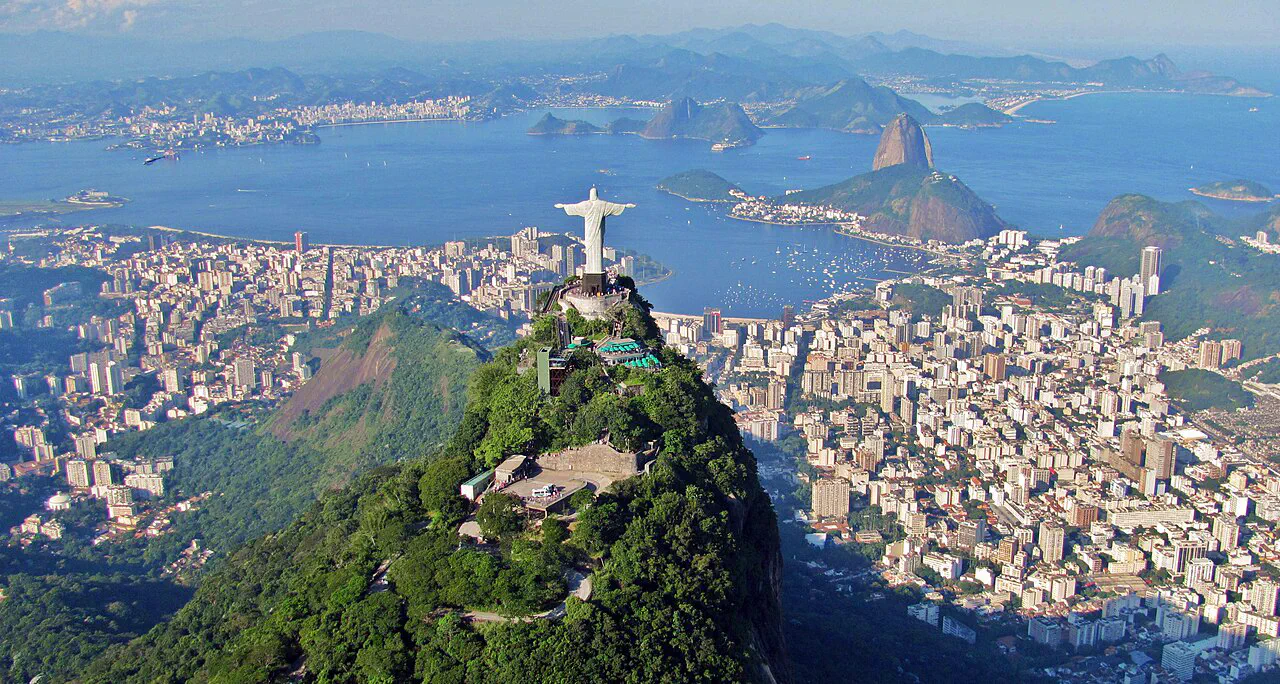
In 1565, the Portuguese founded Rio de Janeiro, today Brazil’s second-largest city, and it was the country’s capital until 1960. Between the real Girl from Ipanema and Jaws on the Sugarloaf cable car come a royal court running from Napoleon, a goalkeeper blamed for a lost World Cup, and a priest’s idea on Corcovado.
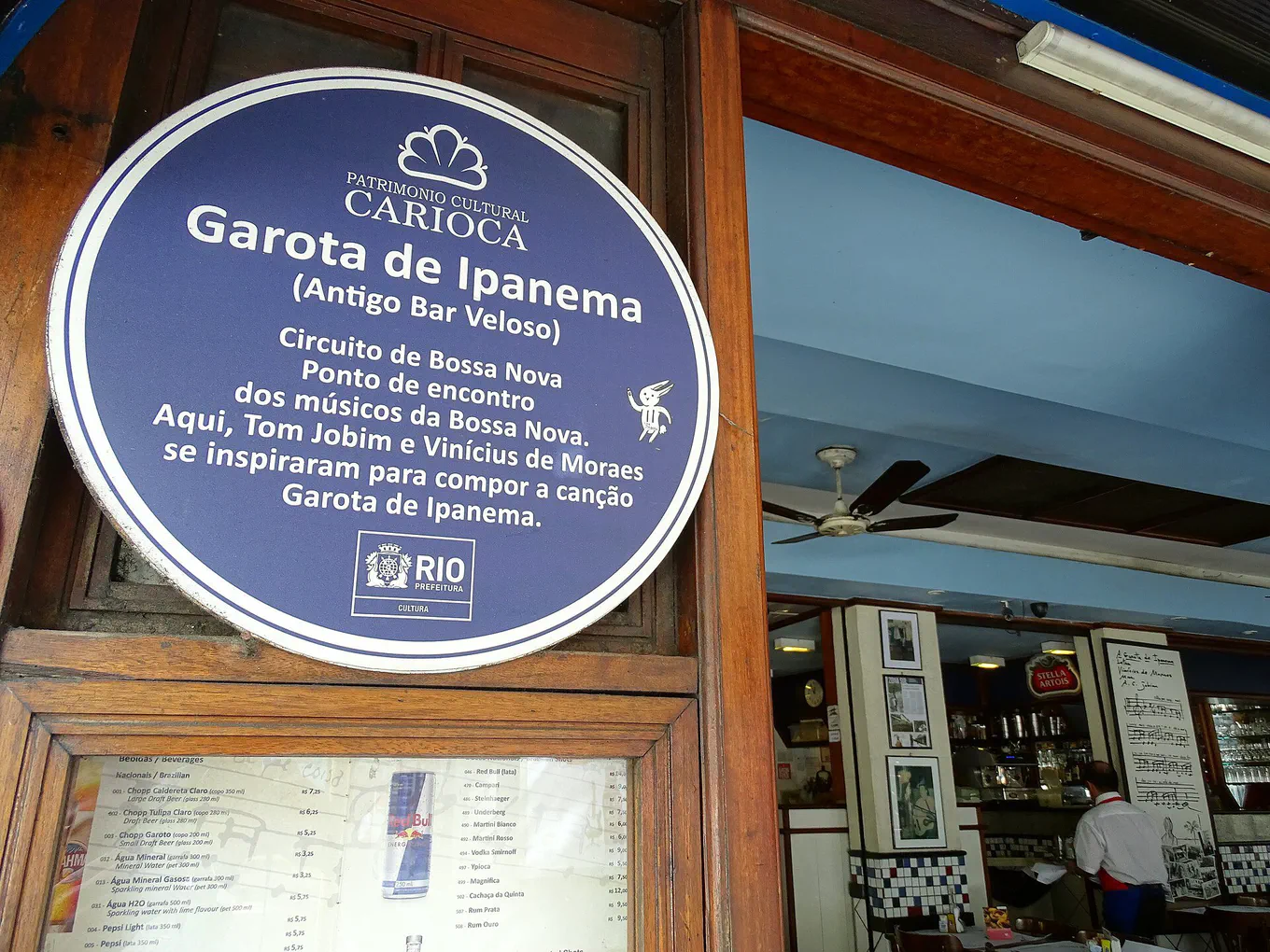
“The Girl from Ipanema” was a real girl. Helô Pinheiro was seventeen, and every day she strolled past the Veloso bar-café, sometimes going in to buy cigarettes for her mother and leaving to wolf whistles. In 1962, Antônio Carlos Jobim and Vinícius de Moraes remembered how they felt as she passed, and wrote the song. Decades later, the songwriters’ heirs sued her for naming her boutique after it. Into evidence went the composers’ own press release, naming her as the real girl. The court ruled for her.
Prince João and the royal court that fled to Rio
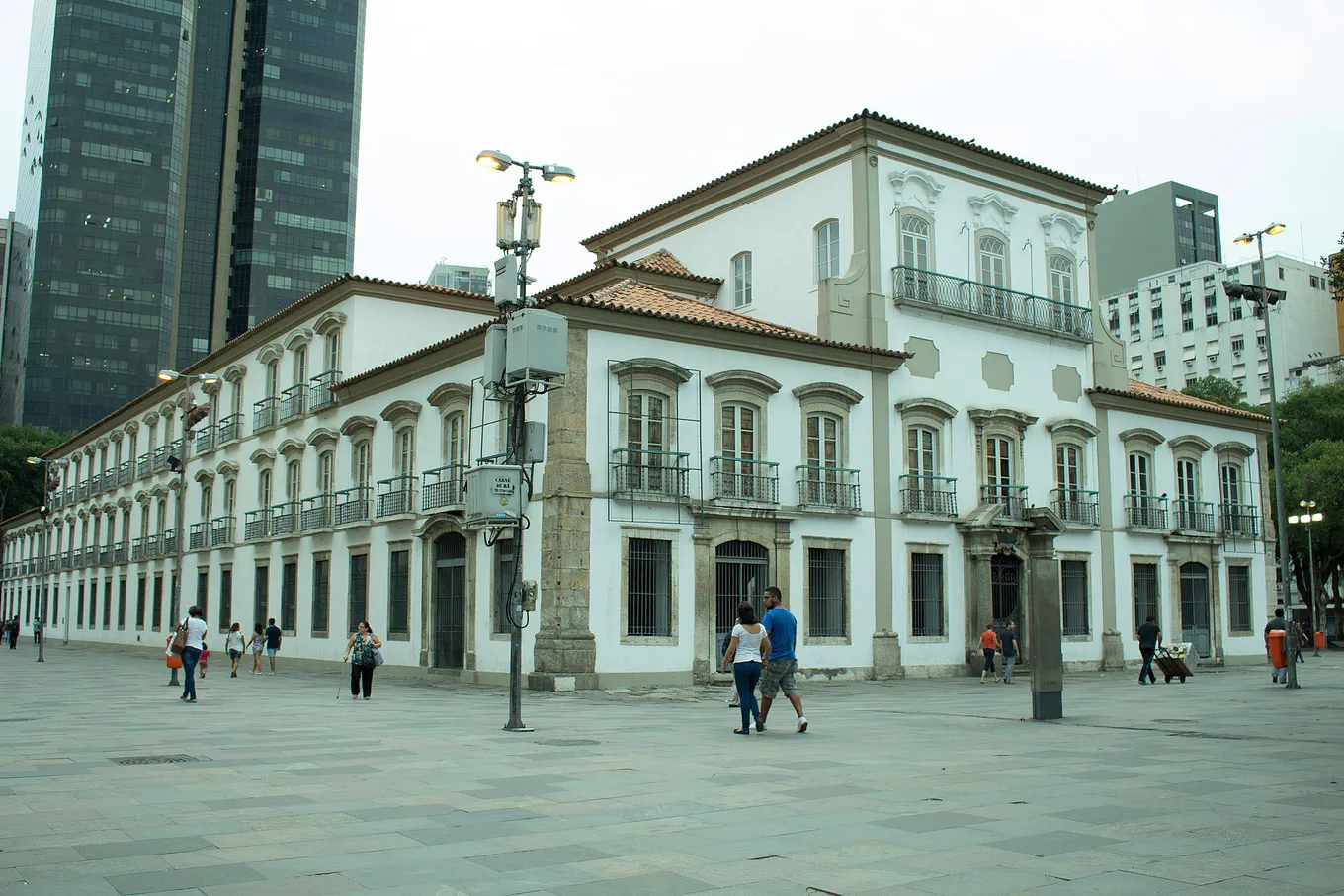
Stand here. The Paço Imperial, on Praça XV de Novembro in central Rio. João’s royal residence from 1808, it is now a cultural centre.
Prince Regent João saw Napoleon coming and ordered the court to Brazil before he could be deposed. Nearly 10,000 people boarded ships in November 1807, days before the invasion. The next year, Rio became the seat of the court, the only European capital outside Europe. But thirteen years on, João was obliged to go home. His heir, Pedro, stayed and refused to follow, and the next year Brazil declared its independence. The colony that had saved João’s crown kept his son.
Moacir Barbosa and the silence of the Maracanã
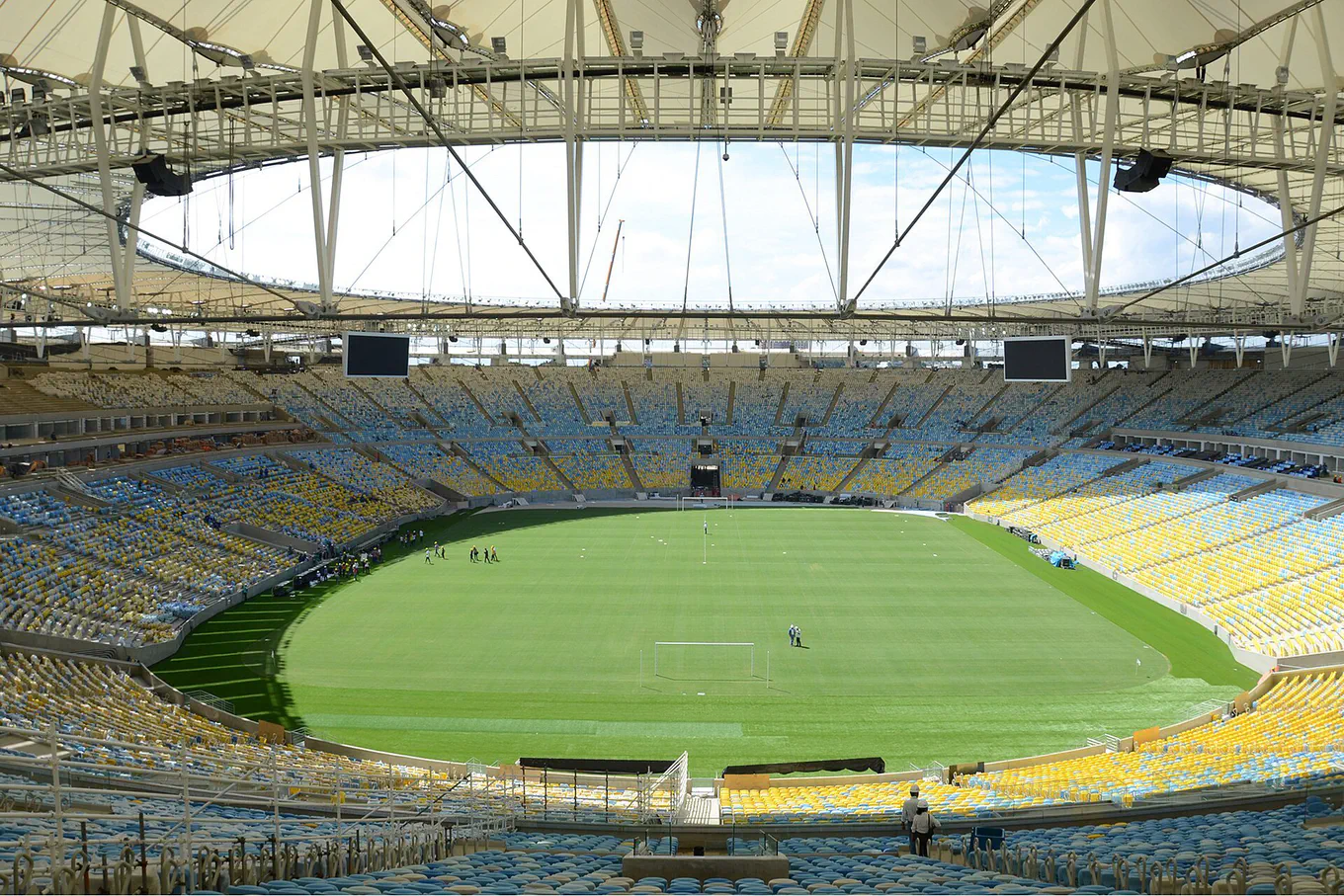
Stand here. The Maracanã Stadium, officially Estádio Jornalista Mário Filho, in the Maracanã neighbourhood. It hosted the 2014 World Cup final and the 2016 Olympic ceremonies.
Brazil needed only a draw against Uruguay at the Maracanã to win the 1950 World Cup. On the day, a Rio newspaper printed a photograph of the team captioned “These are the world champions”. Brazil scored first. Uruguay equalised, and with eleven minutes left, Alcides Ghiggia drilled the ball past the goalkeeper, Moacir Barbosa, who was out of position, expecting a cross. The stadium fell silent, and Barbosa was blamed. Fifty years on, he said Brazil’s maximum sentence was thirty years, but he had been paying for fifty.
A priest’s idea and Christ the Redeemer on Corcovado
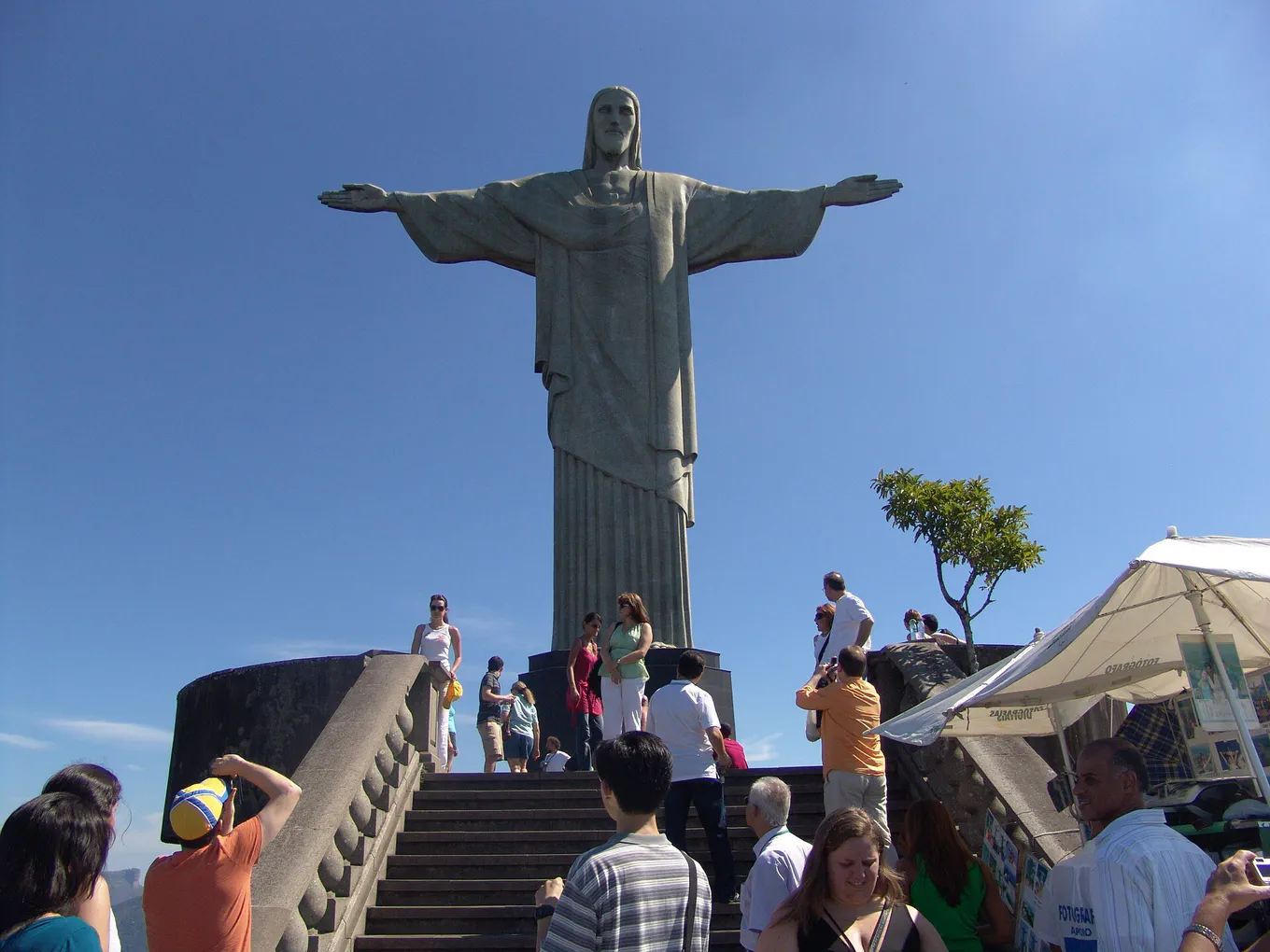
Stand here. The observation deck at the statue’s foot, on Corcovado. A rack railway climbs from Cosme Velho, then 223 steps or lifts.
Visitors on the steps and observation deck at the foot of Christ the Redeemer, on Corcovado in Rio de Janeiro.Ischa1 / Public domain.
Christ the Redeemer, voted one of the New 7 Wonders of the World, began as a priest’s suggestion that went nowhere. In the mid-1850s, Pedro Maria Boss proposed a Christian monument on Corcovado. Decades later, the Catholic Circle of Rio tried again, holding a Monument Week to gather donations and signatures. Nine years of building followed, and in 1931 the statue opened, reinforced concrete faced in soapstone, its arms 28 metres wide. Lightning has struck it since, once knocking a finger off its right hand.
Bond, Jaws, and the Sugarloaf cable car
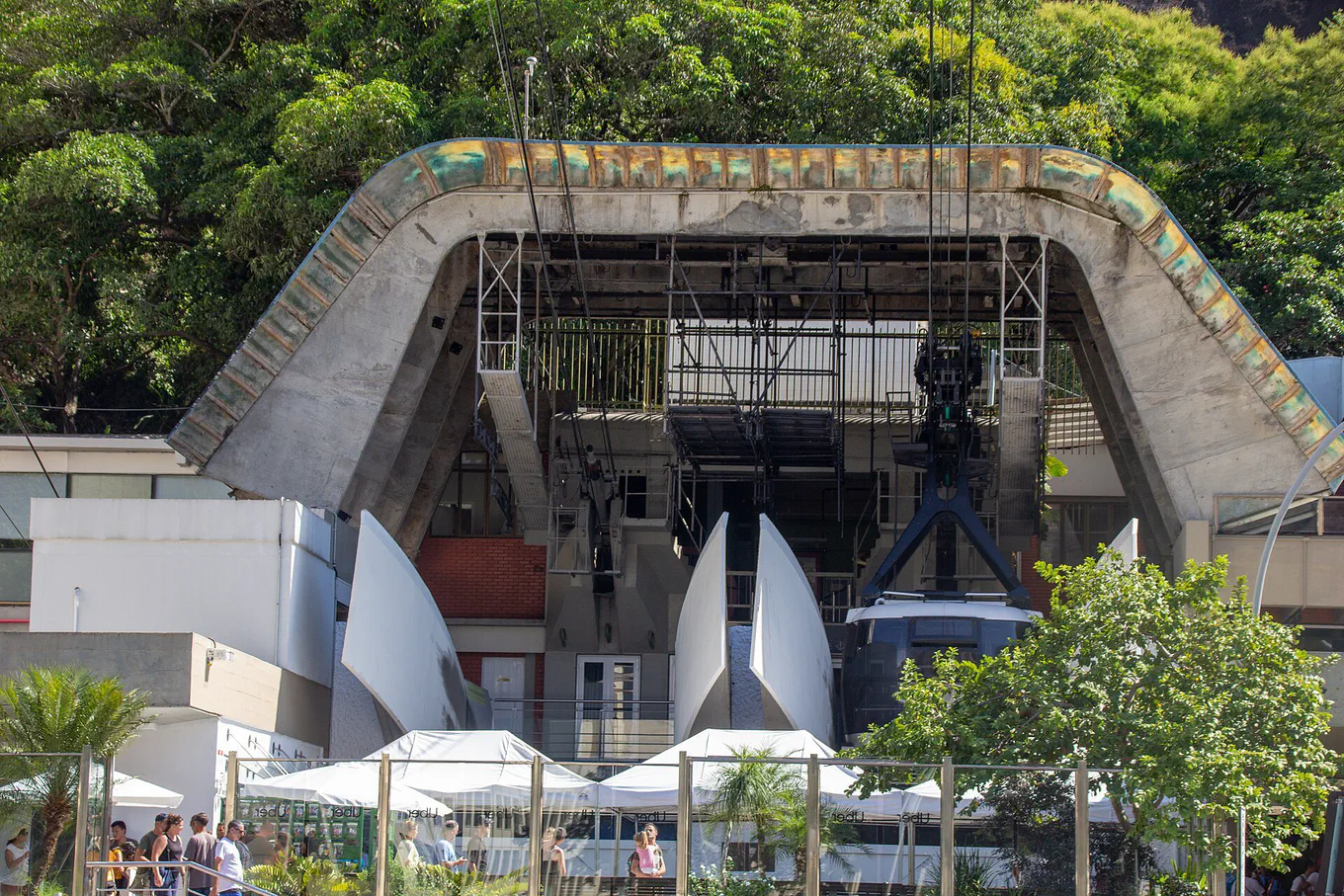
Stand here. The Sugarloaf cable car’s ground station, at the foot of Morro da Babilônia. The line runs via Morro da Urca to the summit.
In Moonraker, the 1979 Bond film, Roger Moore’s James Bond fights off Jaws, the steel-toothed henchman played by Richard Kiel, on the Sugarloaf cable car. Jaws bites into the steel cable. For that shot, the cable was liquorice, though Kiel still had to wear his steel teeth. The danger was real for the stuntman Richard Graydon, who slipped while filming the sequence and narrowly avoided falling to his death. On screen, the car crashes, and a young woman called Dolly rescues Jaws from the wreckage. They fall in love.
Pack nothing. Leave Friday.
Every Friday, I write a free letter, Journey, that takes us on a trip through places, stories, and ideas.
Dom Casmurro(Machado de Assis, 1899). A novel. Its narrator has rebuilt his childhood house from the old Rua de Matacavalos, now Rua do Riachuelo, in Engenho Novo.
City of God(Paulo Lins, 1997). A novel. Three young men and their lives in Cidade de Deus, the favela in western Rio where Lins grew up.
Films to watch before you visit Rio de Janeiro
Black Orpheus(Marcel Camus, 1959). A film. The legend of Orpheus and Eurydice, set in a Rio favela at Carnaval, with long passages filmed in Morro da Babilônia, Leme.
Central Station(Walter Salles, 1998). A film. A retired schoolteacher writes letters for customers who can’t read, at Rio’s Estação Central do Brasil railway station.
City of God(Fernando Meirelles and Kátia Lund, 2002). A film. The rise of organised crime in Cidade de Deus, mostly shot in Cidade Alta, another favela.
Moonraker(Lewis Gilbert, 1979). A film. Roger Moore’s Bond survives attacks by Jaws at Rio Carnival and on the Sugarloaf cable car.
Fast Five(Justin Lin, 2011). A film. Its heist team walks down Copacabana beach, and the Rio unit’s aerial shots take in Sugarloaf, Ipanema, and Christ the Redeemer.
Questions
How do you get up to Christ the Redeemer?
The statue stands on the summit of Corcovado, in the Tijuca Forest national park. You can ride the Corcovado Rack Railway, opened in 1884, 3.8 kilometres up from Cosme Velho, drive the narrow road, or walk the trail from Parque Lage. From the railway and the road, 223 steps, or lifts and escalators, reach the platform at the statue’s foot.
Can you ride the Sugarloaf cable car from Moonraker?
Yes. The cable car opened in 1912, the first in Brazil, and was last rebuilt in 2008. It runs from a station at the foot of Morro da Babilônia to Morro da Urca, then on to the summit, 396 metres above the harbour. In the film, only the cable car interiors were shot at Pinewood.
Was Rio de Janeiro ever the capital of Brazil?
Yes. When the Portuguese court moved to Brazil in 1808, Rio became its seat and the only European capital outside Europe. It was later the capital of republican Brazil, until 1960, when the capital moved to Brasília.