Riyadh is the capital and largest city of Saudi Arabia, and the largest on the Arabian Peninsula, in the eastern part of the Najd plateau. It has been the Saudi capital since 1824. Its stories are the fall of the first Saudi capital, a night raid on a mudbrick fort, forty-seven women at the wheel, a concert hall turned cinema, and a heavyweight’s revenge.
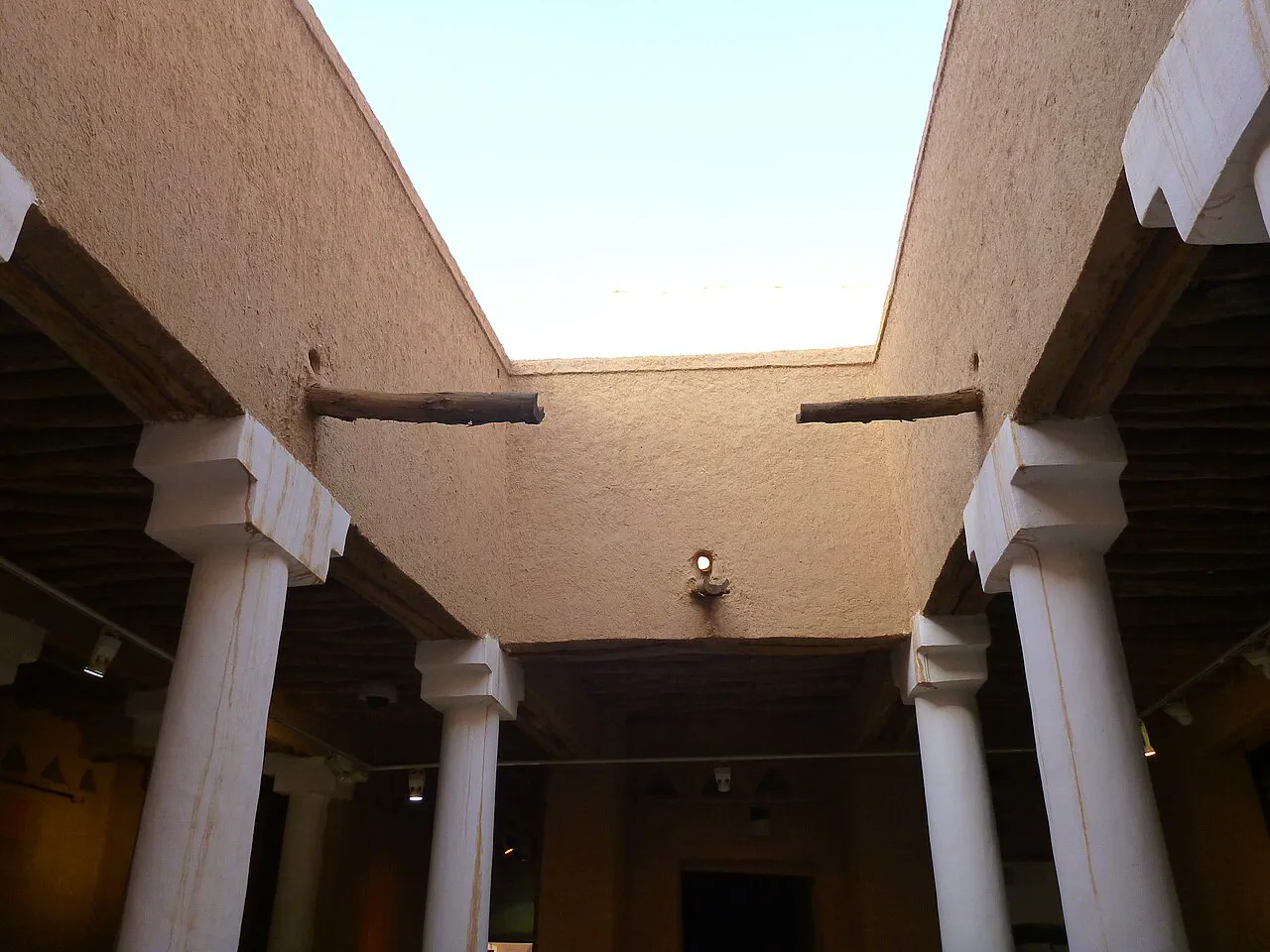
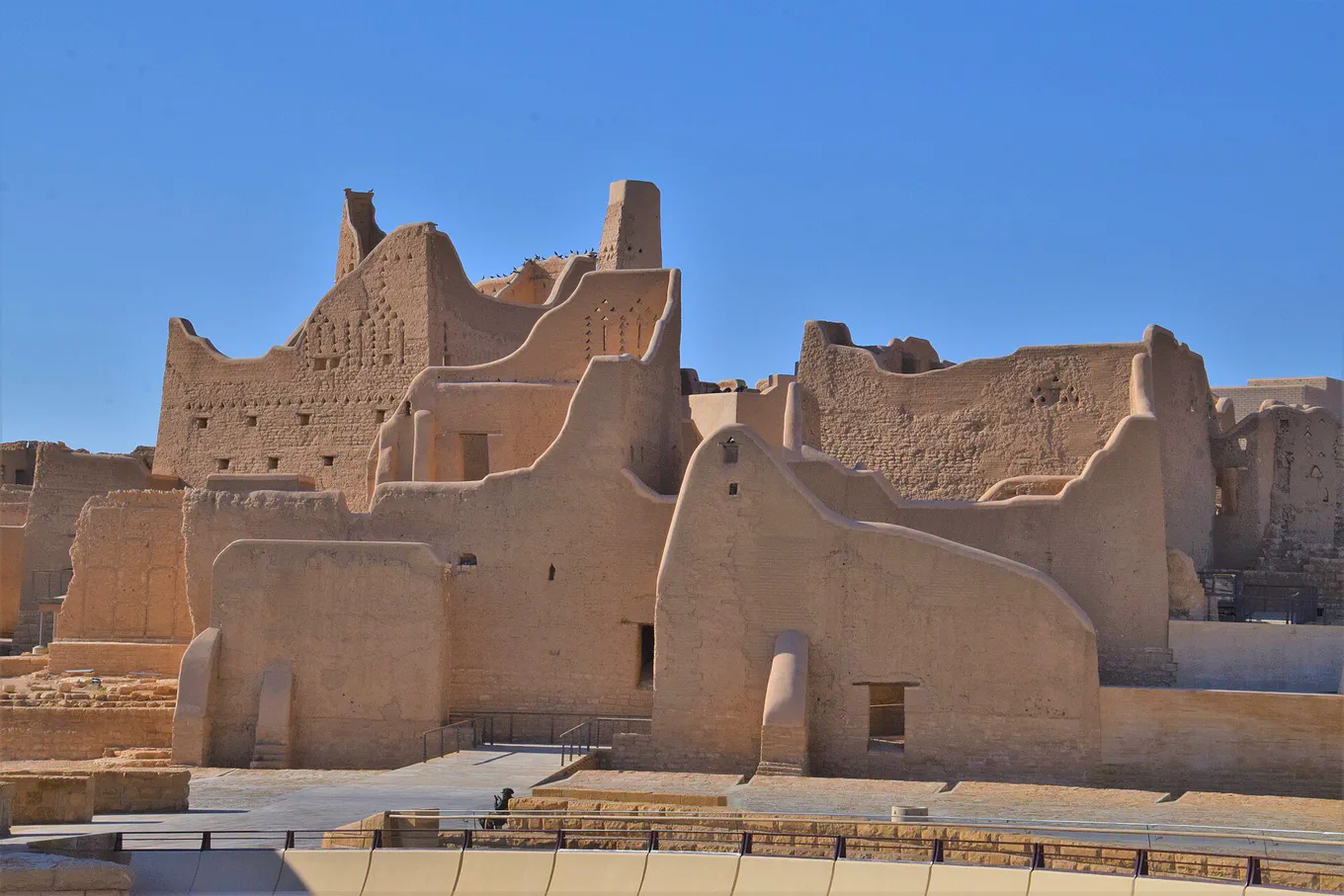
Stand here. Salwa Palace, in At-Turaif, Diriyah, north-west of Riyadh. At-Turaif is a UNESCO World Heritage Site, open to the public since December 2022.
Before Riyadh, the Saudi capital was Diriyah, and the story of its last ruler ends in Constantinople, today’s Istanbul, in front of Hagia Sophia. In 1818, an Ottoman-Egyptian army under Ibrahim Pasha laid siege to the city, and Abdullah bin Saud held out for months before he surrendered. Ibrahim had Diriyah razed, its walls and houses burned to the ground. Abdullah was sent to Constantinople with a recommendation for a pardon. In May 1819, he and two supporters were publicly beheaded in the square before Hagia Sophia.
2 Ibn Saud’s night raid on Masmak Fort
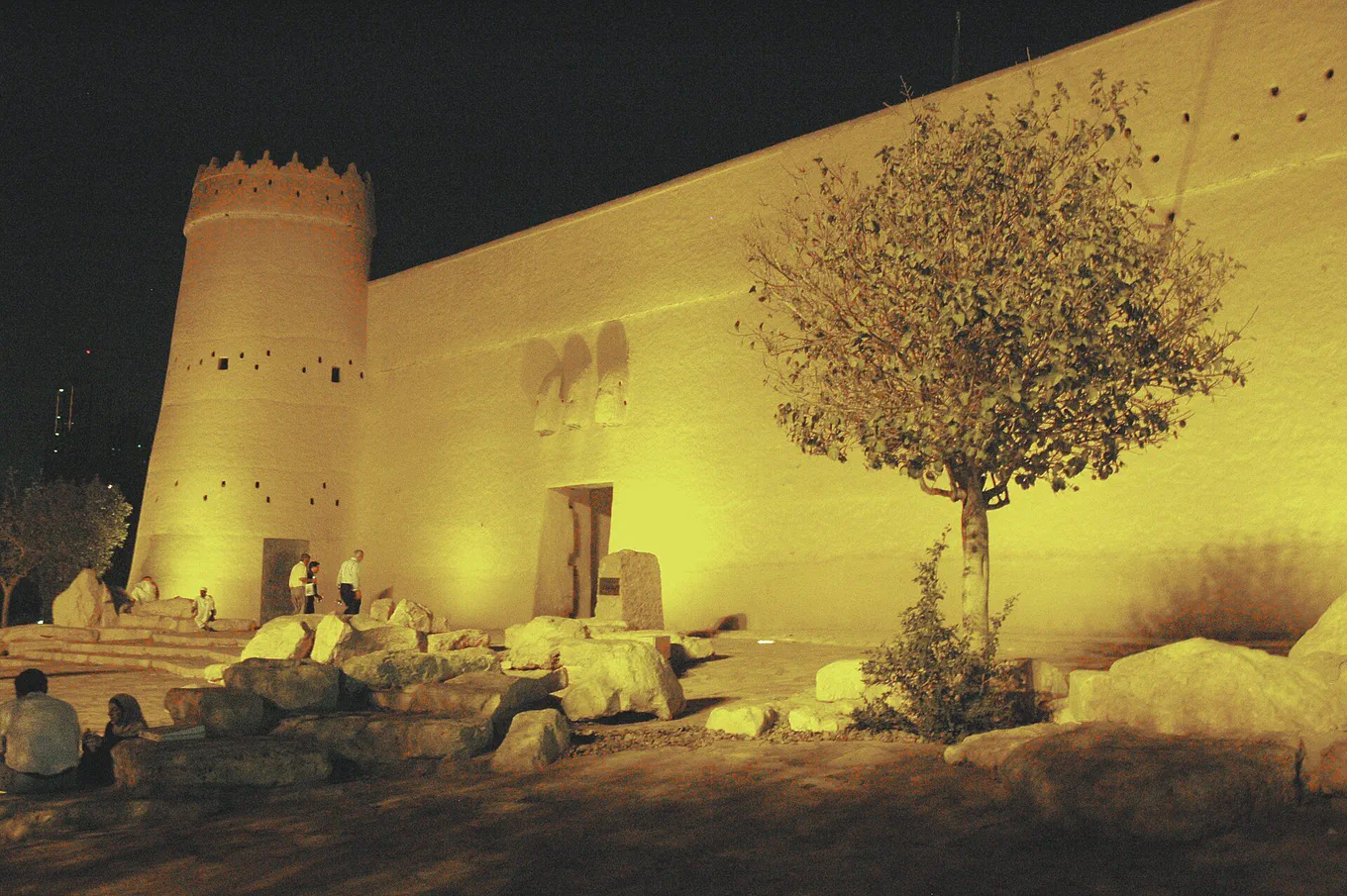
Stand here. Masmak Fort, in the old ad-Dirah district near Deera Square. The clay and mudbrick fort has been a museum since 1995.
Ibn Saud, later the first King of Saudi Arabia, was living in exile in Kuwait in 1902. His family had lost Riyadh to their rivals, the Al Rashid, eleven years before. On the night of 15 January, he led about 40 men over the city walls on tilted palm trees. Ajlan, the Rashidi governor, was killed in front of his own fortress, and his men surrendered. The city was Ibn Saud’s. The tip of a spear from that fight is said to remain in the fort’s gate.
3 The forty-seven women who drove through Riyadh
Stand here. King Abdulaziz Road. The women met in a supermarket car park on this road, though which supermarket hasn’t been traced.
On 6 November 1990, forty-seven women drove through Riyadh in protest at Saudi Arabia’s ban on women driving. It was the Gulf crisis, and they said the ban would leave them helpless if war came. After about 30 minutes, the police stopped them. They were jailed for a day and lost their passports, religious officials called for their beheading, and those who were teachers lost their jobs. Within days, the Interior Ministry made the ban official. It held until 2018.
4Black Panther and Riyadh’s first cinema in 35 years
Stand here. The King Abdullah Financial District, where AMC turned a concert hall into a cinema. Whether it still shows films hasn’t been confirmed.
Saudi Arabia’s first cinema in 35 years opened here on 18 April 2018, with Black Panther. Public screenings had been banned in the 1980s, so there was no cinema to open. The American company AMC hurriedly turned a concert hall, built two years earlier as a symphony hall, into one, and its chief executive, Adam Aron, predicted “the prettiest movie theatre in the world”. On the night, he told the invited crowd it was a historic day for their country. Then men and women sat together to watch the film.
5 Anthony Joshua wins his belts back at Diriyah
Stand here. Diriyah Arena, the 15,000-seat outdoor arena on the outskirts of Riyadh. It has since been renovated and has hosted tennis.
Anthony Joshua, the British heavyweight, had never lost a fight until Andy Ruiz Jr, a late replacement, stopped him in the seventh round at Madison Square Garden. It was one of the biggest upsets in boxing history. The rematch came here. Joshua weighed in lighter than ever, more than three stone lighter than Ruiz, and landed jabs and right hands for twelve rounds to win back his four belts on a unanimous decision. Ruiz admitted that three months of partying had got to him.
Pack nothing. Leave Friday.
Every Friday, I write a free letter, Journey, that takes us on a trip through places, stories, and ideas.
Girls of Riyadh(Rajaa Alsanea, 2005). A novel. Michelle, one of its characters, finds that her western heritage limits her choices in love in Riyadh.
The Heart of Arabia(H. St J. B. Philby, 1922). A history. Its author rode across the Arabian desert on a camel and reached Riyadh on 30 November 1917.
Wolves of the Crescent Moon(Yousef Al-Mohaimeed, 2003). A novel that begins with the Bedouin Turad at the bus station in Riyadh, where he comes across papers documenting the life of someone abandoned at birth.
Films to watch before you visit Riyadh
Wadjda(Haifaa al-Mansour, 2012). A film, the first feature shot entirely in Saudi Arabia. A 10-year-old girl in the suburbs of Riyadh dreams of a green bicycle.
The Kingdom(Peter Berg, 2007). A film. Al-Qaeda terrorists bomb an American oil company’s housing compound in Riyadh.
Mandoob (Night Courier)(Ali Kalthami, 2023). A film, shot over 55 days in Riyadh at the end of 2022.
Questions
Can you visit Masmak Fort in Riyadh?
Yes. Masmak Fort, the clay and mudbrick fort in the old ad-Dirah district close to Deera Square, has been a museum open to the public since 1995. It is where Ibn Saud took back Riyadh in 1902.
What does the name Riyadh mean?
It means “gardens”. Before the city, oasis towns stood here, and orchards of date trees grew outside the walls of the old town. The name comes from them. Riyadh has been the Saudi capital since 1824, when it became the seat of the Second Saudi State.
Why is the Kingdom Centre called the bottle opener, and can you go up it?
Because the opening at the top of the 302-metre tower, an upside-down arch, looks like a bottle opener. Yes, you can go up. Two lifts carry visitors to a public skybridge on top of the arch.