The vanishing art of being somewhere
The Atlantic, the Canaries, the Bahamas, Machu Picchu, Salzburg, the Seychelles, Fez and Istanbul.
Let’s start with a story.
One afternoon in November 1992, in the middle of an endless open sea, a whale came up out of the water on the starboard side of a tiny yacht.
We were a 10m dot on the Atlantic Ocean, a few days into our six-week trip between the Canaries and the Bahamas. There were three of us aboard, and if we needed any reminder that we were visitors to a wild place, the sound of that huge creature crashing back into the water was it.
My instinct, immediate and powerful, was to go below and get my camera.
Thankfully, the skipper — Charlie — was older and wiser than me. I can’t remember his exact words, but the gist was to forget the photograph. The whale might well be gone by the time I got back.
Be present.
So I stayed. And because I stayed, I saw it rise out of the water a second glorious time.
Then it was gone.
I saw dolphins and sharks later on that crossing, but I think it was the only whale I ever saw. I have no photograph of it. What I have is an overwhelming sense of wonder at how small we were on that vast ocean… and a lesson.
The lesson I took was that just because you have a photograph doesn’t mean you were present. In fact, focusing on the photograph can stop you from being present.
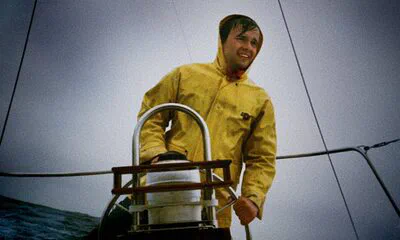
I’d like to say I learned that lesson at sea and never forgot it, but that would be wrong. The older I get, the clearer it is that some lessons have to be learned over and over.
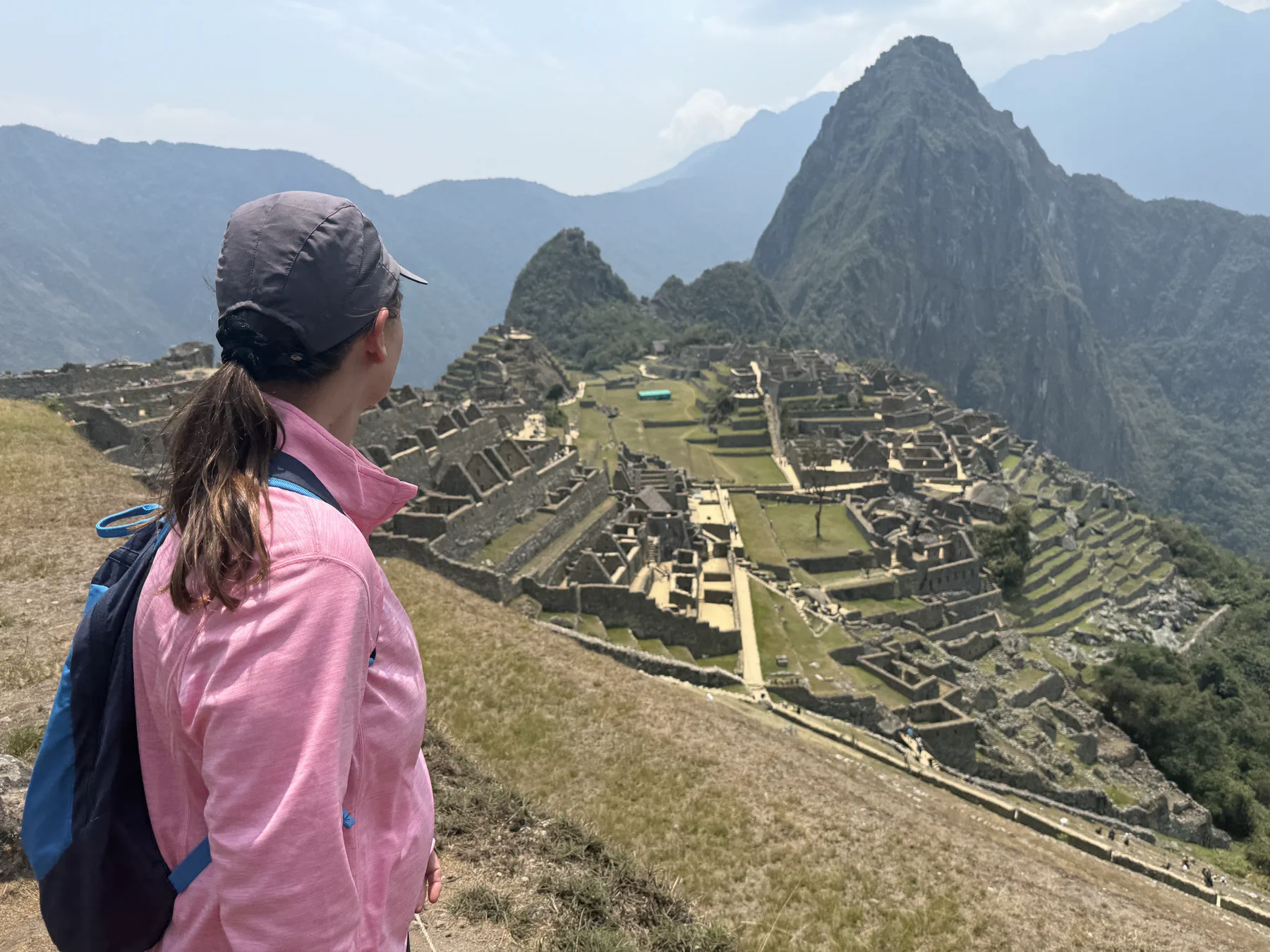
In 2024, my wife Wendy and I went to Machu Picchu. Early in the tour, we came to the spot where everyone takes the photograph you’d all recognise — smiling faces in front of that amazing city in the mountains, with no one else in the picture.
Behold, that picture says, we have travelled far to this wondrous, spiritual place.
Machu Picchu is wonderful. It is spiritual. But there’s a queue for that photo.
It’s not an organised queue, but visitors naturally gravitate to a place like that, and a line forms on its own. Everyone wants the shot, so effectively we queued to get a photograph in which it looked like we were all alone.
I was very goal-oriented in that queue. I wanted the photograph so much that I was prepared to spend my time waiting for it, despite the amazing place I was in. I was at Machu Picchu, waiting for my turn at Machu Picchu.
The philosopher Kieran Setiya has a pair of words for this, telic and atelic. A telic activity has an end point built in, and once you reach it, it’s finished. An atelic activity has no end point. You can’t complete it. You can only stop. When you’re doing something atelic, he says, you aren’t on the way to your goal. You’re already there.
Getting a photograph is telic. Once you have it, you’re done. Being there is atelic.
Fortunately, we had plenty of time to explore Machu Picchu, to sit and look and experience being in that place. But I was forced to wonder whether, had time been shorter, I would have sacrificed the real experience for the photograph.
And I’m not alone. The wonderful places of the world are filled with people looking at or through their phones. I am them. Even now, when I look at a place, part of me is thinking, “That would be a good photograph. That would show my friends I’ve had a great time.”
But here’s the obvious thing.
Other people can take better photographs of whales and Machu Picchu than I can. So the photograph isn’t really about the place. It’s a kind of currency. It lets us prove our worth, and prove how good our lives are.
I’m never going to stop taking photos, but there’s a danger in it, because it’s too easy for the photo to become the only thing. And when that happens, travel stops being the real experience, and becomes the telic checklist.
Click…
Next.
Click…
Next.
Click…
Next.
Of course, the world is never this black and white. You can’t be somewhere without experiencing it on some level, but I do see fellow travellers who spend more time choosing filters than looking at the thing they photographed.
And I feel the pull of that siren song.
The danger, of course, is that focusing on the photo makes me more likely to miss the experience of the thing itself.
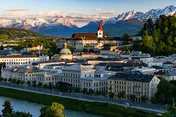
In September 2026, Wendy and I spent a few days in Salzburg. On day three, we walked the Mönchsberg, a dramatic wooded ridge that towers over the city. It was a beautiful escape from the crowds, with gorgeous views. I took photographs, because I always do, but we made the decision to stop and just look.
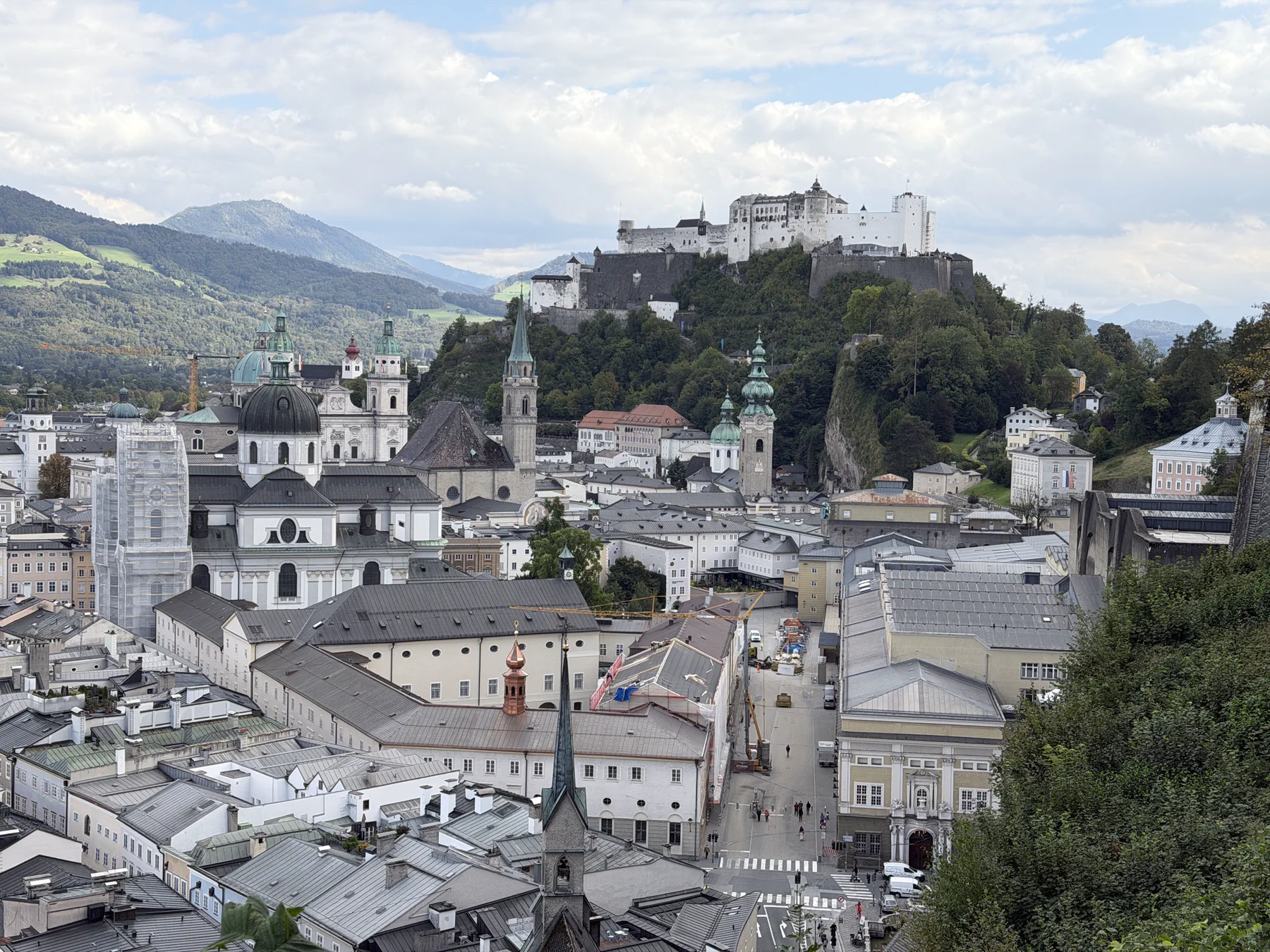
When I say looking, though, I really mean being.
Although we are overwhelmingly visual creatures, being is more than just looking. I don’t mean that in a spiritual or New Age way, although the Mönchsberg does have a Buddhist enlightenment stupa. I just mean that when we take time to stop, we get more.
And isn’t this the reason why we want to explore?
Up high that day, there was a lovely sense of things pulling together. We could see how the different parts of the city connected, how the old town runs into the newer old town and then into the rest of the city, how the roads flow and the traffic flows. We could see (and sometimes hear) the tiny people going about their lives as the castle loomed over it all.
It’s a skyline that probably hasn’t changed much in hundreds of years, and it’s special to know that generations of people have sat where we sat, and done the same. They didn’t have phones to distract them, but otherwise they weren’t that different from us. They wanted a walk in nature and some time away from the noise.
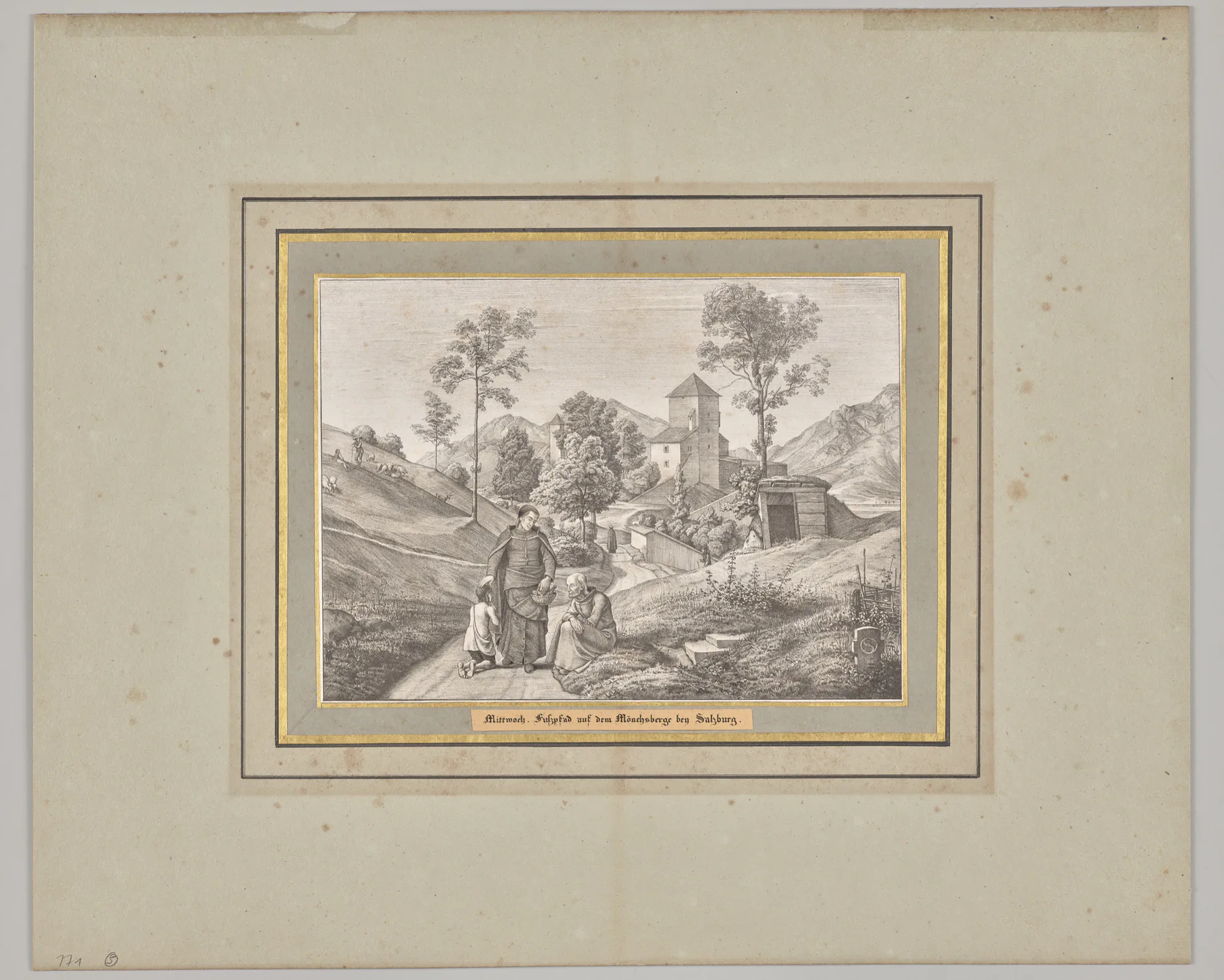
Afterwards, I came across the work of one of those people who walked the Mönchsberg. Ferdinand Olivier was a German painter who came to Salzburg more than two hundred years ago. From his sketches, he made a set of prints of the city and the country around it, one for each day of the week. Wednesday is the footpath on the Mönchsberg.
It isn’t the famous view. It’s a path over the hill, with a man in a long robe carrying a basket, a boy kneeling in front of him, an old man resting on the bank, a shepherd with his sheep on the slope behind, and a tower among the trees. Normal people. Everyday lives. Doing what we’d do two centuries later (sheep excluded).
If Travelling Tales is about anything other than a mild mid-life crisis, it’s this idea… that being somewhere is not the same as being photographed there. At least, not for those of us who want to be explorers.
We want the photographs, but we also want the stories, the sounds, the smells, and the feel of the place around us.
And that requires — no, demands — stopping and doing nothing for a while.
Back on that yacht in 1992, I spent a lot of time doing nothing. The yacht was pretty small for a transatlantic trip. Small yachts have small masts, which means small sails, which means lower speeds. The transatlantic part of the trip took six weeks, and there was often nothing to do but look at the (empty) ocean.
No phones. No internet. And my Walkman’s batteries gave out way too soon.
It was so different from the coastal sailing I’d done, which was all tides, tacking, and looking out for landmarks and other boats.
On the Atlantic, a lot of that went away. We could go for days without changing the sails, because the wind was the same, the sea was the same, and the weather was basically the same.
You’re just waiting.
I used to imagine a mythical remote control that could let me fast-forward through the dull bits of my life to get to the good stuff. No more waiting for the wind to change, or the kettle to boil, or the date with that girl you can’t believe said yes.
Wouldn’t that be awesome?
No, it wouldn’t. Dumb and young as I was when I first had that idea, I was smart enough to realise that if such a magical remote existed, my life would become incredibly short.
The high points make up such a small part of our lives unless we take the time to be present. Unless we embrace the waiting and turn it into being.
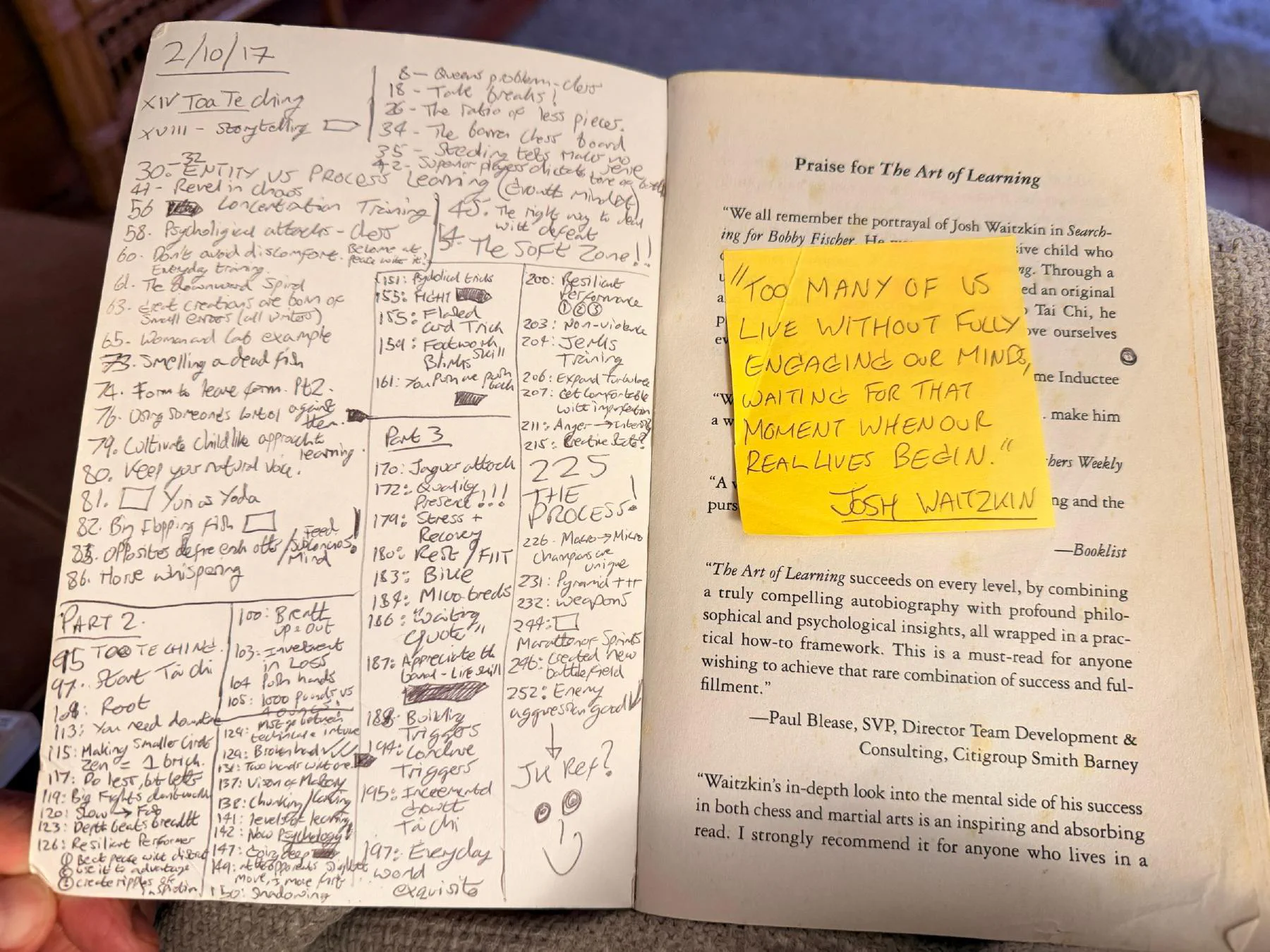
Decades later, I found the same thought in Josh Waitzkin’s book The Art of Learning. We have to love waiting, he says, because “waiting is not waiting, it is life.” I underlined it. The sentence after it, about how many of us live waiting for the moment our real lives begin, is on a yellow sticky note inside the front cover of my copy.
To be clear, the idea that we should be present in our lives is the exact opposite of a new idea, but it feels more urgent now because the remote control exists… It’s just shaped like a mobile phone.
I sometimes wonder what would have happened if I’d had a mobile on that trip, along with satellite internet. I know for sure that I’d be able to show you a photo of the whale… because the phone would have been in my pocket if not in my hand.
I might also be able to show you images of the huge storm that hit us mid-Atlantic, or the silky sunrise after it calmed, or the running lights of the Russian freighter (which was the only other vessel we ever came within hailing distance of).
I could show you those photos, but I’m pretty sure my memories would only be those photos and videos.
Instead, I remember the terrifying wind and the horizontal rain and the straining ropes on the mainsail as the storm howled and ebbed and howled and ebbed. And I remember witnessing that singular, spiritual sunrise, while the others slept below. And I remember the voice of the Russian sailor over the radio… both of us happy to share a little of our lives during the long watch of the night.
I was there. I experienced those things. They are part of me in a way that a photograph could never capture.
For me, the fundamental value of travel is that I am somewhere else, and to get the most from that, I need to really be there.
My goal now, when I see something wonderful, is to take a couple of photos immediately, then put my phone away. If I’m lucky, that quiets that nagging voice long enough for me to really take in the place.
Stop. Wait. And let any sense of discomfort (or, God help me, boredom) show itself for what it is.
Temporary.
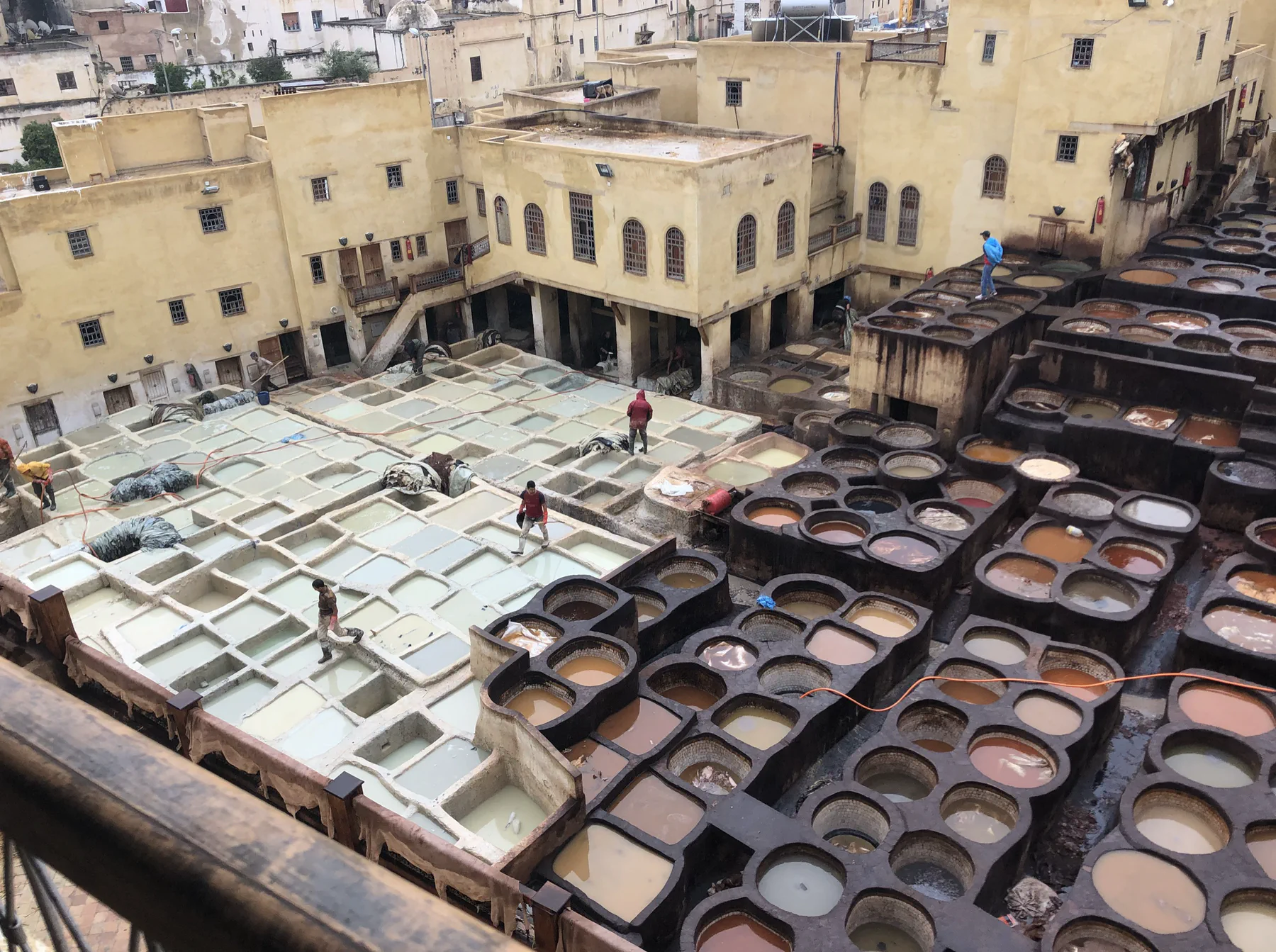
When I do that, I’m using more than my sight. I’m listening. I’m feeling things. Very often I’m smelling different things. (Right now, as I write about smells, I’m thinking of the spice market in the Seychelles in 1990, or the tanneries in Fez in 2018.)
What I’m really doing, though, is noticing the things that I’ll never be able to photograph, and following those threads. Here are three simple examples.
- The gap-toothed smile of joy on the face of the Turkish bath attendant in Istanbul, when I tipped him (despite feeling like he’d beaten me to a pulp).
- The otherworldly silence of the big-bellied bus driver in Mahé who sat serenely above the jostling crowds. (He looked like a god among mortals.)
- The taste of the Piña Colada I had as a “wake-up” drink on Boxing Day, 1992, as we prepared to join a Junkanoo parade.
None of these memories can hold a candle to a photograph in terms of visual detail, but they are visceral in a way that photos never are. I can feel them because I was present for them.
Would I have still drunk that Piña Colada if I’d had a phone in my pocket? Yes, no doubt. But I also know that my memory today would be dominated by the photo I would inevitably have taken of it.
I’m not against photos. I take a ton of them. But I try hard to remember the lesson from the yacht.
The whale was there for 20 seconds, then it was gone.
Sources
- Josh Waitzkin, The Art of Learning (2007), pp. 186–187.
- Kieran Setiya, “The Midlife Crisis”, Philosophers’ Imprint 14(31), 2014.
- Ferdinand Olivier, Seven Areas from Salzburg and Berchtesgaden, Arranged According to the Seven Days of the Week, lithographs, 1818–23. The Cleveland Museum of Art, 2023.52.