In January 2010, while waiting at the airport for a flight to Rome, I bought my first book on Kindle. It was Stephen King’s “Under the Dome.” I’d left my hardback copy at home because it was a monster with no business being anywhere near my lean travel backpack. And yet, I mourned its loss. I briefly considered buying one of the “travel-friendly” paperback airport copies, but they were still big enough to stop a rhino. Then I remembered my phone. The book downloaded in 17 seconds.
— Nick
On the Tiber, in the central-western part of the peninsula, Rome has been Italy’s capital since 1871; it is also the country’s largest city and the administrative centre of the Lazio region. Its historic centre is a UNESCO World Heritage Site. Caesar’s murder and Galileo’s forced recantation lead the list, with Keats’s last rooms and two film shoots, at the Mouth of Truth and in the Trevi Fountain.
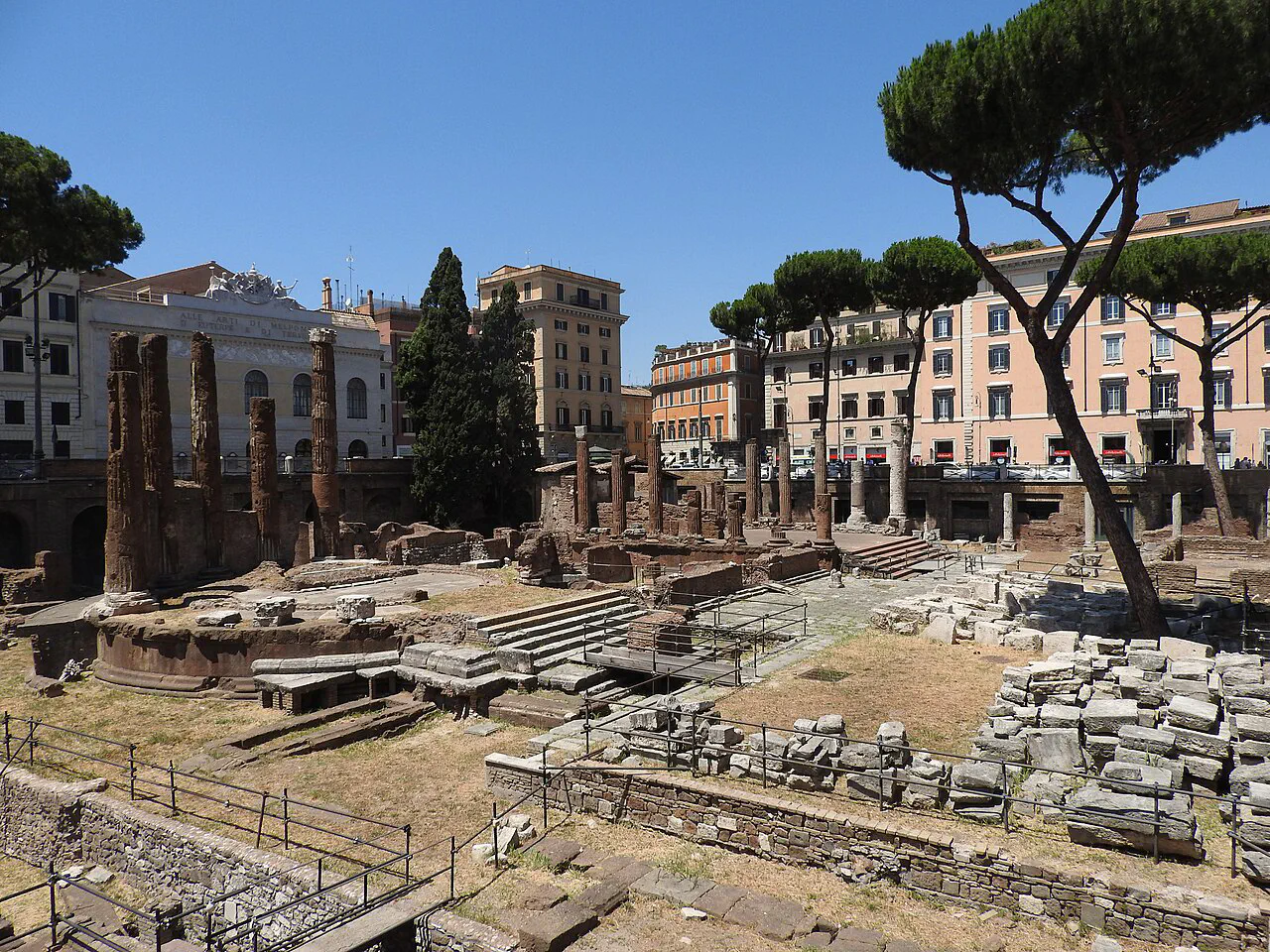
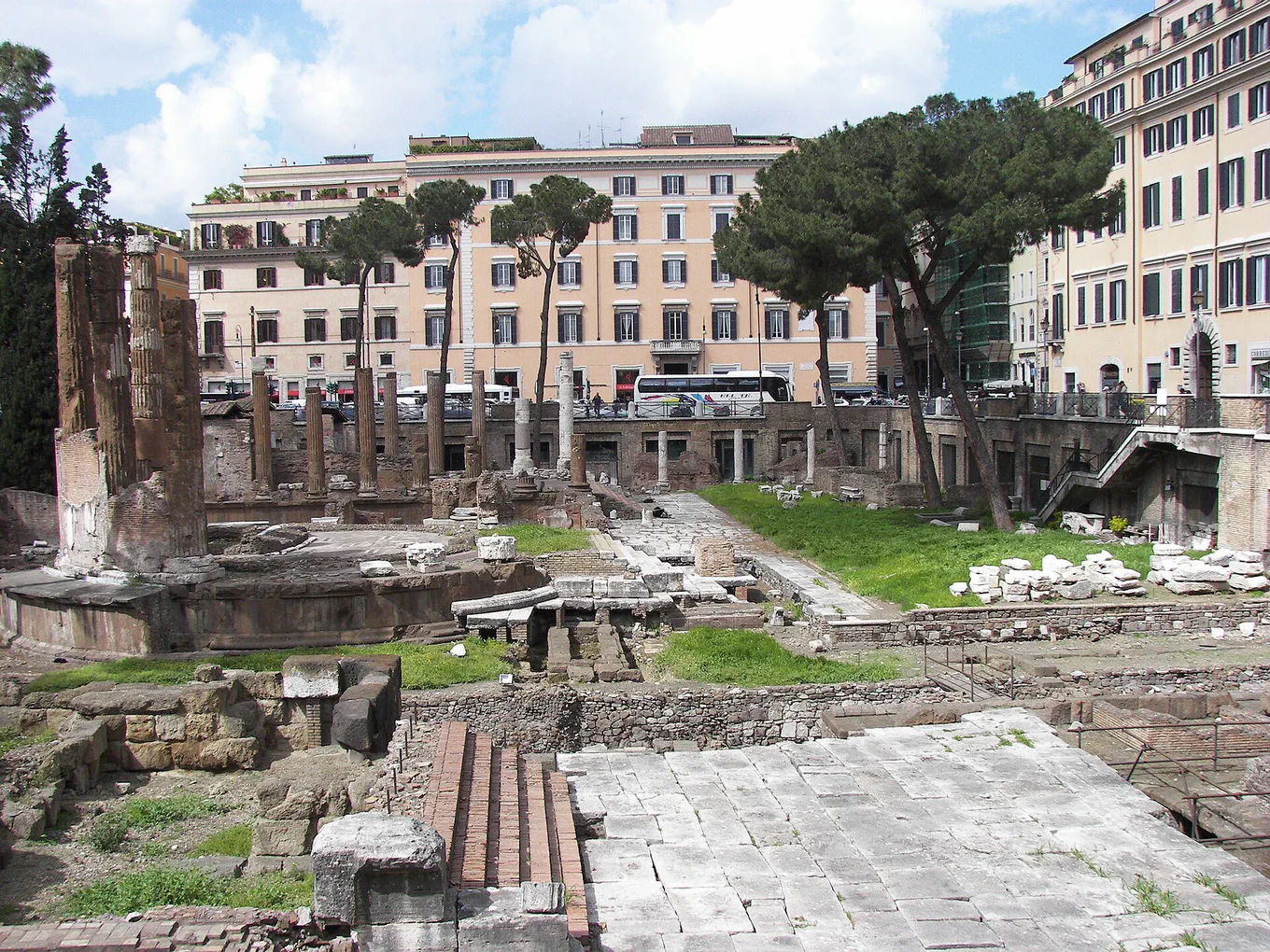
1 Julius Caesar and the Ides of March at Largo Argentina
Stand here. Largo di Torre Argentina, among four Republican temples. Only the back wall of the Curia of Pompey survives, and walkways let visitors walk around the site.
On the Ides of March, 44 BC, Julius Caesar nearly stayed at home. A seer had warned him of danger, and his wife, Calpurnia, had dreamt of his death. But one of the plotters came and asked if he would trust a woman’s dreams. At the Senate, in the Curia of Pompey, senators stabbed him 23 times. Among them was Brutus, a friend he had pardoned. Shakespeare gave Caesar “Et tu, Brute?” Plutarch says that when he saw Brutus, he said nothing, and pulled his toga over his head.
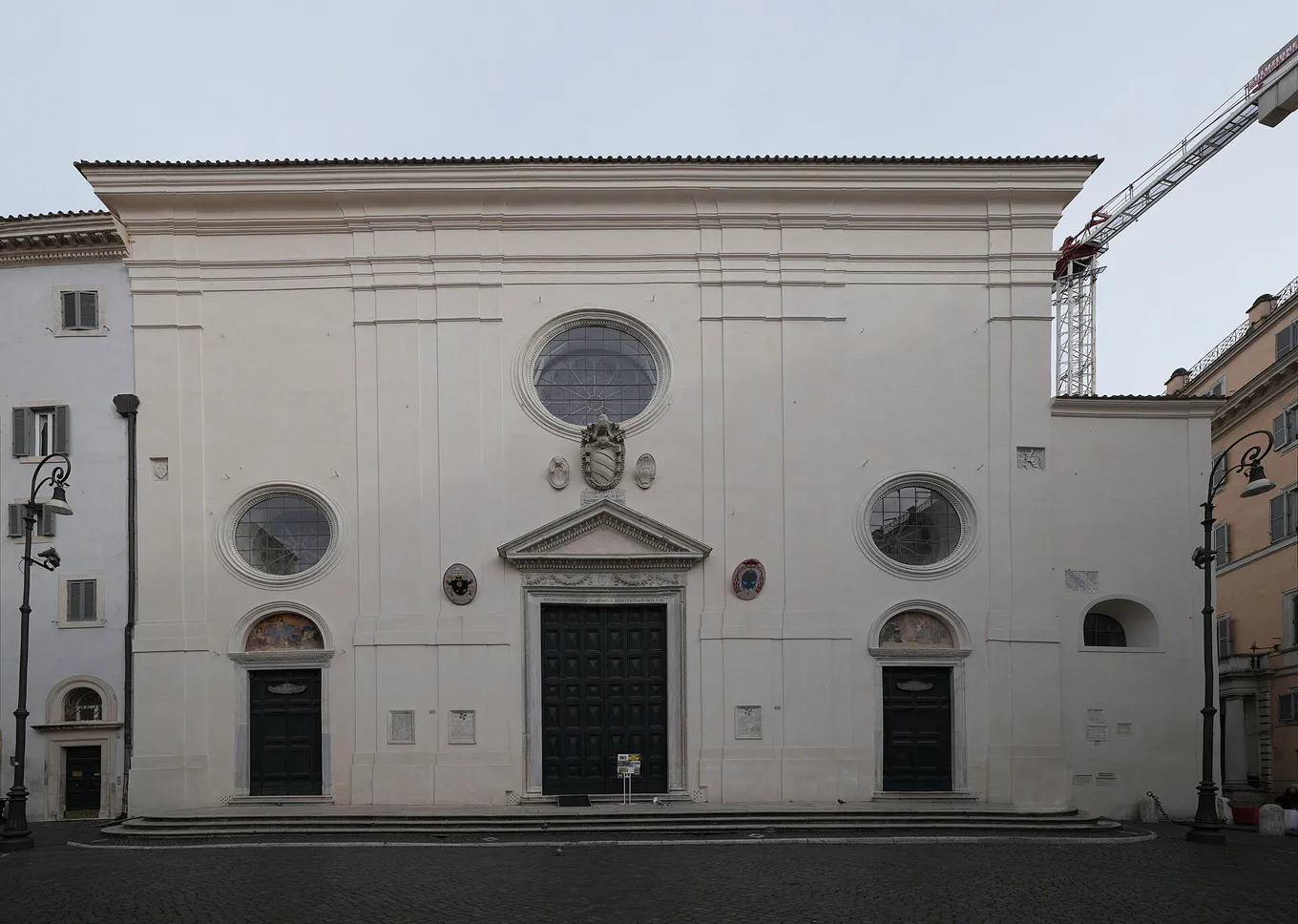
2 Galileo’s recantation at Santa Maria sopra Minerva
Stand here. Santa Maria sopra Minerva, one block east of the Pantheon. Rome’s only original Gothic church, with Michelangelo’s statue Cristo della Minerva inside.
Galileo Galilei wrote a book arguing that the Earth goes round the Sun. He had been required to include the arguments of Pope Urban VIII, once his friend. Galileo did, but he put them in the mouth of the book’s simpleton, Simplicio, and the pope took great offence. On 22 June 1633, the Inquisition made Galileo renounce his theory in a room of the Minerva convent. He lived out his days under house arrest near Florence. The famous “And yet it moves” was probably put in his mouth later.
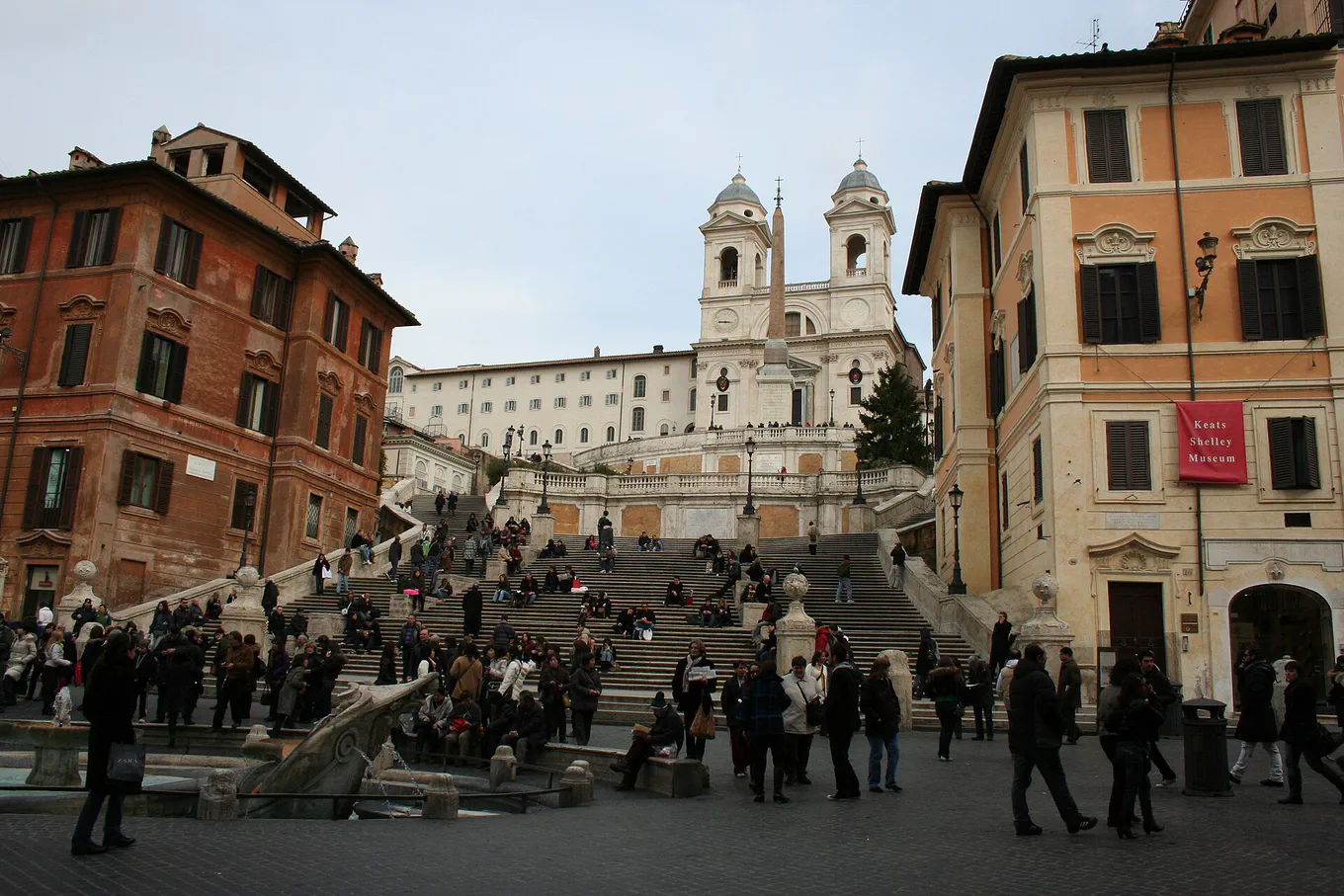
3 John Keats’s last rooms beside the Spanish Steps
Stand here. Piazza di Spagna 26, just south of the foot of the Spanish Steps. The second-floor apartment is now the Keats–Shelley House museum.
The poet John Keats had tuberculosis in 1820, and his doctors advised a warmer climate. He set out for Rome knowing he would probably never see Fanny Brawne, the woman he loved, again. After he left, he felt unable to write to her or read her letters. By the time he reached Rome in November, any hope of warmth had gone. Three months later, he died in these rooms, aged 25. He asked for a gravestone with no name, only “Here lies One whose Name was writ in Water.”
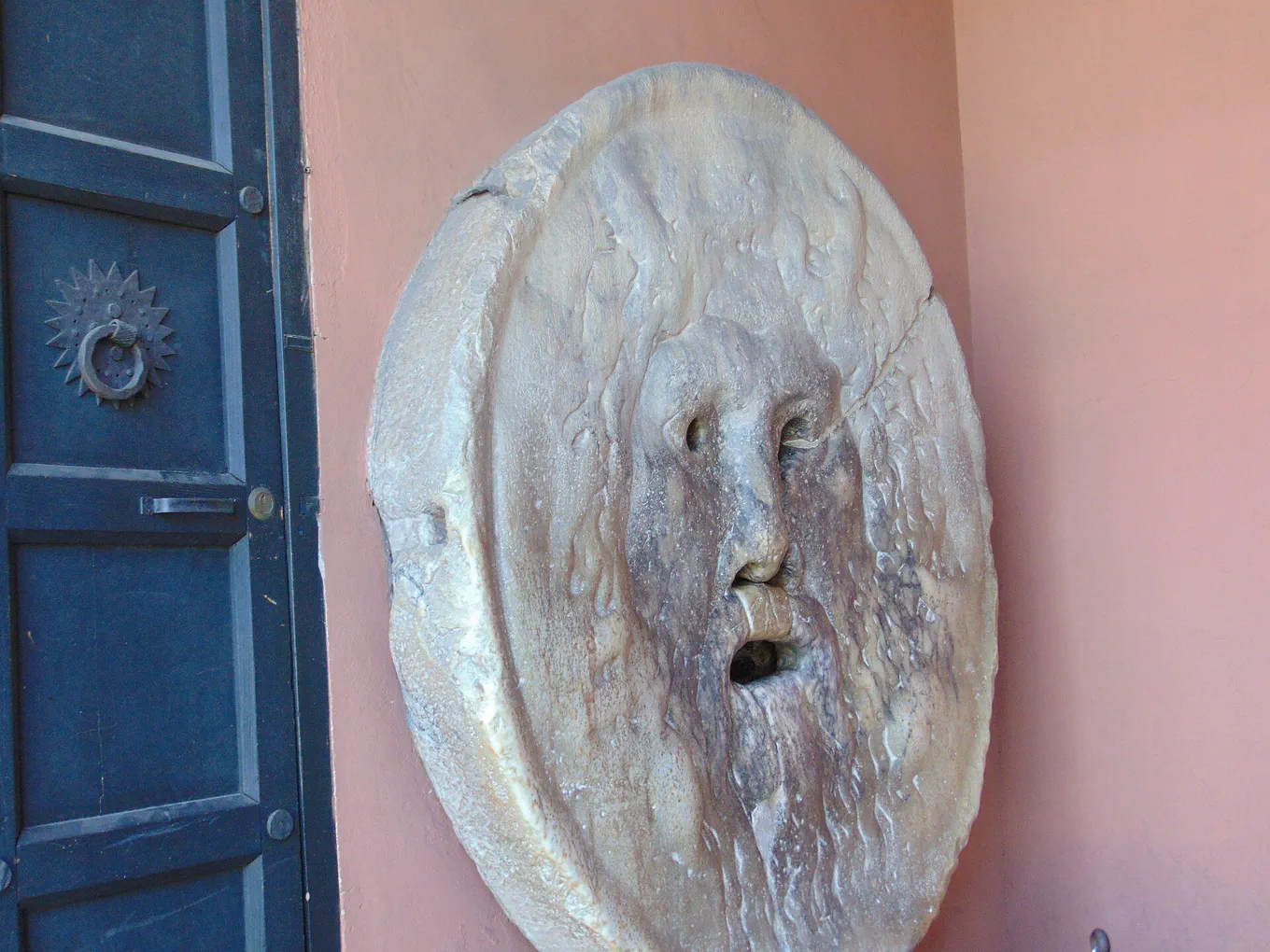
4 Gregory Peck’s hand trick at Rome’s Mouth of Truth
Stand here. The Bocca della Verità, or Mouth of Truth, an ancient marble mask in the portico of Santa Maria in Cosmedin.
Roman Holiday, released in 1953, sends Gregory Peck’s reporter and Audrey Hepburn’s princess to this mask, which by medieval legend bites off the hand of any liar. It was Hepburn’s first major film role, and the director, William Wyler, wanted her spontaneous reactions. The script had Peck simply pretend he couldn’t pull his hand free. But Peck hid it up his jacket sleeve without warning her, so the mask seemed to have eaten it. Her horror was genuine. For once, Wyler got the scene in one take.
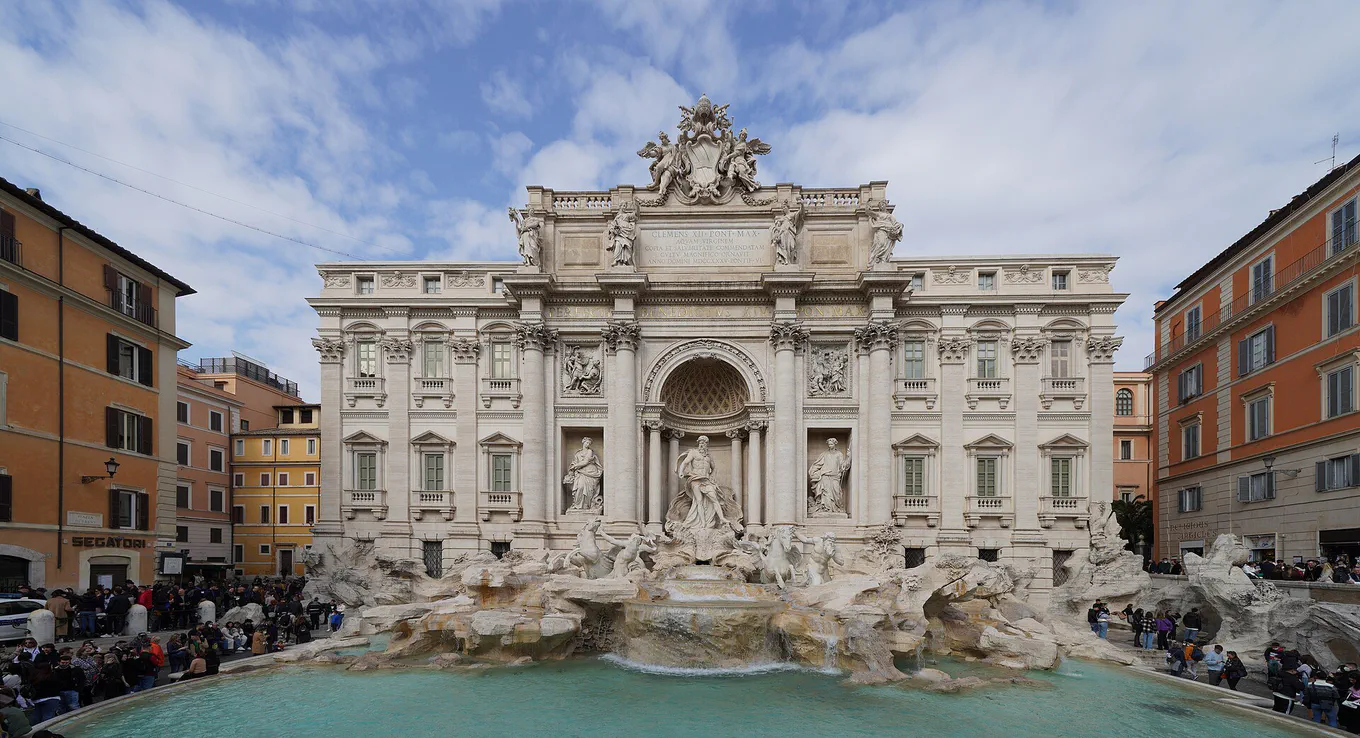
Anita Ekberg wades into the Trevi Fountain with Marcello Mastroianni in Federico Fellini’s La Dolce Vita. The scene was shot over a week in winter. Fellini claimed Ekberg stood in the cold water for hours without trouble, while Mastroianni wore a wetsuit under his clothes, to no avail. Only after Mastroianni polished off a bottle of vodka could Fellini shoot it. Ekberg said she had to be lifted out, unable to feel her legs. When Mastroianni died in 1996, the fountain was turned off and covered in black.
Pack nothing. Leave Friday.
Every Friday, I write a free letter, Journey, that takes us on a trip through places, stories, and ideas.
Daisy Miller(Henry James, 1878). A novella. One night, Winterbourne walks through the Colosseum and sees a young couple sitting at its centre.
Roman Fever(Edith Wharton, 1934). A short story. Set at a restaurant overlooking the Forum, it turns on a letter inviting Grace to a rendezvous at the Colosseum.
Films to watch before you visit Rome
Roman Holiday(William Wyler, 1953). A film. A reporter shows a princess Rome, including the Mouth of Truth at Santa Maria in Cosmedin.
La Dolce Vita(Federico Fellini, 1960). A film. Marcello Mastroianni plays a tabloid journalist across seven days and nights, and wades into the Trevi Fountain with Anita Ekberg.
Bicycle Thieves(Vittorio De Sica, 1948). A film. At the Porta Portese market, Antonio and Bruno spot a man Antonio believes is the thief.
Rome, Open City(Roberto Rossellini, 1945). A film. Its most famous sequence, a raid, centres on number 17 Via Raimondo Montecuccoli, the outside of Pina and Francesco’s flat.
The Great Beauty(Paolo Sorrentino, 2013). A film. Jep Gambardella’s loft overlooks the Colosseum from Piazza del Colosseo, at the corner of Via Capo d’Africa.
The Talented Mr. Ripley(Anthony Minghella, 1999). A film. Its Rome locations include Piazza Navona and the Spanish Steps, beside the house where Keats died.
Questions
Where was Julius Caesar killed, and can you visit the spot?
In the Curia of Pompey, whose remains lie in Largo di Torre Argentina, an open square with four Republican temples in the ancient Campus Martius. Only the curia’s back wall survives. Walkways opened in 2023 let visitors walk around the site. A cat sanctuary, founded in 1993, occupies one of the temples.
What happens to the coins thrown into the Trevi Fountain?
Tradition says that throwing a coin into the fountain before you leave Rome will help bring you back. An estimated 3,000 euros go in every day, and the money is donated to the Caritas association, which uses it for charity work.
Why is Rome called the Eternal City?
The Roman poet Tibullus first called it the Eternal City, Urbs Aeterna, in the 1st century BC, and Ovid, Virgil, and Livy took up the phrase. Roman tradition dates the city’s founding by Romulus to 21 April 753 BC.