One of our dear neighbours died in 2025, aged 90. She’d been to over 100 countries in her life, and the last one was Russia… a trip to St Petersburg in her late eighties, wheelchair in tow. (What an example.)
— Nick
Saint Petersburg sits on the Neva at the head of the Gulf of Finland, in Russia, where Peter the Great founded it in 1703. It was the capital until 1918, and Leningrad from 1924 to 1991. Its stories here are a fictional murderer’s walk, Rasputin’s murder in a palace cellar, a sculptor forced out before his statue’s unveiling, a symphony played under siege, and a poem promised to a stranger.
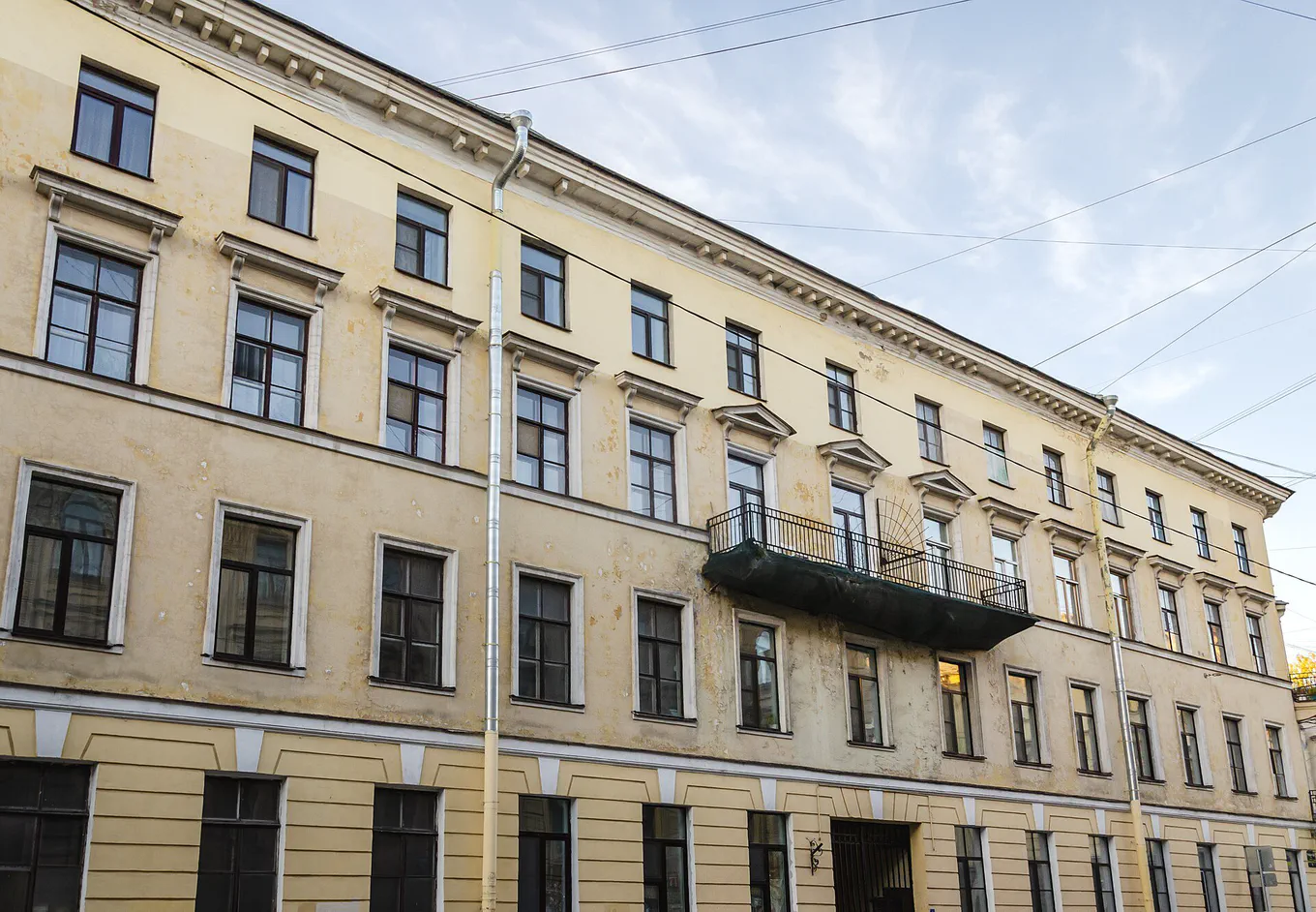
1 Raskolnikov’s house on Stolyarny Lane, from Crime and Punishment
Stand here. Number 19 Grazhdanskaya Street, a residential building at the corner of Stolyarny Lane. A bronze and granite relief from 1999 names it “Raskolnikov’s House”.
In Crime and Punishment, Dostoevsky’s novel of 1866, Raskolnikov, a penniless former law student, lives on this corner in a tiny room under the roof. He plans to kill an old pawnbroker who hoards money. He steals an axe and kills her in her flat, but her half-sister Lizaveta walks in, and he kills her too. By sheer luck, he gets home unseen. The novel counts exactly 730 steps from his home to hers. Many people, actors among them, have tried that walk. Nobody has managed it in 730.
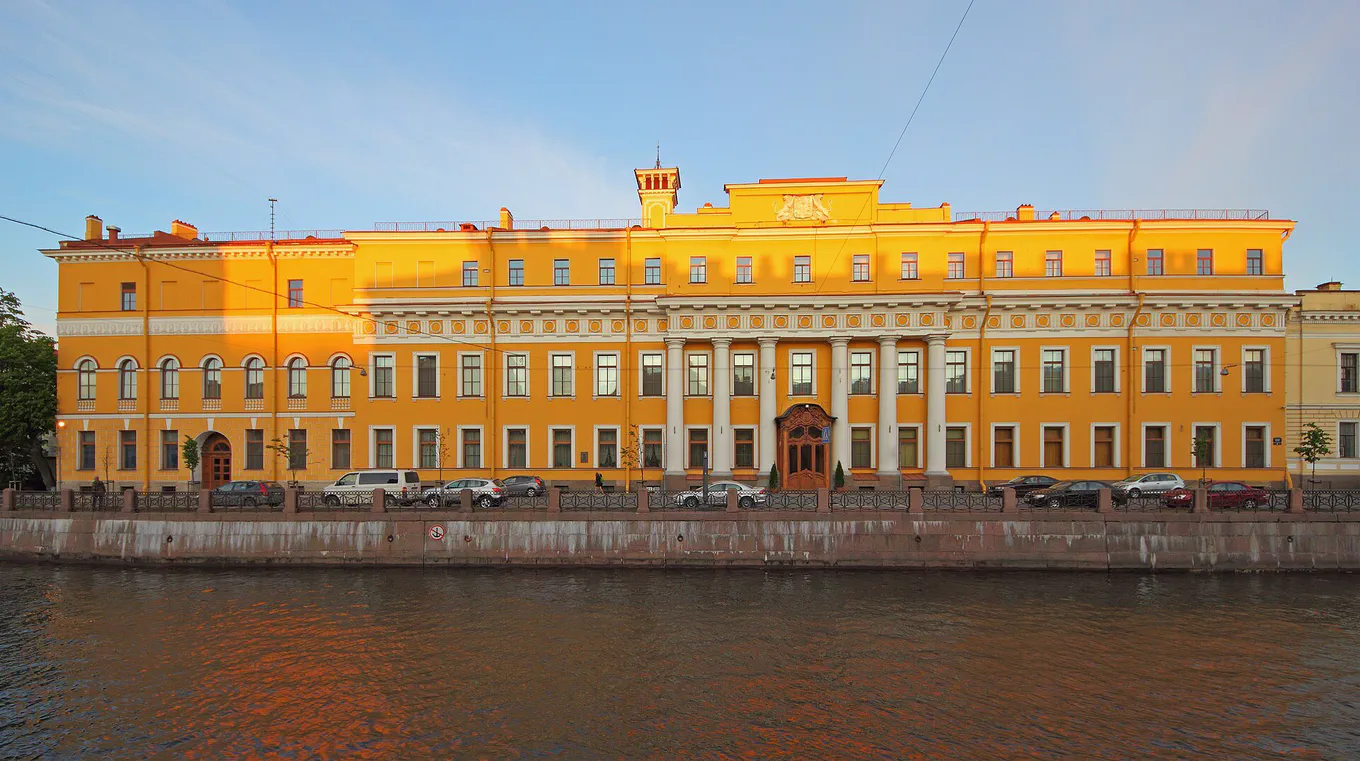
2 Rasputin’s murder in the cellar of the Moika Palace
Stand here. The Yusupov Palace, at Moika Embankment 94. The rooms tied to the murder are a museum, and the courtyard is a kindergarten playground.
Grigori Rasputin, a peasant faith healer from Siberia, won the trust of Nicholas II’s family, who believed he eased their son’s bleeding from haemophilia. In December 1916, a group of nobles including Felix Yusupov got him here. By Yusupov’s own account, Rasputin ate cakes laced with cyanide in the cellar, then drank three glasses of poisoned Madeira, with no sign of distress. Shot in the chest, he leapt up and attacked Yusupov, then followed him into the courtyard, where another conspirator shot him. The autopsy found no trace of poison.
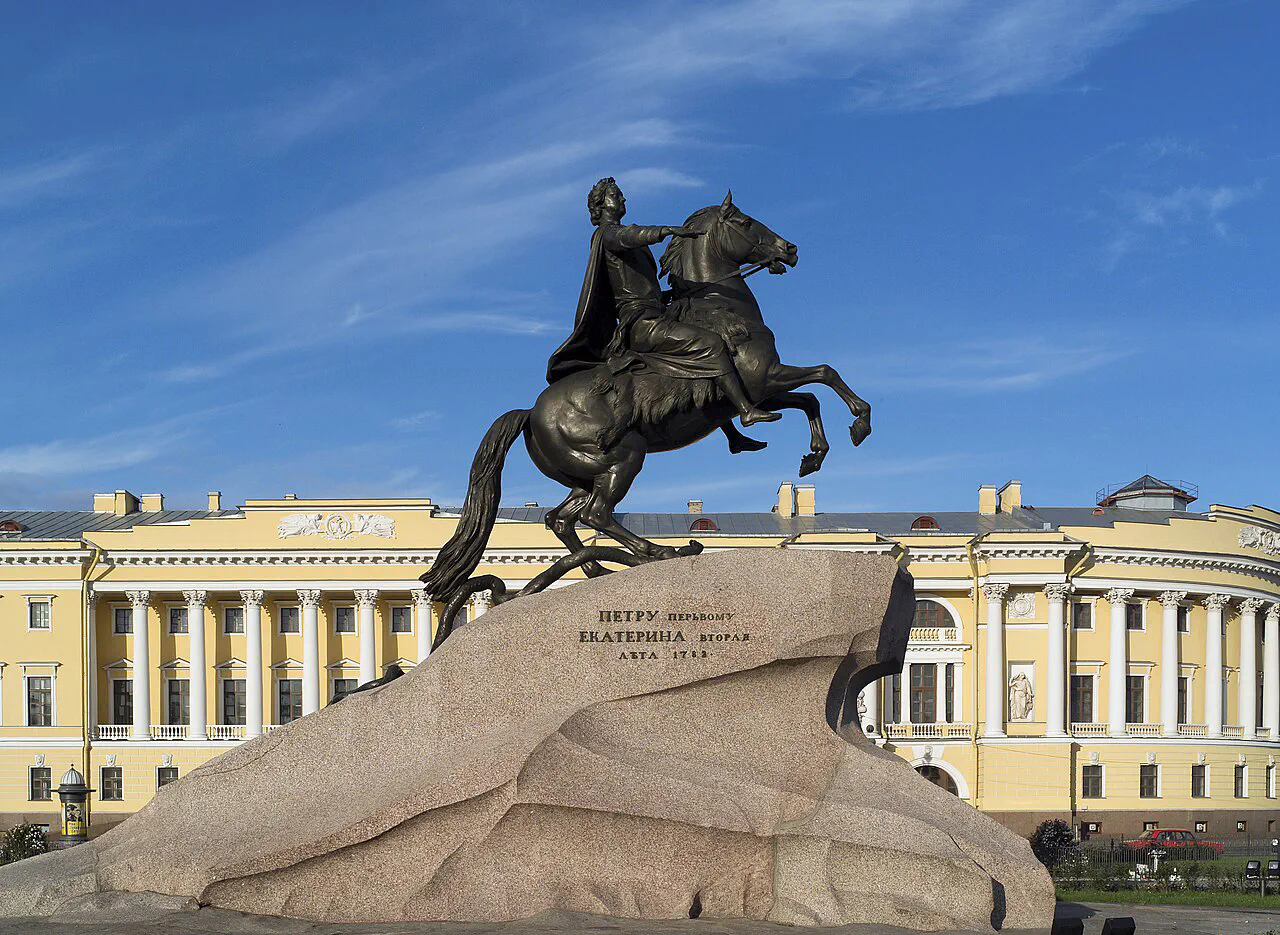
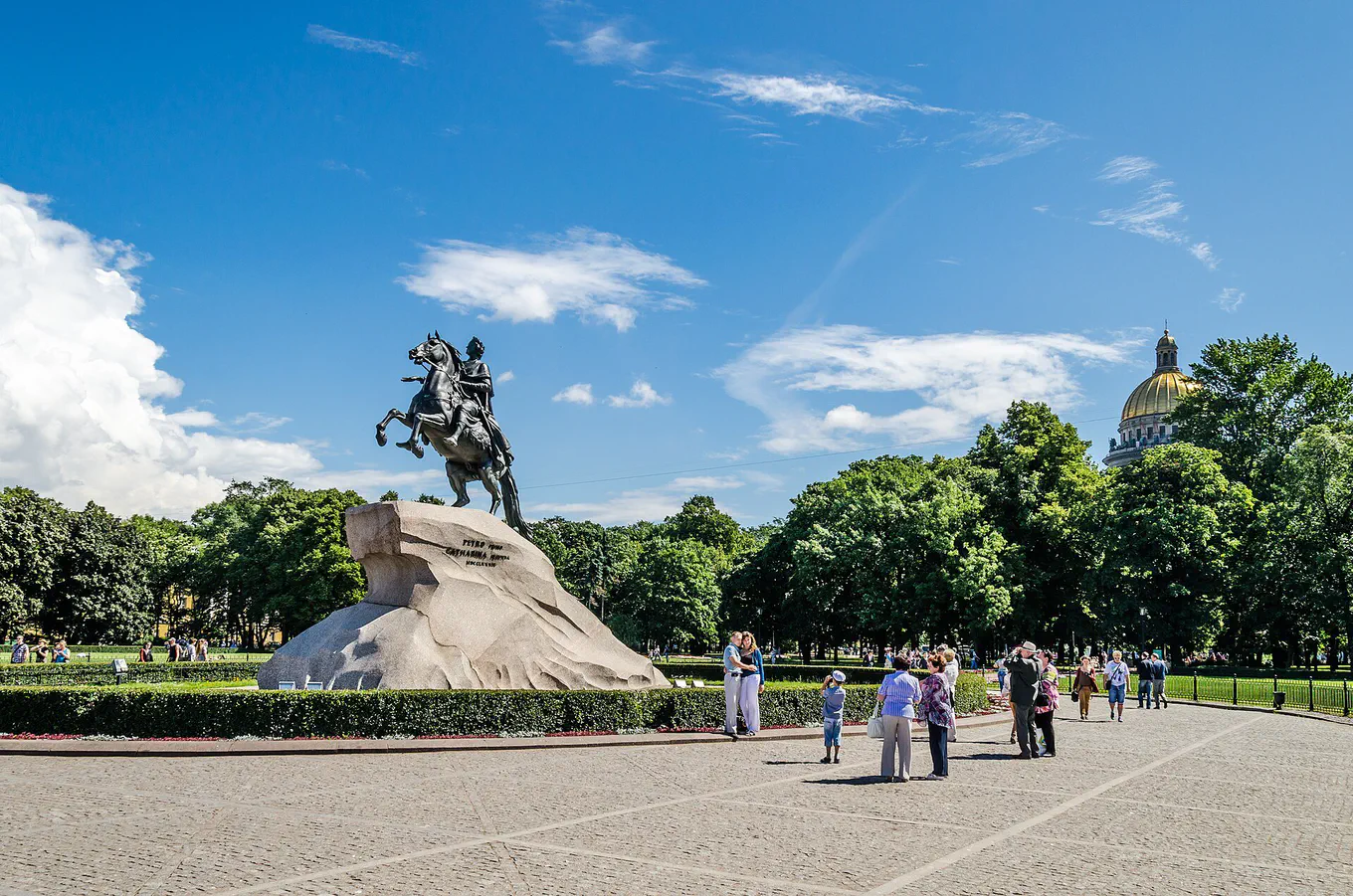
3 Falconet and the Bronze Horseman in Senate Square
Stand here. Senate Square. Peter the Great on horseback still stands on the Thunder Stone, a rock that took 400 men nine months to move.
The Bronze Horseman takes its name from Pushkin’s poem, but Catherine the Great commissioned it from a French sculptor, Étienne Falconet. He wanted to shape its pedestal, the Thunder Stone, where it lay. Catherine had it moved first. Then a misunderstanding between them grew into a serious conflict, and Falconet had to leave Russia before the work was done. He was absent from the unveiling in 1782. Catherine came to see the statue as her own work. Its inscription reads “To Peter the First, from Catherine the Second.”
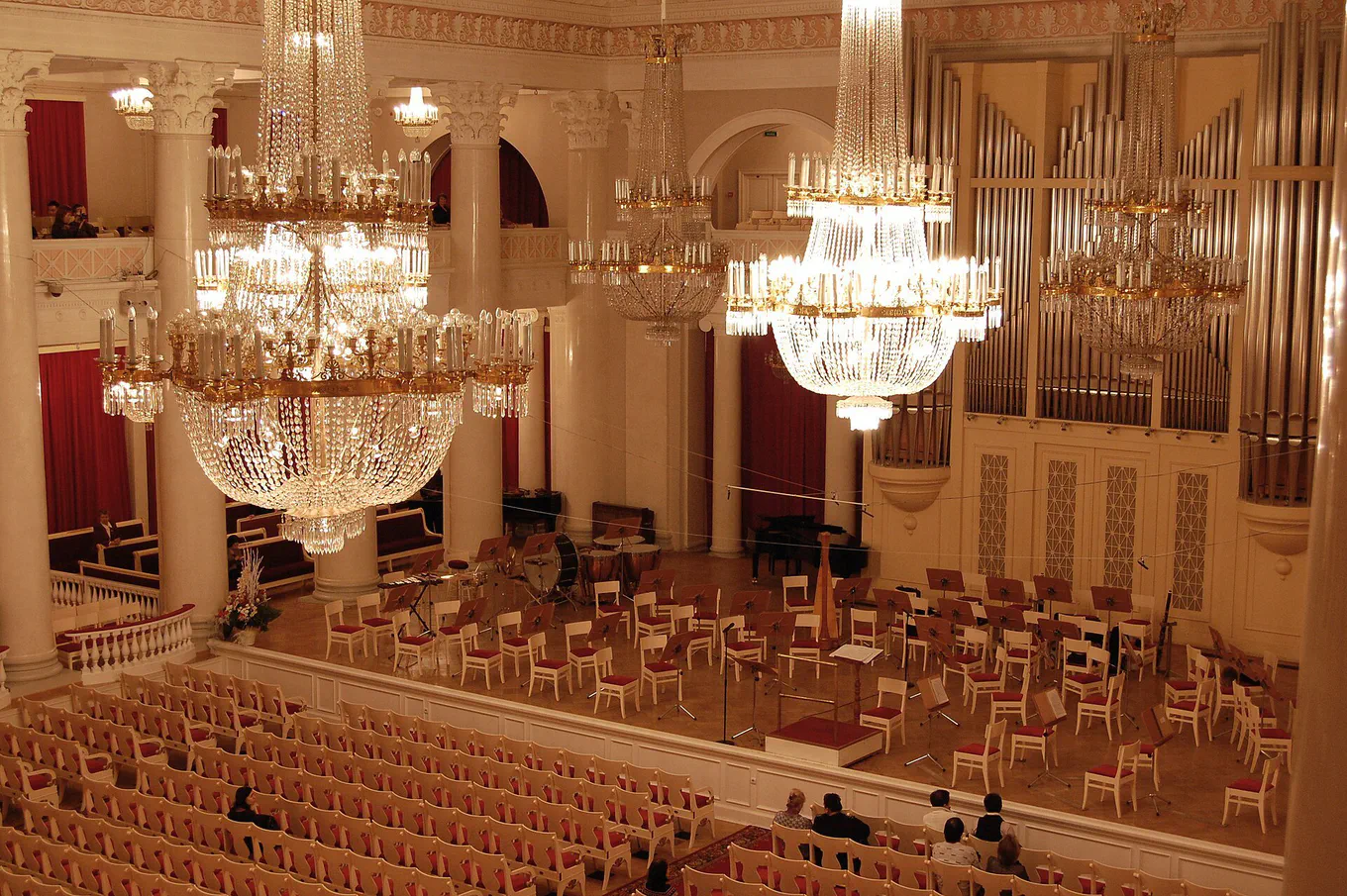
4 Karl Eliasberg and the Leningrad Symphony at the Philharmonia
Stand here. The Grand Hall of the Saint Petersburg Philharmonia, which seats 1,500. The Philharmonia is now named after Shostakovich.
Shostakovich dedicated his Seventh Symphony to besieged Leningrad. Karl Eliasberg, the Radio Orchestra’s conductor, was starving in a hospital at the Hotel Astoria when city officials asked him to perform it. Only 15 of his players were left. The others had starved to death or gone to fight, so he filled the gaps from military bands. On 9 August 1942, they played it here, and loudspeakers carried it to the German forces. It was the day Hitler had picked to celebrate the city’s fall, with a banquet at the Astoria.
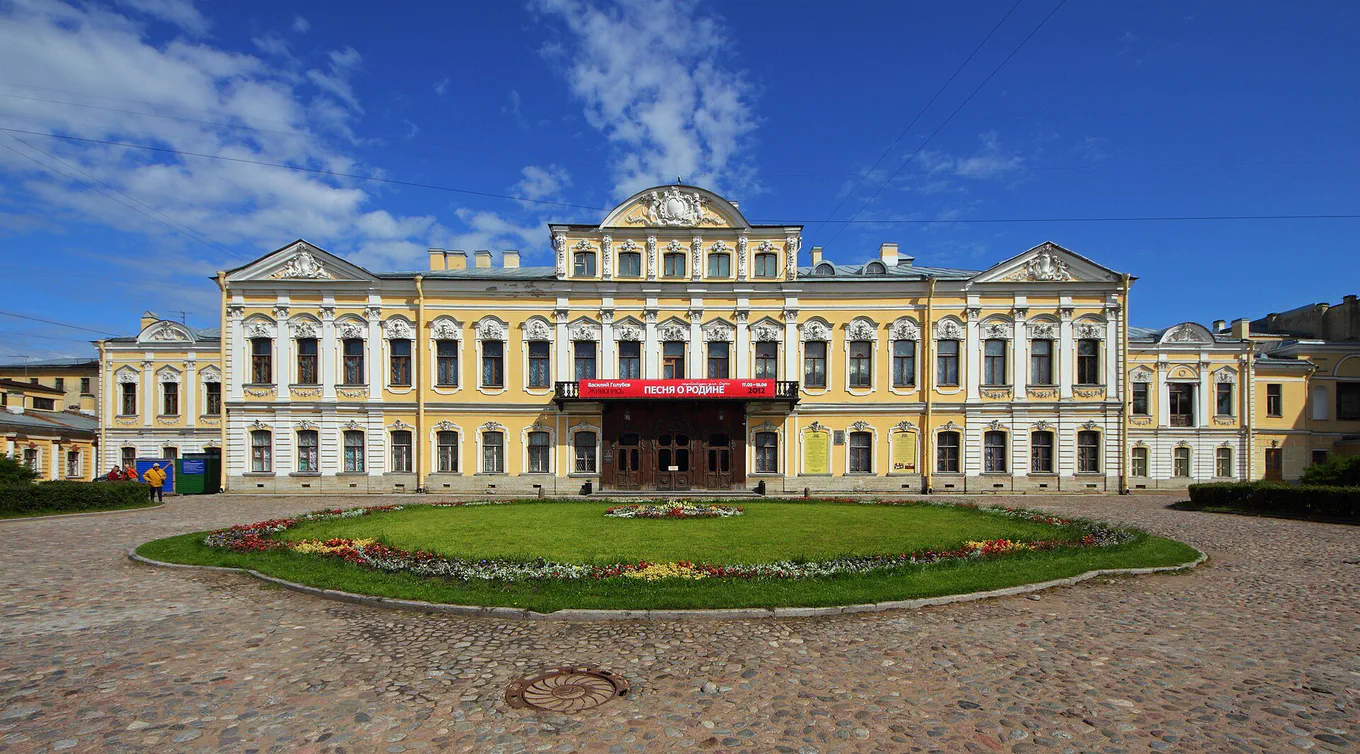
5 Anna Akhmatova’s Requiem and the Leningrad prison queue
Stand here. Fountain House, the Sheremetev Palace by the Fontanka, where Akhmatova lived twice. It has held her memorial museum since 1989.
The poet Anna Akhmatova’s son, Lev, was arrested in 1938 by Stalin’s regime, for being the son of her first husband, who had been shot. For 17 months she queued outside a Leningrad prison to hand in food and plead for him. A woman behind her, lips blue with cold, whispered, “Can you describe this?” Akhmatova said, “I can.” Her answer was Requiem, a poem she kept in her head. Rearrested in 1949, Lev was freed in 1956, after Stalin’s death. Requiem wasn’t published whole in the USSR until 1987.
Pack nothing. Leave Friday.
Every Friday, I write a free letter, Journey, that takes us on a trip through places, stories, and ideas.
Crime and Punishment(Fyodor Dostoevsky, 1866). A novel. Raskolnikov plans his murder from a tiny room under the roof at the corner of Stolyarny Lane and Grazhdanskaya Street.
Speak, Memory(Vladimir Nabokov, 1951). A memoir. It describes in close detail the house at 47 Bolshaya Morskaya Street where Nabokov was born in 1899.
The Bronze Horseman(Alexander Pushkin, 1833). A narrative poem about the flood of 1824. A poor man curses the statue in Senate Square, and it chases him.
City of Thieves(David Benioff, 2008). A novel. A coming-of-age story in the siege of Leningrad. Its hero is taken to a prison called the Crosses.
Films to watch before you visit Saint Petersburg
Russian Ark(Alexander Sokurov, 2002). A film. It was shot entirely inside the Winter Palace of the State Hermitage Museum, in one unbroken take of 87 minutes.
Brother(Aleksei Balabanov, 1997). A Russian crime film. A young ex-soldier travels to Saint Petersburg to seek out his older brother Viktor and becomes embroiled with the city’s mob.
Leto(Kirill Serebrennikov, 2018). A musical film set mainly in Leningrad in the summer of 1981, at the Leningrad Rock Club, drawing loosely on the lives of Viktor Tsoi and Mike Naumenko.
Questions
Where is Raskolnikov’s house in Saint Petersburg?
At 19 Grazhdanskaya Street, on the corner of Stolyarny Lane near Sennaya Square. Dostoevsky scholars identify it as the house where Crime and Punishment begins, and a bronze and granite relief went up on its corner in 1999. Dostoevsky himself lived nearby, at the corner of Stolyarny Lane and Kaznacheyskaya Street, while writing the novel, and a plaque to him hangs on 7 Kaznacheyskaya Street.
Can you visit where Rasputin was killed?
Yes. The Moika Palace, the Yusupov family’s former home at Moika Embankment 94, is now a museum. The part of the building connected with Rasputin’s murder in 1916 is open to public tours.
Why was Saint Petersburg called Leningrad?
Tsar Nicholas II renamed it Petrograd in 1914, after war with Germany began. On 26 January 1924, shortly after Lenin’s death, it became Leningrad. A citywide referendum in 1991 gave back its original name, Sankt-Peterburg.