Salt Lake City, United States, Utah, North America
This just makes me think of giraffes running wild. (If you know, you know.)
— Nick
Between the Great Salt Lake to its northwest and the Wasatch Range to its east lies Salt Lake City, Utah’s capital. Settlers led by Brigham Young founded it in 1847, escaping persecution. Young’s first sight of the valley gives way to a songwriter before a firing squad, a garden nearly lost to condominiums, an Olympics rescued from scandal and a Disney star who didn’t sing most of his songs.
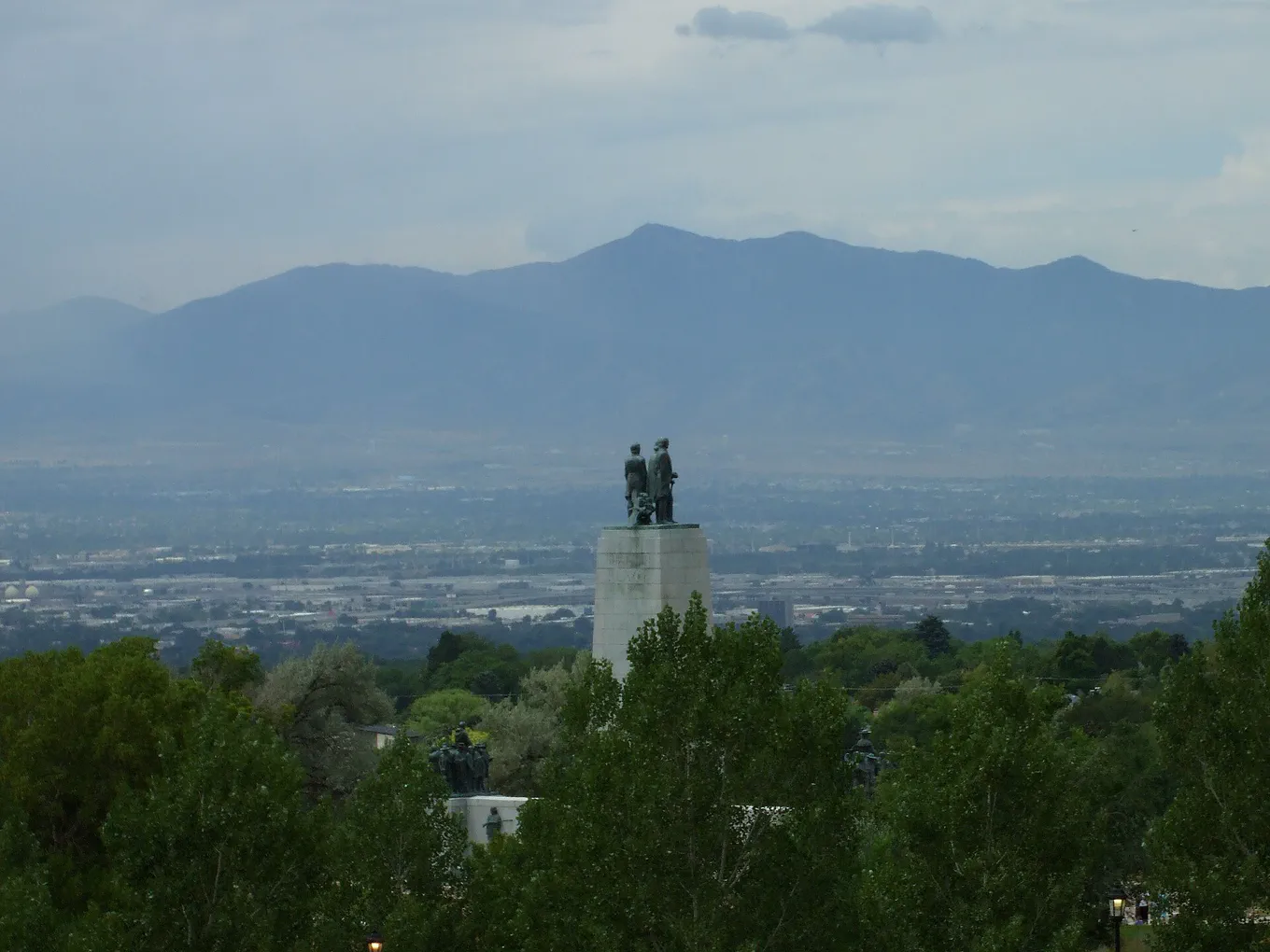
The park stands where Brigham Young first saw the Salt Lake Valley. He had led his people west from Nauvoo, Illinois, looking for somewhere secluded, away from persecution. By the usual account, he arrived on 24 July 1847 sick with fever in the back of a wagon, and his companions propped him up to see the empty valley. “It is enough,” he told them. “This is the right place. Drive on.” Those words were first attributed to him more than thirty years later. Utah still takes the day off.
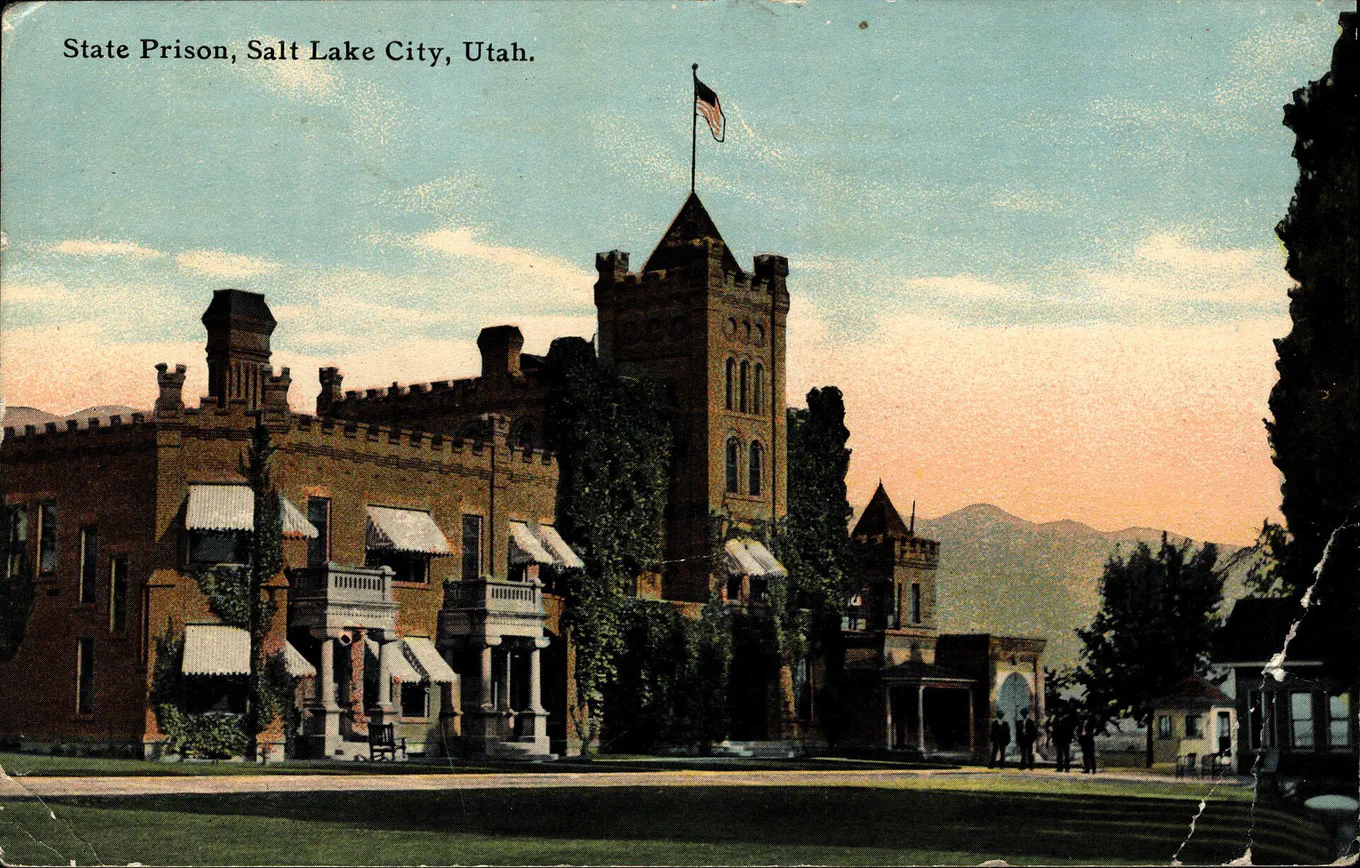
Joe Hill, the man in the song Joan Baez sang at Woodstock, was real — a Swedish-born songwriter for the Industrial Workers of the World. The night a grocer and his teenage son were shot dead in their store, Hill turned up at a doctor’s with a gunshot wound. He said he had been shot in a quarrel over a woman, but refused to name her. He was convicted and shot by a firing squad here in 1915. “I don’t want to be caught dead in Utah,” he had written.
3 Thomas Child’s Joseph Smith Sphinx in Gilgal Garden
Stand here. Gilgal Sculpture Garden, at 749 East 500 South, tucked in the middle of a block behind houses, and now a city park.
In 1945, Thomas Child, a masonry contractor and Latter-day Saint bishop, began a sculpture garden about his faith. Its best-known piece is a Sphinx with the carved face of Joseph Smith, the church’s founder. Another is Child himself, larger than life, in brick trousers. The garden consumed his time and money until he died. His family, tired of the upkeep, considered building apartments around it, and a Canadian company planned to tear it down for condominiums. Instead, Friends of Gilgal Garden bought it, and the Sphinx stayed.
4 Mitt Romney and the 2002 Winter Olympics at Rice-Eccles Stadium
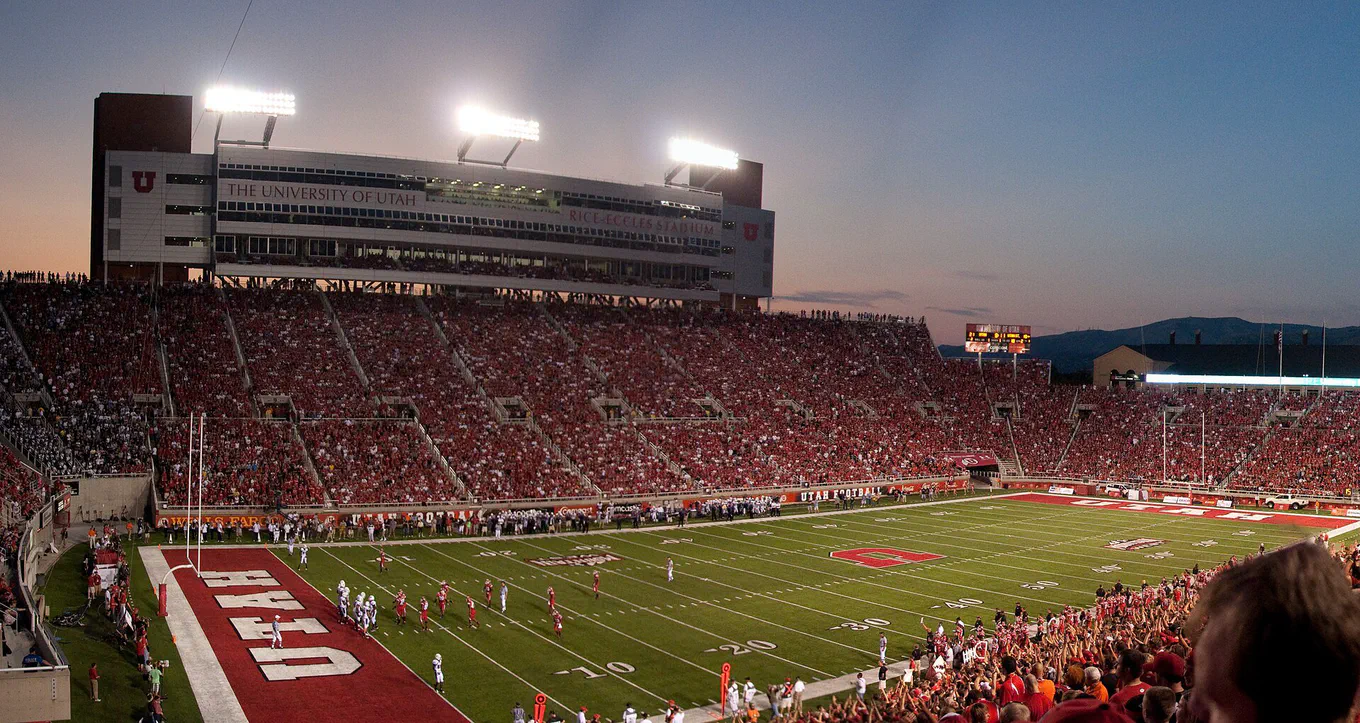
Stand here. Rice-Eccles Stadium, the University of Utah’s football stadium. The 2002 cauldron now stands in an Olympic plaza at its southwest corner.
Mitt Romney was brought in to save the 2002 Winter Olympics. Members of the International Olympic Committee had been accused of taking gifts from the Salt Lake organisers, and ten were expelled. When Romney took over the organising committee, the budget was $379 million short. On 8 February 2002, five months after 9/11, the Games opened in this stadium, and American athletes carried in a torn flag recovered from the wreckage. The Games finished $40 million in surplus.
5 High School Musical’s Troy Bolton at East High
Stand here. East High School, 840 South 1300 East, in the East Bench neighbourhood. It is still a working public high school.
High School Musical, the 2006 Disney Channel film, was shot here, although the story puts East High in New Mexico. Zac Efron was cast as Troy Bolton, the basketball captain who sings, but the part had been written for a tenor, and Efron is a baritone. So Drew Seeley sang most of Troy’s songs. Efron sang only the first and last few lines of “Start of Something New” and the opening of “Breaking Free”. The voice was borrowed, but many of the performers in the film’s basketball number were students here.
Pack nothing. Leave Friday.
Every Friday, I write a free letter, Journey, that takes us on a trip through places, stories, and ideas.
Recapitulation(Wallace Stegner, 1979). A novel, set entirely in Salt Lake City, with many of its scenes at the Hotel Utah, downtown.
Refuge: An Unnatural History of Family and Place(Terry Tempest Williams, 1991). A memoir of the Great Salt Lake’s flooding and dwindling birds at Bear River Migratory Bird Refuge.
Films to watch before you visit Salt Lake City
The Sandlot(David Mickey Evans, 1993). A film. Its sandlot was a dirt lot behind several houses on Glenrose Drive, in the Glendale neighbourhood.
SLC Punk!(James Merendino, 1998). A film, with a funeral scene at the Cathedral of the Madeleine.
High School Musical(Kenny Ortega, 2006). A Disney Channel TV film, shot at East High School, which the story moves to New Mexico.
Big Love(Mark V. Olsen and Will Scheffer, 2006–2011). A TV series, with exteriors filmed in downtown Salt Lake City and in Sandy.
Questions
Is East High from High School Musical a real school?
Yes. East High School is a public high school at 840 South 1300 East, founded in 1913. The film and parts of both sequels were shot there, although the story places the school in New Mexico. It is still a working school, and the film made it a destination for some tourists.
Where is the 2002 Olympic cauldron in Salt Lake City?
At Rice-Eccles Stadium, on the University of Utah campus, where the 2002 Games opened. The museum and memorabilia once kept there have been removed, and the refurbished cauldron now stands in an Olympic plaza outside the stadium’s southwest corner.
Why is it called Salt Lake City?
It is named for the Great Salt Lake, to its northwest, and was first called Great Salt Lake City, until “Great” was dropped in 1868. The lake has no outlet besides evaporation, so minerals build up and make it far saltier than seawater. It is the largest saltwater lake in the Western Hemisphere.