Salvador is the capital of the Brazilian state of Bahia, on a triangular peninsula between the Bay of All Saints and the Atlantic. Tomé de Sousa founded it in 1549, and it was Brazil’s capital until 1763. Its stories here are Michael Jackson filming with Olodum, a capoeira master’s school, an uprising given away by an overheard plan, a nun’s hospital in a henhouse, and a husband who dies dancing at Carnival and comes back as a ghost.
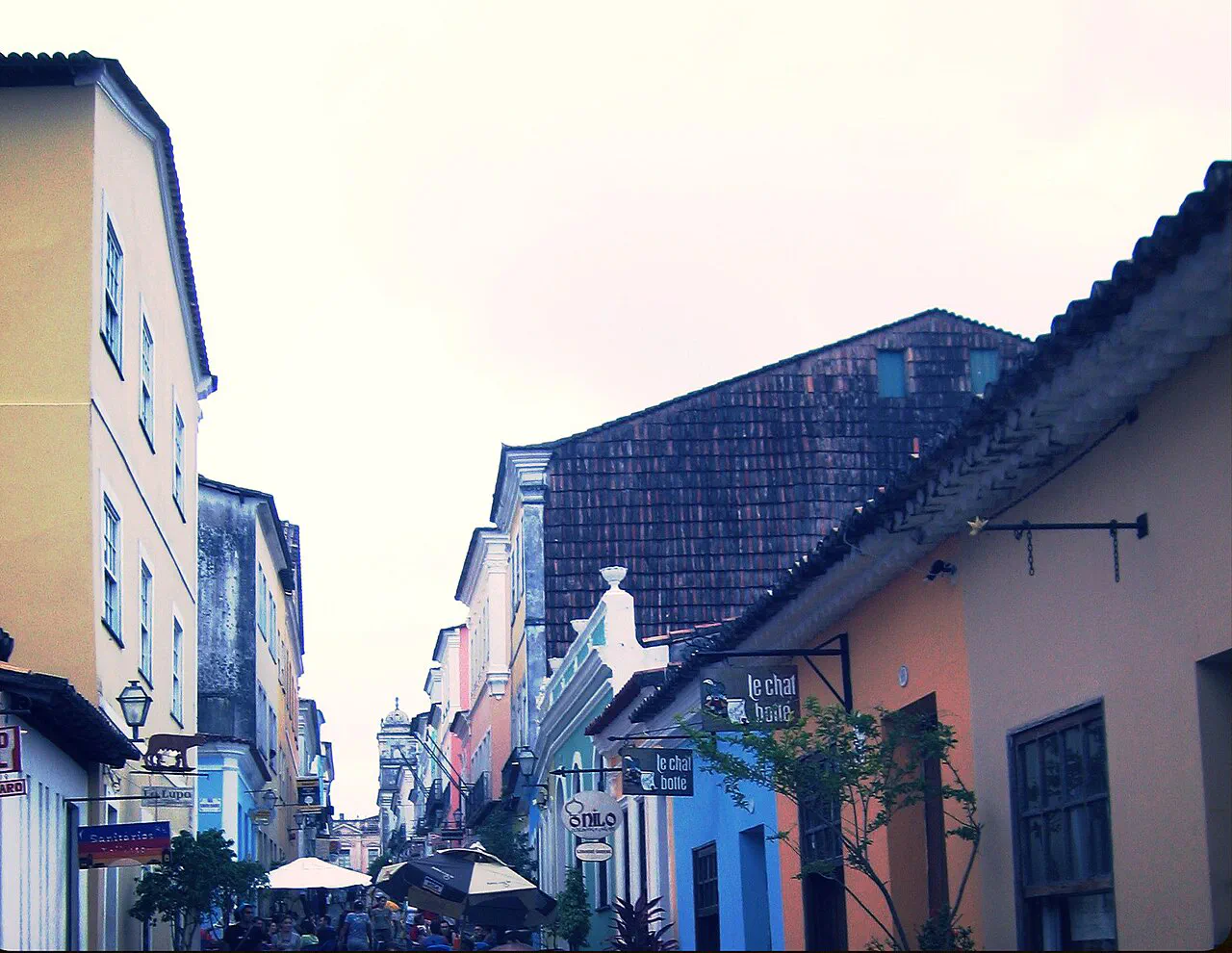
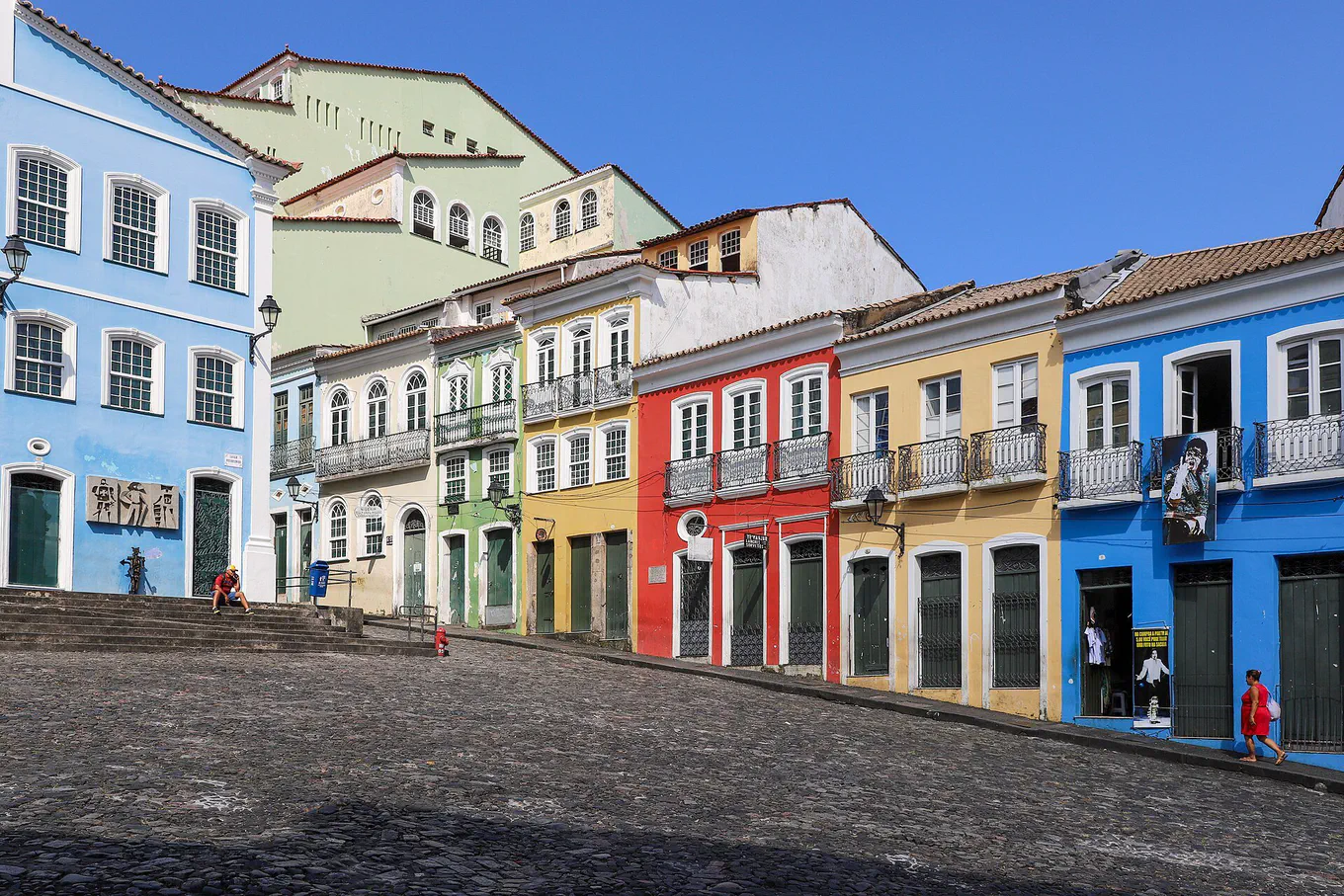
Michael Jackson shot the first video for “They Don’t Care About Us” here in February 1996, directed by Spike Lee, with the drummers of Olodum, a Black Carnival group from Salvador. State authorities had tried to ban the filming, fearing the video would damage their image, and failed. About 5,000 people watched, and children squeezed against the railings and balconies. One of Olodum’s drummers remembered Jackson taking a stick from one player and touching another on the shoulder, plainly having fun. That day, he made himself Olodum’s 201st member.
2 Mestre Bimba’s capoeira school on Rua das Laranjeiras
Stand here. Rua das Laranjeiras, at the Terreiro de Jesus in the Pelourinho, where Mestre Bimba opened his second school in 1942.
Capoeira, the Brazilian martial art, was banned by decree in 1890. In 1932, Manuel dos Reis Machado, known as Mestre Bimba, opened the first capoeira school, and his daughter said he was sure he would take capoeira to the rest of Brazil and the world. He was licensed in 1937, opened a second school on this street, and performed for President Getúlio Vargas. But he did not feel valued by the government. At a former student’s invitation, he moved to Goiânia, and died there, 1,658 kilometres from home.
3 The Malê revolt and the basement on Ladeira da Praça
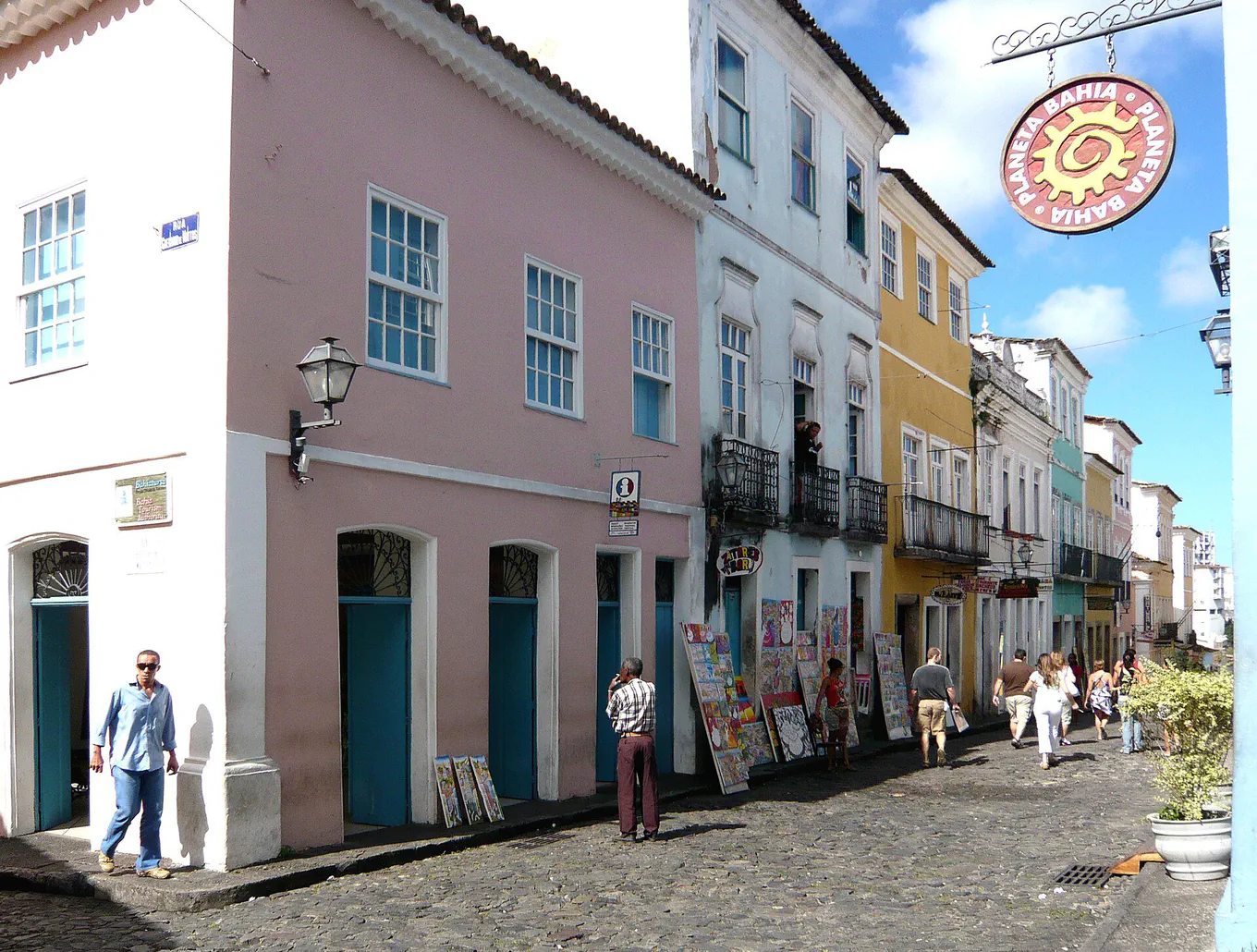
Stand here. Ladeira da Praça, a street in the historic centre. The rebels met in the basement of a two-storey house at its foot.
In January 1835, enslaved and freed African Muslims, the Malês, planned to rise against the government on the 25th, at the end of Ramadan. They met in a basement on this street, the home of Manoel Calafate. But Sabina da Cruz overheard the plan, and the freedwoman she told, who had access to white people, passed it on until it reached the authorities. Officials broke down the basement door, and dozens of armed men burst out into the streets. Witnesses said Calafate was among the first to die.
4 Sister Dulce’s chicken coop that became a hospital
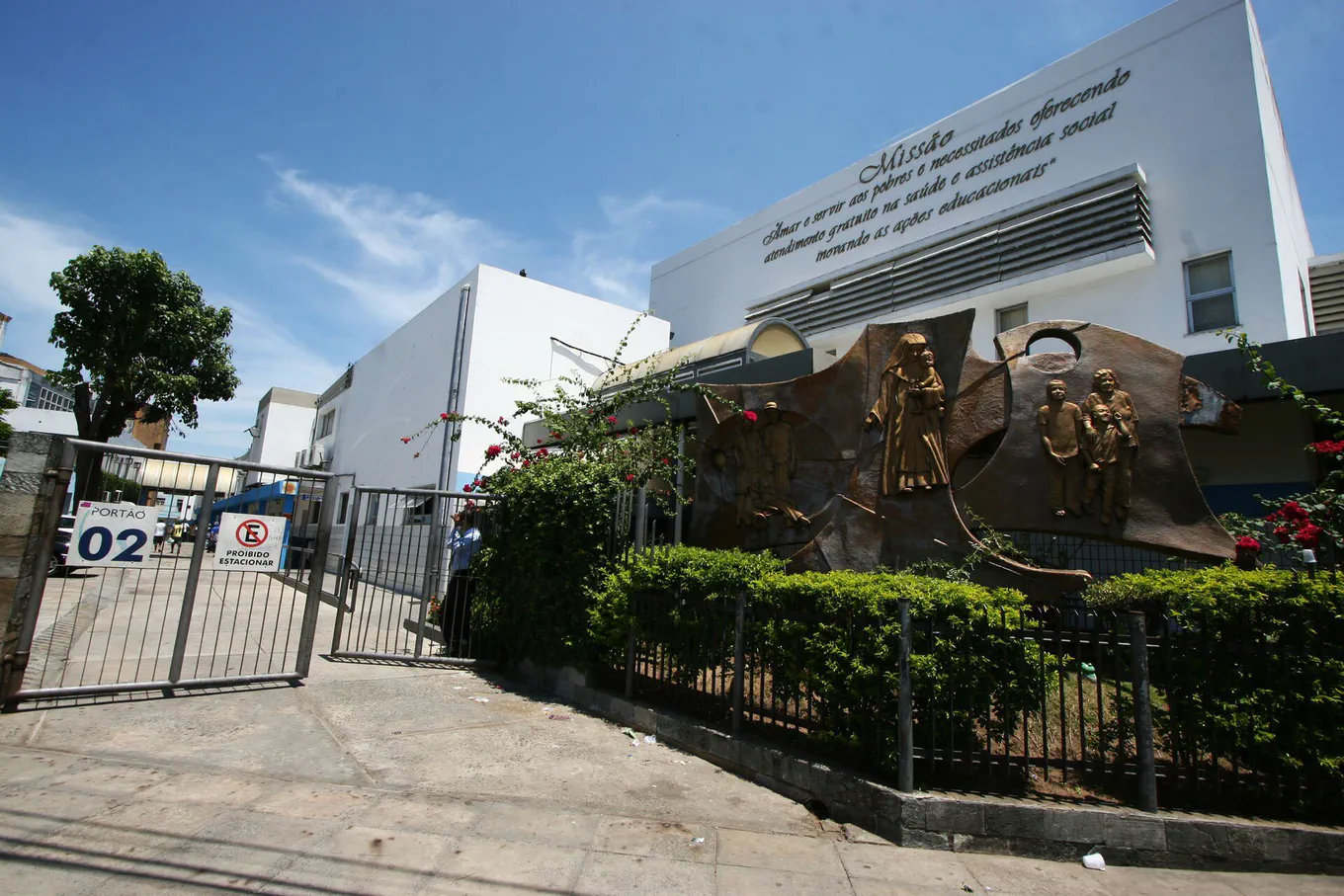
Stand here. The Santo Antônio Hospital, in the Roma Hospital Complex. Sister Dulce’s Memorial there keeps the story of her life.
Sister Dulce, a Salvador-born nun known as the Mother Teresa of Brazil, became the first Brazilian woman to be made a saint. She began by sheltering the sick poor in abandoned buildings in a run-down area called Rat Island, and was evicted again and again. In 1949, her Mother Superior reluctantly let her use the convent’s henhouse, on one condition. She had to look after the chickens. Sister Dulce cared for more than 70 people there. That chicken coop became the Santo Antônio Hospital.
5 Dona Flor’s first husband dies dancing at Largo Dois de Julho
Stand here. Largo Dois de Julho, an L-shaped square in Salvador’s old centre, near the house of the poet Castro Alves.
Jorge Amado’s 1966 novel Dona Flor and Her Two Husbands, filmed in 1976, kills off Flor’s first husband in this square. Vadinho dies on a Carnival Sunday morning, not far from his house, dancing the samba dressed as a Bahian woman. Flor, who owns a successful cooking school, marries again, this time a local pharmacist, Teodoro. But Vadinho comes back. He is a ghost now, and he has lost none of his old ways.
Pack nothing. Leave Friday.
Every Friday, I write a free letter, Journey, that takes us on a trip through places, stories, and ideas.
Dona Flor and Her Two Husbands(Jorge Amado, 1966). A novel. Vadinho, Flor’s first husband, dies dancing the samba in Largo Dois de Julho, then returns as a ghost.
Captains of the Sands(Jorge Amado, 1937). A novel. The Captains of the Sands sleep with the rats in an abandoned warehouse on the sandy waterfront.
Tent of Miracles(Jorge Amado, 1969). A novel set in the old Pelourinho, around a building that is a barber shop, a print shop, and a cultural centre.
Rebelião escrava no Brasil(João José Reis, 2003). A history, in Portuguese, of the Malê uprising of January 1835 in the streets of Salvador.
Films to watch before you visit Salvador
Dona Flor and Her Two Husbands(Bruno Barreto, 1976). A film of Amado’s novel, which became the most popular Brazilian film of all time.
O Pagador de Promessas(The Given Word) (Anselmo Duarte, 1962). A film, and a Palme d’Or winner, shot on the staircase of the Church of the Blessed Sacrament at Rua do Passo.
Ó Paí, Ó(Monique Gardenberg, 2007). A drama film. It follows tenement residents in Pelourinho, Salvador’s historic centre, on the last day of carnival, getting by on creativity, irony, sensuality, and music.
Questions
Where did Michael Jackson film “They Don’t Care About Us” in Salvador?
In the Pelourinho, Salvador’s historic centre, in February 1996. Spike Lee directed, and about 200 drummers from Olodum played with Jackson. State authorities tried to ban the shoot and failed. The same video was also shot in the Santa Marta favela in Rio de Janeiro.
Was Salvador the capital of Brazil?
Yes. Tomé de Sousa founded Salvador in 1549, and it was Brazil’s capital for more than two centuries, until Rio de Janeiro replaced it in 1763. It is still the capital of the state of Bahia, on a peninsula between the Bay of All Saints and the Atlantic.
What is the Elevador Lacerda?
It is a 72-metre public lift linking Salvador’s lower city to its upper city. It was built between 1869 and 1873 and named after Antônio de Lacerda, director of the Commercial Association of Bahia. It was hydraulic at first, has run on electricity since 1906, and its towers were remodelled in Art Deco style in 1930.