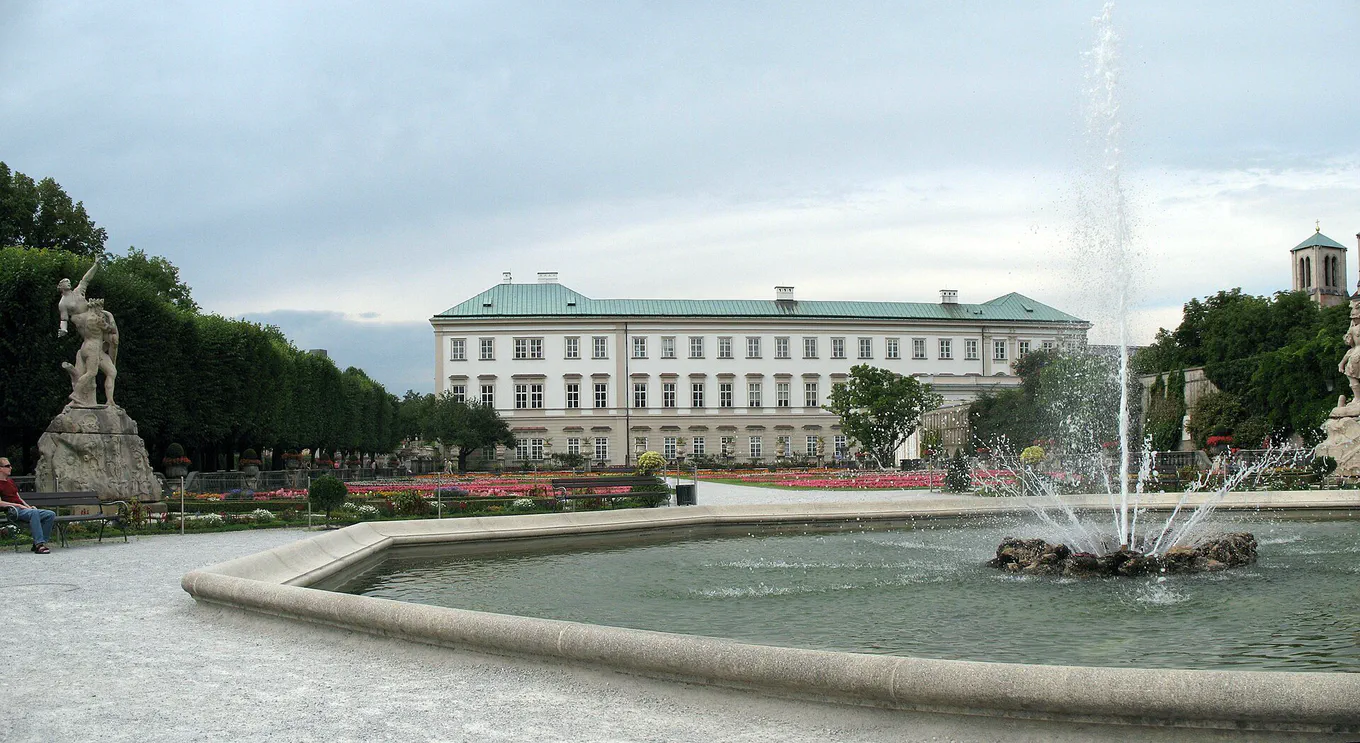
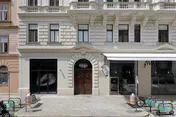
I loved Salzburg. My favourite thing is that the beautiful Mirabell Gardens, where they sing Do-Re-Mi in The Sound of Music, was actually part of the complex built by one of the city-state’s archbishops for his mistress (and their children). A boss move.
— Nick
Salzburg lies on the Salzach River in Austria, at the foot of the Alps near the German border, and was ruled by its prince-archbishops until 1803. Its stories here are a palace built for a forbidden love, Mozart kicked out of the archbishop’s service, the stonemason’s son behind the Doppler effect, the real Maria von Trapp, and a writer who left after a police search.
In The Sound of Music, Maria and the children sing “Do-Re-Mi” in the gardens of a palace built for a forbidden love. Prince-Archbishop Wolf Dietrich von Raitenau had fifteen children with Salome Alt, and asked Rome repeatedly for permission to marry her. It never came. He built a pleasure palace here for the two of them. When Bavaria invaded in 1611, he fled, and his own nephew captured him and locked him up for life. The nephew threw Salome out and renamed her palace Mirabell. The couple never met again.
2 Mozart’s birthplace and the kick that ended his Salzburg job
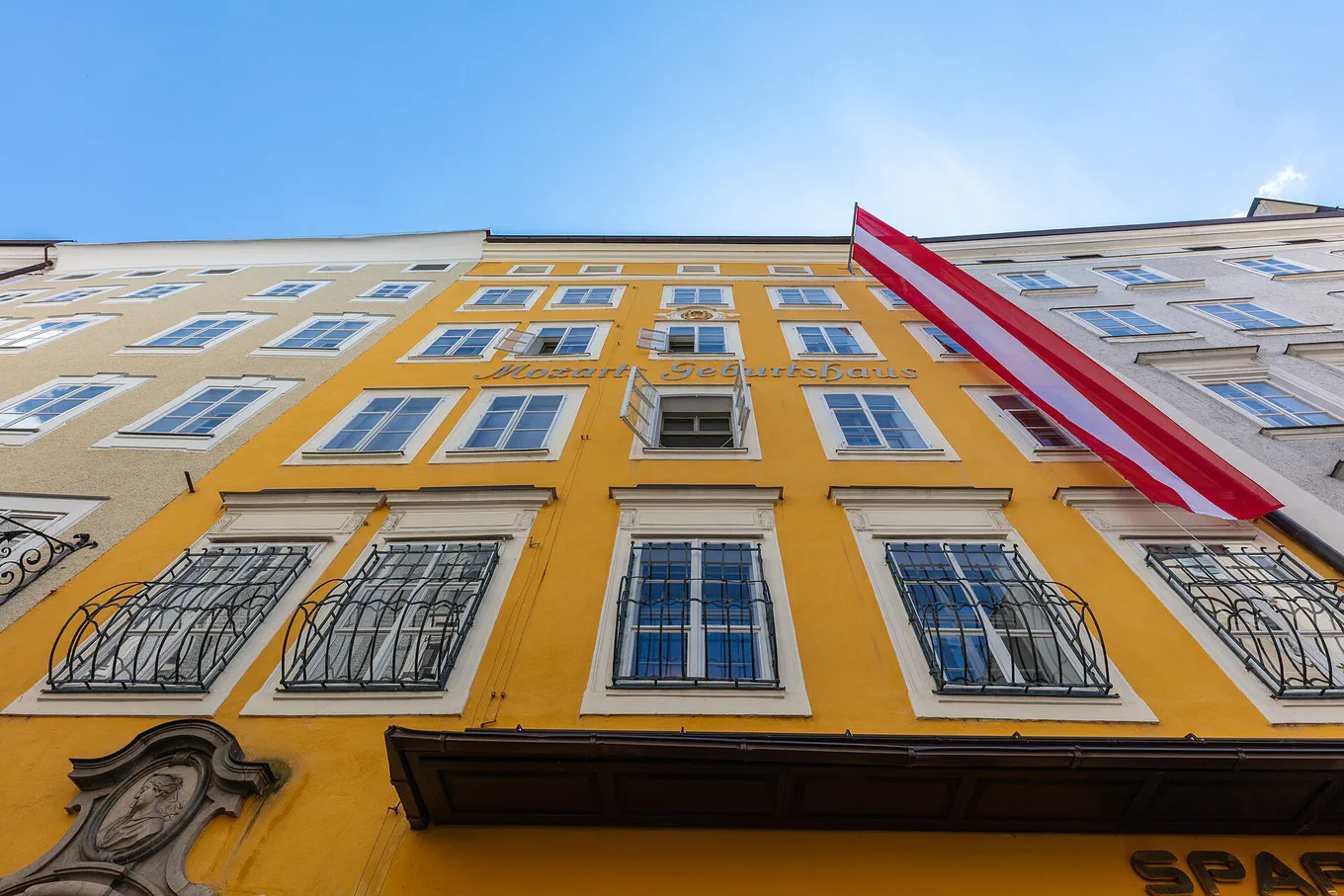
Stand here. Getreidegasse 9, behind the bright yellow front. The house has been a museum since 1880, and its third floor shows his childhood violin.
Wolfgang Amadeus Mozart was born in the third-floor flat here, the son of a minor composer and teacher. He grew up to work as a court musician for Salzburg’s ruler, Prince-Archbishop Hieronymus Colloredo, on 150 florins a year, and he wanted out. In May, he tried to resign, and was refused. The next month he was let go anyway, in a grossly insulting way. The archbishop’s steward, Count Arco, dismissed him, literally, “with a kick in the arse”.
3 Christian Doppler, the stonemason’s son from Makartplatz
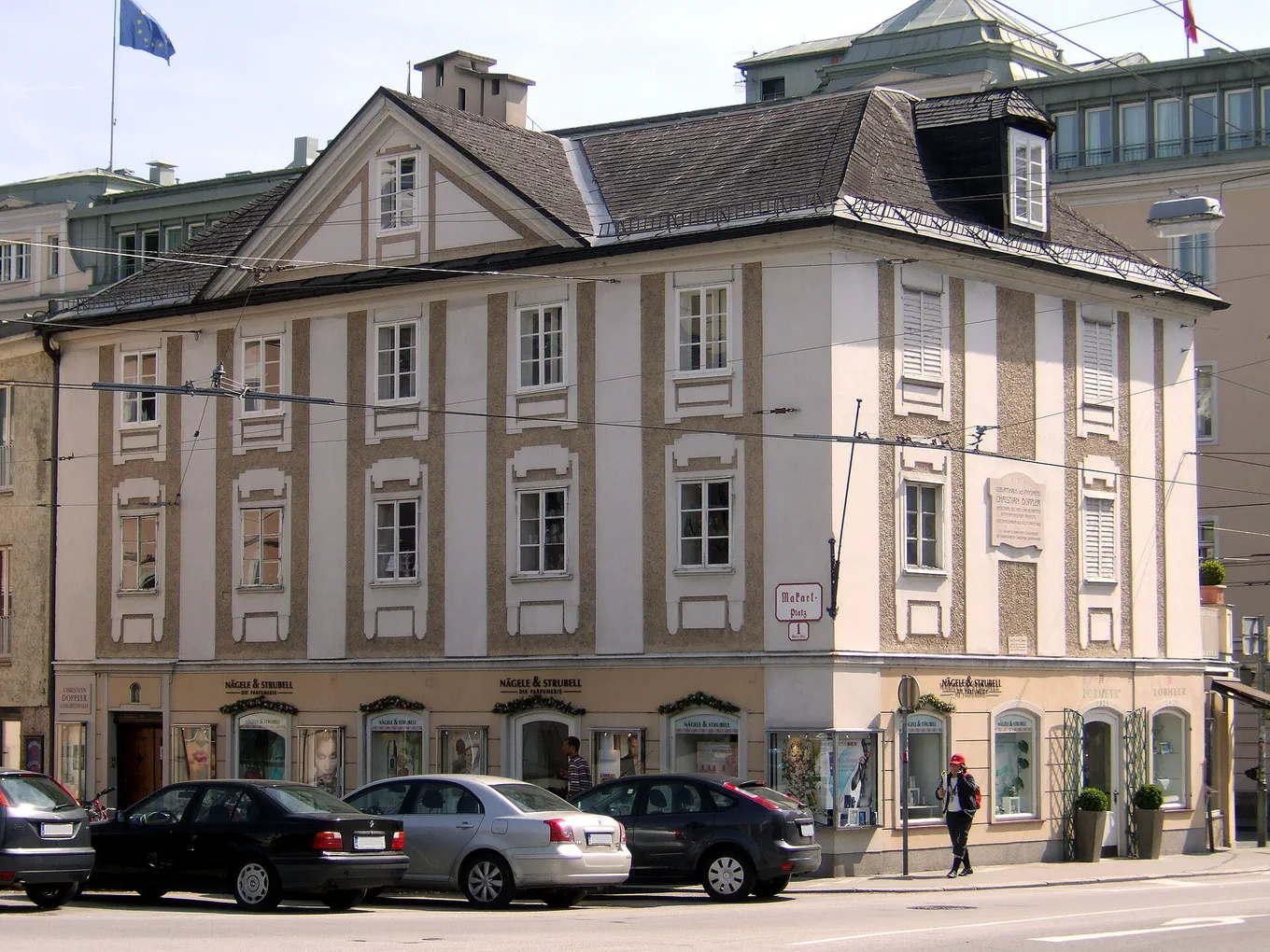
Stand here. Makartplatz. Doppler’s birth house stands next door to the house where Mozart’s family had lived.
The Doppler effect, the change in pitch of a passing siren, is named after a stonemason’s son born in this house. Christian Doppler became a physicist, and in 1842 he argued that the colours of binary stars, stars that come in pairs, were caused by their motion. That turned out to be wrong. But three years later, a scientist named Buys Ballot tested the same idea with sound, and found the pitch was higher as the source came towards him. The effect was real, even though his stars were wrong.
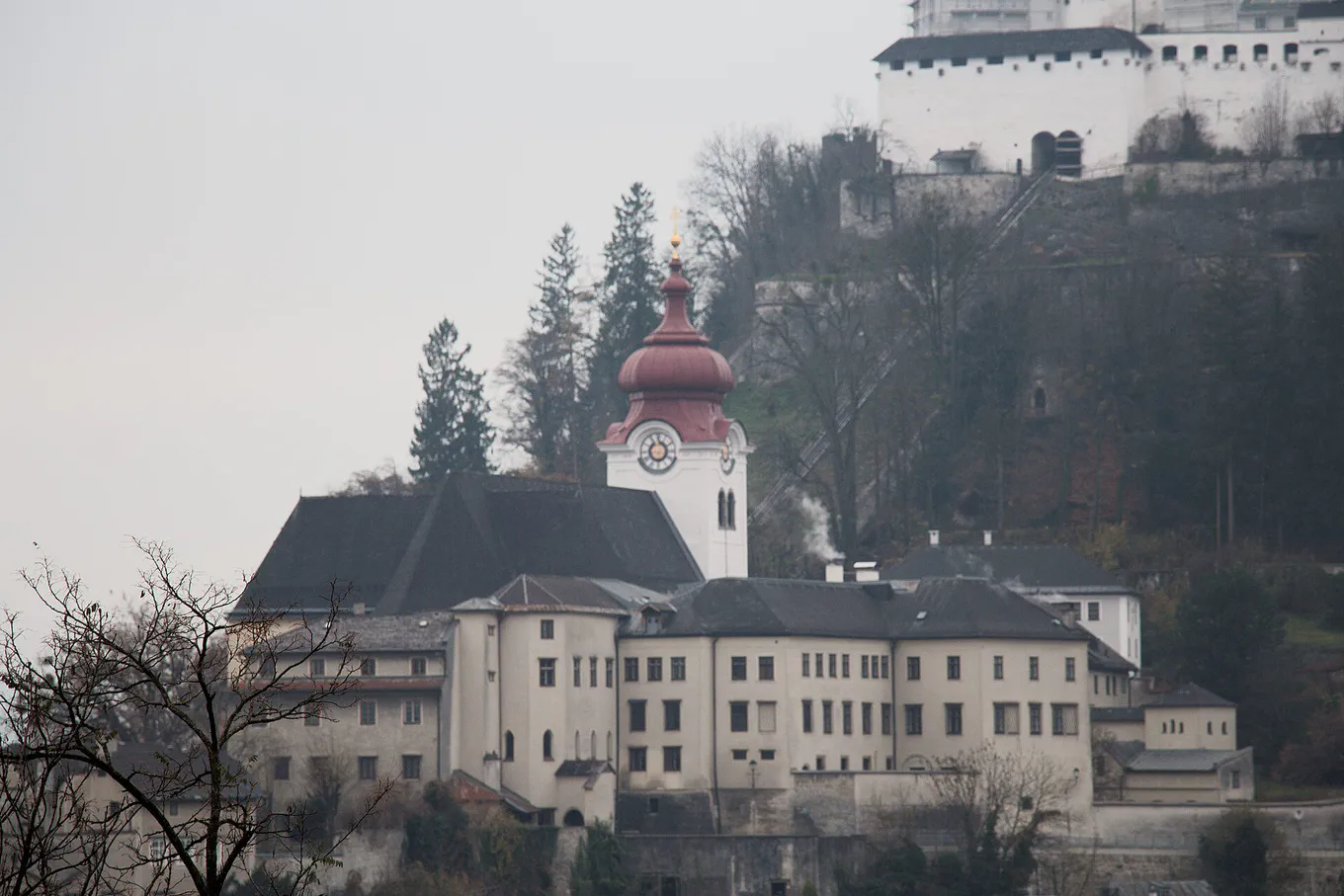
4 The real Maria von Trapp at Nonnberg Abbey
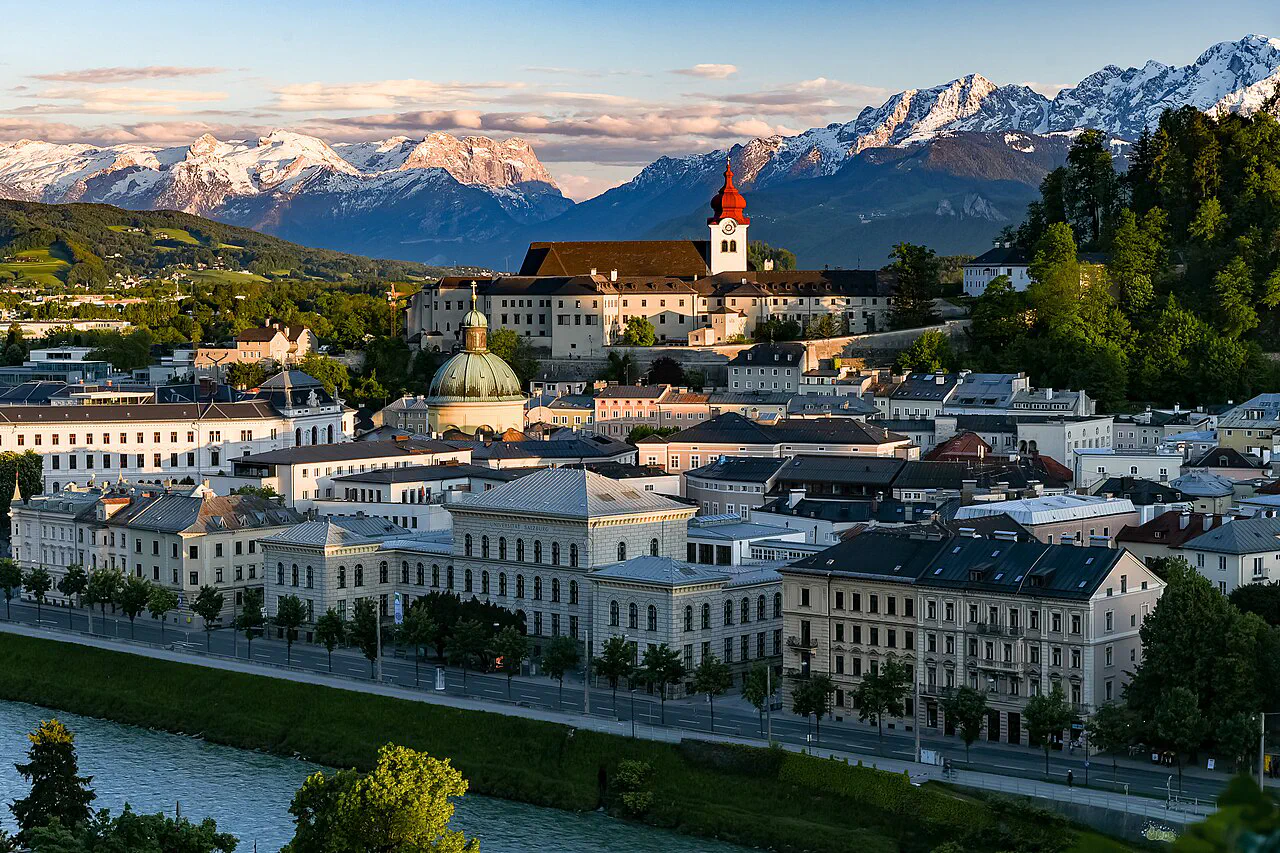
Stand here. Nonnberg Abbey, below the fortress, still a Benedictine nunnery.
Scenes of The Sound of Music were filmed at this abbey, but the real Maria Kutschera came here to become a nun. She was asked to leave for a while to teach one of the seven children of a widowed naval commander, Georg von Trapp. She married him here instead, on 26 November 1927, and by her own account she “really married the children”. She was angry on her wedding day, with God and with her new husband, because she really wanted to be a nun.
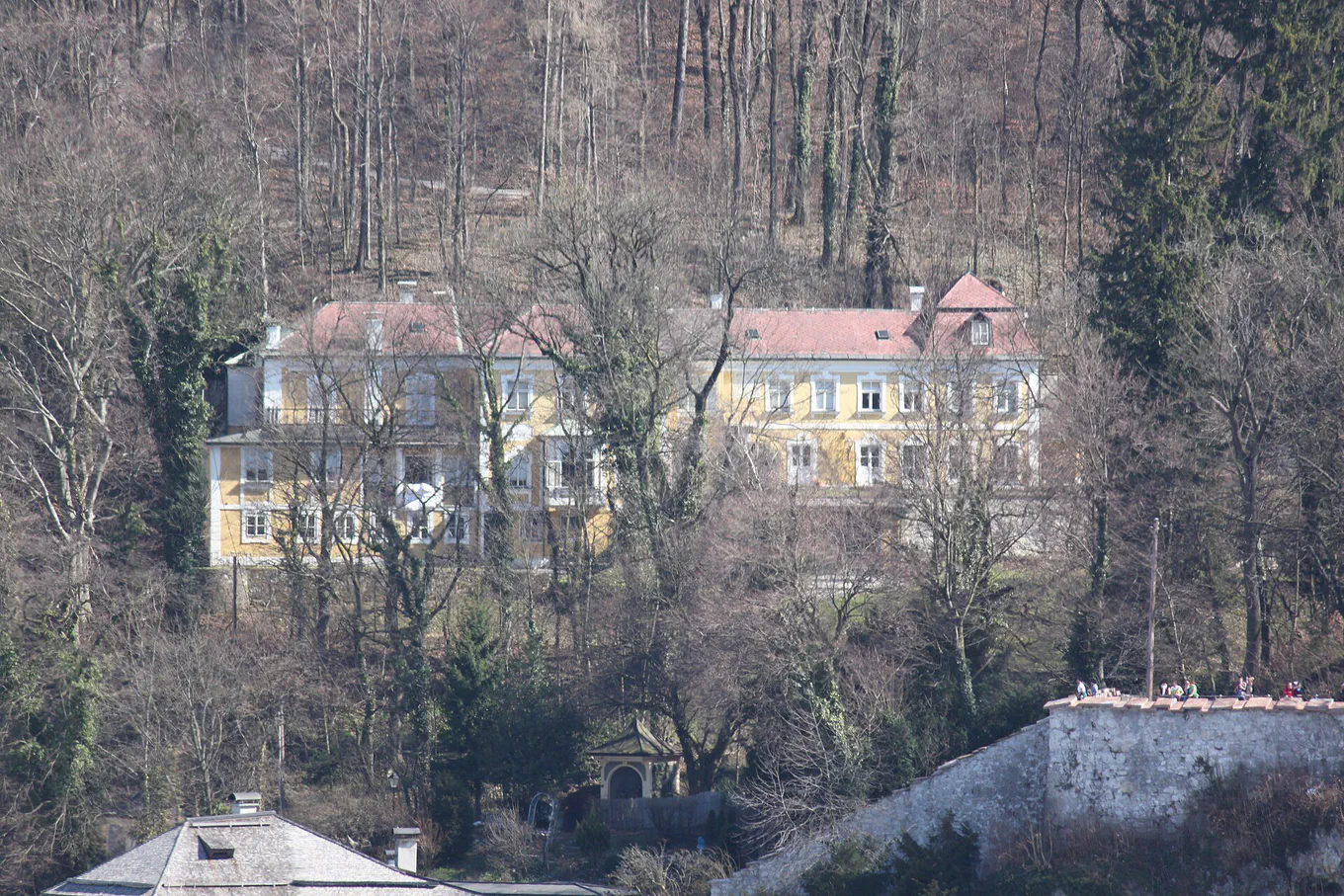
5 Stefan Zweig’s house on the Kapuzinerberg
Stand here. Kapuzinerberg 5, on the path up from Linzergasse. Stolpersteine, memorial stones, for Zweig and his relatives lie at number 5.
The end credits of The Grand Budapest Hotel say it was inspired in part by the novels of Stefan Zweig. During the First World War, Zweig bought this 17th-century hunting lodge on the hill, and he later made it his home all year round. In February 1934, police searched the house, suspecting Zweig of hiding weapons for the Social Democrats. He left Salzburg for London. Eight years later, he and his second wife were found dead of a barbiturate overdose at their house in Petrópolis, Brazil.
Pack nothing. Leave Friday.
Every Friday, I write a free letter, Journey, that takes us on a trip through places, stories, and ideas.
The World of Yesterday(Stefan Zweig, 1942). A memoir. Zweig’s Salzburg years in the house on the Kapuzinerberg, and his flight to London when the police searched it.
The Story of the Trapp Family Singers(Maria Augusta von Trapp, 1949). A memoir. The family’s story, from its beginnings in Salzburg to their escape and new life in America.
The Salzburg Tales(Christina Stead, 1934). A book of tales, and Stead’s first. Visitors to the Salzburg Festival, brought together by chance, pass the time telling fantasies, legends, tragedies, jokes and parodies.
Films to watch before you visit Salzburg
The Sound of Music(Robert Wise, 1965). A film. Maria and the children sing “Do-Re-Mi” around the Pegasus fountain in the Mirabell Gardens.
Jedermann(Hugo von Hofmannsthal, 1911). A play in which Death summons a rich man, still staged every summer on Cathedral Square at the Salzburg Festival.
The Salzburg Connection(Lee H. Katzin, 1972). A film. On a tour of the Hohensalzburg Fortress, its hero, Bill, checks that he is being followed, then loses the man.
Questions
Can you visit Mozart’s birthplace in Salzburg?
Yes. The house at Getreidegasse 9 has been a museum since 1880. The third floor shows his childhood violin, portraits, and early editions of his music.
Did Maria von Trapp really marry at Nonnberg Abbey?
Yes. Maria Kutschera entered Nonnberg in 1924 as a postulant, a woman preparing to become a nun, and married Georg von Trapp there on 26 November 1927. The wedding in The Sound of Music was filmed at Mondsee Abbey instead. Nonnberg’s entrance gate and St John’s Chapel are open to the public.
When is the Salzburg Festival?
Every summer, for five weeks from late July. It opened on 22 August 1920 with Max Reinhardt’s staging of Jedermann, Hugo von Hofmannsthal’s play, on the steps of the cathedral, and Jedermann is still performed on Cathedral Square every year.