Samarkand, in south-eastern Uzbekistan, is among the oldest continuously inhabited cities in Central Asia. It grew rich on the Silk Road, and in 1370, Timur, or Tamerlane, made it his capital. Its stories here are Alexander the Great killing Cleitus, a preacher who, legend says, walked off with his own head, Timur’s mosque, a giant sextant, and the opening of Timur’s tomb days before Germany invaded.
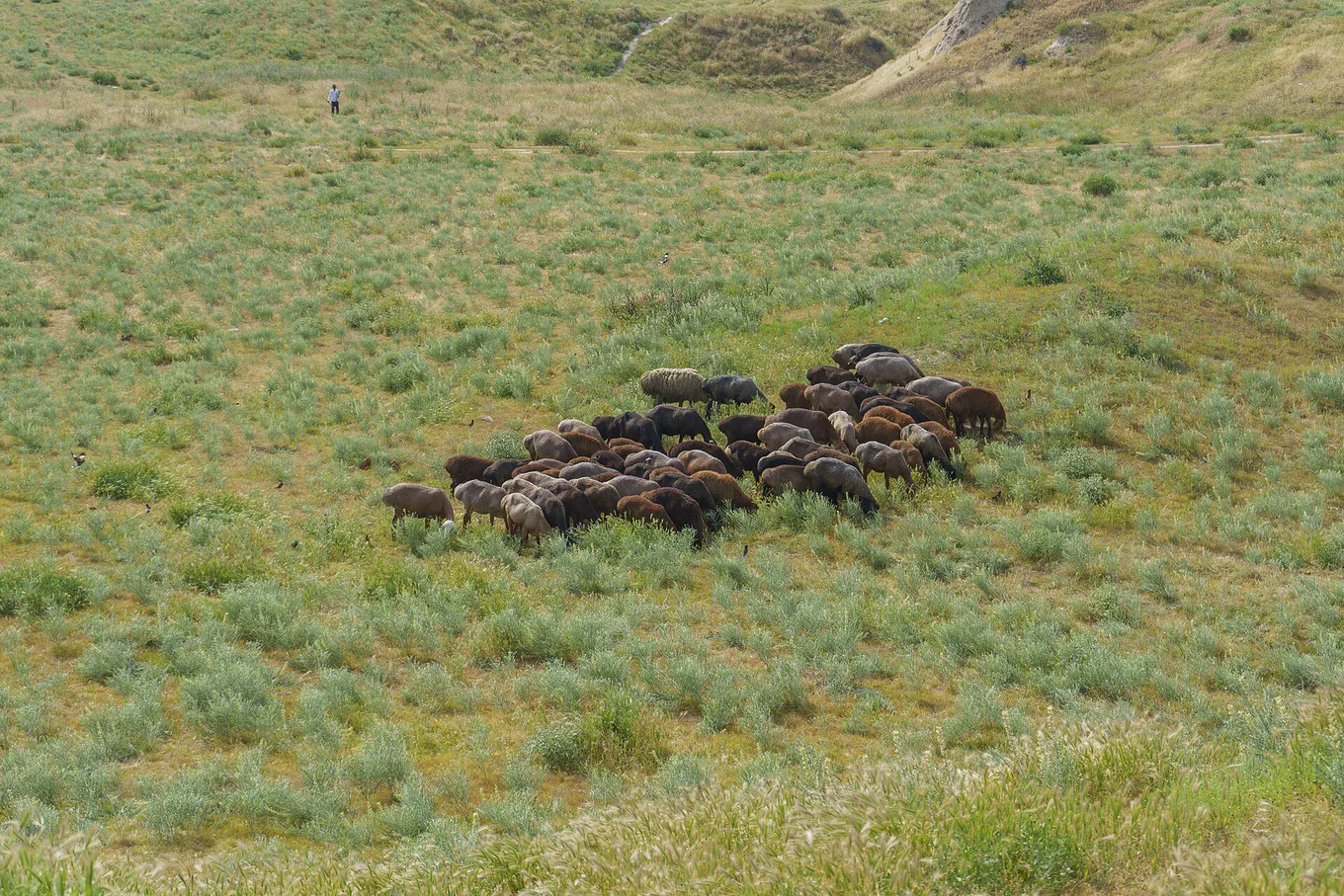
Alexander the Great held a banquet for a feast of Dionysus in 328 BC, in the governor’s palace at Maracanda, now Samarkand. He had just made Cleitus the Black governor of Bactria. Six years before, Cleitus had saved his life, cutting off a Persian’s arm before it could come down on him. Most of the guests were drunk. Cleitus told Alexander he owed all his achievements to his father. Alexander threw a pike into his chest. Then he propped the pike against the wall, meaning to fall on it himself.
2 The Living King of the Shah-i-Zinda necropolis
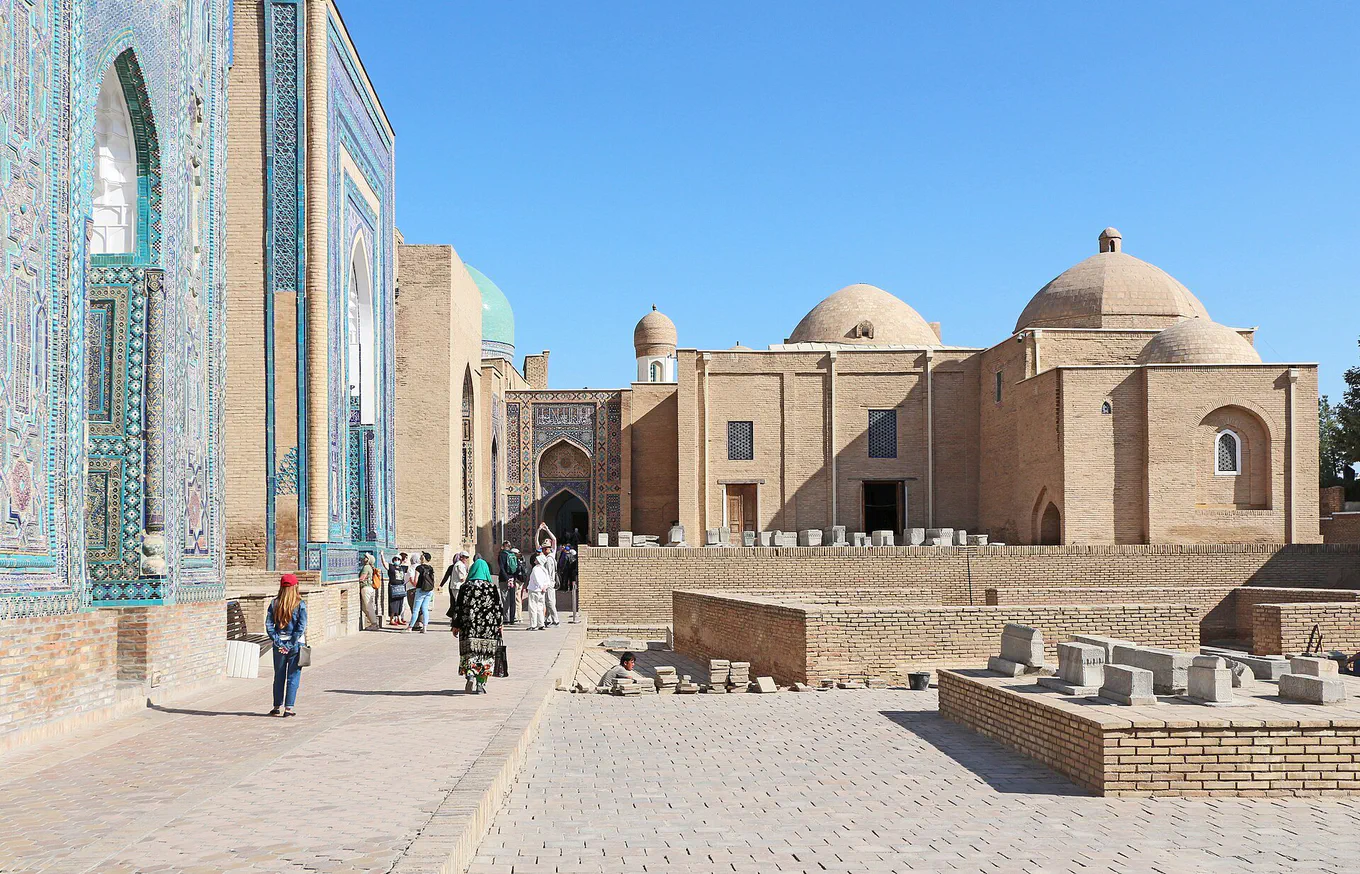
Stand here. The Shah-i-Zinda necropolis, in north-eastern Samarkand. Its more than twenty buildings date mostly from the 14th and 15th centuries.
The narrow avenue of tiled mausoleums at the Shah-i-Zinda necropolis in Samarkand.Bgag / CC0.
Qutham ibn Abbas, a cousin of the Prophet Muhammad, came to Samarkand with the Arab invasion in the 7th century to preach Islam. One legend says he was beheaded as he prayed. But Qutham picked up his own head and walked to a deep well, the Garden of Paradise, where, the story goes, he lives to this day. The necropolis, or city of the dead, that grew up where he is said to be buried came to hold Timur’s sister and niece. Its name is Shah-i-Zinda, the Living King.
3 Timur’s Bibi-Khanym Mosque and its falling dome
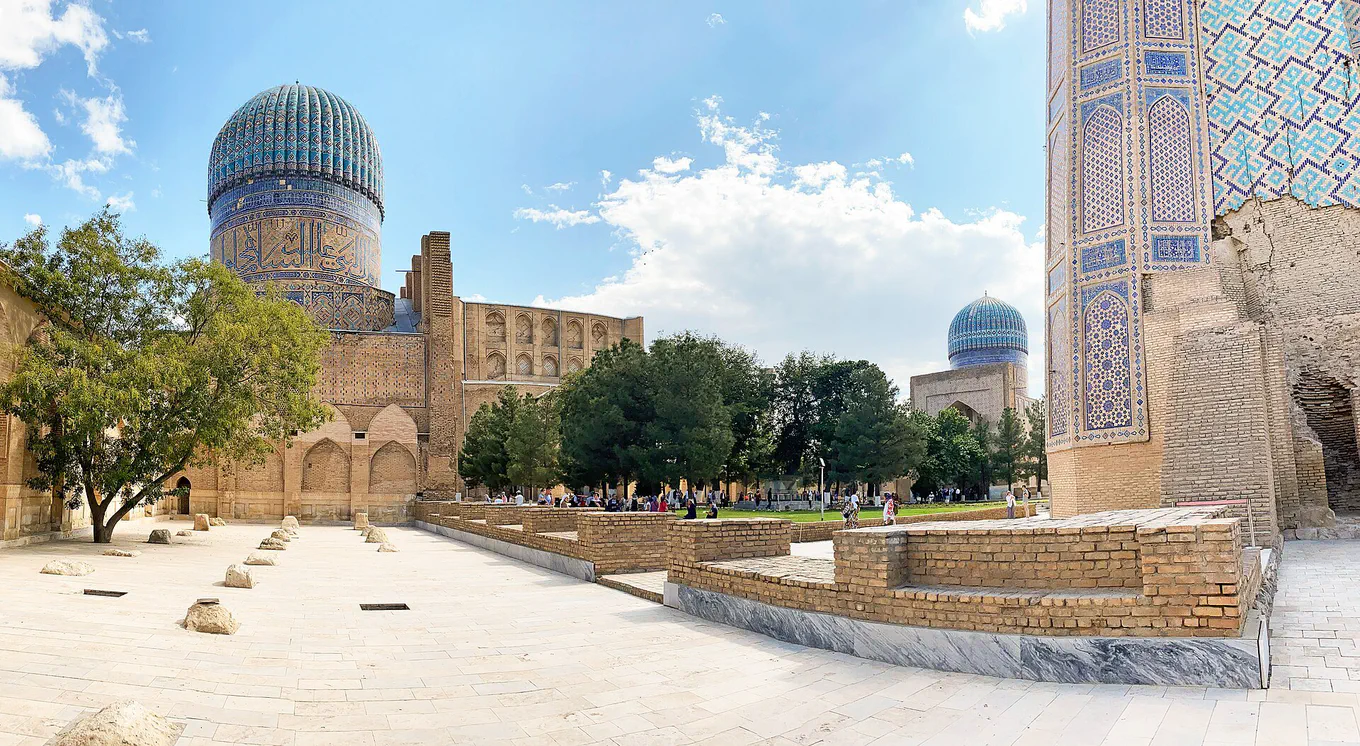
Stand here. The Bibi-Khanym Mosque, in Samarkand, where reconstruction began in 1974. A huge marble Quran stand from Timur’s time stands in its courtyard.
The courtyard of the Bibi-Khanym Mosque, the great Friday mosque Timur built in Samarkand.Bgag / CC0.
After his Indian campaign, Timur, also known as Tamerlane, decided to build a mosque big enough for every man in Samarkand at Friday prayers. In 1404, he came home to find it almost finished. But he wasn’t happy with the progress, and at once had changes made, especially to the main dome. The building was rushed. Within a few years, the first bricks were falling from its great dome.
4 Ulugh Beg’s giant sextant on a Samarkand hill
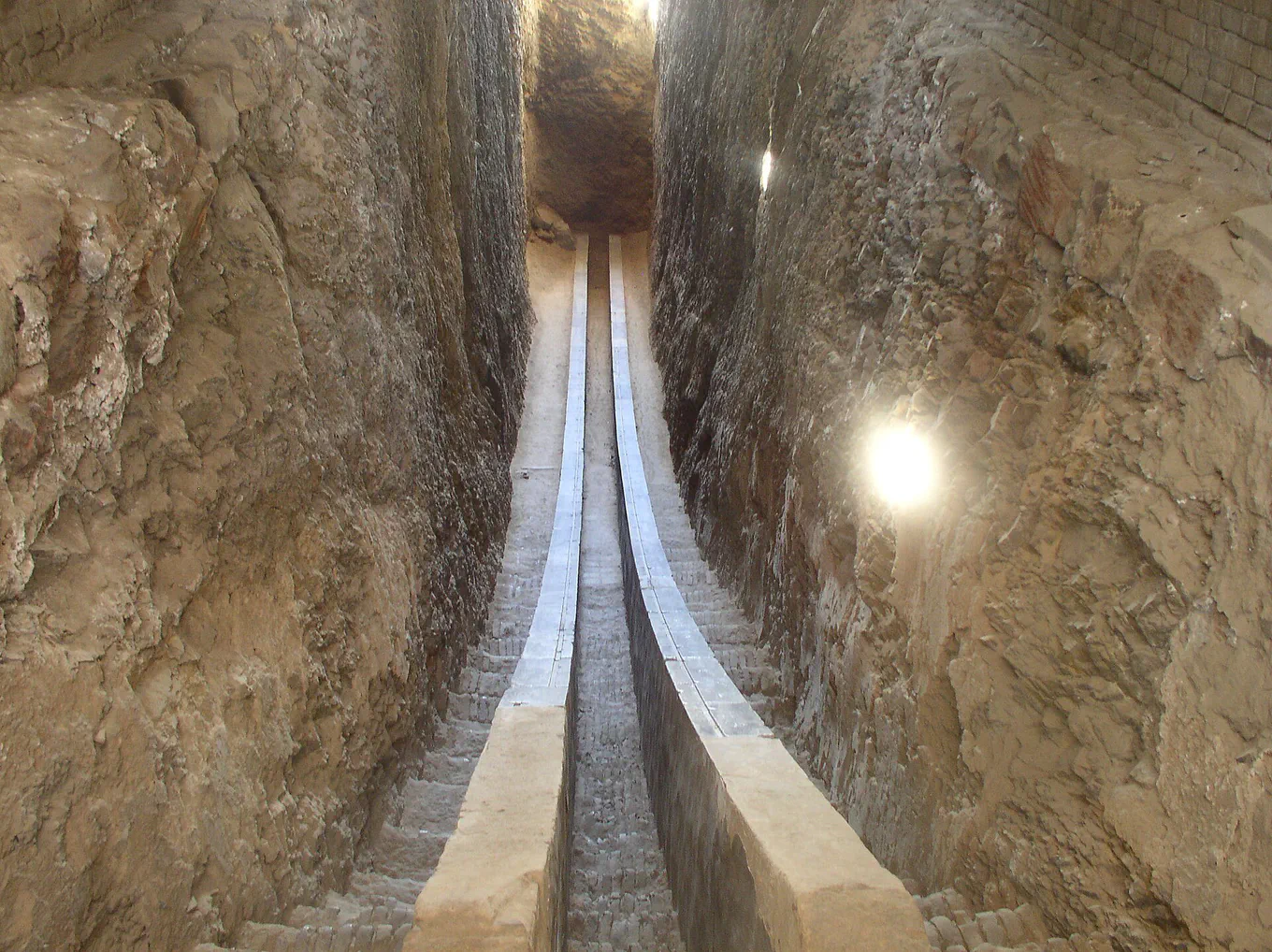
Stand here. The Ulugh Beg Observatory, on a hill in Samarkand. A curving trench holds the lower arc of his sextant, beside a museum built in 1970.
Ulugh Beg, Timur’s grandson, governed Samarkand from the age of sixteen and wanted to measure the heavens. He built an observatory on a hill, around a sextant that was then the largest in the world. He measured the length of the year to within 25 seconds. But in 1449, his own son let him set out for Mecca and had him killed before he arrived. The observatory was destroyed. Soviet archaeologists found Ulugh Beg in 1941, laid at Timur’s feet in the Gur-e-Amir.
5 The curse of Timur’s tomb at the Gur-e-Amir
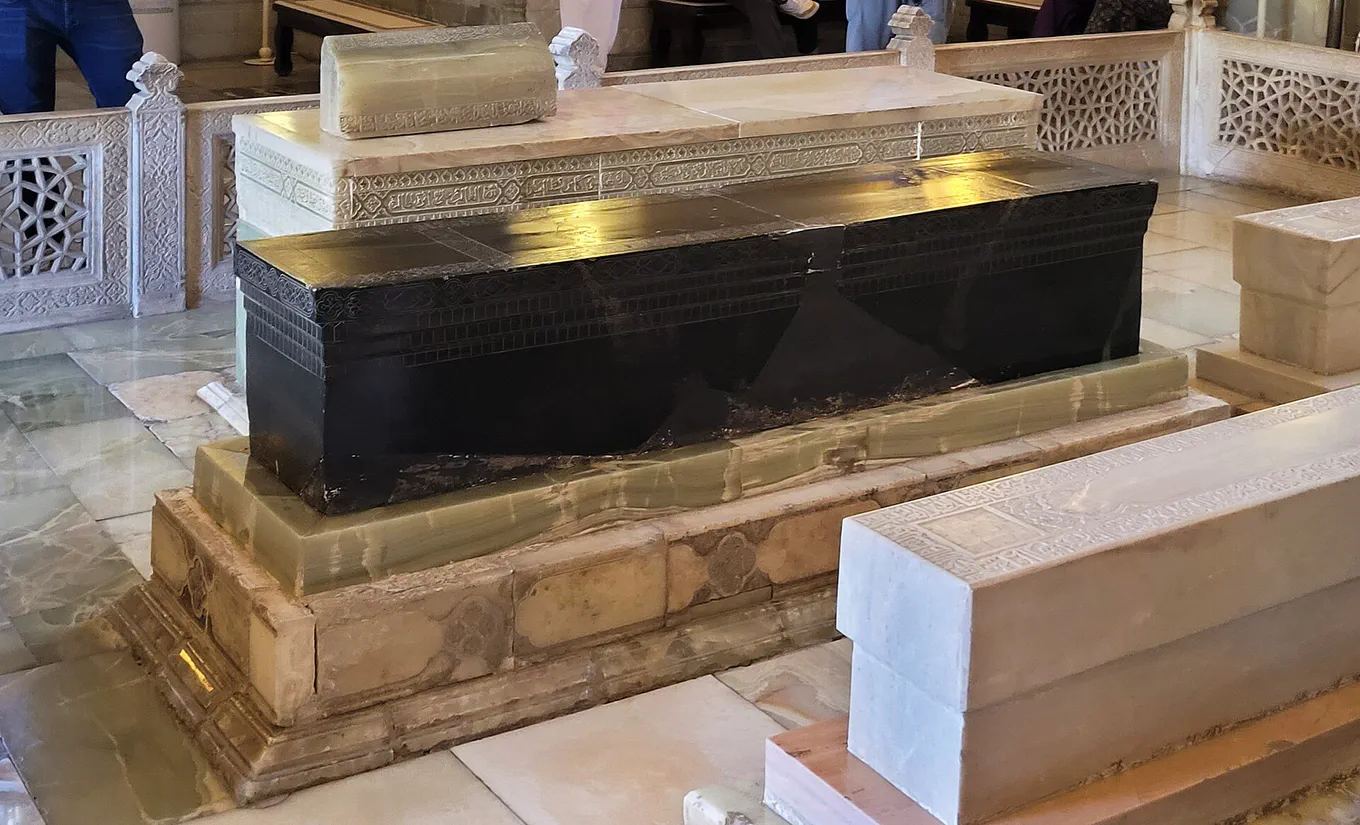
Stand here. The Gur-e-Amir, Timur’s mausoleum. His jade gravestone lies in the centre of the tomb chamber, with the burials in a crypt below.
Timur’s dark jade gravestone among the cenotaphs in the tomb chamber of the Gur-e-Amir, Samarkand.Bgag / CC0.
In June 1941, Stalin sent Mikhail Gerasimov, an archaeologist who could rebuild a face from a skull, to open the tomb of Timur. Rumours went round Samarkand that whoever opened it would be cursed, and local leaders tried to warn his team. Gerasimov raised the sarcophagus anyway. Within days, Germany invaded the Soviet Union. Legend adds an inscription inside, promising an invader more terrible than Timur, though people close to Gerasimov called the story a fabrication. In 1942, Timur was reburied, shortly before the Soviet victory at Stalingrad.
Pack nothing. Leave Friday.
Every Friday, I write a free letter, Journey, that takes us on a trip through places, stories, and ideas.
Clavijo’s account of his embassy to Timur(Ruy González de Clavijo, 15th century). A memoir by the Castilian ambassador who reached Samarkand in September 1404 and left the most detailed contemporary account of Timur’s court by a westerner.
Samarkand(Amin Maalouf, 1988). A novel. The 11th-century Persian poet Omar Khayyam falls in love with a woman poet of the Samarkand court.
Eastern Approaches(Fitzroy Maclean, 1949). A memoir of Maclean’s early career, in which he travels on from Tashkent to Samarkand in the autumn of 1937.
Hassan(James Elroy Flecker, 1922). A play. A love-sick confectioner of Baghdad turns from a life of luxury and joins the caravan to Samarkand, dressed as a pilgrim.
Films to watch before you visit Samarkand
Gentlemen of Fortune(Aleksandr Sery, 1971). A film. A Soviet comedy shot in Moscow and around Samarkand, where the foursome jogs beside the Timurid mausoleum and another scene is shot beside the Rukhabad madrasa.
To the Ends of the Earth(Kiyoshi Kurosawa, 2019). A film. A drama set partly in Samarkand and Tashkent, which a television travel reporter and her crew visit. It was filmed in Uzbekistan.
The Star of Ulugbek(Latif Faiziyev, 1964). A film. A Soviet black-and-white feature set in 15th-century Samarkand, where Ulugbek studies the stars at night in the observatory he built.
Questions
Where is Timur, or Tamerlane, buried?
In the Gur-e-Amir mausoleum in Samarkand, with his sons Shah Rukh and Miran Shah and his grandsons Ulugh Beg and Muhammad Sultan. Building began in 1403, after Muhammad Sultan’s sudden death, and Ulugh Beg finished it. Timur’s jade gravestone lies in the centre of the tomb chamber, and the burials are in the crypt below.
Did Chinese prisoners bring papermaking to Samarkand?
Probably not. A legend says two Chinese prisoners taken at the Battle of Talas in 751 gave Samarkand the secret of papermaking. But archaeology shows paper was already known and used there decades earlier, and one historian calls the story unlikely to be factual. Samarkand did become famous for its paper, exporting it to other cities as a high-quality product.
What is the Registan in Samarkand?
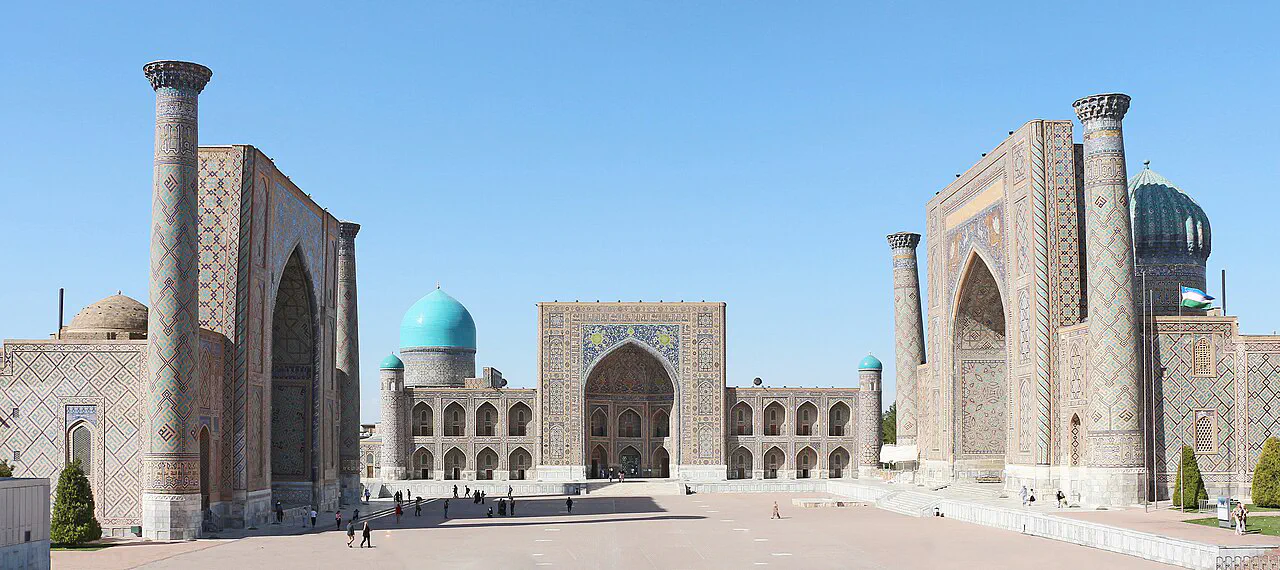
A historic public square, once the heart of the Timurid Empire, whose name means “place of sand”. Three madrasas, or Islamic colleges, frame it: Ulugh Beg’s (1417–1420), the Sher-Dor (1619–1636), and the Tilya-Kori (1646–1660). The tiger mosaics on the Sher-Dor are notable for showing living creatures.