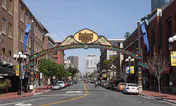
The classic view of San Francisco is those long sloping streets, but I’m thinking now of that sequence in The Conversation where Gene Hackman eavesdrops on that couple in San Francisco’s Union Square. Isn’t Harrison Ford in that movie… when he was still a carpenter?
— Nick
The Golden Gate Bridge crosses to Marin County from San Francisco, at the northern tip of a peninsula in California. The 1849 gold rush made it the largest city on the West Coast at the time. From Vertigo at Fort Point to a tenor fleeing the 1906 earthquake, by way of a bankrupt who proclaimed himself emperor, three men gone from Alcatraz and the city’s first cable car.
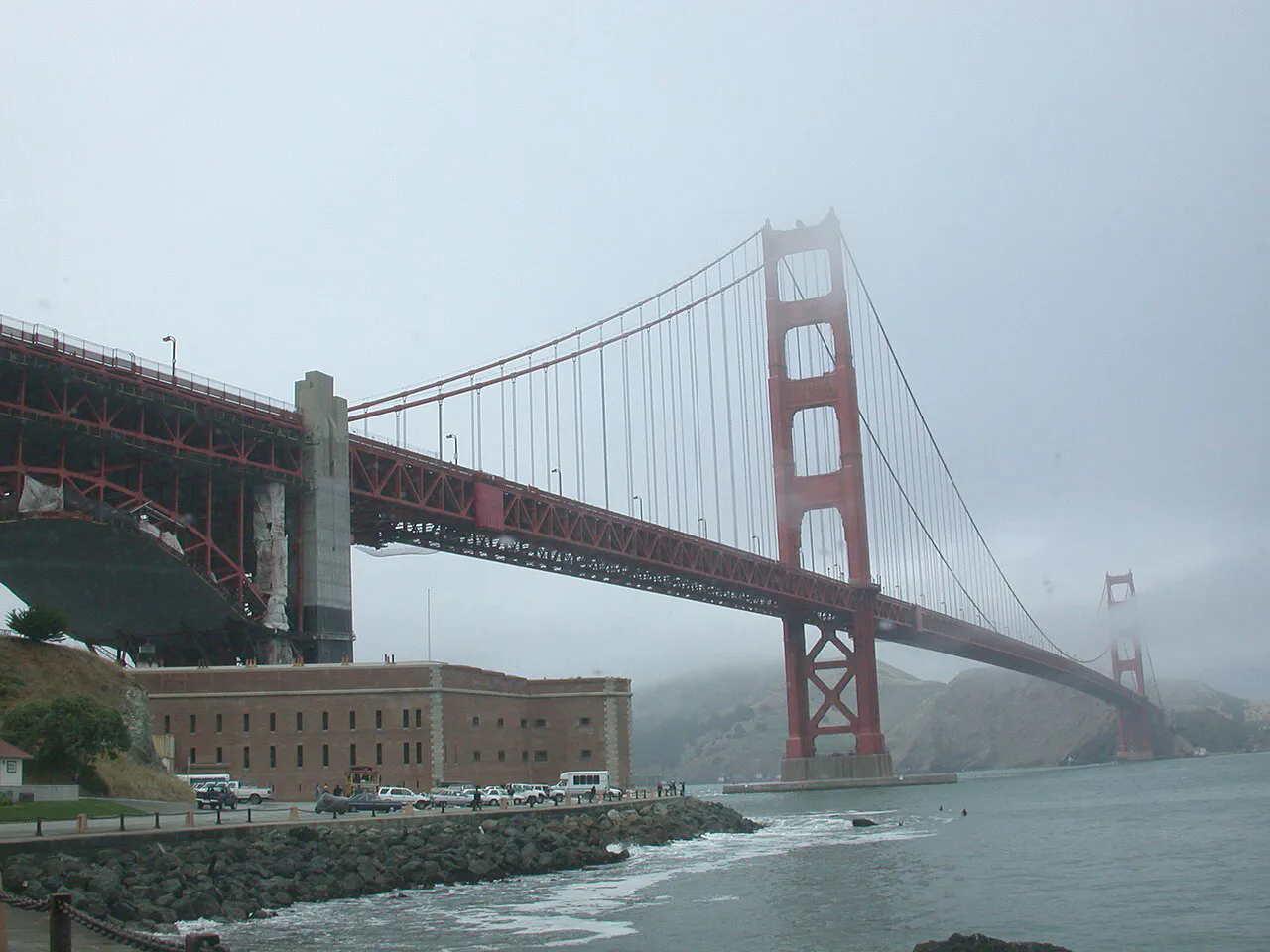
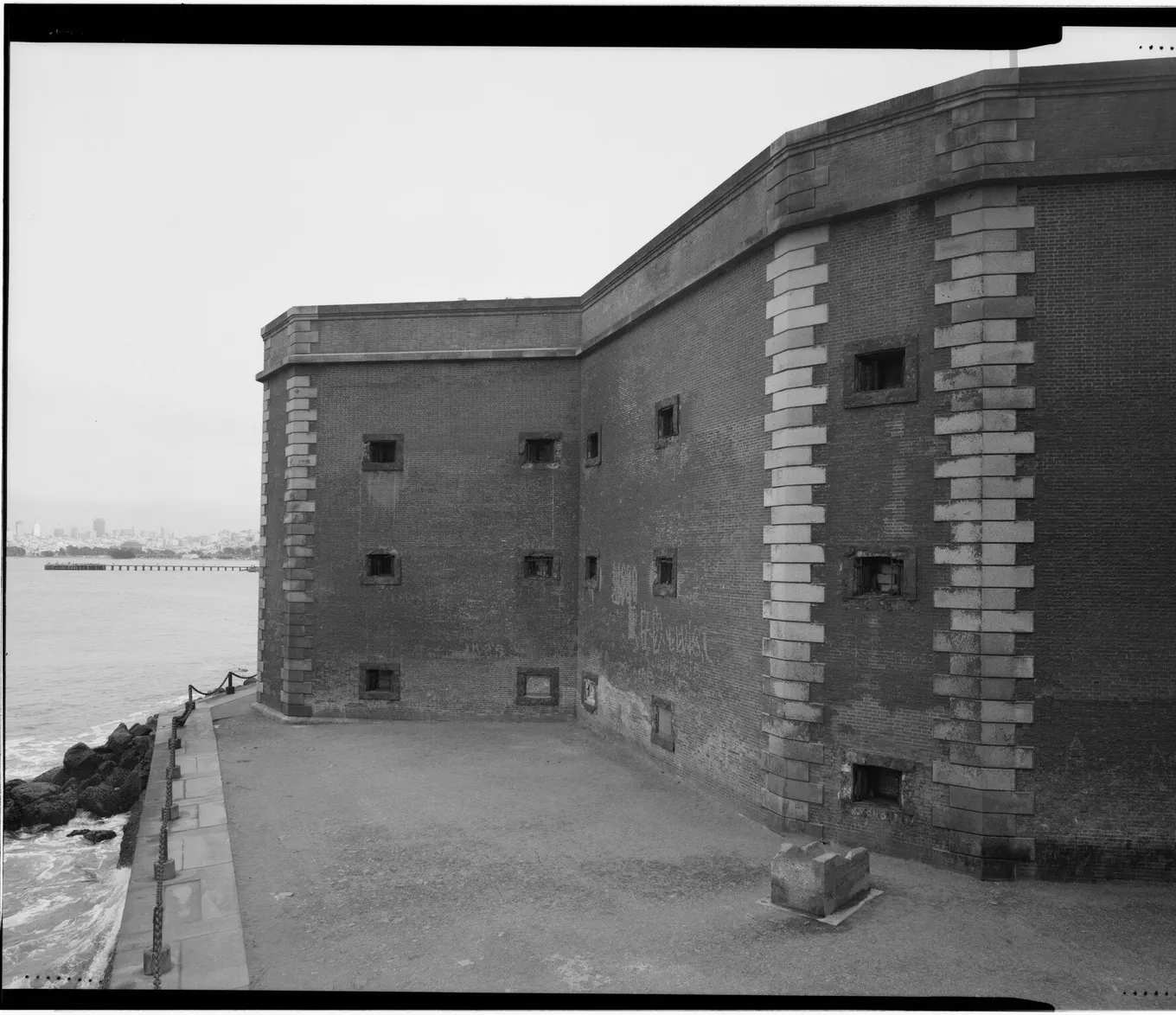
Stand here. Fort Point, a fort under the south end of the Golden Gate Bridge, now a National Historic Site open Thursday to Monday.
Fort Point’s east bastion and seawall on the edge of San Francisco Bay, at the south end of the Golden Gate.David De Vries / Public domain.
In Alfred Hitchcock’s Vertigo (1958), James Stewart plays Scottie Ferguson, a police detective who has retired because of his fear of heights. An old college acquaintance, Gavin Elster, asks him to follow Madeleine, Elster’s wife. Scottie trails her to Fort Point, sees her jump into the bay, and pulls her out. But the woman he saved was never Madeleine. She was Judy, playing Elster’s wife so that Elster could murder the real one. The whole scheme rested on Scottie’s fear of heights.
2 Emperor Norton, the San Francisco bankrupt who crowned himself
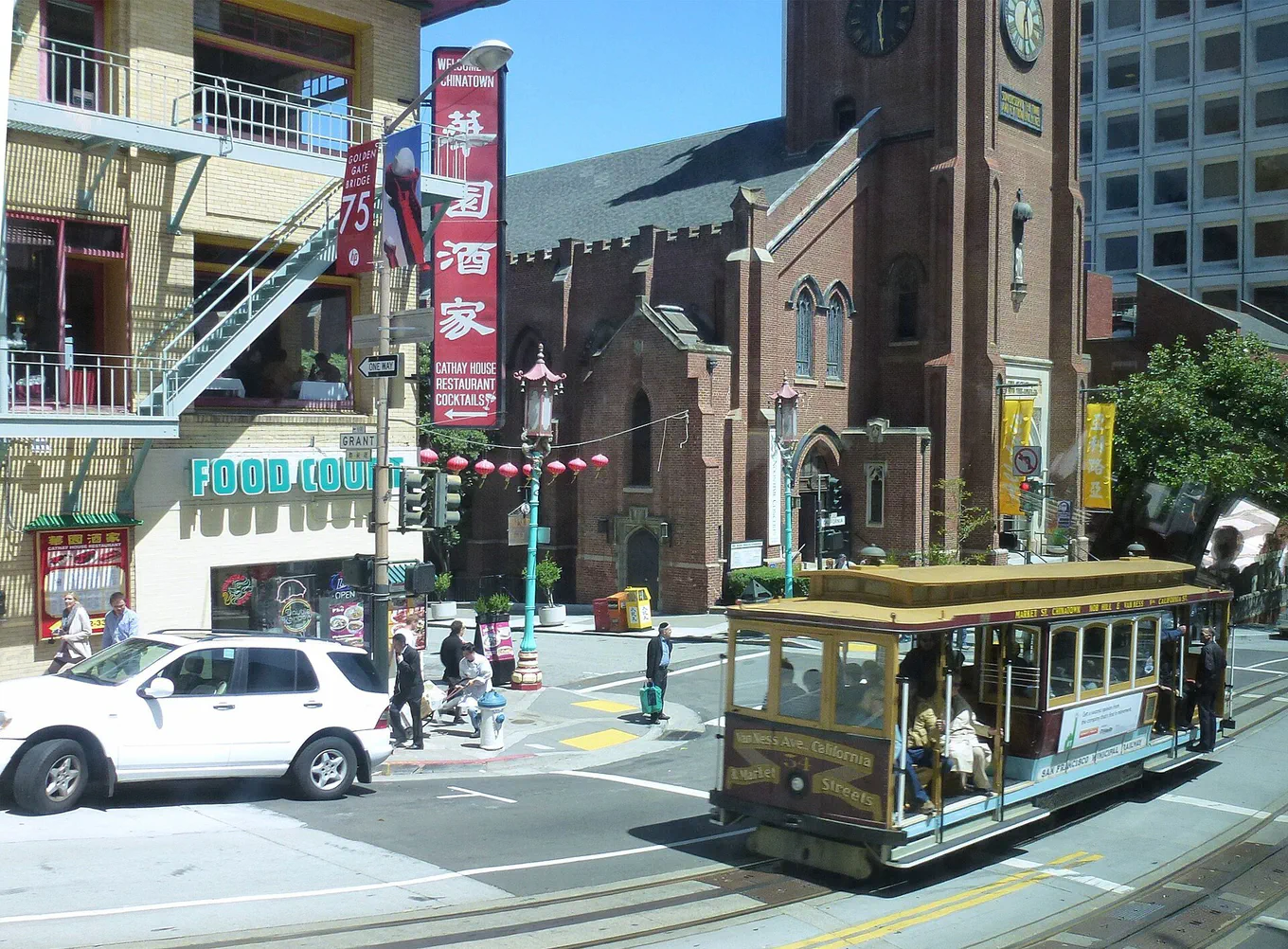
Stand here. The corner of California Street and Grant Avenue, across from Old Saint Mary’s Cathedral, where Norton collapsed in 1880.
Mark Twain modelled the King in Adventures of Huckleberry Finn on Joshua Norton, a San Francisco businessman. He bought a shipload of Peruvian rice in the harbour for $25,000, hoping to corner the market, and the price fell to three cents a pound. The gamble ruined him. On 17 September 1859, he hand-delivered a letter to the Bulletin proclaiming himself “Emperor of these United States”. He issued his own money, and some of the places he frequented accepted it. When he died, some 10,000 people came to view his body.
3 The three men who vanished from Alcatraz
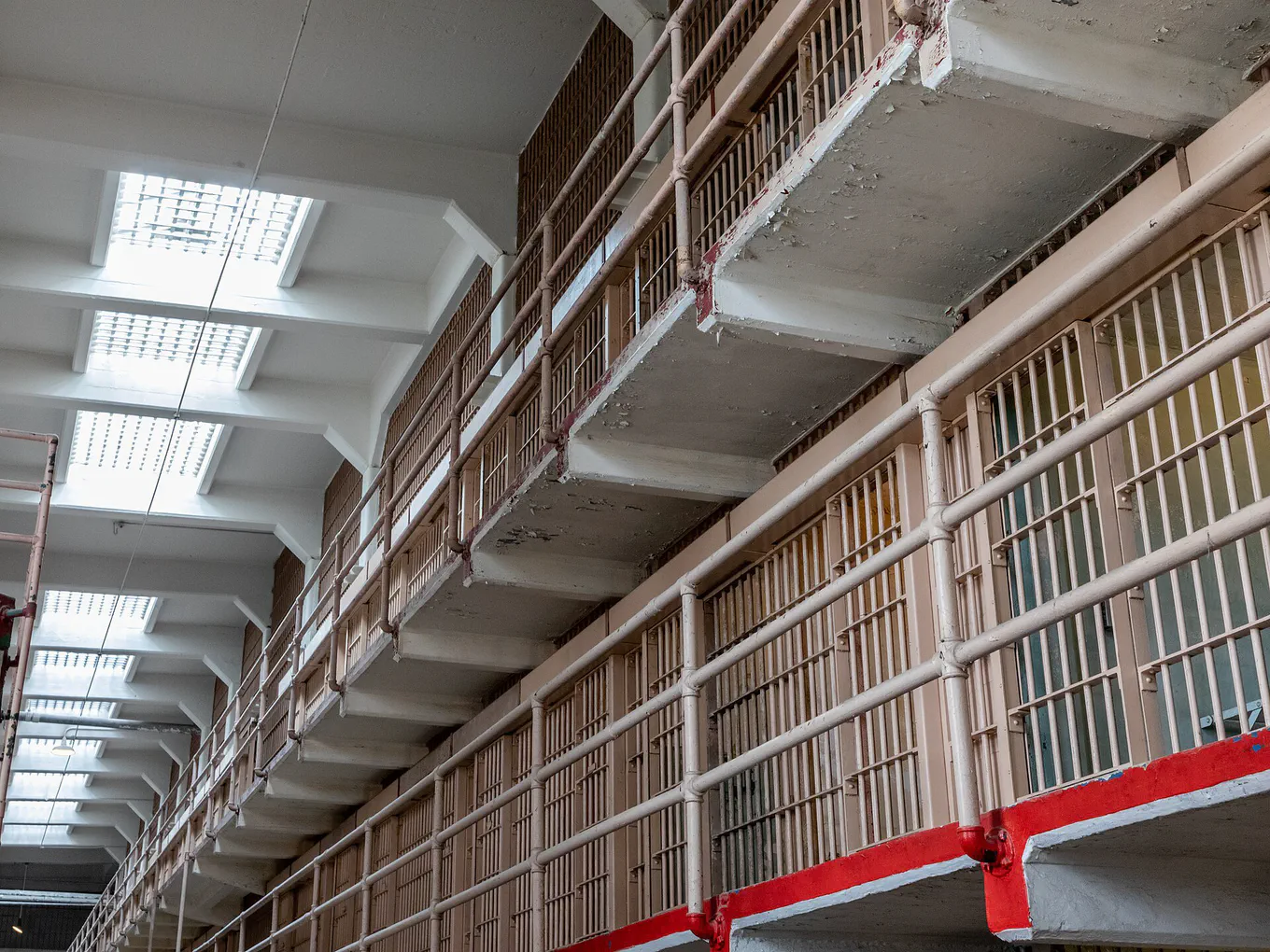
Stand here. The cellhouse on Alcatraz Island. The prison was ordered shut in 1963, and the island is now part of a national recreation area.
Escape from Alcatraz starred Clint Eastwood as Frank Morris. The real Morris and two brothers, John and Clarence Anglin, widened the vents under their sinks with spoons and a drill made from a vacuum-cleaner motor. On the night of 11 June 1962, they left heads of soap and toothpaste in their beds, with hair from the barbershop floor. A fourth man, Allen West, was left behind. The heads fooled the guards until morning. By then the three were gone. No conclusive evidence of their fate has ever surfaced.
4 Andrew Hallidie and the first cable car on Clay Street
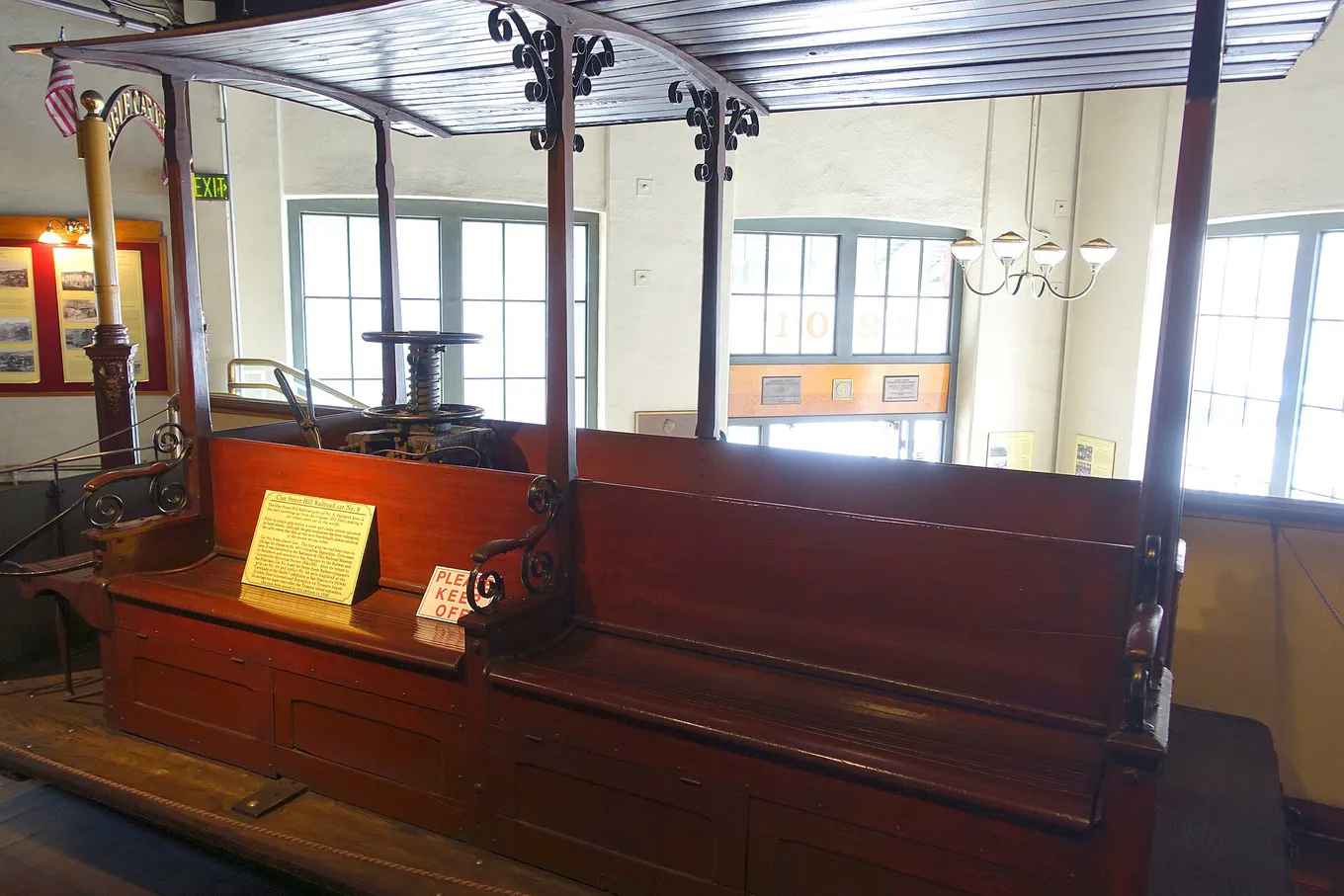
Stand here. The Cable Car Museum, 1201 Mason Street on Nob Hill, inside the powerhouse whose engines and wheels still pull the cables.
Clay Street Hill Railroad car No. 8, built in 1873 for Andrew Hallidie’s first cable line, in the Cable Car Museum on Nob Hill.Daderot / CC0.
San Francisco runs the world’s last manually operated cable car system, and it began with a wire-rope maker, Andrew Hallidie. He reportedly saw horses hauling a car up Jackson Street slip on the wet cobbles and be dragged to their deaths. At 4am on 2 August 1873, he tested his first cable car on Clay Street. Some accounts say the man hired to drive it looked down the hill from Jones Street and refused. So Hallidie took the controls himself and ran the car down and back up without trouble.
5 Caruso, the Palace Hotel, and the 1906 earthquake
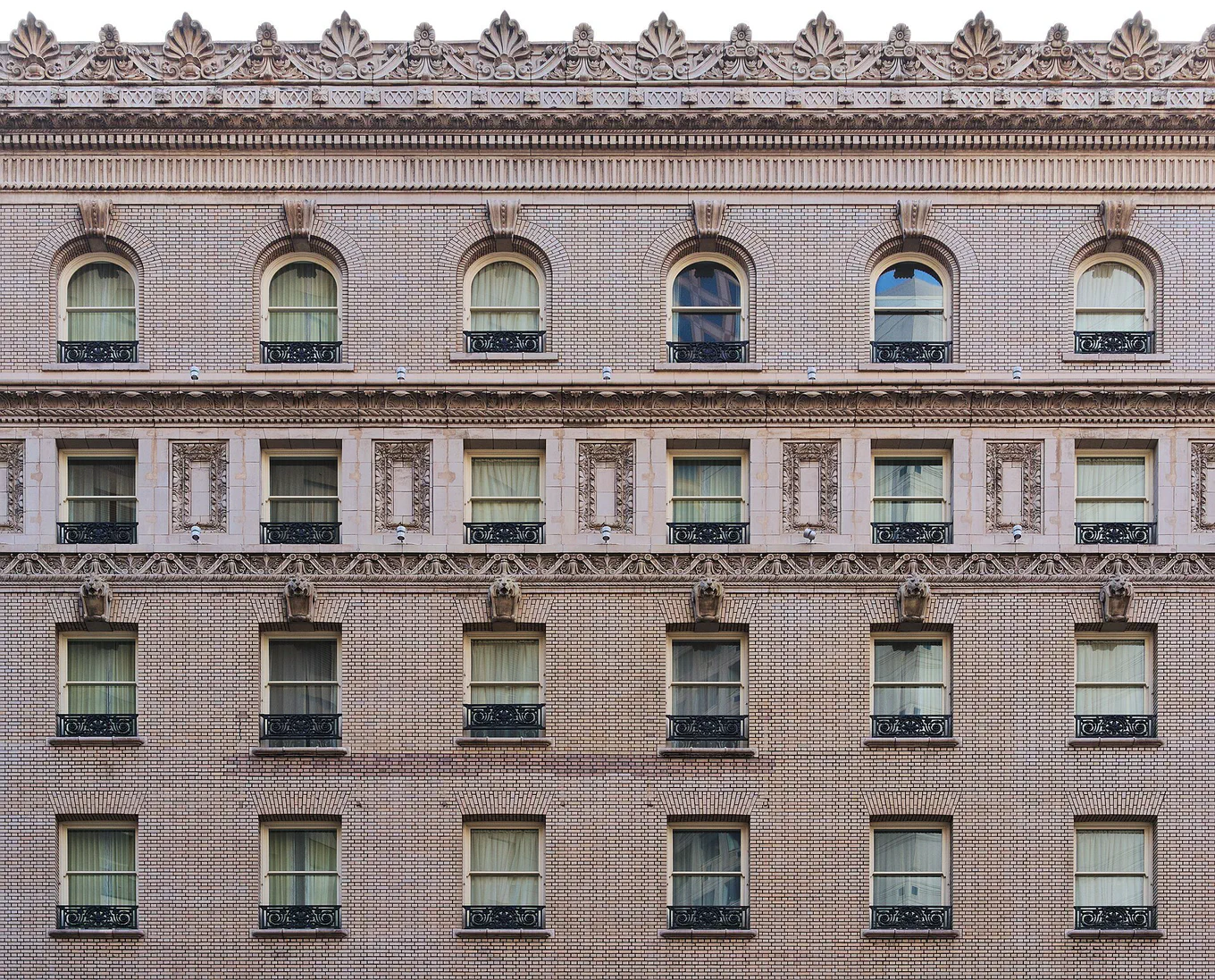
Stand here. The Palace Hotel, at Market and New Montgomery Streets. The original burned in 1906, and its replacement opened on the same site in 1909.
Enrico Caruso, the first international recording star, was in San Francisco on tour with the Metropolitan Opera in April 1906. The morning after he sang Don José in Carmen at the Grand Opera House, the earthquake woke him in his suite at the Palace Hotel. The story goes that he grabbed his signed photograph of President Theodore Roosevelt, ran into the street, and used the photo as his papers to get out of the burning city by boat and train. He vowed never to return. He kept his word.
The Maltese Falcon(Dashiell Hammett, 1930). A novel. Hammett wrote it while living at 891 Post Street, the building where its detective, Sam Spade, may also have lived.
Tales of the City(Armistead Maupin, 1978). A novel. Maupin has confirmed that Macondray Lane, a small pedestrian lane on Russian Hill, inspired its Barbary Lane.
Slouching Towards Bethlehem(Joan Didion, 1968). A collection of essays. The title essay gives Didion’s impressions of Haight-Ashbury in its heyday as a countercultural centre.
Films to watch before you visit San Francisco
Vertigo(Alfred Hitchcock, 1958). A film. Madeleine jumps into the bay at Fort Point, and the prop headstone of Carlotta Valdes was left behind at Mission Dolores.
Bullitt(Peter Yates, 1968). A film. Its car chase begins under Highway 101 in the Mission District, when Bullitt spots the hitmen’s car.
The Conversation(Francis Ford Coppola, 1974). A film about eavesdropping. In it, a couple is recorded as they walk in circles in Union Square.
Escape from Alcatraz(Don Siegel, 1979). A film. Clint Eastwood plays Frank Morris, and it was shot on location at Alcatraz.
Shang-Chi and the Legend of the Ten Rings(Destin Daniel Cretton, 2021). A film. Its shooting locations included Russian Hill, Noe Valley, and Nob Hill.
Questions
Can you visit Alcatraz?
Yes. Alcatraz is part of Golden Gate National Recreation Area, and visitors reach it by ferry.
Where is the Fort Point scene in Vertigo, and can you visit it?
It’s Fort Point, the fort at the south end of the Golden Gate Bridge, where Madeleine jumps into the bay. The bridge’s chief engineer, Joseph Strauss, built a special arch so that the fort could stay. It’s a National Historic Site.
When did the Golden Gate Bridge open?
On 27 May 1937. It spans the Golden Gate, the mile-wide strait between San Francisco Bay and the Pacific, and its 4,200-foot main span was the longest of any suspension bridge in the world until 1964. Its colour is officially called international orange.