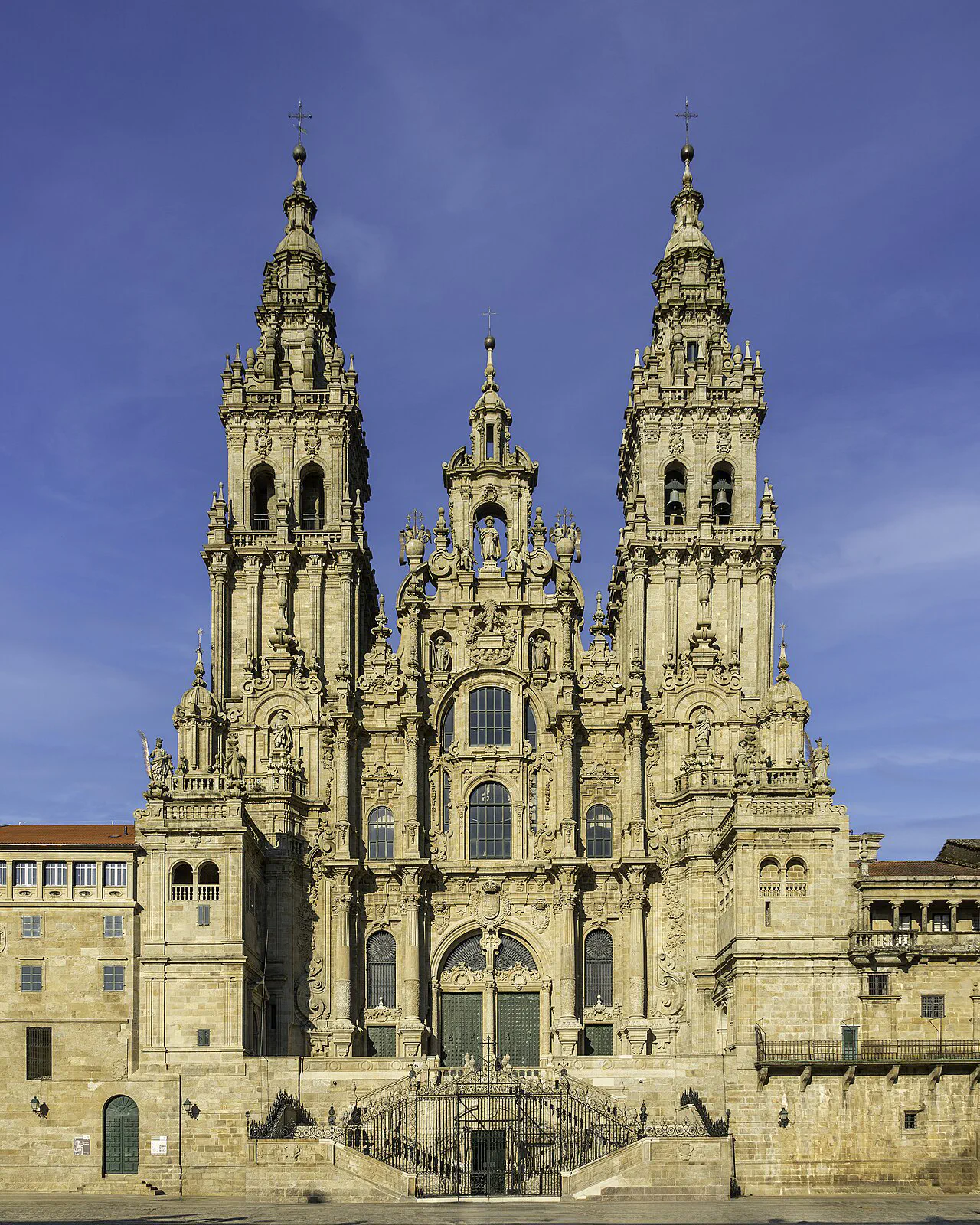
Santiago de Compostela is the capital of Galicia, in north-west Spain. It grew up around the shrine of St James, now its cathedral and, since the 9th century, the end of the Way of St James. Its stories are a ruler who took the bells, a sculptor on his knees, a princess and a runaway censer, relics hidden from Drake, and a film that almost lost its key scene.
Santiago’s church bells, the story goes, ended up as lamps in the great mosque of Córdoba. In August 997, Almanzor, who ruled Islamic Iberia in all but name, came for the shrine of St James. The bishop had emptied the city, and Almanzor’s men burned the church said to hold the apostle’s tomb. But they are said to have left the tomb itself alone. Christian captives carried the bells to Córdoba. In 1236, a king of Castile took Córdoba, and by one chronicler’s account, he sent the bells home.
2 Master Mateo’s kneeling figure in the Portico of Glory
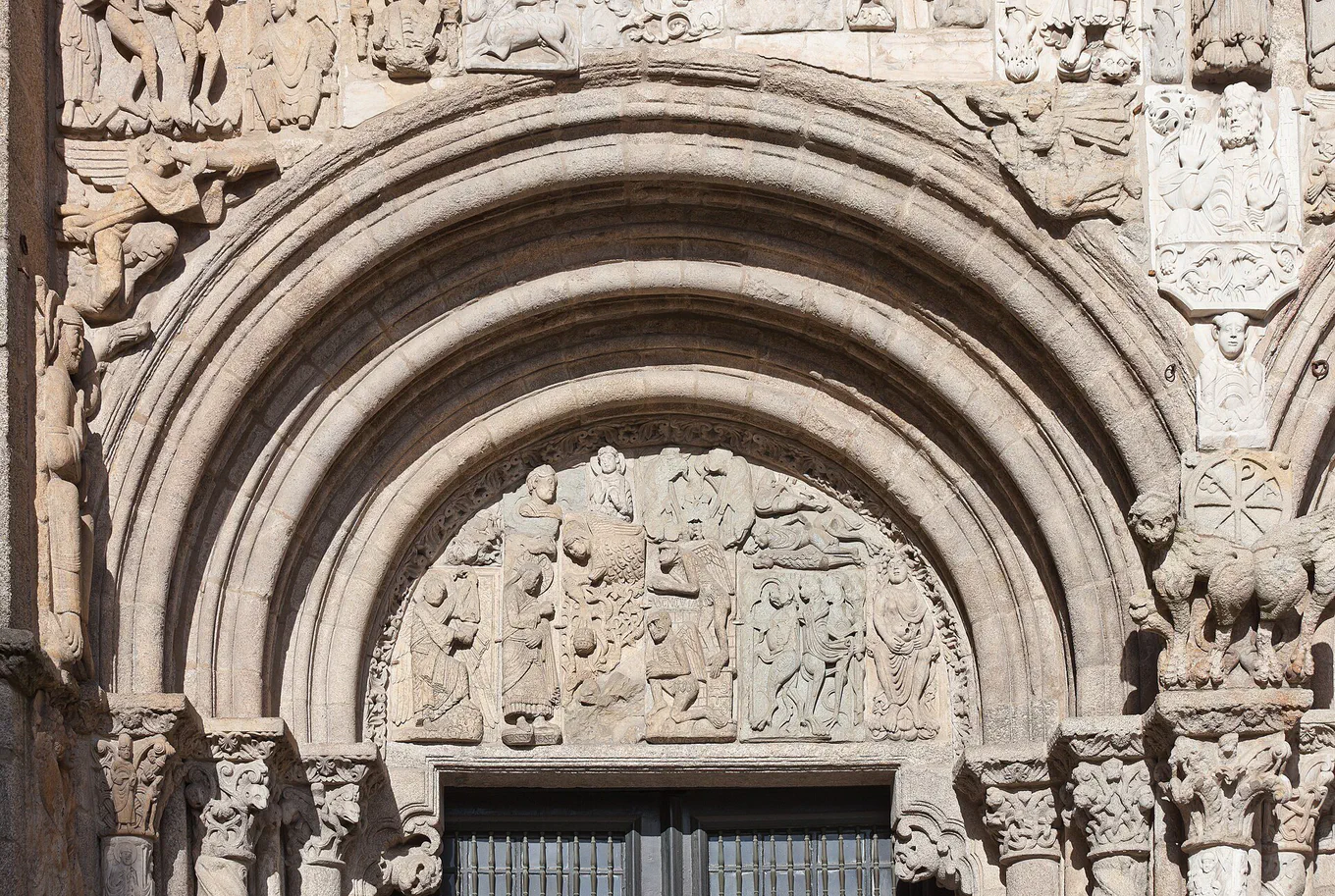
Stand here. The Portico of Glory, inside the cathedral, restored between 2008 and 2018 with its original colours recovered.
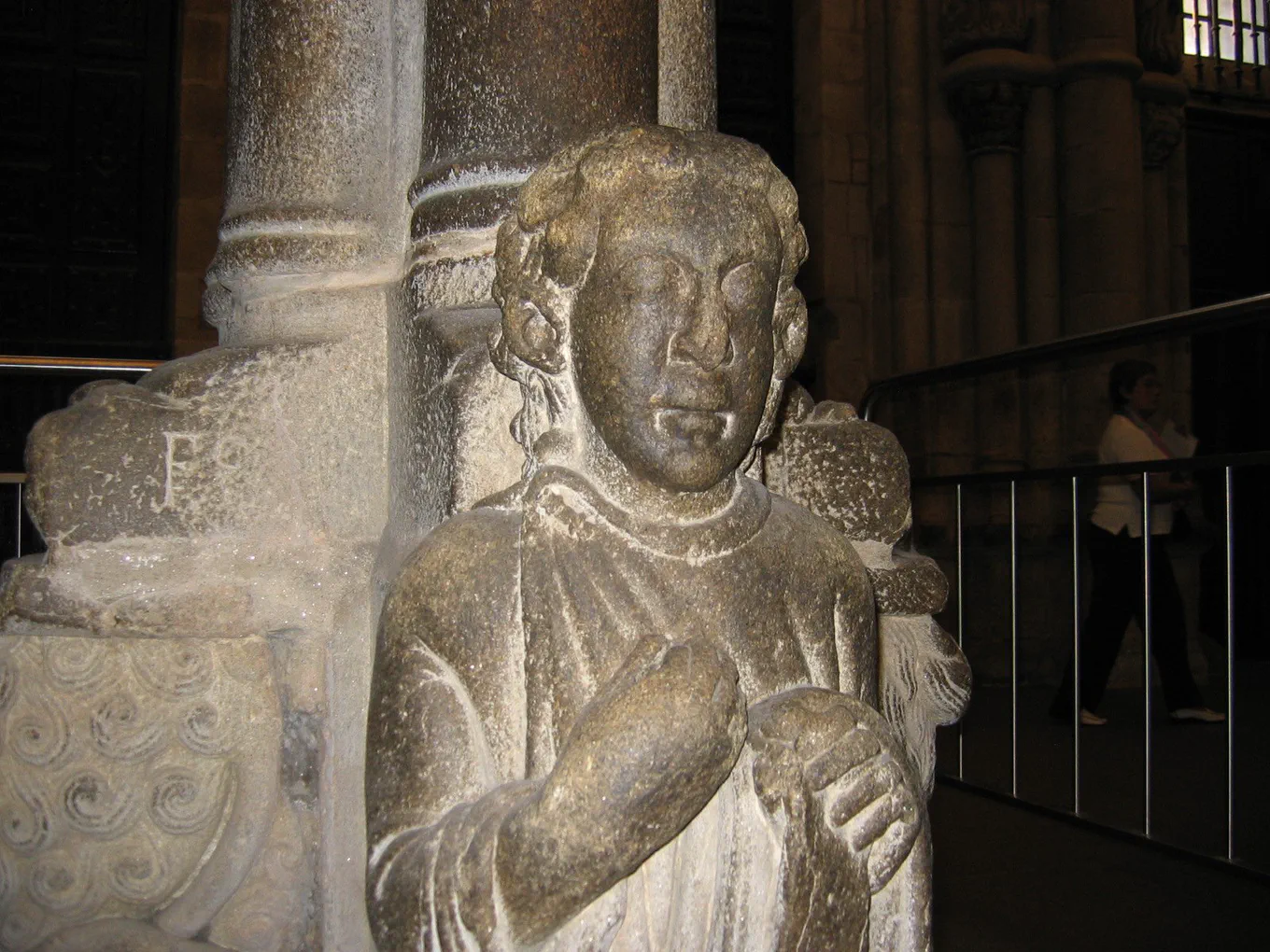
The figure of Master Mateo at the back of the central column of the Portico of Glory in Santiago de Compostela Cathedral.P. Lameiro / Public domain.
In 1168, a king of León gave a sculptor named Mateo a pension for life to take charge of the cathedral works. At the foot of the central column of his Portico of Glory kneels a figure of Master Mateo, a young man with curls holding a sign that reads “Architectus”. The cathedral calls it a portrait of humility. But popular tradition “canonised” him as the Santo dos Croques, and students rub their heads against him for wisdom.
3 Catherine of Aragon and the flying Botafumeiro
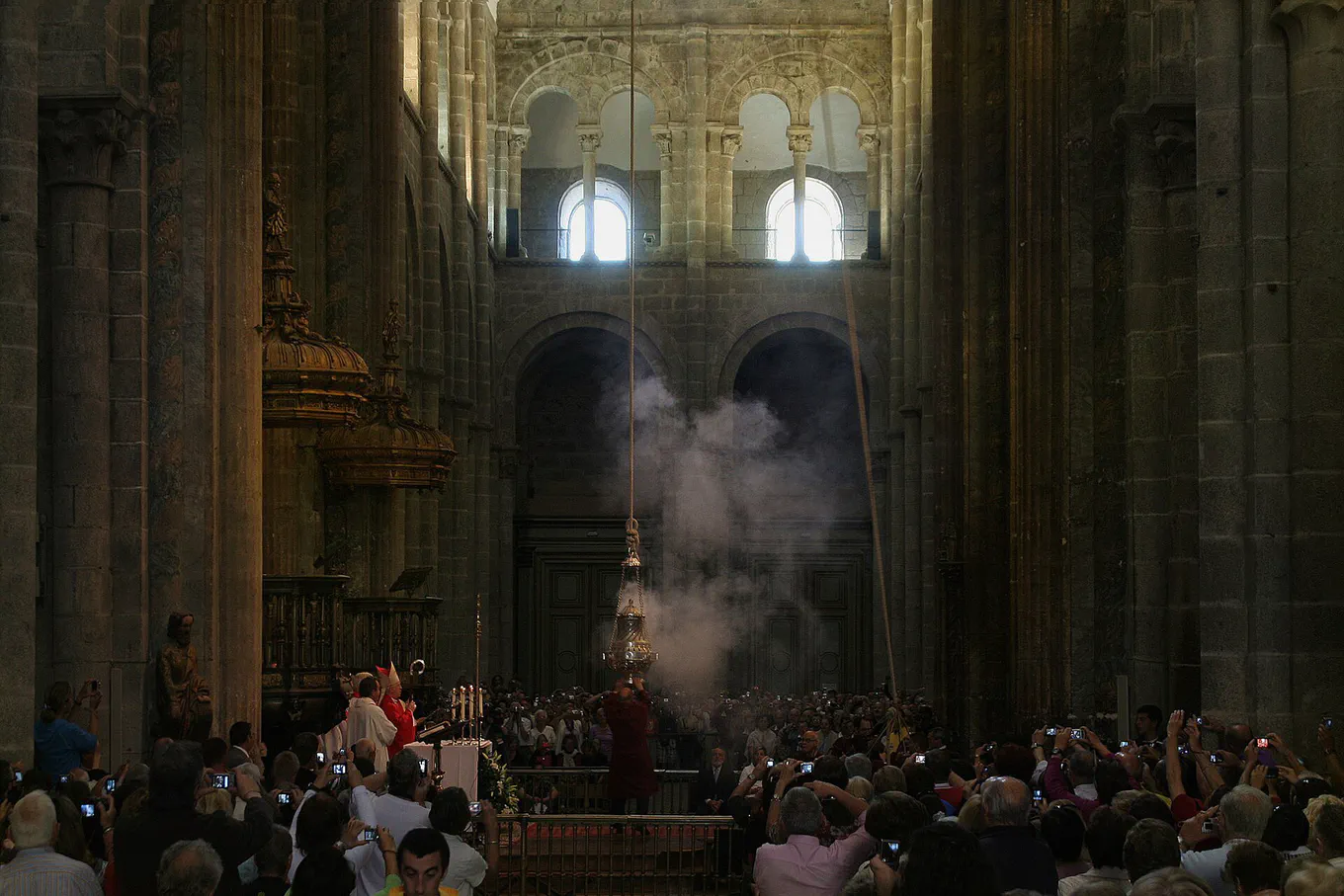
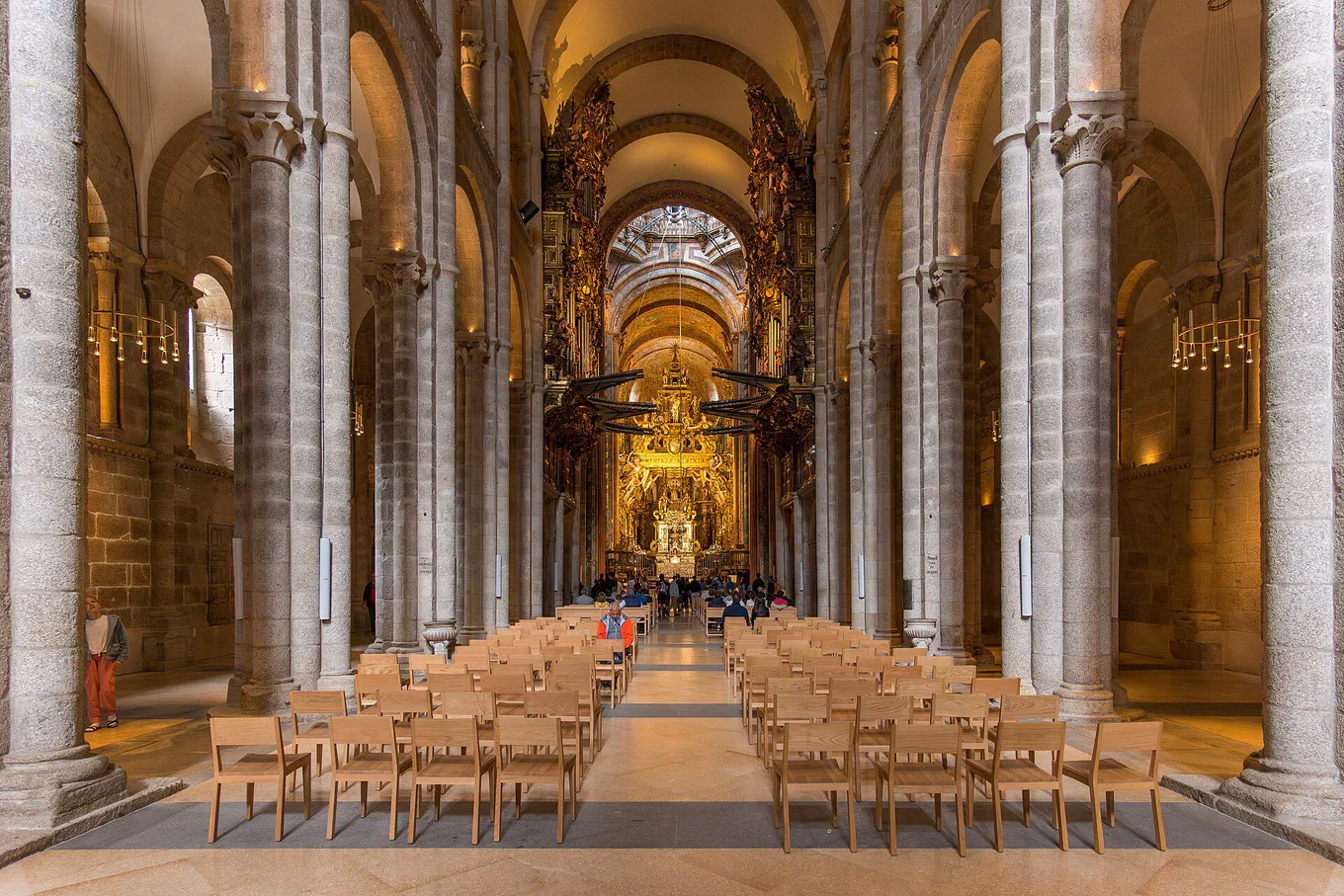
Stand here. The cathedral transept, between the Azabachería and Platerías doors, the two ends of the Botafumeiro’s 65-metre arc.
Long before she was Henry VIII’s first wife, Catherine of Aragon was a princess, the youngest surviving child of Ferdinand of Aragon and Isabella of Castile. She was visiting Santiago on 25 July 1499, the Feast of St James, and the cathedral held a mass in her honour. As the Botafumeiro, its giant censer, swung across the transept, it flew out of the cathedral through the Platerías high window. Nobody was reported hurt.
Francis Drake, the English privateer the Spanish called El Draque, landed at A Coruña in May 1589 and threatened Santiago. To keep the apostle’s relics from him, the archbishop had them hidden in the cathedral’s apse. They stayed hidden, and over time the hiding place was forgotten. In 1879, nearly three centuries later, a canon and historian of the cathedral directed a dig under the apse, and it found an urn of bones. Five years later, the pope declared them genuine.
The Way, a 2010 film, stars Martin Sheen as a father walking the pilgrim road to Santiago with his estranged son’s ashes. His real son, Emilio Estevez, directed the film and wrote the part for him. Sheen was born Ramón Estévez, to a Galician father, and has called not keeping that name one of his great regrets. But church leaders, Estevez told a Christian broadcaster, opposed letting the crew film inside the cathedral. He asked everyone on set to pray, and permission came 48 hours before the scenes were due.
Pack nothing. Leave Friday.
Every Friday, I write a free letter, Journey, that takes us on a trip through places, stories, and ideas.
Books to read before you visit Santiago de Compostela
Seis poemas galegos(Federico García Lorca, 1935). A poetry collection. Lorca’s six Galician poems open and close with tributes to Santiago; in one, the moon dances in the Plaza de la Quintana, his “armchair square”.
Trece badaladas(Suso de Toro, 2002). A Galician-language novel set in Santiago, where thirteen strokes of the cathedral’s Berenguela bell sound “the devil’s hour”.
La casa de la Troya(Alejandro Pérez Lugín, 1915). A romantic novel. A young man’s father makes him study law at the University of Santiago, where he boards at the Casa de la Troya.
Films to watch before you visit Santiago de Compostela
Saint-Jacques… La Mecque(Coline Serreau, 2005). A French film about the pilgrimage to Santiago from Le Puy-en-Velay; its Botafumeiro scene was filmed at the cathedral.
Trece badaladas (Trece campanadas)(Xavier Villaverde, 2002). A Galician film, loosely based on Suso de Toro’s novel, in which a young sculptor returns to Santiago, his home city, after fifteen years away.
The Way(Emilio Estevez, 2010). A drama film about a father who walks the pilgrim road to Santiago. Scenes were shot inside the cathedral, with permission given just 48 hours ahead.
Questions
Can you see the tomb of St James in Santiago cathedral?
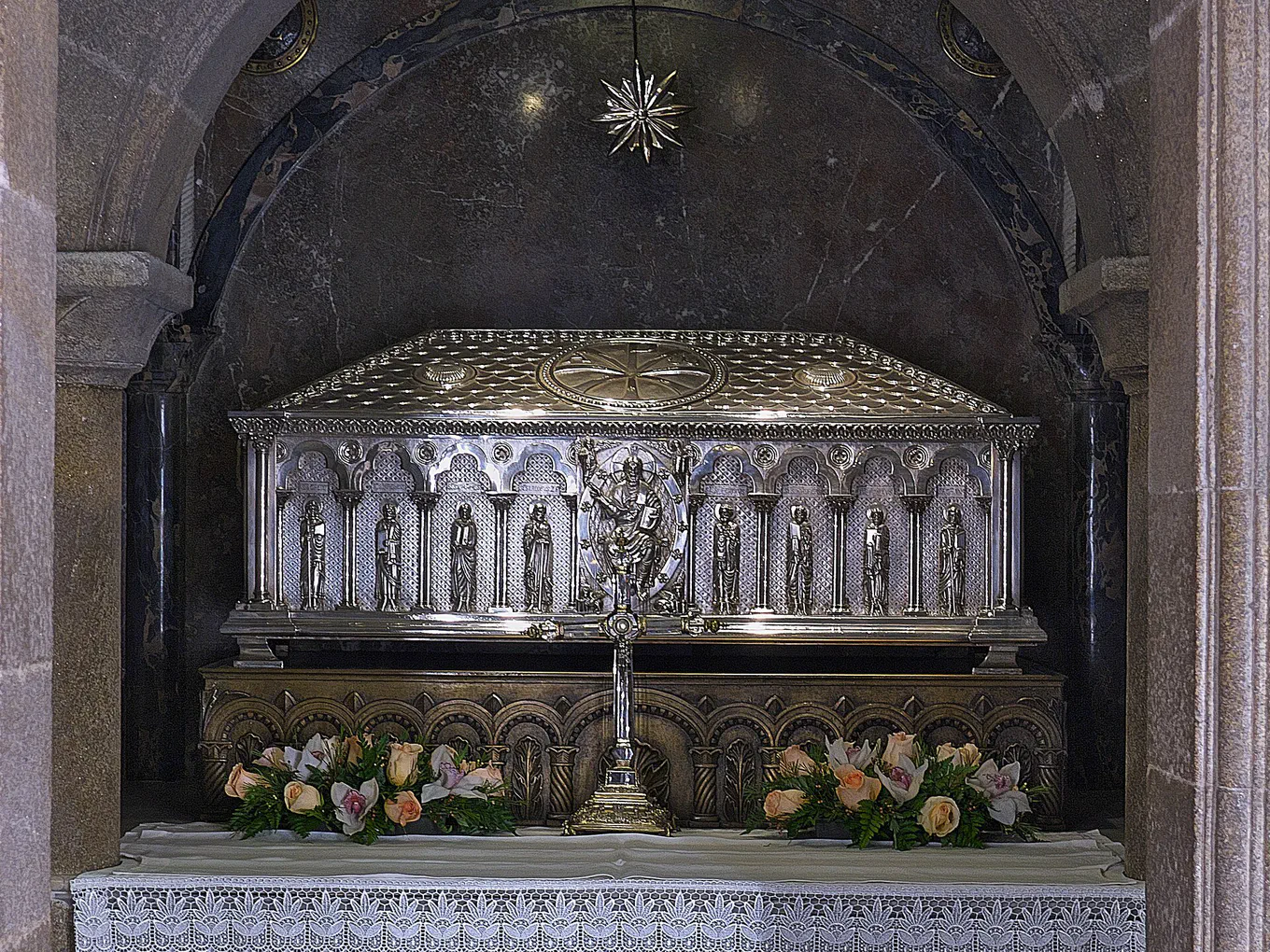
Yes. The relics venerated as the apostle’s are kept in a silver reliquary of 1886, in the crypt beneath the cathedral’s main altar, on the site of the original Roman-era mausoleum. Pope Leo XIII authenticated them in 1884, though whether they are really his has long been questioned.
Does Compostela mean “field of stars”?
Probably not. Folk etymology takes it from the Latin Campus Stellae, “field of the star”. Legend says a hermit, Pelagius, found the apostle’s tomb in 814, led by lights in the night sky. The star on the cathedral’s Obradoiro façade stands for those lights. But the name more likely comes from compositum tella, meaning a well-ordered burial ground.
What is a Holy Year in Santiago de Compostela?
A Jacobean Holy Year falls whenever 25 July, the feast of St James, is a Sunday. In those years, a special east door of the cathedral is opened as an entrance. One fell in 2021.