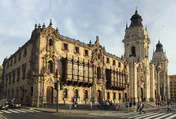
Santiago, Chile, Santiago Metropolitan Region, South America
Pedro Pascal was born here. For me he’ll always be Joel, from the TV version of my favourite game. In episode six of season one he admits to Tommy he’s scared of failing Ellie. There’s no action in the scene at all, and it’s one of the best things in the show.
— Nick
Santiago is the capital and largest city of Chile, in the Central Valley between the Andes to the east and the Coastal Range to the west. The conquistador Pedro de Valdivia founded it on 12 February 1541. Its stories here are a president’s last day, a poet’s house for his lover, a woman holding the new town, a church fire, and a hill turned into a park.
1 Salvador Allende’s last stand in La Moneda Palace
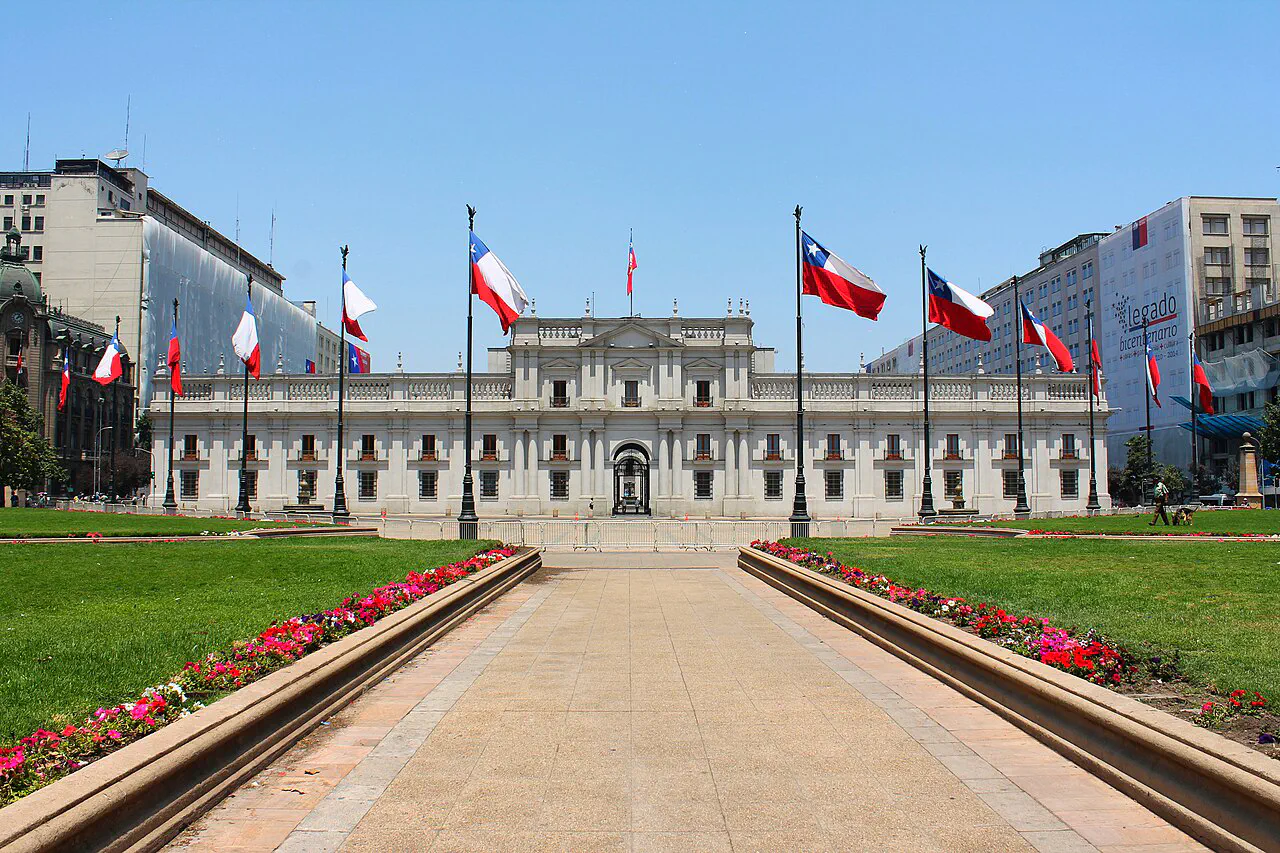
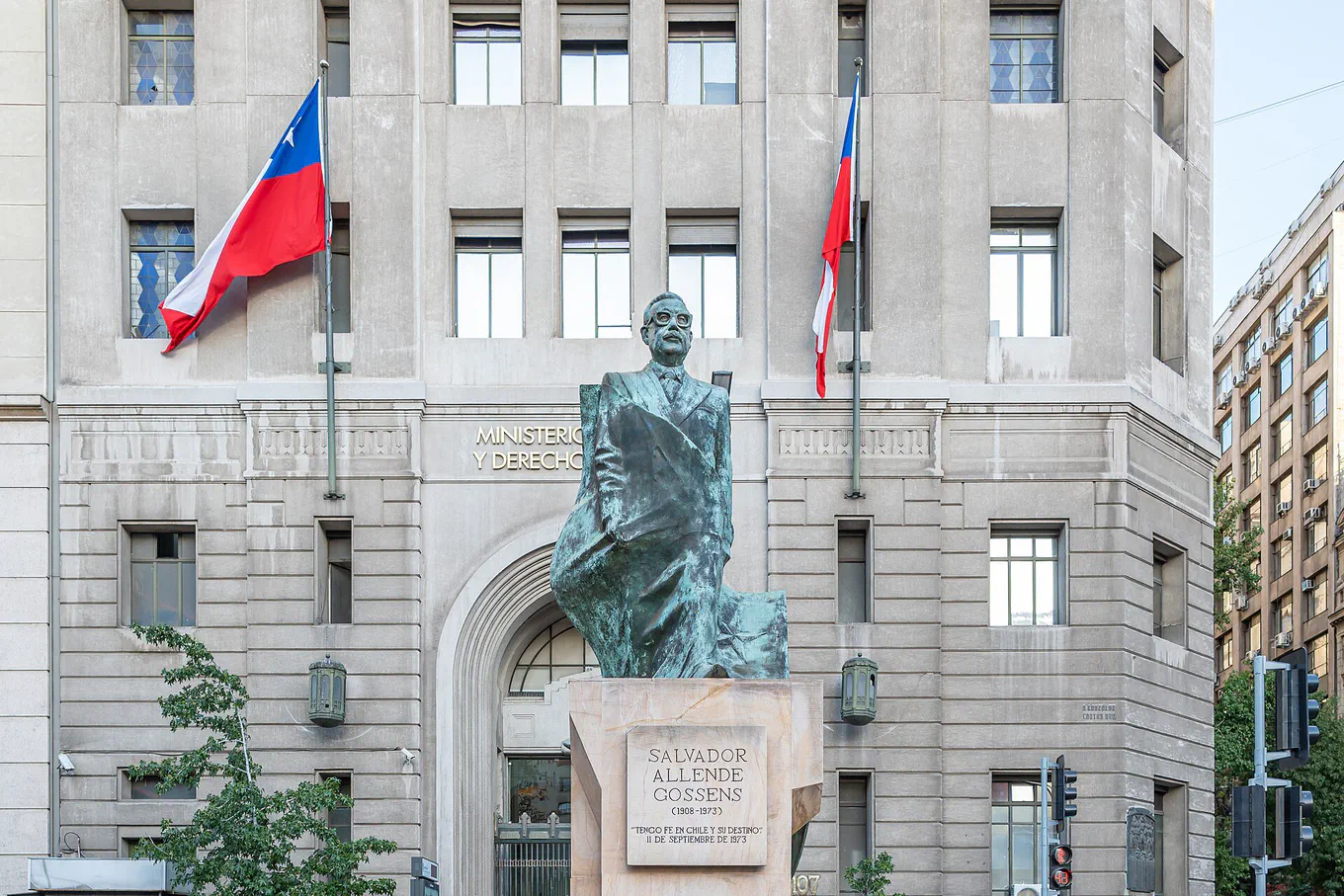
Stand here. Constitution Square, before La Moneda, still the president’s seat. Allende’s statue stands here, and bullet marks from 1973 can still be seen on the palace.
Salvador Allende, the first Marxist elected president in a Latin American democracy, was in La Moneda on 11 September 1973 when the military moved against him. He refused to surrender, even when told the palace would be bombed. At 9.10 a.m., he spoke to the nation live on Radio Magallanes: “Workers of my country, I have faith in Chile and its destiny.” Then the air force strafed the palace with rockets. By the afternoon, Allende was dead by his own hand, with a rifle Fidel Castro had given him.
2 Pablo Neruda’s secret house for Matilde, La Chascona
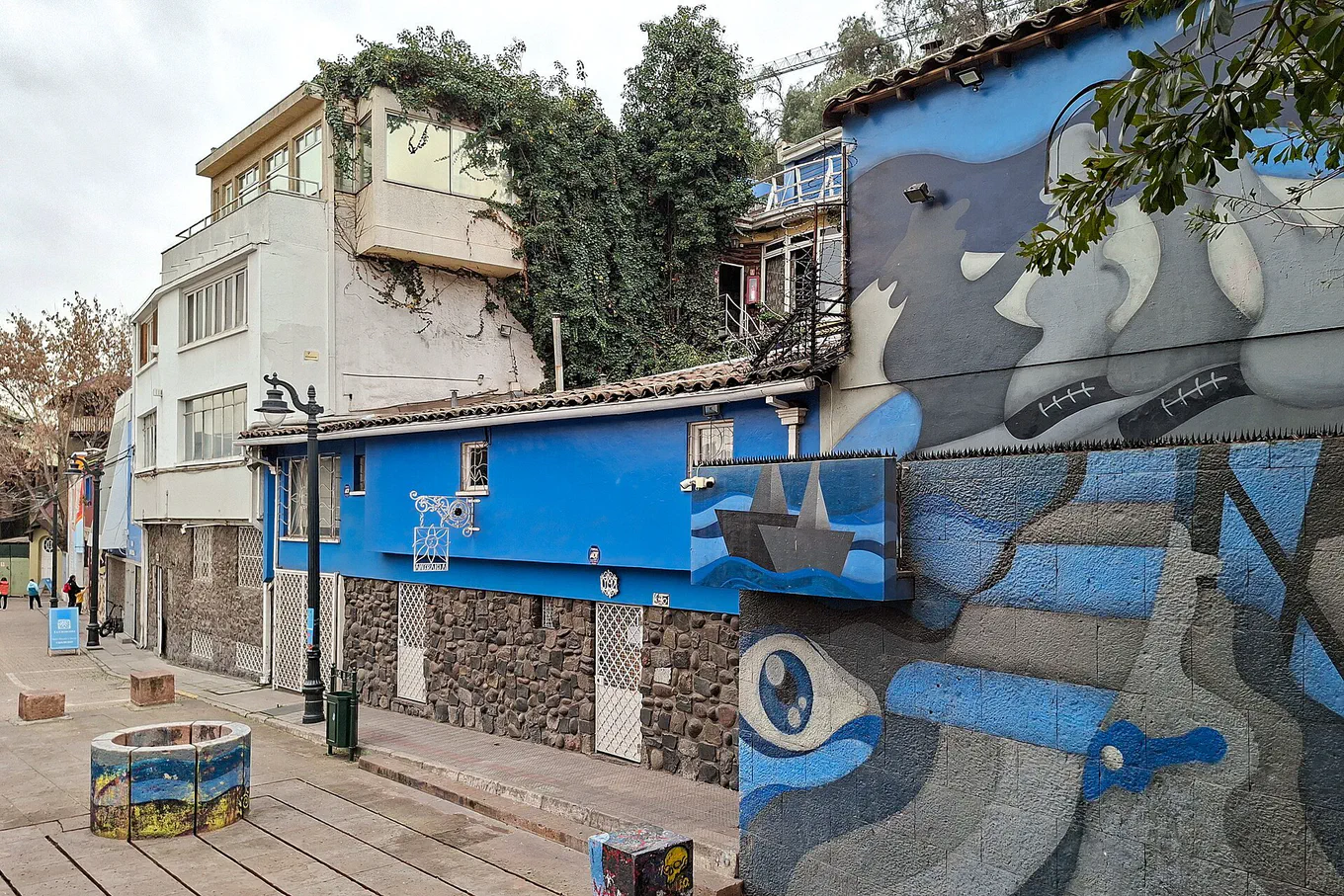
Stand here. La Chascona, Fernando Márquez de la Plata 0192, at the foot of San Cristóbal hill in Bellavista. It is now a house museum.
The poet Pablo Neruda began this house in 1953 for his secret love, Matilde Urrutia, while still living with his wife. He named it La Chascona, Chilean Spanish for tangled hair, his nickname for her abundant reddish hair. They married. In September 1973, twelve days after Allende’s death, Neruda died. The house had been vandalised, and a blocked irrigation ditch had flooded it. Matilde had planks laid over the mud to carry his body in, and spent the night with friends in a living room whose windows were broken.
3 Inés Suárez and the burning of Santiago in 1541
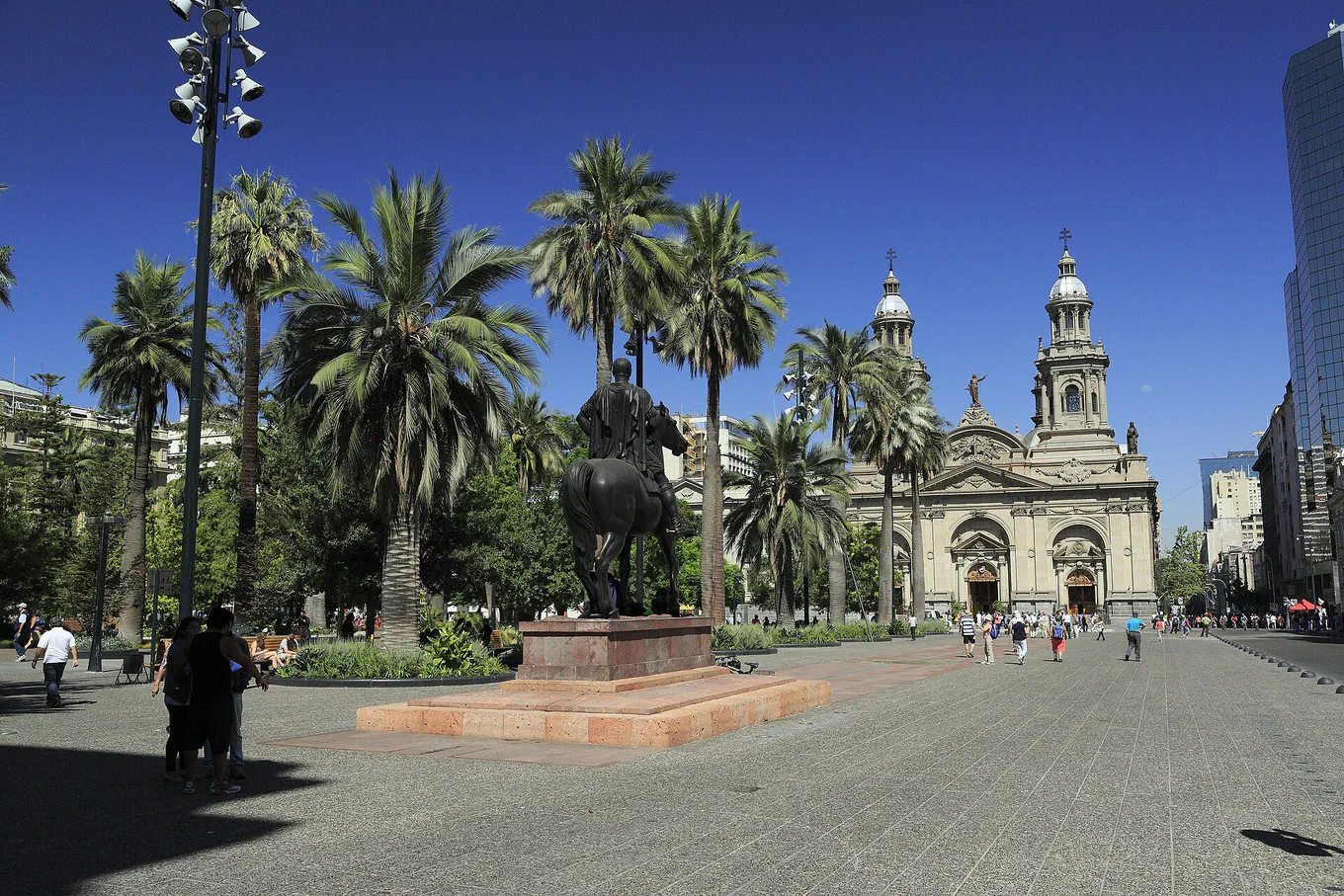
Stand here. The Plaza de Armas, Santiago’s main square, at the heart of the new town. Valdivia’s statue on horseback stands here.
Isabel Allende’s novel Inés of My Soul is written as the memoir of Inés Suárez, Pedro de Valdivia’s mistress. On 11 September 1541, with Valdivia away, thousands of warriors attacked his new town. Inés took a guard’s sword, beheaded seven captive chiefs, and threw their heads among the attackers. The warriors turned back, though victory was in their hands. Some scholars doubt she ordered the killings. About half the town burned. By one account, what remained included two small pigs, a cock and hen, and about two handfuls of wheat.
4 The Company church fire
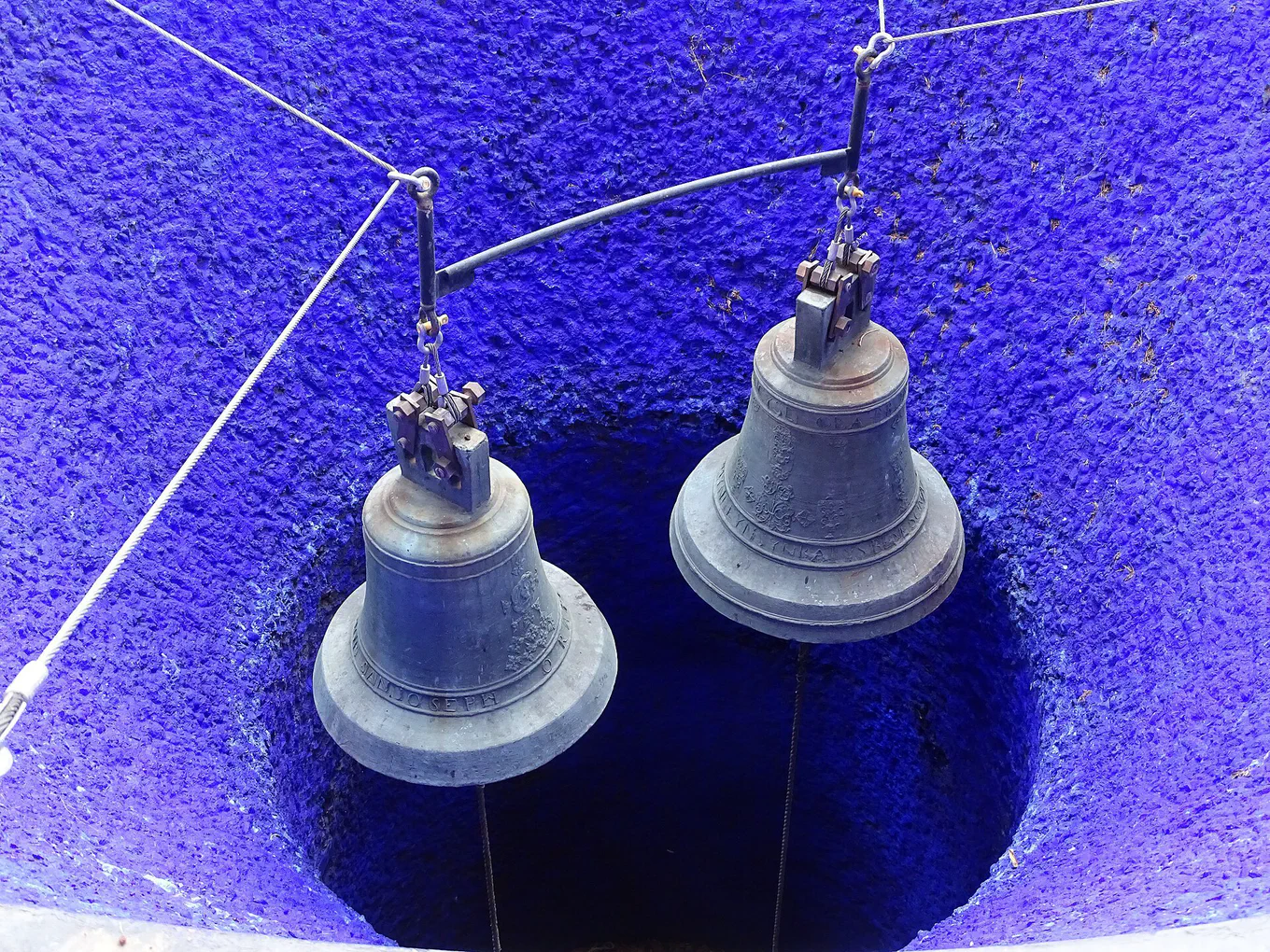
Stand here. The gardens of the Former National Congress. The church is gone, and two of its bells, returned from Wales in 2010, hang beside a statue.
A priest named Ugarte planned a feast-day mass at the Church of the Company in 1863, with thousands of candles and oil lamps among cloth hangings. At about 7 p.m., by some accounts, a lamp on the altar caught the veils. The side doors had been shut to fit more people in, and opened only inwards. The men, seated apart behind an iron grating, mostly escaped. Between 2,000 and 3,000 people died, most of them women. The priests left unharmed, carrying what valuables they could save.
5 Benjamín Vicuña Mackenna’s park on Santa Lucía hill
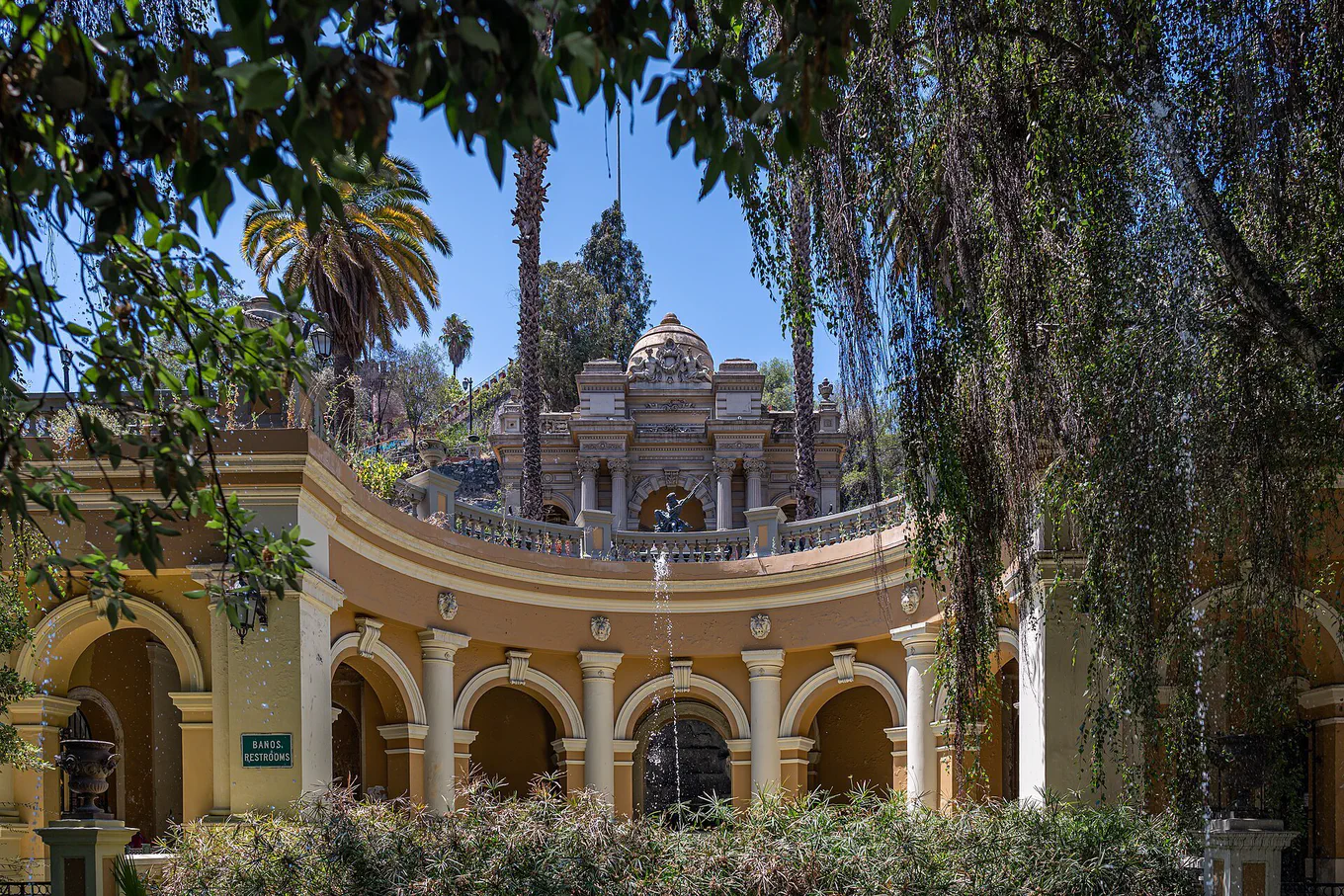
Stand here. Santa Lucía hill, a park of stairways and fountains where a cannon fires at noon. The summit chapel has been shut since the 2010 earthquake.
In 1872, Santa Lucía, the hill Valdivia had named on Saint Lucy’s day, was an arid heap of stones. That year, the president made Benjamín Vicuña Mackenna intendente, in charge of the city, so that he would not trouble the government. Vicuña Mackenna made the hill his great work, building a road up to a new chapel at the summit. He spent heavily on beautifying the city. The heap of stones is now a park, and Vicuña Mackenna is buried in its chapel.
Pack nothing. Leave Friday.
Every Friday, I write a free letter, Journey, that takes us on a trip through places, stories, and ideas.
Inés of My Soul(Isabel Allende, 2006). A historical novel. Inés Suárez, as an old woman, tells how she and Valdivia conquered Chile and founded Santiago.
My Tender Matador(Pedro Lemebel, 2001). A novel. A poor leftist neighbourhood of Santiago in 1986, and the Alameda, where the main character stoops for a protest flyer and is struck by a policeman.
Mala onda(Alberto Fuguet, 1991). A novel. Fuguet’s debut, a coming-of-age story set in Santiago in 1980, during the referendum on Pinochet. It names Providencia, Ñuñoa, and Las Condes.
Films to watch before you visit Santiago
The Battle of Chile(Patricio Guzmán, 1975–1979). A documentary in three parts. A failed coup in downtown Santiago, then the presidential palace bombed from the air on 11 September 1973.
Machuca(Andrés Wood, 2004). A film. Santiago in the months before the 1973 coup, seen through Saint George’s College, the private school the director attended as a boy.
Missing(Costa-Gavras, 1982). A film based on the disappearance of American journalist Charles Horman after the 1973 coup. The film names Santiago but was shot in Mexico.
Santiago, Italia(Nanni Moretti, 2018). A documentary. The Italian embassy in Santiago, which sheltered hundreds of Augusto Pinochet’s opponents after the 1973 coup and helped them reach Italy.
Questions
Can you still see the 1973 bullet marks on La Moneda?
Yes. La Moneda is still the seat of Chile’s president, and the damage from 1973 was restored by March 1981, but some bullet marks were kept and can still be seen.
Can you visit La Chascona, Pablo Neruda’s house in Santiago?
Yes. La Chascona is a house museum at Fernando Márquez de la Plata 0192, in Bellavista, at the foot of San Cristóbal hill.
When and where was Santiago founded?
Pedro de Valdivia took the hill the local people called Huelén on 13 December 1540, Saint Lucy’s day, and named it Santa Lucía. He founded the city of Santiago del Nuevo Extremo on 12 February 1541, and the Plaza de Armas is still its main square.