In 1992, following Columbus’s route, we spent three months in the Canary Islands waiting for hurricane season to pass. Columbus knew his storms. In 1502, he warned Santo Domingo’s governor that a hurricane was coming. The governor sent his fleet out anyway, and most of it sank. All of Columbus’s ships survived. Listen to the sailor.
— Nick
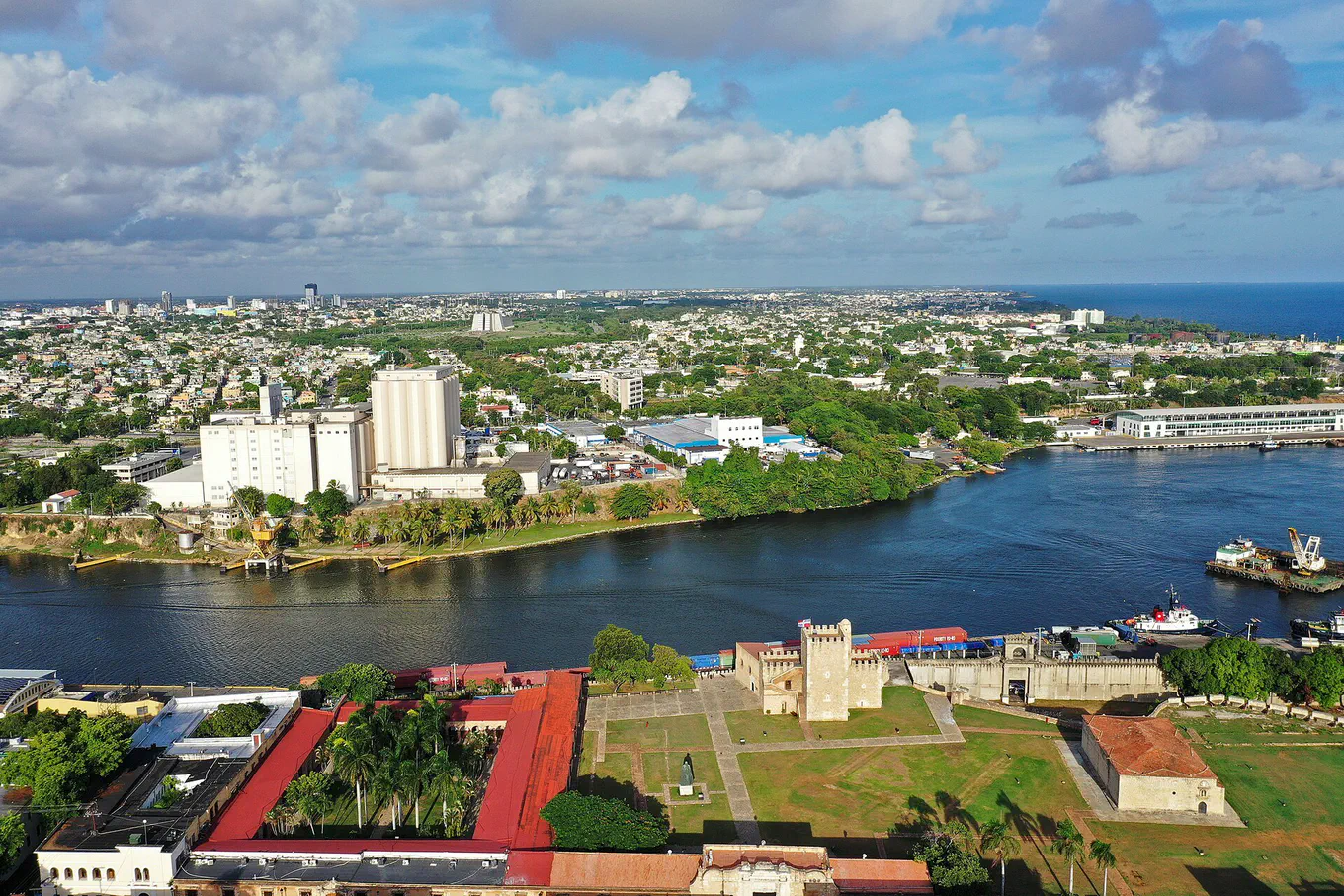
Santo Domingo is the capital and largest city of the Dominican Republic, on the southern coast of Hispaniola, where the Ozama River meets the Caribbean Sea. The Spanish founded it in 1496, and it is the oldest continuously inhabited European settlement in the Americas. Its stories here are Columbus’s ignored storm warning, a friar’s sermon, Drake’s ransom, the night Trujillo was killed, and a palace that played Havana.
In 1502, Christopher Columbus arrived off Santo Domingo, saw a hurricane coming, and asked to shelter in the harbour. The new governor, Nicolás de Ovando, refused him the port. Columbus warned him to hold back the fleet about to sail for Spain, too. Ovando sent it out anyway. The storm sank most of it. Every one of Columbus’s own ships survived. Of Ovando’s fleet, one ship reached Spain. It was carrying Columbus’s gold.
2 Friar Montesinos and the sermon that shocked Hispaniola
Stand here. The seafront, where a 15-metre stone and bronze statue of Montesinos preaching faces the sea, a gift from Mexico dedicated in 1982.
Diego Columbus, Christopher’s son, was governor in 1511 when the Dominican friar Antonio de Montesinos preached the sermon that outraged him. On the fourth Sunday of Advent, Montesinos told the settlers they were all in mortal sin for their cruelty to the island’s people. King Ferdinand ordered the friars shipped home. Instead, they won him round, and the Laws of Burgos followed, the first code to protect the Indigenous people. One listener was Bartolomé de las Casas, who became famous for defending the rights of the Americas’ Indigenous peoples.
3 Francis Drake’s ransom and the cathedral he didn’t burn
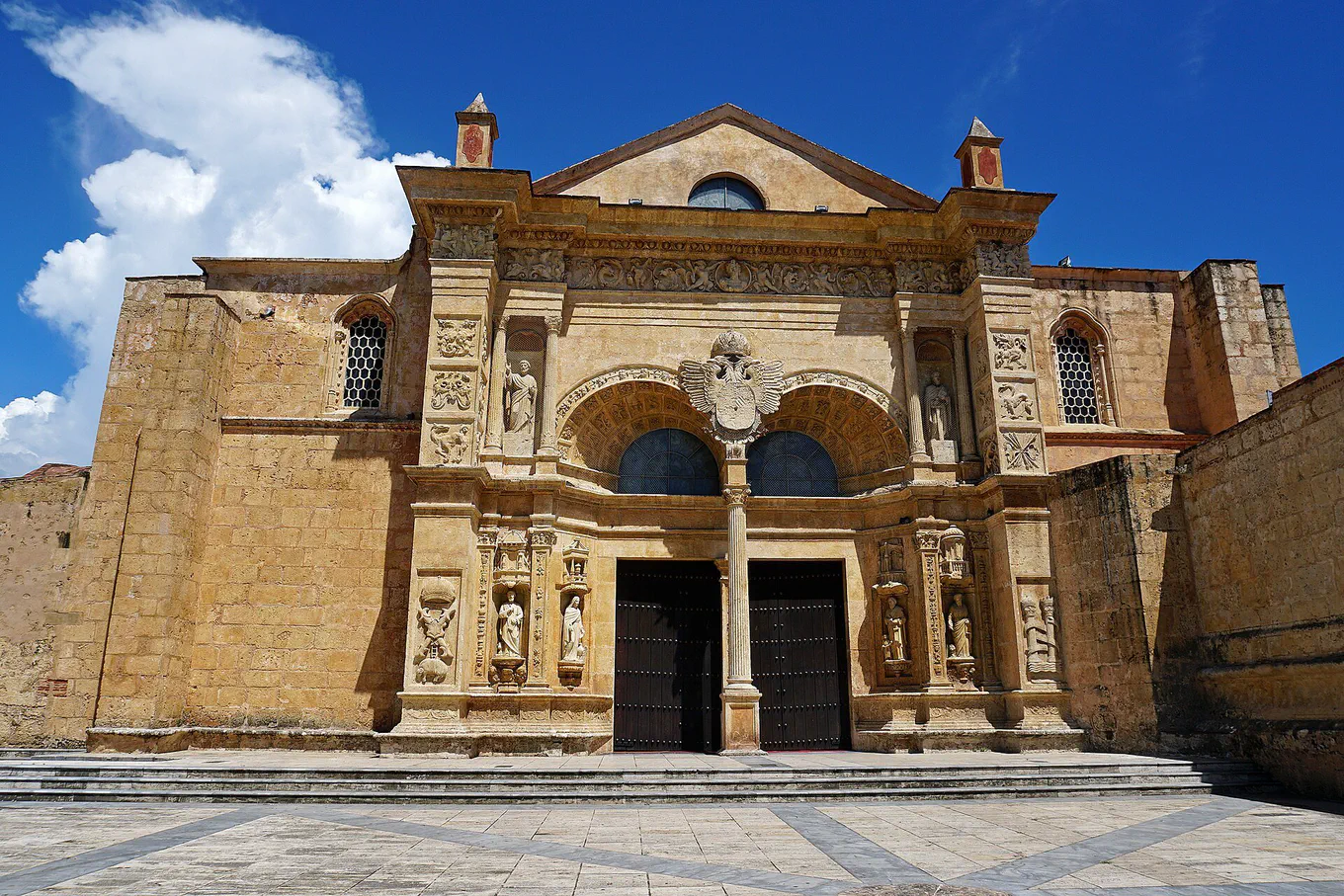
Stand here. The Cathedral of Santa María la Menor, beside Columbus Park, the oldest existing cathedral in the Americas.
Sir Francis Drake arrived on New Year’s Day 1586, captured Santo Domingo, and demanded a million ducats to hand it back. The Spanish eventually offered 25,000. While they bargained, Drake had civic buildings and churches set alight, one after another, until a third of the city lay in ruins. The ransom was paid in the last days of January, and the English left a month to the day after they came. The cathedral was spared the fire. Drake had made it his headquarters.
4 The night they killed Trujillo on the San Cristóbal road
Stand here. The Monument to the Heroes of 30 May, on Avenida George Washington, honours the men who ambushed Trujillo.
Much of Mario Vargas Llosa’s novel The Feast of the Goat is set in the weeks around 30 May 1961. That night, Rafael Trujillo, the dictator, was on the road to his home town of San Cristóbal when seven men ambushed his blue Chevrolet. A shot from Antonio Imbert hit him in the chest, and the car took sixty hits. The plotters had meant to seize his family, but that never happened. Trujillo’s son was brought back from Paris to succeed him, and of the seven gunmen, only Imbert survived the manhunt.
5 How Trujillo’s palace became Batista’s in The Godfather Part II
Stand here. The National Palace, on Avenida México in Gazcue. Built for Trujillo in the 1940s, it houses the government’s executive offices.
The Godfather Part II needed Havana on the eve of revolution, and for a 1974 film Cuba was out of the question. Charles Bluhdorn, whose company owned Paramount, wanted to build up the Dominican Republic as a place to make films, so Santo Domingo played Havana. Trujillo’s palace became President Batista’s. In its Hall of the Caryatids, Michael Corleone goes to a New Year’s Eve party. The festivities are cut short as rebels advance and Batista flees. One ruler’s palace played another ruler’s last night.
The Feast of the Goat(Mario Vargas Llosa, 2000). A novel of Trujillo’s last weeks in 1961. In it, Urania Cabral leaves the Hotel Jaragua to walk along Avenida George Washington and through Gazcue.
Tentacle(Rita Indiana, 2018). A novel set in a post-apocalyptic Santo Domingo, where young maid Acilde Figueroa is the only one who can travel back in time and save the ocean.
Drown(Junot Díaz, 1996). A short story collection set partly in Santo Domingo, where Yunior tells of waiting to hear from his father, who has left for the United States.
Films to watch before you visit Santo Domingo
The Godfather Part II(Francis Ford Coppola, 1974). A film. The National Palace plays Batista’s palace on New Year’s Eve, and the Hotel El Embajador plays Roth’s Havana hotel.
The Lost City(Andy García, 2005). A film set in Cuba but shot in the Dominican Republic, after García was refused entry to Cuba. Its palace scenes were filmed at the National Palace.
The Good Shepherd. A film. The historic corner of Avenida Duarte and Calle Padre Billini sets the scene, and the National Palace becomes a restaurant in the Belgian Congo.
Miami Vice. A film. The Colonial Zone stands in for Haiti, Havana, and Colombia, its Spanish street signs swapped for French ones for the Haitian scenes.
Questions
Is Santo Domingo the oldest city in the Americas?
It is the oldest continuously inhabited European settlement in the Americas, founded by the Spanish in 1496. A hurricane destroyed the first town in June 1502, and the governor, Nicolás de Ovando, had it rebuilt on the other side of the Ozama River.
When was Santo Domingo called Ciudad Trujillo?
From 1936 to 1961, the capital was called Ciudad Trujillo, after Rafael Trujillo, the dictator who was assassinated in 1961. After his death, the city took back its original name, Santo Domingo.
Where were the Havana scenes of The Godfather Part II filmed?
In Santo Domingo. The National Palace, built for Trujillo in the 1940s, played Batista’s palace, and its Hall of the Caryatids held the New Year’s Eve party. The Hotel El Embajador, on a hilltop in the Bellavista neighbourhood, played Roth’s Havana hotel.