I spent time in Sarajevo in 2022 and was excited to explore such a confident, multicultural city… after everything it had been through. For those interested in learning about the siege, I recommend Martin Bell’s memoir In Harm’s Way and Steven Galloway’s novel The Cellist of Sarajevo.
— Nick
Sarajevo, the capital of Bosnia and Herzegovina, lies on the Miljacka River in the Dinaric Alps. It hosted the 1984 Winter Olympics, then endured the longest siege of a capital city in modern history. Its stories are a city hall its architect never saw open, a wrong turn that set off a world war, a book under a librarian’s coat, a dance that needed a loophole, and U2’s promise.
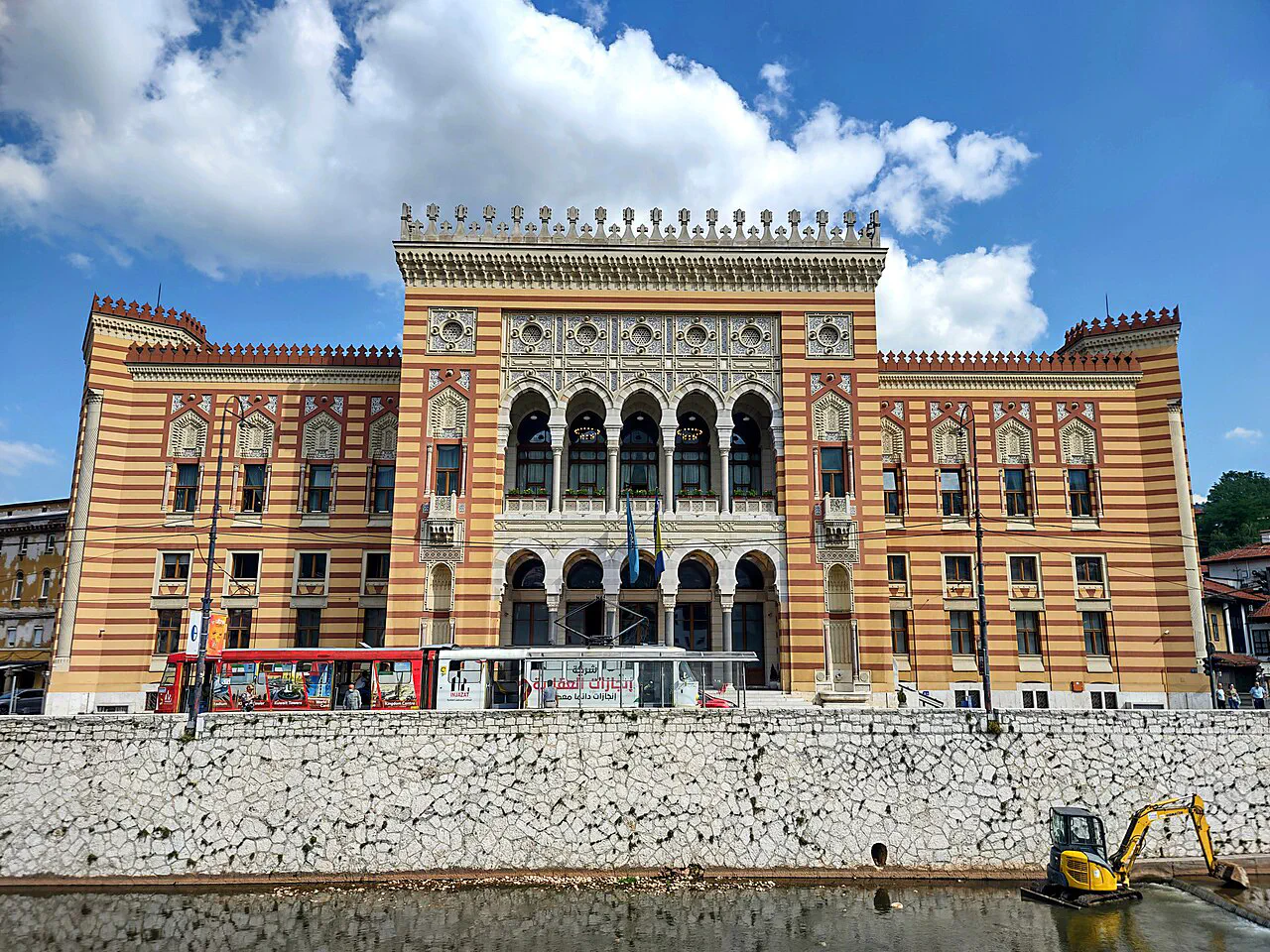
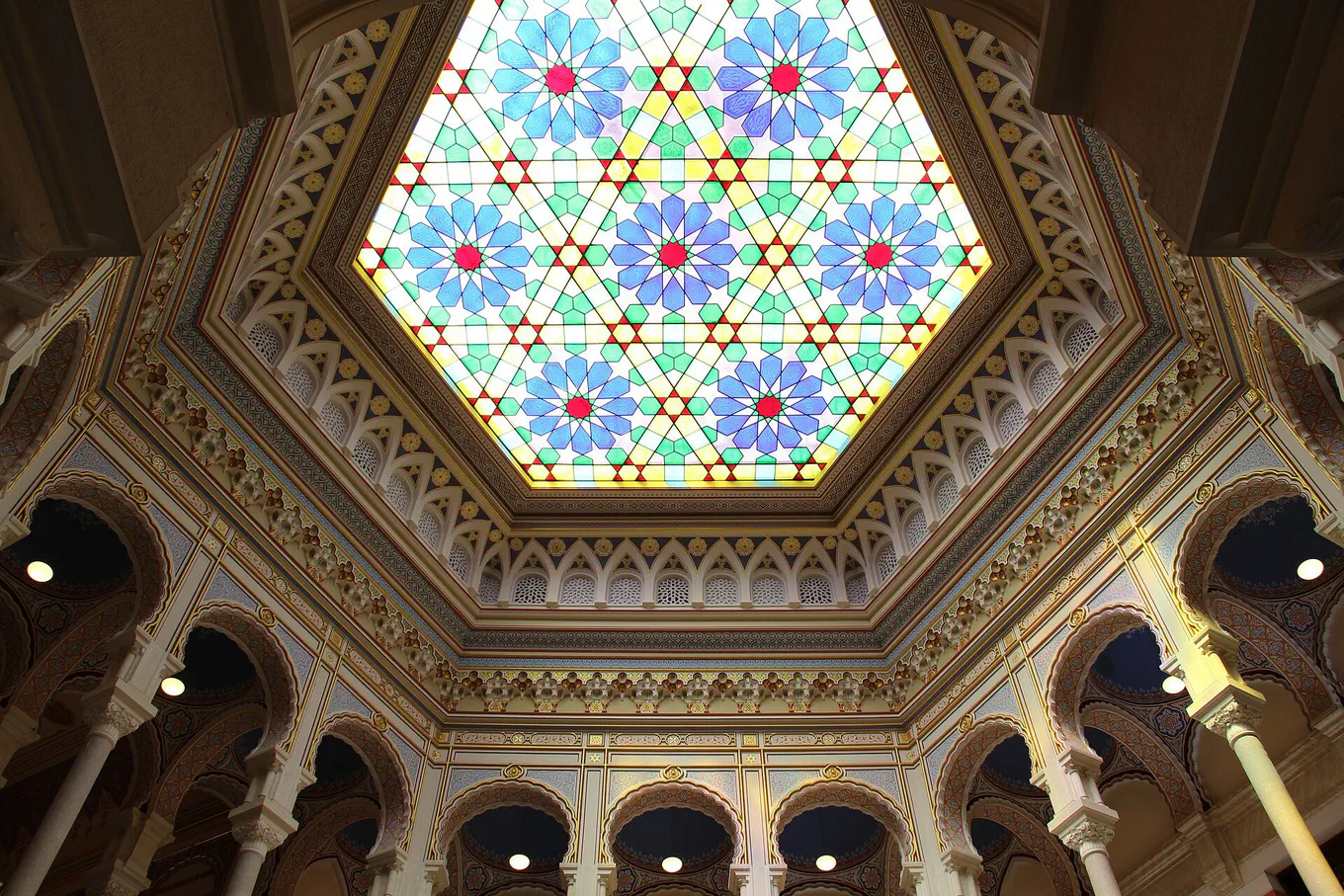
Archduke Franz Ferdinand’s last reception, on the morning he was shot in 1914, was held in this city hall. Its architect had been dead for twenty years. Alexander Wittek, an Austro-Hungarian architect, took over the work after the first designer stopped under a minister’s criticism. But he was diagnosed with a mental disorder, and in 1894 he died in an asylum in Graz. Another architect finished the building. Wittek never saw his city hall open.
2 Gavrilo Princip and the wrong turn at the Latin Bridge
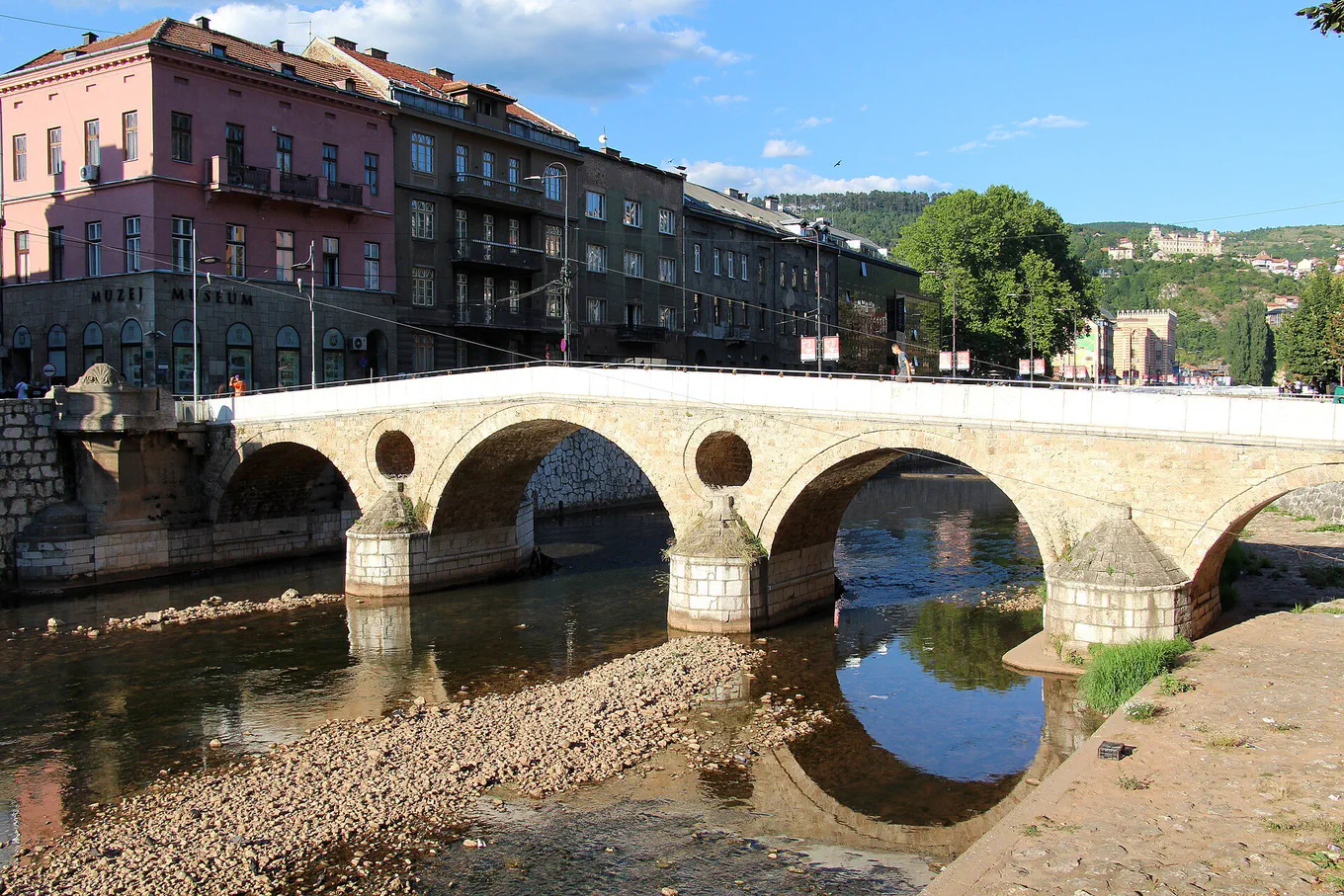
Stand here. The northern end of the Latin Bridge, on the Miljacka. The building that was once Schiller’s Delicatessen now houses the Museum of Sarajevo 1878–1918.
The murder that set off the First World War happened here. On 28 June 1914, Gavrilo Princip, a Bosnian Serb student of nineteen, was waiting to kill Archduke Franz Ferdinand. A fellow plotter threw a bomb, but it bounced off the Archduke’s car. Princip moved in front of Schiller’s. After the town hall reception, the driver turned the wrong way, stalled while reversing, and stopped close to where Princip stood. Princip stepped onto the footboard and shot the Archduke and his wife, Sophie. Both were dead by half past eleven.
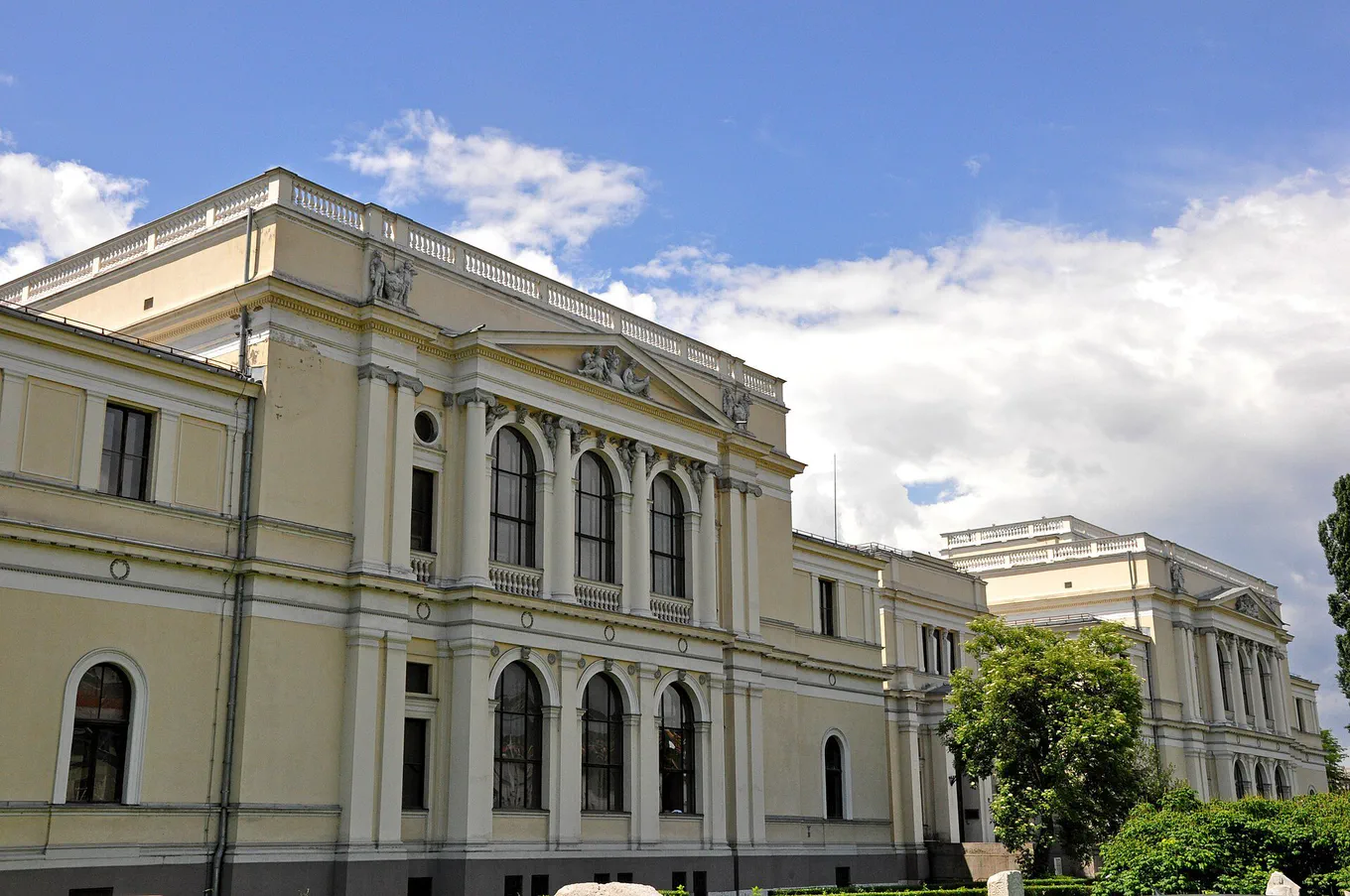
Geraldine Brooks’s novel People of the Book tells a fictional history of the Sarajevo Haggadah, a Passover manuscript made most likely in Barcelona and stained with Seder wine. In early 1942, a German commander came to the museum to take it. Minutes earlier, Derviš Korkut, the Muslim chief librarian, had tucked it inside his coat. The German was told another officer had it. The story goes that Korkut gave it to an imam in a mountain village, who hid it among Qurans. It came back intact after the war.
4 Torvill and Dean’s Boléro at the Zetra Olympic Hall
Stand here. The Juan Antonio Samaranch Olympic Hall, once the Zetra. Badly damaged in the war, it was rebuilt in 1999.
More than 24 million people in Britain watched Jayne Torvill and Christopher Dean, ice dancers from Nottingham, skate to Ravel’s Boléro here in 1984. Getting it onto the ice took a loophole. Olympic rules set the free dance at four minutes, give or take ten seconds, and the shortest cut ran four minutes twenty-eight. But the rules started the clock only when they began skating. So if their blades stayed off the ice for the first eighteen seconds, Boléro would fit. They won gold, with a 6.0 for artistic impression from every judge.
5 U2 keeps its promise to Sarajevo at Koševo Stadium
Stand here. Koševo Stadium, in the neighbourhood of the same name, which held the opening ceremony of the 1984 Winter Olympics.
“Miss Sarajevo”, a song with Luciano Pavarotti singing the opera solo, is about women who held a beauty pageant during the siege. U2 vowed to play the city one day, but the only way in was a UN plane. On 23 September 1997, two years after the war, they played to about 45,000 people. That day, trains ran into Sarajevo for the first time since the war began. Then Bono lost his voice and stumbled through the song. The band counts the show among its proudest moments.
Pack nothing. Leave Friday.
Every Friday, I write a free letter, Journey, that takes us on a trip through places, stories, and ideas.
People of the Book(Geraldine Brooks, 2008). A novel. An Australian book conservator comes to Sarajevo to restore the Haggadah, kept in the National Museum of Bosnia and Herzegovina.
Logavina Street: Life and Death in a Sarajevo Neighborhood(Barbara Demick, 1996). Non-fiction. One street, Logavina Street, followed through the war in articles that ran from 1994 to 1996.
The Fixer: A Story from Sarajevo(Joe Sacco, 2003). A non-fiction graphic novel set in Sarajevo. It starts in a hotel lobby in 1995, near the end of the siege, and tells the story of a Sarajevan man.
Films to watch before you visit Sarajevo
Welcome to Sarajevo(Michael Winterbottom, 1997). A war drama film. Its characters stay at the Holiday Inn, the main hotel for the press during the siege.
Grbavica(Jasmila Žbanić, 2006). A film. A single mother, Esma, lives in Grbavica, the neighbourhood of the title and one of the most traumatised in the city.
Kiss the Future(2023). A documentary film about U2’s involvement with Sarajevo and their 1997 concert at Koševo Stadium.
Questions
Where exactly was Archduke Franz Ferdinand shot?
At the northern end of the Latin Bridge, an Ottoman-era bridge over the Miljacka, in front of what was Schiller’s Delicatessen. That building now houses the Museum of Sarajevo 1878–1918. In the Yugoslav era, the bridge itself was known as Princip’s Bridge.
Did Gavrilo Princip eat a sandwich just before the shooting?
The story says he had just eaten one at Schiller’s Delicatessen, moments before he fired. But no primary source from the time mentions it, and the myth probably began with a 2001 novel, Twelve Fingers.
What is the legend of the Sebilj fountain?
Local legend says that anyone who drinks from the Sebilj, the wooden Ottoman-style fountain in the middle of Baščaršija Square, will return to Sarajevo one day. The first was built in 1753 and burned in 1852. Alexander Wittek, the architect of the Vijećnica, rebuilt it in 1891.