My impression of Seattle comes down to The Last of Us Part II, Frasier, Grey’s Anatomy, Starbucks, and Amazon. I love two of these and have complicated feelings about the others.
— Nick
At Alki Point, in 1851, the founding settlers of Seattle landed. The city they began is now the most populous in Washington state, and sits on an isthmus, a narrow neck of land, between Puget Sound and Lake Washington. A chief’s name comes before a glue pot that burned 25 blocks, a left-handed guitarist, a napkin sketch and the man whose idea Starbucks turned down.
1 Chief Seattle’s name and his statue at Tilikum Place
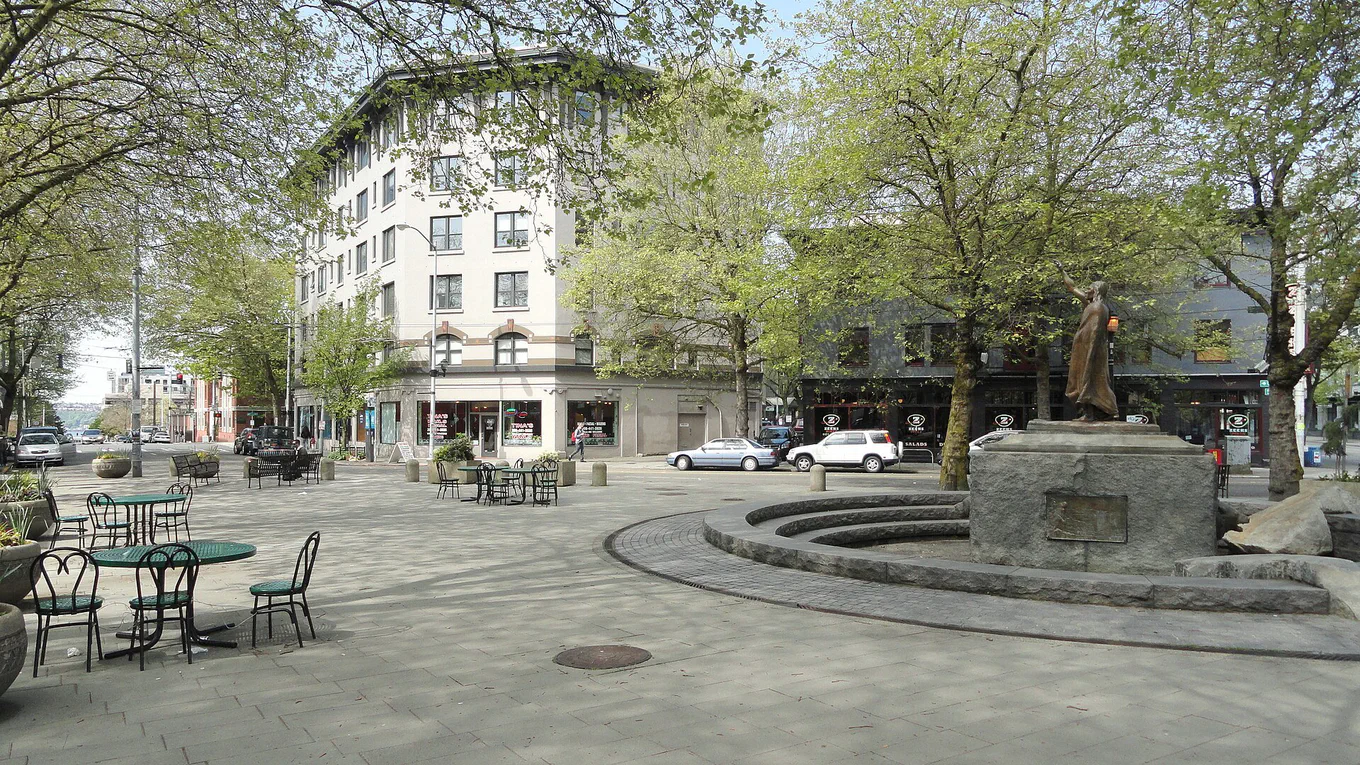
Stand here. Tilikum Place, where James A. Wehn’s 1912 statue of Chief Seattle stands. His great-great-granddaughter unveiled it, and it’s now a city landmark.
Seattle is named after a real man. Si’ahl, known as Chief Seattle, led the Duwamish and Suquamish peoples when settlers arrived in the 1850s, and befriended one of them, Doc Maynard. In 1853, Maynard persuaded the town to take the chief’s name. When the chief spoke at a meeting, a pioneer took notes. Thirty-three years later, a speech was rebuilt from them, and later writers added lines of their own. Those versions became manifestos for environmentalism and Native American rights. Not all of those words were his.
2 John Back’s glue pot and the Great Seattle Fire
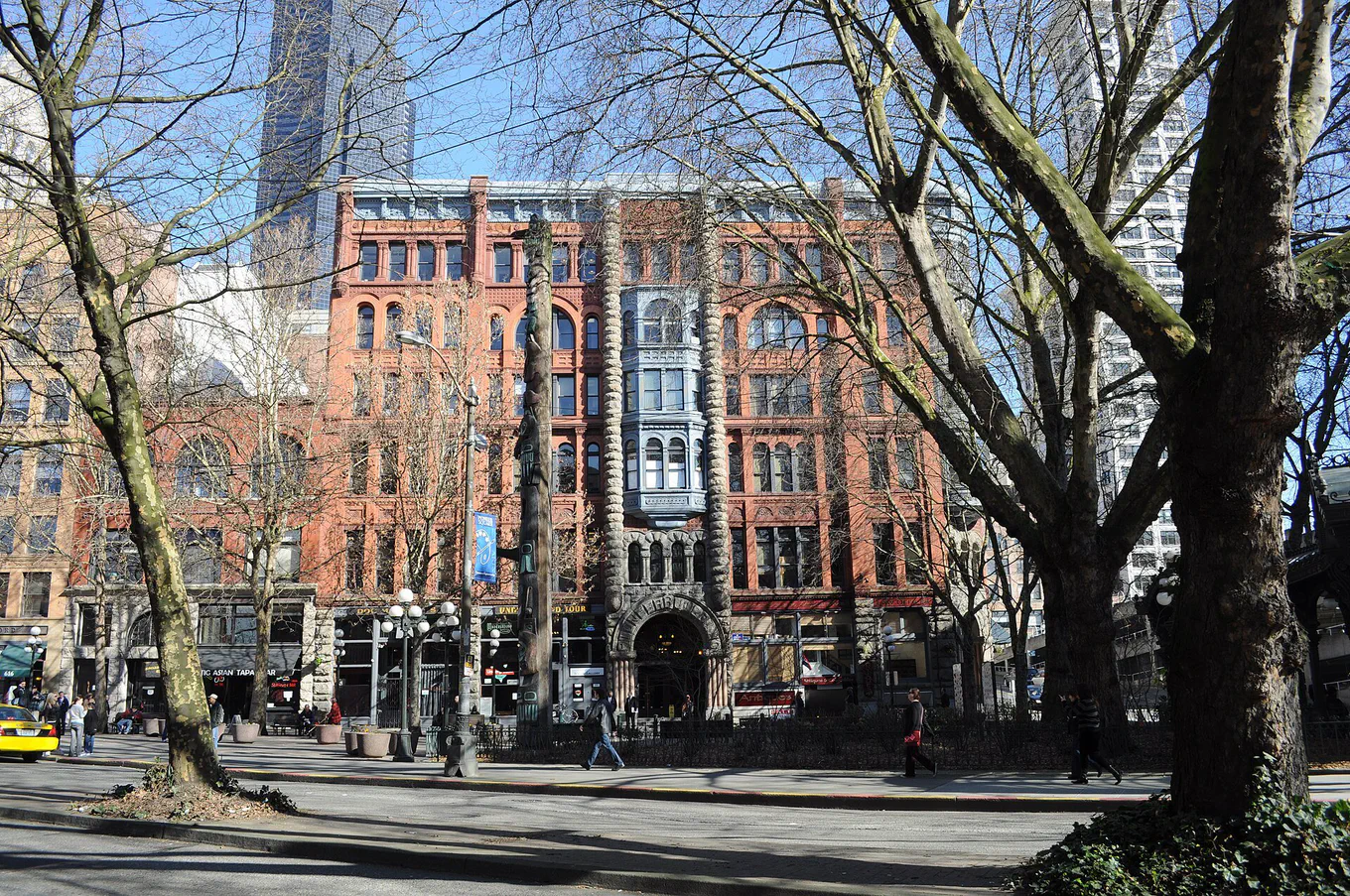
Stand here. Doc Maynard’s Public House, at 614 1st Avenue in Pioneer Square. The Underground Tour starts beneath it and walks the old pavements below.
On 6 June 1889, John Back, a Swedish immigrant in his mid-twenties, was melting glue on a stove in a basement cabinet shop. The pot boiled over and caught fire, so he threw water on it. “The glue flew all over the shop into the shavings,” he said, “and everything take fire.” By the next morning, 25 city blocks had burned. The city rebuilt in brick and stone and raised the streets of Pioneer Square by one to two storeys. The old pavements are still down there.
3 Jimi Hendrix and his upside-down guitar in Seattle
Stand here. Near the corner of Broadway and Pine Street, where Daryl Smith’s life-size bronze shows Hendrix playing a Stratocaster.
As a boy in Seattle, Jimi Hendrix carried a broom about, pretending it was a guitar. In the late 1950s, he got a real one, an old acoustic that cost $5. He was left-handed, but his father, Al, had insisted he eat and write right-handed. Jimi tried the guitar right-handed, then restrung it and turned it upside down. When Al asked him about it, Jimi said, “I find I can play left-handed easier than I can right-handed.”
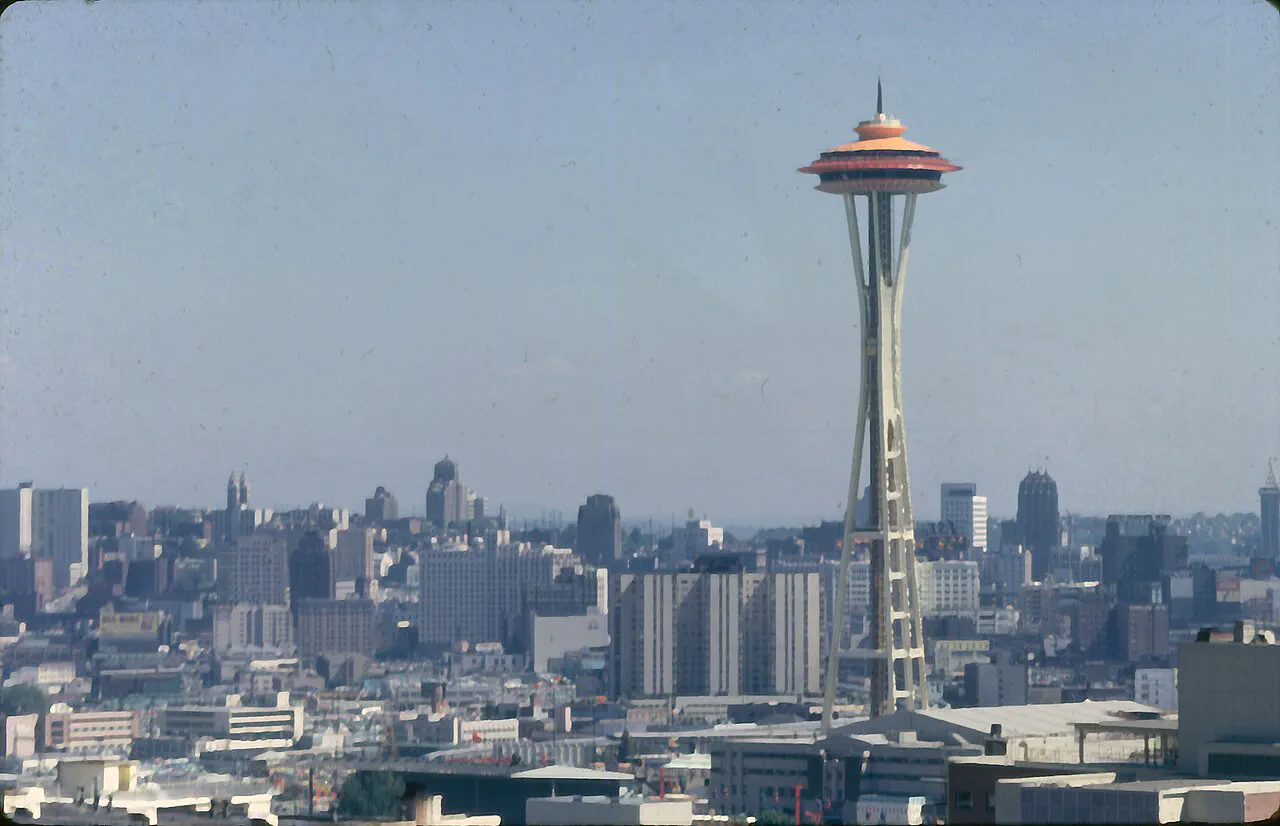
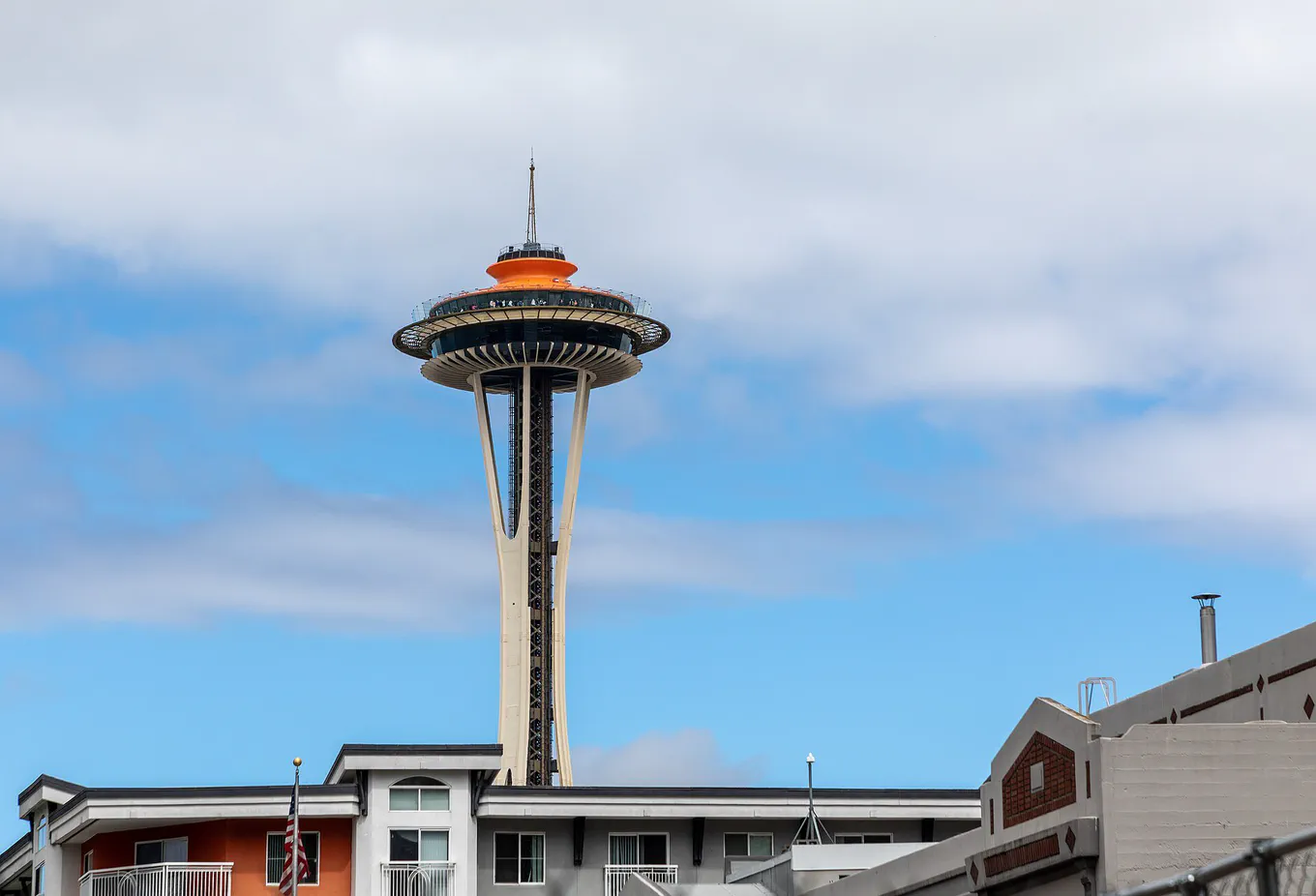
The Space Needle started as a doodle. Eddie Carlson, a chief organiser of Seattle’s 1962 World’s Fair, was inspired in Stuttgart by a broadcast tower with a restaurant, and in a hotel café he drew a great central structure on a napkin. But the tower had no site, and King County wouldn’t pay. At last a lot turned up, 120 feet square, holding switching gear for the fire and police alarms. Only a year remained. The last lift car went in the day before the fair opened.
5 Howard Schultz, Milan, and the Pike Place Starbucks
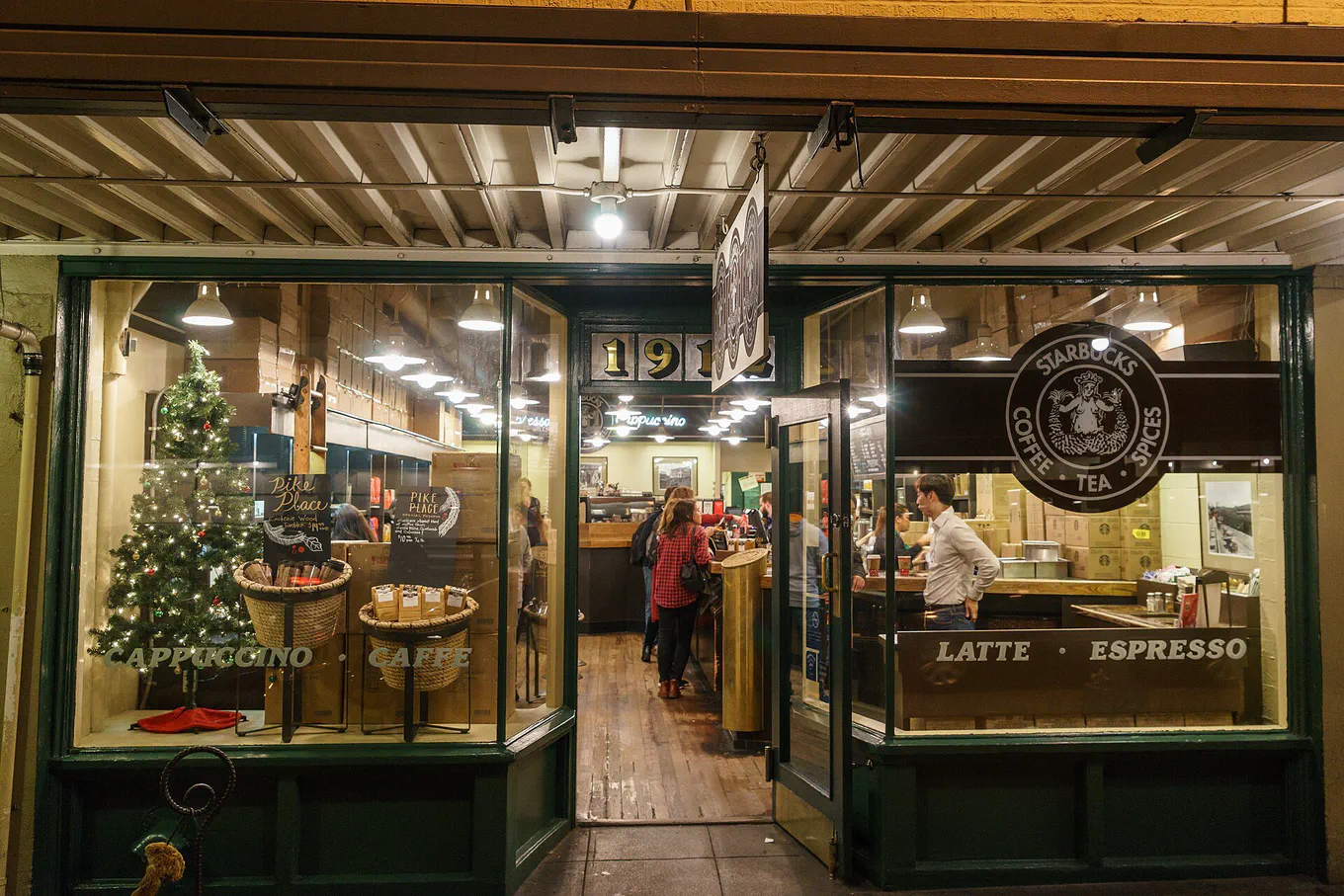
Stand here. 1912 Pike Place, in Pike Place Market. The Starbucks here keeps its early look, but the shop first opened half a block north.
For its first decade, Starbucks sold coffee beans, not coffee drinks. In 1983, it sent its marketing director, a New Yorker called Howard Schultz, to Milan, where he visited more than 500 espresso bars. He came home with an idea from Milan. The founders wouldn’t take his idea further, so he left and opened his own café, Il Giornale, modelled on Milan’s bars. Two years later, they sold him Starbucks for $3.8 million. The man whose idea they had turned down renamed his own cafés Starbucks.
Pack nothing. Leave Friday.
Every Friday, I write a free letter, Journey, that takes us on a trip through places, stories, and ideas.
Hotel on the Corner of Bitter and Sweet(Jamie Ford, 2009). A novel. Families store their belongings in the basement of Seattle’s Panama Hotel.
The Boys in the Boat(Daniel James Brown, 2013). A history of the University of Washington’s eight-oared rowing crew.
Films to watch before you visit Seattle
Sleepless in Seattle(Nora Ephron, 1993). A film. Tom Hanks as a widowed architect on a Lake Union houseboat, with scenes at Pike Place Market and Alki Beach.
It Happened at the World’s Fair(1963). A film. Elvis Presley at Seattle Center, with the Space Needle and the Monorail as backdrops.
Singles(Cameron Crowe, 1992). A film, shot partly in the courtyard of the Coryell Court Apartments on Capitol Hill.
Frasier(1993–2004). A sitcom. Frasier Crane returns to his hometown of Seattle, though most episodes were filmed in Los Angeles.
Questions
Is the Pike Place Starbucks the first Starbucks?
Not quite. It’s often called the first, but 1912 Pike Place is the shop’s second address. Starbucks opened in 1971 at 2000 Western Avenue, in a corner shop of the old Harbor Heights Hotel, and moved half a block south to Pike Place in 1976.
What is the Seattle Underground, and can you visit it?
After the 1889 fire, the streets of Pioneer Square were raised by one to two storeys, leaving old pavements and basements below. Part of it has been made safe for guided tours. Bill Speidel’s Underground Tour, which began in 1965, starts beneath Doc Maynard’s Public House at 614 1st Avenue and takes 75 minutes.
Who is Seattle named after?
Si’ahl, known as Chief Seattle, a leader of the Duwamish and Suquamish peoples. His friend Doc Maynard persuaded the settlers to rename their town after the chief on 23 May 1853, when they filed its first plats, the maps that divide land into lots. The chief died on the Suquamish Reservation at Port Madison in 1866.