Gangnam Style was born here. Is that good? I can’t decide. Whatever the answer, it was the first video on YouTube to reach a billion views… so it was something.
— Nick
In 1394, the founder of Korea’s Joseon dynasty chose Seoul as a capital. Cut in two by the Han River, in the northwest of South Korea, it is the country’s capital and largest city. A film family running home in the rain shares the page with a king’s new alphabet, a queen killed in her palace, a declaration hidden in a hospital bed and a pop song’s billion views.
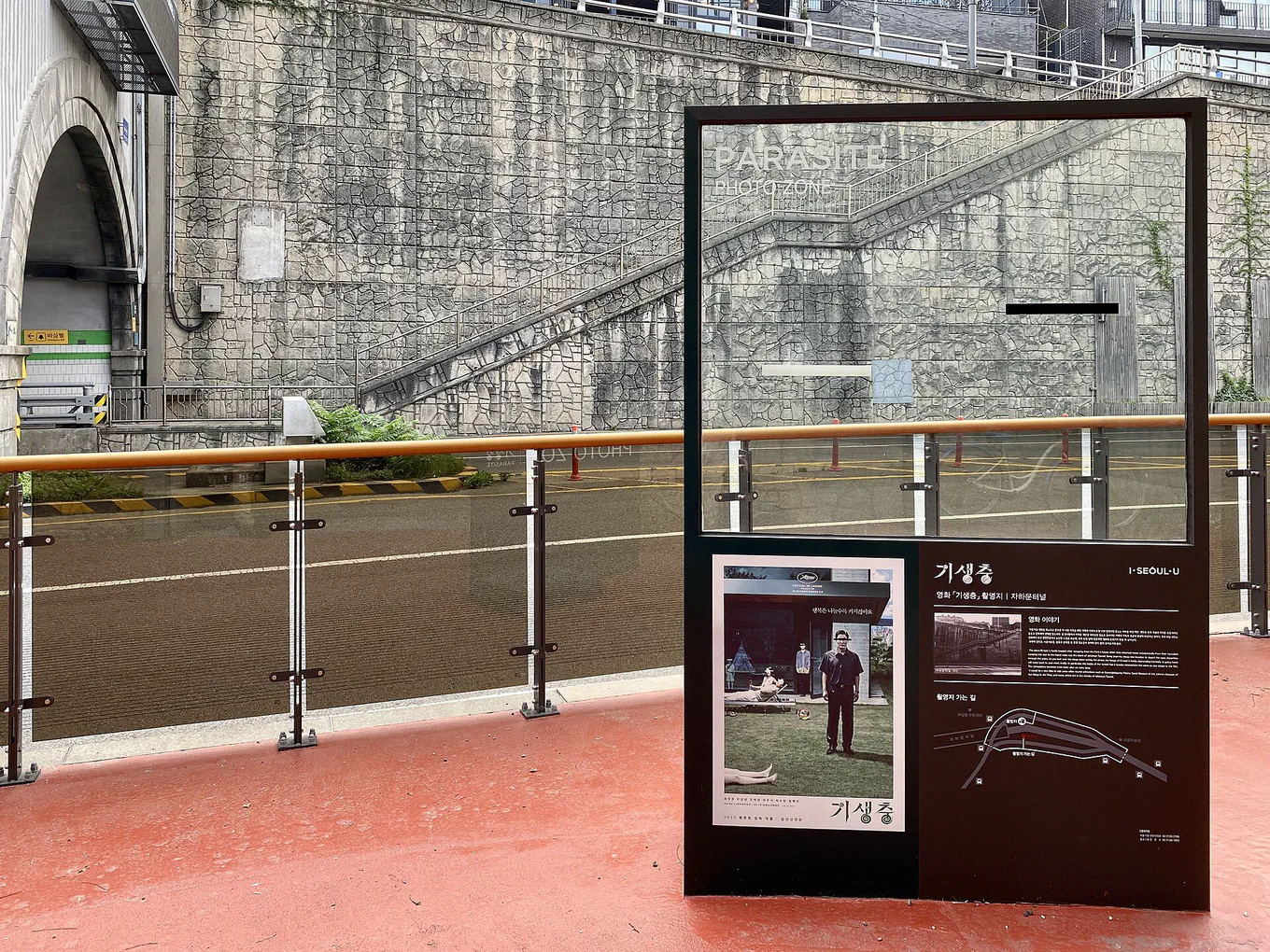
Bong Joon-ho’s Parasite (2019), the first film not in English to win Best Picture at the Oscars, began with a job he once had, tutoring a rich Seoul family’s son. In the film, the poor Kims, from a semi-basement flat, scheme their way one by one into jobs with the wealthy Parks. Both homes were sets. These stairs are real, and the soaked Kims run down them heading home in the rain. Seoul has since promised funding first to the estimated 1,500 low-income families living in semi-basements like theirs.
2 King Sejong’s alphabet and the scholars who fought it
Stand here. The statue of King Sejong in Gwanghwamun Square, in front of Gyeongbokgung Palace. Its pedestal leads down to an exhibition, “The Story of King Sejong”.
Writing in fifteenth-century Korea meant Chinese characters, and most commoners could not read. In 1443, King Sejong showed his court twenty-eight new letters, designed, he wrote, for everyone to use at their ease. Reading Chinese was a mark of status, and leading scholars rebuked the script as anti-Confucian. Sejong replied that a script made to help his people was Confucian, and jailed some of his critics for a day. Even so, his alphabet, Hangul, was looked down on for more than 400 years. The government adopted it only in 1894.
3 The killing of Queen Min in Gyeongbokgung Palace
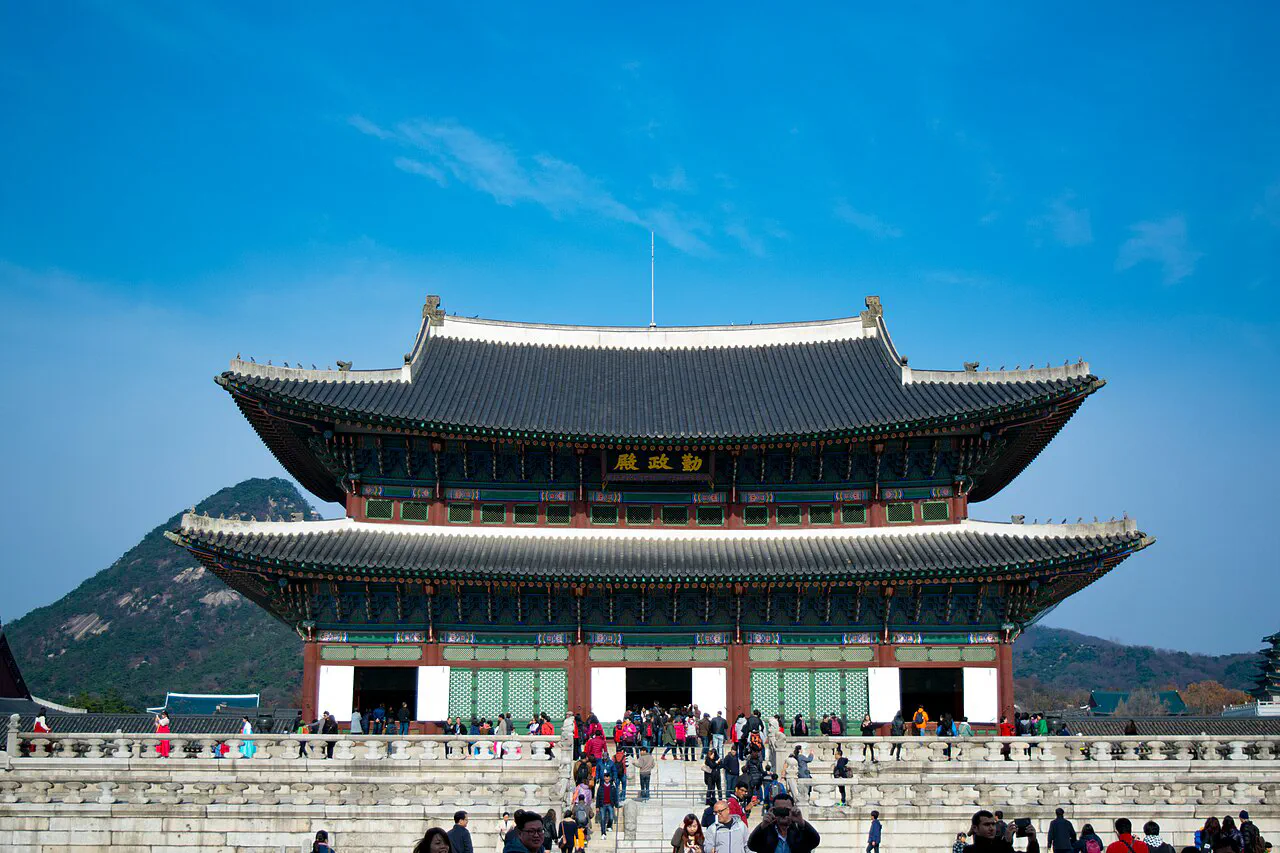
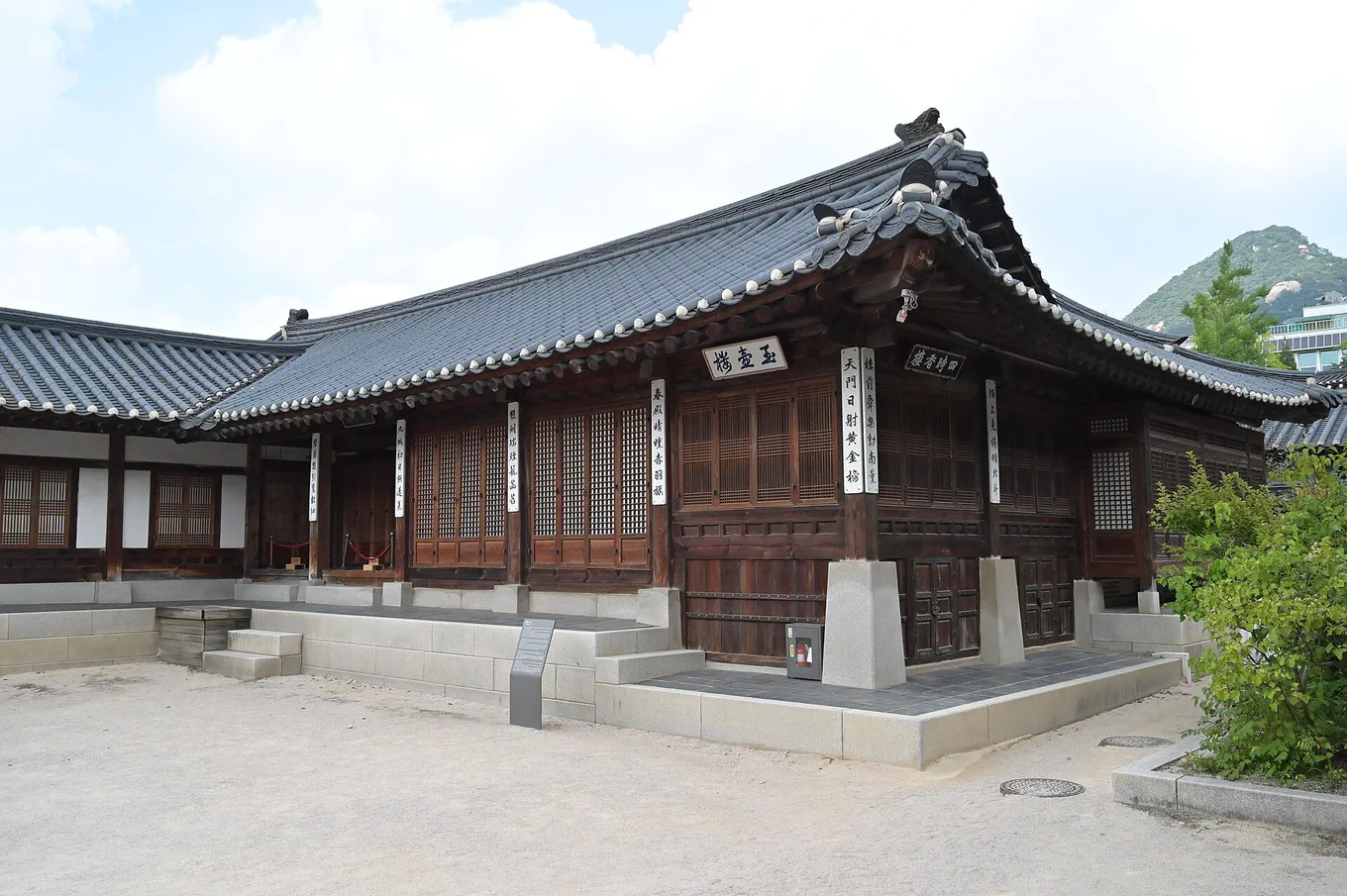
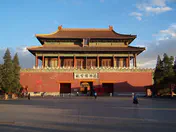
Stand here. Gonnyeonghap, on the west side of Gyeongbokgung Palace’s Geoncheonggung quarters. The palace is free to enter for anyone wearing hanbok, traditional Korean dress.
Queen Min, wife of Korea’s King Gojong, sided with Russian interests to keep Japan in check. At first light on 8 October 1895, Japanese police climbed the palace walls on folding ladders and opened the gates, and agents under Miura Gorō, who planned her murder, came for her. None of them had ever seen her. They killed her, and when the women around her collapsed in grief at the sight of her body, the killers took it as proof. They burned the body. Only a singed finger bone was found.
4 Albert Taylor’s scoop and the house called Dilkusha
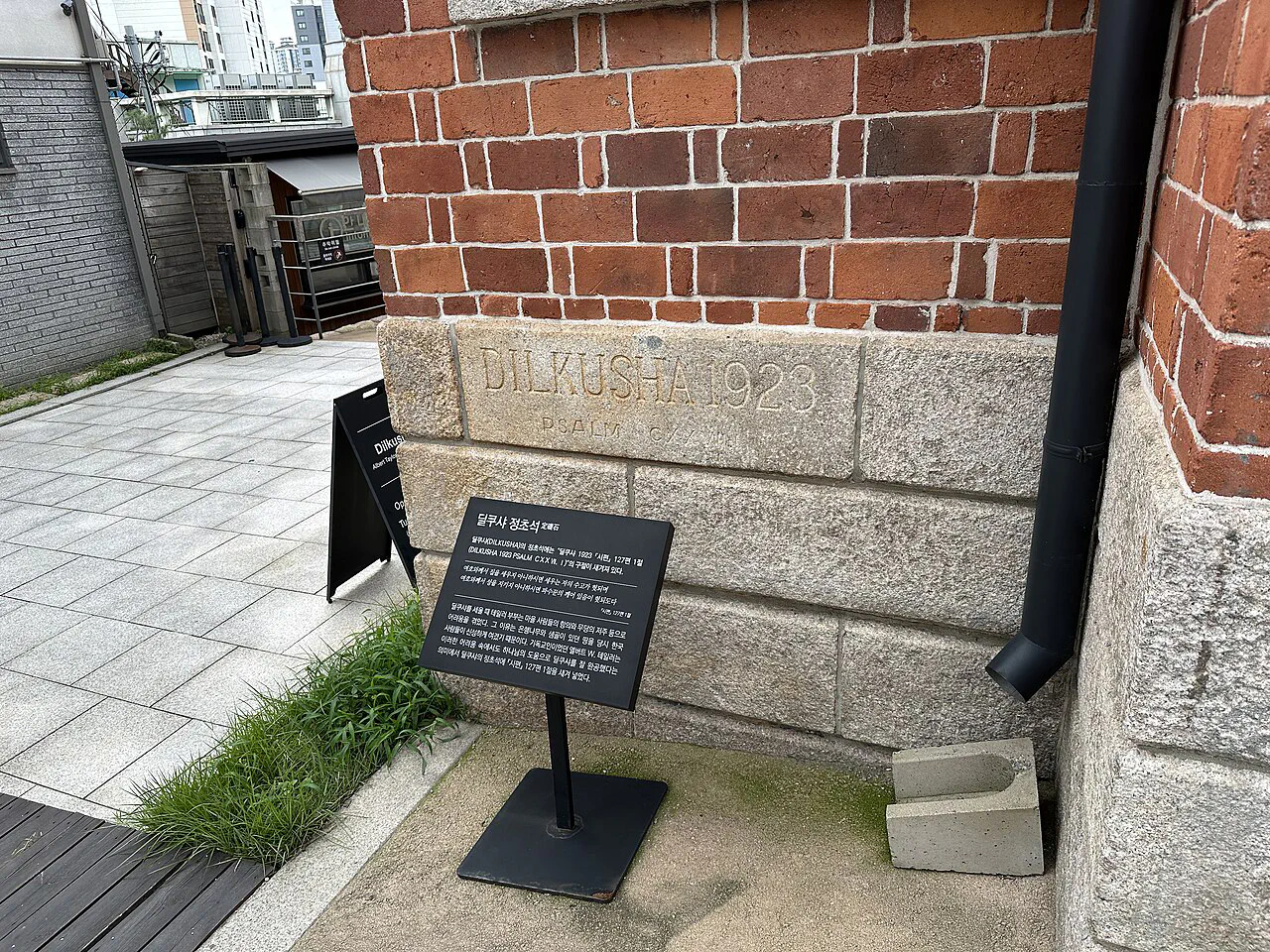
Stand here. Dilkusha, the house the Taylors built in 1923–24 at 17 Sajik-ro 2-gil, Jongno-gu, now a free annex of the Seoul Museum of History.
In 1919, the Associated Press asked Albert Taylor, an American, to cover King Gojong’s funeral. His wife, Mary, gave birth at Severance Hospital, whose basement was secretly printing Korea’s Declaration of Independence. When the Japanese raided, a nurse hid copies in Mary’s room. Albert found them in her bed as he lifted their son. His brother smuggled them to Tokyo in the heel of his shoe, and the world heard. Mary wrote that he was “more thrilled to find these documents than he was to find his own son”.
5 Psy’s “Gangnam Style” and the bronze hands at COEX
Stand here. The east patio of COEX, in Gangnam. A five-metre bronze of the dance’s rein-holding hands plays the song when people come near.
Psy said he made “Gangnam Style” only for fans at home. Released in July 2012, the song pokes fun at people in Seoul’s wealthy Gangnam district trying very hard to be something they’re not, and its dance mimes riding a horse, holding the reins. That January, Psy had told a concert audience in Osaka that there he was “just a little chubby newcomer”. On 21 December, “Gangnam Style” became the first video on YouTube to reach a billion views.
Pack nothing. Leave Friday.
Every Friday, I write a free letter, Journey, that takes us on a trip through places, stories, and ideas.
Chain of Amber(Mary Linley Taylor). A memoir. She recalls giving birth at Severance Hospital in 1919 and waking to find a Korean nurse hiding papers beneath her baby.
Please Look After Mom(Kyung-sook Shin, 2008). A novel. Sixty-nine-year-old Park So-Nyo is separated from her husband among the crowds of the Seoul subway station, and her family begins a desperate search to find her.
The Vegetarian(Han Kang, 2007). A three-part novel set in modern-day Seoul, in which Yeong-hye stops eating meat after a bloody nightmare about human cruelty, with devastating consequences in her personal and family life.
Films to watch before you visit Seoul
Parasite(Bong Joon-ho, 2019). A film. A poor family schemes its way into a rich household, then runs home in the rain down the Jahamun Tunnel stairs.
The Host(Bong Joon-ho, 2006). A film. A creature comes out of the Han River and storms through Hangang Park, where a slow-witted man runs a snack bar.
A Single Spark(Park Kwang-su, 1995). A drama film. A young man starts work at a garment factory in Seoul’s Peace Market.
Seoul Station(Yeon Sang-ho, 2016). A film. A homeless man with a bloody wound on his neck wanders the area around Seoul Station, then lies down there.
Gangnam Blues(Yoo Ha, 2015). A film. Set in the 1970s, during the real-estate development of Seoul’s Gangnam district.
Questions
Where are the Parasite filming locations in Seoul?
Seoul’s city government said in 2020 that it would promote four. One is the corner store in Mapo District where the first scene was shot, and another is the stairs nearby. The third is the Jahamun Tunnel stairs in Jongno District, and the fourth is Sky Pizza in Dongjak District, which donated pizza boxes for the shoot.
Can you visit Dilkusha, Albert Taylor’s house?
Yes. Dilkusha, whose name means “Heart’s Delight” in Persian, is an annex of the Seoul Museum of History at 17 Sajik-ro 2-gil, Jongno-gu. It opened to the public in March 2021 after restoration.
When did Seoul become Korea’s capital?
In 1394. Yi Seong-gye, the founder of the Joseon dynasty, chose Hanyang, as Seoul was then called, in September that year, and building began in October. The dynasty’s first royal palace, Gyeongbokgung, was established the next year.