Wonderful city. I first visited Seville for the Expo in 1992. Among other things it featured a Pabellón Del Futuro (a pavilion of the future). I was 21 at the time, young and fit. When I returned to that site in 2025, the pavilion was overgrown and out of use. I tried not to take it as a metaphor.
— Nick
Castile took Seville in 1248, and the city later held the royal monopoly on trade with Spanish America. It is the capital and largest city of Andalusia, in Spain, on the lower reaches of the River Guadalquivir. A king’s mistress leads off, and a tax collector in jail, an opera’s cigarette worker, Columbus’s travelling bones and a plaza that became Naboo come after.
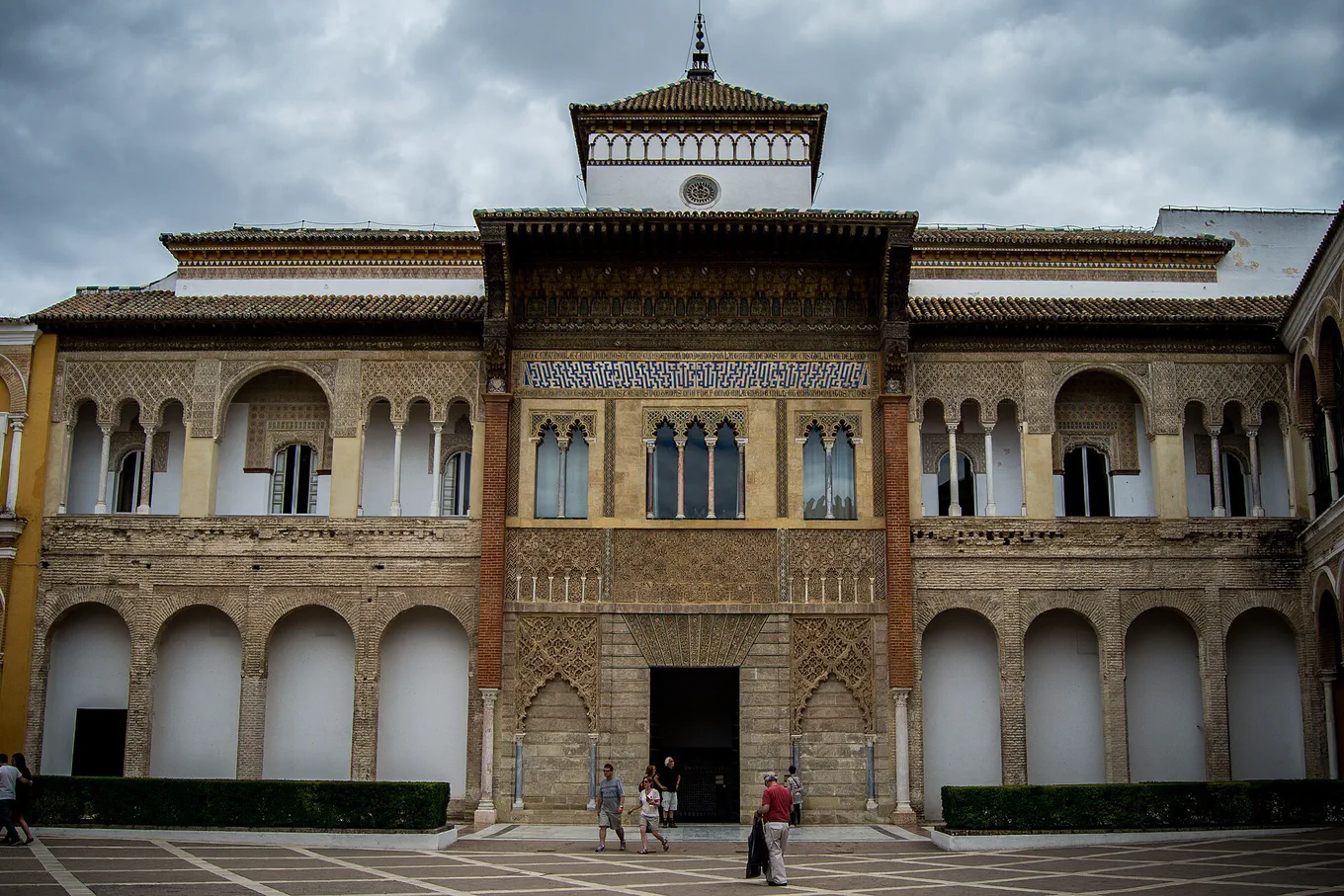
Game of Thrones filmed part of its fifth season in the Royal Alcázar, but the king who built this palace had a stranger story. In the summer of 1353, King Pedro I of Castile married Blanche of Bourbon, and abandoned her two days later for his mistress, María de Padilla. When María died in 1361, Pedro claimed he had married her in secret in 1353, and that she had been his first and only legitimate wife. The Alcázar’s old baths still carry her name.
2 Cervantes jailed in Seville, where Don Quixote may have begun
Stand here. Calle Sierpes. The Royal Prison was demolished, and a bank office stands on its site, with a stone plaque of 1905.
Don Quixote may have begun in a cell on this street. Miguel de Cervantes, widely regarded as the greatest writer in the Spanish language, was a royal tax collector. He trusted the taxes he had collected to a merchant, who failed and fled. In September 1597, Cervantes was jailed here until the year’s end. In the novel’s preface, he calls the book an offspring “begotten in a prison”, but never says which. Another town claims the honour. The 1905 stone has no doubts. Here, it says, he conceived Don Quixote.
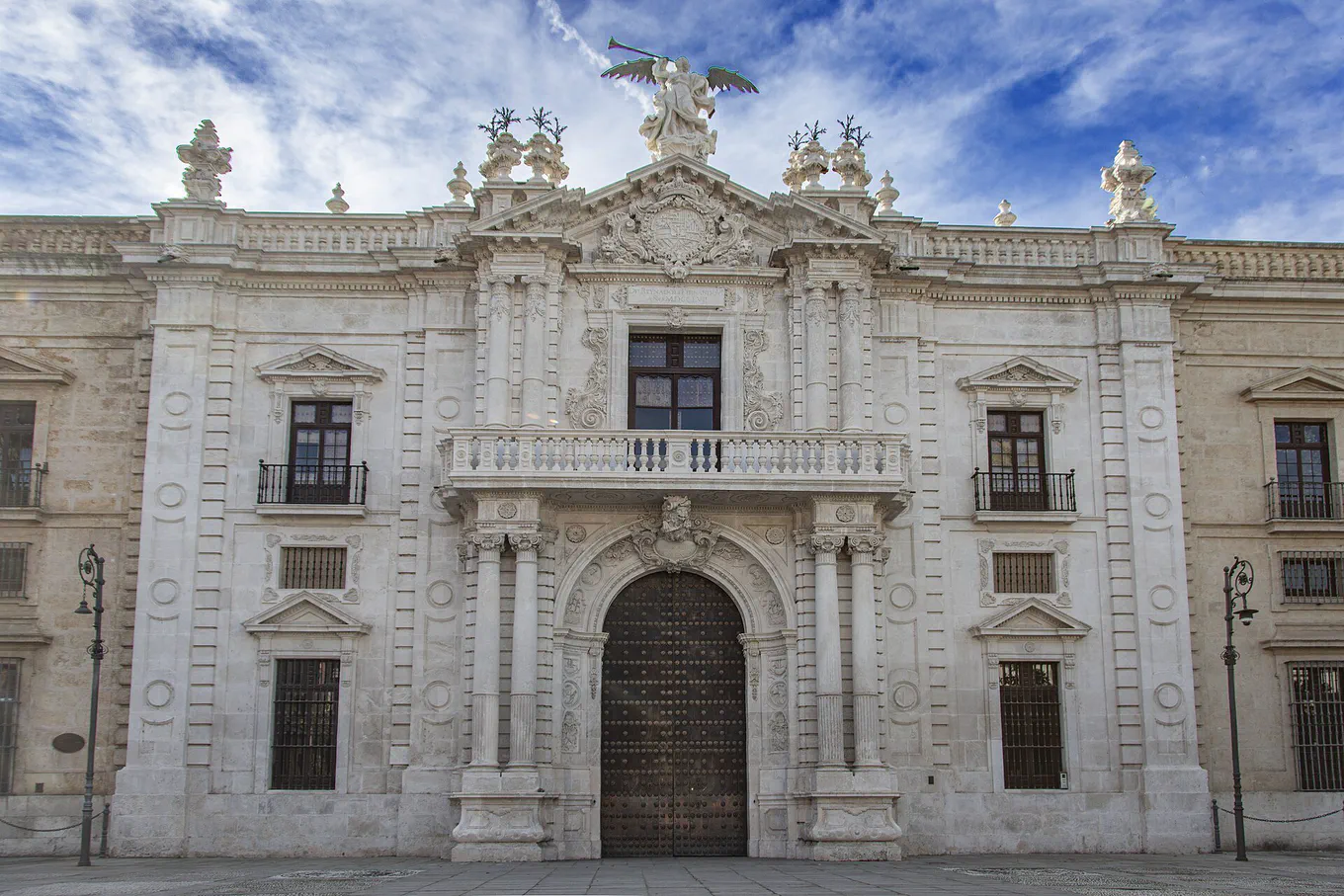
Stand here. The Royal Tobacco Factory, once the second largest building in Spain. Since the 1950s it has housed the University of Seville’s rectorate, its head office.
Bizet’s Carmen opens at the door of this factory, where Carmen works. She attacks a woman with a knife. Don José, a corporal, agrees to free her hands, and she runs off laughing. José loses her to a bullfighter, and stabs her as she tries to enter the arena. The opera opened in Paris in 1875 to mostly bad reviews, and often played to half-empty houses. That June, Bizet died, the day after its 33rd performance, never knowing it would be acclaimed.
4 Christopher Columbus’s restless bones in Seville Cathedral
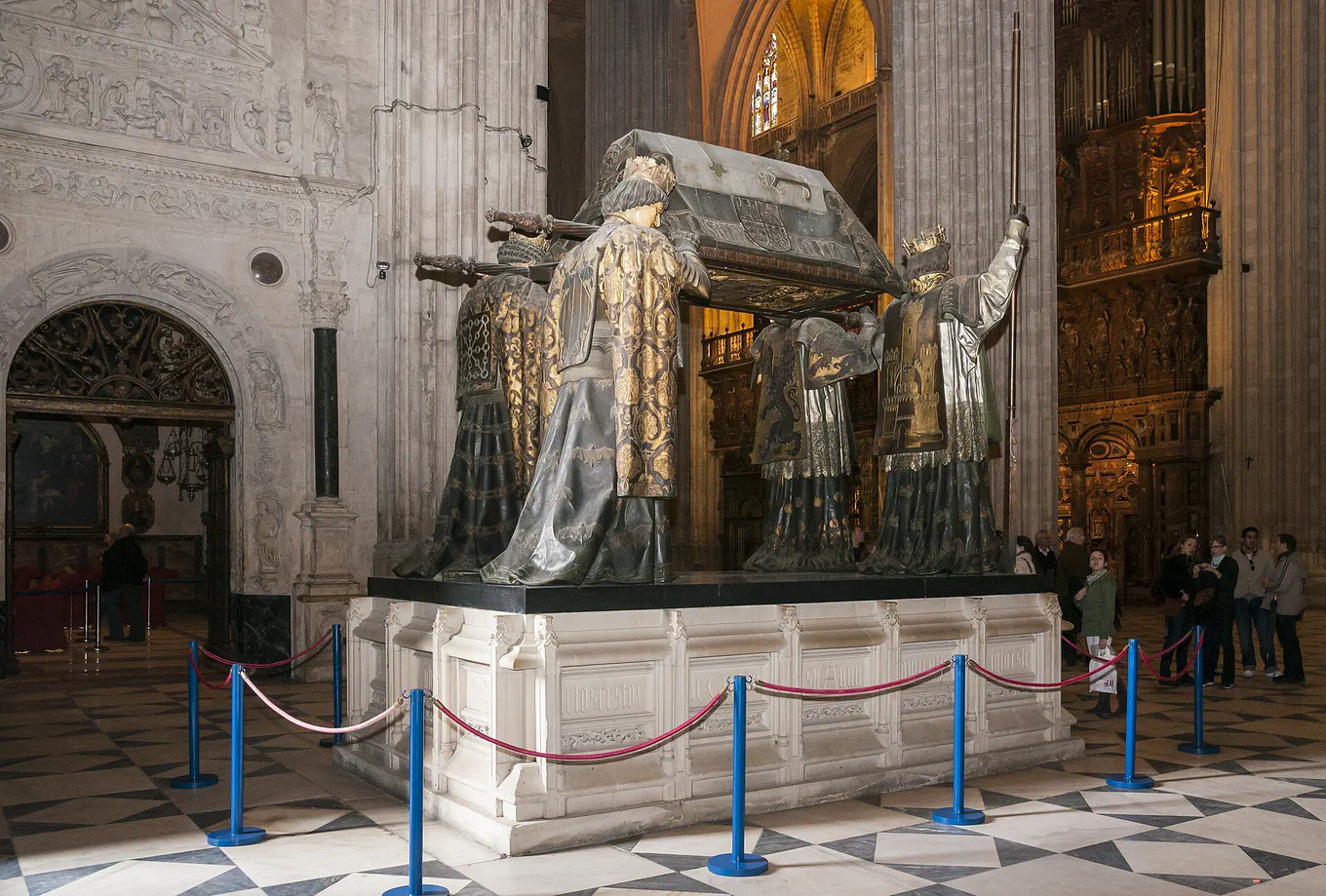
Stand here. The tomb of Christopher Columbus, inside Seville Cathedral. Four heralds, for the kingdoms of Castile, León, Aragon, and Navarre, carry the coffin.
Christopher Columbus died in Valladolid in 1506, and his travels were only beginning. He had asked to be buried on the island of Hispaniola. His remains went to Seville, then to the cathedral in Santo Domingo, then to Havana. When Cuba became independent, at least some of them came back to Seville, in 1899. DNA tests have since backed the Seville bones. But in Santo Domingo, a priest once found a lead box inscribed “Discoverer of America, First Admiral”, and the city has never allowed those remains to be tested.
5 Aníbal González’s Plaza de España, from world’s fair to Naboo
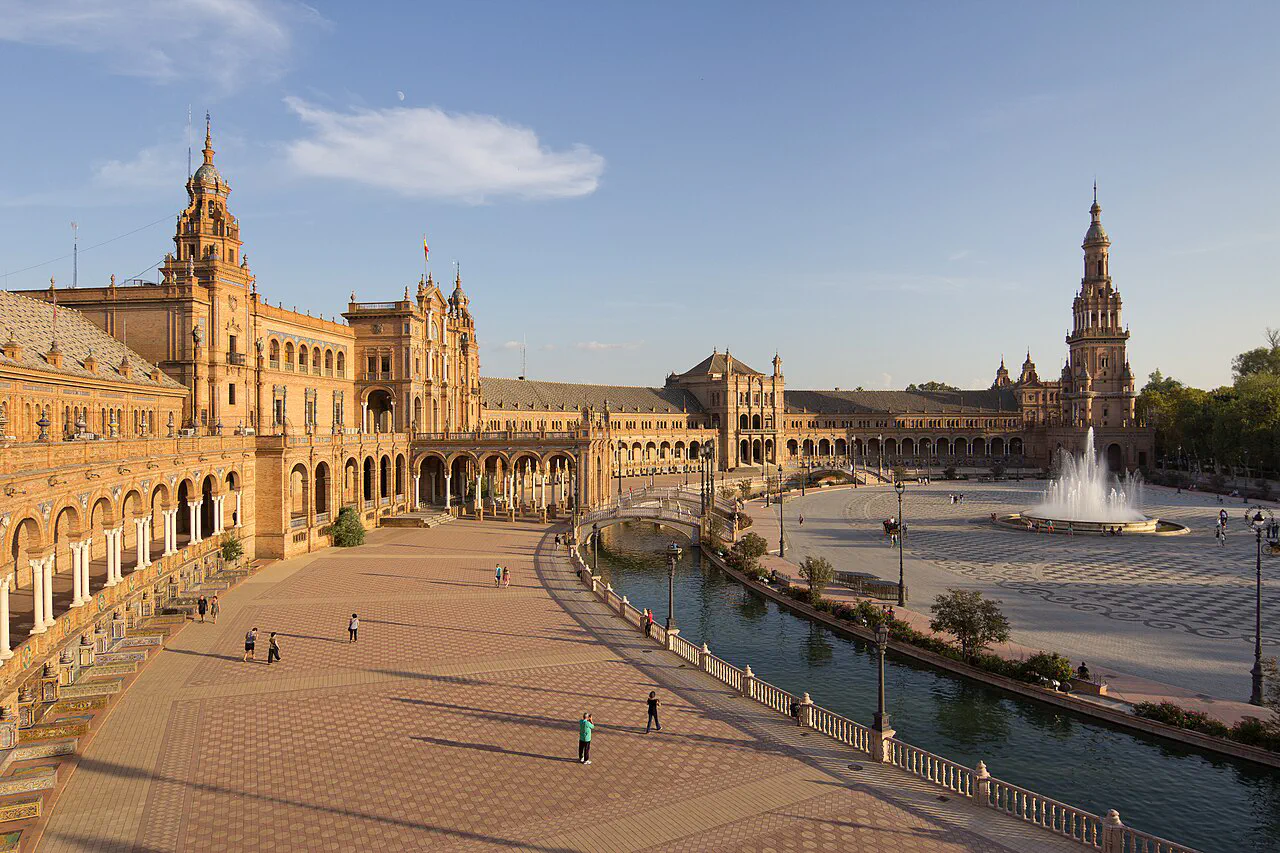
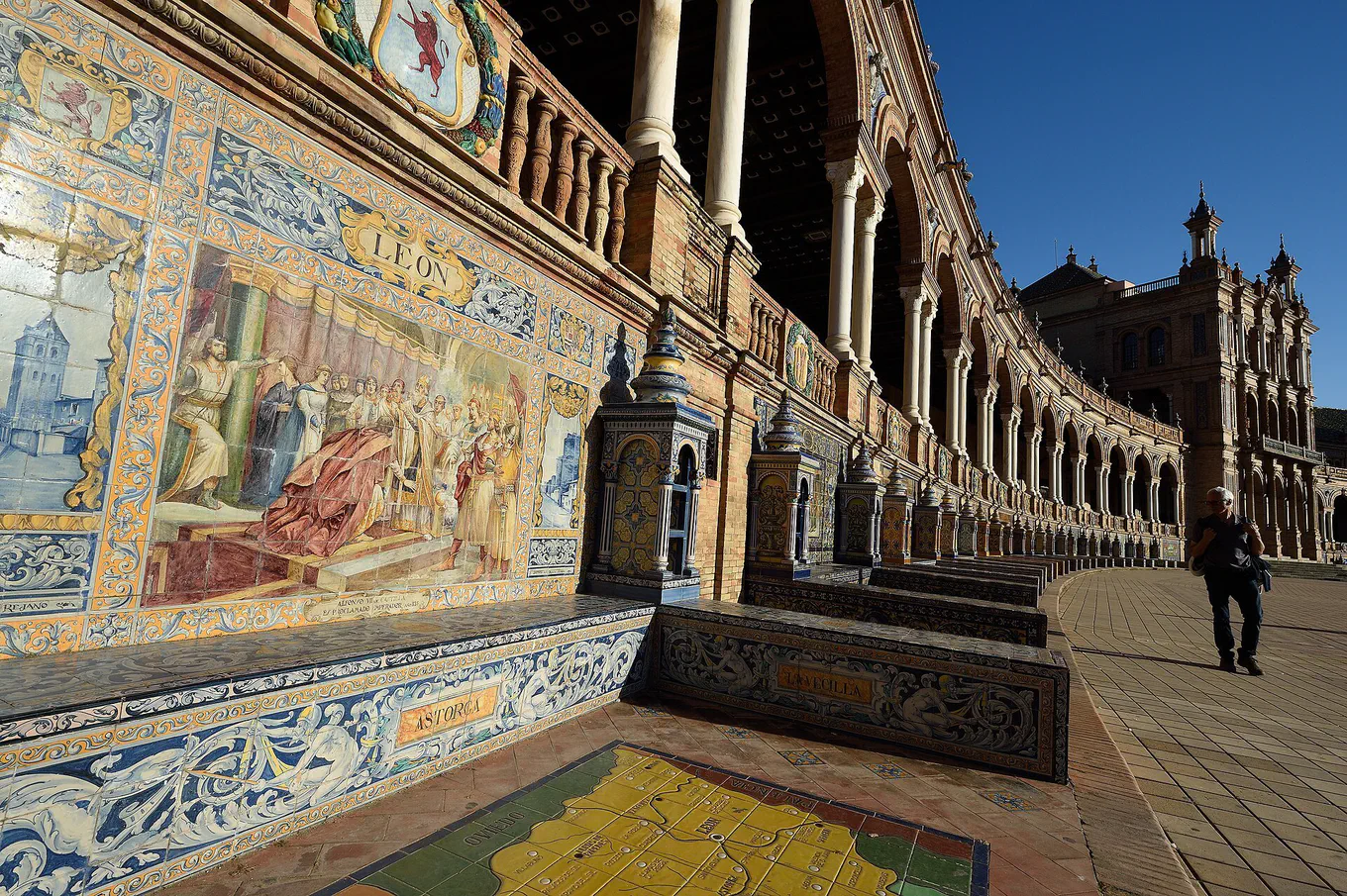
Stand here. The Plaza de España, in María Luisa Park. Tiled alcoves around it stand for the provinces of Spain, and four bridges cross its moat.
In Star Wars: Episode II – Attack of the Clones, the plaza plays Theed, on Naboo. Hayden Christensen and Natalie Portman talk here in a scene recreated from Lawrence of Arabia, in which the plaza was the British headquarters in Cairo. The plaza was built for a world’s fair, the Ibero-American Exposition. In 1914, a Seville architect, Aníbal González, began building for the fair, and he designed its largest and most famous buildings. The fair opened on 9 May 1929. Three weeks later, González died, in the city where he was born.
Pack nothing. Leave Friday.
Every Friday, I write a free letter, Journey, that takes us on a trip through places, stories, and ideas.
Carmen(Prosper Mérimée, 1845). A novella. In Seville, a soldier guarding the cigar factory meets Carmen, who works there, and arrests her for cutting a co-worker’s face.
Rinconete and Cortadillo(Miguel de Cervantes, 1613). A novella, one of his Exemplary Novels. Two petty criminals travel to Seville and are taken in by the city’s thieves’ guild, under its leader, Monipodio.
The Barber of Seville(Pierre Beaumarchais, 1775). A play, set in the street in front of Dr Bartholo’s house in Seville.
The Seville Communion(Arturo Pérez-Reverte, 1995). A novel. A priest is sent from the Vatican to Seville to look into a dilapidated church threatened by demolition.
Films to watch before you visit Seville
Lawrence of Arabia(David Lean, 1962). A film. The Plaza de España plays the British headquarters in Cairo, and the Alcázar a town hall courtyard in Damascus.
Star Wars: Episode II – Attack of the Clones(George Lucas, 2002). A film. The Plaza de España appears in exterior shots of Theed, a city on the planet Naboo.
Carmen(Georges Bizet, 1875). An opera. It opens in a Seville square beside the door of the tobacco factory, where Carmen is a cigarette worker.
Game of Thrones, season 5 (HBO, 2015). A TV series. Part of the season was filmed in the province of Seville, the Royal Alcázar among its locations.
Questions
Can you see Christopher Columbus’s tomb in Seville?
Yes. The tomb has been in Seville Cathedral since 1899. Its monument, designed in 1891 by the Madrid sculptor Arturo Mélida for Havana Cathedral, was finished in Seville in 1902. DNA studies from 2003 to 2005, affirmed in 2024, concluded that the Seville bones are his. Santo Domingo has never allowed its rival remains to be tested.
Where was Game of Thrones filmed in Seville?
At the Royal Alcázar. Part of the fifth season was shot at several places in the province of Seville, the Alcázar among them, and Spanish Wikipedia also lists the sixth season there. The palace is still one of the Spanish royal family’s official residences.
Was the Giralda a minaret?
Yes. It was built as the minaret of the Great Mosque of Seville under the Almohad dynasty and finished in 1198. Inside, 35 ramps wind around seven vaulted chambers. In 1401, the city decided to replace the mosque with a cathedral, and between 1558 and 1568 Hernán Ruiz the Younger crowned the tower with a Renaissance belfry.