In my second Jon Kaine novel, Charlotte Locke phones New York from Singapore to order the change at the top of Keon Locke. Bad times.
— Nick
Stamford Raffles set up Singapore as a British trading post in 1819; the island city-state, off the southern tip of the Malay Peninsula in Southeast Asia, became independent in 1965. A prince and a lion begin the tale; Raffles and the sultan he made, a cocktail disguised as fruit juice, a general beaten by a bluff and a professor whose satire was taken seriously follow.
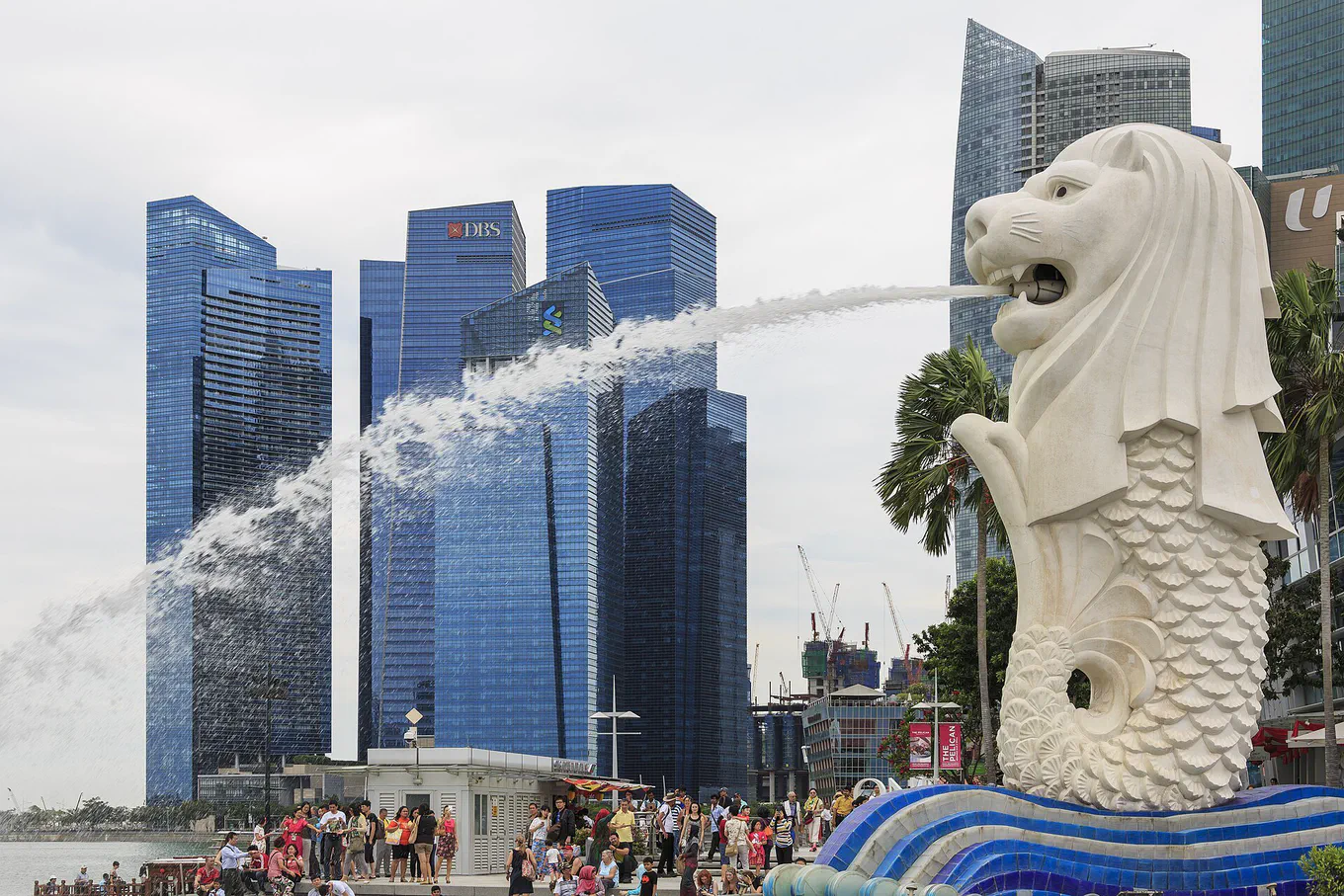
Singapore’s name means “Lion City”. In the Malay Annals, a prince of Palembang, Sang Nila Utama, saw an island with a white beach from a rock on Bintan and sailed for it. A great storm rose, and calmed only when he threw his crown into the sea. On the island he saw a strange beast with a red body, black head, and white breast, and was told it was a lion. He named the island Singapura. Lions have never lived in Singapore. The beast is thought to have been a tiger.
2 Stamford Raffles and the sultan he made, Singapore River
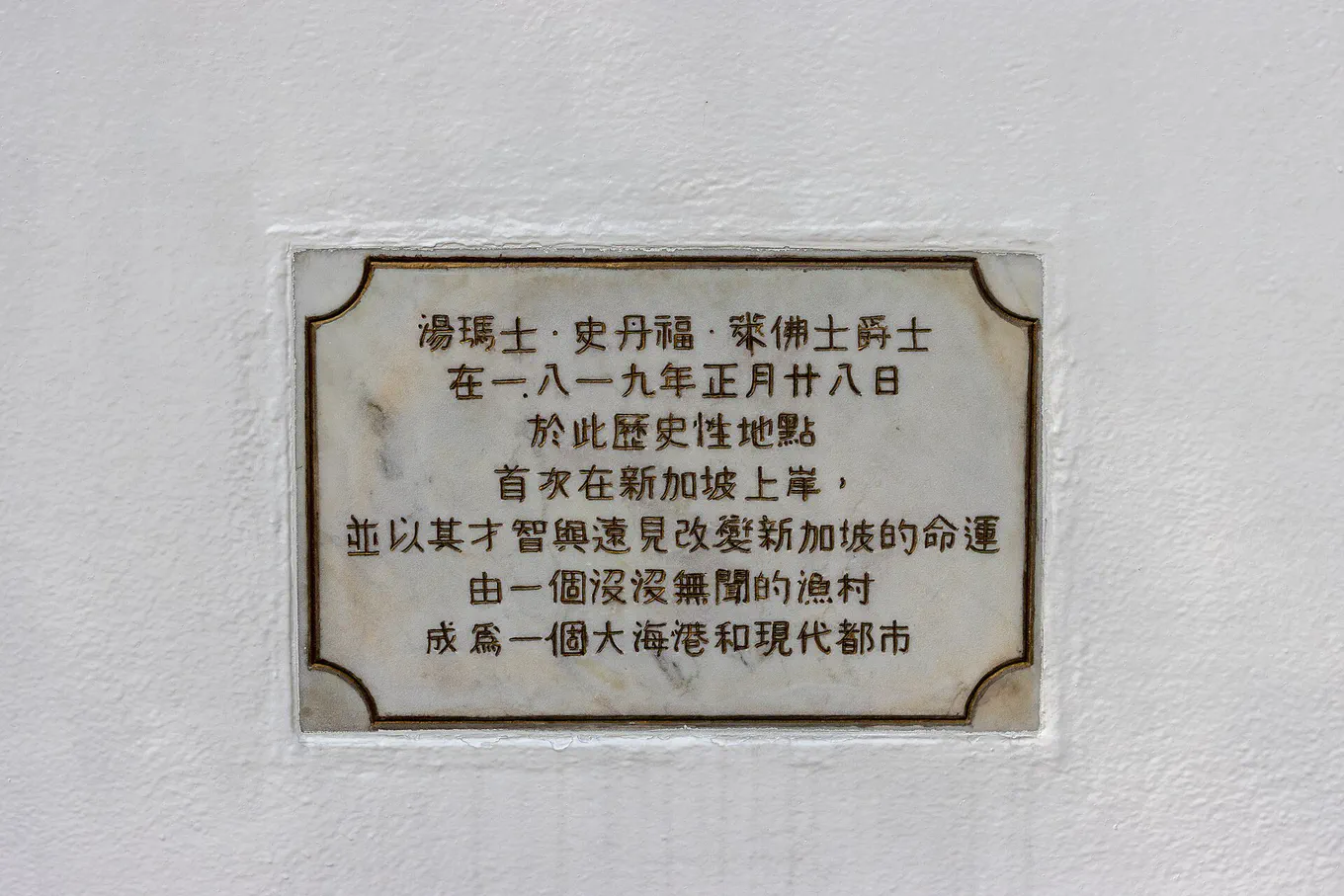
Stand here. Raffles’s Landing Site, on the north bank of the Singapore River at Boat Quay. A 1972 cast of his 1887 statue stands there.
Stamford Raffles is considered the founder of Singapore, though his longest stay was eight months. He arrived in 1819, wanting a British trading post to break the Dutch monopoly, and for that he needed the Sultan of Johor’s signature. But the sultan was close to the Dutch. So Raffles turned to the sultan’s elder brother, Hussein, who had been passed over while away at his wedding. Raffles had him smuggled in from Penyengat Island and recognised him as sultan. Hussein signed, for 5,000 Spanish dollars a year.
3 Ngiam Tong Boon’s Singapore Sling at the Long Bar
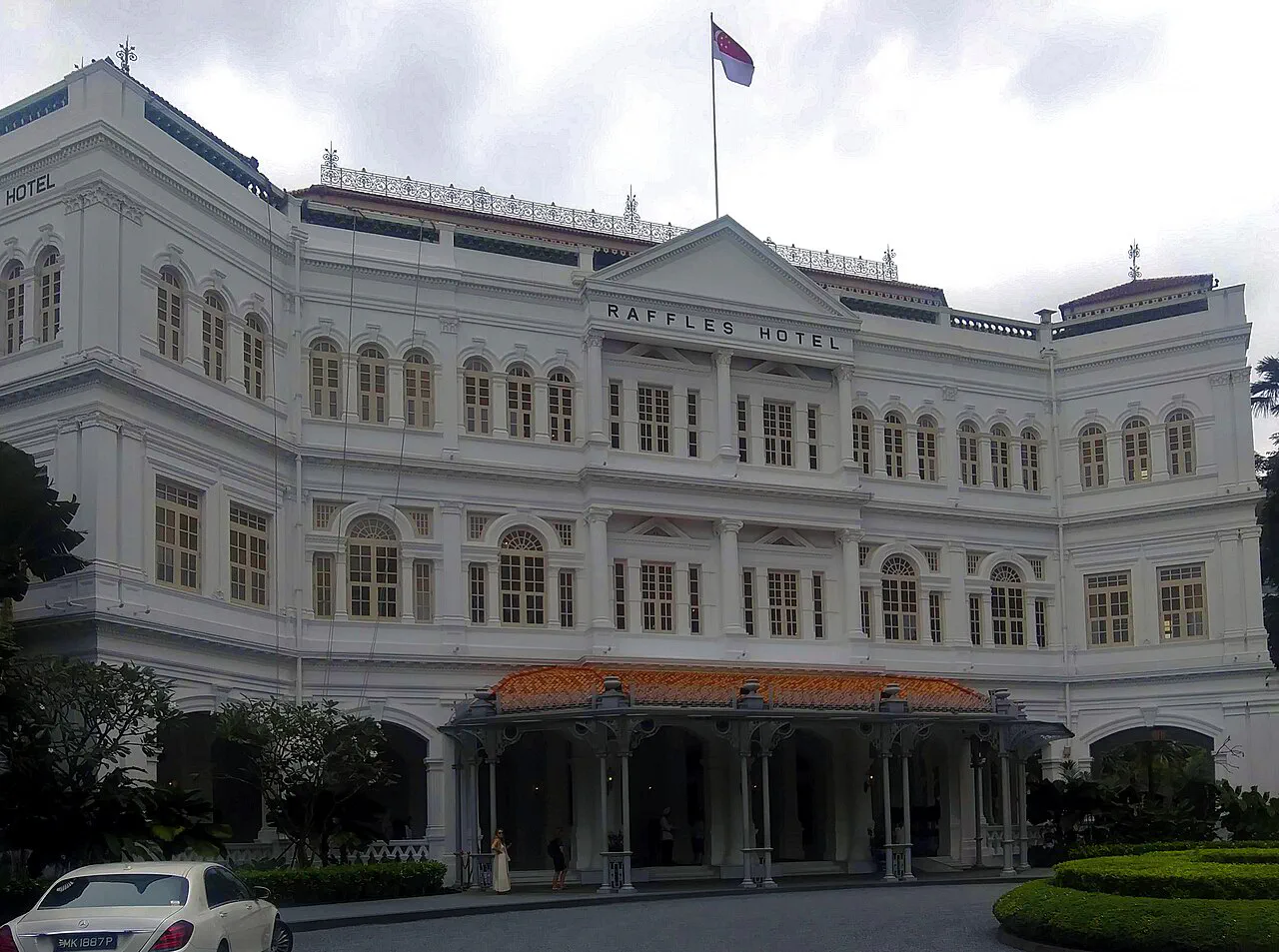
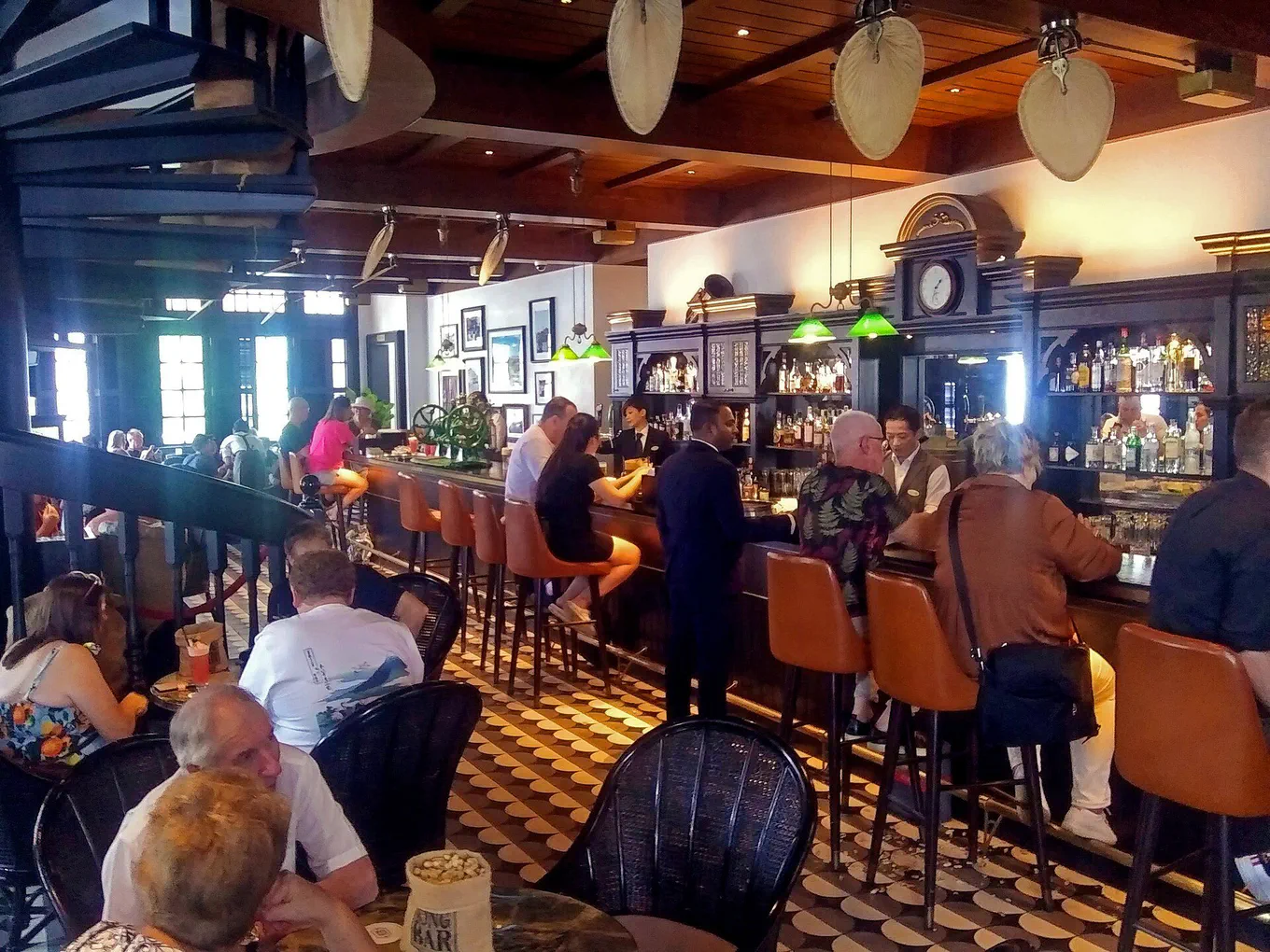
Stand here. The Long Bar, upstairs in the Raffles Arcade at Raffles Hotel. Guests still brush peanut shells onto the floor.
The Singapore Sling is said to have been mixed at the Long Bar in 1915 by a Hainanese bartender, Ngiam Tong Boon, though others date the drink earlier. Etiquette kept women off alcohol in public, so they were served tea or fruit juice. Ngiam made them a gin drink that looked like fruit juice. But the hotel stopped serving it after the 1930s, and the recipe was lost. Today’s Sling was rebuilt from a visitor’s note of 1936.
4 Arthur Percival’s surrender at the Ford Factory, Bukit Timah
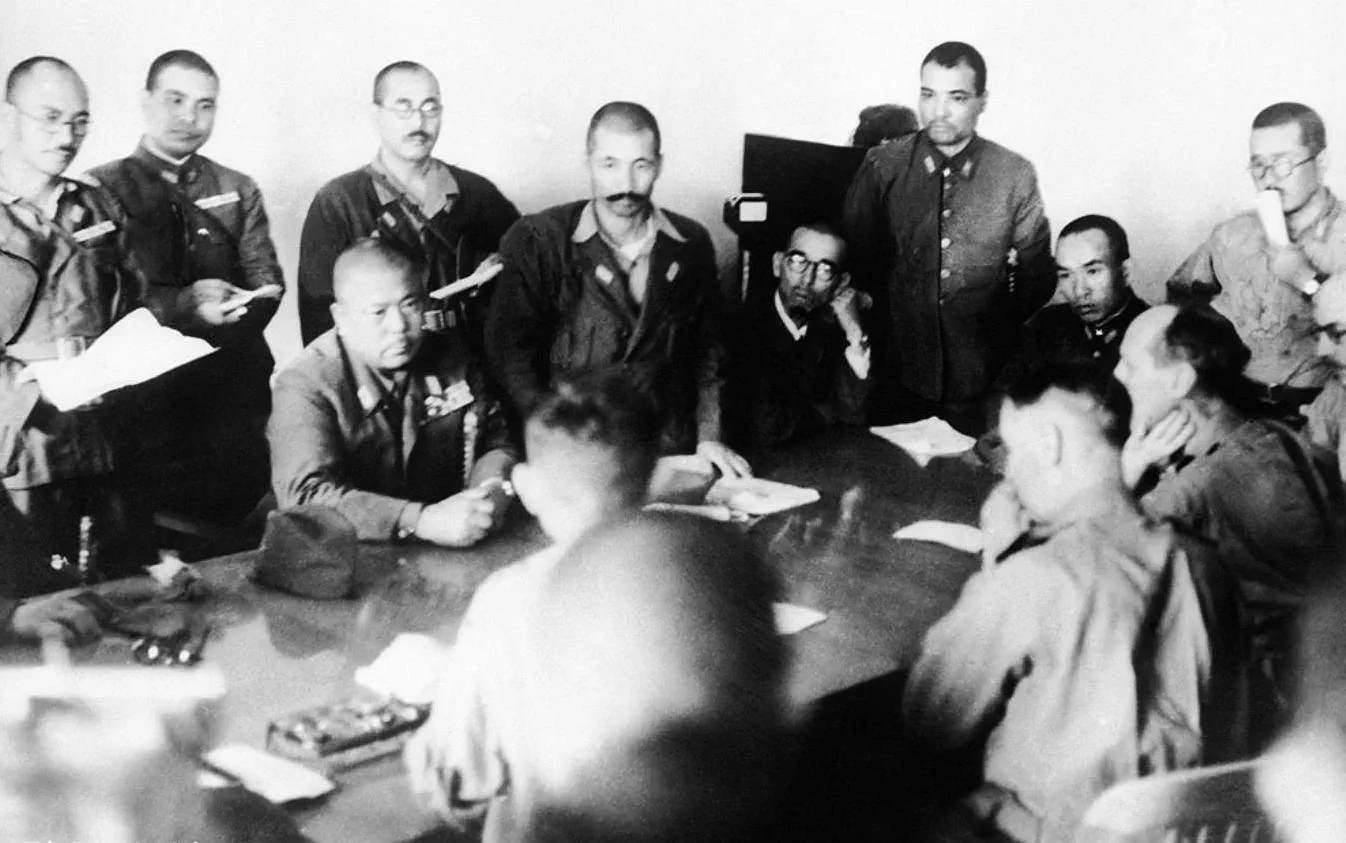
Stand here. The Former Ford Factory in Bukit Timah, now a heritage gallery, shows the boardroom of the surrender, its clock set to the minute.
Yamashita and Percival negotiate the surrender of Singapore in the boardroom of the Ford factory at Bukit Timah, 15 February 1942.Unknown / Public domain.
Churchill called the fall of Singapore the worst disaster in British military history, and it ended here. On 15 February 1942, the British commander, Arthur Percival, marched under a white flag to the Ford factory and surrendered. About 80,000 men became prisoners, Percival among them. The Japanese were running low on shells, but Percival did not know. Their commander, Tomoyuki Yamashita, later said he had 30,000 men and was outnumbered more than three to one. “My attack on Singapore was a bluff,” he said, “a bluff that worked.”
5 C. Northcote Parkinson, Raffles Professor, and Parkinson’s Law
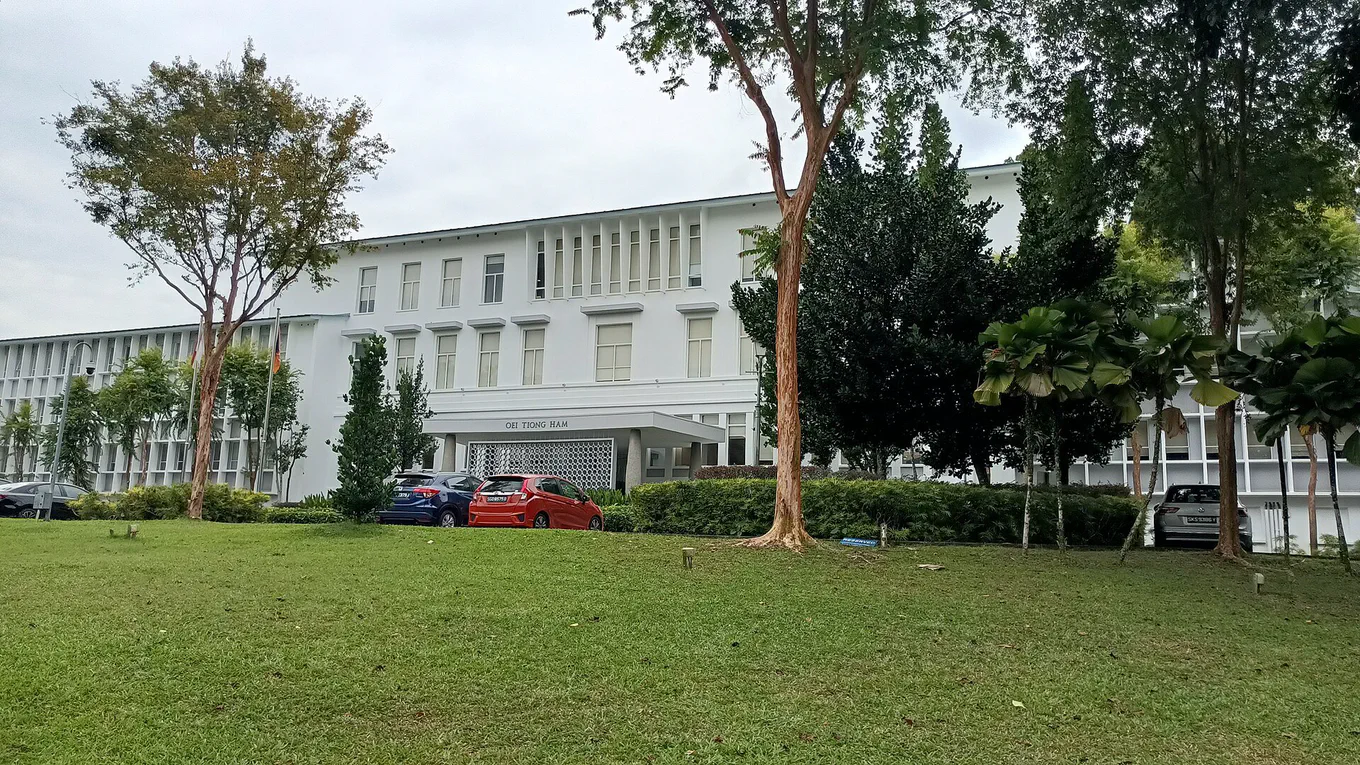
Stand here. The Bukit Timah campus, home of the University of Malaya in Parkinson’s day, now houses the Lee Kuan Yew School of Public Policy.
Parkinson’s Law began as satire, published in 1955 by C. Northcote Parkinson, Raffles Professor of History at the University of Malaya in Singapore. In The Economist, he mocked the Admiralty and the Colonial Office for growing as their ships and colonies dwindled. Work, he wrote, “expands so as to fill the time available for its completion”. The book that followed was an instant best seller. But readers took the joke seriously, and the man who had mocked bureaucracy became an authority on public administration.
Pack nothing. Leave Friday.
Every Friday, I write a free letter, Journey, that takes us on a trip through places, stories, and ideas.
King Rat(James Clavell, 1962). A novel, set in the Changi Prison camp where Clavell was held. An American corporal plans to breed rats to sell for food.
Aunty Lee’s Delights(Ovidia Yu, 2013). A detective novel. Aunty Lee runs a Peranakan cafe on Sentosa, and begins to investigate when a woman’s body washes up on the island’s beach.
The Art of Charlie Chan Hock Chye(Sonny Liew, 2015). A graphic novel. Charlie Chan Hock Chye is seen working in his family’s shop in post-war Singapore, and the book was given three Eisner Awards in 2017.
Films to watch before you visit Singapore
Saint Jack(Peter Bogdanovich, 1979). A film, shot entirely on location in Singapore in 1978, including Bugis Street and the former Empress Place hawker centre.
Ilo Ilo(Anthony Chen, 2013). A film, shot in a five-room flat in Tampines and in housing estates at Jurong and elsewhere.
Crazy Rich Asians(Jon M. Chu, 2018). A film, with scenes at Newton Food Centre, a hawker centre, and a wedding reception in the Supertree Grove at Gardens by the Bay.
Questions
Can you still drink a Singapore Sling at the Long Bar?
Yes. The Long Bar is on the second floor of the Raffles Arcade at Raffles Hotel, 328 North Bridge Road, and takes walk-ins only. It sells 800 to 1,200 Singapore Slings a day, and guests are invited to brush peanut shells off the bar and onto the floor.
Can you visit the room where Singapore surrendered in 1942?
Yes. The Former Ford Factory, at 351 Upper Bukit Timah Road, is a heritage gallery with the exhibition Surviving the Japanese Occupation: War and Its Legacies. It shows the boardroom where the surrender took place on 15 February 1942, with a clock set at the time of the surrender.
Why is Singapore called the Lion City?
Its original name, Singapura, means “Lion City” in Sanskrit. In the Malay Annals, the prince Sang Nila Utama saw a strange beast on the island, was told it was a lion, and named the island after it. Lions have never lived in Singapore, and the animal is thought to have been a Malayan tiger.