I’ve only seen Split from the air (we were flying to Dubrovnik). It looked beautiful.
— Nick
Split is Croatia’s second-largest city, on the eastern shore of the Adriatic, in Dalmatia. It grew up around the palace the Roman emperor Diocletian began building by the sea in 293. Its stories here are an emperor’s cabbages, a bishop’s lucky toe, an architect taken for a spy, a defiant football club, and a Wimbledon champion who jumped into the sea.
1 Diocletian’s cabbages and the tomb that became Split Cathedral
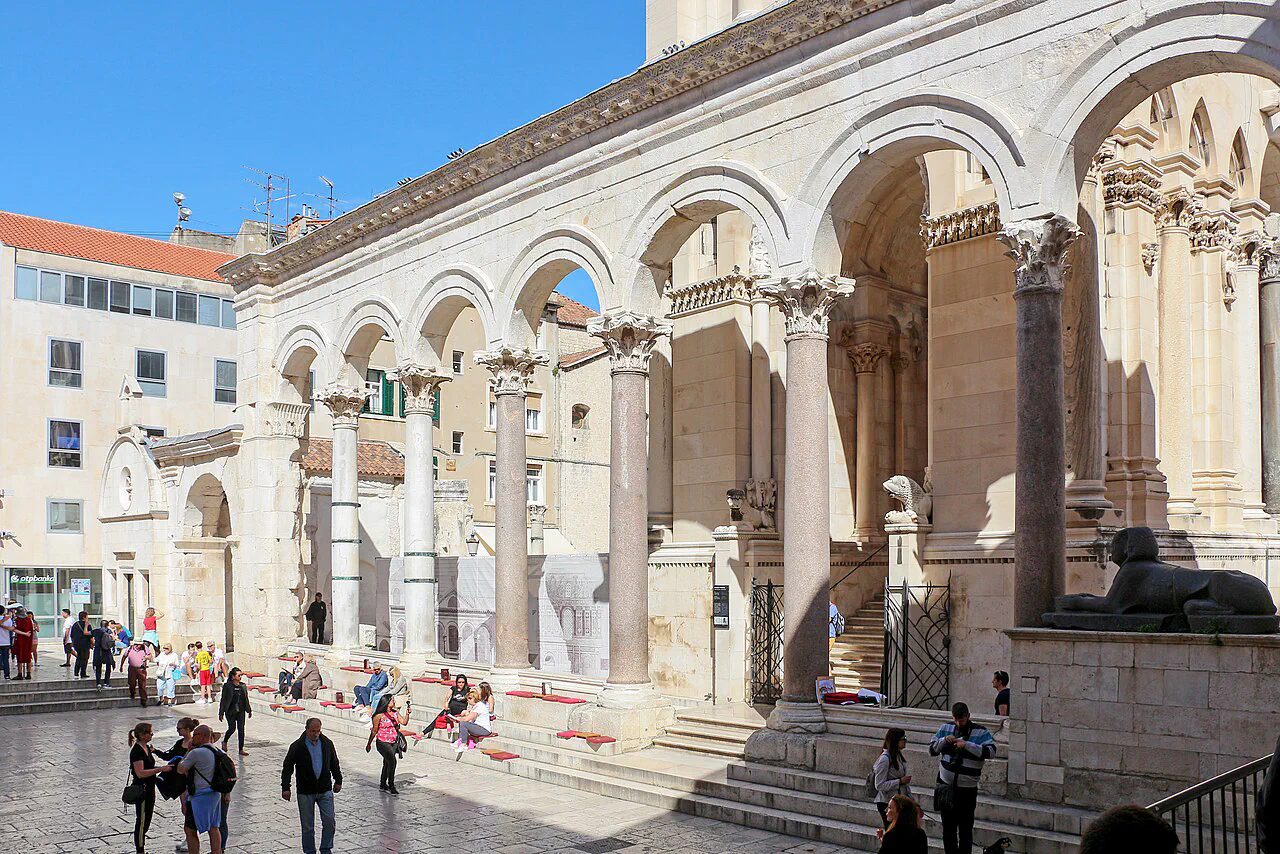
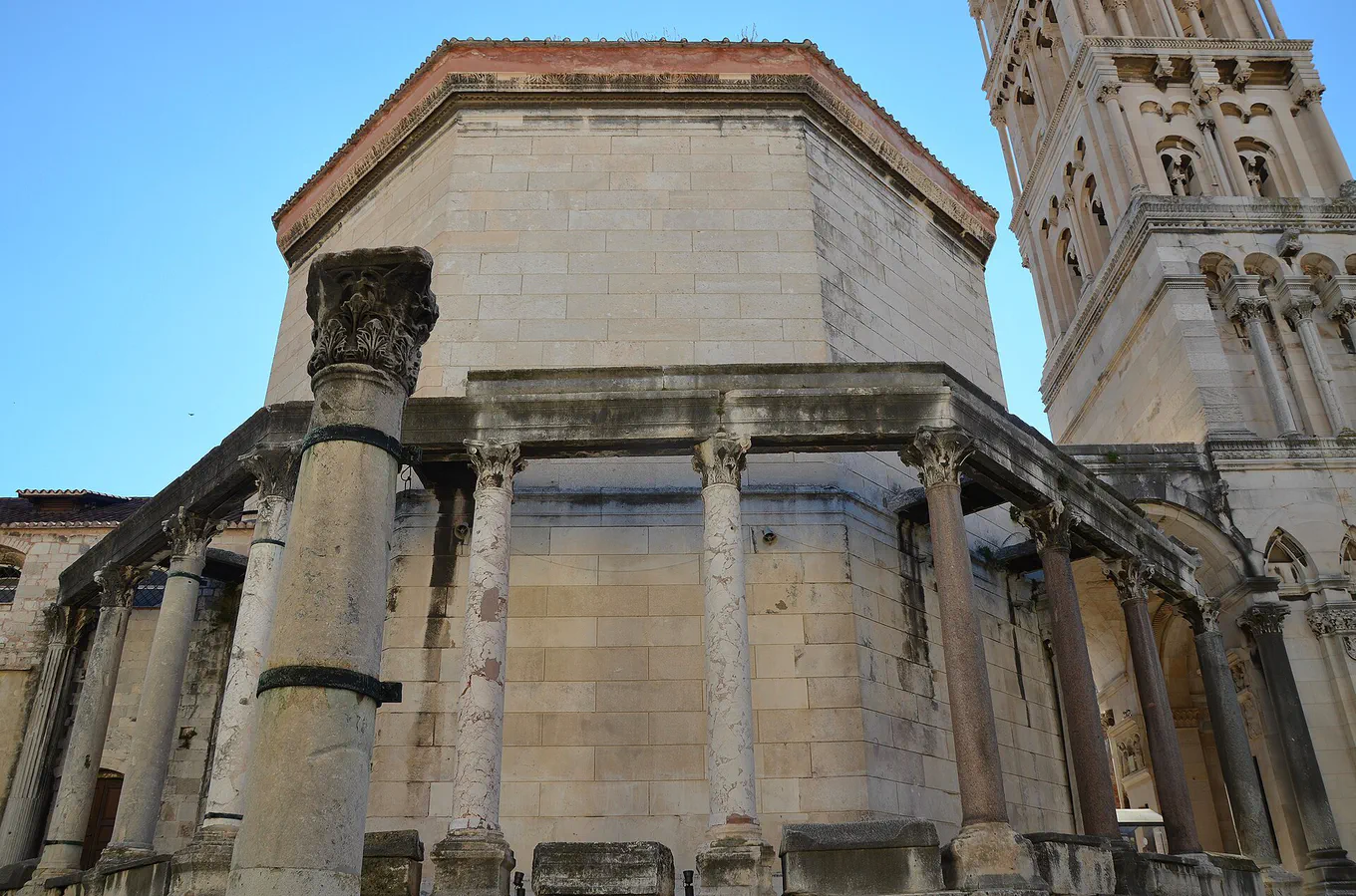
Stand here. The Peristyle, the palace’s monumental court. On its east side, Diocletian’s mausoleum is now the Cathedral of Saint Domnius, still in use.
The emperor Diocletian built this palace to retire in, and on 1 May 305 became the first Roman emperor to abdicate by choice. He lived out his retirement tending his vegetable gardens. Begged to return to the throne, he is reported to have answered, “If you could see the cabbages I have planted here with my own hands, you surely would never have thought to request this.” But he had also led Rome’s bloodiest persecution of Christians. Today his tomb is a cathedral, named for a saint his persecution beheaded.
2 Gregory of Nin’s lucky toe outside the Golden Gate
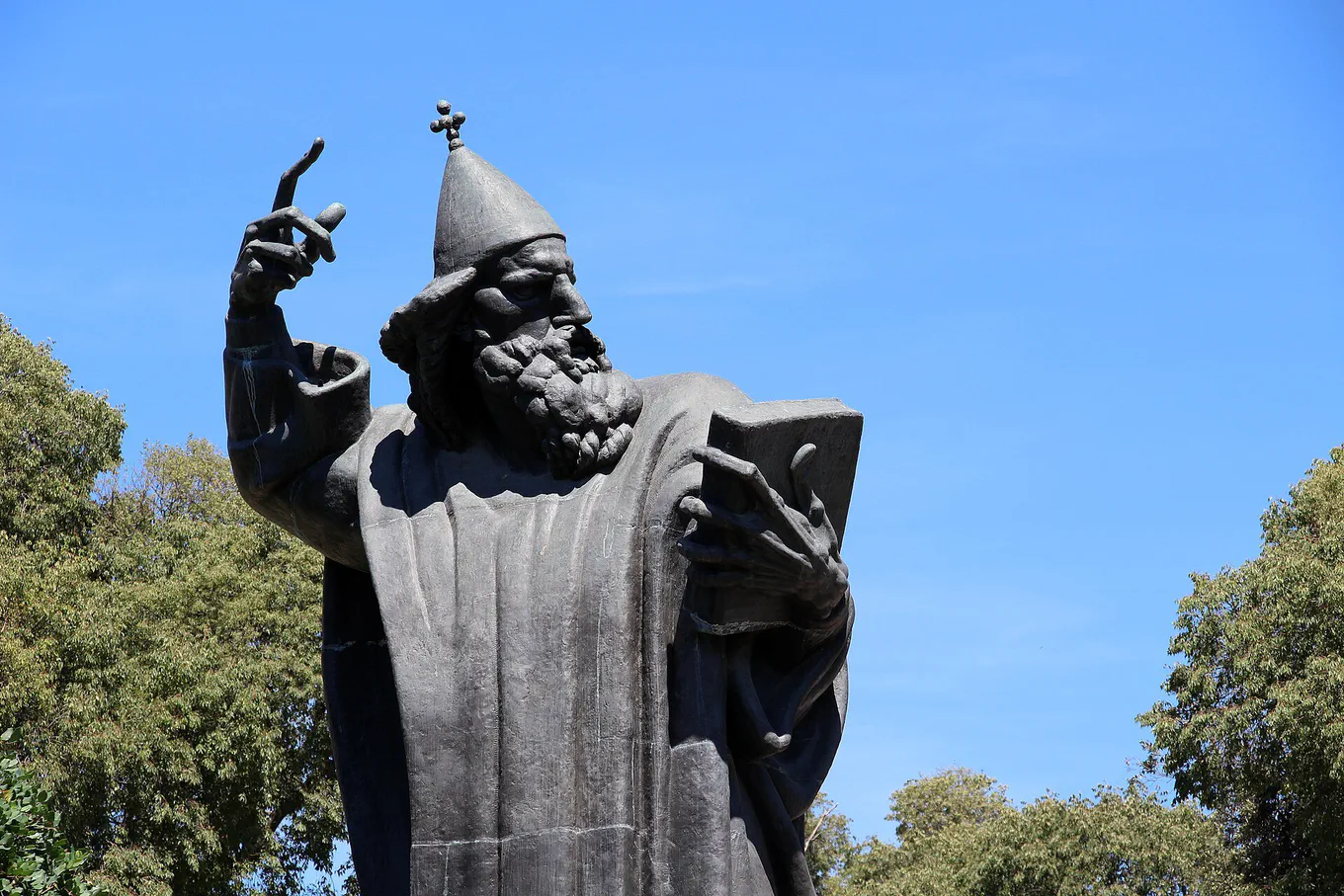
Stand here. Just outside the Golden Gate, the palace’s north gate, by the Đardin park. The bishop’s big toe is worn smooth and shiny.
In the 10th century, Gregory, bishop of Nin, brought Croatian into church services, which had been held only in Latin, a language most Croatians could not understand. The Pope strongly opposed him. In 1929, a statue of him more than seven metres tall went up in the Peristyle. Then, in the Second World War, Italian occupiers moved the statue out of the city. After the war it came back, but to a spot outside the Golden Gate. Visitors rub his big toe for luck, so often that it shines.
3 Robert Adam, the architect taken for a spy in Split
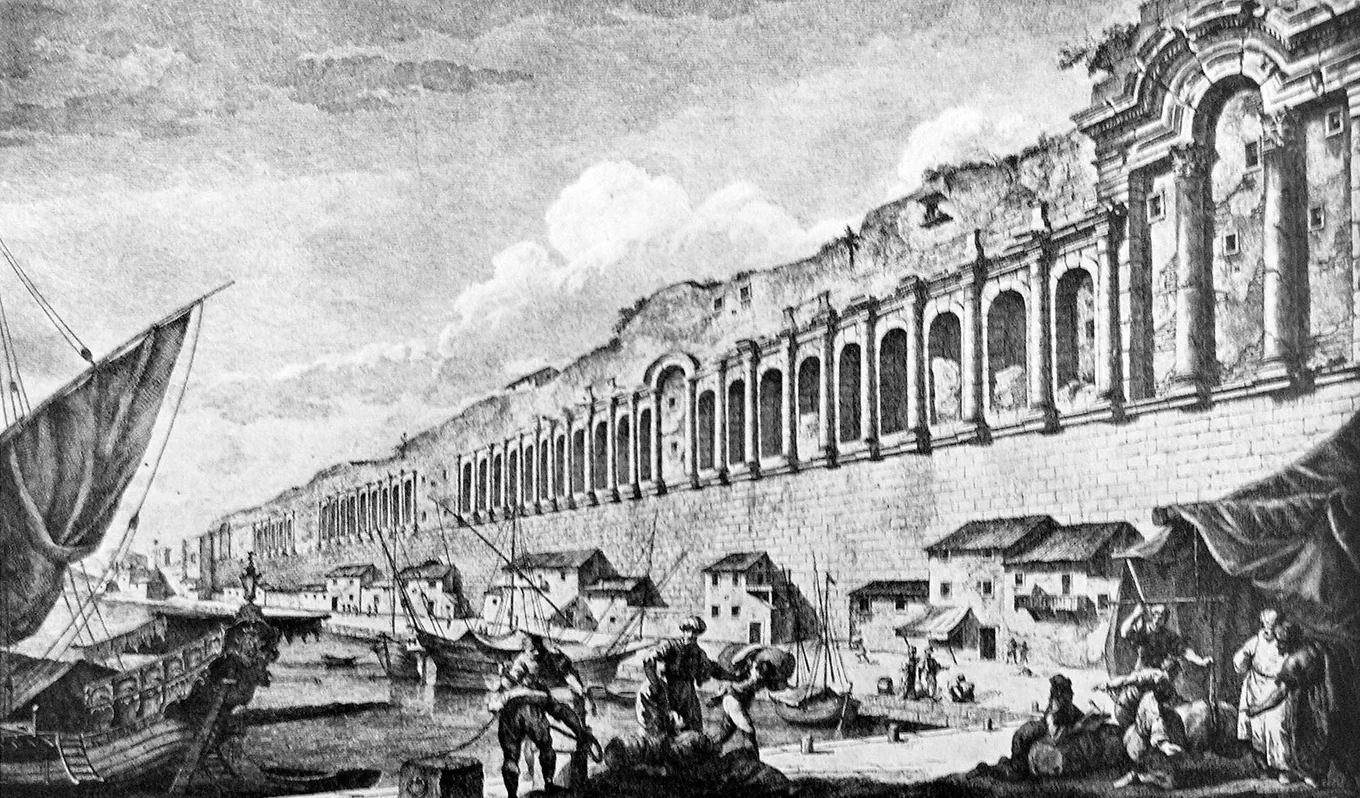
Stand here. The palace’s south wall, facing the harbour. Houses have been built into its Roman arcades over the centuries.
Robert Adam’s engraving of the palace’s south wall above the harbour, with houses built into its Roman arcades.Robert Adam / Public domain.
Robert Adam, later the most famous Scottish architect of his generation, came here in 1757 to survey a Roman palace no one had studied. A book on it, he hoped, would make his name. But the Seven Years’ War was on, and the Venetian authorities took his surveying for spying and asked him to leave. Adam got home with his drawings and published the book. In London, he raised the Adelphi beside the Thames on arched vaults, echoing the sea front he had been sent away from.
4 Hajduk Split and the Italian league it turned down
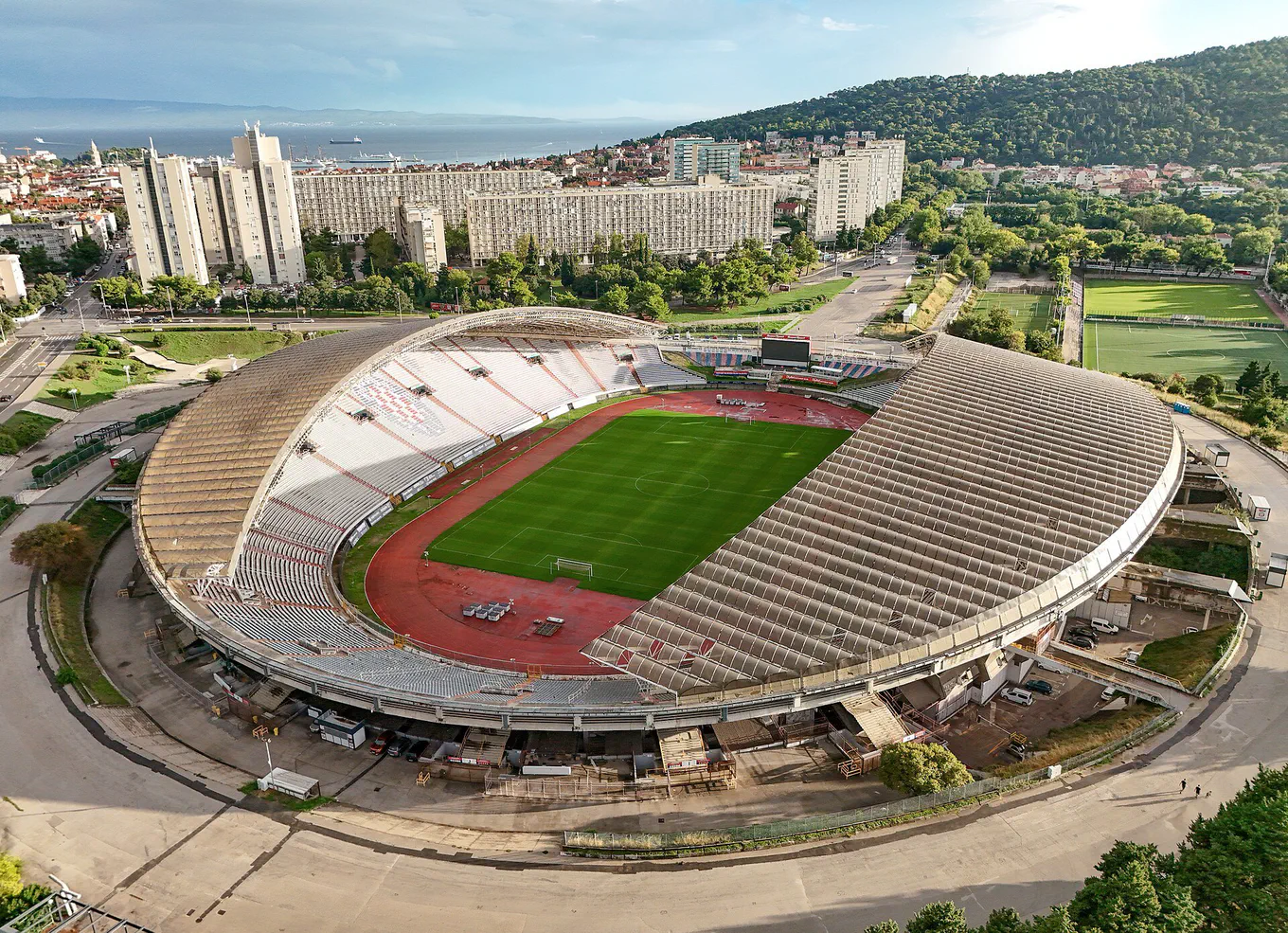
Stand here. Stadion Poljud, Hajduk’s home ground since 1979, with almost 34,000 seats. The wartime story played out elsewhere.
Hajduk Split carries the name of the hajduks, outlaws who fought Ottoman rule. In the Second World War, Italy occupied Split and offered the club a place in the Italian first division, as AC Spalato. Hajduk refused and stopped playing. Its players escaped to the free island of Vis, and on 7 May 1944, the club was formed again as the football team of the Yugoslav resistance. Touring the next year, it reached Beirut, where Charles de Gaulle made it an honorary team of Free France.
5 Goran Ivanišević brings Wimbledon home to Split harbour
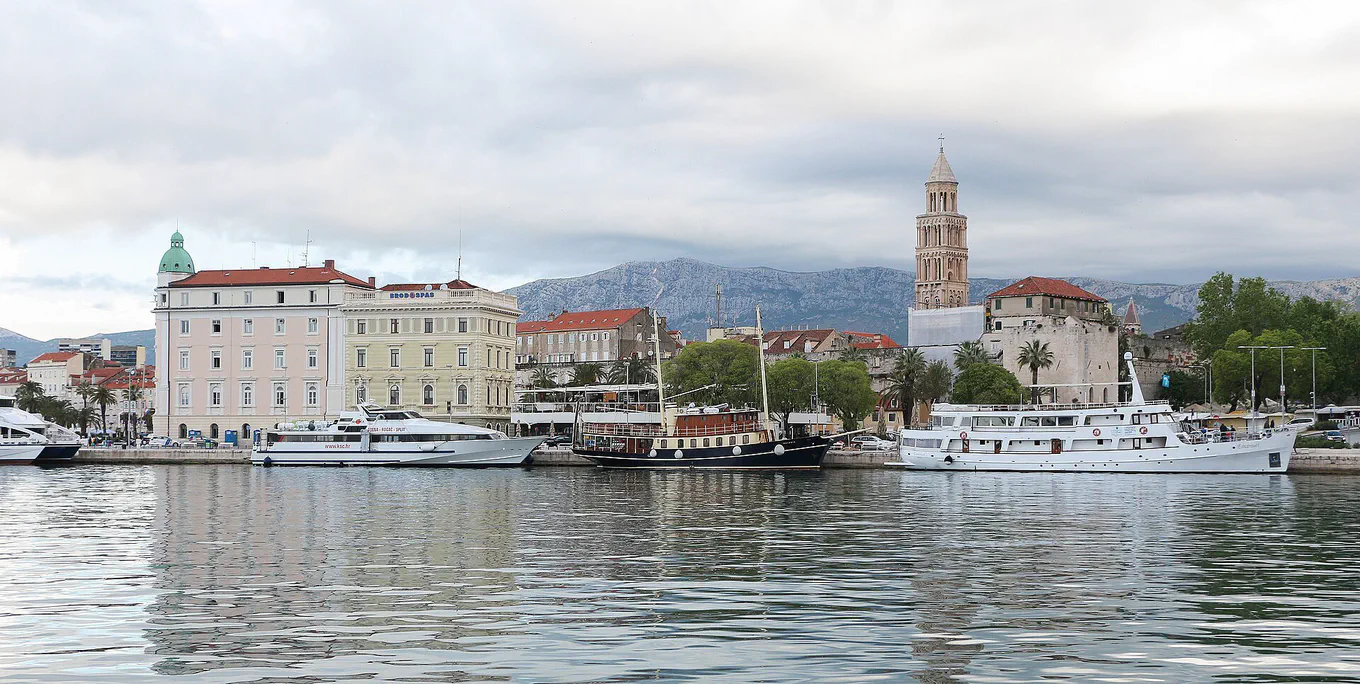
Stand here. Split’s central harbour, where the city welcomed home its Wimbledon champion.
Three times in the 1990s, Split’s Goran Ivanišević lost the Wimbledon final. By the summer of 2001, he had fallen to No. 125 in the world and needed a wild card even to play. He won anyway, beating Patrick Rafter in five sets to become the only singles player to win Wimbledon as a wild card. The next day, more than 150,000 people met him here, with a parade of boats and fireworks. Ivanišević took off his clothes and jumped into the sea.
Pack nothing. Leave Friday.
Every Friday, I write a free letter, Journey, that takes us on a trip through places, stories, and ideas.
Ruins of the Palace of the Emperor Diocletian at Spalatro in Dalmatia(Robert Adam, 1764). A history. Adam’s study of the palace, with 61 illustrations, from the survey that got him taken for a spy.
Split(Alida Bremer, translated by Ruth Ahmedzai Kemp, 2024). A historical novel. In 1936, the body of Darko Barić is found among the fishing nets beside the harbour.
Mother of Sorrows(Jurica Pavičić, 2026). A crime novel of community and family in Split, where Inspector Zvone finds a doctor’s teenage daughter murdered in an abandoned factory on the city’s outskirts.
Films to watch before you visit Split
The Weekend Away(Kim Farrant, 2022). A film about a trip to Split, shot on the Riva, in the Peristyle and the palace cellars, and at the Gregory of Nin statue.
Game of Thrones, season four (HBO). A TV series. The cellars of Diocletian’s Palace play Daenerys’s throne room in Meereen, and the place where she locks up her dragons.
Velo misto(The Big Town) (Miljenko Smoje, 1980). A TV series following Split through turbulent times from 1910 to 1947, with Hajduk and its founders at its heart.
Questions
Is Split Cathedral really Diocletian’s mausoleum?
Yes. The Cathedral of Saint Domnius was built in 305 as the Roman emperor’s mausoleum, and became a church in the 7th century. It is regarded as the oldest Catholic cathedral in the world still in use in its original structure.
Where was Game of Thrones filmed in Split?
In the cellars beneath Diocletian’s Palace, which became Daenerys’s throne room in Meereen and the place she locks up her dragons at the end of season four. Alleys in the palace played Meereen’s streets, and the fortress at Klis played the city itself.
Do people still live inside Diocletian’s Palace?
Yes. Refugees from nearby Salona settled inside its strong walls around 650, and it has been lived in ever since. Today the palace makes up about half of Split’s old town, with around 3,000 inhabitants.