Spotify was born here. I haven’t been with them since they low-key implied that I listened to too much Marillion… but I can’t deny that they changed the world.
— Nick
Founded in 1252, Stockholm, the capital of Sweden, stretches across fourteen islands where Lake Mälaren flows into the Baltic Sea. A king’s warship that sank on her maiden voyage is the opening tale, and a shop clerk who became Greta Garbo, a sick girl who made up the name Pippi Longstocking, the bank siege that named Stockholm syndrome and a prime minister’s last walk home complete the set.
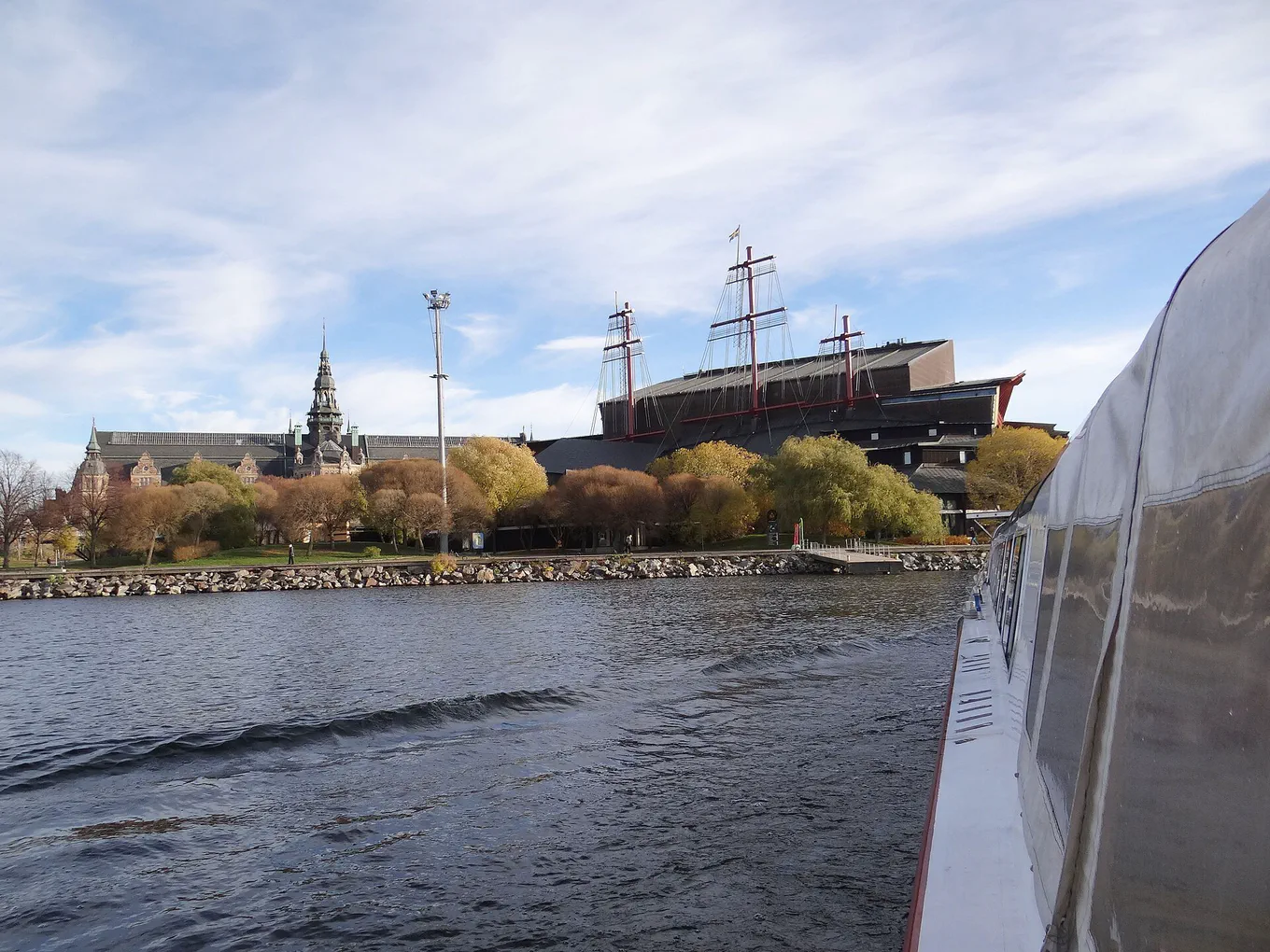
The warship in the Vasa Museum was built for King Gustavus Adolphus, who wanted a strong navy for his war with Poland-Lithuania. She was one of the most powerfully armed vessels in the world. Before she sailed, thirty men ran back and forth across her deck to test her, and the admiral stopped them after three trips, fearing she would capsize. On 10 August 1628, a gust pushed her onto her side, and water poured in through the open gunports. She sank about 1,300 metres into her maiden voyage.
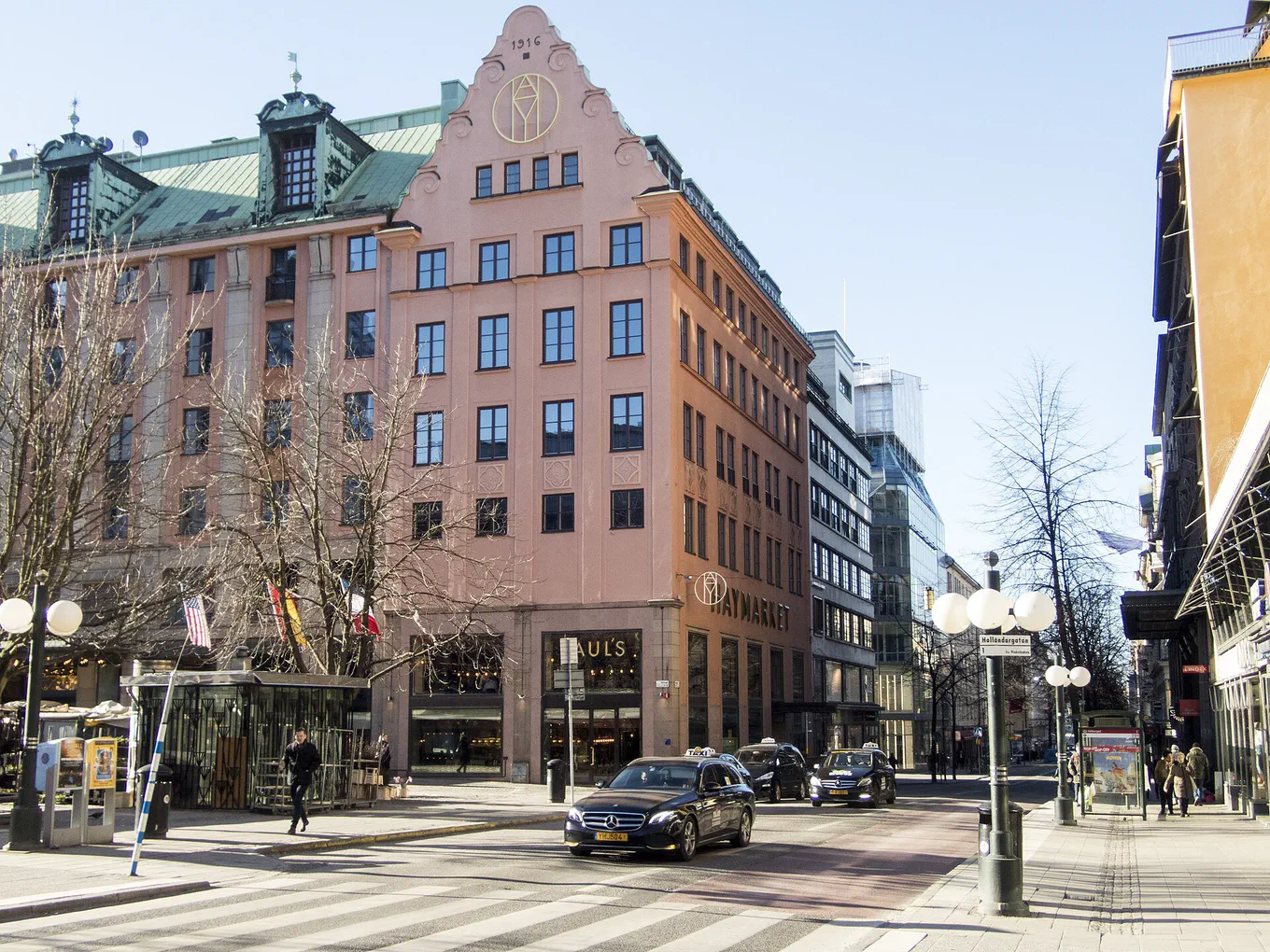
2 Greta Garbo, the clerk who modelled hats at PUB on Hötorget
Stand here. The PUB department store building on Hötorget. In 2015, plans were announced to close the last of the store and turn the whole building into the Scandic Hotel Haymarket.
Before Hollywood, Greta Garbo worked in the hat department of this store. She was born Greta Gustafsson into a poor family in Stockholm, and her father died in 1920, when she was 14. After lathering soap in a barber’s shop, she came to PUB, running errands and modelling hats for the catalogue. That same year, a director of the store’s film commercials cast her in adverts for women’s clothing. Five years later, she was brought to Hollywood at the request of Louis B. Mayer. She couldn’t speak English.
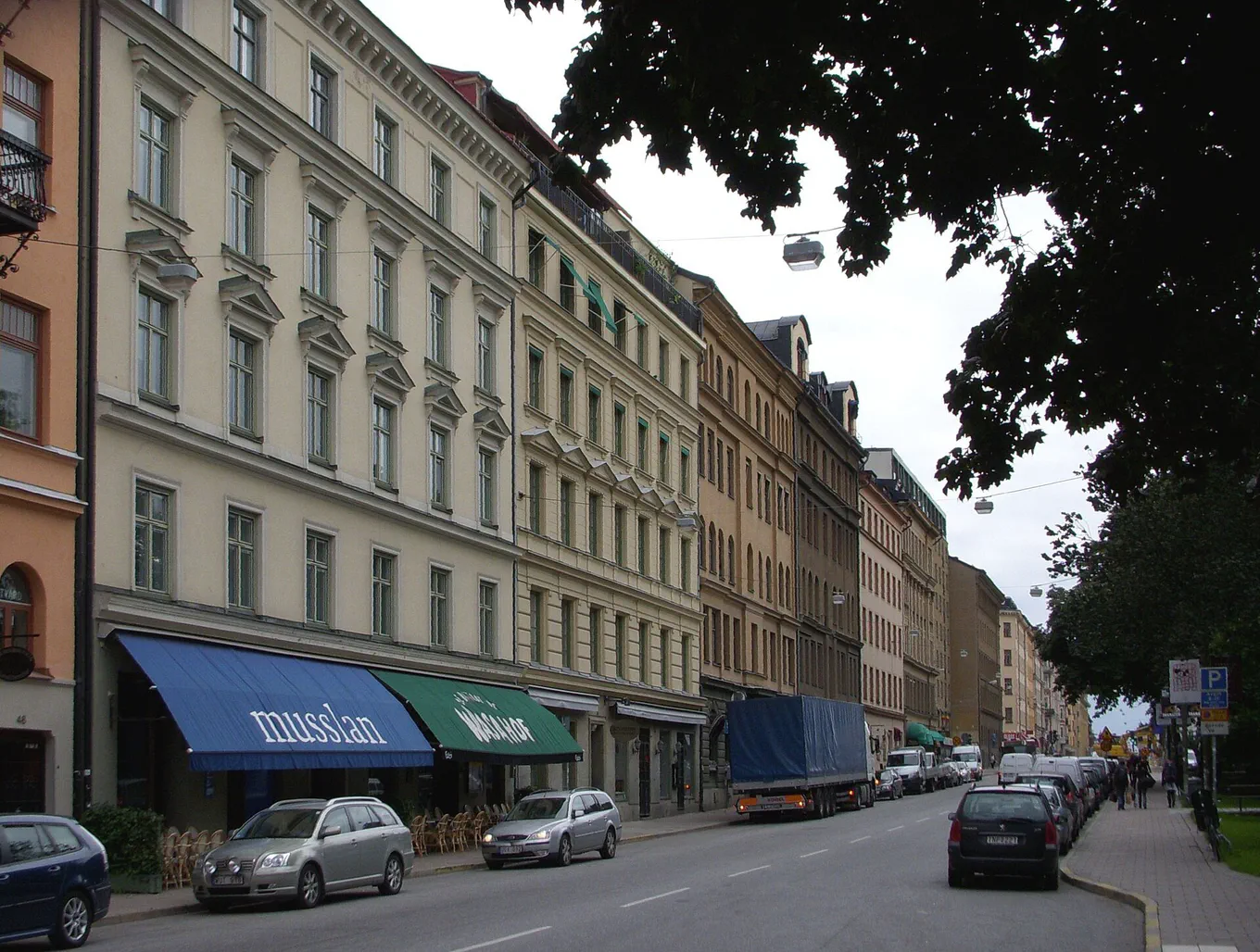
3 Astrid Lindgren writes Pippi Longstocking at Dalagatan 46
Stand here. Dalagatan 46, Astrid Lindgren’s flat from 1941 until her death in 2002, now shown on guided tours.
Pippi Longstocking was a name Astrid Lindgren’s daughter Karin made up on the spot, ill in bed and asking for a story. Lindgren told the stories, and in April 1944, laid up with a twisted ankle, she wrote them down in shorthand, and a copy became a homemade book for Karin. The publisher Bonnier rejected the manuscript as “too advanced”. It then won a competition run by Rabén and Sjögren, and by the end of the 1940s, Pippi had saved them from financial ruin.
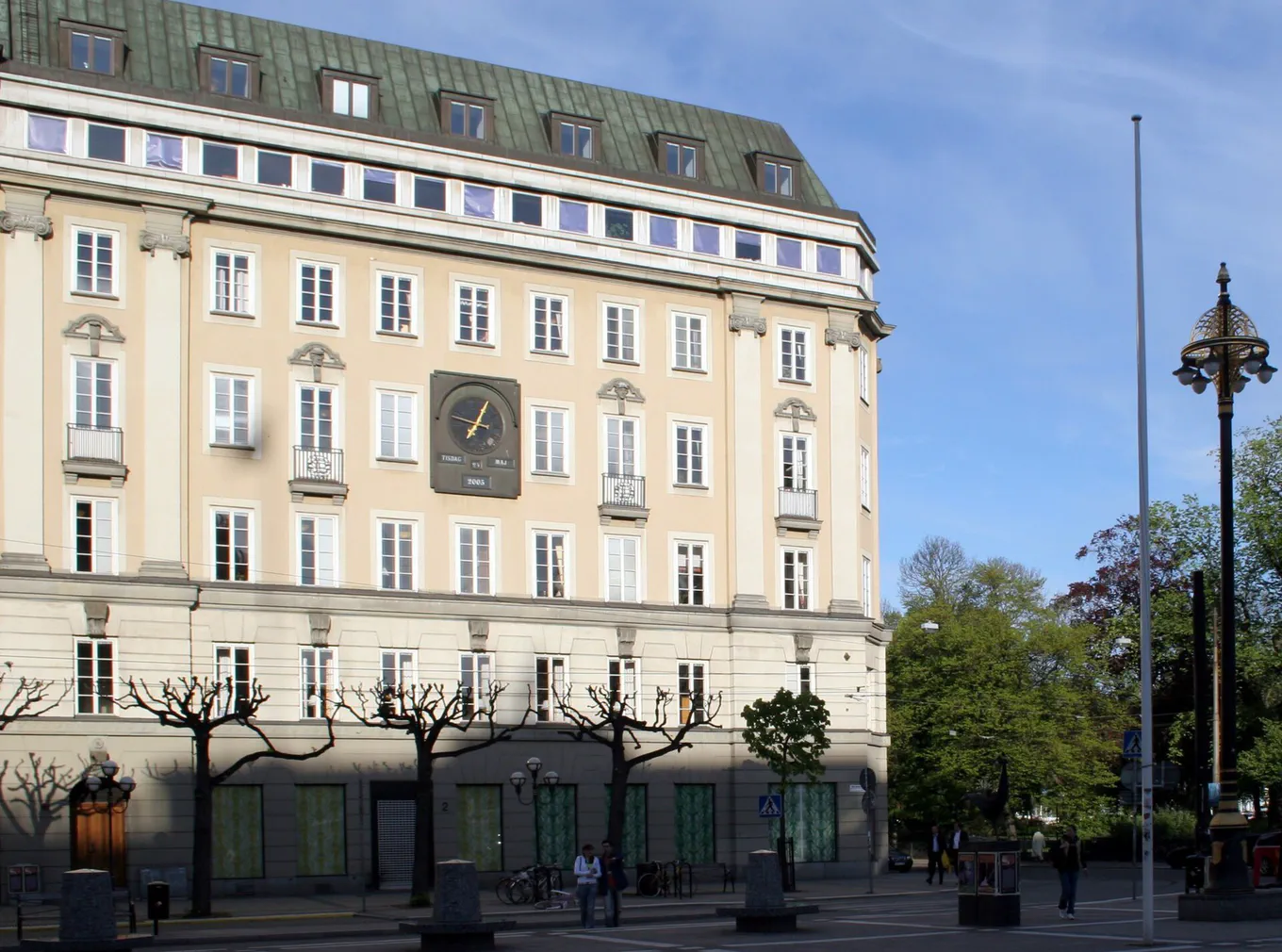
4 The Norrmalmstorg bank siege that named Stockholm syndrome
Stand here. The former Kreditbanken building on Norrmalmstorg, the Stockholm square that gave the syndrome its first name.
The name Stockholm syndrome began here in 1973, when a prisoner on leave took four bank staff hostage and had a friend brought from jail. One hostage, Kristin Enmark, said she felt safe with her captors and feared the police. She phoned Prime Minister Olof Palme and asked him to let them all leave. Tear gas ended the siege, with no hostage permanently hurt. A psychiatrist who never met the hostages named the reaction after the square. Enmark spent decades saying she only did what it took to stay alive.
5 Olof Palme’s last walk home on Sveavägen
Stand here. The corner of Sveavägen and Tunnelgatan, where a plaque marks the spot. Palme is buried at Adolf Fredrik Church nearby.
Olof Palme, Sweden’s prime minister, wanted to live as ordinary a life as possible, and often went out without bodyguards. On 28 February 1986, with none, he and his wife, Lisbeth, went to the Grand Cinema to see a Swedish comedy, then walked home along Sveavägen. At 23:21, at this corner, he was fatally shot in the back at close range. Lisbeth’s back was grazed, and she refused to leave him. Who fired is still unknown.
Pack nothing. Leave Friday.
Every Friday, I write a free letter, Journey, that takes us on a trip through places, stories, and ideas.
The Girl with the Dragon Tattoo(Stieg Larsson, 2005). A novel, published after its author’s sudden death. Lisbeth Salander lives on the top floor of Fiskargatan 9, on Södermalm.
The Red Room(August Strindberg, 1879). A novel in which a group of bohemians meets to talk in a red dining room at Berns Salonger.
Let the Right One In(John Ajvide Lindqvist, 2004). A novel set in Blackeberg, a working-class suburb of Stockholm, in the early 1980s.
Films to watch before you visit Stockholm
The Square(Ruben Östlund, 2017). A film. Its central character is the curator of the X-Royal, a fictional Stockholm art museum in the former Royal Palace, modelled on Stockholm Palace.
Let the Right One In(Tomas Alfredson, 2008). A film, shot mostly in Luleå, with more filming in Blackeberg, where a leap from a tree was shot in the town square.
Questions
Is the Vasa ship in Stockholm the original?
Yes. The Vasa sank on her maiden voyage in 1628. She was found in 1956 with a home-made probe, and raised in 1961 with her hull largely intact, after 333 years on the seabed. She is displayed in the Vasa Museum, which opened in 1990 in Stockholm’s Royal National City Park.
Can you visit Astrid Lindgren’s flat in Stockholm?
Yes. Her home at Dalagatan 46, where she lived and worked from 1941 until her death in 2002, and where she wrote Pippi Longstocking, is shown on guided tours run by the Astrid Lindgren Society.
How many islands is Stockholm built on?
Fourteen. The city stretches across fourteen islands where Lake Mälaren flows into the Baltic Sea, with the island chain of the Stockholm archipelago beyond it to the east. More than 30 per cent of the city area is water, and another 30 per cent is parks and green spaces.