Stuttgart is the capital of the German state of Baden-Württemberg, set in a valley on the Neckar called the Stuttgart Cauldron. It was founded in 950 as a stud farm for warhorses. Its stories here are an engine built in secret in a greenhouse, a TV tower called an eyesore, an estate mocked as an ‘Arab village’, a playwright’s escape, and the officer who tried to kill Hitler.
1 Gottlieb Daimler’s secret greenhouse workshop in Bad Cannstatt
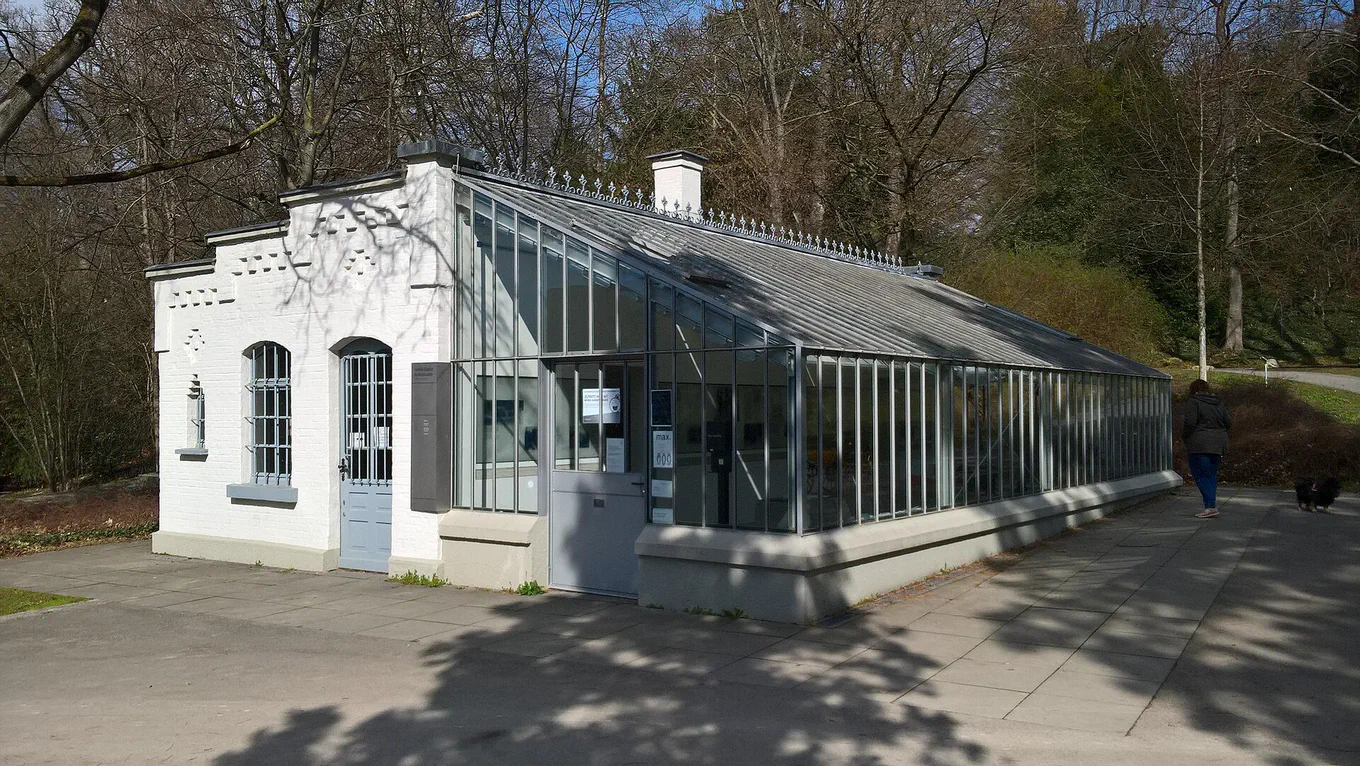
Stand here. The Gottlieb Daimler Memorial, Taubenheimstrasse 13, on the southern edge of the Kurpark. The converted greenhouse where they built their engines survives as the memorial.
The glass-fronted greenhouse in Bad Cannstatt’s Kurpark where Gottlieb Daimler and Wilhelm Maybach built their engines.Kolonist / CC0.
Gottlieb Daimler, whose company would name an engine after a ten-year-old girl called Mercedes, started in a garden. Fired by the Deutz company, he bought a cottage in Cannstatt in 1882, and with his partner Wilhelm Maybach turned its glass-fronted summer house into a workshop. Not even Daimler’s family knew what went on inside. Neighbours told the police the pair were counterfeiters (one account blames the gardener), and officers raided the workshop while the two men were out. They found nothing but engines.
2 Fritz Leonhardt’s TV tower on the Hoher Bopser
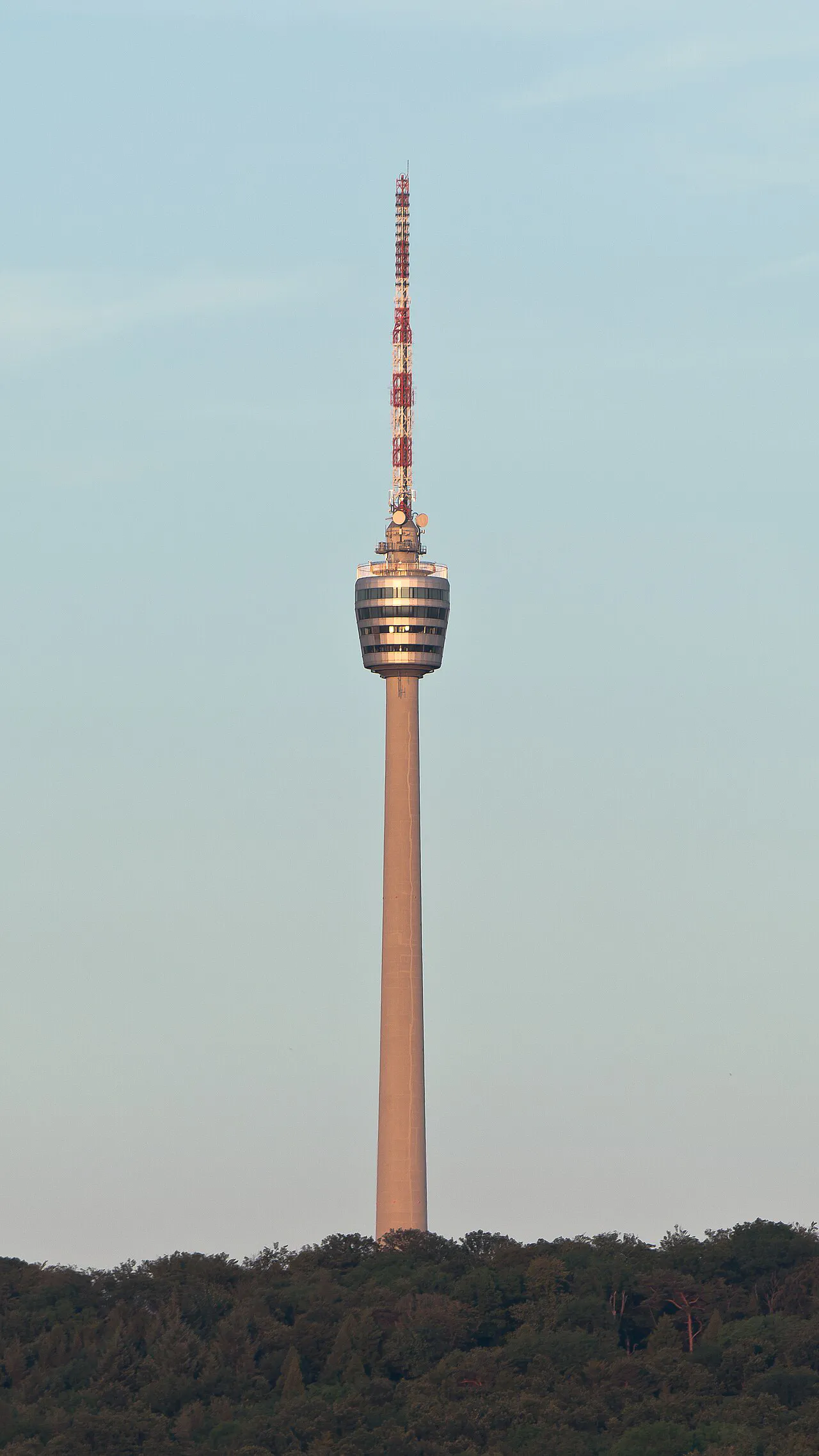
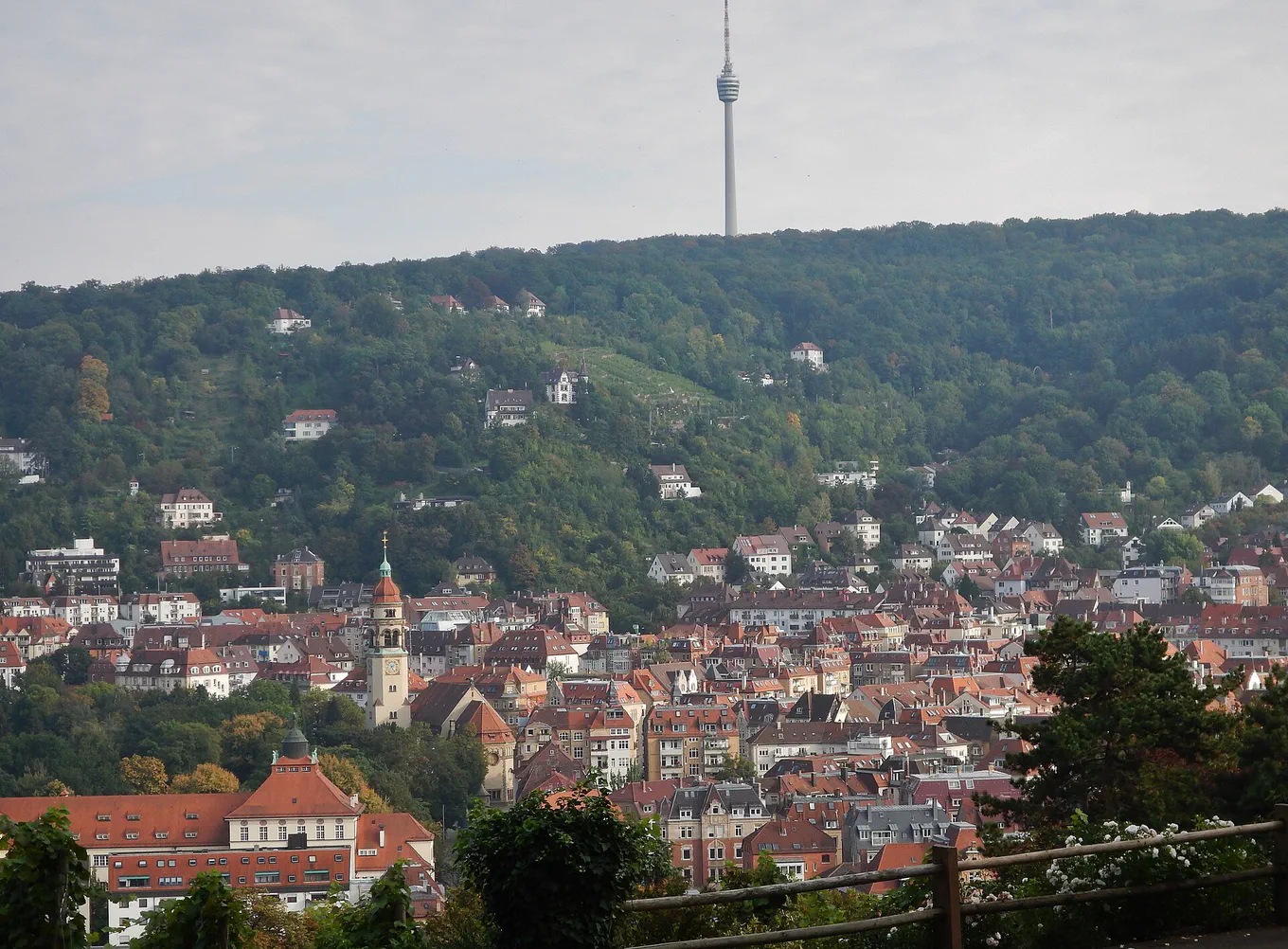
Stand here. The TV tower on the Hoher Bopser, in Degerloch. It has a two-storey viewing platform at 150 metres, and a café on the top floor.
Stuttgart’s broadcaster planned a 200-metre steel mast. Fritz Leonhardt, an engineer known for his bridges, thought a mast would spoil the view of the hills, and proposed a viewing tower with a restaurant instead. Some councillors feared a financial disaster, and letters to the paper called it an eyesore. The broadcaster decided to pay for the tower itself. It opened in 1956, the first of its kind, and earned back its 4.2 million marks in five years. The eyesore became the prototype for TV towers around the world.
3 The Weissenhof Estate, mocked as an ‘Arab village’
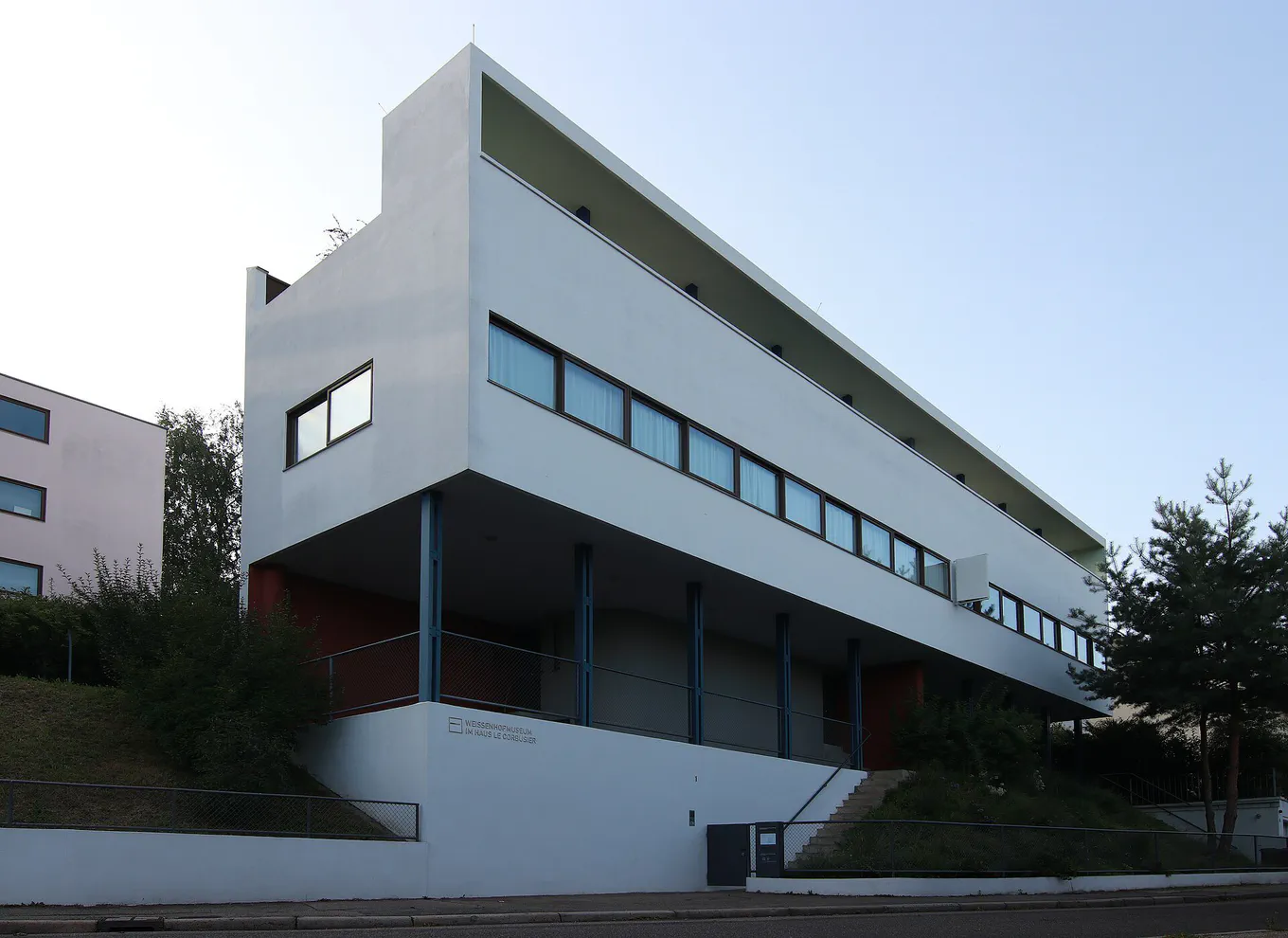
Stand here. The Weissenhof Museum, in Le Corbusier’s pair of houses at Rathenaustrasse 1–3. The other houses on the estate are private homes.
In 1927, Ludwig Mies van der Rohe gathered architects including Le Corbusier and Walter Gropius to build an estate of modern houses in Stuttgart, as an exhibition called The Dwelling. Half a million came. But a Stuttgart league for the protection of the homeland called the white, flat-roofed cubes an ‘Arab village’ and wanted them torn down, and a postcard showed them with camels and a lion. In 1939, the Reich bought the estate to demolish it. Only the war saved it. Today, Le Corbusier’s buildings are World Heritage.
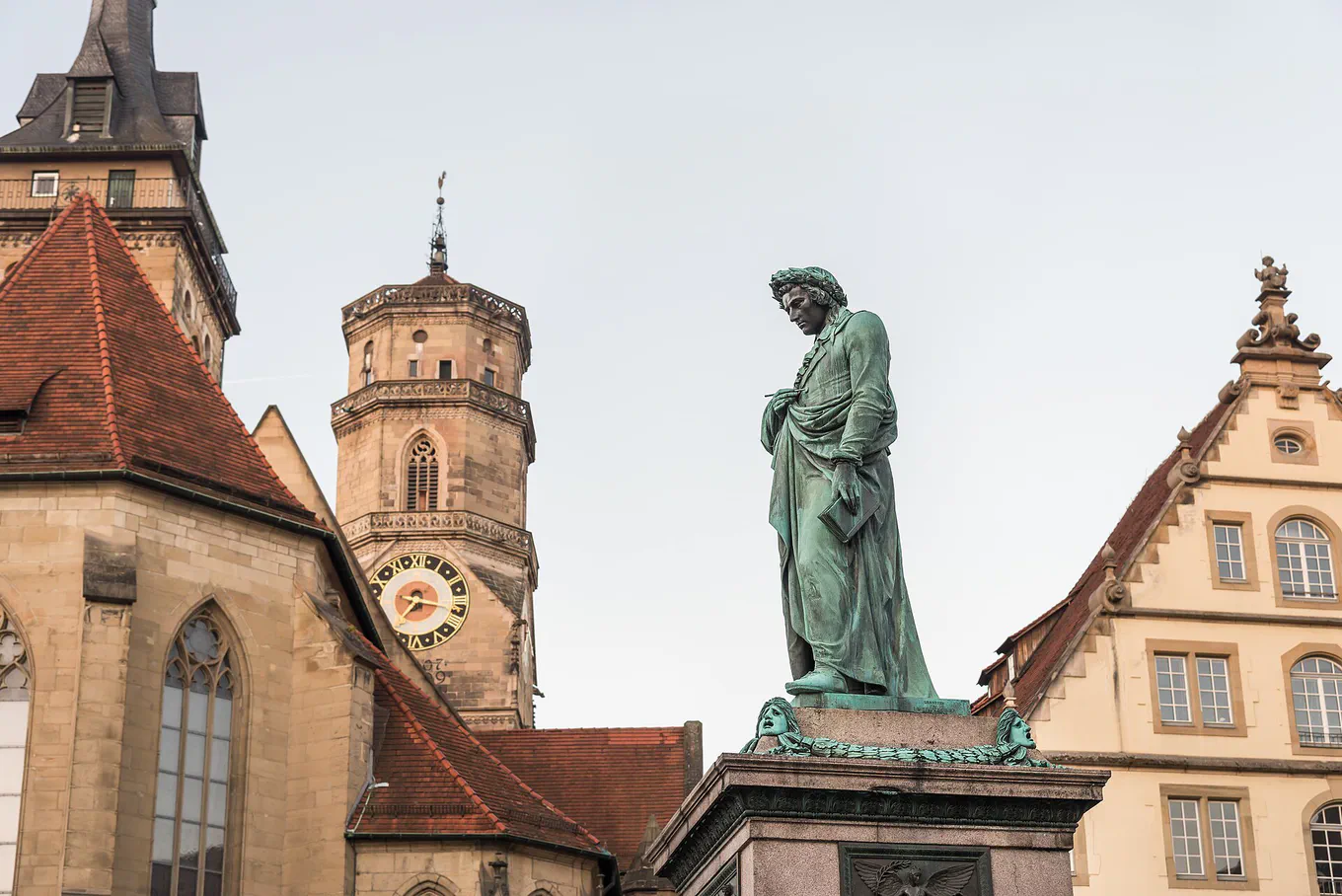
Stand here. Schillerplatz, where Bertel Thorvaldsen’s statue, raised in 1839, was Germany’s first memorial to Schiller. His academy, the Karlsschule, was destroyed in the Second World War.
Friedrich Schiller’s play The Robbers opened in Mannheim in January 1782, and its author wasn’t supposed to be there. He was a regimental doctor in Stuttgart, a job he disliked, and he went without leave. His ruler, Duke Karl Eugen of Württemberg, jailed him for fourteen days and forbade him to write anything but medicine. Schiller’s petitions got nowhere. So on 22 September, while the Duke held a party at his palace, Solitude, Schiller slipped away to Mannheim with a friend. The regiment listed him as a deserter.
5 Claus von Stauffenberg and Stuttgart’s Old Castle
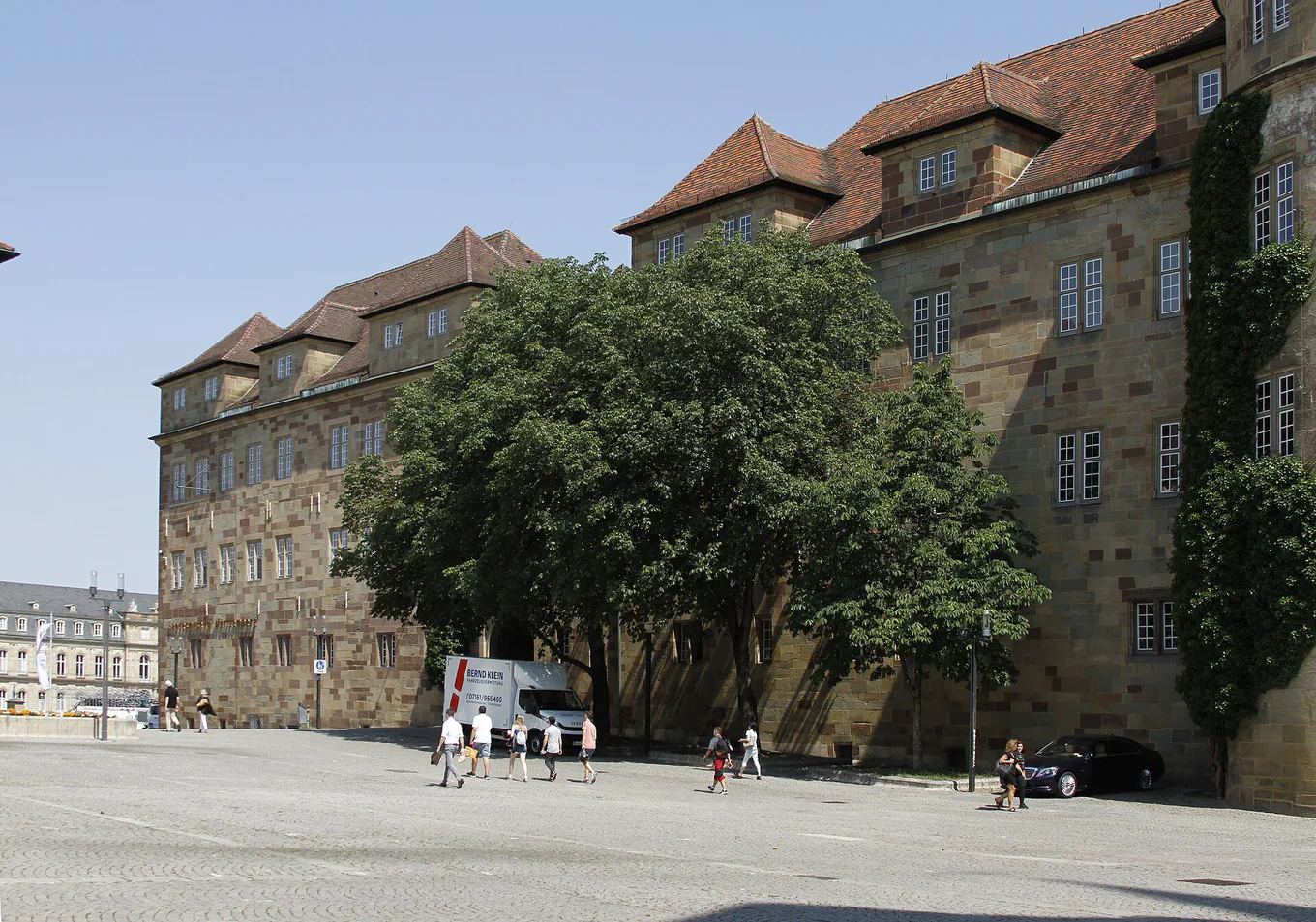
Stand here. The Old Castle (Altes Schloss), now home to the Landesmuseum Württemberg. On its Karlsplatz side is a free memorial to Stauffenberg.
Valkyrie, the film with Tom Cruise, tells how Claus von Stauffenberg tried to kill Hitler. He grew up in this castle, where his father was court marshal to the King of Württemberg. On 20 July 1944, at Hitler’s headquarters, the Wolf’s Lair, Stauffenberg set a briefcase holding two small bombs under the conference table, as close to Hitler as he could. But a heavy oak table leg shielded Hitler, who suffered only minor injuries. That night, Stauffenberg was shot by a makeshift firing squad in a courtyard in Berlin.
Pack nothing. Leave Friday.
Every Friday, I write a free letter, Journey, that takes us on a trip through places, stories, and ideas.
Jud Süß(Lion Feuchtwanger, 1925). A historical novel based on the life of Joseph Süß Oppenheimer, court Jew to Duke Karl Alexander of Württemberg in Stuttgart.
Reunion(Fred Uhlman, 1971). A novel set in Stuttgart in 1932, as the Nazis rise. Long after, its hero, Hans, receives a letter from his old school.
Die blaue Liste(Wolfgang Schorlau, 2003). A German novel, the first case for Georg Dengler, who has his office in Stuttgart’s Bohnenviertel.
Films to watch before you visit Stuttgart
Reunion(Jerry Schatzberg, 1989). A film, with a screenplay by Harold Pinter, shot on location in Berlin, New York, and Stuttgart.
Stammheim(Reinhard Hauff, 1986). A film. The trial of the left-wing Baader-Meinhof Group in the court at Stammheim Prison, in Stuttgart’s northernmost district.
The Baader Meinhof Complex(Uli Edel, 2008). A film, shot partly at Stammheim Prison.
Questions
Can you go inside the houses of the Weissenhof Estate?
Only one. Le Corbusier’s pair of semi-detached houses at Rathenaustrasse 1–3 has been the Weissenhof Museum since 2006, and it is the only building on the estate open to visitors. All the other houses are private homes and can’t be visited, even on a tour.
Where is the Stauffenberg memorial in Stuttgart?
In the Old Castle (Altes Schloss), on the Karlsplatz side, where Stauffenberg grew up while his father was court marshal to the King of Württemberg.
What is Stuttgart known for?
Cars and wine. Stuttgart is called the ‘cradle of the automobile’. It is home to the Mercedes-Benz Museum and the Porsche Museum, and Porsche, Bosch, and Mercedes-Benz Group have their headquarters there. Some of its hills are covered in vineyards, and it is often described as lying ‘between forest and vines’.