Taipei is the capital of Taiwan, in the north of the island, built mostly on an ancient lakebed. It has been the seat of the Republic of China’s government since 1949. Its stories are an oil shop that became Din Tai Fung, a climber on Taipei 101, a jade cabbage, students in a square, and a film chef who loses his sense of taste.
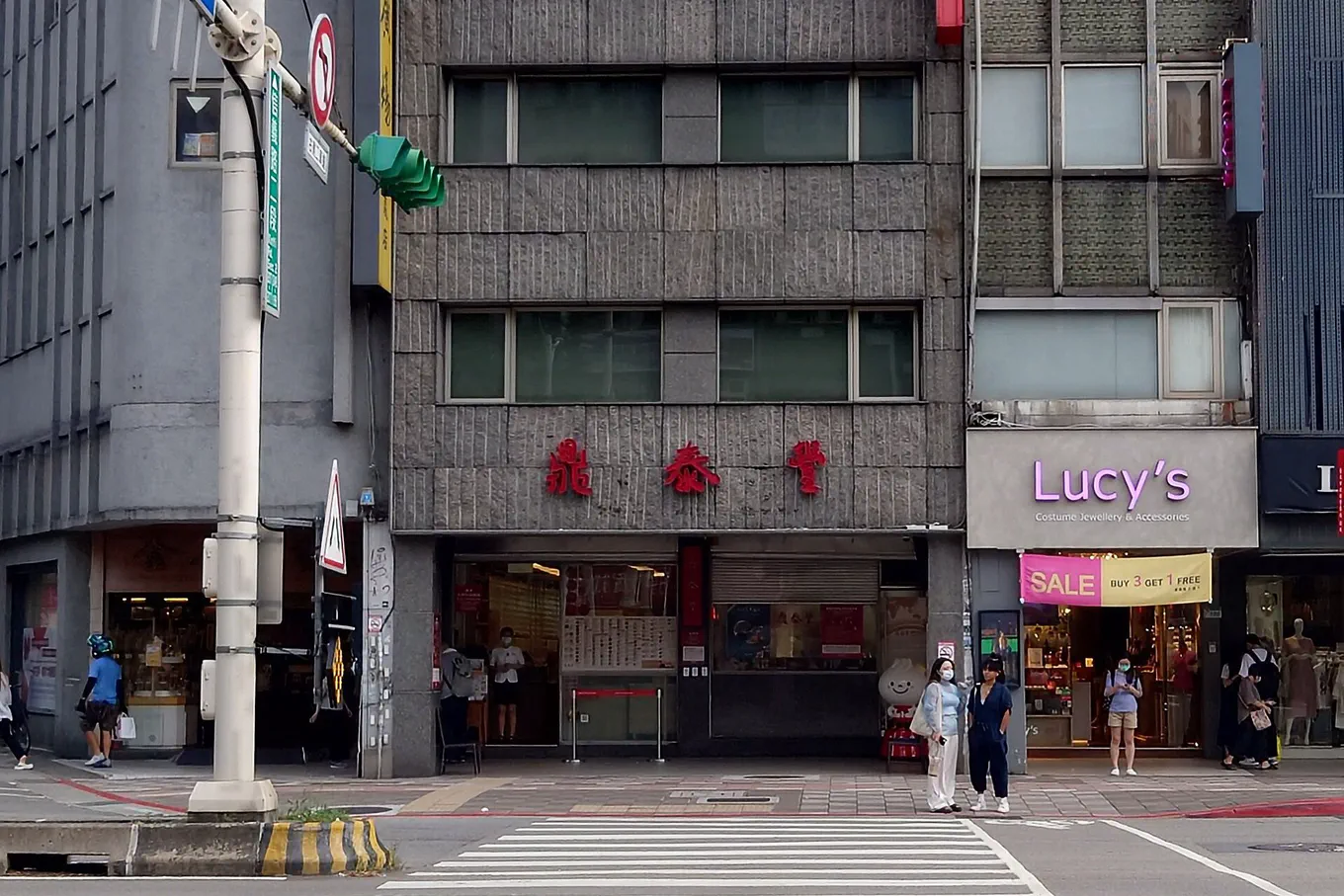
Din Tai Fung, the dumpling chain known worldwide, began as a cooking-oil shop. Yang Bing-yi came to Taiwan alone at 20 and found work delivering oil. When that firm collapsed, he and his wife opened an oil shop of their own. But tinned oil came in and changed how people bought it. In 1972, on a friend’s advice, they gave half the shop to xiaolongbao, dumplings in paper-thin wrappers with 18 folds. Soon they stopped selling oil altogether. The old sign by the entrance still reads “Din Tai Fung Oil Retail”.
2 Alex Honnold climbs Taipei 101 without a rope
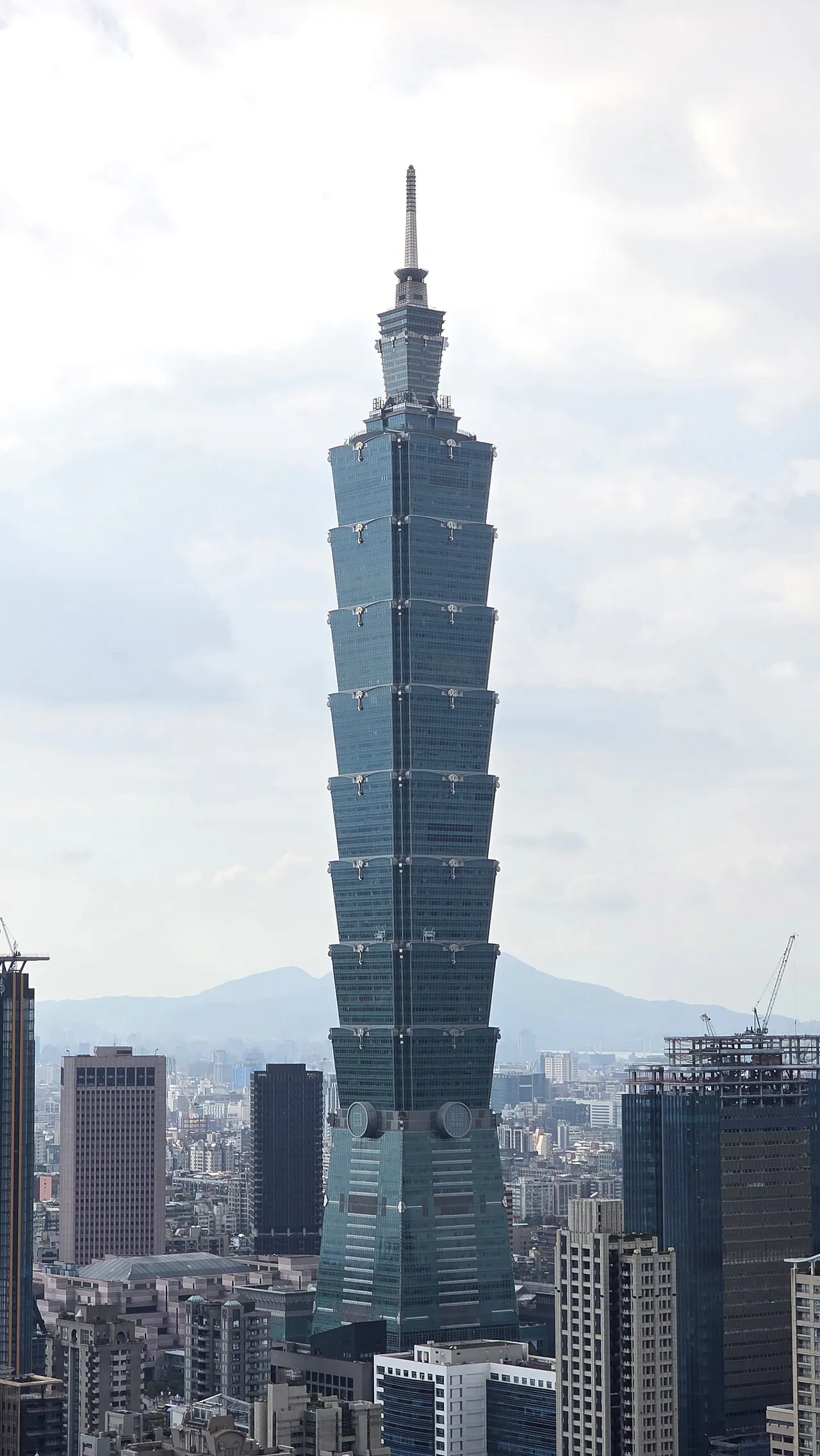
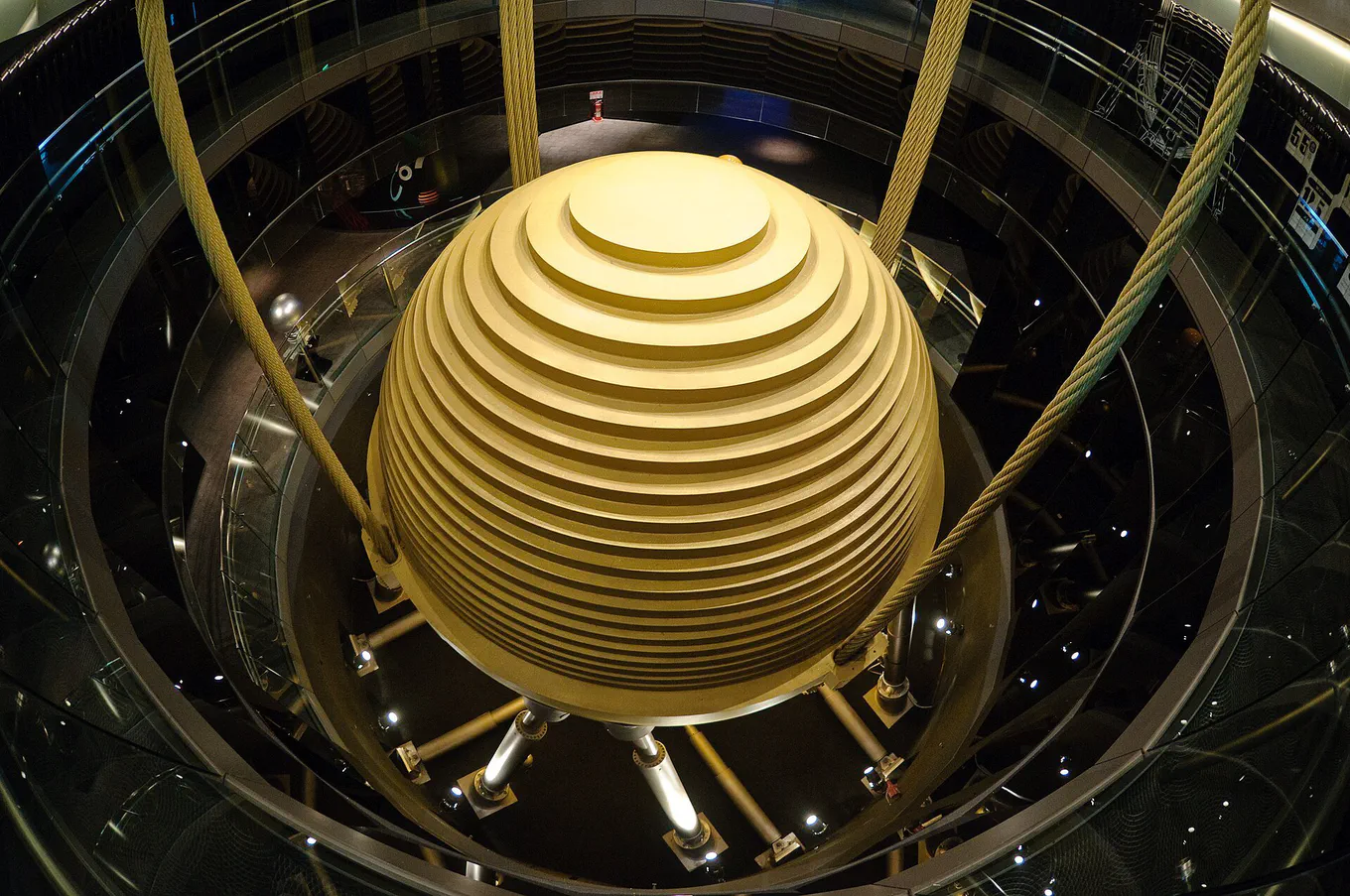
Stand here. Taipei 101, in Xinyi District. Its 660-tonne steel damper hangs in view from the 88th floor up to the 92nd.
Alex Honnold, the climber in the Oscar-winning film Free Solo, came to Taipei 101 to climb it without a rope, live on Netflix. Only one man had reached the top of its spire before, Alain Robert, in 2004, and he took four hours in heavy rain, with a safety rope. Bad weather put Honnold back a day. On 25 January 2026, he set off at nine in the morning, smiling and waving to onlookers. About an hour and a half later, he was at the top of the spire.
3 The Jadeite Cabbage, from Consort Jin’s palace to Taipei
Stand here. The National Palace Museum, in Shilin District, re-established here in 1965. The Jadeite Cabbage is its most famous piece.
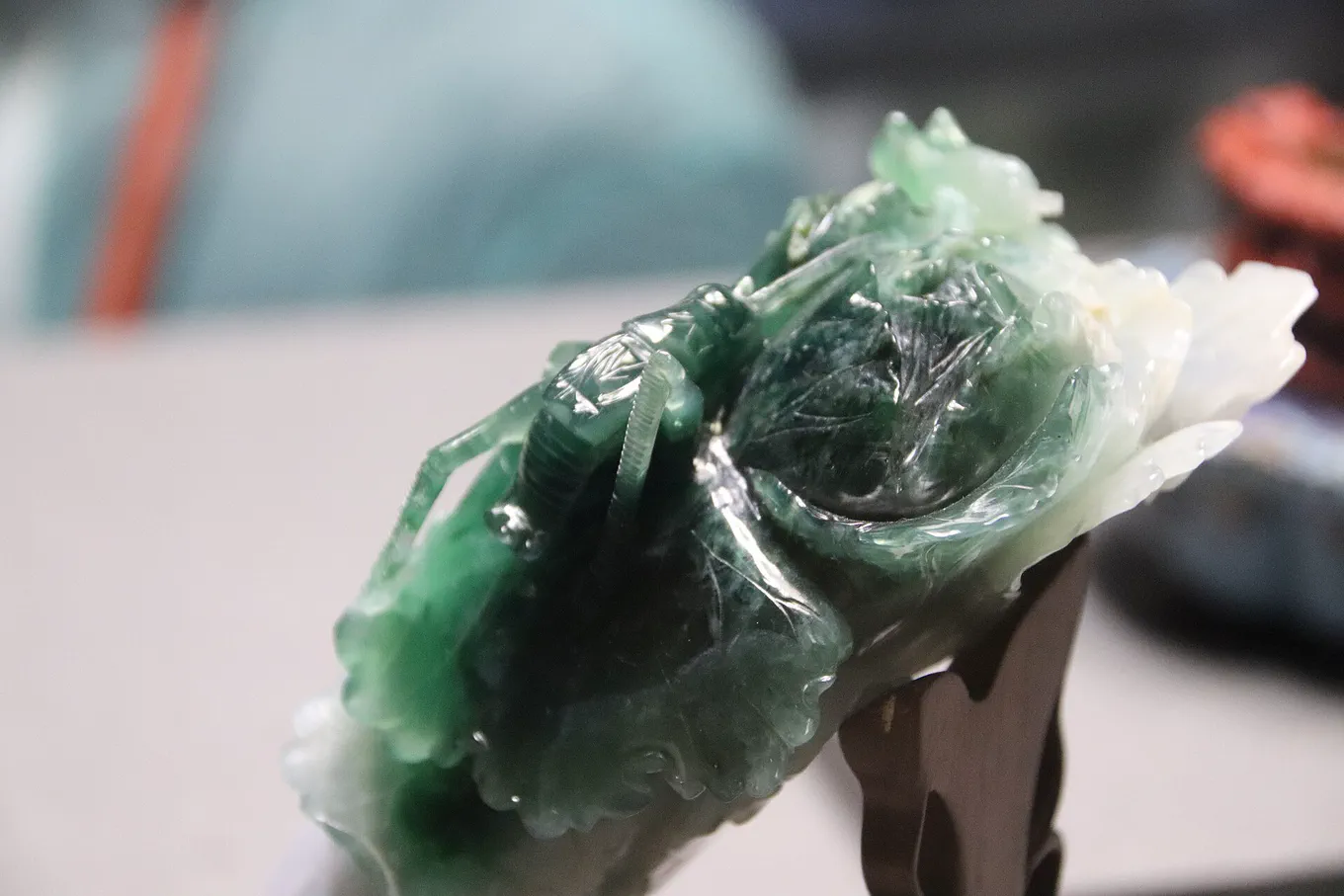
The Jadeite Cabbage, a Qing dynasty carving in one piece of jadeite, at the National Palace Museum in Taipei.Gary Lee Todd / Public domain.
The Jadeite Cabbage was first displayed in the Forbidden City, in the home of Consort Jin, who probably brought it in her dowry when she married the Guangxu Emperor in 1889. It is hardly larger than a hand, carved from one half-white, half-green stone whose flaws became the veins of the leaves. It survived two wars and crossed to Taiwan when the Nationalist government retreated there. Officially, it is only a “significant antiquity”. But the public has chosen it as the most important piece in the whole museum.
4 The Wild Lily students on Liberty Square
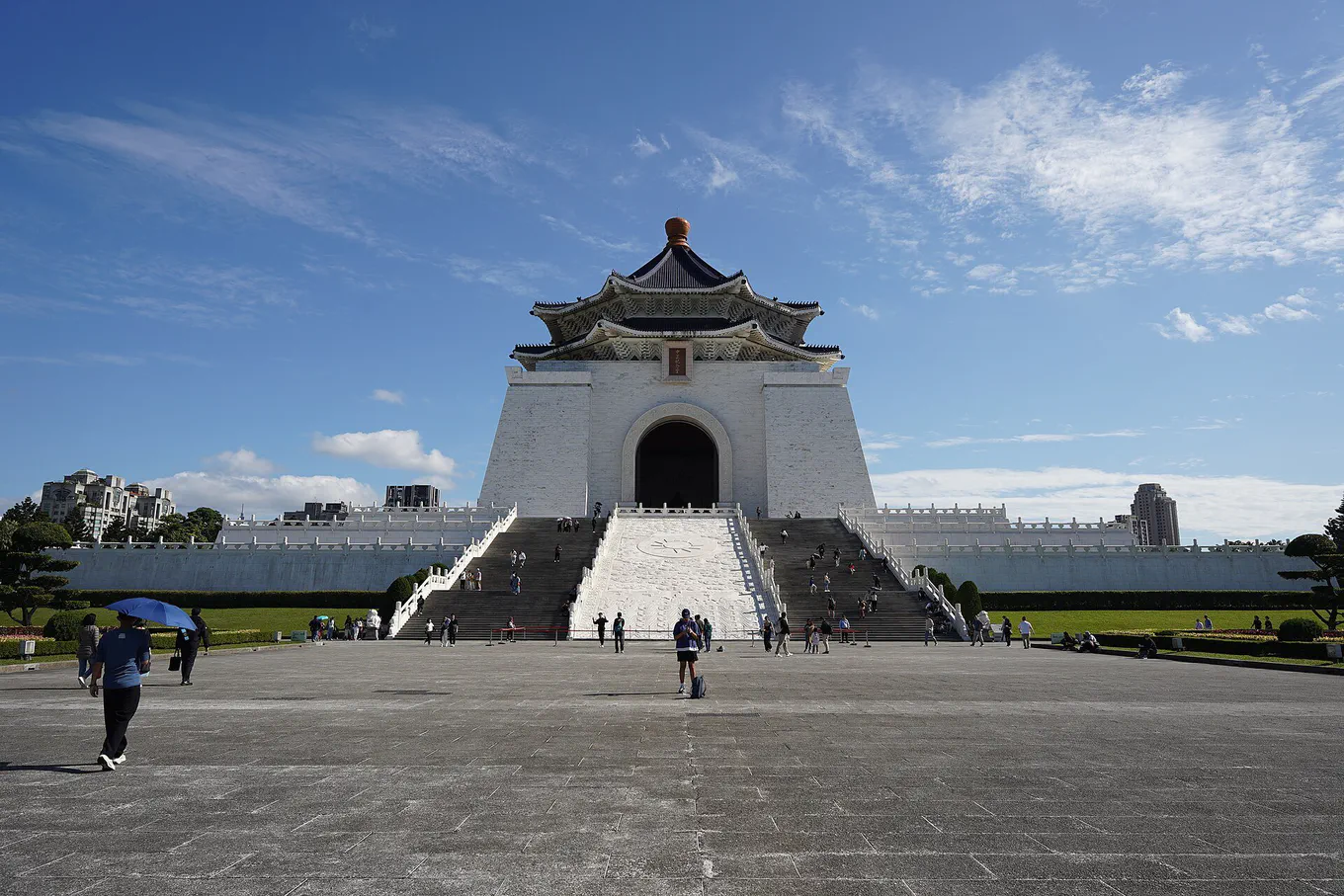
Stand here. Liberty Square, in front of the Chiang Kai-shek Memorial Hall. It was renamed in 2007 for its part in Taiwan’s democracy.
In March 1990, university students began a sit-in below the Chiang Kai-shek Memorial Hall. That year only 641 members of the National Assembly had voted for president, with one party and one candidate, and the students wanted direct elections. Thousands joined them, wearing white Formosa lilies. The sit-in fell in the week of President Lee Teng-hui’s inauguration. On the first day of his new term, he welcomed fifty students to the Presidential Building and promised full democracy. Six years later, Lee became Taiwan’s first popularly elected leader.
5 Ang Lee’s master chef at the Grand Hotel
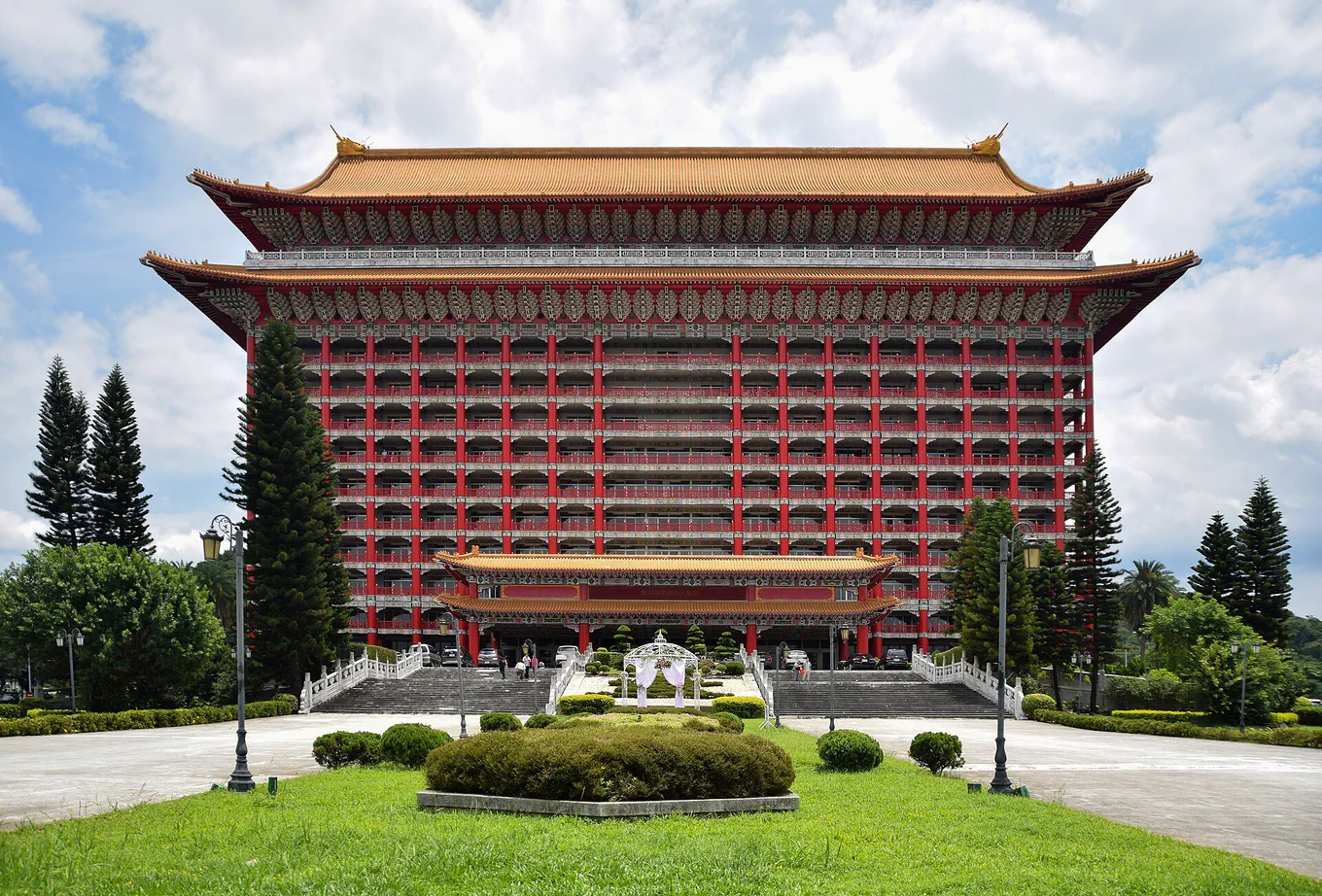
Stand here. The Grand Hotel, on Yuanshan in Zhongshan District. Its 87-metre palace-style main building is one of the world’s tallest Chinese classical buildings.
Ang Lee’s Eat Drink Man Woman (1994), his only film shot entirely in Taiwan, follows Mr Zhu, the ageing master chef of the Grand Hotel. It opens on a Sunday as the widower cooks a feast for his three daughters. But his sense of taste is going. Before his daughter Jia-Chien leaves for a job in Amsterdam, she cooks a last feast at home, and only her father comes. He tastes it, and his taste is back. They hold hands and call each other “Father” and “Daughter”.
Pack nothing. Leave Friday.
Every Friday, I write a free letter, Journey, that takes us on a trip through places, stories, and ideas.
Taipei People(Pai Hsien-yung, 1971). Short stories. One story follows street characters in Taipei’s New Park, now 228 Peace Memorial Park.
Crystal Boys(Pai Hsien-yung, 1983). A novel. It is set in the same New Park and describes its reputation as a place for gay cruising in the 1970s.
Notes of a Crocodile(Qiu Miaojin, 1994). A novel. Set in Taipei in the late 1980s, after martial law, told largely through the private diaries of a college student, Lazi, who falls for a female classmate.
Films to watch before you visit Taipei
Eat Drink Man Woman(Ang Lee, 1994). A film. Its widowed father is a master chef at the Grand Hotel, on Yuanshan, with three grown daughters at home.
Vive l’amour(Tsai Ming-liang, 1994). A film of the Taiwanese New Wave. In it, a woman walks a path in Daan Forest Park, then still unfinished.
A Brighter Summer Day(Edward Yang, 1991). A film. An epic crime drama set in early-1960s Taipei, whose Chinese title names Guling Street.
Lucy(Luc Besson, 2014). A film. An American student in Taipei is caught up with a drug lord at the Regent Taipei. Taipei 101 was a location.
Questions
Is Taipei the capital of Taiwan?
In practice, yes. Taipei has been the seat of the Republic of China’s central government since 1949. The constitution names no capital city, but a decree makes Taipei the official seat of government, so it is the de facto capital, the capital in fact if not in law.
Can you see the giant damper inside Taipei 101?
Yes. A 660-tonne steel pendulum hangs from the 92nd floor to the 88th and sways to steady the tower in strong winds. Visitors can see it from the 88th floor up to the 92nd. In Typhoon Soudelor, in 2015, it swung a metre, its largest movement on record.
Is the original Din Tai Fung still open?
Yes. The Xinyi branch, on Xinyi Road near Yongkang Street, stands where the oil shop first sold dumplings, and the old sign reading “Din Tai Fung Oil Retail” still hangs near the entrance.