I flew out to Tallinn in 2015 for a summer conference on conversion rate optimization. It was nice enough that I wish I’d got to spend more time exploring the city. As it was, we were bused out to a hotel complex a few miles out on a beautiful beach. My main memory is that, at that time of year, it never got dark.
— Nick
Tallinn is the capital of Estonia, on a bay of the Gulf of Finland only 80 kilometres south of Helsinki. Its Old Town, a UNESCO World Heritage Site since 1997, is one of the best-preserved medieval cities in Europe. The stories here are a flag that fell from the sky, a tsar’s seaside palace, a film almost entirely reshot, a crowd that sang for freedom, and a hotel floor that officially didn’t exist.
1 The Danish flag that fell from the sky over Tallinn
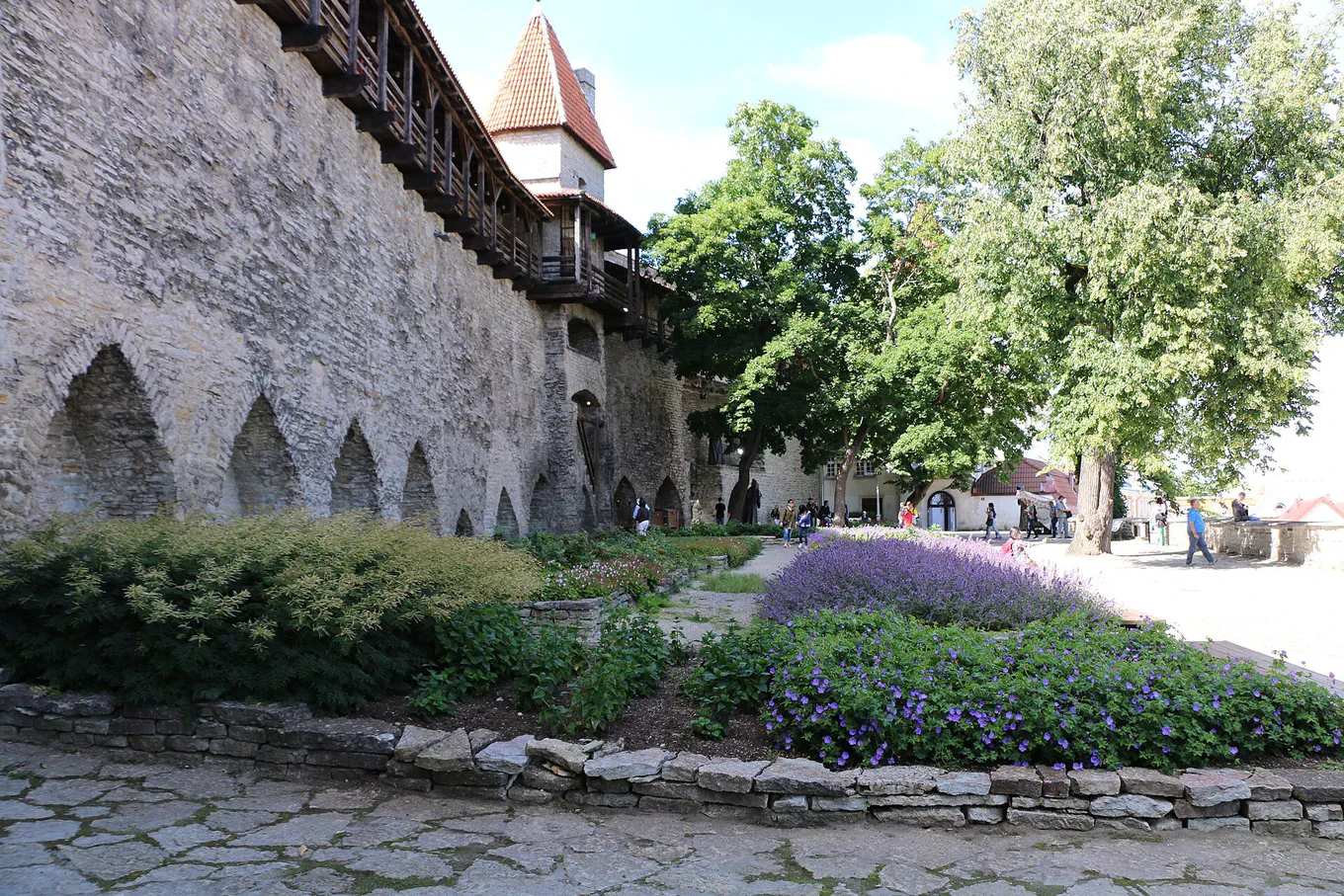
Stand here. The Danish King’s Garden, beside Toompea on the slope facing St Nicholas Church. A sculpture, Tuli lipp (“The Flag Descended”), tells the legend.
Denmark’s flag, the Dannebrog, fell from the sky here, so the legend says. On 15 June 1219, King Valdemar II of Denmark, on crusade in Estonia, was close to losing the battle of Lyndanisse. On a hill above the fighting, the Archbishop of Lund prayed with his arms raised, and a red flag with a white cross fell from the sky. The battle turned, and Valdemar won. The account rests on two versions from the early 16th century. If the story is true, no country flies an older national flag.
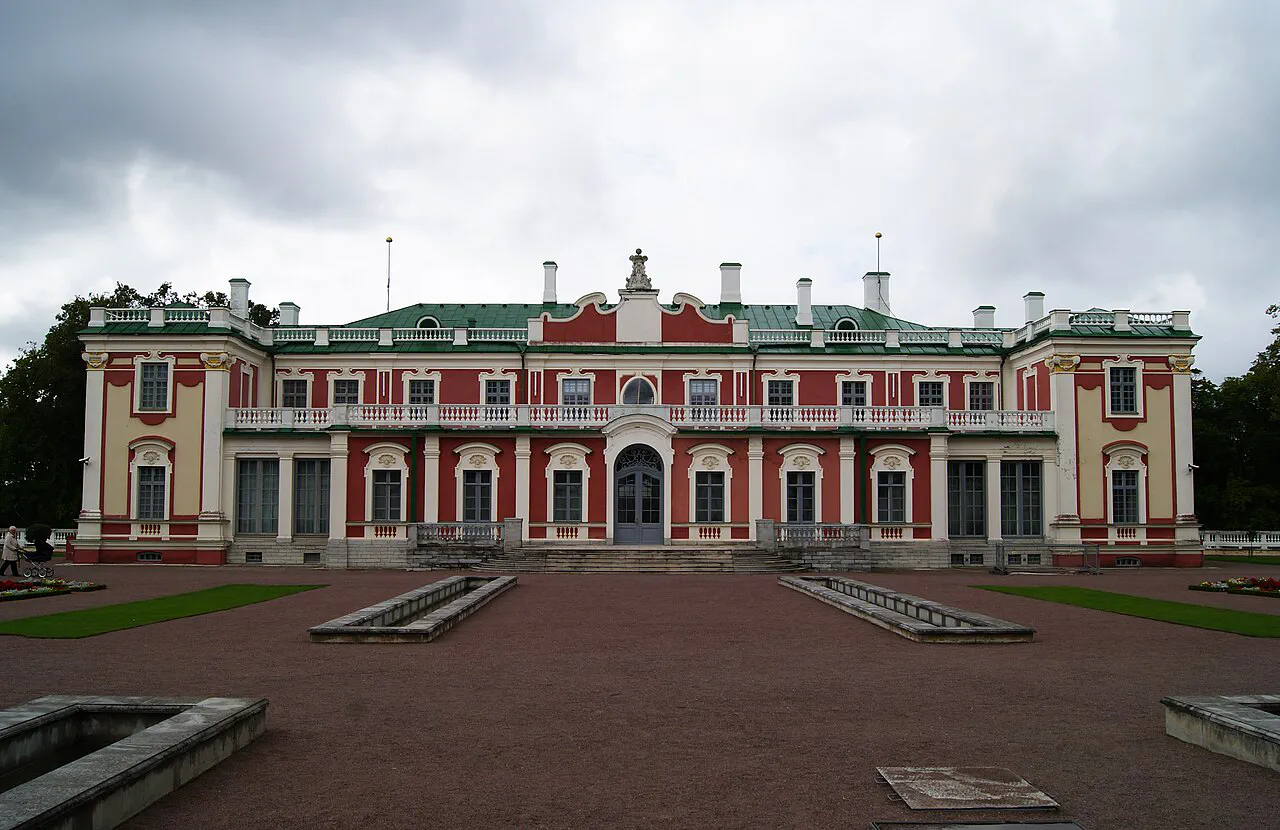
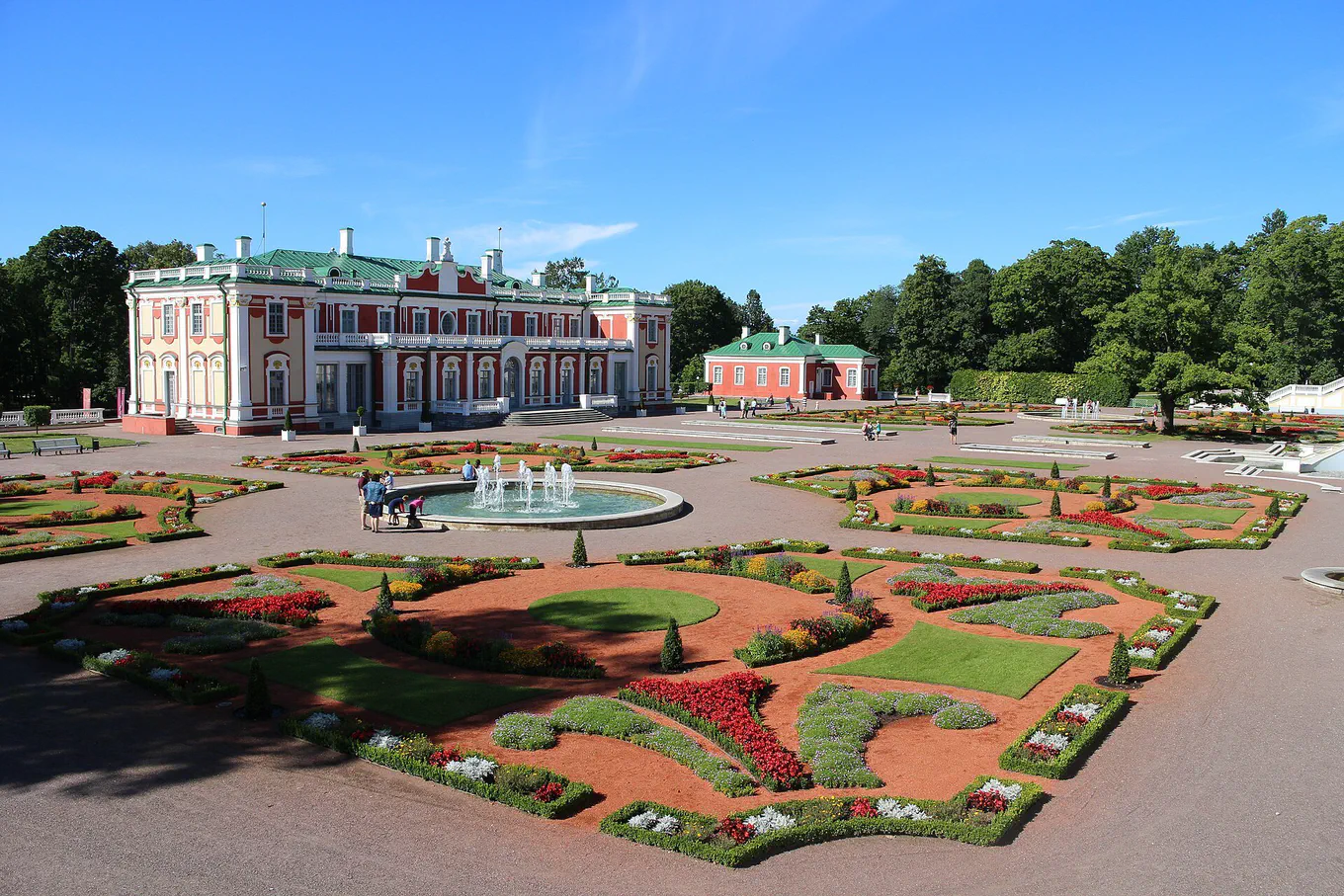
2 Peter the Great’s seaside palace at Kadriorg
Stand here. Kadriorg Palace, in Kadriorg park, now the Kadriorg Art Museum. The President of Estonia’s official residence stands beside it.
In 1718, Peter the Great, tsar of Russia, began a palace by the sea at Tallinn, and its main hall became one of the finest Baroque rooms in northern Europe. Peter and his wife, Catherine I, visited the unfinished residence several times. But Peter died in 1725, and Catherine showed no interest in the seaside property. Russia’s rulers lost interest in Tallinn for a long while, and Peter’s grand plans were never carried out in full. Yet the palace and its park carry her name. Kadriorg means “Catherine’s valley”.
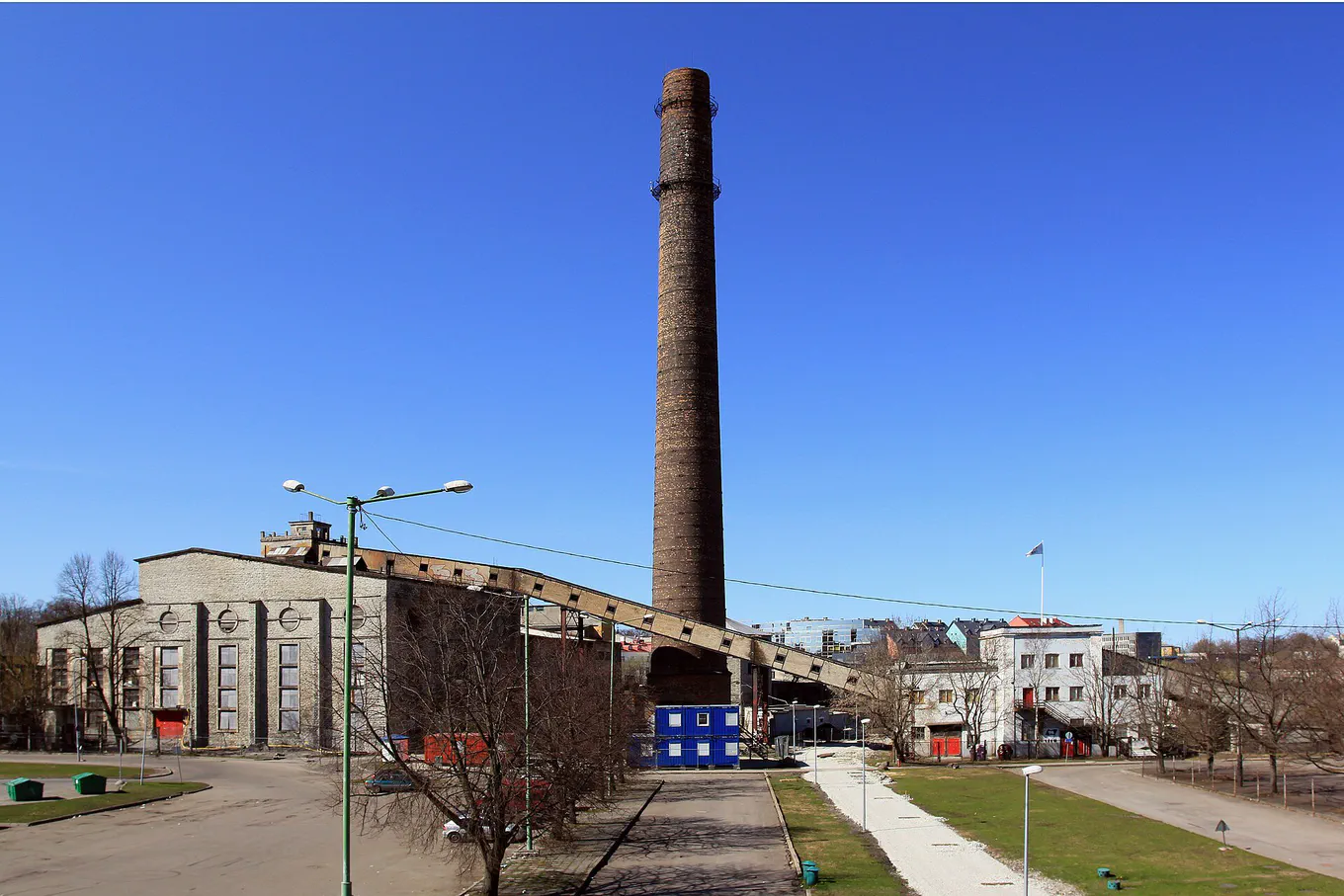
3 Tarkovsky’s Stalker and the old Tallinn Power Plant
Stand here. The former Tallinn Power Plant, now the Tallinn Creative Hub, where a memorial plate to the film was put up in 2008.
Andrei Tarkovsky’s film Stalker follows its characters into a place called the Zone, and this power plant was its threshold. The scenes inside the Zone were shot at two deserted hydropower plants on the Jägala river. But Tarkovsky had shot on new Kodak stock that Soviet laboratories didn’t know well, and the footage came back improperly developed and unusable. He fired his cinematographer and reshot almost the whole film with a new one. Almost all of the Stalker released in 1979 was shot twice.
4 Heinz Valk’s “we will win” at the Song Festival Grounds
Stand here. The Tallinn Song Festival Grounds, between Narva Road and Pirita Road in Kadriorg. The arched stage was built in 1959.
Heinz Valk, an artist and caricaturist, gave Estonia’s Singing Revolution its name, after crowds gathered here to sing on two June evenings in 1988. That September, with Estonia still a Soviet republic, Valk spoke at the Song of Estonia concert, before a crowd estimated at 300,000 in a country of about 1.5 million. In his speech he first proclaimed what became the independence movement’s most famous slogan: “One day, no matter what, we will win!” Three years later, on 20 August 1991, Estonia declared its independence.
5 The KGB’s secret 23rd floor at Tallinn’s Hotel Viru
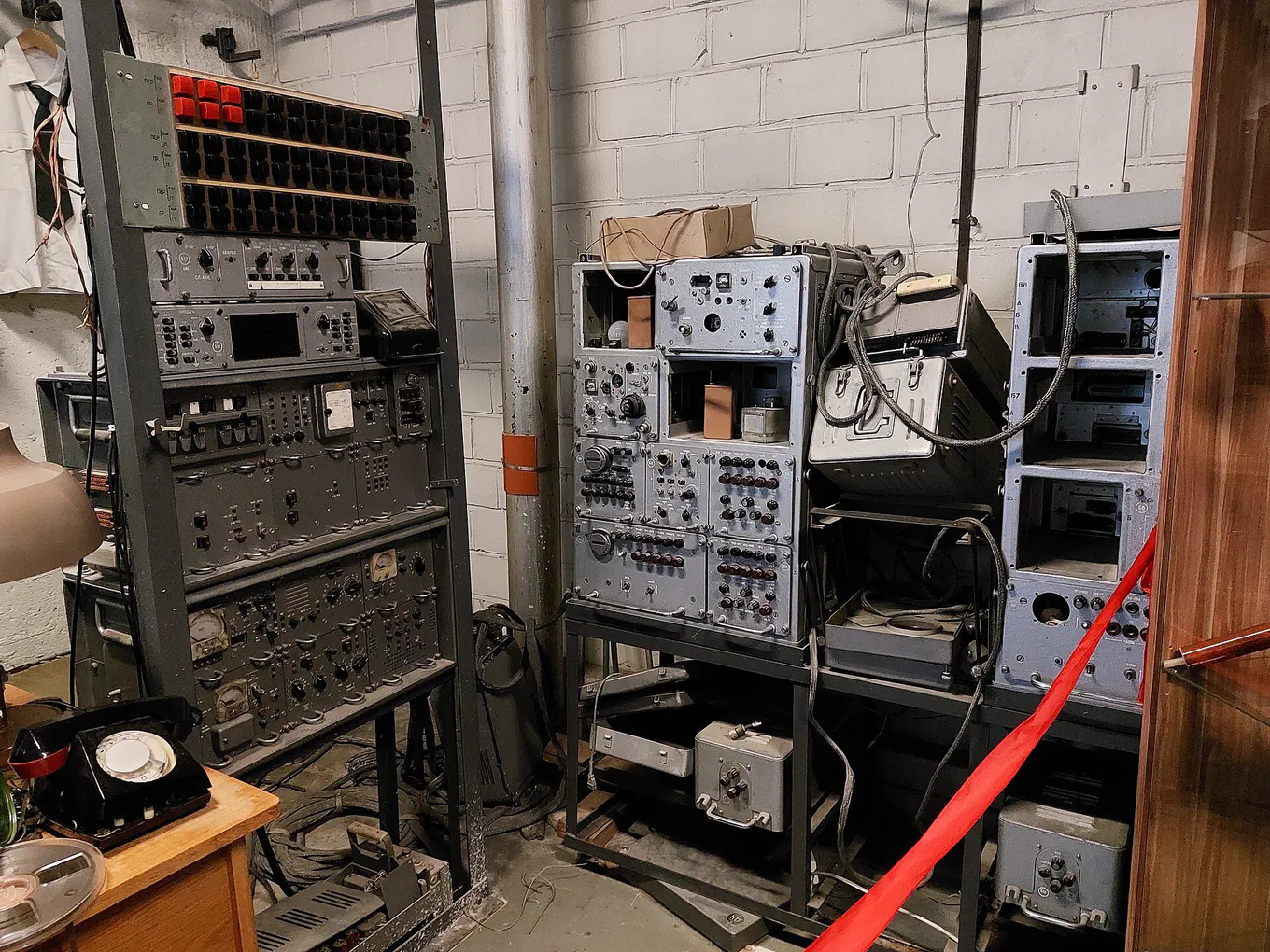
Stand here. Hotel Viru, at Viru väljak 4 beside the Old Town. Its former KGB radio room is now the Hotel Viru & KGB Museum.
The KGB ran a listening centre on the 23rd floor of this hotel, Estonia’s first high-rise, which housed many foreign tourists, mostly Finns. Officially the hotel has 22 floors, and the door to the radio room says “There is nothing here”. Sixty rooms were bugged, and so were ashtrays, bread plates, and the sauna. Then, on an August night in 1991, as the Soviet Union neared collapse, the last agent left in a hurry. The rooms weren’t found until 1994. The ashtray was still full.
Pack nothing. Leave Friday.
Every Friday, I write a free letter, Journey, that takes us on a trip through places, stories, and ideas.
Apothecary Melchior(Indrek Hargla, from 2010). Novels about Melchior, an apothecary in medieval Tallinn, and the author’s best-known work.
Treading Air(Jaan Kross, 1998). A semi-autobiographical novel, set against the Soviet air force’s bombing of central Tallinn on 9 March 1944.
Between Three Plagues(Jaan Kross, 1970–1980). A four-part historical novel. It opens with the boy Balthasar Russow, later a chronicler, watching tightrope walkers in Tallinn.
Films to watch before you visit Tallinn
Stalker(Andrei Tarkovsky, 1979). A film. The threshold to the Zone was shot at the old Tallinn Power Plant in central Tallinn.
Tenet(Christopher Nolan, 2020). A film. Linnahall, the harbourside hall beyond the Old Town walls, plays a Kyiv opera house, and the Kumu Art Museum plays the Oslo Freeport.
Melchior the Apothecary(2022). A film of Hargla’s novels, in which Melchior solves crimes in medieval Tallinn, shot on Town Hall Square and in the Danish King’s Garden.
Questions
Where is the KGB floor at Hotel Viru?
On the 23rd floor of Hotel Viru, at Viru väljak 4 beside the Old Town, although officially the hotel has 22 floors, as its lift shows. The KGB used the floor as a listening centre to spy on guests, and its former radio room is now the Hotel Viru & KGB Museum.
Where in Tallinn was Stalker filmed?
The threshold to the Zone was shot around the former Tallinn Power Plant, now the Tallinn Creative Hub, where a memorial plate to the film went up in 2008. The scenes inside the Zone were shot in a few days at two deserted hydropower plants on the Jägala river near Tallinn.
Was St Olaf’s Church in Tallinn once the tallest building in the world?
Probably not. A medieval craftsman said it stood 84 fathoms tall. Read as Rhineland fathoms, that would make it 159 metres and the tallest building in the world, but he probably meant local fathoms, about 115 to 125 metres. From 1944 to 1991, the Soviet KGB used its spire as a radio tower and surveillance point.