Tangier, Morocco, Tanger-Tetouan-Al Hoceima, Africa
Wendy and I went to see Indiana Jones and the Dial of Destiny expecting very little, and loved it… if only for the nostalgia. Much of the fun is a tuk-tuk chase through Tangier, with Indy, well past retirement, refusing to stay in the chair. Point taken, Dr Jones.
— Nick
Tangier is a city at the Strait of Gibraltar, on the Mediterranean and Atlantic coasts of northwestern Morocco. From 1925 to 1956, it was the centre of an international zone run by France, Spain, and the United Kingdom. Its stories here are a novel rescued from a hotel floor, a painter’s rainy window, an emperor on a white horse, a pilgrim who kept going, and a writer who stayed fifty-two years.
1 William Burroughs writes Naked Lunch in a Tangier hotel
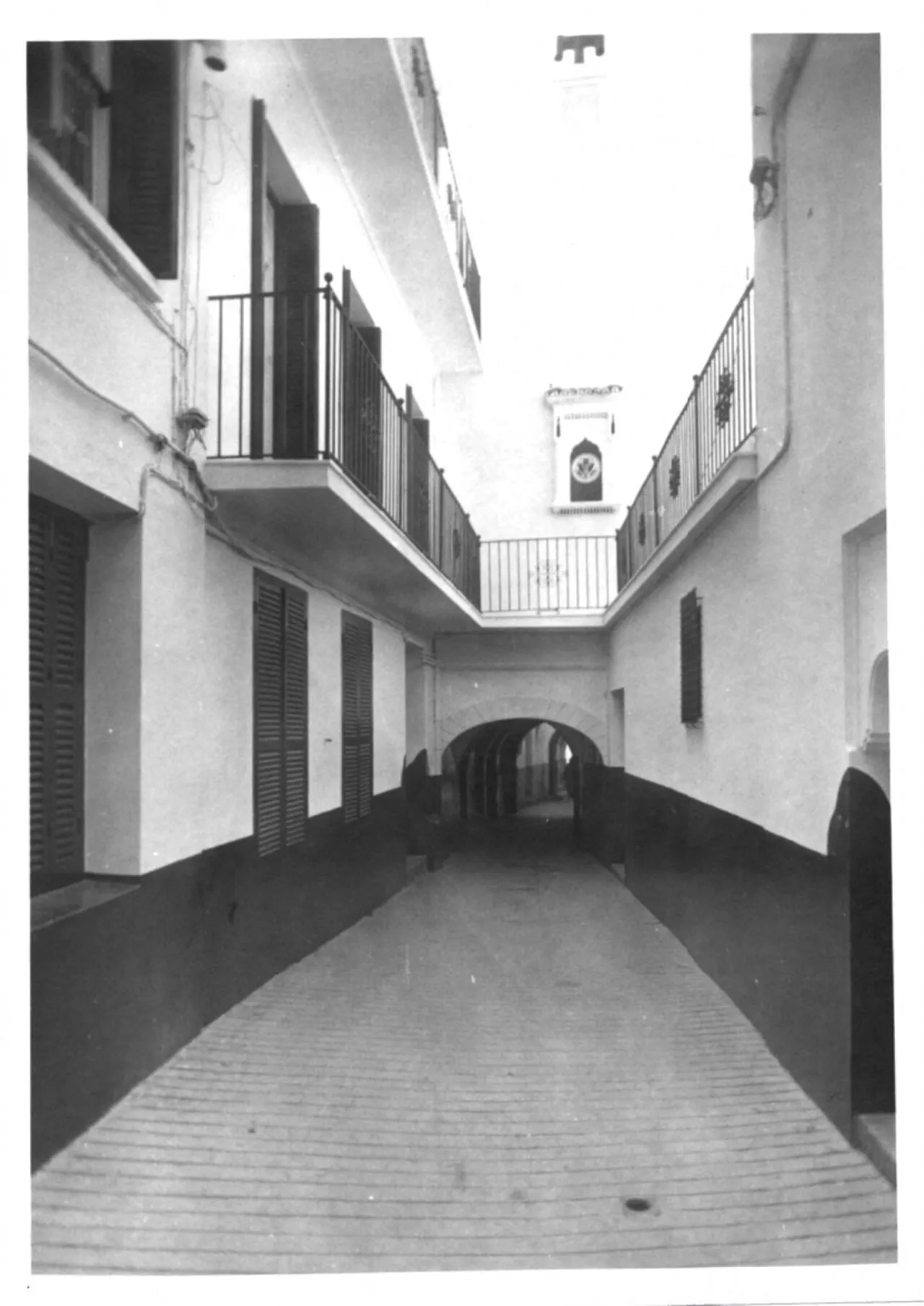
Stand here. The Hotel El Muniria, where Burroughs wrote in room 9. The building stands, with the Tangerinn bar adjoining it.
Naked Lunch, the novel once banned in Boston, began as loose pages in a Tangier hotel room. William Burroughs spent three years writing episodes he called routines, but he became severely addicted to Eukodal, eventually taking the drug every two hours, and struggled to organise them into a story. The writer Paul Bowles remembered the pages scattered all over the floor. In early 1957, Jack Kerouac and Allen Ginsberg came to help him type and arrange them. By Bowles’s account, they and Alan Ansen, who paid their way, salvaged the book.
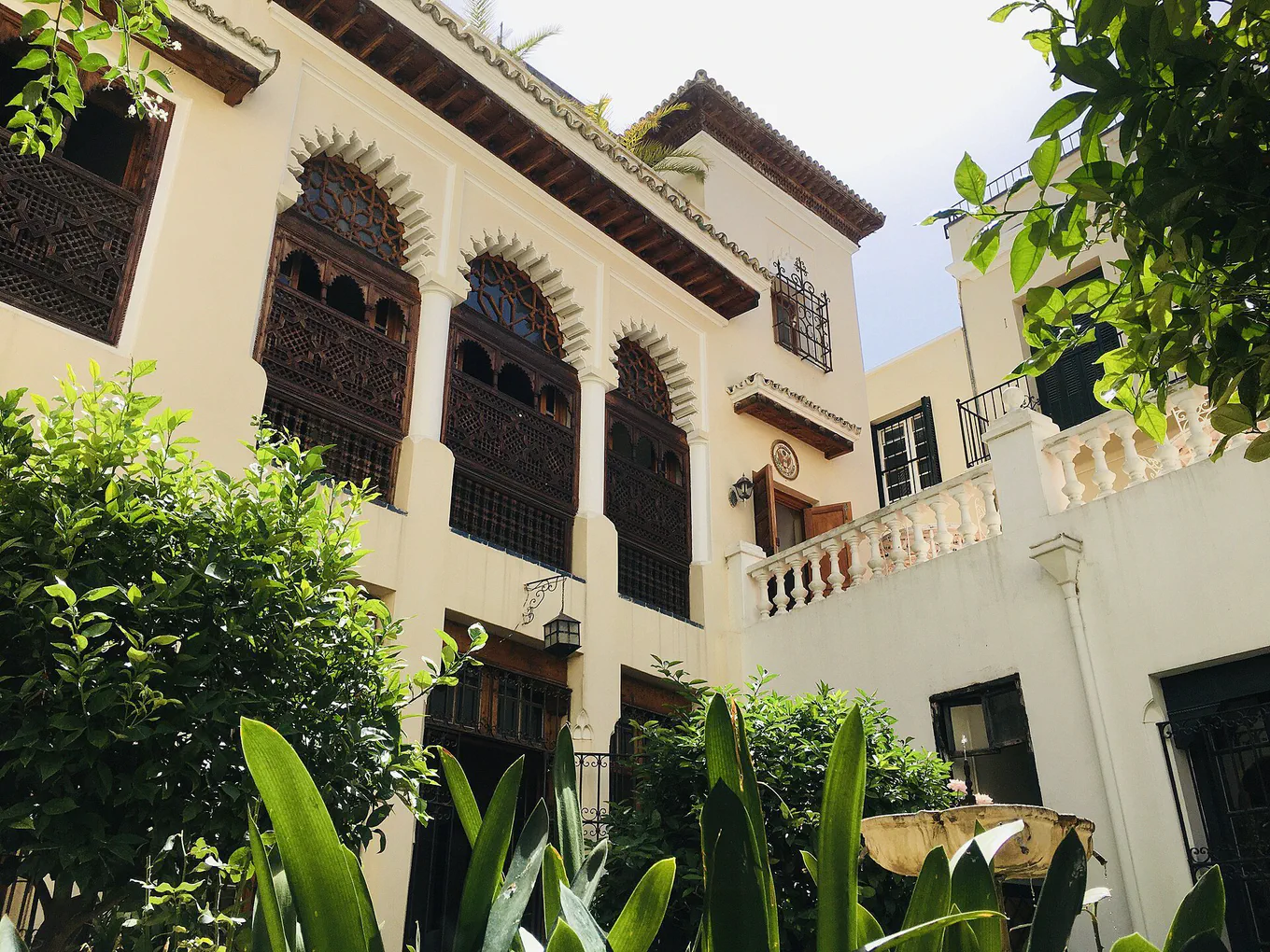
Stand here. The Grand Hotel Villa de France, reopened in 2014 as a five-star hotel after a thorough refurbishment.
In January 1912, Henri Matisse crossed the Strait from Andalusia to Tangier and took room 35, on the second floor of the Grand Hotel Villa de France. For weeks, a persistent rain enveloped the city. From his window, he could see the bay, St Andrew’s Church, and the medina, the walled old town. He painted that view. Decades later, the hotel declined and stood shut for more than twenty years. The painting, Window at Tangier, is in the Pushkin Museum in Moscow. The room waited, and it has been restored.
3 Kaiser Wilhelm II rides into Tangier on a white horse
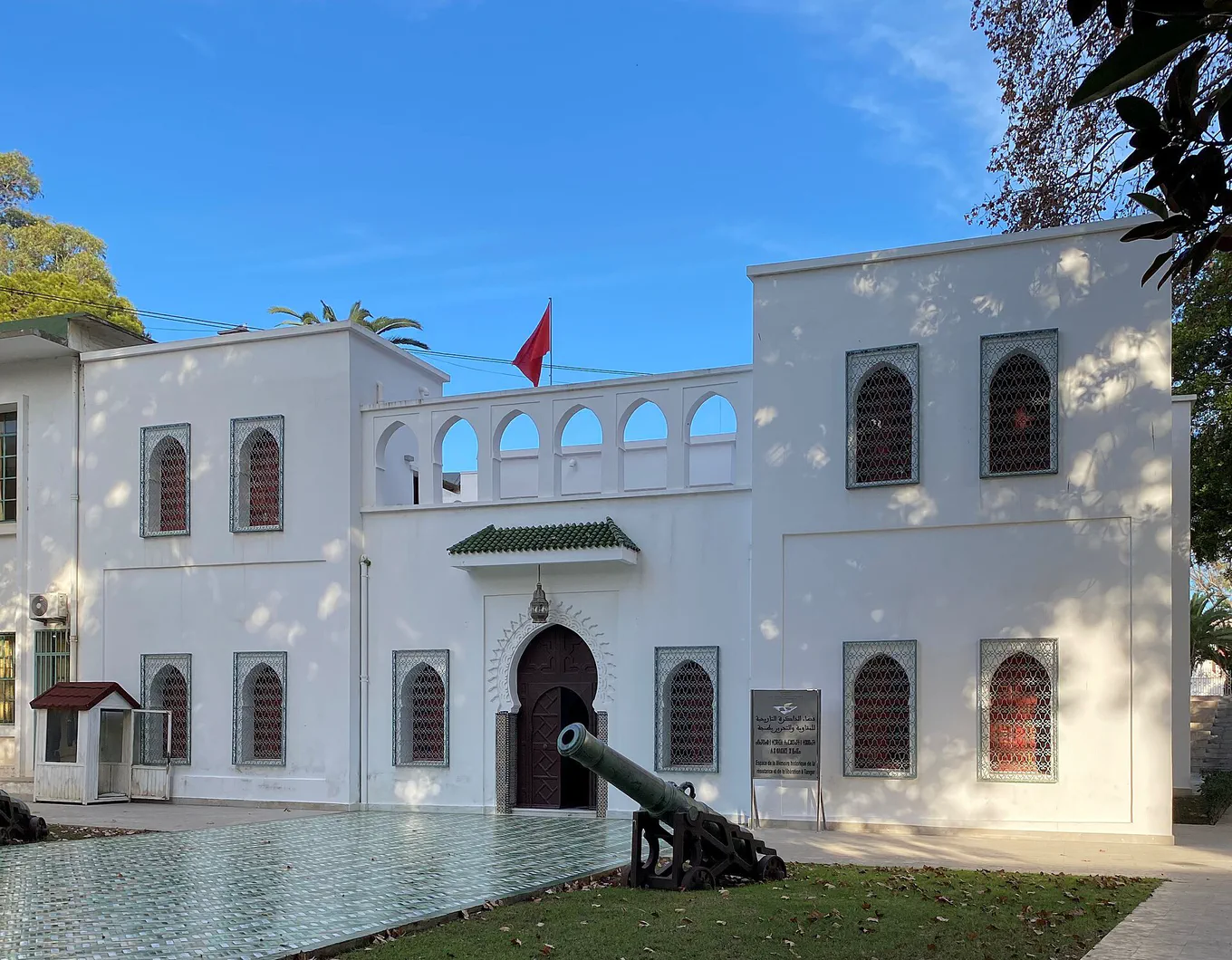
Stand here. The Mendoubia, the former German legation, entered from the Grand Socco square. It now houses Tangier’s commercial court and a memorial museum.
Kaiser Wilhelm II, the German Emperor, arrived in Tangier on 31 March 1905 to challenge France’s growing control over Morocco. He toured the city on a white horse, then spoke at the German legation, declaring he had come to support the sultan’s sovereignty. He even spoke up for Moroccan independence. But at the Algeciras conference that followed, Germany’s only supporter was Austria-Hungary, while Britain, Russia, Italy, Spain, and the United States backed France. The crisis left Germany more isolated in Europe, with Britain firmly at France’s side.
4 Ibn Battuta leaves Tangier for Mecca and keeps going
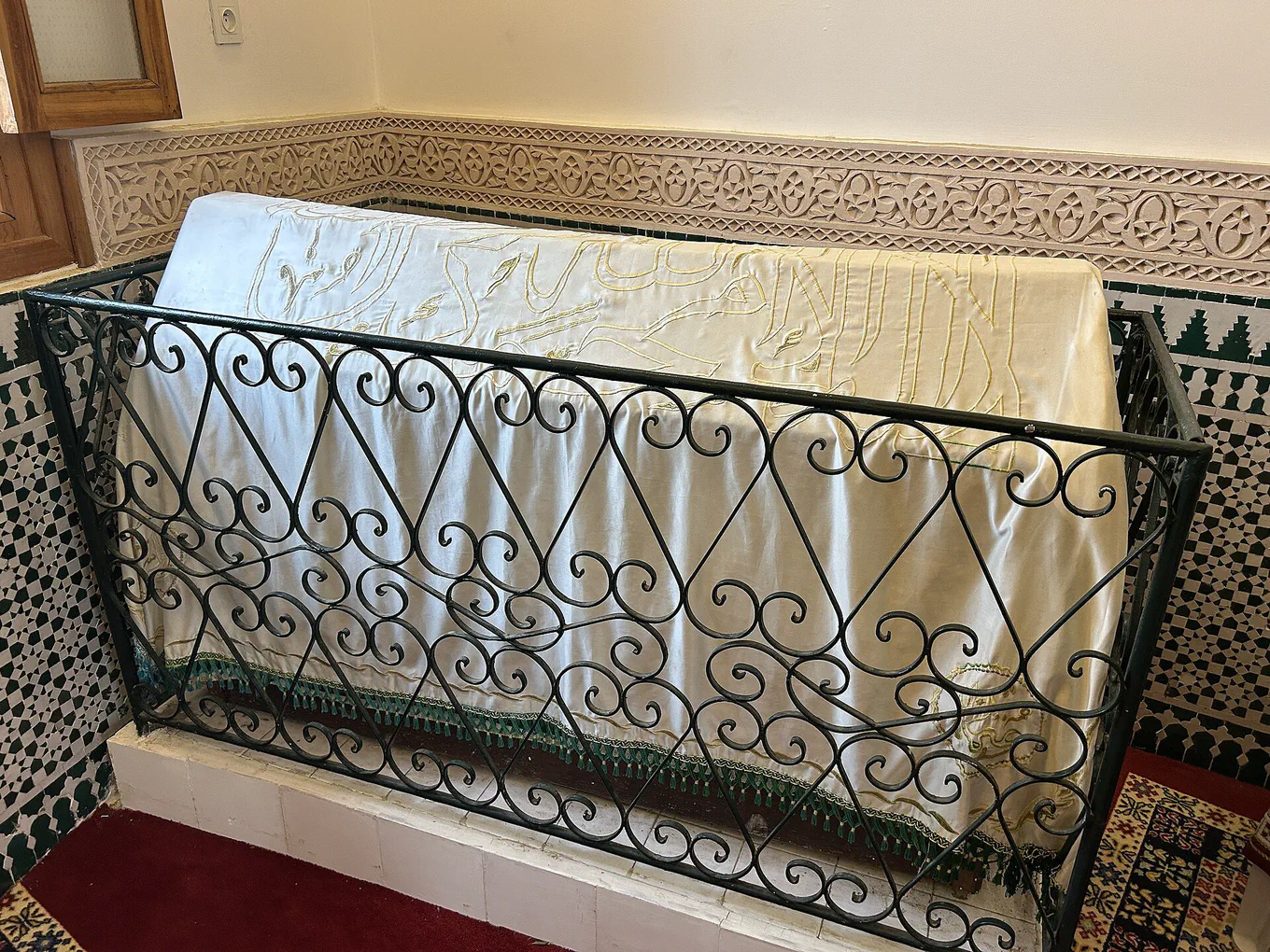
Stand here. The medina, where guides take visitors to a grave they claim is Ibn Battuta’s.
Ibn Battuta travelled further than any other explorer before the modern age, some 117,000 km, starting from his home town, Tangier. In 1325, aged 21, he set off to make the hajj, the pilgrimage to Mecca, forsaking his home, as he later told it, “as birds forsake their nests”. But Mecca was only the start. For thirty years, he crossed much of Africa, Asia, and the Iberian Peninsula, once by camel to Timbuktu. He became a judge in Morocco, and nobody can be sure where he lies.
5 Paul Bowles comes to Tangier on Gertrude Stein’s advice
Stand here. The Tangier American Legation, on rue d’Amérique, a sultan’s gift to the United States in 1821. Its museum has a wing devoted to Bowles.
Before The Sheltering Sky made his name, Paul Bowles was a young American composer who also wrote poetry, in Gertrude Stein’s circle in Paris. Stein called him “the manufactured savage”, begged him to give up writing poetry, and pointed him to Tangier. In the summer of 1931, he came and took a house on the mountain above Tangier Bay. In 1947, he settled here for good, and his wife, the writer Jane Bowles, followed. Tangier kept him for fifty-two years, until he died there, aged 88.
Naked Lunch(William S. Burroughs, 1959). A novel, written in room 9 of the Hotel El Muniria. Its Interzone stands in for the Tangier International Zone.
Let It Come Down(Paul Bowles, 1952). A novel. An American, Nelson Dyar, arrives in the International Zone of Tangier.
For Bread Alone(Mohamed Choukri, 1973). A memoir, translated by Paul Bowles. Choukri flees the countryside for Tangier, its foreigners, and its underworld.
Films to watch before you visit Tangier
Inception(Christopher Nolan, 2010). A film. A foot chase was shot in the streets and alleyways of the medina.
Spectre(Sam Mendes, 2015). A James Bond film. Madeleine Swann takes Bond to L’Américain, a fictional Tangier hotel, where a secret room points them to the Sahara.
Only Lovers Left Alive(Jim Jarmusch, 2013). A film, shot partly in Tangier.
Questions
Can you visit the Tangier American Legation?
Yes. The building on rue d’Amérique was a sultan’s gift to the United States in 1821, the first property the US government acquired abroad. It is now a museum and cultural centre, with a wing devoted to Paul Bowles.
What was the Tangier International Zone?
From 1925 to 1956, Tangier and the land around it, 382 square kilometres in all, were run as an international zone under France, Spain, and the United Kingdom. A protocol of 29 October 1956 returned it to full Moroccan sovereignty. In Naked Lunch, Burroughs’s Interzone stands in for it.
Can you see Spain from Tangier?
Yes. From Café Hafa in Tangier, open since 1921, Tarifa in Spain is visible in the distance. At its narrowest, the Strait of Gibraltar separates Africa and Europe by about 14 km, and ferries cross it every day.