Tashkent is the capital and largest city of Uzbekistan, in the country’s north-east. In 1865, it fell to the Russian Empire and became the capital of Russian Turkestan. Its stories here are a Romanov banished in disgrace, a Quran Lenin agreed to send back, a poet in a wartime attic, a prime minister who died the night after making peace, and a blacksmith who took in fifteen orphans.
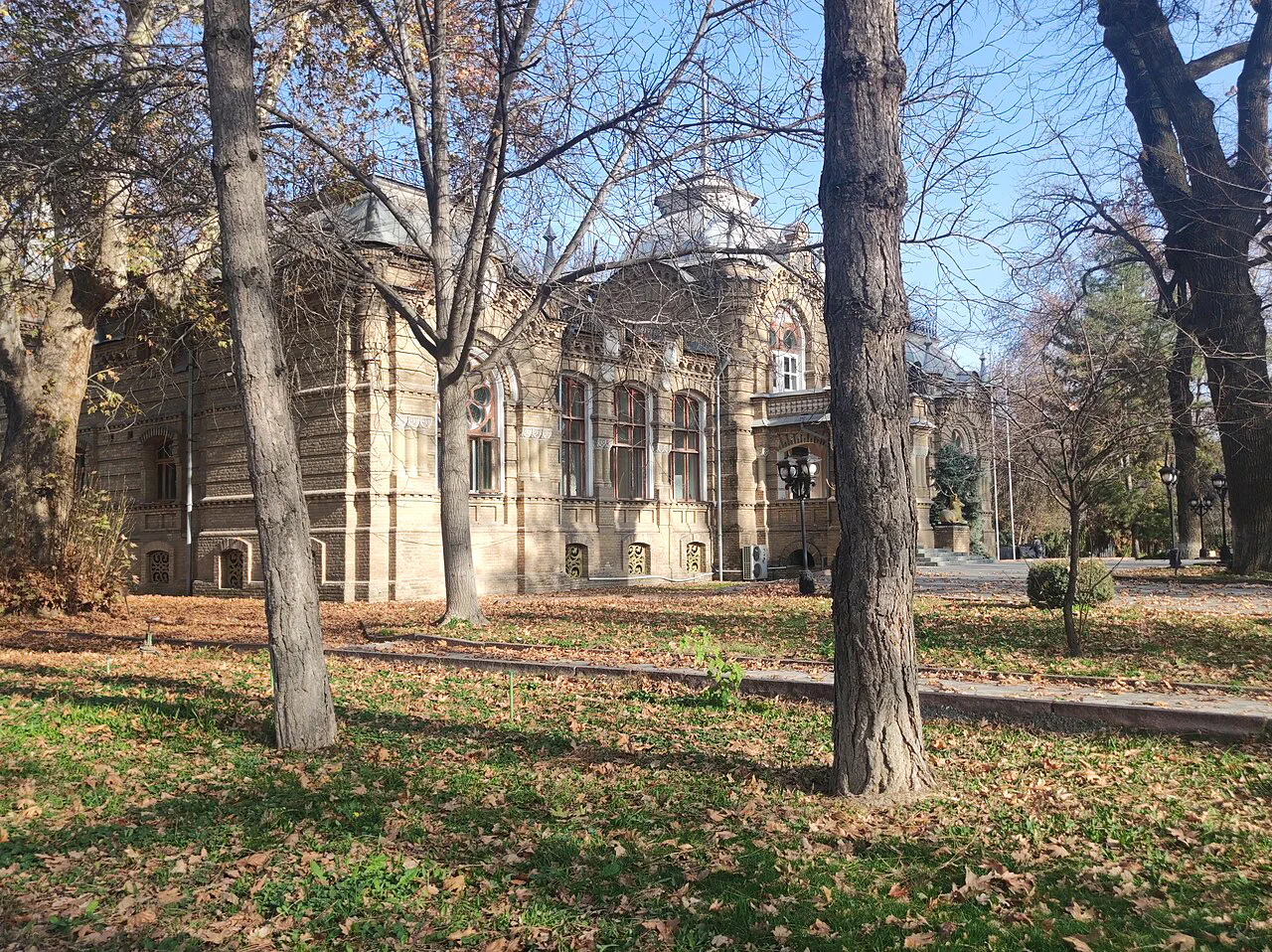
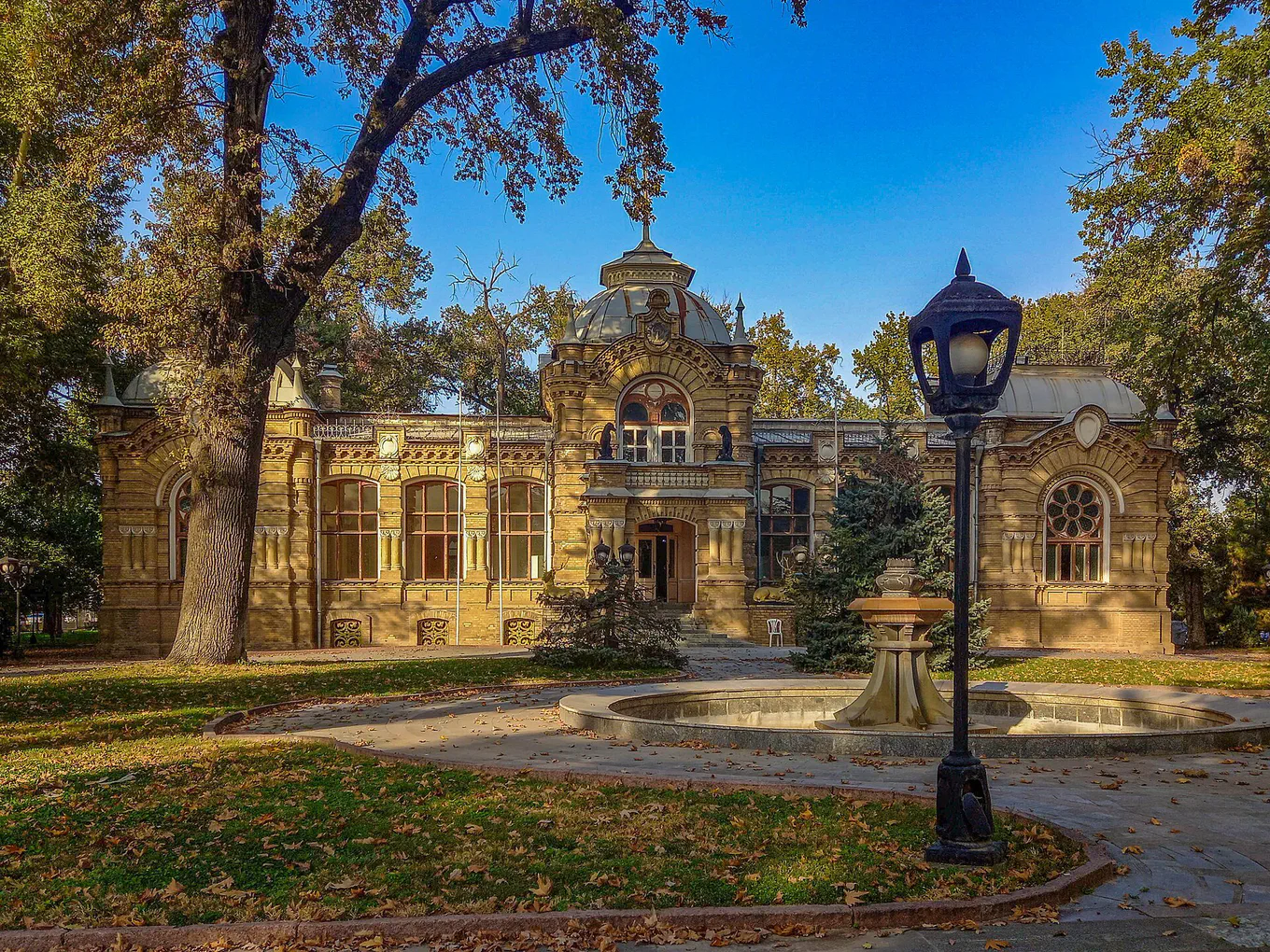
Grand Duke Nicholas Konstantinovich was a Romanov, a grandson of Tsar Nicholas I, when three diamonds disappeared from his parents’ wedding icon. Everything pointed to him. An imperial decree declared him insane, and he was sent away to the newly conquered city of Tashkent. There he built himself a palace, and when he died, he left it to the city on condition that it became a museum. In 1919, the paintings of the only Romanov ever declared insane founded Tashkent’s art museum.
2 The Uthman Quran and its journey to Tashkent
Stand here. The Center for Islamic Civilization, opened in 2026 above the Hazrati Imam area. The manuscript moved there in November 2025.
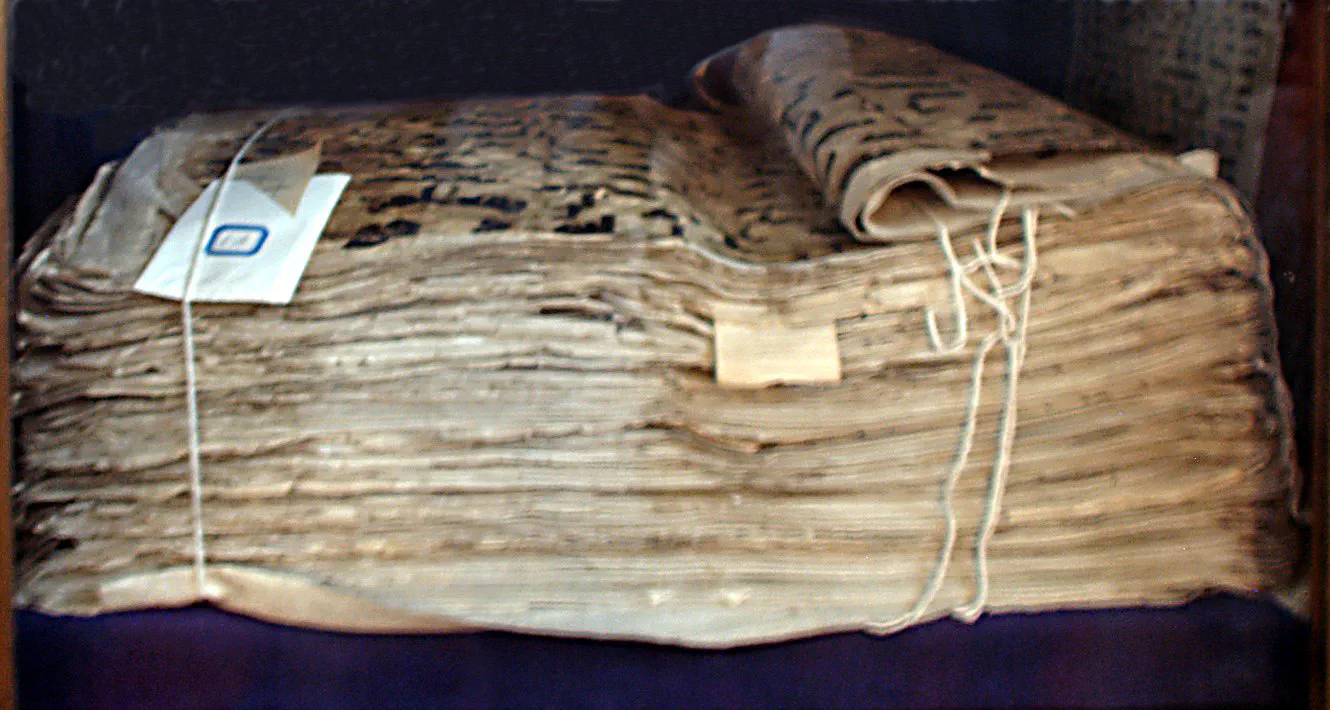
Tradition says this Quran was the personal copy of Uthman, the third caliph, kept for his own use in Medina and later stained with his blood. In Samarkand, it was held in the Khoja Ahrar madrasa, a religious school, until a Russian general took it by force and sent it to the Imperial Library in St Petersburg. After the revolution, in December 1917, Lenin approved its return, and in time it reached Tashkent. But radiocarbon dating puts it between 775 and 995.
3 Anna Akhmatova’s wartime attic in Tashkent
Stand here. The club-museum named for Anna Akhmatova, at 53 Vakhidov Street. Her attic was in a house on Zhukovsky Street.
A steep wooden staircase of nineteen shaky steps led up to the attic where Anna Akhmatova, the Russian poet, lived in wartime Tashkent. She had been evacuated to the city in 1941. There she finished a first draft of Poem Without a Hero, and while away from Leningrad she fell seriously ill with typhus and came through it. But when she went home to Leningrad in May 1944, what she found, she wrote, was “a terrible ghost that pretended to be my city”.
Stand here. The Shastri monument, a bust on a pink granite base at a crossroads in central Tashkent, unveiled in 1976.
The Tashkent Files, a 2019 conspiracy thriller, is about the death of India’s prime minister, Lal Bahadur Shastri, in this city. He came for talks, mediated by the Soviets, to end the 1965 war with Pakistan. On 10 January 1966, he and Pakistan’s President Ayub Khan signed the Tashkent Declaration, and the war was formally over. By one o’clock that night, Shastri felt unwell. An hour later he was dead. The cause given was a heart attack, but many people still believe he was poisoned.
5 The Tashkent blacksmith who took in fifteen orphans
Stand here. The Shamakhmudov family monument on Bunyodkor Square, where it was first unveiled in 1982.
During the Second World War, a Tashkent blacksmith, Shaakhmed Shamakhmudov, and his wife, Bakhri Akhmedova, adopted fifteen orphans, children of Russian, Kazakh, Belarusian, Moldovan, Latvian, Jewish, and Tatar origin. A monument to the family stood in the centre of Tashkent until 2008, when the city authorities had it taken down. One blogger suggested it didn’t fit President Islam Karimov’s idea of the Uzbek state. On 9 May 2018, on the order of President Shavkat Mirziyoyev, it was put back on its square.
Pack nothing. Leave Friday.
Every Friday, I write a free letter, Journey, that takes us on a trip through places, stories, and ideas.
Mission to Tashkent(F. M. Bailey, 1946). A memoir in which the author is given a Cheka assignment to find a rogue British agent, himself.
The Akhmatova Journals(Lydia Chukovskaya, English edition 1994). A memoir. Chukovskaya arrives at Tashkent station with Anna Akhmatova in November 1941, and the two are driven to a hotel.
City of Bread* (Alexander Neverov, English edition 1927), also published as *Tashkent. A novel of famine refugees making for Tashkent in 1921, drawn from the author’s own journey for food.
Films to watch before you visit Tashkent
The Tashkent Files(Vivek Agnihotri, 2019). A conspiracy thriller about the death of Lal Bahadur Shastri in Tashkent, which leaves the central mystery unresolved.
Tashkent Is a City of Bread(Shuhrat Abbosov, 1968). A film of Neverov’s novel, in which two peasant boys flee the starving countryside of 1921 for food in Central Asia.
To the Ends of the Earth(Kiyoshi Kurosawa, 2019). A film. A television travel reporter visits Uzbekistan with her crew, and in Tashkent sings “Hymne à l’amour” in a fantasy sequence set at the Navoi Theatre.
Questions
Where did Lal Bahadur Shastri die, and is there a memorial in Tashkent?
Lal Bahadur Shastri, India’s prime minister, died in Tashkent in the early hours after he signed the Tashkent Declaration with Pakistan on 10 January 1966. A bust of him by the Uzbek sculptor Yakov Shapiro, unveiled in 1976, stands on a pink granite base at a crossroads in central Tashkent, and a street in the city is named after him.
What is the Romanov Palace in Tashkent?
It is the palace that Grand Duke Nicholas Konstantinovich, a grandson of Tsar Nicholas I, had built in Tashkent in 1891, after he was exiled to the city. He left it to Tashkent on condition that it became a museum, and his paintings founded the city’s art museum in 1919.
What happened in the 1966 Tashkent earthquake?
At 05:23 on 26 April 1966, a shallow earthquake struck directly beneath the city centre. It killed between 15 and 200 people but left 200,000 to 300,000 homeless. Builders came from across the Soviet Union, and the rebuilding took a record three and a half years.